Blog Archives
Chop That Sh*t Up!: Leadership and Life Lessons Learned While in the Military


Chop That Sh*t Up!, by CSM Daniel L. Pinion, is an enthralling autobiography that offers an insider’s look into the life of a U.S. Army soldier. Spanning an impressive 28-year career, from his early days as a naïve private to his esteemed position as a sergeant major, Pinion’s narrative is both raw and insightful.
This autobiography is a patchwork of human experience, weaving together tales that range from the hilariously absurd—like the incident that lends the book its title—to the deeply moving. Readers will be taken on a journey through the spectrum of military life, encountering the humor and sorrow that come with the territory. Pinion’s candid recollections serve as a poignant reflection for those considering military service and offer a dose of reality for the general public.
Despite touching on heavier themes, Pinion’s memoir offers more than just a glimpse into the military psyche. His honest confrontation with personal challenges such as traumatic brain injury and PTSD is revealing and serves as a testament to the very real struggles faced by many service members.
There is a rhythmic balance of light and dark within these pages. Pinion possesses a remarkable ability to convey the unique camaraderie among soldiers, eliciting laughter with one anecdote and drawing tears with the next. Particularly moving is the book’s conclusion, which pays homage to fallen comrades in a manner that commands respect and reflection from the reader.
Pinion does not shy away from controversy, either. His memoir doubles as an exposé, where he offers a critical eye towards the military hierarchy and shares his disenchantment with some of the leadership he encountered. Furthermore, he sheds light on the systemic failures veterans face upon returning home, especially regarding mental health support.
Chop That Sh*t Up!, by CSM Daniel L. Pinion, is an exceptional addition to military biographies and narratives, providing a voice to experiences often shrouded in silence. It is an essential read not only for prospective soldiers but for anyone looking to understand the profound sacrifices and bonds forged in the line of duty. This book, authentic and heartfelt, deserves a place on the shelf of every reader who values the depth and complexity of real-life heroism.
Pages: 182 | ASIN : B0CGCSKP9J

Ever Vigilant
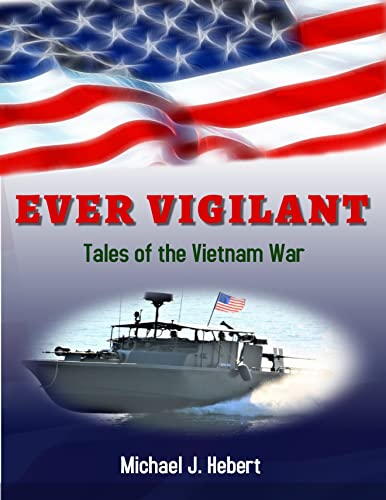
Ever Vigilant is the memoir of Michael J. Hebert and covers his year serving in Vietnam between 1969 and 1970 on the River Boat Patrols with the U.S. Army. The book is a fascinating insight into an under-reported aspect of the Vietnam War.
Ever Vigilant begins stateside before Hebert is drafted and covers his time in Vietnam and his return home after the horrors of war. From the first page, Hebert hooked me on his writing style. While many books focused on this subject matter tend to be exceedingly dry and severe, the beginning of Ever Vigilant is light-hearted. Hebert is a master at placing himself back in his shoes at a much younger age. His narrative sounds like a young 20-year-old is writing it, full of wit, self-deprecating humor, and a certain level of naivety that the reader knows will be shattered when Hebert reaches Vietnam. Hebert focuses on his time with the PBR (Patrol Boat River), which was used to intercept and hassle enemy travel on Vietnam’s myriad rivers, a dangerous job, to be sure.
Ever Vigilant is full of interesting stories of young men coming of age in the middle of a war zone. War is dreadful, but Hebert shows how even at the darkest of times, we can find glimmers of light. His stories of brotherly camaraderie between young men thrown together are genuinely heartwarming. The topic of the war itself is handled deftly. This is neither an anti-war book nor a diatribe on patriotic duty and the benefits of an aggressive foreign policy. Ever Vigilant is respectful and simply shows the war’s effect on real people, both positive and negative.
Hebert’s writing is energetic, and his descriptions are masterful. He has a real knack for sending you to the places he describes. For example, a large part of the book covers his team’s battle against nature during a typhoon after their boat is destroyed. Having experienced a typhoon myself, Hebert’s writing took me right back. The same goes for his descriptions of Vietnam. He perfectly captures the country’s beauty and the nature of the people who live there. While this is a book written from the American perspective during the war, Hebert shows an appreciation for how difficult the war was for the natives as well.
Ever Vigilant is a gripping memoir sharing a young man’s experiences in Vietnam. Whether you are interested in the Vietnam War or military history in general, there is much to love here. This personal account is a fun, humorous, touching, and sometimes harrowing tale of a young man’s experiences in war.
Pages: 339 | ASIN : B09PKNZ254
The Three Muscat Years
The Three Muscat Years by K.M. Harikrishan chronicles three years in the life of a young Indian army doctor as he adapts and finds his footing in a foreign country. Life becomes increasingly more challenging as the doctor is faced with the death of his father and a devastating sense of loss and grief.
As the young doctor learns to adjust to his new life and career challenges, he seeks comfort and acceptance from unexpected people he meets, some of whom become close friends. The story reads like a memoir, but it is interesting how it captures the essence of character growth. I found the doctor’s life experiences relatable, much like that of an ordinary person, even with extraordinary circumstances. The author does an excellent job of recounting his life so that we look beyond our first impressions and collective ideas about army personnel and medically trained staff.
I thoroughly enjoyed this book, having grown up with Indian culture and tradition. The narrator never wastes a chance to discuss unique characteristics of culture, Carnatic music, and other fond ideas and memories, which provide comfort for loneliness and becoming homesick. It’s an exciting book highlighting the personal impact of traveling and working abroad under stressful circumstances.
I enjoyed the author’s candid writing style and straightforward storytelling which encourages us to identify with the characters in the story while sympathizing with their feelings and hardships. The Three Muscat Years by K.M. Harikrishan is an easy book to read and enjoy, with lots of witty humor, relatable content, and the sensitive narration of one doctor’s journey.
Pages 274 | ASIN 9390882583
Good people are imperfect. Bad people aren’t.

The Smallest War follows a group of military operatives who go up against Russian operatives in a battle to control a new oil source. What was the inspiration for the setup to your story?
I was a Cold War kid so thought it would be fun to pitch the old enemies into a battle. During research for The Smallest War, I came across the USA/USSR Maritime Boundary Agreement and realised I’d found the catalyst for the confrontation. The first draft of The Smallest War was a heavyweight, weighing in at a little over 140K words. It detailed the backstory of the United States buying Alaska from Russia and how the error in the alignment of the boundary across the Bering Sea came to be. Sadly, there was a “Kill your darlings” year during which I slimmed the novel down. That said, it is a better book for the cuts.
Did you create an outline for the characters in the story before you started writing or did the characters’ personalities grow organically as you were writing?
A bit of both. I wrote outlines for the characters detailing their looks, speech patterns, habits, heritages and dreams. I also wrote a plot which was around 17K words. As The Smallest War developed, so did the characters, but the more refined development came with the assistance of an editor. There was no particular guidance given, more just observations about the characters themselves. In the draft the editor read, the main characters were verging on superhuman, and the editor thought they could do with taking a toilet break (i.e. do those things that people do as a matter of course each day, such as being injured if they were involved in a car crash).
What were some themes that were important for you to explore in this book?
I sweated over the epigraph “Good people are imperfect. Bad people aren’t.” It’s the main theme of The Smallest War, and I hope I’ve crafted the characters to fit the premise. We are all flawed, but overwhelmingly we are good. There are only a few of us that are perfectly malevolent, like Major Regina Volkov.
What is the next book that you are working on and when will it be available?
In light of what I learnt writing The Smallest War, I’m re-writing the first novel I wrote. The first novel did the rounds with the agents in Australia and was put in the drawer while I wrote The Smallest War. It’s not a sequel or prequal, just another book I’d like to read. It will be published in 2023.
Author Links: GoodReads | Twitter
Small War is the United Nations’ best kept secret: the end of conventional warfare. Acting in self-interest, the United States’ military buries it.
Oil—enough to build a superpower—is discovered by the United States, only for Russia to lay claim. The United States threatens war, but a resurgent Russia ruthlessly executes a play years in the making. Dominos fall: a fire the size of England, a bloody naval skirmish, breath-taking political manipulation. Small War will decide who exploits the oil.
Unprepared, the United States exhumes its Small War capability and staggers into a contest of hunter and prey: five relentless rounds of pursuit by any means necessary, winner takes all.
Press-ganged into the fray, Danny “The Beef” Wellington joins his two teammates, Kimimela Thunderhawk and Matt Balthazar, planning to do just enough to stay alive, but there’s a hitch. A traitor lurks, and only Danny can tip the balance to give the United States a fighting chance.
Full of unrelenting cat-and-mouse, rapid-fire action and characters pushed to their limits, this book is perfect for fans of I am Pilgrim by Terry Hayes, Ice Station by Matthew Reilly and Inferno by Dan Brown.
If you can catch a breath, you’re not reading The Smallest War. Get it now!
Unsung Heroes

Sea Pay is a memoir of life in the US Navy in the late 70s and early 80s aboard the aircraft carrier USS Midway. Why was this an important book for you to write?
Many men and women of our armed forces depart on deployment, work hard, do their jobs, and complete their missions. They are the “unsung heroes” who are never recognized for the price they have paid to protect our great nation.
What were some ideas that were important for you to share in this book?
Most jobs in the military are not glamorous but, they must be performed in order to complete the mission. Somebody must scrub the pots and pans.
What is one piece of advice you wish someone had given you when you were younger?
“Plan for the future”, . . . It will be here before you know it.
What do you hope is one thing readers take away from your story?
Military service is tough in many ways. Many keep their tragic and strain-full experiences compartmentalized to keep moving forward. Never underestimate what a veteran has lived through.
Author Links: GoodReads | Linkdin | Facebook | Website
Dorgan quickly turns his job into an adventure that pays very well. With a general court-martial looming, he and his shipmates continue to add adventure and excitement to their “tour of duty,” both on and off the boat-until one night, when an unexpected turn puts an end to it all.
Stories Of Experiences
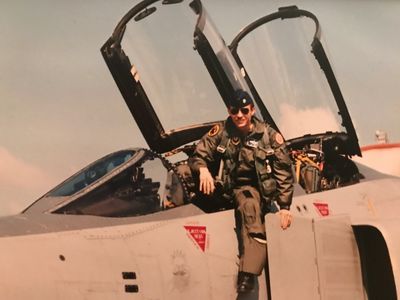
Betrayal in the Casbah follows a military attaché as he sets out on a rescue mission to save a downed pilot being held by terrorists. What was the inspiration for the setup to your story?
Most of my inspiration in writing the book came from my military background and experiences while serving for almost three decades. Being a fighter pilot experiencing combat, a base commander in NATO, leadership roles at the highest levels at the Pentagon, and the intrigue of being a military attaché in an extremely unstable country in North Africa. But actually, I combined events of my last two years as a military attaché in Algeria in writing the book. The attempt to rescue a downed American pilot was an actual mission and I used much of what happened while attempting to accomplish that mission in the fictionalized story.
What is your background and experience in writing and how did it help you write Betrayal in the Casbah?
I have always loved the written word and periodically would write little stories of experiences in my life, but nothing serious. Most of my previous writing was of a military nature. Briefings, reports, after action documents, evaluations, etc….. The only formal background would be my bachelor’s degree in English and Political Science.
What were some themes that were important for you to explore in this book?
Terrorism in North Africa, Al-Qaeda, the Barbary Coast pirates, and ancient Roman cities in Algeria.
What is the next book that you are working on and when will it be available?
Escape from Algiers, which is the sequel to Betrayal in the Casbah. Hopefully it will answer many questions that persist after reading my first book. I anticipate the sequel being available at the end of this year or early 2023.
Author Links: Website | Instagram
Nursed to health by the beautiful and mysterious Abella, Mitch returns to duty and is approached by the CIA with a covert mission: to rescue and bring home a downed American pilot being held by terrorists in Algiers. As he plans and prepares for the mission, Mitch and Abella become confidants and lovers, and Mitch discovers she is more than just a nurse working in a military hospital. Together with longtime friend and French colonel Yves Dureau and Mitch’s assistant, Army Warrant Officer Dave McQueen, Mitch and Abella will risk their lives to bring the American POW to safety.
And Never Looked Back
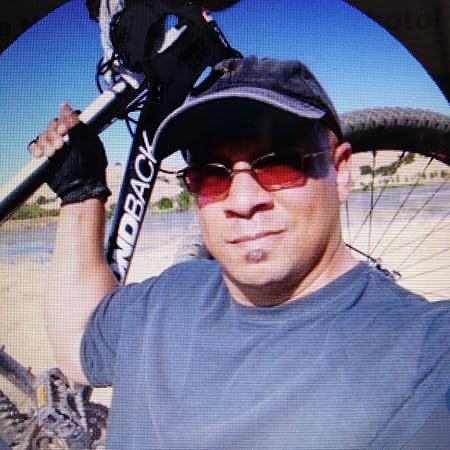
The Mongoose Crew follows a military veteran that wants to keep his past in the past, but everything he built starts to fall apart when his former crew starts looking for him. What was the inspiration for the setup to your story?
The inspiration behind the “Mongoose Crew” started with my own tour in the United States Army, where I served on active duty, of which a portion of that time was spent in Somalia from August of 1993 through December of that same year. Like the main character, “Mickey Frank,” I was a member of a team of five soldiers who provided mobile security for military personnel throughout our entire tour in country. The words “Mongoose,” was stenciled on our modified gun ship (vehicle), and other soldiers in the area began referring to us as the Mongoose Crew. About a year later, my Army tour was over, and I returned home to begin a new chapter. As the years passed, I started noticing that I had some internal difficulties as I tried to adjust to civilian life. I didn’t know it at that time, but like many other military veterans, I was suffering from trauma due to my experiences in the military, and self-medicating with alcohol to manage my mental health. Ultimately, I was diagnosed with Post Traumatic Stress Disorder. I tried to discover healthier ways to manage the emotions, and writing my thoughts on my laptop served as effective therapy for me, and still does. Of course, the story I create in “The Mongoose Crew” is fiction, but the guts of the story came from our deployment to Somalia in 1993, and the memories I have of the four other members of my crew, all of whom were wonderful people when I served with them, and nothing like the sadistic characters portrayed in my novel.
Mickey is a good guy that ended up in the wrong place in Somalia. What were some driving ideals behind your character’s development?
The main character, “Mickey,” is a guy who was very gung-ho throughout his time in the Army, and clearly identified with the gritty and tough-minded American Soldier mentality. He embodied all of the characteristics of a tough soldier, but Mickey also had a conscientious side to him. He was well read with a passion for political issues and social justice, not only in America, but around the world. His buddies joked with him about being an intellectual because Mickey would often challenge his buddies on the politics and business of war, and the motivations of the power elite in our government. Mickey loved America and would be the first to fight for her, but he was not naive when analyzing the history and policies of his own government. Once he’s in Somalia, and is able to witness the level of poverty and the inhumanity happening around him, he comes to the conclusion that the civil war among the Somali clans were about basic human survival and power, survival of the fittest. Mickey saw it as the poor vs. poor, fighting a civil war in one of the poorest nations on earth. Perhaps he was still a bit naive at age 22, but Mickey wondered how the world would be if the power elite around the world, could share a small portion of what they have with the poorest among us. He grew up plenty during his deployment, and when he was primed and groomed by superiors to accept his next promotion, the conscientious Mickey Frank chose to decline the promotion and chose to leave the Army. He loved his time in the Army, but he was ready for the next chapter in his life, and never looked back.
What were some themes that were important for you to explore in this book?
When focusing on the strong antagonist in the story, “Tommy Cuttler,” I wanted to explore the theme of power and privilege in our society. If you have the political muscle and financial fortune behind you, a person can get away with almost anything, especially when those very influential elite are being provided cover by their wealthy and powerful friends. That theme could not ring truer after analyzing Cuttler and the influential people in his life. A second theme that I was not aware of until already in the midst of the project, was the conviction and trust that all the characters in the story had in one another. Mickey and Jimmy Ortega were always close when serving together on active duty, but the two had to re-establish that trust in one another if they were going to accomplish their mission. They had not spoken or kept in touch since Mickey left the Army many years ago, so you can only imagine the doubt that each man had when teaming up again. How had the other changed over the years? Would each man be committed to the other in their mission? The same applies to all three antagonists in this story. “The Stooges,” as they are often referred, had the clear advantage of remaining inseparable over the many years, but when people can do the evil deeds as they have over a long period, there is no conviction or bond stronger than those three individuals. The three men were really an extension of one another, with the same conviction and purpose, which was to kill.
What is the next book that you are working on and when will it be available?
I’m currently working on a single book of short novels, which will be my first volume, and I hope to have it completed this summer. Some stories revolve around social justice themes, so I’m basically writing often, taking breaks on some projects and tackling others with a bit more vigor. I do plan to link my work to the social media platforms that you mentioned, so that’s coming. Thank you again for this opportunity to share my thoughts on my book, as well as my future plans.
Author Links: GoodReads | Amazon
As the years passed, Mickey has grown comfortable in his family life, until he is shaken to the core by the knowledge that members of his past life are searching for him. He believes he knows why the army is after him, but he is not prepared for the even darker secrets three members of his crew hold.
The Mongoose Crew is a deep dive into the complexity of a soldier’s experience in a land thousands of miles away from home and the trauma many veterans experience when they return.
About the Author
Marcus F. Fair is a social worker and has enjoyed a twenty-five-year career in the field as an investigator, along with several other titles over the years. He has been blessed with a wonderful woman and life partner to be by his side for the past twenty years, whom he owes his life.
Fair finds family to be essential in his life and always tries to remember this face through the good times and the bad. In the community, he dedicates himself to aid those who are underprivileged and families in need. In his spare time, he enjoys playing chess, shooting at the gun range, reading a good novel, and anything involving outdoor activities. However, spending time with his family is what he enjoys the most.


 LITERARY TITAN