Blog Archives
Seven Magic Bullets
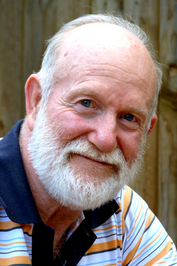
The Hole in Your Life is a compassionate and practical guide to navigating grief and bereavement, shared from a place of not just professional expertise, but lived personal experiences, making it relatable in a way other books are not. Why was this an important book for you to write?
I get a great deal of satisfaction, even joy, when I can relieve suffering. If you like, you can think of this as selfish: I’ve been cursed with way too much empathy, so, for example, the daily news is a horror show. I cannot avoid it because being informed is necessary for my job as a Professional Grandfather (striving for a tomorrow for today’s youngsters, and a tomorrow worth living in), so if I don’t take precautions, I shed sympathetic tears of blood in response to war, environmental disasters, inhumane treatment of people and the like.
This book sets out how I deal with deep distress of any kind including this second-hand grief, but also the death of my daughter, and what I have taught to lovely people during decades of my counseling psychology practice. And the good thing is that these tools are all science-validated.
All sentient beings are apprentice Buddhas, apprentice Jesuses. So, when I remember (but never when I don’t), I act as if I were already enlightened. The Dalai Lama has said, “My religion is kindness,” and “The aim of enlightenment is to be of service,” so this book is an important step on my chosen journey.
What were some ideas that were important for you to share in this book?
First, life is too short for the seriousness it deserves. There is no point in being gloomy when writing about sad topics. In fact, fun is one of the “seven magic bullets” that shoot down monsters like depression, chronic anxiety, irrational anger. When you put a good dose of the seven magic bullets into your life, you are a pogo stick: the harder life bounces on you, the higher you rise. You’ll find them described at http://bobswriting.com/psych/firstaid.html
Second, whatever is, is. Acceptance, what in Buddhism is called equanimity, is the most powerful way to deal with any problem. This doesn’t mean condoning evil, but is part of being an effective change agent.
Third, forgiveness (including self-forgiveness), gratitude, and generosity are the most important tools of positive psychology, which is the scientific basis of my work.
Oh… about generosity. I have a long-standing policy: anyone sending me proof of purchase of one of my books, and anyone subscribing to my blog, Bobbing Around, has earned a free (electronic) book.
What was the most challenging part of writing your book, and what was the most rewarding?
I love all my children. That includes the real physical two-legged beings who call me Dad, and also the children of my imagination. On three occasions, these two groups have overlapped, giving me the opportunity to give double love.
My fictionalized autobiography, Ascending Spiral, has my children in it with their genuine personalities, and the events in their lives, but fictionalized names. (How surprising is that?)
Anikó: The stranger who loved me is my biography of a remarkable woman who achieved the impossible and survived the unsurvivable more than once. She is my mother. I visited her in Hungary during her dying days and returned with a huge amount of material. I couldn’t even look at it for two years, then wrote the book, which has won four awards.
The third book is of course The Hole in Your Life: Grief and Bereavement. It uses the story of how I dealt with the death of my daughter, Natalie, so there she is, loved twice over. Is that challenging enough?
And this is also the most rewarding part. Unlike my mother’s biography, this book was almost completed weeks after Natalie’s death, thanks to all I have learned in the past twenty-four years.
What do you hope is one thing readers take away from The Hole in Your Life?
Your wonderful reviewer has pinpointed it. The best way to deal with suffering is through it rather than avoidance. This gives us the opportunity for growing from the experience. Hmm… I should be about 50 ft tall by now. Hold it, that’s not the kind of growth I mean.
Thanks to the handicap of a scientific training, I don’t believe anything but go with the evidence. So far, I’ve spent a brief 82.75 years collecting that evidence, so I won’t list it all here. There is a part-completed draft of a book hiding in my computer about that. But the conclusion is that the purpose of life is spiritual growth. There is no point in change when everything is perfect. Suffering is the spur to growth. It doesn’t feel nice—but ask a teenager about growing pains.
A major loss is awful, but it is also the opportunity for a new start.
Author Links: GoodReads | X | Bluesky | Facebook | Website
Tragedy Into A Source of Strength
The Destiny of Our Stars is a heartfelt memoir about love, loss, and renewal, sharing your grief and spiritual awakening alongside reflections on fate, synchronicity, and the mysterious ways the universe brings meaning to suffering. Why was this an important book for you to write?
Turning my personal tragedy into a source of strength led to a profound commitment to help others find their own path through sorrow. I found it to be a vital step in my own healing.
What were some ideas that were important for you to share in this book?
That grief is a natural response to losing someone dear, but it’s how we navigate that pain, and adjust to a changed life, is what determines our path forward. Loss is an unavoidable part of the human experience, but our ability to adapt and build resilience is what truly allows us to continue living fully with dignity and purpose. Our focus should be on healthy coping, and finding ways to integrate the loss into our lives, rather than being consumed by it.
Never be afraid to step out of your comfort zone; take risks, face new experiences, and push beyond your routine. Have the courage to grow and the integrity to be yourself. Rebuild your life parallel with grief, rather than trying to conquer it, and keep a strong support system around you as you seek out social interactions that promote joy and connection as you move ahead.
What was the most challenging part of writing your memoir, and what was the most rewarding?
Well, reliving the moments was a brutal challenge; it was an agonizing ordeal, like a descent into a dark and emotionally devastating place. But, I knew I had to face it head-on, as my goal was to heal and reclaim my life. I acknowledged I needed to confront the past as a necessary step toward facilitating acceptance and inner peace. Ultimately, my greatest reward was a fundamental shift in perspective, reminding me that the life I shared with my beloved, though fractured by illness and loss, held an enduring value and beauty worth cherishing for the rest of my life.
What advice do you have for women navigating widowhood who are just starting this phase of their lives and trying to find themselves?
Following a loss, you should allow yourself to be vulnerable and recognize that it’s okay not to be okay. Realize that acceptance, healing, peace, even closure, do not happen overnight. Grief is a nonlinear process that is beyond your control. You must permit yourself to feel the full spectrum of emotions, and concede that struggling is a natural part of the healing process. You’re about to experience what I call a “necessary pause” in your life, a type of sabbatical, so take it all in and process it at your own pace. Most importantly, take the time to focus on yourself, and cultivate your self compassion. Healing from loss is a process of transformation. By honoring the grief, validating the pain of loss, and allowing yourself to feel and express your emotions without judgment, eventually nurtures the strength needed to redefine your path forward while carrying the loss with you.
Between Worlds: Between Worlds, A Life of Abduction, Addiction, and Awakening


Brian Martin’s Between Worlds is an unflinching memoir wrapped in the surreal. It’s part trauma confession, part spiritual reckoning, and part cosmic fever dream. Martin tells of a life marked by abuse, addiction, strange visitations, and an aching search for meaning. The book opens in darkness, both literal and emotional, moving through scenes of childhood pain, hallucination, and haunting encounters that blend the psychological and the supernatural. As the story unfolds, it shifts from terror to transcendence, revealing a man grappling with his own mind and his memories, questioning what’s real and what’s revelation.
Reading this felt like wading through someone’s nightmares while clutching a flickering flashlight. Martin’s writing hits hard, raw and poetic in turns, and sometimes so vivid that it left me uneasy. His prose can feel chaotic, but that chaos feels intentional, like the inside of a fractured mind trying to make sense of itself. I found myself fascinated. The honesty is brutal. There are no neat answers, no tidy lessons, just waves of memory and madness that force you to sit with discomfort. I respected that. It made the book feel alive, even when it hurt to read.
At the same time, there’s a strange beauty threaded through all that pain. Martin writes about horror with the eye of a poet, and about faith with the heart of a skeptic. I could feel the ache of someone who wants to believe in something, God, magic, UFOs, salvation, but can’t ever quite grasp it. That struggle hit close. The spiritual parts don’t feel preachy. They feel desperate and human. There were moments when I had to pause just to take in how he could write about trauma with such raw tenderness.
Between Worlds is for readers who can handle truth that’s ugly and luminous at once, who don’t mind getting lost in someone else’s storm if it means finding a little light of their own. If you like memoirs that bleed honesty, or stories that blur the line between real and unreal, you’ll remember this one.
Pages: 307 | ASIN : B0FWN2PGHM

Dusty Roads: Meet the Hidden Figure Who Really Ignited the Women’s Movement


Elaine Rock’s Dusty Roads tells the story of Barbara “Dusty” Roads, a trailblazing flight attendant who dared to challenge the airline industry’s sexist standards in the 1950s and 60s. The book follows Dusty’s rise from a young stewardess bound by age limits, girdle checks, and marriage bans to a formidable advocate who reshaped labor rights and gender equality in aviation. Rock paints an intimate portrait that blends Dusty’s personal struggles with broader social change, showing how one woman’s determination rippled into the women’s movement itself.
Reading this biography felt like being on a flight through time. It’s turbulent, beautiful, and filled with purpose. Rock’s writing is crisp yet full of warmth. I could feel her admiration for Dusty in every page. What I enjoyed most was the balance she found between Dusty’s grit and her vulnerability. The author doesn’t just list victories. She lets us feel the cost of them, the isolation, the heartbreak, the stubborn hope that kept Dusty going when most people told her to sit down and be quiet. There’s a quiet defiance in the tone that made me cheer for Dusty, even when the odds were stacked sky-high.
The blatant discrimination, the absurd rules about weight and marriage, the humiliation of being judged for your age, it’s maddening. But Rock doesn’t preach. She lets the history speak for itself, and that makes it hit harder. I found myself reflecting on how many women still face subtler versions of the same nonsense today. The mix of historical detail and Dusty’s personal voice pulled me in completely. It didn’t feel like reading a textbook about feminism. It felt like sitting across from a brave, funny, no-nonsense woman telling me her life story.
By the time I reached the end, I felt a mix of admiration and gratitude. Dusty Roads is the kind of book that sneaks up on you. It educates, but it also stirs something deep inside. I’d recommend it to anyone who loves stories about ordinary people doing extraordinary things, especially readers who crave strong female voices that history almost forgot. It’s perfect for those who want to understand how real change begins, not with grand speeches, but with one person refusing to accept “that’s just how it is.”
Pages: 436 | ASIN : B0DL4F6B56
Thriving In The Modern Workplace: A Gen Z Guide to Success

Giselle Sandy-Phillips’s Thriving in the Modern Workplace is a guidebook written straight to and for Gen Z professionals trying to find their footing in a constantly shifting job market. It’s part handbook, part pep talk, and part mirror for a generation raised online but forced to work within systems built before them. The book mixes structured lessons on communication, adaptability, and self-assessment with moments of warmth, humor, and raw honesty. It moves fluidly between coaching and storytelling, showing how to navigate everything from hybrid work models to mental health struggles, while still pushing readers to define success on their own terms.
What I loved most was how personal and conversational the writing felt. It doesn’t preach, it talks to you like a friend who’s figured a few things out and wants you to avoid her mistakes. The tone is direct and modern, full of personality yet surprisingly practical. Sandy-Phillips knows how Gen Z thinks and what they value, and she meets them where they are. The self-assessments are smart additions, turning the book into an interactive experience rather than just something to read passively. I found myself nodding along, sometimes laughing, sometimes pausing to think about how deeply this generation is shaped by chaos and connection at the same time. The balance of empathy and blunt advice worked well, it felt relatable and grounded, never performative.
The book feels like it’s both a therapist and a career coach. There were sections that revisited ideas or leaned into slogans that read more like social media captions. The sincerity always shines through. What really works is how Sandy-Phillips captures the anxiety and ambition of being young in a world that never stops moving. She never blames or patronizes; instead, she guides you toward finding rhythm in the noise. That’s what makes this book feel alive. It reflects the messiness of real growth, not a polished version of it.
I’d recommend Thriving in the Modern Workplace to anyone in their late teens or twenties who’s unsure how to start, or restart, their career without losing themselves in the process. It’s especially good for students, new graduates, and even mid-level professionals who need a reset. It’s not just about jobs; it’s about identity, purpose, and peace of mind. If you’re the type of person who wants to build a life that works for you and not just through you, this book is worth your time. It won’t hand you answers, but it’ll help you ask better questions, and that’s what thriving really looks like.
Pages: 212 | ASIN : B0FSVXNXJ4

Benefical Economics: A Red State Citizens Guide to Crafting A Better Constitution When the Govrnment Fails The Citizens
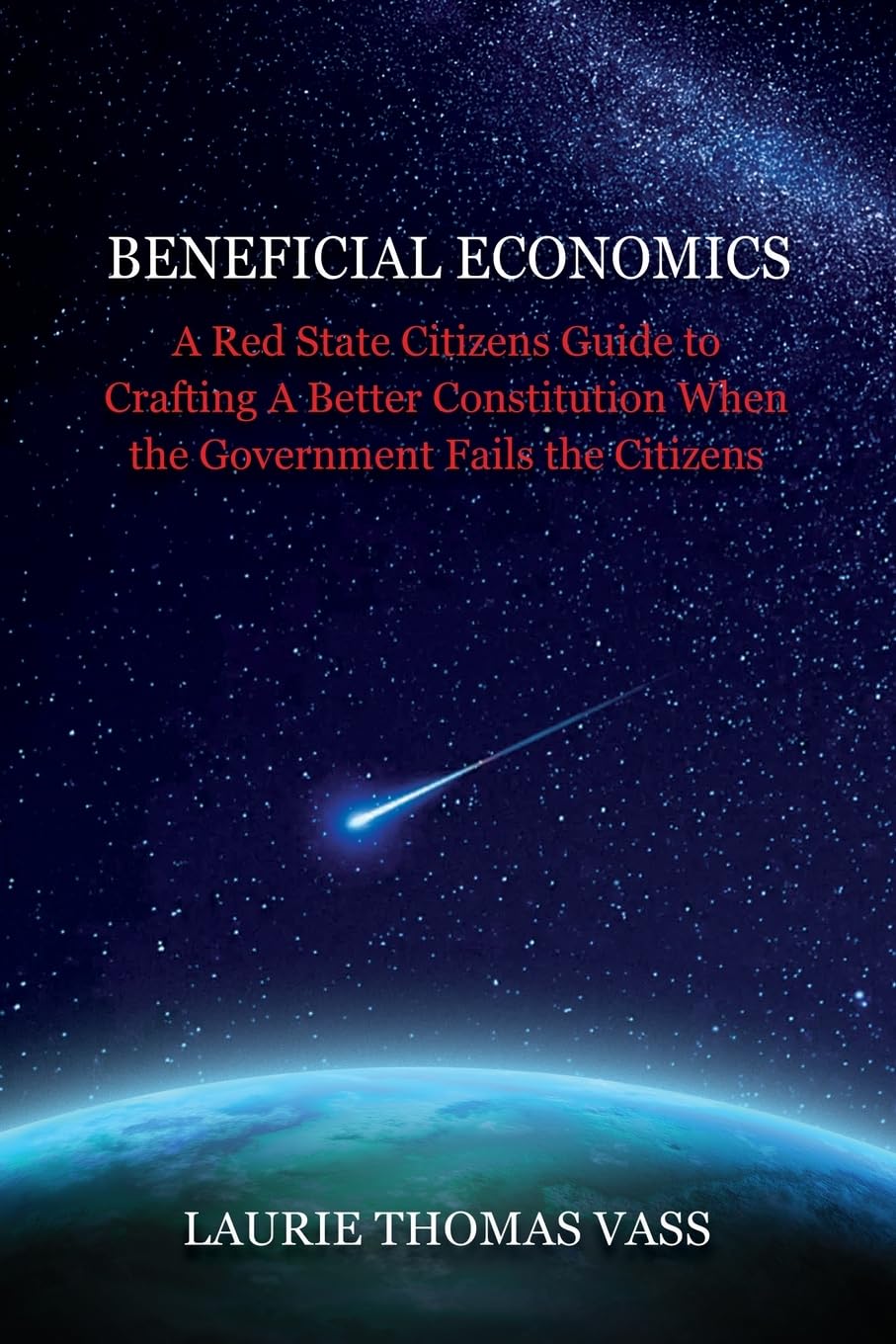
Laurie Thomas Vass’s Beneficial Economics dives headfirst into the chasm of America’s growing ideological divide. It lays out a detailed case for why, in the author’s view, “red state citizens” must abandon what’s left of Madison’s Constitution and rebuild a new one that decentralizes power and restores liberty. The book mixes history, political theory, and constitutional design, using thinkers like Adam Smith, James Buchanan, and Immanuel Kant to argue that liberty, trust, and decentralized economics are the keys to a stable and moral society. Across its dense chapters, Vass sketches a new political architecture, a “Democratic Republic of American States,” built on state sovereignty, fair economic rules, and resistance to what she calls “predatory state capitalism.”
Reading this book felt like a deep plunge into one person’s grand blueprint for reimagining America. I admired the sheer audacity of it. Vass writes like someone convinced of their mission, and that conviction gives the prose a pulse. Their tone is urgent, sometimes fiery, and often unapologetic. The author mixes scholarly arguments with plainspoken outrage, and that combination keeps the reader hooked even through pages of constitutional draft language. I don’t agree with all their conclusions, but I couldn’t help respecting the clarity of their beliefs. The author connects economics, morality, and governance in ways that made me stop and think. There’s a spark of rebellion in every sentence, and I found myself drawn to the raw energy of that.
The book swings between philosophy, constitutional text, and economic diagrams with little warning. Sometimes I felt like I was in a civics lecture, then suddenly in a manifesto. The passionate tone sometimes leads the underlying reasoning, but underneath all that, there’s a real idea here, a longing for fairness, for a government that listens to people, for communities that grow from trust instead of control. When Vass ties Adam Smith’s “invisible hand” to quantum theory and self-organizing order, it’s wild and fascinating. The author is trying to link economics to physics, politics to morality, and citizens to cosmic principles of order. That ambition alone makes the book worth wrestling with.
I’d recommend Beneficial Economics to readers who enjoy bold political thought experiments, especially those skeptical of centralized government or curious about alternative constitutional models. It’s not an easy read, and it’s not neutral, but it’s brimming with conviction and intellectual fire. People who feel alienated by modern politics might find it empowering, and those who don’t agree with Vass will still find it thought-provoking.
One Last Question Before You Go: Why You Should Interview Your Parents
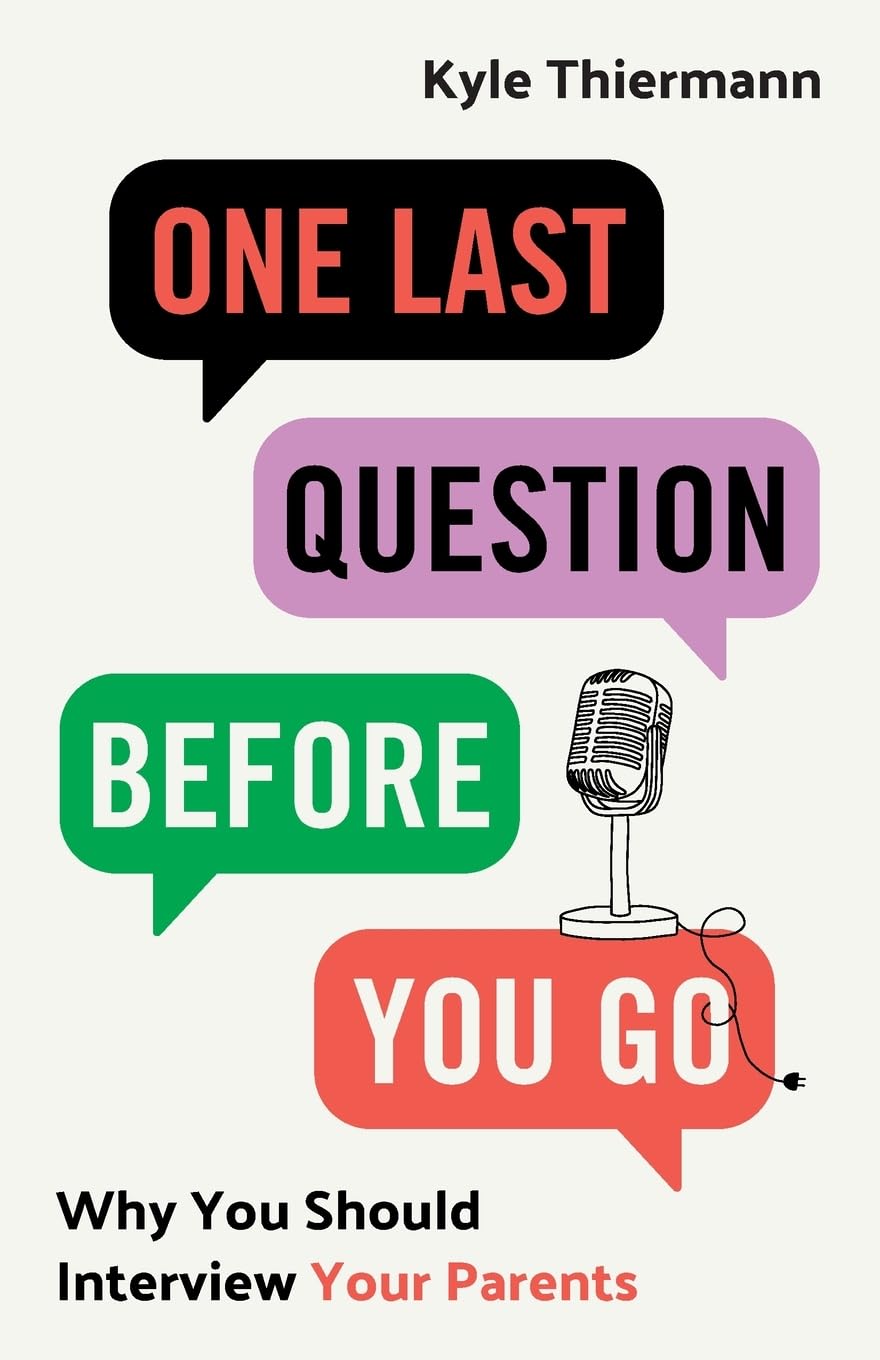
Kyle Thiermann’s One Last Question Before You Go is part memoir, part field guide for emotional courage. It begins as a practical project, recording conversations with his parents before it’s too late, but evolves into a moving exploration of love, misunderstanding, and reconciliation. Thiermann opens his life with remarkable honesty, describing a childhood shaped by idealism, tension, and unconventional choices. His storytelling blurs the line between instruction and confession, reminding readers that asking questions can be both a form of preservation and an act of healing.
Thiermann’s writing balances clarity and lyricism. He recounts moments from his youth in Santa Cruz with humor and unease: surf sessions laced with danger, family debates over truth and science, and a mother whose belief in conspiracy theories fractures their bond. When he writes, “Now when my mom and I look up at the same blue sky, she sees chemtrails, where I see clouds,” the simplicity of the line reveals something profound about distance and love. It’s this honesty, direct, unsentimental, but deeply felt, that gives the book its emotional weight.
His reflections on interviewing parents are both practical and philosophical. Thiermann treats listening as a skill that requires humility and patience. His advice to start with simple questions, to let silence breathe, feels genuine and attainable. He doesn’t posture as an expert but as someone learning in real time. When he describes forcing himself to write “bad questions” until something true appears, it captures the imperfect process of reaching toward another person.
The book’s rhythm is conversational yet purposeful. Thiermann alternates between intimate family vignettes and broader reflections on communication, mortality, and forgiveness. He resists the urge to offer neat resolutions, allowing discomfort and ambiguity to remain. That restraint makes his insights resonate more deeply.
One Last Question Before You Go manages to be both instructive and profoundly human. It’s a reminder that asking hard questions is not about control or closure, it’s about connection. This is a book for readers who value sincerity over polish, who want to bridge emotional gaps with their own parents, or who simply wish to understand their family stories before time takes them. Thoughtful, unguarded, and deeply affecting, Thiermann’s work lingers long after the final page.
Pages: 156 | ASIN : B0FR8JLM98


 LITERARY TITAN