Blog Archives
Lords of Sixty Third Street


Lords of Sixty-Third Street is a gritty crime thriller set on Chicago’s South Side, opening with the shocking murder of Tribune reporter Michael Anderson. From there, the story widens into an underworld web: a mob crew scrambling to protect its interests, a ruthless street gang fighting for power, and a fellow reporter determined to uncover the truth. The book has the bones of a classic crime novel but wraps it in local detail, political corruption, and the messy humanity of people who live and die on those blocks.
I was pulled in right away. The opening chapter is brutal. It sets a tone that never really lets up, and I caught myself tensing as the scene unfolded. Author Edward Izzi writes in a straightforward, almost journalistic style that fits the subject matter, especially when he switches into Larry McKay’s first-person point of view. Larry’s voice feels worn down in the way longtime reporters often are. His sarcasm, his grief, and even his guilt feel believable. And the pacing surprised me. The chapters bounce between the investigation, the mob’s internal politics, and the O-Block gang’s chaos, but it never feels scattered. Instead, it feels like standing in the middle of a neighborhood where everything is happening at once.
What I liked most, though, was how the author handles violence and power. He doesn’t shy away from either. Some scenes made me uncomfortable, not because they were poorly written but because they felt too close to stories that make the news in real life. The book keeps circling back to what desperation and loyalty can make people do. There’s also this tension between the old guard, the Outfit, with its rules and rituals, and the young gang members who don’t care about structure and burn everything they touch.
By the time I reached the end, I felt like I had watched a full neighborhood ecosystem twist around one terrible act of violence. It’s the kind of story where nobody gets out clean, and honestly, that feels right for this genre. If you enjoy crime fiction that leans into atmosphere and moral gray areas, especially stories rooted in Chicago’s history of corruption and street politics, this one will hit the spot. Fans of gritty crime thrillers will appreciate how fully it commits to its world and its characters.
Pages: 378 | ASIN : B0FXVVHLD5

Perceived Predictability

Inheriting Karma follows a man hiding in plain sight whose cover is blown, sending his life into chaos and forcing him to scramble to hold it all together with the least amount of casualties. What was the inspiration for the setup of your story?
The question itself holds the key to my answer. I’m the type of guy who needs a challenge. Predictable outcomes send me packing from the story. I write how I feel, so having a man hiding in plain sight with a perceived predictability lets me shock the reader.
I thank you for your review; it truly nails my intention when writing stories. It’s no secret that my series is not for everyone. Characters who die in the first book are still big participants in follow-ups. For the reader, they are tasked with trying to follow the depth of karma each actor’s actions create.
What inspired your characters’ interactions and backstories?
Growing up, I didn’t have to go far for what I now call Safari Hunts. Challenging Karma was meant as a one-off, keep a last promise to my mom. So many family traits make up the characters. Mam’s boob magnet eyes, Francois’ inventing new dishes and making everyone try it, Ray’s never buying new clothes, and love of pickles.
Backstories are a blend of daydreaming, people-watching, and engagement. When my tenth draft of Challenging Karma shocked my mom into trying to talk me out of using its ending, I knew I had a formula that I couldn’t change.
By nature, I’m a puzzle solver; even playing cards, it has to be a strategic game or I get bored (any bridge players who can help educate)? Even now, I have to slow down because I write an interaction that leads to a fifth, sixth, or even seventh book storyline. For example, lawyer Charlene Reece was supposed to die in Surviving Karma then a daydream brought her story to a new level. Her Karma story really expands in Reciprocating Karma, coming out later this month.
How do you balance story development with shocking plot twists? Or can they be the same thing?
For me, the story takes the reader so many miles down a path only to reach a time when the puzzle hits a three-pronged crossroads. Again, your reviewer nailed it when he said he had to go back to adjust his thoughts. So far, the twists exist on these three paths: believe what you think you read, go back to change your thinking, or go forward with expected outcomes.
The twist, although meant to shock, is a kind of progression of events that fills a lot of our current news cycles. Serial Killers in #1. A wrongfully convicted prisoner seeks payback in #2. Criminal organizations use public events to further their goals in #3. And #4, where a vigilante will seek retribution for the deaths of loved ones.
The premise, “Walk in another’s shoes,” is how I try to develop the story. Hence, the need for a comedic slowdown, weird encounter, or stubborn quirk. I want unique characters that readers can relate to. Reciprocating Karma introduces Carlee. Her sports story is one such lighter moment. But even while writing it, I could picture my wife actually living that experience (before she married a sports nut, of course).
I hope the series continues in other books. If so, where will the story take readers?
Beta readers for #4, Reciprocating Karma compare it to a movie that has caused many a conversation about whether it’s a Christmas movie or a thriller during the holiday season. It comes out in the next few weeks, so readers will have to pick a side. Yes, there’s a shock, but its subtitle causes a self-review of one’s own life.
The future in my Karma world has at least two more shocks to provide. In fact, both #5 and #6 are ripping through pages (I handwrite every first draft). But with Karma being such a wide open source of inspiration, seven will start filling dreams soon.
Author Links: Goodreads | X (Twitter) | Website | Amazon
Runs parallel to the soon to be released crossover book #4 ‘Reciprocating Karma!’
One oversight is all it took to turn hunters against him. Legal documents record his real name as Wilson O’Reilly instead of Forrest Clay, but his involvement with Ricky Topin going rogue brightens the already dual personality spotlight. Two criminal accomplices vie for attention over the one true love Wilson has ever experienced, a cop.
Once word spread of his link to Topin’s murderous rage, hiding in plain sight no longer became a possibility. Or just maybe? A boss to one, partner to another, and enemy to the third person, O’Reilly weaves his circumstances toward a solution. Although for him to walk the streets again, past friends may die, organizations receive new leadership, and cops become targets.
Although fluid, the first seed planted is to use his onetime lovers, position against her. A simple warning of an assassination attempt piques interest until the offspring of a former gangster ‘Inherits Karma’ from his father. One kill shot setting the stage for O’Reilly to regain the blessings of freedom.
Stuck in quicksand, law enforcement takes the case, international. Thrilling mind games culminate in a three-minute window, where survival becomes a scene of chaos.
Inheriting Karma

I went into Inheriting Karma expecting a mystery, maybe some crime or supernatural twist, but this book was something else entirely. It’s mysterious, sure, but not in the usual “whodunit” way. It’s like stepping into someone’s mind after everything has fallen apart. The story is fragmented, poetic, and even a little trippy. It talks about guilt, fate, and what happens when your past won’t stop chasing you. It’s weird, dark, and hypnotic in a way that’s hard to explain and hard to look away from.
It wasn’t easy to follow. The writing feels like a code at times, like the story wants you to dig through the mess to find the meaning. But there’s something addictive about that. The mood is heavy, almost haunting, and I found myself flipping back pages trying to piece together what was real and what was just in the narrator’s head. It’s got that eerie, unsettled vibe that keeps you tense even though you don’t know why.
If you’re the kind of mystery reader who likes neat clues and clean endings, this might throw you off. But if you enjoy stories that play with your head, that make you question what’s happening, this book has that in spades. It’s like a psychological puzzle wrapped in poetry. I wouldn’t call it a traditional thriller, but it definitely gave me chills.
I’d recommend Inheriting Karma to readers who like their mysteries a little offbeat. Fans of surreal or psychological thrillers where the real tension comes from the mind, not the crime. It’s strange, but it’s the kind of strange that sticks with you.
Pages: 328 | ASIN : B0FM6TTGJG
Tequila

Tequila follows generations of the Ramirez family, from Sotero’s gamble on aging tequila in the 1950s Jaliscan Highlands to the modern corporate empire known as RAM Industries. What begins as a tale of sweat, soil, and ambition slowly becomes a saga of family betrayal, violence, and power. Across decades, we watch tequila move from rustic distilleries into the bloodstream of global trade, all while the Ramirez family wrestles with love, greed, and blood feuds that never seem to fade. It is a story that swings between passion and brutality, family devotion and ruthless ambition.
I admired the way author Tim Reuben captures place, especially the Mexican highlands where Sotero’s first plants take root. Those early chapters breathe with heat and dust, the struggle of a farmer dreaming big. Then, almost suddenly, the narrative shifts to boardrooms and courtrooms, and it struck me how ambition hardens with each generation. I found myself both hooked and unsettled. The violence was raw, sometimes shocking, yet it felt earned, a natural extension of the world Reuben built.
The writing itself is quick, sharp, and often cinematic. The dialogue snaps, the scenes cut hard, and there is little handholding. I enjoyed that rhythm because it gave the book urgency. But I also caught myself wishing for pauses, more room to breathe, especially when the story moved into modern-day plots with kidnappings, corporate lawyers, and family infighting. Still, I admired the boldness. Reuben doesn’t play it safe. He tells a story that spills over with energy, grit, and heat.
I’d recommend Tequila to readers who enjoy family sagas laced with crime, corporate drama, and old-world passion. Tequila felt like a mix of The Godfather’s family drama, the cutthroat energy of Succession, and the grit of Narcos, all poured together into one fiery shot of a story.
Pages: 407 | ASIN : B0FDH5FYHM
The Scars We Carry
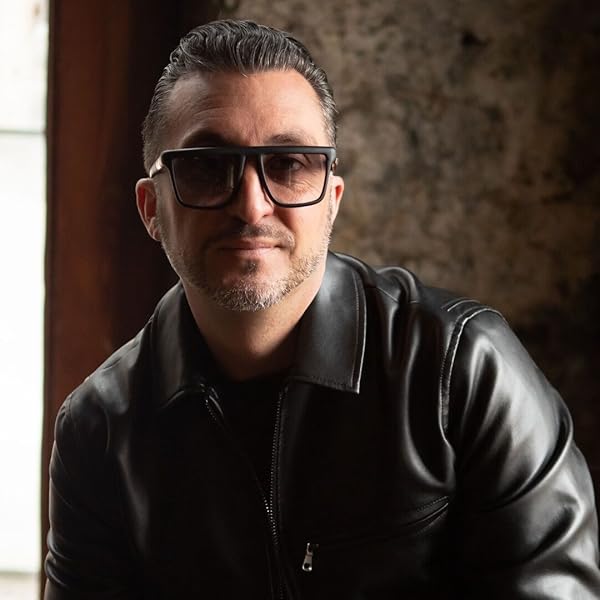
The Sins We Inherit follows a conflicted man trying to be a good father who thought he’d escaped his family’s criminal legacy, only to be pulled back in when his grandfather dies suddenly. What was the inspiration for the setup of your story?
The inspiration began in a very personal place. I started writing during a difficult season of heartbreak and anxiety, and the story grew out of those emotions. What began as journaling slowly evolved into a narrative about identity, family, and the legacies we carry.
The first two chapters — the wake and funeral — are essentially real. They were some of the hardest scenes to write because they came directly from my own experience of losing my grandfather Carlo, who was such an important figure in my life. That rawness gave the story its foundation of authenticity.
Milwaukee became the natural backdrop. I grew up there, and its history and underworld culture gave the story a setting that felt authentic and rarely explored in fiction. From there, the character of Cost took shape as someone wrestling with the same questions I was asking myself: What does it mean to be a man, a father, and a son while carrying the weight of the past? That intimacy, set against the backdrop of crime and family power struggles, gave the book a cinematic quality from the start — I’ve always envisioned it as something that could live not only on the page, but on screen as prestige television or film.
What aspects of the human condition do you find particularly interesting that could make for great fiction?
I’ve always been fascinated by flawed characters who are still trying to do right, even when they fall short. The moments that stay with me — whether in books or film — aren’t usually the loud or violent ones, but the quiet scenes of love, regret, or vulnerability. Those moments reveal our contradictions: strength and fragility, pride and longing, loyalty and betrayal.
That tension is at the heart of The Sins We Inherit. It’s why I believe the story lends itself to screen adaptation — the crime and ambition create stakes, but the real drama comes from the universal struggles of family, identity, and the need to belong. That balance is what defines the best prestige dramas, and it’s what I wanted to capture here.
What themes were particularly important for you to explore in this book?
Redemption was central. The novel asks whether we can rise above the cycles we inherit, or if they define us no matter how far we run. Alongside that, I wanted to explore legacy, manhood, and the bonds of family — especially the father–daughter relationship, which became the emotional core of the story.
Ultimately, the book is about transformation. It’s about shifting the idea of strength from suppressing pain to confronting it, and finding meaning in the scars we carry. That emotional throughline is also why I believe the story is destined to resonate beyond the page — it’s rooted in the same timeless, human themes that make the great crime dramas work on film and television.
When will Book Two be available? Can you give us an idea of where that book will take readers?
Yes — I do see The Sins We Inherit as the beginning of a larger story. From the outset, I had a general arc for a trilogy in mind, and I’ve already outlined both Book 2 and Book 3. Each installment builds on the themes of legacy, family, and redemption, while raising new questions about power, identity, and the price of the choices we inherit.
My ambition is for this saga to stand within the mafia canon, but in a way that feels contemporary and fresh. Milwaukee remains a unique, underexplored setting, and the father–daughter relationship continues to ground the story in something universal. At its heart, the next book will push deeper into what it means to face the past, confront pride, and still fight for transformation. It’s a layered arc that I believe has all the hallmarks of prestige television: intimate, character-driven drama unfolding against a backdrop of power and consequence.
Author Links: GoodReads | X (Twitter) | Facebook | Website | TikTok | Instagram | YouTube | LinkedIn | Amazon
Costantino “Cost” Caduto Jr. thought he’d escaped his family’s criminal legacy. But when his grandfather Tiger, the man who held it all together, suddenly dies, Cost is dragged back into a city simmering with tension, betrayal, and unfinished business.
Now, standing at the crossroads of who he was and who he might become, Cost must confront everything he left behind:
– A family fractured by power, grief, and long-held secrets
– A dangerous power vacuum that threatens to pull everyone under
– The one person he’s always tried to keep safe, his daughter, now watching his every move
Set against the backdrop of Milwaukee’s underworld, The Sins We Inherit is a gripping tale of legacy, loyalty, and the price of silence. As old allegiances unravel and new threats emerge, Cost must decide whether walking away was ever truly an option, or if some bloodlines run too deep to outrun.
Perfect for fans of atmospheric crime fiction, morally complex protagonists, and slow-burning suspense with heart.
The Sins We Inherit
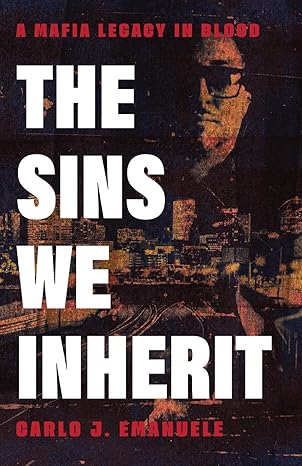
Carlo J. Emanuele’s The Sins We Inherit is a bruising, heartfelt story about family, legacy, and the ways the past refuses to stay buried. The novel follows Costantino “Cost” Caduto II as he returns to his family’s orbit after the death of his grandfather, Tiger, a man whose shadow looms over Milwaukee’s underworld and over Cost’s own conflicted heart. The book moves through wakes, eulogies, burials, backyard feasts, and street confrontations, blending the intimacy of family drama with the sharp edges of a crime saga. It’s about fathers and daughters, fathers and sons, and the ways love can be messy, protective, and even dangerous.
Right from the opening pages, where Cost stands at Tiger’s wake, worn down and haunted, I felt pulled into the smoke-filled rooms and tight-lipped exchanges that define this world. The writing is cinematic without being overstuffed; little details like the smell of cigar smoke or the scrape of pews in a church make the world feel alive. At times, though, the heaviness of description slows things down, especially in the funeral chapters, but I didn’t mind lingering there. It felt true to the weight of grief, and it set the stage for the power struggles that follow.
I also appreciated how Emanuele balances the personal with the criminal. Cost isn’t just an heir to a mafia empire, he’s a divorced father trying to stay close to his daughter, Maddy, even as she slips through his fingers. The moment when she addresses him as “Dad” at the wake, only to retreat into the crowd, struck me with particular force. That small interaction captured more distance and heartbreak than any shouting match could. Later, when Frank Vistoso tries to assert himself at the altar during Tiger’s funeral, it’s not just a clash of egos; it’s a reminder that Cost can never fully escape this world, no matter how much he wants to. I found myself rooting for him, even when I suspected he wouldn’t get the peace he craved.
What I didn’t expect was how much heart the book carries in its quieter moments. A favorite scene of mine was the repast after the funeral, with sausage sizzling on the grill and cousins arguing over poker. The food, the noise, the laughter, it all felt warm and familiar, and it reminded me that this story isn’t only about violence and legacy, but also about belonging. I could almost smell the garlic bread and hear Sinatra crackling on the speaker. It’s those scenes, where love and menace share the same table, that give the book its punch.
The Sins We Inherit left me thoughtful and stirred. It’s not just a mob tale, it’s a story about trying to be better for the people you love, even when the past won’t let you. I’d recommend this book to readers who enjoy crime dramas with a human center, especially fans of The Sopranos or Dennis Lehane. But I’d also recommend it to anyone who’s ever wrestled with family expectations, or who’s wondered how much of our lives are chosen versus inherited. It’s a dark, gripping read, but underneath the gunmetal, there’s a father’s love beating strong.
Pages: 258 | ASIN : B0FKN76L1K
Loyalty, Desperation, and Fear

Gangsters and Demons follows a dockworker trying to survive in Chicago during the 1920s who is forced to join an organized crime syndicate to provide for his family and encounters literal demons, both personal and paranormal. What was the inspiration for the setup of your story?
The inspiration for Gangsters and Demons came from a fascination with the gritty, morally complex world of 1920s Chicago, a city pulsing with industrial hardship, organized crime, and social upheaval. I wanted to explore the human cost of survival in such a ruthless environment through the eyes of a working-class figure like Jimmy Maloney, a dockworker who’s not inherently a criminal but is forced into that world to protect his family. The idea of blending a classic noir gangster tale with supernatural horror stemmed from my interest in how external pressures—like poverty and crime—can mirror internal struggles, such as addiction or guilt, which I personified through literal demons. I was also inspired by the era’s cultural undercurrents, like Prohibition and labor struggles, which felt ripe for a story where the line between human corruption and paranormal malevolence could blur. The challenge was to take a familiar historical setting and twist it into something unsettling and unexpected, where the real horror might not just be the demons but the everyday grind that breaks people down.
What is one pivotal moment in the story that you think best defines Jimmy Maloney?
One pivotal moment that defines Jimmy Maloney occurs when he’s forced to make an impossible choice between killing a close friend for the crime syndicate or risking his family’s safety by defying the syndicate’s brutal leader. Without giving too much away, this moment—set against the backdrop of a tense, rain-soaked confrontation at the Chicago docks—strips Jimmy down to his core. He’s not a hero or a villain, just a man caught in a web of loyalty, desperation, and fear. His decision in this scene, driven by his love for his family but haunted by the moral cost, encapsulates his struggle to hold onto his humanity while navigating a world of crime and supernatural terror. It’s a moment where his personal demons and the paranormal ones he faces collide, showing his resilience but also his vulnerability.
What intrigues you about the horror and paranormal genres that led you to write this book?
I’ve always been drawn to the horror and paranormal genres because they allow you to explore the unknown in ways that reveal deeper truths about the human condition. What intrigues me most is how these genres can externalize internal struggles—fear, guilt, addiction, or loss—into tangible, terrifying forms. In Gangsters and Demons, I wanted to use the paranormal to amplify the noir atmosphere of 1920s Chicago, where the line between human evil and supernatural malevolence feels porous. The idea of demons, both literal and metaphorical, gave me a way to dig into themes like exploitation and faith, which are woven into the story’s fabric. Horror also has this raw, visceral power to grip readers, to make them feel the stakes of Jimmy’s world, where every choice could lead to damnation, whether spiritual or societal. Blending that with the historical noir thriller felt like a fresh way to tell a story that’s both pulpy and profound.
What is the next book that you are working on, and when can your fans expect it to be out?
The next book I’m working on is another historical fiction. I won’t reveal too much here because it is still in its early stages. Release date: TBD.
Author Links: GoodReads | X (Twitter) | Facebook | Website | Amazon
Gangsters and Demons is a historical fiction with a dark twist. A noir thriller that blends gangster drama with supernatural horror, exploring how far a good man will go to protect his family, and what prices power truly demands in a city where ancient evil wears modern suits.
Whatever It Takes

Whatever It Takes is a gritty and fast-paced crime thriller that follows Fort Worth detective Kit Hanover as she’s recruited by the FBI to go undercover in a seedy Las Vegas nightclub to take down an organized crime ring involved in money laundering and murder. Posing as a cocktail server and as an exotic dancer, Kit is thrust into a world of danger, deception, and personal reckoning. As she navigates the murky underworld of the Pink Kitten club and balances the threat of a powerful crime boss, Kit must rely on her instincts, strength, and sheer will to survive and gather enough evidence to bring justice to the victims.
Alan Brenham writes with a sharp edge and a deep understanding of the law enforcement world. The dialogue pops with realism, sometimes brutal, sometimes darkly funny. The pacing is relentless, pulling me through each scene with a white-knuckled grip. Kit is not your standard heroine. She’s tough but wounded, confident but struggling with demons, and her complexity made me root for her even harder. Her backstory, especially her strained ties to her heritage and her late adoptive father, added a real sense of weight to her choices. What really got me was the emotional toll the assignment took on her, especially the moments she doubted herself but still pushed forward.
Some of the setup sections, like the training and prep, felt a tad drawn out, but they did add to the realism. The way Kit’s moral boundaries were constantly tested gave the story tension, and I found myself questioning what I’d do in her place. There’s a lot of emotional complexity packed in here—anger, fear, pride, loneliness—and Brenham doesn’t shy away from the sleazier, more uncomfortable parts of undercover work. The club scenes are drenched in smoke, sweat, and that sense of being watched, and you can almost feel Kit’s skin crawl as she tries to keep her cover intact. It’s not just about the mission—it’s about survival. And Kit never stops being human in the face of it all.
Whatever It Takes delivers more than just a suspenseful plot. It’s a raw, character-driven ride into the underbelly of crime, power, and sacrifice. I’d recommend this book to fans of strong female leads, undercover cop dramas, and noir-style storytelling. If you liked Donnie Brasco or The Departed, this one’s for you. Just be ready to ride the emotional roller coaster. Kit Hanover is a great character, and Brenham makes you feel every step of her journey.
Pages: 350 | ASIN : B0F8C2QFHB



 LITERARY TITAN