Blog Archives
Washington Post Is Switching Off Lights


Piotr Bardzik’s Washington Post Is Switching Off Lights is a strange, witty, and razor-sharp collection of aphorisms that reads like a cocktail of philosophy, satire, and self-therapy. It’s not a novel, not quite poetry either, but something in between, an endless stream of short, punchy reflections on politics, ego, human nature, and absurdity. The book feels like flipping through the diary of a man who sees the world too clearly to take it seriously. From politics to death to dopamine, Bardzik fires off truths and contradictions at lightning speed. You don’t read this book to follow a story. You read it to be jolted awake.
I’ll be honest, reading this felt like watching fireworks. Every line bursts for a second, then vanishes, leaving an echo. Some aphorisms are funny and wickedly sharp, others hit hard because they’re too true to laugh at. The writing is stripped bare, almost surgical, but it carries an undercurrent of despair and amusement that feels very human. I loved that it didn’t try to be lofty. It’s smart but never pretentious, bitter but never cynical. There’s something deeply personal here, too. Bardzik pokes at himself as much as he pokes at everyone else, which makes it feel authentic and weirdly comforting.
Still, it’s not a book you can swallow in one go. The tone swings from irony to sadness to hilarity in a heartbeat, and that constant shifting keeps you on your toes. There are a lot of ideas in this book. Yet that’s part of its charm. It’s a modern kind of chaos, crafted into small, perfect fragments. The language crackles with energy, and the humor often cuts deep enough to sting. It made me laugh, then wince, then think, and that’s not something I can say about many books lately.
I’d recommend this to anyone who loves wordplay, irony, and truth disguised as jokes. It’s perfect for readers who enjoy thinkers like Wilde, Cioran, or Vonnegut, but want something more contemporary and raw. It’s one of those rare reads that makes you want to put it down every few pages just to let the thought sink in, and maybe laugh at how much it hits home.
Pages: 59 | ASIN : B0FSYG8G8C

Star People’s Wisdom


Star People’s Wisdom moves through levels of consciousness like Akashic, Quantum, and what Basil calls the Megaquantic Field, weaving cosmic science and divine energy into one sweeping spiritual map. It’s not written like a story so much as received energy, a transmission from something higher. The messages from Star People, the talk of DNA shifting into crystalline light, and the merging of God as both darkness and radiance, it all reads like a channeled vision of what’s coming for humanity. The pages buzz with devotion and a call to remember who we really are: infinite beings in a body, walking a universe made of vibration and love.
I’ll be honest, parts of it left me breathless, other parts left me spinning. There’s this raw sincerity in the author’s words, like she’s cracked open her heart and just let the universe speak. Her talk of the “Megaquantic Field” feels wild and new, like she’s building a bridge between physics and prayer. The writing swings between poetic and deeply personal. You can tell she’s lived what she’s sharing. Every fear, every awakening, every night spent staring into the void looking for God. It’s not academic, but that’s part of its charm. It’s like sitting in a long conversation with a friend.
There’s a lot here. Cosmic downloads, alien collectives, energetic codes. It’s easy to get overwhelmed. But when I stopped trying to “get” it and just felt it, something shifted. Her words carried a vibration, like they weren’t meant to convince but to awaken. I felt my own memories stir, old ones, soul-deep ones. Maybe that’s what she meant when she said the book is alive. It really does feel that way.
If you’re someone who’s walking a spiritual path, who’s ever felt like the world doesn’t quite fit anymore, this book will resonate with you. It’s perfect for the seekers, the sensitives, the ones who talk to the stars at night and mean it. It’s for the dreamers and those who are ready, as Basil says, to remember.
Pages: 528 | ASIN : B0FT526DST

Star People’s Wisdom: Messages From Beyond The Stars For Human Awakening
From the very beginning, Star People’s Wisdom sets itself apart as something more than a book. It is presented as a transmission, a living energy, rather than just words on a page. Author Victoria Basil takes readers on a sweeping exploration of consciousness, from the Akashic Records to the Quantum and into the newly revealed Megaquantic Field. Along the way, she weaves together personal experiences, channeled messages, and cosmic insights. The themes stretch wide: humanity’s spiritual evolution, the balance of light and dark in God, the recalibration of DNA, and the guidance of extraterrestrial beings she calls the Star People. At its heart, the book serves as a transformational map for seekers stepping into deeper awareness of themselves and the universe.
What struck me most was the tone of intimacy and urgency. Basil doesn’t write like a distant teacher. She writes like someone opening a door and waving you in, insisting that you’re ready, even if you don’t feel it yet. At times, I felt pulled into her excitement, almost like sitting with a friend who just discovered something too important to keep to herself. The rawness of her journey, the trauma, the doubts, the strange synchronicities, gave the cosmic material a human grounding that made it relatable, even when the subject matter stretched the limits of comprehension. The writing often circles back, emphasizing key insights with passion. At times the phrasing reaches for grandeur, but the sincerity beneath it kept me turning pages.
Some of the concepts challenged me. The Megaquantic Field, crystalline DNA, and dimensional timelines are not ideas that come easily. Yet I also found myself unexpectedly moved. Her discussion of God as both light and dark, for example, was thought-provoking. It reframed the discomfort I’ve always had with “all light” spirituality, and it felt refreshingly honest. Her channelings from the Star People, whether taken literally or symbolically, carried an energy of encouragement and compassion that I couldn’t dismiss. There’s a warmth in her insistence that no one is broken or too late, and that reminder is a gift in itself.
I would recommend this book to anyone on a spiritual path who feels restless, curious, or out of place in conventional explanations of reality. This is a book for seekers who resonate with words like awakening, energy, higher timelines, and soul expansion, those open to transformational ideas that stretch beyond the boundaries of accepted science. It is not just read, it is experienced. Infused with channeled wisdom and conscious awakening, it serves as both a companion and a catalyst, guiding readers to feel as much as they think. For those ready to expand their awareness, Star People’s Wisdom offers inspiration, remembrance, and a spark of illumination for the path ahead.
Pages: 528 | ASIN : B0FT526DST
How to make life simple, happy and successful the Taoist way
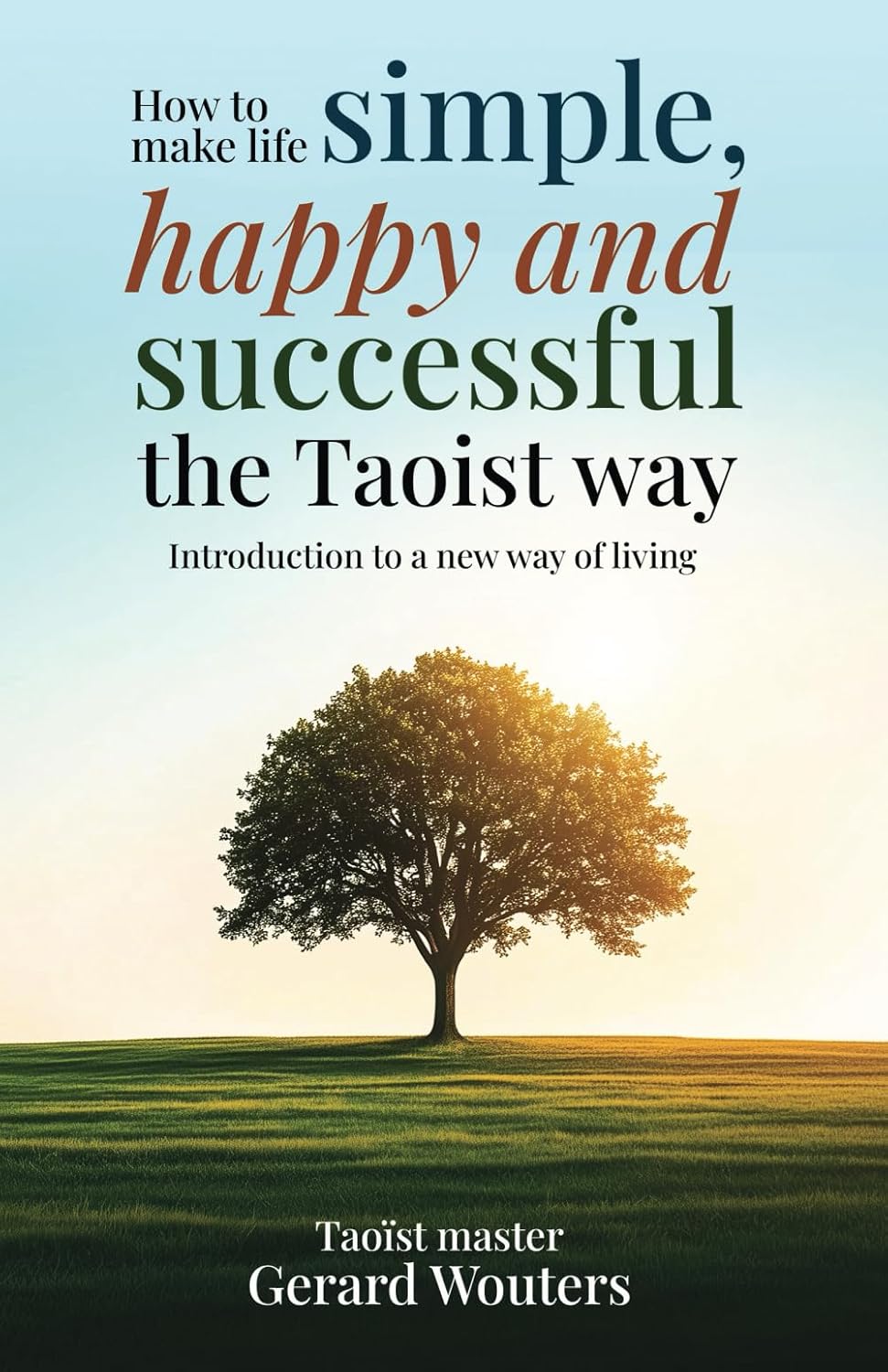
This book is part memoir, part guide, and part manifesto. The author, Gerard Wouters, tells the story of how he went from an unhappy financial manager to the only Taoist Niranam therapist in the world. Along the way, he introduces the reader to the Niranam method, a Taoist-based approach that blends physical, mental, and spiritual healing. Through stories, reflections, and bold claims, the book lays out a vision for living more simply, more happily, and with a stronger sense of purpose.
I found myself pulled in by the raw honesty of his journey. He doesn’t write like an academic or a polished self-help guru. The language is simple, direct, and sometimes almost conversational. I liked that. It made me feel as if he were speaking to me across a table, not at me from a stage. Some parts struck me as deeply moving, especially when he described how his teacher saw his unhappiness just by looking at him. Those moments felt almost magical.
I couldn’t ignore the passion running through the pages. The way he connects everyday struggles, like relationships, stress, and feeling lost, to Taoist philosophy gave me new ways of looking at things. I caught myself nodding along more often than I expected. The book sometimes drifts into criticism of society, religion, and politics. His frustration with a materialistic world came across as genuine, not just ranting.
I think this book will resonate with people who are searching for meaning beyond the usual routines. If you’re open to unconventional ideas, if you like stories more than theory, and if you’re curious about Taoism but don’t want a textbook, this could be a good fit. It isn’t for everyone. If you’re willing to let go of rigid expectations and just take in the message, there’s wisdom here that can make you pause, reflect, and maybe even shift the way you live.
Pages: 199 | ASIN : B0F44H7RSR
“Time” is Not Our Enemy
Understanding Time and Eternity takes readers on a thought-provoking and ambitious journey to explore how humans perceive, conceptualize, and live within the realms of time and eternity. What was the inspiration for the original and fascinating idea at the center of the book?
The idea to write this book came to me many years ago, seeking to understand the connection between us and “time”. I have always been concerned with how time “flows” and how it influences us. I was also interested in how time “modifies” our bodies, aging them. I wondered if there were no more eternity, would we be eternal?
My visit to Japan in 2023 catalyzed the process of writing this book and gave it its final form. Following this visit, I tried to understand “time” in a broader way, going beyond just the Western vision of time. I studied the Western and Eastern visions of the concepts of “time” and “eternity” in comparison. To my surprise, I found that they have many common elements, of course, in addition to the elements specific to each religion or philosophy.
One thing that stood out was the extent of your research and how you drew from multiple disciplines to form your theory, rather than relying solely on science or religion. Did you find anything in your research of this story that surprised you?
Yes. While doing research for this book, I was often surprised to find many common elements in both Eastern and Western religions or philosophies. I was surprised that “time” as a concern of man has been at the core of human philosophy since ancient times. Man – regardless of faith – has correlated the idea of “time” with the concept of divinity. Another “goal” that appeared almost obsessively was how man seeks to continue his own earthly existence in a certain way through “eternity.” It was also surprising for me to observe how different and sometimes opposing the Western vision is to the Eastern one regarding certain aspects of “time” or “eternity” and at the same time how close this same vision is for other views related to “time” and “eternity”.
What were some ideas that were important for you to share in this book?
Through this book, I tried to convey more of the idea.
First of all, understanding the concepts of “time” and “eternity” helps us to better integrate into society and have a broader vision of humanity. Also, understanding how these concepts influence people’s thinking and shape their religious beliefs contributes to the general progress of humanity.
“Understanding Time and Eternity” shows my own vision of “time”, namely the fact that time “exists” in the form of “timelines” that can be individual or societal, as well as my vision that time can also be in the form of “loops”, not only cyclical or linear. I also emphasized the idea that these “timelines” can “interact” with the “eternity lines” as well as my concept related to “time travel”.
However, I concluded that the emergence of a new temporal system is inevitable in the future due to the evolution of human society and the increasing influence of artificial intelligence.
What is one thing that you hope readers take away from Understanding Time and Eternity?
Through my book, I would like readers to understand that knowing ourselves and our relationship with what is around us will come to define us as individuals. When we appear in this world, we are not asked, and when we leave this world, we are also not asked for the accord. We come to this world from eternity, and after we die, we go again into eternity. From these aspects, we should start our introspection and analysis of the relationship between us and “time”.
We must understand that “time” is not our enemy and death is not the end. Regardless of our philosophy of life or our faith, temporality and eternity are intertwined, and we must each find our own “niche” that ensures our emotional stability and personal fulfillment.
I wish that my readers in the West gain a better understanding of Eastern philosophy and those in the Far East gain a clearer vision of how Westerners live their daily lives.
But are we really in a battle with time? Is it our enemy? Can’t we make it our friend during our earthly life? Regardless of whether we consider it a friend or an enemy, time leaves visible the effects of its passage through our individual lives or our collective lives as a society.
In this book, I was exclusively concerned with time in a philosophical sense, specifically with how humans perceive it and how they relate time to their philosophical conceptions and religious beliefs. I explored the relationship between temporality and eternity, and I have concluded that, although time and eternity are opposites from all points of view (in the general view), in my view—which I have presented in this book—they are not as opposites. Still, they interpenetrate and influence each other.
I have concluded that not only does the past influence our future, but the future can also influence the past.
This book is a continuation of my previous works, which explore philosophical and religious themes and complement my philosophical and theological vision regarding the reality around us and what lies beyond it.
I have analyzed the concept of time from a philosophical and theological perspective.
I examined the concepts of “time” and “eternity” from the perspective of the Abrahamic religions (Christianity, Islam, Judaism) but also from the standpoint of Eastern religions/philosophies from the Far East (Buddhism, Daoism, Hinduism, Shintoism, Confucianism, Jainism). It was essential for me to examine how humans relate to “time” and “eternity,” as well as the impact of these philosophical concepts on the lives of common people throughout the millennia.
A significant chapter was the realization of a comparative analysis between Eastern and Western thought regarding temporality and eternity.
At the end of the book, I conclude that the emergence of a new temporal system is inevitable in the future, given humanity’s evolution and the increasing influence of AI on human society.
Understanding the concepts of “time” and “eternity” helps us integrate better into society and have a broader, more inclusive vision of humanity.
I hope that the readers from the West will gain a deeper understanding of Eastern philosophy and that those from the Far East will have a clearer vision of how Westerners live their daily lives.
This book aims to decipher the “energies and philosophies” that shape a community’s behavior, whether it behaves similarly or differently from other communities. Religions and philosophies are essential for the health of communities, and the concepts of “time” and “eternity” are crucial to them Therefore, their understanding is essential for the general progress of humanity.
Understanding Time and Eternity
In Understanding Time and Eternity, Vasile Ghiuta sets out on an ambitious journey to explore how humans perceive, conceptualize, and live within the realms of time and eternity. Drawing from a vast array of sources like Western philosophy, Eastern religions, Christian theology, modern physics, and psychology, he examines how time has been viewed through history and what it might truly mean. From ancient philosophers like Aristotle to contemporary scientific ideas about spacetime, and from Buddhist cycles to Christian eschatology, Ghiuta dissects and compares how cultures, thinkers, and faiths have tried to grasp these elusive ideas. A central thread running through the book is his personal thesis that time and eternity are not opposites but intertwined states of being that bleed into each other, influencing the fabric of our lives and identities.
Ghiuta writes with passion and a sense of awe, but sometimes it felt like he was trying to fit the whole universe into one bottle. There were times I was completely drawn in, like when he described time as an illusion we all share, or the theory of temporal and eternal “loops” intersecting in our souls. I found that idea beautiful and haunting. But other parts, especially those heavy with historical summaries or theological debates, felt academic. He clearly has deep respect for every tradition he references. That said, his sincerity shined through, and I appreciated that he wasn’t afraid to say when he disagreed with figures like Plato or Nietzsche. He wasn’t just retelling what others thought, he was wrestling with it all in his own voice.
What really stuck with me was how Ghiuta returned, again and again, to the personal side of time, how it shapes us, how it defines our memories and our fears, how it quietly holds hands with eternity in everything we do. His reflections on death, legacy, and the “timeless” qualities of love and kindness felt honest and moving. It’s not every day you read a book that jumps from astrophysics to Japanese cultural concepts like “Ma,” and still tries to land on the question of what happens when we die. That wild scope was the book’s strength. It made me think hard, and I never stopped being curious about where he would go next.
I’d recommend this book to people who like big questions and don’t mind taking the scenic route through philosophy, religion, and science to get some answers, or more likely, better questions. If you’re the type who likes to read slowly, underline a lot, and sit quietly with your thoughts afterward, you’ll find something rich here. It’s for seekers, wanderers, and lovers of deep thought, Ghiuta’s book might just shift how you think about your own clock, and what lies beyond it.
Pages: 492 | ISBN : 978-1-7775695-4-9
The Objectivist’s Guide to the Galaxy: Answers to the Ultimate Questions of Life, the Universe, and Everything
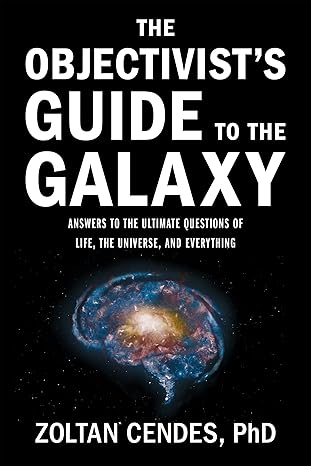
After reading The Objectivist’s Guide to the Galaxy, by Zoltan Cendes, I found myself both challenged and provoked. The book is a philosophical and scientific expedition through 42 “Ultimate Questions” about life, the universe, and the human mind. Cendes sets out to finish the job that Douglas Adams left as a joke in The Hitchhiker’s Guide to the Galaxy by giving serious answers to the deepest questions about existence. From the nature of consciousness and knowledge to the structure of space-time and the metaphysics of mathematics, the book moves briskly guided by Ayn Rand’s objectivist philosophy and modern science. It’s ambitious and unrelenting, written with the intent to convince rather than merely explore.
I found the writing incredibly confident. Cendes writes with the conviction of someone who believes they’ve genuinely cracked the code of the universe, and in some ways, that’s thrilling. There’s a sharpness and clarity to how he argues for the “primacy of existence” and the role of volitional consciousness in shaping reality. I admired how he didn’t water down big ideas. It is worth noting that at times, the tone veers somewhat toward dismissive, and the reasoning is sometimes presented with an air of finality.
Still, I enjoyed how wide the scope was. One minute you’re reading about ancient cave art and the roots of concept formation, and the next you’re knee-deep in a breakdown of quantum mechanics and AI consciousness. Some chapters had me nodding along, and even in disagreement, I appreciated the effort to bring philosophy and science into one tight framework. His take on language, consciousness, and mathematics had real weight. I liked that he stuck to his guns and built a full worldview rather than just skimming topics.
The Objectivist’s Guide to the Galaxy is best for readers who enjoy having their assumptions pushed, especially if they have a taste for philosophy and don’t mind some sharp edges. Fans of Ayn Rand will love it. Fans of Richard Dawkins or Sam Harris might find common ground, too. It left me stimulated, and I recommend it to anyone who prefers to be left still turning over bigger ideas when the reading is done.
Pages: 392 | ASIN : B0F8J74GZS
I’ve Lived It

Stoic Empathy is a sharp and heartfelt exploration of how two seemingly opposing traits, stoicism and empathy, can be merged into a potent tool for influence, resilience, and personal growth. Why was this an important book for you to write?
Because I’ve lived it. I’ve had to. I grew up in war-torn Tehran, navigating missile strikes and ideological oppression, and then started over as a refugee in Canada. Years later, I was leading high-stakes negotiations in sleek boardrooms as a corporate lawyer in America. Through it all, I found myself constantly reaching for two tools: my ability to stay calm and principled under pressure (stoicism), and my deep desire to understand and connect with others (empathy). People often see these as opposites, but in my life, they were partners—my survival tools, my leadership compass, my parenting strategy. I wrote Stoic Empathy because I wanted to offer a roadmap for others who are trying to live with power and integrity at once, in a world that often tells them they have to choose.
What were some ideas that were important for you to share in this book?
One was that self-control is not about suppression—it’s about clarity.
The other was that empathy doesn’t have to make you soft; it can actually make you sharper.
I wanted to challenge the misconception that empathy is merely emotional absorption. In truth, it can be tactical, discerning, and fierce. I also wanted to speak to people who feel deeply but don’t know what to do with that depth—especially those in leadership positions. And lastly, I needed to share the idea that influence doesn’t require dominance; it requires alignment—between who we are, what we believe, and how we show up.
Did you find anything in your research of this book that surprised you?
Yes—how many ancient philosophers were deeply attuned to what we now call emotional intelligence. I expected to pull heavily from modern psychology and neuroscience, and I did, but what surprised me was how relevant the writings of Epictetus and Marcus Aurelius felt when filtered through the lens of human connection. I also discovered fascinating neurological evidence that validated what I’d experienced instinctively as a survivor of oppression and war, but also as a lawyer and a mother—that our brains are wired to both mirror and regulate emotions, and that mastering that dance is what gives us real power.
What is one thing that you hope readers take away from Stoic Empathy?
That strength and sensitivity are not at odds. In fact, our most effective leaders, partners, and creators are often those who can feel deeply but act with discipline. If there’s one thing I hope readers take away, it’s this: You are allowed to feel everything—but you don’t have to do everything those feelings suggest. Power lies not in shutting down or giving in, but in standing calmly at the center of it all, discerning what matters, and choosing how to move forward with grace.
Author Website
Stoicism combined with empathy may sound like a contradiction in terms. But when these seemingly opposing forces are harnessed together, they have the power to change your life.
From surviving missile attacks and political oppression in Iran to leading high-stakes legal teams and negotiations in corporate America, Shermin Kruse’s journey fuels her mission to merge empathy and stoicism as tools for navigating power, justice, and human connection in every facet of life. In this eye-opening book, she offers you this radical perspective shift—anchored in up-to-the-minute research—to help you navigate life’s challenges with power and principles.
We often think of empathy as an emotional stance: we feel what someone else is feeling. But Kruse outlines a form of empathy that’s based in cognition, not emotion—a way for us to understand what the other person is thinking and feeling while keeping a distance from their feeling state—and shows us how we can strategically maneuver our level of engagement from “emotional empathy” to “cognitive empathy” in different circumstances. Then she utilizes Stoic philosophy and modern science to outline the how of emotional regulation and control. The bridge she builds between Stoicism and empathy gives us the knowledge and discipline we need to:
Calmly assess the power dynamics of any situation
Understand and manage our own emotions as well as the emotions of others
Defuse danger and turn conflict into connection
Skillfully steer a challenging conversation toward the result we want
Whether you’re a leader striving to succeed in your role with integrity, an educator seeking to guide curious minds with compassion, a parent nurturing resilience in your children, or simply facing a personal or professional crossroads, Stoic Empathy is an essential toolkit for negotiating success in every area of your life.



 LITERARY TITAN