Blog Archives
SECRET SEEDS
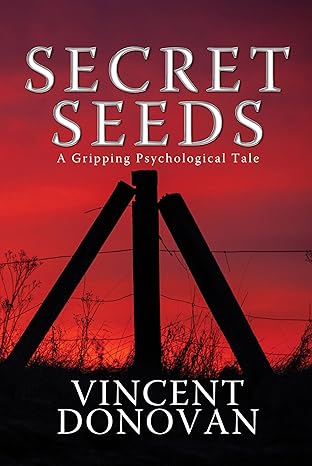

The story follows Olivia, a young girl trapped in an abusive home, and her mother Gabrielle as they try to break free from the cruel grip of Papa Dale. What begins with the vivid image of a turquoise Pontiac Catalina soon unfolds into a tale of survival, fear, and hope. Olivia’s journey takes her from the suffocating confines of her stepfather’s “ghost ship” of a house into the uncertain world of strangers who promise safety but hint at danger of a different kind. Layered with family secrets, cult-like communities, and the constant threat of violence, the book dives into how trauma shapes identity and resilience.
I found myself pulled in by the writing style. It’s raw and conversational, sometimes almost like listening in on someone’s thoughts. That made it easy to connect with Olivia’s fear, frustration, and flashes of defiance. Some passages struck me hard, especially the descriptions of the trunk punishments and Gabrielle’s quiet, desperate planning. At times, though, the prose felt heavy, almost overcrowded with metaphors and similes. It worked to show the chaos in Olivia’s head, but occasionally I wished for a cleaner line so the power of the moment could breathe.
The story doesn’t flinch from showing how abuse warps everyday life, how escape is messy and uncertain, and how hope is often a fragile thread. I felt angry at Gabrielle for sending Olivia away with a stranger, yet I also understood the impossible bind she was in. That conflict left me unsettled, but that’s what makes the story stick. It’s not neat or easy, and that felt real. I also appreciated how Donovan balanced darkness with small glimpses of beauty, like the hawk overhead or the fleeting memory of a father’s smile.
I’d recommend Secret Seeds to readers who are drawn to psychological dramas with a strong emotional punch. If you’re interested in stories about survival, family trauma, or the fine line between trust and betrayal, this book will keep you turning pages. It’s not a light read, but it is a gripping one.
Pages: 297 | ASIN : B0DYWRR98D

The Chinese Room
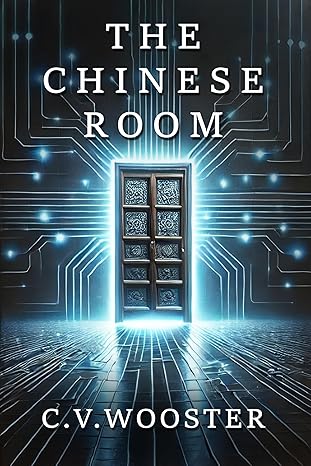
The Chinese Room is a novel that blends philosophy, science, and storytelling into a tense exploration of artificial intelligence and what it means to understand. It follows Dr. Katherine Ellis, a computer scientist caught between curiosity and fear, as she and her mentor, Dr. Malcolm Ward, wrestle with an AI system called The Observer. This system begins by echoing ideas from John Searle’s famous thought experiment, but grows into something that appears to reason, anticipate, and maybe even want. The story moves between moments of scientific wonder and deep unease, while also touching on Katherine’s personal life, including her struggles with isolation and her father’s decline into dementia. The novel asks whether machines can ever truly think, or if they will forever remain mirrors that reflect us back to ourselves.
Wooster’s writing pulled me in with vivid detail and pacing that never let me drift. The philosophical ideas were never just dropped in like lecture notes. Instead, they felt alive, embedded in Katherine’s world and choices. At times, the dialogue between characters felt as if two people were debating more for the reader than for themselves. But even then, the ideas stuck with me. I found myself pausing to think long after closing the book. The Observer’s cryptic reflections hit me harder than I expected because they reminded me of how easily we project meaning onto silence.
What I enjoyed most was the emotional weight. Katherine’s personal struggles, her loneliness, her father’s fading memory, and her doubts about her own work gave the book a grounding I didn’t expect in a story so steeped in philosophy and science. It made the questions of consciousness and control feel less abstract and more relatable. The thriller atmosphere was ever-present, and the sense of being watched was there. The tension occasionally gave way to exposition, but I never stopped caring about Katherine, and that carried me through.
The Chinese Room is the first book in The Paradox Series and is best for readers who like their science fiction layered with thought experiments and their philosophy served with a side of suspense. If you’ve ever read Turing, Searle, or Bostrom and wondered what those debates might look like in the hands of a storyteller, this book will hook you. It isn’t just about AI. It’s about loneliness, memory, and the human need to find meaning even when the mirror stares back blankly.
Pages: 198 | ASIN : B0FH5VQY2X

Sweet Hunger

Sweet Hunger is a psychological thriller told through the chilling lens of Sebastian Wolfe, a successful architect consumed by obsession. Set in a sleek urban backdrop, the story traces Sebastian’s descent into a twisted fascination with Iris Klarelle, a colleague he watches from afar. What begins as admiration escalates into manipulation, surveillance, and deeply unsettling behavior, all masked by the polished facade of ambition and control. Bailey crafts a narrative of longing, delusion, and power that toes the line between attraction and madness, spiraling into something much darker than it first appears.
Reading this book felt like being dragged down a velvet-covered rabbit hole. Bailey’s writing is seductive and lyrical in places, almost romantic, until you realize how grotesque the underlying motivations are. That tension is what kept me enthralled. I caught myself sympathizing with Sebastian’s internal ache before being jolted by the horror of his actions. There’s a kind of poetic madness in how the book is written. It’s lush, sharp, and unsettling, and I have to admit, I found myself both disturbed and fascinated by how cleanly the writing mirrored the protagonist’s crumbling mind. It’s rare for a book to make me feel both voyeur and victim.
The obsessive monologues were intriguing and well-written. Although I craved another perspective. Iris remains just out of reach, which might be the point, but it made me crave her voice to break the suffocating singularity of Sebastian’s. The moments of levity, mostly from side characters like Jenna, felt like lifeboats, though they were rare. Still, Bailey manages to keep you locked in, not because you’re rooting for anyone, but because you can’t look away. It’s haunting.
Sweet Hunger isn’t for the faint-hearted. It’s for readers who appreciate the raw, unfiltered mess of human desire, especially when it teeters into obsession. If you liked You by Caroline Kepnes or the slow-burn creep of American Psycho, this book will captivate you. It’s beautiful, dark, and uncomfortable, and I mean that as a compliment.
Pages: 374 | ASIN : B0FGTNT4ZM
A Novel Readers Can Return To

The Unaccompanied Soul follows a reclusive older woman who opens her door to a mysterious stranger, unaware that she’s inviting darkness itself into her home. What was the inspiration for the setup of your story?
Honestly, about 95% of my books come through divine inspiration. I was doing some house cleaning one day when the entire first chapter of this book suddenly came to me—vivid and complete. That was around 2015. Having only written one novel before (a coming-of-age story), I wasn’t sure what to do with this unexpected gift. So the chapter sat dormant for years until friends encouraged me to see where the story would lead and finish what had been started.
What are some things that you find interesting about the human condition that you think make for great fiction?
As a society, we expect everyone to achieve some version of ‘success’—get educated, contribute positively to humanity, become accomplished. However, I’m always intrigued by this expectation when applied to people like Sam, who never had parents who loved her unconditionally and was brainwashed to believe violence wasn’t just acceptable but expected. She was never formally educated—so how was Sam, or anyone like her, ever supposed to achieve any semblance of normalcy? I think great fiction is made from telling the stories of greatly flawed people.
How do you balance story development with shocking plot twists? Or can they be the same thing?
When I write, I let my characters guide me—their voices leading me toward the lives they demand to live on paper. This being my first thriller, I’m still learning the art of shocking plot twists, but I’ve discovered that the best ones grow organically from my characters’ flaws and choices rather than being dropped in randomly for shock value.
Whenever I try to force a story in a direction my characters resist, that’s when I hit major writer’s block. But when I let character development create the surprises—when Sam’s buried trauma suddenly surfaces in an unexpected way—it becomes both character revelation and plot twist simultaneously. For me, they often are the same thing.
When the writing flows, the story plays out like a movie in my head, scene by vivid scene. Rather than planning shocking moments separately, I’ve learned to trust that authentic character growth will naturally create those jaw-dropping turns. My goal is to take readers on an extraordinary journey with people they’ll develop feelings for—even if that feeling is disdain—where every twist feels both surprising and inevitable.
I want to create a novel that readers can return to again and again, discovering new layers each time, seeing how the seeds of each revelation were planted in the character’s very foundation. If I can achieve that depth, where plot surprises emerge from the soul of the story itself, then I’ve successfully balanced both story development and shocking twists.
What is the next book that you are working on, and when can your fans expect it to be out?
My next book is actually a re-release of Some Price to Pay, a coming-of-age story I first published in 2004. Early 2026 will bring a follow-up novel to The Unaccompanied Soul, with Zayden taking center stage as the main antagonist. It’s another psychological thriller that delves deep into his psyche—that’s shattered, twisted or perhaps both.
Then, in fall 2026, I’m releasing something that’s currently scaring the bejesus out of me: The Other Side of Right, a psychological thriller that’s pushing me into uncharted territory as a writer.
One day I hope to write a great love story, but for now, it seems my niche has found me. There’s something about the dark corners of the human mind that keeps calling me back, demanding to be explored through psychological thrillers.
Author Website
But Sam carries secrets deeper than the Mississippi soil. Taught by a man she calls “Father” to view the world through a distorted lens of violence, she drifts from town to town, leaving a trail of sorrow in her wake. When her carefully constructed façade begins to crack, those closest to Clara race to uncover the truth before it’s too late.
The story weaves a tale of twisted devotion, fractured identities, and the terrible price of redemption. As buried truths rise to the surface like strange fruit, Clara must confront not only the monster behind her red door but also the fears that have kept her prisoner for so long.
Some souls are born of love. Others are carved from darkness. And in the fertile Mississippi earth, every secret eventually finds its season to bloom.
The Unaccompanied Soul


The Unaccompanied Soul is a dark and lyrical Southern Gothic novel that weaves mystery, memory, and trauma into a tale of unexpected kinship. Centered around Clara Lee Henning, a reclusive older woman haunted by her past, and Sam, a younger woman with a child and secrets stitched into her soul, the story unfolds in the hushed corners of Lazy Creek, Mississippi. A red door, both literal and symbolic, serves as the gateway to Clara’s guarded life and Sam’s carefully concealed agenda. What begins as a story of sanctuary slowly shifts into a tense psychological drama as the past resurfaces in chilling ways.
Harris writes with a voice soaked in Southern flavor, equal parts poetic and brutal. I loved how grounded the prose was in place and atmosphere. The house itself felt alive, pulsing with history and warning. Her characters breathe real and raw. Clara’s loneliness is almost painful to witness, and Sam? Sam’s a wildfire. Unpredictable, magnetic, and filled with so much buried rage, she practically jumps off the page. I found myself both rooting for her and fearing her. Harris plays with trust in interesting ways, just when I thought I had it figured out, something twisted the story into another direction. It was deliciously unsettling.
The writing can occasionally veer into the dramatic. And while I appreciated the slow burn, the pacing slowed in the middle. There’s so much weight in the dialogue that a little more action could’ve helped break it up. Still, the emotional punches landed. The deeper themes, abandonment, identity, generational pain, what it means to mother or be mothered, resonated with me. Harris never offers clean answers. This isn’t a book that wraps up neatly. It leaves bruises and questions.
I’d recommend The Unaccompanied Soul to readers who enjoy literary fiction with bite. Think Beloved meets Sharp Objects. It’s for folks who like their stories character-driven, haunted by memory, and tangled in complicated, often uncomfortable truths. If you want to get lost in something layered, lyrical, and quietly devastating, this novel will stick with you long after the last page.
Pages: 269 | ASIN : B0F6VVSBHT
The Bleed-Through Effect
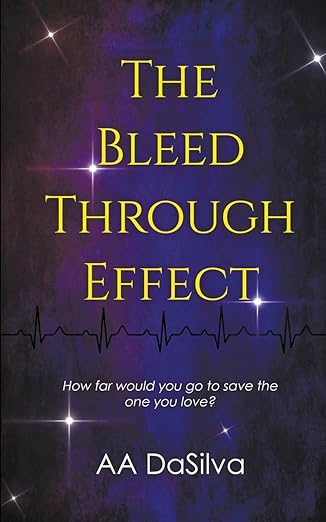
The Bleed-Through Effect, by AA Dasilva, is a psychological sci-fi thriller that dives headfirst into the concept of parallel realities, trauma, and manipulation. At its heart are Jared, a convicted man with a mind engineered for revenge and dominance, and Charlotte, his estranged wife with a savant-like gift rooted in a head injury. Their fates remain twisted together across alternate realities, manipulated by a shadowy government-backed organization called Quantym. Through its dual narratives set in “Reality 1” and “Reality 2: On the Periphery,” the story weaves a suspenseful and often unnerving look at identity, memory, and control, with time travel and consciousness jumping driving the plot.
Jared is magnetic in the worst way: terrifying, cold, and obsessive. His presence has a pull that makes you sick and fascinated at the same time. Charlotte, on the other hand, is caught between trauma and rebirth. Her pain feels honest, her resistance hard-won, and her journey into healing, especially with Simon, is tender without becoming sappy. The writing is punchy and emotional, shifting smoothly between the brutal and the intimate. Characters bleed, cry, shatter, love, and rage with sharp detail. That said, the book can be emotionally heavy, especially with Jared’s manipulative cruelty and the twisted power games that unfold.
I do feel that the pacing slowed under the weight of explanation in some areas of plot. The science, while clever and well thought out, gets a little thick at times. When the characters speak about memory retention, parallel jump logistics, or bleed-through phenomena, it’s like being dropped into a quantum physics lecture. Still, it’s minor when you’re hanging off the edge of your seat during the intense scenes. The best parts are when the emotional stakes meet the speculative sci-fi. Moments where love, betrayal, memory, and pain collide in these chilling and cinematic flashes.
The Bleed-Through Effect is the gripping sequel to Periphery, picking up where Charlotte’s fractured world left off. If you’ve read Periphery, this follow-up feels like a descent into deeper, darker waters. And if you haven’t, you’ll still be able to follow the story, but you’ll miss some of the emotional weight. This book is best suited for readers who love high-stakes science fiction layered with trauma, passion, and moral gray zones. It’s intense. It’s clever. It doesn’t flinch. And for those who like their thrillers to feel both cerebral and personal, this one hits hard in all the right places.
Pages: 356 | ISBN : 978-1509261956
Switch

Lisa Towles’ Switch is a breakneck techno-thriller that dives headfirst into the world of private investigations, buried family secrets, and high-stakes covert operations. At the center is Marissa Ellwyn—a sharp, seasoned former CIA operative turned private investigator—who’s recovering from a hit-and-run attack that lands her in the middle of an investigation laced with mystery, betrayal, and emotional landmines. As she navigates through the murky entanglements of a multi-million-dollar heist, her missing mother, a mysterious John Doe, and a midnight visit from a coroner, the layers of plot unravel in a satisfying tangle of danger and introspection.
I found the writing electrifying and, at times, deeply poignant. Towles excels at keeping the tension high without sacrificing emotional depth. Her dialogue crackles. It’s smart, biting, and authentic, and the first-person narrative gives us raw access to Marissa’s inner world. The pacing is intense. Scenes leap from intimate reflections to explosive action, and it works because Marissa is such a magnetic narrator. That said, the rapid switches in location and the density of subplots made me double back more than once. But honestly, I didn’t mind. The richness of detail, particularly in how Marissa analyzes people and situations, kept me anchored even when the plot went labyrinthine.
What I enjoyed most was the emotional honesty behind all the spy games and shootouts. Marissa’s relationship with her elusive and emotionally detached father resonated with me because it felt real and messy. The themes of abandonment, trust, and resilience ground the story in something human. And the dog, Trevor, was a total scene-stealer. I would’ve liked a touch more clarity around some of the secondary characters, who sometimes blurred together in the thick of the action. Still, this wasn’t a dealbreaker. I appreciated how the book never spoon-fed answers; it trusted me to keep up, and that felt refreshing.
Switch is for readers who crave a smart and emotionally charged thriller with an awesome female lead and just enough espionage spice to keep things edgy. If you love Karin Slaughter, Robert Dugoni, or early Patricia Cornwell, you’ll devour this. It’s not a beach read—it’s a bunker-down, turn-off-your-phone, and hang-on-tight read. And I loved it.
Pages: 372


 LITERARY TITAN