Blog Archives
Understanding of the Cosmos

Sacrificial Lambs follows an apprentice archangel, a compromised pope, and divided clergy into a final battle between prophecy, power, and moral reckoning. The premise blends theology with genetic experimentation. What drew you to framing the “Trinity’s secret recipe” as a kind of celestial code?
The Celestial Code examines the relationship between religion and scientific discoveries. It shows how scripture has been rooted early on in our understanding of the cosmos.
The novel presents faith as a battlefield rather than a sanctuary. What were you hoping to explore about religion under existential pressure?
In theory, I wanted to see how the Pope and his selected Cardinals would react if the Kingdom of Heaven really called upon them for service. I had wanted to test things like their faith and their level of commitment to violence, even if it were directed toward an evil reptilian hybrid and barbarian-looking Centaurs. With this in hindsight, I also wanted to see if they would disobey the Son of Man and the young angel Darr in their quest for revenge.
Sacrificial Lambs sits at the intersection of religious thriller, apocalyptic fantasy, and supernatural horror. How intentional was that blend?
Initially, I wanted to compose a religious thriller until I began adding things like parallel universes and mythical creatures. Still, I think most novels are written to fit into multiple genres.
Is this world one you plan to return to, or was this story meant to stand alone?
This story was meant to stand alone; I don’t see any sequels soon.
Author Links: GoodReads | Amazon
Sacrificial Lambs:
A Thrilling Mix of Genres – Perfect for fans of urban fantasy, dark fantasy, adult thrillers, biblical fiction, and apocalyptic fiction.
A High-Stakes Mystery – A chilling tale packed with psychological suspense and mythological fiction.
Heart-Pounding Action – A relentless action & adventure journey through nightmarish realms and celestial battles.
Profound Themes – A religious fantasy that explores faith, redemption, and the ultimate battle for the soul.
Short Essays for Inquiring Minds


Short Essays for Inquiring Minds is a collection of fifty-plus short pieces that grew out of Ronald Gruner’s Substack, written between late 2024 and the end of 2025. He groups them into broad themes like COVID and public health, presidential leadership, economic and foreign policy, democracy under pressure, artificial intelligence, media and culture, plus a final grab-bag of lighter topics. You move from the discovery of viruses in sick tobacco plants to the Spanish Flu and COVID, from Eisenhower’s highways and McCarthy’s witch hunts to Trump’s tariffs and shutdowns, from Iranian coups and the Berlin Airlift to AI chatbots and culture-war skirmishes at Cracker Barrel, all in compact essays meant to be read in one sitting.
Gruner writes like an engineer who turned into a storyteller, steady and calm, and he likes a clean narrative more than rhetorical fireworks. He starts with scenes, not abstractions. A teenager in Washington state quietly coding a COVID tracker on his holiday break, a five-year-old in a Mexican village who becomes “patient zero” for the Swine Flu, a Russian botanist staring at mottled tobacco leaves and discovering viruses when the filtered sap keeps killing plants. The history is detailed but not stuffy, and he breaks down technical things like virology or air-traffic control with simple explanations and little asides about coffee cups, noisy radars, or Uber’s driver app. Even when I did not care deeply about the specific policy question, the human setups pulled me along and the data and charts felt like they belonged in the story rather than being dropped in to impress me. Sometimes, the tone slips into lecturing, and you can feel the Substack cadence, that weekly “lesson,” which makes a few essays blend together, but most of the time, the clarity and the pacing keep it lively.
The author is obsessed with the tug-of-war between public health and personal liberty, and he uses everything from the Spanish Flu to George W. Bush’s forgotten pandemic plan and the COVID lockdown fights to poke at that tension. He has little patience for grifters selling miracle cures or for pundits declaring pandemics a hoax, and he is blunt about how “alternative facts” and media bubbles corrode trust. At the same time, he tries hard not to preach only to one tribe. His essays on Trump, Social Security, trade wars, and the federal deficit criticize but also explain how we got here, and his background in technology shows up in the AI chapters, which run through the history of the field and ask what happens when algorithms start shaping news and opinion. I did feel some whiplash as the book hopped from Iranian oil politics to an Uber driver’s paycheck to the inner life of a golf ball. The range is a strength, but it also means not every topic gets the depth it hints at, and readers who want a tight single argument might find the experience more like browsing an unusually thoughtful news magazine.
I found the “A Trade War over Chickens” very timely, because it takes what sounds like a quirky footnote in history and shows how it still shapes what we drive and what we pay today. The way Gruner walks through Johnson’s 25 percent “Chicken Tax” on light trucks, the VW buses full of hippies, and the slow drift toward giant pickups that now rule American roads felt almost like a magic trick, simple story at first, then the wider picture snaps into place. I thought about current tariff fights on Chinese EVs and solar panels and realized I had the same uneasy feeling. Short-term win, long-term lock-in.
I would recommend Short Essays for Inquiring Minds to readers who like current affairs, American history, and big-picture policy issues, people who do not mind some hard numbers with their stories, and who are open to having their priors nudged. If you want short, well-told pieces that try to be fair and still take a stand, this collection is a solid fit.
Pages: 380 | ASIN : B0GK37CV8C

Life and How to Live It: Near Wild Heaven

Life and How to Live It: Near Wild Heaven, by Chaz Holesworth, drops readers right into the chaos of a teenager trying to rebuild himself after being torn apart by a strict, fear-driven religious upbringing. The book moves through Chaz’s numb early days outside the born-again world, his collapsing sense of self, and the fragile moments of hope he finds in friendships, music, and small sparks of love. The story follows him as he wrestles with trauma, confusion, and the constant pull of old beliefs that shaped him. Page after page shows how he hangs on to whatever beauty he can find while walking through one emotional storm after another.
As I read, I kept feeling this knot in my stomach. The writing has a raw honesty that hits fast. Chaz explains his inner world with simple words that land hard. I could feel his panic when he talks about losing feeling in himself, and I could feel the heaviness in the way he walks for miles just to outrun his thoughts. The book does not try to sound wise or polished. Instead, it feels like sitting across from someone who is finally telling the truth about their worst moments. Sometimes the scenes moved almost too quickly, and I wanted him to stop and breathe, yet that speed felt real for a kid trying to stay ahead of his own mind.
What surprised me most was how the writing mixes dark confusion with sudden beauty. One moment, Chaz is talking about cutting himself or chanting old religious phrases to fight his fears. The next moment, he is describing a song that lights him up again. The whole story feels like that. Heavy. Quiet. Then alive for a second. I love how he talks about music. Those parts felt almost tender. It made me care even more because you can see how these songs kept him going when nothing else did. The book sometimes circles the same worries again and again. Still, that repetition feels true to what panic actually is. It does not move in straight lines. It loops, digs, and drags you back.
By the end, I walked away feeling protective of this kid he used to be. The story works because it does not offer easy answers. It simply lets you see the fight inside someone who was thrown into adulthood without a map. I would recommend Near Wild Heaven to anyone who grew up in a controlling or religious home, anyone who struggled with feeling lost as a teen, or anyone who holds music close because it saved them at least once. It carries a strange kind of hope. Holesworth’s work is a must-read for readers who appreciate honest memoirs about trauma and survival.
Pages: 219 | ASIN : B0G86SPCVD
Storm of Arranon

Storm of Arranon is a young adult science fantasy novel that follows Erynn Yager, a gifted cadet on the world of Korin who keeps seeing strange visions and crackling blue static at her fingertips. When a visiting general from the sister world Arranon arrives, Erynn discovers she has a hidden heritage, a deeper connection to Arranon, and a role in a growing war against a ruthless alien force. The story moves from flight simulators and bar nights on base, to forested mountains, sentient plant-creatures, and desperate battles in the sky and in space, as Erynn figures out who she really is and what kind of power she is willing to use.
I really liked Erynn as a main character. She is competent and prickly and brave, but she also doubts herself, resents the secrets around her, and gets scared at exactly the moments a real person would. Her powers are messy and physical: static crawling over her skin, bright colors in her vision, that sweet, spicy smell that shows up when the Anim blath are near. Those details gave her magic a grounded, sensory feel that made the “fantasy” part of the science fantasy really work for me. I also enjoyed her relationships, especially the tension between her loyalty to the family that raised her and the pull toward Arranon and Jaer. Nothing about those choices feels simple, even when the plot is in full “save the worlds” mode.
On the craft side, the book leans into its genre mix of space opera and epic fantasy. You get dogfights in Interceptors and alien warships, then you are in ancient forests with warrior orders and old prophecies. The glossary at the front hints at how much invented language and fauna you are about to meet, and there were moments where I had to pause and remember which creature or curse word was which. Still, the author usually anchors new terms in action, so I picked things up as I went. The pacing starts a bit slow while we are in classes and at Coeunn’s bar, then it keeps tightening, with battles, escapes, and moral choices stacking on top of each other. The villains are a little theatrical at times, but Birk in particular is unsettling in a way that fits the darker edges of the story.
I came away feeling like I had spent time in a full world, not just a backdrop for laser fights and magic blasts. I think the book is most interested in cost: what it means for a young woman to be told that she is the one who has to stand between her people and destruction, and what she has to give up to do it. There is romance, but it stays secondary to Erynn’s growth and the larger conflict. If you like young adult science fantasy that blends starships with ancient powers, if you enjoy following a capable but conflicted heroine through both cockpit maneuvers and mystical trials, this is a solid and engaging read.
Pages: 334 | ASIN : B00BMX8JA2
Cruise of a Lifetime: Mac in Montevideo

Cruise of a Lifetime follows Mac, a hungry and curious Macaroni Penguin who accidentally sneaks onto a cruise ship and ends up becoming the star entertainer on board. What starts as a quest for fish turns into a full-blown adventure with dancing, chaos, parades, and a surprise trip into the heart of Montevideo. Mac causes trouble everywhere he goes, but he also fixes problems, makes people smile, and somehow always lands on his feet. By the end, he is part of the crew, famous on TV, and already dreaming about the next stop on the cruise.
I honestly had a blast reading this chapter book. The writing feels playful and bouncy, almost like it is winking at you the whole time. Mac has a strong personality and a big ego, but he is never annoying. He is funny and bold and kind of ridiculous in a way kids will love. I caught myself smiling a lot, especially during the dance scenes and the parade chaos. The dialogue is snappy and easy to follow, and the jokes actually land without trying too hard.
What I enjoyed most is the heart behind the silliness. Under all the jokes and fish stealing, the story is really about finding where you belong and using what makes you weird as your strength. Mac does not change who he is to fit in. He leans into it, and the world bends a little to meet him. I also liked how Montevideo and Carnival were woven in. It felt like a fun intro to another place without turning into a lesson or slowing the story down. The occasional images that popped up throughout the book added extra charm and made the story feel even more fun and alive.
I would recommend Cruise of a Lifetime to kids who love funny animal stories, big personalities, and lots of action. It is great for read-aloud time and would be perfect for early elementary readers. Adults reading along will appreciate it too, especially if they like stories that are light, cheerful, and full of heart. A dancing penguin, a cruise ship full of chaos, and one very big heart. This book proves that being yourself can take you anywhere.
Pages: 74 | ASIN : B0G319BGWC
Daddy, Can I Be A Marine?

Daddy, Can I Be a Marine?, by Ben Olbon, offers a reflective and heartfelt look at a father’s time in the United States Marine Corps through the eyes of his children. The story follows a brother and sister as they learn about their father’s service, discovering who he was before parenthood and how those experiences shaped the man they know today. The narrative highlights how military service can remain a lasting and defining part of personal identity long after active duty ends.
The book’s greatest strength lies in its presentation of core values such as leadership, commitment, and responsibility. These themes feel authentic rather than instructional, making them accessible for young readers. Olbon’s personal connection to the story brings sincerity and quiet pride to the narrative. The children’s growing fascination with the Marines begins with simple curiosity about their father, which makes his service feel personal and inspiring rather than distant or abstract. This approach naturally invites meaningful conversations between parents and children about service, sacrifice, and family history.
The illustrations by Alana McCarthy enhance the story with warmth and emotional depth. Details like the Marine Corps uniform and earned medals visually reinforce the importance of the father’s service. Expressive characters and carefully composed scenes help children engage with both the emotions and the message of the book. The inclusion of Marine Corps facts at the end adds another layer of value, offering informative content for readers who may be curious about military life or future service.
Daddy, Can I Be a Marine? is a thoughtful and engaging book well suited for family collections and classroom use. It is especially meaningful for military families and career exploration lessons, providing a respectful and accessible way to honor service while strengthening intergenerational understanding.
Pages: 32 | ASIN : B0FN9QPDGV
In His Image
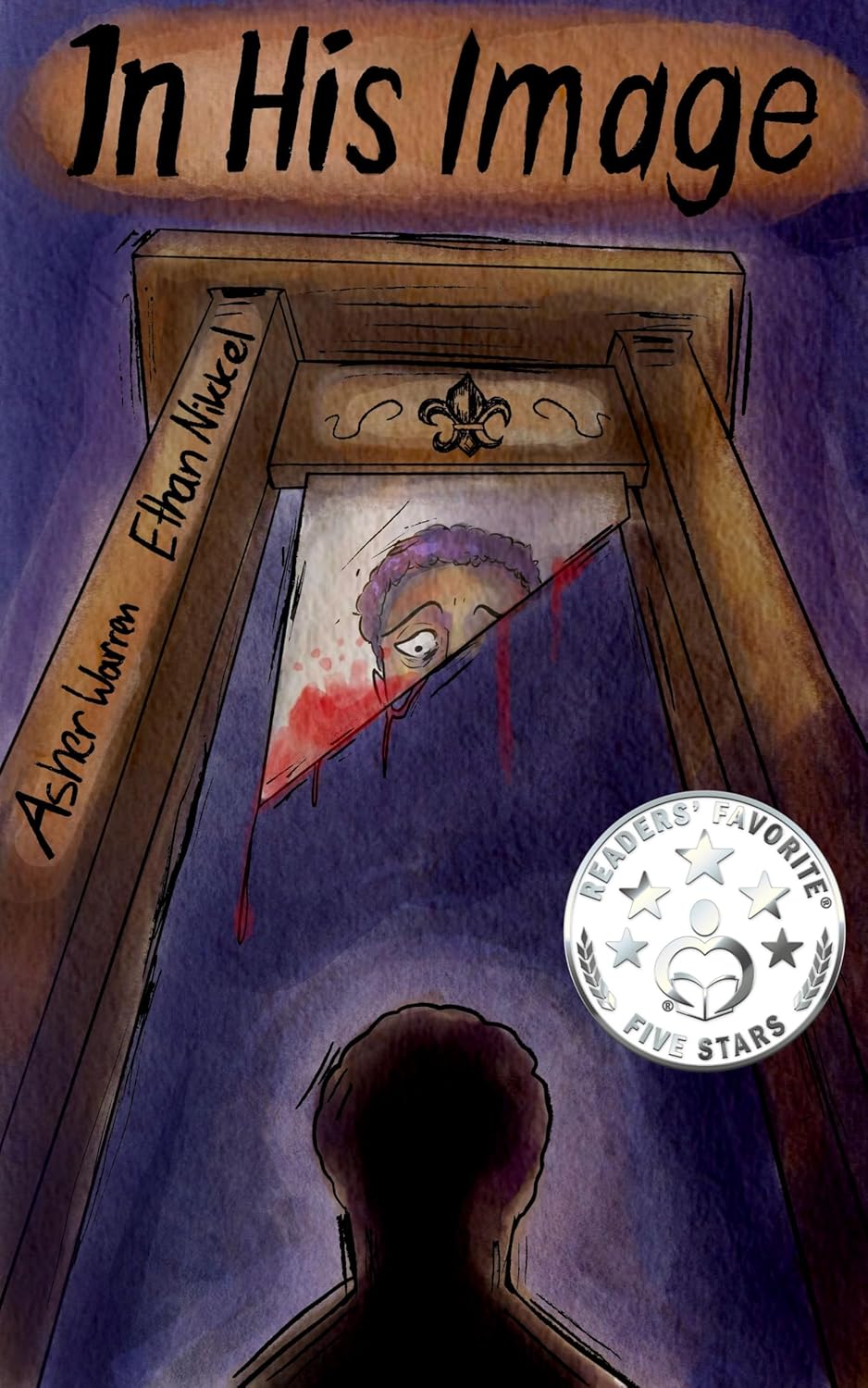
I went into In His Image expecting a dark crime novel with religious overtones; what I found was something more unnerving and intimate. The book follows Louis Fontenot, a criminal profiler in New Orleans whose obsession with understanding killers evolves into an unthinkable act of creation. As a serial murderer stalks the city, Louis crosses ethical and scientific lines, attempting to manufacture the “perfect killer” by merging DNA, memory, and will. The story unfolds as a first-person descent, part police procedural, part theological horror, where the line between investigator, creator, and monster erodes chapter by chapter.
Louis is precise, controlled, and chillingly self-aware, and that interiority makes the novel work. The prose lingers on heat, sweat, ritual, and routine, grounding the more extreme ideas in sensory realism. New Orleans isn’t just a backdrop; it breathes, rots, sings jazz, and watches. I was drawn into Louis’s rationalizations even as they curdled. The authors resist easy moral signposts, which made the experience more unsettling than a conventional thriller. I didn’t always like Louis, but I believed him, and that belief carried me forward.
The second half of the novel leans hard into body horror and existential dread, and while it occasionally risks excess, I admired the commitment. The Frankenstein epigraph is not subtle, but it’s earned. This is a book fascinated by creation without responsibility, by intelligence divorced from empathy, and by the seductive lie that understanding evil grants control over it. Some scenes made me uncomfortable, not because they were gratuitous, but because they were coldly logical. The horror here isn’t chaos; it’s intention.
In His Image will appeal most to readers of psychological horror, crime fiction, and science-fiction horror, especially those who enjoy moral ambiguity and slow-burn dread. Fans of Frankenstein or Jeff VanderMeer’s Annihilation will recognize the same obsession with creation and consequence, though this novel wears a sharper procedural edge. A cold-blooded blend of crime and creation, In His Image asks what happens when the need to understand evil becomes indistinguishable from the urge to make it.
Pages: 327 | ASIN : B0FXVV5S3X
Find The Part That Wants To Live

Teach Me How to Die follows a small group of strangers who gather in a New York rehearsal studio to attend a class on writing suicide notes and explore the situations that lead them to this point. What sparked the idea of a master class devoted to writing suicide notes?
The idea of placing everyone in obviously impossible circumstances is the basis of the novella. This artistic method is known as mystical realism, in which mystical elements are incorporated into a realistic picture of the world. A master class on writing suicide notes is impossible by definition. But everything that happens during it is incredibly realistic. The characters in the story don’t question how this is possible. At first, the reader might briefly think it’s a joke. But the characters’ behavior convinces the reader of the authenticity of what’s happening. We conducted a survey of audience members who had seen a production of the play of the same name Off-Broadway, asking whether such a master class was possible. The overwhelming majority answered affirmatively! For me, this meant the approach had worked. In many ways, this determined the desire to publish a novella “Teach Me How to Die” based on the play of the same name.
Each character is identified by an archetype rather than a name. What did that choice allow you to explore?
Not so much an archetype, which, as we know, provides a collective image. Rather, we analyze temperament types and personality traits characteristic of a particular profession or occupation. All people are different, but certain types have their own behavioral, responsive, and thought patterns. By replacing their first name with a nickname, the members of this temporary group presented themselves as they saw fit. Thus, some identified with their occupation—Violinist, Accountant, Poet. Others identified through self-esteem, for example, Loser. A participant whose purpose in life was to get even with those who had offended him called himself a Hunter. And someone prone to “philosophizing”—a Philosopher. In him, both his profession and a unique way of perceiving the world merged.
The idea of suicide can occur to almost anyone at some difficult moment in their life. We exclude individuals with mental illness or those under the influence of acute traumatic circumstances or psychoactive substances. Suicide is essentially a destructive way to resolve an intrapersonal conflict. Throughout the narrative, we see how individual personality traits shape reactions to external factors, leading to hopelessness, disillusionment with life, and, consequently, a desire to leave it all behind… The encounter of a certain personality type with an obstacle to satisfying their most important needs leads to a suicidal decision. To help others, firstly, suspect the presence of such thoughts in their loved ones, and secondly, provide all possible assistance in understanding the situation, thereby offering a chance to prevent a tragic outcome. The novella presents various personality types in crisis. Suicidal tendencies are transient and ambivalent, a fact well known to psychologists.
This means that the decision can be influenced. You just need to find the key to that part of the personality “that wants to live,” while blocking the one “that wants to die.” It’s difficult, but possible. And it’s always worth trying, because the stakes are too high – a human life.
Suicide is handled with seriousness but without sensationalism. What boundaries did you set for yourself while writing?
In the foreword, I explain that the novella “Teach Me How to Die” is based on real events from my life. It so happened that one of my classmates was going through a difficult period of finding and accepting his gender identity, facing rejection from his family. He regularly called me late at night and shared his plans – his desire to end his life. At first, this frightened me very much, but then I realized that these were just “lingering” thoughts spoken aloud, and I started distracting him with stories about methods of suicide and the content of suicide notes. I gleaned this information from a book I accidentally bought at a street market, written by a pathologist; I think it was called “101 Ways to Take Your Own Life.” It also included examples of suicide notes with thier analysis. Quite soon, I realized that this spontaneously developed form of communication was exactly what he was ready to accept at that moment. Fortunately, the part of his personality “that wanted to live” prevailed: he is alive, healthy, successful, and quite happy with his life.
At the very beginning of that story, I considered the conversation on such a sensitive topic to be a boundary I shouldn’t cross. Then my boundaries of what was permissible expanded, convincing me that any red line can be crossed if it helps save someone’s life. When writing the novella, I took into account the opinions of people who had such negative experiences in their families. Both for the would-be suicides themselves and their family members, despite the “sensitivity” of the topic, there is a clear understanding of the need to talk about suicide as a preventive measure.
If a reader struggling with dark thoughts picks up this book, what do you hope it offers them in that moment?
The main message of the novella is: “Share your dark thoughts, don’t keep them to yourself! You will be heard!” And a call to those around people whose world has narrowed today to the obsessive thought of ending their lives: “Don’t pass by, find the ‘right’ words, work together to find any way out of the impasse, even the most unusual and phantasmagorical ones will do!”
Author Links: GoodReads | Facebook | Instagram | Website
The collection of nine short stories addresses the issues of gender identity, finding one’s place within society, problems of empathy for loved ones, and overall, how to stay on the side of Good in the age of “inverted” values. A look into the future allows us to believe in the possibility of preserving such human values as love, mercy, kindness, mutual assistance, self-realization, and personal and professional development from a historical perspective.


