Blog Archives
East to West Across Russia: The Long Journey Home


East to West Across Russia follows a man who chases a childhood dream across the entire span of Russia. He flies to Vladivostok and then rides the Trans Siberian Railway all the way to Moscow. Along the way, he wanders through fog-soaked hills, quiet cities, lonely platforms, and the deep interior of his own memory. The story blends real travel with imagined scenes that reveal his heartbreak, his longing, and his hunger for meaning. Russia’s forests, rivers, and rail stations move past his window like an old film reel, and he uses every mile to reach inward as much as he reaches westward.
The writing swings between poetic and raw, sometimes in the space of a single page. I liked that about it. The style is big on feeling and big on atmosphere. I caught myself smiling at the simple little moments, like the chaos of breakfast or the clinking of tea glasses on the train. Other times I felt a tug in my chest when he drifted into memories of lost love or those spiraling thoughts that come when the world is quiet and a person finally has to face himself. The prose has a kind of earnest honesty that feels almost old-fashioned, and it hit me harder than I expected.
There were moments, though, when the intensity of the reflection felt a bit heavy. Every small detail seems to carry emotional weight, and every encounter becomes a doorway into deeper meaning. Part of me admired that dedication. Still, the narrator’s sincerity kept me grounded. I found myself rooting for him even when he veered into melancholy. His curiosity about Russia, about its people and history and vastness, felt real. His tenderness toward strangers, even brief ones like Alexei on the plane, made the journey feel warm and human.
By the time I reached the final pages, I felt the quiet satisfaction that comes after finishing a long trip and finally setting your bags down. I walked away thinking this book fits readers who love travel stories that linger in the soul rather than just list places on a map. It will speak to anyone who enjoys reflective writing, who has ever chased a dream across a border, or who has ever tried to heal by moving forward one small step at a time. If you want a journey that is both physical and emotional and are willing to sit with someone else’s heart for a while, this book is a good companion.
Pages: 200 | ASIN : B0DDMVJ55B

The Unwritten Rule
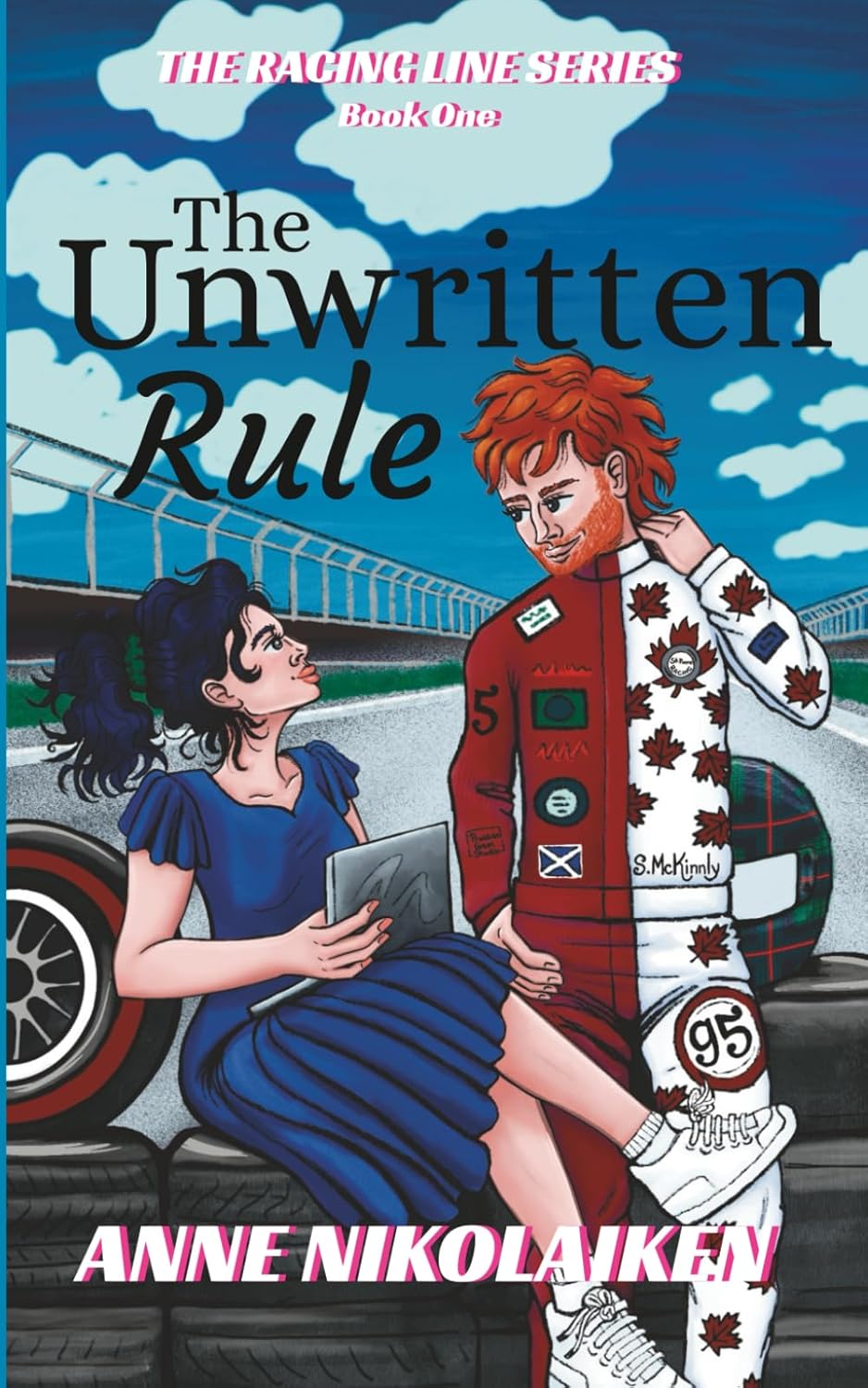
The Unwritten Rule follows Sydney McKinnly, a world-famous driver trying to rebuild his career after a messy breakup, and Heather Everett-Fortier, a biographer who wants to chase her dream of writing romance. They crash back into each other’s lives after a holiday fling. What begins as a simple work agreement turns into a slow burn filled with heat, tension, and all the trouble that comes from pretending feelings can stay boxed up. The book blends a jet-setting racing world with the quiet hopes of two people who keep trying to guard their hearts. And it builds toward a love story that hits hard in all the soft places.
I found myself caught off guard by how warm the writing feels. The tone is bright. The emotions creep up. The dialogue snaps with charm. I liked how the chapters alternate between Heather and Sydney. The voices feel distinct and real. Heather’s mix of self-doubt and stubborn hope made me root for her right away. Sydney’s grief and grit pull the story in deeper. I kept thinking about how both of them try so hard to convince themselves they don’t want more. The way those walls fall apart is sweet and a little messy. I liked that. The snowy getaway scenes hooked me fast. The racing-world details give it an extra spark without dragging the story down.
Some moments made me grin. Some made me ache a bit. I enjoyed how the author lets the characters run into their own fears. The book doesn’t rush their growth. The chemistry builds at a slow simmer. Then it hits like a punch of heat when they let go. The writing style kept me turning pages. It’s clean, warm, and playful. At times, I wished a few emotional beats lingered longer, but the pace fits the story’s high-energy world. I also loved how Heather’s dream of writing romance mirrors the romance she is stumbling into. It adds a sweet echo to every chapter.
The Unwritten Rule is a great pick for readers who want a sports romance with heart, tension, and a steamy payoff. Fans of character-driven love stories will enjoy watching Heather and Sydney trip over their own rules and fall anyway. If you like a mix of emotional healing, travel, and slow-building chemistry, The Unwritten Rule is worth picking up.
Pages: 442 | ISBN : 1069402214
Emotions Getting Louder

The Northern Light Within is a tender, winter-lit guide that blends science, story, and simple practices into a compassionate roadmap for moving through life’s hardest seasons. Why was this an important book for you to write?
I wrote The Northern Light Within because winter has always brought up a lot for me personally. When the days grew shorter and colder, I noticed my own emotions getting louder — old anxieties, self-doubt, and a sense of heaviness that was harder to shake off.
Over the last 15 years of coaching, I saw the same thing in my clients. Winter, and “winter-like” phases in life, seemed to amplify whatever people were already carrying. The season stripped away distractions and made vulnerability more visible.
This book felt important because I wanted to offer something gentle, honest, and practical for those times. A companion for people who feel like they’re walking through their own inner winter — blending science, story, and simple practices that have genuinely helped me and the people I’ve worked with. In many ways, it’s the book I wish I had during some of my hardest seasons.
How did you decide which rituals and reflections belonged in the book?
The filter was very simple:
Does this actually help someone when they’re struggling?
If a practice didn’t pass that test, it didn’t make it into the book.
The rituals and reflections are drawn directly from my own journey and from years of working with clients. Some came from moments when I personally needed support — breathwork during anxious phases, grounding practices when my mind was racing, small daily reflections that helped me find perspective in the middle of overwhelm.
Others are tools I’ve seen work repeatedly in sessions: simple, doable steps that helped people feel calmer, clearer, or more emotionally steady during difficult seasons.
Nothing is there because it sounds nice on paper. Everything in the book has been lived, tested, and has made a real difference in someone’s life — mine or my clients’.
How did you balance scientific grounding with personal storytelling without letting one overshadow the other?
For me, the two naturally belong together.
I’ve always believed that ancient practices and modern science are speaking the same language — just with different vocabularies. In my coaching, I blend both because people today want reassurance from neuroscience, but they also want to feel understood as human beings, not just as “brains on legs.”
Over time, that blend evolved into what I call Medit-Action: a way of working where meditation, awareness, and spiritual tools are always anchored in small, practical actions and supported by what we know from research.
So in the book, the science offers clarity — why winter affects mood, how the nervous system responds to stress, what breathwork and grounding actually do in the body.
The stories — my own, and those inspired by client journeys — show how all of that plays out in real life. They give the reader something to relate to, so it doesn’t feel abstract or clinical.
I didn’t want the book to be purely academic or purely emotional. I wanted it to feel like someone sitting beside you saying, “Here’s what we know, here’s what I’ve lived, and here’s what you can try right now.”
That’s the heart of Medit-Action, and that’s how the balance found its way onto the page.
What do you hope readers feel or carry with them in the days and weeks after they finish the book?
I hope they walk away with a softer, steadier relationship with themselves.
Not a perfect life, not constant positivity — just a little more calm in their body, a little more clarity in their mind, and a sense that they’re not “broken” for finding certain seasons harder than others.
If a reader can come out of the book feeling more equipped to handle their own winters — with a few practices they actually use, a new way of understanding their emotions, and a quiet belief that their inner light is still there even on the heavy days — then the book has done what I hoped it would do.
More than anything, I want them to remember:
your hardest season doesn’t erase your light.
Sometimes, it’s the very thing that helps you see it more clearly.
Author Links: Amazon | GoodReads
When life grows cold and the light feels distant, this book becomes a gentle beacon back to yourself.
In this beautifully written and practical guide, Ashish Singh, award-winning life and wellness coach and founder of The Calm Mind, shows how even the darkest seasons can become fertile ground for growth, calm, and quiet joy.
Drawing on mindfulness, psychology, and timeless wisdom from cultures that thrive in long winters from Nordic Stillness to eastern philosophy, he introduces “The Winter Loop,” seven guiding lenses that nurture acceptance, openness, nourishment, breath, gratitude, and kindness. These simple yet powerful mindfulness practices help you rediscover steadiness and warmth from within — even amid winter blues.
Blending poetic reflection with science-backed insights, Ashish reminds us that peace and happiness cannot be postponed until spring. They begin here, in this breath, in this very season of your life. His voice is both wise and deeply human, offering gentle rituals that meet you where you are and guide you toward light, clarity, and renewal.
For anyone feeling stuck, weary, or searching for meaning, this is more than a self-help book. It is a soulful companion, one that helps you bloom in winter and shine in every season that follows.
Your light is waiting — it’s time to find it, bloom in winter, and shine in every season.
Sacred Celebrations: Designing Rituals to Navigate Life’s Milestone Transitions


Sacred Celebrations is a warm and soulful guide to marking life’s transitions with intention and love. Elizabeth Barbour weaves stories from her own life with practical teachings about rituals, ceremonies, and the ways we gather around beginnings and endings. The book moves through birth, marriage, loss, illness, and the everyday moments that often slip by. It shows how rituals can help us slow down, breathe, and feel anchored in a world that moves too fast. Her stories are tender and sometimes raw, and they shine a light on the human need for connection during joyful and difficult times.
Barbour’s writing carries an honesty that caught me off guard, and I kept pausing just to sit with her words. The scene where she describes her mother’s final days was emotional. I felt the weight of that love and conflict. I also laughed at simpler moments, like the chaos of celebrations that go sideways or the small joys tucked into everyday rituals. Her style is comforting. It’s like listening to a friend who has lived a lot and is willing to tell the truth about how messy life can be. I appreciated how she took rituals out of the realm of “big spiritual practices” and grounded them in regular life. This made the whole idea feel doable for anyone.
What struck me most was how gentle her guidance felt. She never pushes. She invites. The book nudged me to look at my own transitions, even the quiet ones I usually gloss over, and I found myself thinking about the moments I rushed through without honoring how they shaped me. Some parts made me emotional because they stirred up memories I didn’t expect to revisit. Other parts lit me up with curiosity. I kept thinking about how simple actions, like a walk to a creek or lighting a candle, can shift the way we move through the world. The book feels both practical and mystical in a way that surprised me. I kept underlining sentences and dog-ear pages.
I would recommend Sacred Celebrations to people who crave meaning in their routines, anyone moving through a major transition, and those who want to deepen their emotional or spiritual life without anything too complicated. It’s also a lovely fit for caregivers, coaches, therapists, ministers, or anyone who holds space for others. The book feels like a soft place to land, and it left me wanting to create more intentional moments in my own life.
Pages: 252 | ISBN : 0972468692
Dead and Buried: The Last Kitsune Book 2

Dead and Buried picks up with Tai trying to hold her life together while everything supernatural around her spins out of control. The book follows her attempts to manage her unstable kitsune magic, the chaos caused by her two-tailed nekomata Magoo, a strange psychic attack, a dream that might not be a dream, and the frightening discovery that her supposedly dead father, Viktor, may still have a grip on the world of the living. As Tai and her friends confront new dangers, including zombie-like creatures, restless spirits, and a growing conspiracy tied to the Key of Wealth, the story widens into a mystery that reaches from woods to clubs to interdimensional threats. It all builds into a story about identity, legacy, and the messy courage needed to face old shadows.
What struck me right away was how alive the writing felt. The opening scene with undead mice skittering across the floor pulled me in with a laugh and a grimace at the same time. Tai’s voice is sharp and funny, but it carries this constant undercurrent of vulnerability that made me root for her before I even realized it. The book throws wild supernatural moments around like confetti, and yet the emotions always land. I kept feeling this push-and-pull between humor and fear. One moment I was laughing at Magoo acting like a furry little menace and the next I felt a knot in my stomach when Tai described her dreams about Sunreaver or the shock of hearing Viktor whisper that things were not over. The mix worked for me. It felt raw and very human, even when things got weird.
I also loved how the story handled relationships. Ash brings warmth into scenes that would otherwise feel too heavy, and Xunie’s mysterious and chaotic energy adds a spark that made me grin every time she appeared. The club scenes with Nico cracked me up, especially when the supposedly impossible ghost activity starts up again. At the same time, the book digs into Tai’s trauma in a way that is emotionally resonant. Her guilt about Sunreaver, her fear that she might not be in control of herself, and her anger at being treated like a fragile resource instead of a person. I felt those things right alongside her, and the writing did not sugarcoat any of it. It made the fun moments brighter and the frightening ones sharper. If anything, the emotional whiplash made the story feel more real to me.
By the time I closed the book, I felt like I had been on a wild ride through magic, danger, grief, and a whole lot of found family chaos. I enjoyed that messy thrill. I enjoyed the heart in it even more. If you like supernatural stories that mix humor with fear, action with real emotional weight, or if you simply enjoy following a character who stubbornly keeps getting back up no matter what is thrown at her, then this book is absolutely worth your time. Fans of urban fantasy, paranormal mystery, or character-driven supernatural drama will have a blast with Tai and her world.
Pages: 339 | ASIN : B0FBJ89ZZV
The Athlete Whisperer: An Improbable Voice in Sports

Andrea Kirby’s The Athlete Whisperer is a vivid and unfiltered memoir that pulls back the curtain on what it means to be a woman breaking barriers in sports broadcasting. From her early days as one of the first female sportscasters in the 1970s to her later years coaching athletes and media talent, Kirby tells her story with grit, humor, and honesty. The book weaves through decades of change in television and sports, balancing personal struggle with professional triumph. It’s not just about a career, it’s about identity, perseverance, and the raw nerve it takes to keep moving when no one wants you there.
What I liked most about Kirby’s writing is how straightforward it feels. She doesn’t write like someone trying to impress you. She writes like someone who’s lived through hell, laughed about it, and decided to share the punchlines. Her voice is confident, yet not polished to perfection, which makes it genuine. The stories are fast-moving, full of sharp details, and often tinged with pain that sneaks up on you between the victories. I felt her frustration when men dismissed her, her thrill when she nailed a broadcast, and her heartache when life hit harder than any newsroom drama.
At times, I found myself pausing not because the writing was heavy, but because it was relatable. Kirby doesn’t whitewash the sexism, the exhaustion, or the loneliness. She’s not asking for pity, though. She’s showing how resilience can look messy and stubborn and still be beautiful. The people she met, famous names from ESPN, ABC Sports, and the field, come alive through her lens, but it’s her own story that lingers. There’s a rough-edged warmth in the way she talks about the athletes she coached and the young broadcasters she helped find their footing. I could almost hear her voice, no-nonsense, but kind.
By the end, I felt like I’d sat across from someone who’d lived several lives in one. The Athlete Whisperer isn’t just for sports fans. It’s for anyone who’s ever felt underestimated or out of place but went ahead and did the thing anyway. If you like memoirs that feel like conversation, that mix heart with humor and truth with tenderness, this one’s worth your time.
Pages: 256 | ASIN : B0F3BK5ZX9
The Magic of Imperfection
The Magic of Imperfection surprised me with how quickly it got to the heart of its message. Author Jason McLennan argues that most great work reaches a sweet spot long before perfection. He calls this the ¾ baked moment, the point where an idea is clear enough to stand yet rough enough to grow. He shows how this mindset speeds up creativity, opens the door to real innovation, and breaks the grip of fear and overthinking. Using stories from architecture, mentorship, cooking, leadership, and even childhood, he makes the case that embracing imperfection helps people make more progress, take smarter risks, and actually enjoy their work.
Reading this book, I found myself nodding, smiling, and sometimes groaning because the truth hit a little too close. McLennan’s tone is warm and grounded, and he mixes personal stories with quick lessons that feel almost like friendly nudges. I liked how he ties big ideas to everyday moments, like pulling cookies out of the oven before they look done or watching asparagus cook just a little too long. These simple images stuck with me more than some productivity books stuffed with charts or buzzwords. Sometimes the message was repeated, but I didn’t really mind because each angle gave it a fresh spark.
I especially loved the honesty around failure. His stories about projects that collapsed, ideas that bombed, and designs that broke apart mid-demonstration made the book feel relatable. And his point about people who cling too tightly to perfection really landed with me. I’ve watched talented friends freeze themselves in place, and I’ve done it too. The way he talks about letting the universe finish what you start made me laugh at myself a little. The writing isn’t fancy. It’s straightforward and warm. Sometimes it feels like someone thinking out loud. I liked that looseness because it matched the whole philosophy.
Anyone who feels stuck, overwhelmed, or afraid to put their work out into the world would get a lot from The Magic of Imperfection. It’s great for creatives, leaders, students, and anyone who carries too much pressure on their back. If you enjoy books that teach through stories instead of strict rules, this one will fit you well.
Pages: 192 | ASIN : B0FGPLMPKG
The Courage Gap

The Courage Gap lays out a simple but stirring idea. Fear opens a space between what we think about doing and what we actually do. Courage closes it. Margie Warrell walks through five steps that help readers shift their focus, rewrite the stories they tell themselves, regulate fear, step into discomfort, and learn from the moments when everything falls apart. She threads research, personal stories, and vivid examples like Navy SEAL missions and childhood hardships. All of it points toward one lesson. Braver action begins long before the action itself. It begins inside.
I was pulled by the book’s tone, which is warm and direct. It feels like she is sitting with you over coffee, nudging you to look a little deeper. Her stories about her mother, her moves across continents, her husband’s early COVID hospitalization, and her own shaky steps into new roles resonated with me. I liked that she did not hide her fear. She showed it. The writing made the ideas easier to trust.
Her ideas landed with me in a way that surprised me. The pieces about how the brain fixates on danger, how fear makes us shrink, and how easy it is to rationalize our hesitation stuck with me long after I put the book down. I kept thinking about times when I stayed quiet or stayed small because it felt easier. The book stirred a mix of embarrassment, hope, and a kind of restless energy to try again. I especially liked her point that courage is not the absence of fear but the choice to act while fear tags along. It felt doable. It made the book more than an inspirational talk and closer to a companion for moments when you want to run the other way.
By the time I reached the end, I felt a quiet push to step toward the things I usually avoid. I would recommend The Courage Gap to anyone who feels stuck, scared, or tired of circling the same problem. It suits new leaders, seasoned leaders, parents, people in transition, and anyone craving a nudge toward a fuller life. It offers a way to grow into the person you keep imagining when you let yourself dream beyond your fear.
Pages: 168 | ASIN : B0D36WXKHZ


 LITERARY TITAN