The Making of a Warrior of Light is part memoir, part motivational guide, and challenges readers to turn survival into strength through discipline, truth, and relentless self-reinvention. Was there a particular moment when you realized your experiences could help others?
I first realized my story could help others when I was in college at Alverno. Until that point, I carried a lot of shame about my childhood and almost never spoke about it. My focus was simple: survive it, bury it, and move forward.
Then I read A Child Called “It.”
While reading that book, something shifted inside me. For the first time, I saw how a painful story, when told honestly, could become a source of strength for someone else. Instead of something to hide, it could become something that helps others feel seen and understood.
At the same time, I was confronting the beliefs I had carried about myself for years. Growing up, I had internalized the message that I was dumb and worthless. Simply believing that I could succeed in college felt like a radical act of defiance against the past I came from.
In that moment, I made a quiet but powerful decision: my past would not determine my future. And I promised myself that when I made it to the other side, I would share my story so others could see what was possible. If I could overcome those beliefs and rebuild my life, then maybe someone else reading my story would begin to believe they could too.
That promise eventually became The Making of a Warrior of Light.
You describe how survival behaviors can look like personality. Can you explain that idea?
Most people don’t realize how much of their personality is actually built around survival. When we grow up in environments where we feel unsafe, unseen, or unsupported, the mind adapts quickly. It creates strategies to protect us, and over time, those strategies can start to look like personality traits.
Hyper-independence can look like strength. Perfectionism can look like ambition. Emotional distance can look like confidence. But often those patterns began as ways to stay safe.
One of the biggest survival patterns in my own life was overworking. From the time I was fifteen, I was working two to three jobs while going to school. That pattern continued through college and into adulthood. Even after I started my own business, I was working seventy-hour weeks while also being a full-time caregiver for my son and pursuing multiple degrees and certifications.
For a long time, I framed that as a positive identity. I told myself I was a “growth goddess,” someone who loved learning, building, and achieving. But underneath that drive was a deeper belief I hadn’t yet questioned: if I wasn’t producing, learning, or accomplishing something, I didn’t feel valuable.
What looked like ambition was actually survival.
Recognizing that was a turning point for me. When we start to see the difference between who we truly are and the version of ourselves we built just to get through hard circumstances, we can begin to release the patterns that keep us exhausted and disconnected from our worth.
Because the truth is, our value was never meant to be measured by how much we produce.
Worth is not something we earn through survival. It’s something we remember when we finally stop trying to prove we deserve to exist.
What does “Beast Mode” mean in the context of personal growth, and how can readers apply that mindset to their own challenges?
In the context of personal growth, “Beast Mode” means making a non-negotiable decision that you are done living the old way. It’s the moment when you stop negotiating with your limitations and commit to doing whatever it takes to transform your situation.
A lot of personal development advice focuses on gentle, daily practices, and those are incredibly valuable. A few minutes of meditation or a short coherence practice each day can create powerful shifts over time. But there are moments in life when things are collapsing all at once—your finances, your health, your emotional stability, your sense of direction. In those moments, transformation often requires a different level of commitment.
Beast Mode is when you decide that your breakthrough is the priority.
For example, creating heart-brain coherence through practices like breathwork or HeartMath can absolutely be done with a few minutes a day. But when I’ve gone through intense seasons of my life, Beast Mode meant something much more devoted. It meant practicing coherence every hour for several days, or committing to that level of discipline for weeks if necessary. It means regulating my nervous system, aligning my thoughts, and staying spiritually anchored again and again until the internal shift became undeniable.
Anyone can wait for life to improve. Beast Mode is when you become the person who decides it will. It requires devotion–a willingness to show up for your transformation with extraordinary focus until the old pattern breaks.
Because ultimately, a breakthrough doesn’t belong to the most talented people. It belongs to the ones who become relentless about their own evolution.
What advice would you give someone who feels stuck in survival mode?
The first thing I would tell someone who feels stuck in survival mode is this: start by regulating your nervous system. When your body is constantly operating in stress, fear, or overwhelm, it becomes almost impossible to see clearly or make empowered decisions. Practices that bring your body back into coherence—breathwork, stillness, movement, prayer, or meditation—create the internal safety required for real change.
But regulation alone isn’t enough. You also have to become devoted to aligning with your highest timeline.
What that means in practical terms is that you begin disrupting anything in your life that dishonors who you are becoming. Sometimes that’s a habit. Sometimes it’s an addictive coping pattern. Sometimes it’s the way you treat your own body through food or self-neglect. And sometimes it’s the dynamics within your relationships.
Growth often requires a reordering of your life. I’m not saying people need to abandon their families or cut everyone off. But many people do need to establish stronger boundaries around their time, their energy, and the environments they allow themselves to stay in. Survival mode thrives in chaos, depletion, and misalignment. When you begin protecting your energy and choosing environments that support your expansion, everything starts to shift.
Moving out of survival mode is rarely a single decision. It’s a series of courageous choices that gradually reshape your life.
Because ultimately, the life you’re meant to live can’t fully emerge until you stop making space for the patterns that keep you small.
#1 International Bestseller Unleash Your Inner Warrior: A Journey of Resilience and Hope
Discover the transformative power of resilience and hope in “The Making of a Warrior of Light” by Theresa Rubi Garcia. This gripping memoir delves into the heart-wrenching struggles and triumphant victories that have molded Theresa into a beacon of strength and inspiration. If you’ve ever felt overwhelmed by adversity or sought a beacon of light in your darkest moments, this book is your guide to finding that inner strength and forging a path to a brighter future.
As you read, you will find: A Journey of Courage: Traverse the raw and unfiltered path of Theresa’s life, from the shadows of abuse and prejudice to the radiant light of hope and empowerment.
Empowering Narratives: Discover the power of resilience through Theresa’s heartfelt stories that encourage you to find your own inner strength.
Universal Inspiration: Whether you face personal challenges or systemic obstacles, this memoir offers universal lessons on overcoming adversity and achieving personal transformation.
A Beacon of Hope: Theresa’s story serves as a guiding light, demonstrating how love, inner strength, and unwavering determination can lead to a brighter future.
A Call to Action: This book is more than a memoir; it’s a motivational call to rise, confront your struggles head-on, and emerge stronger and more empowered.
Heartfelt Connection: Feel a deep sense of solidarity and support as Theresa’s journey resonates with your own experiences, fostering a sense of community and shared purpose.
Join Theresa Garcia in “The Making of a Warrior of Light” and be inspired by the story of a woman who turned her darkest moments into a luminous future. Let her journey guide you to uncover your inner warrior and rise above life’s challenges. Embrace your own journey with the good, bad, and ugly, and find the strength to close the cycles that hold you back.
Mother’s Ruin is a brutally honest and heartbreaking memoir that shares with readers your tumultuous childhood and early adulthood life as you coped with the effects of your mother’s alcoholism and emotional instability. Why was this an important book for you to write?
Definitely for my own healing and for that of those facing similar circumstances. My mother’s addiction and untimely passing have long since overshadowed me, and I needed to share my story to achieve full emotional freedom from this.
Despite what the stigma may have you believe, addiction is a trauma-response and never a choice. Nobody wakes up one morning and decides to pick up a bottle of alcohol or similar, and this was something that I was desperate to convey through my writing.
How did you decide what to include and leave out in your memoir?
This was something that I struggled with: the fine line between oversharing and undersharing. I wanted my writing to be rich and emotive, but to also not read like a personal diary, and I hope that I have achieved this.
I do believe that having already outlined my second memoir at the time also helped in choosing what to include (alongside endless rounds of editing, of course!).
What was the most challenging part of writing your memoir, and what was the most rewarding?
The flashbacks and the fear of being perceived were equally challenging. Long-suppressed memories were suddenly boiling to the surface, and not only did I have to address and write about these, but I also had to learn to do so in a safe, controlled and healthy manner, without reverting to previous toxic coping mechanisms.
Though my mum may not have been my protector, I have spent my life believing that I should be hers. With this in mind, I was worried that people would believe that I was villainising her in some way, when this could not be further from the truth.
That said, Mum may well have been poorly, but this is no justification for her actions, and I am tired of living a life enshrouded in secrets and lies to protect a collective.
The most rewarding aspect has definitely been the feedback that I have received. Though it pains me to know how many people can relate to my story, I am also proud of and thankful for those who have reached out to me whilst on their own healing journeys.
What do you hope is one thing readers take away from your story?
That healing from trauma may be painful, messy, and never linear, but it is always possible.
Raw, hard-hitting, but, ultimately, a true memoir of survival.
Raised fatherless on a ’90s poverty-stricken council estate, in the East Midlands, Belle details the struggles faced as she shared the role of young carer with her older brother, and the difficult transitional period as their relationship changed from brother and sister to child and caregiver, following court-approved legal guardianship.
MOTHER’S RUIN is an honest account of the devastating long-term impact of a mother’s addiction, dangerous actions and untimely death, just before her daughter’s eleventh birthday.
Belle Mills’ Mother’s Ruin is a brutally honest and heartbreaking memoir that follows the author’s tumultuous childhood and early adulthood as she copes with the effects of her mother’s alcoholism and emotional instability. Written in raw and intimate prose, the book is both a confession and a cry for connection. It tracks Belle’s experiences growing up in a working-class British town, surrounded by love yet starved of the nurturing and stability she craved. Her account weaves together personal memories, therapy sessions, and vivid reflections on trauma, mental illness, and the weight of abandonment, all told through the lens of someone fighting to make sense of her own pain.
Reading this book shook me. It left me feeling like I’d sat beside Belle through each moment, watching her as a child search for her mother’s approval, as a teenager drowning under the pressure of school and self-worth, and later as a young woman walking the tightrope between survival and collapse. The writing is emotionally dense but easy to follow. Belle doesn’t use fancy words to impress; she tells it like it is. And that’s where the strength lies. Her vulnerability is disarming. I found myself rooting for her, crying with her, and getting angry on her behalf. The structure bounces between timelines at times, but it only makes her struggle feel more lived-in. You feel how trauma isn’t linear. It loops and claws and resurfaces when you least expect it.
What struck me most was how well Belle captures the duality of love and pain, especially the love for a parent who keeps letting you down. The parts about her mother are some of the hardest to read because they’re not one-note. Belle doesn’t just paint her as a villain. She mourns the person her mother used to be and the one she might have been. It’s complicated and messy, and that makes it feel so real. I also appreciated how much Belle lets us into her head. The way she describes dissociation, panic attacks, and suicidal ideation is visceral and chilling. She doesn’t shy away from the darkness. But there’s also beauty in her resilience. Her relationship with her brother, her dogs, and even with strangers who show her small kindnesses, all of it reminds you that survival isn’t always dramatic. Sometimes it’s just continuing.
Mother’s Ruin is for anyone who’s grown up with a parent who couldn’t parent. For anyone who’s carried too much, too young. For survivors of trauma who don’t have tidy endings but still keep going. I wouldn’t recommend this book to someone looking for light reading or an uplifting memoir. But if you want to read something brave, human, and painfully relatable, then this one is worth every page.
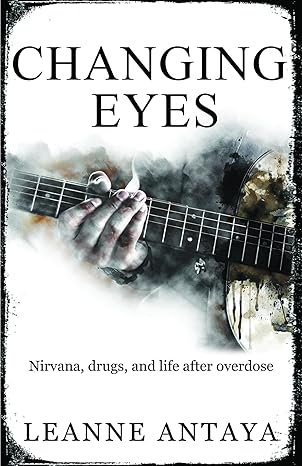
Changing Eyes is a raw and wrenching memoir written by Leanne Antaya about her family’s harrowing battle with addiction, particularly her son Trey’s descent into drug use and the long, painful road to his recovery. Spanning decades, the book moves from Leanne’s early romance and marriage to Marco, through raising four children, to navigating the chaos of addiction, near-death experiences, strained relationships, and personal trauma. Told through Leanne’s eyes as a mother, it’s an honest account of love, loss, resilience, and the aching hope that somehow, amid all the wreckage, healing is possible.
This book tore me up and stitched me back together, sometimes in the same chapter. Antaya’s writing isn’t polished in a literary sense, but that’s what makes it work. It’s messy, emotional, and real. She doesn’t whitewash the shame, the guilt, or the unbearable powerlessness that addiction brings into a family. Her style jumps between memories and moments with a kind of breathless honesty, as if she’s spilling it all out before she loses her nerve. There were parts where I had to pause and sit with it, where her pain leapt off the page and made me feel like I was in that hospital room or standing at that phone, dreading the worst.
The book is more like a collection of moments and memories than a tightly woven narrative. But maybe that’s the point. Addiction isn’t tidy. Grief doesn’t follow a three-act structure. What stands out most to me is Leanne’s sheer determination to hold her family together. Her voice carries this sharp mix of exhaustion and fire that made me root for her, even when things kept falling apart. And Trey’s story is both heartbreaking and infuriating, but Antaya never lets you forget that he’s human, even when he’s at his lowest.
I’d recommend Changing Eyes to anyone who wants to understand what addiction does to families, not in theory, but in the day-to-day heartbreak. This is for the parents who are living in quiet fear, for the friends who don’t know what to say, and for anyone who thinks addiction is just a personal failing. It’s not a light read, and it doesn’t offer easy answers. But it’s full of gut-level truth, and in the end, it clings to hope.
The Twelve Steps: A Modern Hero’s Journey reframes the well-known path of addiction recovery using Joseph Campbell’s hero’s journey as a guide and drawing from storytelling, Jungian psychology, and classic spiritual traditions, to map each of the Twelve Steps onto an archetypal journey from despair to renewal. What was the inspiration for the original and fascinating idea at the center of the book?
Early in my recovery, around three years of sobriety, I read Joseph Campbell’s seminal work, The Hero With A Thousand Faces. I felt like I was having a spiritual experience with each page I read. It dawned on me that what I was reading was the journey not only of the hero throughout cultures and time, but it was also the direct experience I was having working the Twelve Step program of recovery. I was on my own hero’s journey, as were all the people in the rooms I was “trudging the road of happy destiny” with. It was an exhilarating experience, and I was alive as never before. I set about writing, researching, and organizing my thoughts and insights, and it took many years (twenty-five to be exact), but after many drafts and rewrites, this book, The Twelve Steps, a Modern Hero’s Journey, finally came alive.
What were some ideas that were important for you to share in this book?
The whole pattern of transformation–from the broad strokes of Separation, Initiation, and Return, to the details included in each of these categories. For example, early on in the Separation stage, the hero always gets a mentor–think of Luke Skywalker meeting Obi-wan Kenobi (Ben), and eventually, Yoda. These figures mentor and teach Luke, and often save him from his reckless immaturity. The same is true in recovery. During the first and second Steps, the person new in recovery also gets a mentor–called a sponsor–who has the experience the newcomer doesn’t have–but needs to survive the journey.
In addition, during this initial stage, the hero also develops friendships with companions who add their own talents and experience to the hero, and who have traveled the road before him and so can lend their experience, strength, and hope. Think of Dorothy in The Wizard of Oz and the scarecrow, the Tin Man, and the cowardly lion. Together, these companions travel the journey together and support one another as each of them grows. The same is true, of course, in recovery, as newcomers and old-timers alike surround themselves with the fellowship of the program, and together, they can do together what neither one of them could do alone.
There are many, many examples throughout each stage of the journey, and throughout each Step of the recovery journey. Each one is fascinating, enlightening, and ultimately, life-changing.
What was the most challenging part of writing your book, and what was the most rewarding?
The most challenging part of writing this book was finding the right way to incorporate all the wonderful stories of myth that give the hero’s journey its context within the history of mankind. The challenge was to find a way to include this material without it diluting the main thesis: the comparison of the hero’s journey and the journey of recovery. I finally resolved this by including this valuable material in the appendix. This allows me to tell the main story and highlight the duality of the two journeys, yet it also gives the reader access to these wonderful and enjoyable stories.
The most rewarding part of writing this book has been the initial reception and comments from advanced readers, reviewers, and websites like Literary Titan. Perhaps the biggest acknowledgment the book has received so far is from Kirkus Reviews. Kirkus thought so highly of the book, that they automatically entered it into their very exclusive “Kirkus Prize” literary contest…Kirkus only chooses 10% of the books they review annually for this prestigious award, they automatically nominated The Twelve Steps, A Modern Hero’s Journey for this award. See the full Kirkus review here: https://www.kirkusreviews.com/book-reviews/anonymous3/the-twelve-steps/ And read about the Kirkus Prize here: https://www.kirkusreviews.com/prize/
What is one thing that you hope readers take away from The Twelve Steps: A Modern Hero’s Journey?
The depth of meaning and overall importance the journey of recovery contains. My hope is that everyone who is either in a Twelve Step recovery program, or who knows someone who is, reads this book and comes to a new understanding of not only the work required to attain sobriety or abstinence, but also the importance of why someone goes through this. I hope they learn what the true significance of someone having a spiritual experience is, and what it means not only to the person taking the journey, but for society and the world as a whole.
In this inventive and profound exploration of the Twelve Steps and Twelve Traditions, an old-timer of the program reveals the recovery journey for what it truly is: a modern retelling of the classic hero’s journey of transformation that frees spiritual energy trapped by addiction, pouring it back into the world, thus healing both the individual and the society. The Twelve Step journey of recovery is, at its core, the modern retelling of the age-old archetype of the Hero’s Journey. This powerful pattern of transformation is revealed in three stages: separation, initiation, and return. These stages perfectly describe the journey of recovery as well, and when further broken down into their individual steps—such as answering the call, getting a mentor, and, most important of all, having that mentor introduce the hero to a Power greater than himself—the true meaning and purpose of the recovery journey comes alive. The Twelve Steps: A Modern Hero’s Journey deepens and inspires all those on their own journey of recovery, regardless of the type of program they are in. The treasures awaiting those bold enough to venture into the adventure will heal not only themselves, but all of humanity as well. Classic tales from mythology, such as The Odyssey and the adventure of Hercules, as well as modern stories from popular literature and film, such as Luke Skywalker’s in the Star Wars series and Harry Potter’s journey through Hogwarts, plus many more, illuminate the Twelve Step journey, and offer a deeper and more reverent understanding of this sacred pattern of transformation. The Twelve Steps: A Modern Hero’s Journey entertains, informs, and delights readers with a profound new understanding of the journey they are on, a journey countless of heroes before him or her have taken since the beginning of time.
Severed Sacredness is your memoir sharing the story of your daughter’s long, grueling journey of survival and recovery and the power that hope and faith played during this challenging time. Why was this an important book for you to write?
Because of a promise. The depth of pain and the massive amounts of story and miracle were being held inside of me. A wide sweep of online research left me unable to find anyone with a story like hers with the depth of injury that she had suffered in hopes to show recovery was possible with quality of life. I had promised God if our daughter recovered with any kind of quality of life I would write the story for the ONE person who was searching for HOPE and couldn’t find it. I kept my promise and wrote her story. What I discovered while I was writing was also important. I had a great amount of unprocessed grief due to being in the throes of full-time caring and intensive rehabilitation I never had the time to grieve all the loss that comes with a devastating trauma. As I wrote the book I grieved as if it was happening all over again. After writing the full manuscript I came to the realization that I had emptied all of my story and grief onto the pages of the book which was so freeing. The spaces that once held the grief and stories were now empty and the story was now safe and preserved. It was such a gift to find friendship with my grief and to no longer hide it or ignore it. I have found a beautiful balance of all that we have endured and survived which has now prepared me to step into another unexpected role of public speaking to share hope and faith with many of the stories and tools I have gained through this life journey.
I appreciated the candid nature with which you told your story. What was the hardest thing for you to write about?
Placing myself back into the moments of such devastation and having to feel the horrific pain of seeing Jessie injured so critically with such gross disfigurement of her beautiful head and the remembering of all that she lost in that one moment of impact. Reliving all those moments of when her life hung in the balance and having to navigate her care with such intentional focus over and over again. Seeing the normalcy of lives go on when hers was literally cut off at the root but she still lived with such agonizing injuries with no easy answers or quick fixes. LONG JOURNEY OF RECOVERY.
What were some ideas that were important for you to share in this book?
To never never give up hope. To stay in the moment when in crisis. To take the next right step. To know that God will send help. That you are never alone. With God ALL THINGS are possible. To show how to navigate healthcare in ways that can advocate for your beloved one.
What do you hope is one thing readers take away from your story?
That no matter how devastating and hopeless life looks and feels, there is hope. There is always hope.
When fifteen-year-old Jessie Boone collided with an aspen tree 700 hundred miles away from home, no one was sure she would survive or what quality of life she would have if she did. A massive traumatic brain injury devastated her brain and body, and brought her parents to their knees in shock and grief. The only certainty was their faith in their Creator who, unbeknownst to them, had already placed the right people on the ski slopes, in the hospitals, and in the community that wrapped their arms and resources around this wounded child and family.
Severed Sacredness is the raw account of a mother’s journey through forty days of terror and anguish in acute crisis, eighteen months of grueling rehabilitation from a mute spastic quadriplegic state, and thirteen years of slow reclamations of capacities, life-threatening regressions, and cycles of grief and grace.
Even in the darkest forests, we are not alone.
If your beloved’s life hangs in the balance, or you are a friend looking for ways to support someone facing the unimaginable, this book is a medicine of hope for anguished souls, a map for chaotic minds navigating the healthcare system, and a field guide for finding or creating sacred moments of provision and presence in the midst of the severed and suffering.
A shoot will come up from the stump of Jesse; from his roots, a Branch will bear fruit. Isaiah 11:1
In Surviving the Stroke, you share your journey to recovery following a hemorrhagic stroke as well as actionable advice for those coping with the daily challenges of rehabilitation. Why was this an important book for you to share?
There is a saying ‘knowledge is power.’ While I was in the ICU for that first week and the rehabilitation hospital for three weeks, there was a lot of knowledge passed on, however, most of that knowledge was not about predicting the future as it related to recovery and rehabilitation. While I’m sure the information was available, but at the time I thought it would have been nice to have some of that information. After the rehab hospital, I was in outpatient therapy for 10 months. I met other stroke victims during that time and it was there that I decided to write the book because we all had shared experiences and agreed that there was not a good supply of resources to prepare us for the day-to-day future in being prepared for, and what to expect during recovery, rehabilitation, and later.
I appreciated the candid nature with which you told your story. What was the hardest thing for you to write about?
This is a good question and in hindsight, I think the hardest part was probably in the beginning when I discussed the actual stroke experience and my conversation with God. I think that was because in the moment of the stroke occurring, there was uncertainty of what was happening and if I was dying, or what was happening, therefore I think that was probably the most difficult.
What is one misconception you believe many people may have about recovering from a stroke?
During interactions with other stroke victims at outpatient therapy, we discussed this subject and there are some misconceptions relating to the severity of a stroke. The term mini-stroke is used a lot and I think when people hear the word, stroke, they automatically associate it with mini-strokes and celebrities like Hailey Bieber who appeared to be fine afterward and returned to their activities. Although, there are other celebrities like Randy Travis who have severe strokes, paralysis, and other challenges, and they fade away from the public eye.
In outpatient therapy, there was a woman in her first week and she was similar to me in the severity of the stroke. Her employer called her twice in the previous week asking when she was returning to work, which was upsetting to her and demonstrated to us a lack of empathy, a lack of understanding, and the reality of what a stroke really is.
What is one thing you hope readers take away from your experience?
There is a section in the book “I Quit,” that discusses quitting and dying. My hope is that when a stroke happens, it is not the end of the world. A positive attitude coupled with occasional humor can overcome life’s challenges. Do not give up, do not quit, and embrace the challenge ahead.
A personal account of the stroke experience and the recovery and rehabilitation process. A guide for stroke victims, family and caregivers on what to expect immediately following a stroke, and during the recovery and rehabilitation process. Filled with valuable must know information that will provide a guide to what to expect and plan for.
Improbable and Extraordinary is a raw, heart-wrenching memoir that navigates the turbulent waters of Saul Horwitz’s life, shaped by mental illness, family dynamics, and personal transformation. Co-written with his sister Erika, the book delves into Saul’s struggles with bipolar disorder and his journey toward recovery, offering an unflinching portrayal of his darkest moments and the flickering hope that guided him toward light. Spanning decades of emotional highs and lows, this story is as much about healing as it is about understanding and resilience.
What struck me first was the brutal honesty with which Saul recounts his experiences. The opening chapter vividly describes recurring suicidal ideations, setting the tone for a narrative steeped in pain but striving for clarity. Saul’s vivid descriptions, like his withdrawal from baseball—a childhood obsession abandoned mid-game due to a crushing wave of apathy—were especially poignant. These moments highlight how mental illness can abruptly hijack even the most joyful or driven endeavors, turning triumphs into fleeting mirages. As someone who has often heard sanitized versions of similar struggles, this unapologetic candor felt like a brave and necessary invitation to empathize with a reality many shy away from acknowledging.
The book is also deeply reflective. Saul doesn’t shy away from dissecting his childhood trauma, including his father’s harsh disciplinary methods and the emotional aftermath of his parents’ divorce. Yet, he resists the temptation to solely blame others for his plight. For instance, while he shares heart-wrenching accounts of being beaten and emotionally neglected, he also acknowledges the genetic and biochemical facets of bipolar disorder. I found this balance refreshing; it allowed the book to transcend the realm of grievance and step into the space of accountability and growth. His revelation about the impact of his mood swings on his loved ones, particularly his children, was both heartbreaking and enlightening.
One of the most impactful sections is the exploration of Saul’s recovery process, notably his involvement in 12-step programs and group therapy. The “Miracles That Saved Me” chapter is a standout for me. These reflections are laced with humility and wisdom, showcasing how Saul transformed his pain into tools for survival and, eventually, service to others. It reminded me that recovery is not a straight road but a winding path dotted with small, often imperceptible victories.
Improbable and Extraordinary is a stirring account of survival and self-discovery. Saul’s journey reminds us of the resilience of the human spirit, even when confronted with unimaginable odds. This book will resonate with those battling mental illness, their loved ones, and anyone seeking inspiration from real-life transformations.