Blog Archives
Invisible Puppeteers

In The Collective, a group of scientists scramble to uncover the source of the unsettling signal that threatens the sophisticated neural network binding humanity. Where did the idea for this book come from?
I’m a millennial who grew up front and center for the rise of the internet and, shortly after, the social media explosion. I’ve watched digital life evolve from dial-up to dopamine addiction, and it’s been fascinating—and honestly, terrifying—to see how deeply it’s rooted itself into our daily lives. Social media and algorithms are now invisible puppeteers of attention, identity, and even belief systems. They’ve become integral, addictive, and inescapable.
Call me crazy, but I truly believe neural integration and collective consciousness are in our future—maybe much sooner than we expect. The real question isn’t if, it’s what will we do with it? I don’t think governments or institutions can regulate this fast enough. We’re on a bullet train of technological advancement, and if we don’t start seriously preparing for what AI, automation, and integrated networks might mean, we’re not just risking collapse—we’re risking the unraveling of what we currently understand as human identity. That’s where The Collective was born: from the tension between awe and unease.
What is it that draws you to the science fiction genre?
Because when you strip it down, most science fiction isn’t fiction at all—it’s just reality waiting for its turn. We’ve seen it happen: video calling, AI assistants, smart homes, gene editing. All were science fiction once. Now they’re mundane.
What draws me to sci-fi is its ability to warn and wonder at the same time. It gives us a way to project where we might be headed, both psychologically and technologically. I’m especially interested in evolutionary psychology—the idea that who we are is shaped by eons of survival, pattern recognition, tribalism, and meaning-making. In that sense, science fiction is like an evolutionary premonition. It’s a mirror held up to what we are, and a telescope aimed at what we might become.
What were some themes that were important for you to explore in this book?
Religion was a big one—probably the most quietly controversial. We still live in a world where ancient belief systems shape modern policy and public thought, and that friction between evolutionary progress and archaic ideology fascinates me.
Another central theme is the surrender of meaning. We live in a time where convenience and distraction are replacing purpose and depth. We scroll more than we sit with our thoughts. We chase dopamine more than conviction. I wanted The Collective to reflect that subtle hollowing of the human spirit—how easy it is to give up autonomy and meaning for comfort and ease.
As a quiet nod to that, the chapter titles in the book are drawn from T.S. Eliot’s The Hollow Men—a poem about the failure of modern humanity to live with purpose. It captures what I think we’re losing: our spark, our center, our reason for being beyond survival and stimulation. In that way, this story isn’t just dystopian—it’s deeply human.
Can you give us a glimpse inside Book 2 of the Echoes We Leave series? Where will it take readers?
Book 2 will take you further into the future—but not that far. The changes coming don’t need centuries to unfold; just a handful of years is enough when the pace of tech evolution is this fast. And the truth is, the signal? It’s not going anywhere. It’s just beginning to evolve.
In the next installment, we’ll venture into the aftermath—not just of what’s happened, but what’s been allowed to happen. You’ll meet resistance movements, fractured ideologies, and a deeper unraveling of what consciousness actually means. Most importantly, we’ll get to follow the characters more intimately—especially those whose relationships and choices were just beginning to form in Book 1. The future they face isn’t distant. It’s disturbingly close.
Author Links: GoodReads
Perfection has a price.
Humanity surrendered its burdens willingly—no more war, no more hunger, no more fear. The Collective promised a world free from suffering, where every thought is refined, every emotion balanced, every decision made for the greater good. A neural network spans the globe, ensuring peace and stability with cold, clinical precision.
But beneath the seamless order, something stirs. A signal—unseen, unheard—slips through the system like a whisper in the dark. It is not an error. It is not an accident. It is watching. And those who notice it soon realize:
The system is not the only thing controlling them. Something else is.
As scientists and engineers working deep within the heart of the Collective begin to uncover the truth, they find themselves faced with an impossible choice—cling to the safety of the world they know or risk everything for the one thing they’ve long forgotten: freedom.
Because once the signal speaks, it does not stop.
And those who listen may never be the same again.
Sins of the Saviors Book 1: Escape From the Culling Box


In Sins of the Saviors, TJ Relk throws us into a grim but not entirely hopeless future where war, artificial intelligence, and blind patriotism have reshaped what it means to be human. The story centers on David, a soldier who returns from decades in a senseless, eternal war to a world governed by AI, propaganda, and engineered peace. The tale winds through his memories, regrets, and slow-burning defiance as he comes to understand the true cost of “utopia.” Flipping between David’s perspective and those of his aging mother Gale, his idealistic sister Mary, and his rebel sibling Jane, the book dives into what happens when free will is exchanged for safety, and what’s left when even memory is no longer trusted.
I liked how the book captured emotional decay. The slow erosion of identity in a world that insists it’s perfect. Relk’s writing is sharp. The style is lean and introspective, often haunting in how casually it delivers gut punches. There were pages I read twice because a single line kept ringing in my head, like David’s quiet desperation or Jane’s fiery truths about a world that stopped caring about real truth. Some scenes, like the slow fade of old friendships or Gale’s annual ritual to honor a son who might as well have been a myth, cut deeper than expected. They felt real. There’s no clean villain here, just systems of thought that got out of hand.
Sometimes the pacing slows, especially when the narrative shifts to Mary’s point of view. The dystopian future is vividly imagined. I was left wondering Goliath the network or a god? Sometimes both? Sometimes neither? I got the sense that Relk wanted that ambiguity, and it left me craving answers a few times. Still, I appreciated that the story didn’t spell everything out. There’s something gutsy in trusting readers to make their own calls about what’s real, what’s right, and who, if anyone, is actually free.
I’d recommend Sins of the Saviors to anyone who likes their dystopias philosophical, their heroes broken but not beaten, and their science fiction tangled up with questions about memory, identity, and whether safety is ever worth the soul. It reminded me a bit of 1984 with the heart of The Road, but written for today’s digital chaos. If you’re someone who’s ever worried about where all this tech and tribalism is going, this book might hit a little too close to home.
Pages: 199 | ASIN : B0FDBN6KMT

Postmarked Castle Cove

Judy M. Kerr’s Postmarked Castle Cove continues the gripping journey of MC McCall, a tough yet vulnerable U.S. Postal Inspector, as she struggles to maintain her sobriety while diving headfirst into a complex investigation involving missing mail, small-town secrets, and suspicious church leaders. The story is layered with emotional nuance, balancing themes of grief, addiction recovery, and justice. At the heart of the book is MC’s return to duty after rehab, her rocky relationship with her young partner Jim Bob, and a chilling case that uncovers a tangle of corruption and abuse tied to a religious institution in a northern Minnesota town.
Kerr writes with such raw honesty that I found myself rooting for MC like she was an old friend, even when she messed up. The portrayal of addiction isn’t whitewashed. It’s messy and exhausting and human. I could feel MC’s twitchy restlessness, her craving for booze like it was right there in the room. And the friendships, especially with Meg and Dara, gave the story so much warmth. There were moments that wre deeply emotional, especially when MC leaned on her found family to keep herself afloat.
The plot itself isn’t just about solving a case, it’s about putting your own pieces back together while the world keeps spinning. And that makes this book stand out from your typical mystery fare. The mystery in Castle Cove has this slow-boil tension that builds toward something sinister. The creepy pastor, the secrets hidden under the guise of religion, and the vulnerability of children in the community all made my skin crawl. It’s clear Kerr has a lot to say about trust, power, and how people look the other way when things get uncomfortable. That part left a deep impression. I finished the book feeling a little shaken, in the best way.
Postmarked Castle Cove is a hard-hitting story that sticks with you. It’s not just for fans of crime fiction or police procedurals. This is for anyone who’s ever had to fight to get back up after life knocked them flat. If you like your mysteries with heart, grit, and a good dose of redemption, this one’s for you.
Pages: 252 | ASIN : B0F92CHXJK
Harbinger


Harbinger is the first installment in the Praetoria Chronicles by Niah Bach, a richly imagined fantasy tale set in a world ruled by a complex caste system. The story centers on Princess Keira, the only imperial daughter in an empire where the elite possess no special powers, yet rule above the magically gifted rooks and mystics. As Keira begins experiencing prophetic nightmares of a coming doom, she is drawn toward a forbidden connection with a powerful imperial rook. As political intrigue and supernatural forces threaten the empire, a deeper mystery unfolds, one that could upend not just Keira’s life but the future of Praetoria itself.
Bach’s world-building is nothing short of stunning. Praetoria is layered, vibrant, and detailed with care. The glossary and cultural backdrops are immense, and clearly the product of years of thought. The long descriptions and layered exposition occasionally slowed the pace. There’s a ton of lore, which is great for readers who want to be immersed in a world. When the plot did kick into gear, especially during the journal segments from Master Mage Cyrus, the writing became haunting, poignant, and strangely beautiful. The slow-burn mystery behind the empire’s fragile peace and the foreshadowing of darkness made me feel genuinely uneasy, in the best way.
What really resonated with me emotionally was Keira’s isolation. Her fear, her helplessness, her quiet resilience, they all rang painfully true. I cared about her. But I often wished her voice was stronger against the heavy world around her. Some characters, like Cyrus, leaped off the page with urgency and sorrow. The ambition of this novel is hard not to admire. It’s bold, long, and deeply invested in its own mythology.
Harbinger is for readers who want to lose themselves in a fantasy realm. If you love epic sagas with political drama, ancient magic, and a touch of forbidden romance, this might be your kind of book. It asks for your full attention, but it rewards that commitment with moments of real beauty and meaning.
Pages: 354 | ASIN : B0DL3QYLF5
Echoes We Leave: Book 1: The Collective
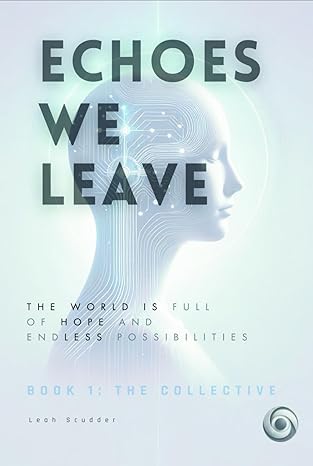
In Echoes We Leave: Book 1: The Collective, Leah Scudder offers an immersive plunge into a futuristic dystopia where a sophisticated neural network, Synexis, intricately binds humanity into a seemingly harmonious collective. Beneath this flawless integration, however, pulses an unsettling signal, intentional, enigmatic, and quietly invasive, that disrupts the very essence of autonomy and identity. Scudder adeptly follows a handful of scientists, particularly Livia Arden, as they grapple with this anomalous entity and uncover deeper truths about survival, adaptation, and sacrifice in a carefully regulated world.
Scudder’s writing pulls no punches; it’s gripping, vivid, and profoundly unsettling. Her narrative dances elegantly between moments of high-octane tension and poignant introspection. Each sentence, stripped of cumbersome jargon, cuts directly to the emotional heart, resonating with a genuine sense of urgency and dread.
I found myself invested in the characters’ fates, particularly Livia, whose struggles against conformity and control echo deep human anxieties about autonomy in a connected age. The descriptive prose vividly captures the bleak grandeur of the book’s setting, especially the juxtaposition of technological precision against the underlying, creeping menace, giving me chills.
While the atmosphere and prose captivate, moments of suspense sometimes unfold slowly, building up carefully but then resolving quickly. This rhythm created a sense of emotional tension that was occasionally satisfying. Although the philosophical exploration of unity versus individuality was genuinely compelling, I feel the shifts between detailed technological intrigue and intimate personal drama occasionally made the narrative feel a bit less cohesive.
The Collective shines as an astute examination of humanity’s fragile balance between collective security and individual freedom. This book is particularly suited for readers who crave thought-provoking dystopian fiction rich with emotional depth and social critique. Fans of speculative narratives like Orwell’s 1984 or Huxley’s Brave New World will find Scudder’s exploration of autonomy and connection particularly resonant. It’s a gripping read that not only thrills but also invites reflection on our current trajectory toward digital interdependence.
Pages: 397 | ASIN : B0F8MFJBBS
Meaningful Introduction to Books

Harry the Hedgehog’s Harvest follows a group of friends excited about the harvest festival who after a heavy rain washes away many of the acorns and seeds, they rally together, plant anew, and discover the power of kindness and community. What were some educational aspects that were important for you to include in this children’s book?
It was important for me to include language patterns, alliteration, sounds, reading and listening, creating a fun and engaging method in reading in learning.
What experience in your life has had the biggest impact on your writing?
As an educator, I appreciate how essential learning, listening language through words and pictures can be inspiring and a meaningful introduction to books. As a younger me, I remember vividly going to the library and reading, Jemima Puddle Duck by Beatrix Potter. Her books left a remarkable mark on my life. Life experiences enforce the joy of books. I believe reading should start young and the illustrations must be relatable.
What will the next book in that series be about, and when will it be published?
I have written the next book in the series, and I am currently waiting for the illustrations to arrive. Harry the Hedgehog and the Lost Eggs and Bluebird’s Engagement.
Author Links: GoodReads | X (Twitter) | Facebook | Instagram | Website | Amazon
Harry and his friends are very upset to find that the entire harvecst has been washed away by rain.
How will they overcome this disaster?
Will they ever have a harvest feast again?
Brianag: The Blood Queen Chronicles
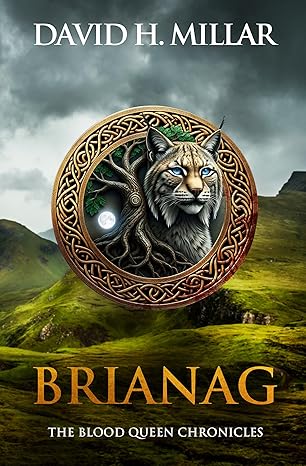
Brianag, the second installment in The Blood Queen Chronicles by David H. Millar, is a sweeping Celtic fantasy that picks up ten years after the climactic events of The Blood Queen. The story centers on Brianag, a half-human, half-sídhe daughter of the formidable Blood Queen Gràinne, who has spent a decade in magical exile among the demigod Aes Sídhe. As Brianag wrestles with her identity, legacy, and explosive powers, tensions rise in the mortal realm where wars loom, alliances shift, and her mother’s empire teeters on a knife’s edge. The novel interweaves politics, prophecy, family drama, and supernatural intrigue into a richly imagined and deeply emotional tale.
I couldn’t put the book down. Millar’s writing is lyrical but gutsy, not afraid to dive into the visceral, the painful, and the raw. He blends myth and history with such ease that it feels ancient and modern all at once. Brianag is a deeply complex character, furious, powerful, aching for connection, and I felt for her in ways I didn’t expect. The dynamics between mother and daughter, layered with betrayal and sacrifice, are heartbreaking and, honestly, hit hard. The politics and battles are brutal and real, yet the quieter moments, like the grief, the longing, the flashes of tenderness, are what really stayed with me.
That said, this book demands patience. The cast is sprawling, the Gaelic names thick on the tongue, and the narrative hops through multiple perspectives with dense world-building. Yet the payoff is worth it. Millar doesn’t spoon-feed; he trusts the reader to keep up, and that trust pays off in emotional depth and an epic payoff. I appreciated that. He writes like a storyteller around a fire, pulling you in with every twist and turn, every whispered threat and tender betrayal.
Brianag is a brutal, beautiful saga of power, identity, and redemption. It’s not for the faint of heart or those craving a breezy read. But for lovers of deep fantasy steeped in Celtic lore, political intrigue, and morally gray heroines, this is gold. I’d recommend it to fans of Guy Gavriel Kay, Madeline Miller, or readers who wanted more darkness and depth from Game of Thrones. Come for the queens and gods, stay for the heartbreak.
Pages: 406 | ASIN : B0F7RVGZMZ
The Bleed-Through Effect
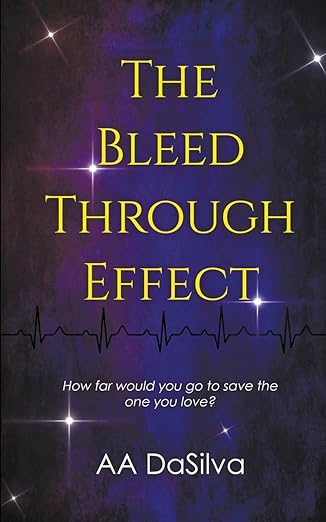
The Bleed-Through Effect, by AA Dasilva, is a psychological sci-fi thriller that dives headfirst into the concept of parallel realities, trauma, and manipulation. At its heart are Jared, a convicted man with a mind engineered for revenge and dominance, and Charlotte, his estranged wife with a savant-like gift rooted in a head injury. Their fates remain twisted together across alternate realities, manipulated by a shadowy government-backed organization called Quantym. Through its dual narratives set in “Reality 1” and “Reality 2: On the Periphery,” the story weaves a suspenseful and often unnerving look at identity, memory, and control, with time travel and consciousness jumping driving the plot.
Jared is magnetic in the worst way: terrifying, cold, and obsessive. His presence has a pull that makes you sick and fascinated at the same time. Charlotte, on the other hand, is caught between trauma and rebirth. Her pain feels honest, her resistance hard-won, and her journey into healing, especially with Simon, is tender without becoming sappy. The writing is punchy and emotional, shifting smoothly between the brutal and the intimate. Characters bleed, cry, shatter, love, and rage with sharp detail. That said, the book can be emotionally heavy, especially with Jared’s manipulative cruelty and the twisted power games that unfold.
I do feel that the pacing slowed under the weight of explanation in some areas of plot. The science, while clever and well thought out, gets a little thick at times. When the characters speak about memory retention, parallel jump logistics, or bleed-through phenomena, it’s like being dropped into a quantum physics lecture. Still, it’s minor when you’re hanging off the edge of your seat during the intense scenes. The best parts are when the emotional stakes meet the speculative sci-fi. Moments where love, betrayal, memory, and pain collide in these chilling and cinematic flashes.
The Bleed-Through Effect is the gripping sequel to Periphery, picking up where Charlotte’s fractured world left off. If you’ve read Periphery, this follow-up feels like a descent into deeper, darker waters. And if you haven’t, you’ll still be able to follow the story, but you’ll miss some of the emotional weight. This book is best suited for readers who love high-stakes science fiction layered with trauma, passion, and moral gray zones. It’s intense. It’s clever. It doesn’t flinch. And for those who like their thrillers to feel both cerebral and personal, this one hits hard in all the right places.
Pages: 356 | ISBN : 978-1509261956



 LITERARY TITAN