Blog Archives
Processing My Trauma

Tremor in the Hills follows a teenage girl struggling with trauma after surviving a devastating quake, whose best friend is accused of murder, and she has to help discover the truth. What was the inspiration for the setup of your story?
The inspiration: In 2007, I was with my husband and 2 young children visiting his family in Ica, Peru, when an 8.1 magnitude earthquake struck. 90% of the town we were in was destroyed, and we had a difficult time getting home, although we were VERY lucky and grateful that we survived, and everyone in his family did also. 500 people died in the same town we were in. When I got home, everyone wanted to hear my story, but I did not want to talk about it, so I wrote it down and sent it to everyone I knew. The writing got a very good reception, and I have always loved mysteries, so I decided to continue processing my trauma through writing a story based loosely on my experience.
It seemed like you took your time in building the characters and the story to great emotional effect. How did you manage the pacing of the story while keeping readers engaged?
Tremor in the Hills has been through countless edits and 3 different editors, so I think it was mainly practice, editing, and just getting to be a better writer over the years.
How do you balance story development with shocking plot twists? Or can they be the same thing?
I hate to say it, but I think it’s a mixture of real-life experience and twisted imagination… I do believe that story development and shocking plot twists are melded together.
When will Book Two be available? Can you give us an idea of where that book will take readers?
Book two, with any luck, will be out in late 2026. It will feature many of the same characters. The setting is Caral, an archaeological site in the north of Peru, and answers part of the question of where K’antu went at the end of Tremor in the Hills. There will be 3 books total in the trilogy.
Author Links: GoodReads | X (Twitter) | Facebook | Website | Amazon
A Confounding World
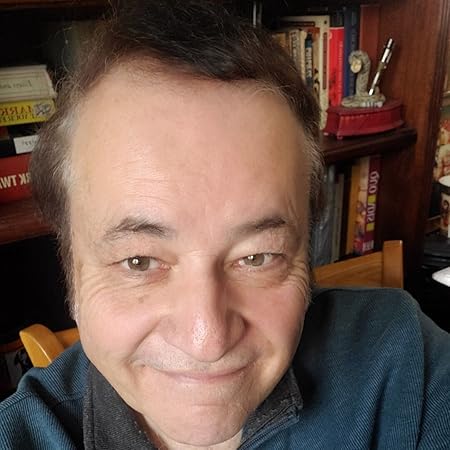
Not Yet Your Time follows a self-deprecating office worker whose mundane New York life derails after a near-death encounter with a mysterious woman, leading him to question everything he knows about time, fate, and faith. What was the inspiration for the setup of your story?
I have always felt that the best drama or comedy follows from individuals being placed in situations for which they are utterly unprepared. (Being trapped on Everest while climbing is not the same as crash landing on Everest in your swim trunks) I have also always had the sneaking suspicion that our history, our myths, and the foundations of our culture are on very wobbly grounds. Finally, as someone who spent a full career in marketing, I know that reality is just a press release away from changing.
I found Titus to be an interesting character who gets pulled into a strange situation and manages to adapt despite everything that happens to him. Were you able to achieve everything you wanted with the characters in the novel?
When I embark on creating, in effect, an entire world, I need a central character to react to, digest, and pass through it. I needed Titus to be that person. I gave him the vulnerabilities and hidden strengths to attempt to deal with a confounding world that has sucked him in against his will, only because he was attracted to a mysterious woman. I was also pleased with Kanenas, my, in effect, flawed and reluctant messiah. A good man with ideas, totally unprepared for the greatness that is hung on his shoulders. (Inside secret) I patterned him after the attitude and speech mannerisms of the late actor Peter O’Toole, also a great and deeply flawed person.
I found this novel to be a cutting piece of satire. What is one thing that you hope readers take away from your novel?
Absorb all you can in life from as many sources as you can tolerate because no one person or philosophy has all the answers.
What is the next book that you are working on, and when can your fans expect it to be out?
The world’s greatest historian has a dark secret. He travels back in time and gets deathbed confessions from great figures in history. A Gesture to the Wind is narrated by the historian’s unsuspecting assistant, who is drawn into a world of illegal historic relic dealers, Russian spies, EPA investigators, and the Battle of San Juan Hill, all while developing a deep and abiding friendship with a time-displaced Ben Franklin. (As you can see, I’m having fun.)
Author Links: GoodReads | X (Twitter) | Facebook | LinkedIn | Website | Amazon
This odd trio embark on a perilous odyssey that includes imprisonment in a labyrinthine security complex under the ruins of the World Trade Center; flight through a murky unfinished tunnel beneath the Hudson River, a safe house masquerading as a defunct museum; and a perilous train ride to link up with a terror cell. Ultimately, the reluctant Titus will face a rendezvous with life, love, death, and destiny in the green wilds of New York’s Hudson Valley.
Propulsive Stories
Stolen follows a brilliant, tough, and resourceful private investigator with a powerful AI who helps a woman being stalked for her new EV battery, when it snowballs out of control into blackmail, espionage, and an underground crime ring aided by a rival AI. What was the inspiration for the setup of your story?
This question goes to the heart of how I write. Sometimes I start a chapter with only a vague idea of what I want to accomplish. When it’s done, more than I expected ends up on the page. For example, in Stolen, a deadly international assassin targets the protagonist and her client. Until the moment I started writing that chapter, there was no assassin, not even the concept of one. My creative process is fluid and more creative as I go. I never outline my stories or rely on pages of story notes. I start with a loose story framework, define the characters, and then let them loose. I’m sometimes surprised when a twist I hadn’t intended to write suddenly appears. If I like the twist and think it enhances the story, I leave it in and make whatever adjustments are necessary to accommodate it. For my book, Stolen, I didn’t have a distinct element of inspiration; I just had a general idea. However, as this is the third book in the series, the characters were already well-known to me. This familiarity made it easier to tell the story.
The supporting characters in this novel, I thought, were intriguing and well-developed. Who was your favorite character to write for?
Molly, with her massive AI brain, is always fun to write for. In this book, I explore why Molly is motivated to work with humans, rather than trying to wipe out humanity, as some people fear the technology may one day do.
How did you balance the action scenes with the story elements and still keep a fast pace in the story?
I intentionally write all of my books with pace in mind. My favorite line in a review is this: “…I couldn’t put the book down,” or “It kept me up late into the night.” As a reader myself, I enjoy propulsive stories. I want my readers to experience that sensation.
Can you tell us more about what’s in store for Riley Callen and the direction of the next book?
I’m taking a break from this series, but I’ll definitely return to it in the future. These great characters have many more stories to tell. When I do return to the series, the next book already has a title: Quantum. If you think AI’s potential is scary, wait until you see an AI installed on a quantum computer. It’s not hyperbole to say the tech could break the world.
Author Links: Amazon
However, when a Chinese conglomerate purchases the company, Lena learns there will be no payday. The new owner is not liable for the contract she’d negotiated with the old management. Frustrated but determined to change her luck, she revises her original design and substantially extends the battery’s range. She intends to sell the new design to a competing company, which will render her old design obsolete. But it soon becomes clear that the Chinese company that acquired her battery design has become aware of her plan and is surveilling her wherever she goes. Fearful for her safety, Lena contacts Riley Callen and asks for help. Riley and her AI associate Molly quickly intercede, diffuse the situation, and get Lena the money she’s owed.
Thinking the case is resolved, Riley returns to assisting the FBI with capturing a highly organized crew of kidnappers. The Feds had made no progress on the case until Riley and Molly started working on it. Molly quickly discovers the kidnappers have an AI of their own coordinating the logistics of the kidnappings. This allows those in charge to get rich while simultaneously distancing themselves from their crimes and the criminals they employ to do the dirty work.
While embroiled in her work with the FBI, Molly reports that the man running the corrupt Chinese company, Mr. Shi, has contracted an international assassin named The Black Dragon to kill Riley and her client, Lena Alton. Not wanting to stop chasing the kidnappers, who are promising violence against future hostages if the FBI continues to interfere with their crimes, Riley brings in her Special Ops friends, Carnivore and Vegas, to help her dispatch the assassin before he can do any harm.
The clock is ticking on both cases, and Riley will have to work faster than ever to stop these bad guys.
Treacherous Trek

Fallen Deer follows a woman and her friends as the town they live in quickly spirals into an intricate mystery involving arson, hidden children, and a chilling murder that seems to connect to forces far greater than the town itself. What was the inspiration for the setup of your story?
You might be surprised if I told you a deer fell out of the sky and landed on our car, but it’s true. My husband was driving during a rainstorm, and apparently the deer was hit by a truck in the other lane and went airborne. My husband never saw it coming since it fell from above the car. He only knew what happened because another driver stopped to tell him. He was in shock when he called me—he hadn’t even dialed 911 yet—and I was startled that a career fire lieutenant, who was trained to respond to danger, would react to a crisis the same way the rest of us do. As we talked about the accident in the weeks after it occurred, I knew it would be the catalyst scene of Fallen Deer. I just added a little Cadence extra to it. The symbolism of the falling deer gave me the title, too, and the storyline for the character who falls the farthest.
The other inspiration was the political battle over immigration reform during election season. I wanted to put a face on the individuals who sacrifice everything to come to a country where half the people hate them and describe them as “venom” or worse. What is their motivation and thinking behind the decision to embark on such a treacherous trek that may end in being sent back to the place from which they fled? What is the history of immigration and who gets to tell the story of it?
What were some ideas that were important for you to personify in your characters?
I wanted to explore greed; resilience; revenge; retribution; discovering one’s inner strengths and weaknesses; trust; redemption; and, finally, acceptance and love.
What scene in the book did you have the most fun writing?
Aside from the opening scene of the falling deer, I liked writing Oliver’s journey of self-discovery. His is a late coming-of-age story, and his scenes are fraught with terror, insecurity, angst, comic relief, and glimpses into his parents’ intrusive relationship with him. Oliver first appeared in Stone Coat Man (A Cadence Mystery #5), where he shied away from the action. I wanted to dig deeper into his story and take him on his personal journey from shy, reticent kid, whose parents still send him care packages of essentials, to a self-reliant adult, who may not like where his thoughts are taking him, but who knows he’s the only one in a position to act upon them. The scene in which he envisions his vehicle passenger and a huge stag standing in front of the vehicle as Minecraft characters was really fun to write, but I am no gamer. I had to do research and then revise and revise to get the right balance of humor and suspense. I especially enjoyed writing the dialog between Oliver and his passenger.
What is the next book that you are working on, and when can your fans expect it to be out?
I don’t have a title yet for the book I’m working on now, but it will be book 7 of the series, A Cadence Mystery, and it’s going to be a frightful thriller! I’ve had nightmares about the asanbosam, a creature from Ghanian mythology, that appears in the book. Often, my dreams take my books in directions I hadn’t considered, or they resolve questions when I feel stuck or suffer writer’s block, so I am always open to what they show me. The book deals with a terrible chapter in our history, doppelgangers, and the power of suggestion. I’m about 36,000 words in and plan to release the book in December 2025.
Author Links: GoodReads | BlueSky | Facebook | Website | Amazon
Environmental Activism
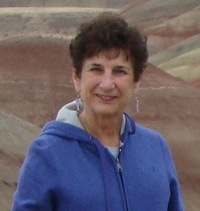
In The Water Factor, a man determined to save his drought-stricken community risks it all to steal water trucks as he strives to make access to water a human right. What was the inspiration for the setup of your story?
Anthropology and psychology degrees, serving as president of the Oregon Museum of Science and Industry, and founding the Museum Tour, an educational supply catalog, contributed to my interest in social justice activism. As a blogger and current Community for Earth Committee member, I seek to inspire the public to become environmentally aware activists. Reading Blue Gold by Maude Barlow and Tony Clarke set me on the path to exploring water issues in a time of scarcity. After learning that water was commodified in 1992 and negated as a public right, I became alarmed about its ramifications, including being traded on Wall Street.
My idea of stealing water trucks to right a wrong was a product of my imagination. It was a way to return clean water to communities suffering from corporate greed.
Native American culture is an integral part of my life and the novel. My domestic partner, Ray Losey, is a totem pole carver and storyteller. Over the years, I assisted in performances at schools, galleries, and senior centers. Warm Springs is a reservation I visited often to attend powwows, organize education programs in conjunction with the museum, and swim in their spring-fed pool. When interviewing their Emergency planning manager, he spoke of their aging infrastructure and burgeoning homeless population. We discussed their need to import water and the fires that devastated miles of profitable timberland.
Can you share with us a little about the research required to put together your story?
Creating the story was a two-and-a-half-year journey involving intense research. I read and listened to stories of criminal acts, corruption, and corporate manipulation and intertwined them into the narrative. Investigations led to the World Trade Organization’s role in getting rid of protective laws in third-world countries, enabling foreign investors to establish businesses with minimal oversight, and how the World Bank and International Monetary Fund charge interest countries can’t pay back. I read how water pipes are being tampered with to divert water to marijuana farms and how ranchers and farmers are fighting over water rights. I discovered that bottled water costs 2000 times more than tap water and that groundwater was being drained for commercial purposes. An acquaintance who works for Northwest Natural Gas confided that the company was aggressively purchasing water rights on the West Coast and discovered that utility companies nationwide were all making similar purchases. The list of abuses continues to grow in communities that ignore how their local government manages water.
Numerous tribal members assisted in authenticating passages about Native American culture. Michael (Two Feathers) Rey, a Potawatomi native, storyteller, filmmaker, and artist, encouraged me to stay true to my goal of describing how corporate takeovers compromise public access to clean water. Ed Edmo, Shoshone-Bannock poet, playwright, and consultant to the Smithsonian’s National Museum of the American Indian, ensured my descriptions of reservation life and ceremonies rang true and were respectful. I was also fortunate to receive guidance from Ed’s wife, Carol.
Five years ago, I adopted an Ethiopian/Samali immigrant family and became a grandmother to their two beautiful daughters. They, and other African acquaintances, assisted with authenticating the Ethiopian scenes.
What themes were important for you to explore in this book?
The story centers on the protagonist, James Hokama Byrne, a naive high school graduate whose eyes are opened when driving a water truck through rural communities. As he matures, he becomes a social activist working to return what should be a human right to its rightful owners.
A second theme focuses on an antagonist, Aaron Gooding, a man caught up in the manipulations of a power-hungry boss and his fight to free himself from the evil ways of his past.
Native American reservations and rural Ethiopian communities are examples of how government entities and water cartels impact disadvantaged communities.
Can readers expect to see more from you soon? What are you currently working on?
Since finishing The Water Factor, I’ve explored new ideas and themes related to environmental activism and social justice. Antheia in the Thorns, the second novel in the Rightfully Mine series, scheduled for release next year, focuses on air quality rather than water. It introduces a little-known oil product polluting the atmosphere that the U.S. refines and markets worldwide. The shocking story will keep readers on the edge of their seats.
Author Links: GoodReads | Amazon
The novel opens dramatically in 2039 with James Hokama Byrne, grandson of Chief Tahoma-Kiche, leading a team to steal water trucks and take them to the reservation where his grandparents live. The battle began years ago, when water was labeled a commodity rather than a right, and Glacier Oceanside joined the ranks of the world’s largest water cartels. Top executives didn’t count on being confronted by James Hokama Byrne, an employee the company mentored since his high school graduation. But delivering to drought-stricken farms and getting kidnapped in Ethiopia changed the young man’s outlook. When the Glacier Oceanide started draining aquifers on his grandfather’s reservation to send to bottling plants and marijuana farms, something within him snapped. He couldn’t remain silent.
The plot involves readers in the manipulations and crimes of water cartels, drug lords, and utility companies that operate openly and with little oversight. Going by his middle name, Hokama, the hero is challenged to make access to clean water a human right, not a commodity exploited by private corporations. The story is exciting, radical, and urgent, involving love affairs, murder, and kidnapping. If you like action with a touch of romance, and if you cry for misused populations, you won’t want to miss this call to action. To ensure authenticity, Eichinger met with members of the Warm Springs Indian Reservation in Oregon and was assisted by Native American Smithsonian consult and Ethiopian families.
No Talent for Surrender


No Talent for Surrender, by Mark Stirling, unveils the journey of Johnny Promise, a character whose blend of athleticism and creativity takes an unexpected turn. The narrative begins with Johnny’s life-altering collapse, ushering him into a world of unresolved mysteries and family secrets. Central to the plot is the enigmatic Maura and the obscured truths hidden by Johnny’s grandfather. This novel weaves a tale of resilience, hope, and the complexities of familial bonds.
The characterization of Johnny Promise stands out for its depth and relatability. Despite his flaws, Johnny’s resilience and likability resonate throughout the story. Maura, characterized by her determination and warmth, is particularly notable for how she navigates life without being defined by her disability. The narrative is further enriched by a cast of well-developed characters, each adding unique dimensions to the story. Memorable scenes, like Johnny’s interactions with his charismatic barber and the emotive visit to his sister, showcase the author’s strength in creating vivid, engaging moments.
The world created by Stirling is both immersive and gritty, defined by a tone that deftly balances suspense with a raw, realistic texture. This setting provides a backdrop that complements the story’s themes and characters. The narrative’s pacing unfolds with a reflective, measured tempo, thoughtfully drawing readers into the depth and nuance of the story. This deliberate approach enhances the reader’s connection with the characters and plot, providing a rich, immersive experience. While I feel that a more dynamic pace might broaden its appeal in future works, the current pacing certainly holds all the elements of an engaging read, and its gentle rhythm allows for a deeper appreciation of the story’s intricate layers.
No Talent for Surrender is a compelling exploration of strength, mystery, and the nuances of human relationships concluding with an impactful twist. Mark Stirling’s semi-autobiographical novel is a recommended read for anyone searching for a moving tale steeped in realism and guided by a cast of relatable characters.
Pages: 227 | ISBN : 978-1960116406




 LITERARY TITAN