Blog Archives
Ava and the Last Bird
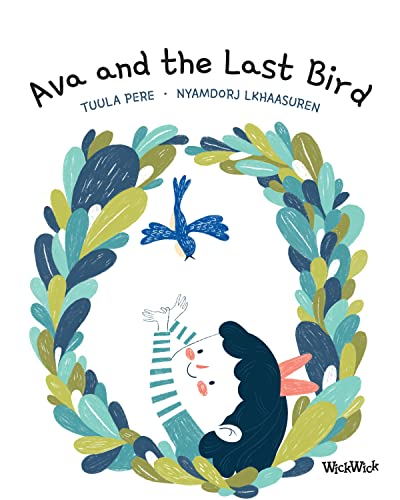

Ava discovers a bird’s nest outside her window. Each day she enjoys watching the nest to see what they will do. She loves watching the little chicks as they hatch and grow to wait to see if they can learn to fly.
Now Ava is very curious and wants to help the birds. So she tries reading to them. Her best friend Axel hears her outside reading and soon is bird watching with her as they watch the little birds learn to fly. Then a tiny little bird falls out of its nest. Ava and Axel don’t know what to do, but Ava’s grandmother does. He says, leave the baby alone it’s parents will come to rescue it when we go away. Sure enough, that is what happened. So Ava and Axel continue to watch the birds until they can all fly.
Ava and the Last Bird is a wonderful picture book for kindergarten and young elementary school children. Author Tuula Pere teaches children that nature is a wonderful place full of amazing creatures to discover. He also teaches children that they need to not interfere with the animals that surround them. Birds know what is best for them, and people must let them take care of their own families.
The artwork by illustrator Nyamdorj Lkhaasuren is fun and colorful. I loved how Ava dressed up as a bird to sing and dance for the baby bird that fell. The whimsical characters will keep children entertained as they follow along with the story.
Children and teachers will love following the adventures of Ava and Axel as they discover how the birds in their backyard live. This is a great way to introduce children to bird watching and how to properly observe the animals that live around them without causing distress or getting hurt.
Pages: 36 | ASIN : B09K4BTNW1

The Path To A Friend’s Heart
Colin the Crab Finds a Treasure follows a crab who meets a hurt pearl oyster and while helping her heal realizes the value of friendship. What was the inspiration for your story?
After I had written the first book – The Caring Crab – in this series, I couldn’t just leave the characters. They had grown so strong in my mind that they continued their lives almost independently.
I am happy to pass on my real-life experiences through the life circle of Colin the Crab. The diverse character gallery offers a fruitful ground to explore very human relationships, weaknesses, and strengths.
I have chosen two main themes for this book: different perceptions of essential things in life and trust as a prerequisite for friendship.
I found it essential to show that Colin the Crab lived a rich life, although it was seemingly modest. Children get to compare the choices various characters value in life. I hope they realize the importance of friendship by the end of the story, too!
I also wanted to show that it is better to be genuinely yourself than pretend to be something else. When Colin gets lost on this path, the consequences are harmful. Fortunately, Colin learns from his mistakes. Boasting is pointless, and not everyone needs to build muscle at the gym. The path to a friend’s heart goes along other routes.
If you were to write a spin-off about a side character, which would you pick?
Funny coincidence that you ask this! I recently started to consider writing separate books or series about Colin the Crab’s friends.
There are many delicious characters in the series about whom I could easily write separate books or an entire spin-off series. I could look at the world through the eyes of Eddie the Eel, Stella the Starfish, or Ms. Monkfish, for example. Also, the fast-paced life of Norma the Newt’s family with many lively children would be a perfect setting for new adventures. Each spin-off would indeed become interesting in different ways.
With Eddie, who is a technology freak, we would undoubtedly embark on the wildest adventures. He is so passionate about acquiring the fastest, most comprehensive, and most expensive technology and solving everyday problems with them.
The sophisticated and vain Stella would undoubtedly spend most of her efforts to fulfill her desires. That kind of character simply believes herself to be the center of the world. Successes and failures with this delusion would give rise to many juicy conflicts.
There would undoubtedly be many interesting things to tell about old Ms. Monkfish’s past and memories. Her adaptation to modern life and various friends also offers exciting opportunities for stories. And needless to say, Norma the Newt’s bunch of children – with its hustle and bustle – is certainly enough to fill many books.
Thinking about this answer inspires me to consider these spin-off stories seriously. Thanks for that, and let’s get back to it later.
What are your favorite blogs or websites for writers?
I don’t know if I dare to admit that I hardly follow any authors’ blogs or web pages. I am writing all the time myself and work with my own publishing company, so I don’t have too much time and energy for that.
There are some literary communities to which I belong. e.g., The Association of Finnish Nonfiction Writers and Finnish Youth Writers Association. I follow their communication and activities – and participate occasionally. I used to belong to IBBY Finland as a board member and have been the chairman of the board for the Topelius Society of Finland, which recently organized a national poem competition for young writers.
I know this isn’t exactly an answer to your question, but I rather write and act myself instead of reading how others do that. Besides, I have this hybrid role of being a publisher as well. In that respect, as a writer, I am perhaps in a different situation than the others.
I personally have direct contacts with all my target groups – including international publishers, illustrators, and translators. Hopefully, I’ll find more new ways to be in contact with as many readers internationally as possible. Enough goals for a small author/publisher and enough reasons to develop my blogs and websites!
What books did you grow up reading?
I grew up with a library of books, not my own, but the village library across the road. I moved between the shelves there from one age group and theme to another.
I went to the library every evening it was open and borrowed loads of books. I quickly moved from fairy tales and picture books to international favorites in children’s literature. My favorites were all the adventures like The Famous Five and Five Find-Outers by Enid Blyton and many more. Naturally, the romantic books about Anne of Green Gables by L. M. Montgomery had to be read later. I also read all the possible Edgar Rice Burroughs’ Tarzan books to keep the balance.
The most important books of my childhood and youth also included various non-fiction books. I was a big consumer of them. As schoolbooks sparked my interest in some topics, I got excited to learn more details from the library’s book collections.
In my childhood in the 1960s and 1970s, it was impossible to use the Internet to search for information, but a library was a good source. Of course, the amount of information available has multiplied, but it is essential that the data is structured and there is peace in absorbing it. Books are a great tool in that sense. That’s the reason why I would love to retain something of that explorer vibe that I enjoyed in my childhood library.
Author Links: Facebook | Website
Just as Colin starts to wonder if his own life is a bit too ordinary, a tidal wave tosses Priscilla the Pearl Oyster into his backyard. Colin’s new friend has something very valuable—something that many others want, including the deceitful Larry the Lobster.
Remember How We Felt When We Were Little
Do You See Me at Home follows a small child that struggles with big feelings and needs the adults in their life to comfort and reassure them things will be ok. What was the inspiration for your story?
This book is one of three belonging to “Do You See Me? Series.” I wrote the books because I believe my experiences as a mother of three can be helpful for young families.
I have always been sensitive to observing everyday situations between young children and their parents. I often notice that adults somehow look past the children even when a little attention is needed.
It is often a matter of small things that grow into big problems unless they are dealt with compassion right away. In many situations, we can choose to behave kindly and smoothly to make everyone do better. I don’t mean that we should accept all requests or whims of the child. On the contrary, we must help children find their place and limits safely and learn to trust that they receive support when needed.
I want to remind the reading adults that you have to listen to your child, even in the middle of a rush. Creating a sense of security is one of the most important things. It is also easier for the child to face strange and scary things in such an atmosphere.
Children must make their voices heard, even when they cannot express themselves adequately. An observant adult can sense what is going on, even without words. We have to empathize and remember how we felt when we were little.
How do you use social media as an author?
I admit that I am a beginner as a social media user. Our publishing company, Wickwick, has a lot of online activity in marketing and sales. For my part, I connect with all my stakeholders by participating in producing the publishing company’s material.
In addition, I have both the Tuula Pere Author and the personal Tuula Pere Facebook pages. My friends and readers there include very different people interested in children’s literature — readers, writers, illustrators, publishers, and many of my dear old supporters. I also use LinkedIn to talk about books and writing internationally. I try to find a suitable way to meet people on each channel. They are different depending on the media and have different expectations.
I’m also quite active in the Publishers without Borders group, an engaging Facebook community born during the pandemic. It’s incredible how fast such networks can spread! There are about 4,500 people from the book industry in this community, and I have already met some at the international book fairs and publishing fellowship programs.
And I recommend my Warm Values Blog to you! I write there on a more general level on topics that I consider essential and exciting – such as Author’s Voice, Parenthood, Society, and Inspiration. My purpose is to get my readers to ponder various societal themes with an empathetic approach. I may reflect on recent events around us, or go back in history, describe observations from my travels, and thoughts behind my books.
In Warm Values Blog, I sometimes open my personal experiences of family life, being a mother and child, or layered memories of my family’s many generations. – My modest and ordinary grandparents would have been amazed reading about how much they have influenced my thinking and writing!
If you could spend a day with another popular author, whom would you choose?
When I answer questions like this, I often choose some past writer. My companion would now be Mika Waltari (1908¬–1979), a versatile Finnish writer who was a professional writer for almost every kind of literary assignment. In addition to the smooth pen, he had a broad knowledge base and studies that gave depth to his social reflections.
He was so productive and successful that many people in the book industry and literature field envied him. He seemed to be capable of writing anything and adapting his gifts to very different uses and audiences. He wrote great historical novels, film scripts, crime novels, plays, essays, poems, and rhymed texts for newspaper comics. And was well-paid, too!
I chose to spend my imaginary day with Waltari, as I am a great admirer of his most famous novel worldwide, The Egyptian. But as a writer of many travel stories, he would undoubtedly be an expert as a traveling companion, preferably on a train.
I traveled alone by train around Europe for a month at a young age. I made a lot of observations about different regions, people and their habits and languages, and history, too. There was a lot for a young traveler to ponder and melt together. Young Waltari did the same thing and wrote a novel about that. No doubt, we would have a lot to discuss about our findings on the way – at least for one day together!
Have you ever traveled as research for your book?
I enjoy traveling a lot because it helps me understand life more broadly. The goal of my travels is simply to see and experience, perhaps learn something new and connect it to my previous experiences and knowledge. All this belongs to refining one’s personality.
As I walk around and explore things and meet people, I get new ideas, and old ones develop further. Everything gathers deep in my mind, where it matures – hopefully even into a story worth telling others. I guess I don’t travel to collect material but gain life experience and clarify and refresh my thinking.
In my children’s books, the stories travel around the world. In this way, I want to connect children across all borders – visible or invisible. The ingredients in these stories come from somewhere deeper than my travels. They come from the journeys my brain and heart have made.
But who knows if the more concrete “mental souvenirs” from my journeys could later be used in books for adults? The caches of my memory are already quite packed at this age.
So far, I’ve not written much for adults – mainly non-fiction. But I have published one collection of my short stories for adults in Finnish. And in some of them, I have put a few extraordinary situations and events from my travels abroad.
Maybe it’s soon time to start writing about this lifelong journey for adults. But it takes a new kind of courage!
Author Links: Facebook | Website
Many ordinary situations can be difficult for young people, and that’s when you need a grown-up’s support. With a warm heart and playful mind, families can fin
I Write for the Benefit of Children
You Can Fly, Little Bird follows three sibling birds and how they are different from each other and that it is ok to be different. Why was this an important book for you to write?
There were three children in my own childhood home, each with a particular personality from the very beginning. The nest was everyone to share, but each child had their way of approaching the world around and testing one’s skills there. In the three little birds of the book, I recognize many traits from my own sibling series.
It is not always easy for parents to find a suitable way to encourage different children. First, they must know the children well enough; their skills must be valued and supported. You can help with choices, but it is not good to influence the direction too much.
As I wrote my book, it was interesting to experience the perspective of three different siblings leaving the nest – through birds’ eyes. One is longing for the top of the mountain, with its strong winds, and is not afraid of danger. The other one is an explorer by nature, and for the last sibling, the nearby forest is a suitably safe place.
I think this book is necessary for both children and their parents, who hopefully read it together. The story provides an opportunity for deep discussion about children’s needs and desires. At the same time, it reminds parents of the individuality of each child.
When you’re writing an emotional or difficult scene, how do you set the mood?
When I write a story, it takes me entirely with it. Actually, the whole story has already been born before this somewhere in my head. Writing is really just about putting a story into text. Its content and atmosphere already exist for me.
I hope and trust that my readers will sense the authenticity of the moods that I describe. I don’t strive and push any mood. I live a genuine atmosphere of the story myself. I don’t like pretending, not even in writing fairytales.
With my most difficult and sensitive stories, I have cried myself. While my own emotional turmoil can be intense, I want to filter it out so that the reading child finds the book safe and encouraging anyway. There is always at least a hopeful ending to my fairytales.
I have also shed tears of joy when writing stories. I rejoice at the family getting back home after the war. I am happy when Colin the Crab, who lives alone in his cozy house, finally finds his beloved spouse. There are many big and small moments of happiness in my fairy tales.
In real life, joys and sorrows are often present simultaneously, which is possible even in a story aimed at children. No reason to hide that! Children understand much more than adults will ever believe!
What book (or books) are you currently reading?
I recently bought a pile of books published by the Finnish Literature Society. I am now reading a travelogue from 1828, written by Elias Lönnrot. In English, the title would be “The Wanderer.” Lönnrot has many literary and linguistical accomplishments – the most famous being the Finnish national epic, Kalevala.
He wandered for months in remote areas, met ordinary people in the countryside, and gathered Finnish oral tradition. Many of the places described in this book are familiar to me.
It is touching to read the observations of Lönnrot, a wise and attentive person, about nature and people two hundred years ago. The world is changing, but some things remain the same. Fortunately, there are always people who love both poems and stories and the language in which they are told.
I could praise Lönnrot even more, but let it be enough to say that in this book, too, he shows his intelligence, attentiveness, and sense of humor as well.
Has writing and publishing a book changed the way you see yourself?
I have written and published over 50 original stories. Each of them means a lot to me in its own way. I have incorporated some of my thinking and heart into all of them. When I’m writing my stories, I also think very deeply about my life and everything I’ve experienced. I could claim to be having a discussion together with my text. At the same time, it influences and develops my own thinking.
Especially when writing about the most demanding topics, I go very deep into my thinking and morals, even if it may just be reflected in what I write on the lines. So, the writing process touches my heart. I need to be sure about and in balance with everything I write. I feel that it’s my responsibility to the young readers and their families. I demand a lot from myself in this regard.
Before becoming a children’s author and publisher, I had professionally done a lot in my life. Although my career in legal posts and corporate management was meaningful and rewarding, I feel I am fulfilling the most important calling of my life now, in children’s literature.
When I look back on my life, it feels natural that I have ended up as a children’s writer and publisher. It combines my love for children, writing, and social impact – in a gentle way. Even my background as a Ph.D. in Law can be put to good use in children’s literature as its moral backbone.
Becoming a children’s author has not made me see myself differently, as I feel always being the same person – just in different roles. But I genuinely feel the joy that I have gotten closer to myself.
The most important thing is to connect with my readers’ minds. Nothing coming from outside of this relationship affects how I see this task. I don’t try to please anybody; I just honestly write for the benefit of children. I’m not sure if this change is due to the new path I chose or is simply due to growing older. Either way, it feels good and natural.
Author Links: Facebook | Website
Finally, curiosity wins over fear, and Serene discovers that her wings can keep her aloft. Once she gets to know her surroundings, she finds joy in her skill. She also finds there’s plenty of space for all kinds of birds in the forest, including timid Serene.
Not Just a Writer, an Author
My Sunflowers follows a young girl that wants to grow sunflowers despite being told she is too young to do it herself. What was the inspiration for this story?
Often children have fun ideas that adults don’t support. The reasons are many; it’s dangerous, takes too much time or money, or disturbs the others. However, we must give space for the child’s natural curiosity and desire to experiment. They must be encouraged to try new things and trust their abilities.
Sometimes children make mistakes – as we all do, and their actions involve a certain amount of danger, but coping with risks is essential for the learning process. Once the children have received basic information and instructions from their parents, it’s gradually time to face the outside world more widely. I was lucky to live in the safe freedom of my childhood. It included many bike rides, forest exploration, and other outdoor activities.
I still remember how exciting it was to go out alone to try new things. Luckily, I never hurt myself worse, even though I climbed tall trees and steep cliffs. I learned to take a suitable number of risks and to survive with odd tasks, people, and places. All those skills have been beneficial later in my life. Without that kind of childhood, I wouldn’t be the person I’m today.
Why did you choose sunflowers for this story over another type of flower?
I have always loved sunflowers, even though I have not grown them myself. They have a lot of energy, both in terms of their name, color, appearance, and height. The sunflower is a positive and proud plant that can be used in many ways. In my story, the size of the sunflowers has its special meaning.
The girl has the challenge of getting the tall flowers to cope with two obstacles. First, large flowers are difficult to grow unnoticed by others. The more significant threat, however, is a storm rising overnight. Long stems and heavy flowers are in danger when a storm blows and rain hits the yard.
The help and advice of a friendly gardener are crucial for the child. With the support of some sticks, the plants withstand the storm and rain.
After My Sunflowers was already published, growing sunflowers and their intense yellow color under a blue sky have become a symbol of staying strong in difficult times. If my book helps somebody keep their head high and trust themselves, I appreciate that.
When did you first call yourself a writer?
First, I’d distinguish between calling myself a writer or an author. I have felt like a writer much earlier than I dared to call myself an author.
Writing has been an essential part of my legal studies and my work as a lawyer and the head of corporate communication in large companies. But that has been non-fiction writing of articles, contracts, and presentations.
I have always written a lot in my free time, too. Those texts have been only occasionally published in some local newspaper or taken part in some competition. The turning point was 2010 when I published my first children’s book Stella and the Magic Stone. At first, I was a little shy to call myself an author because I had started publishing independently through my company Wickwick Ltd. Becoming a member of The Finnish Youth Writers Association and The Association of Finnish Nonfiction Writers encouraged me nationally though my focus has always been mainly international.
Now, after twelve years of active publishing, I finally feel not just a writer but an author, too! I have written and published over 50 original children’s books in several languages and sold translation rights to many international publishers. I still have some connections to my previous professional past, e.g., I recently worked as a contributor to a “Research Handbook on Contract Design” by writing an article about contracts and the human factor.
To sum up. In a broader sense, I have been a writer – also professionally – for about forty years and an author for over a decade. As you can see from this answer, we, lawyers, often make simple things very complex. I may be a little too serious here, but writing is such an important and responsible task for me. I feel privileged because I have the opportunity to reach people through it and try to make a difference in their lives.
What advice would you give to help others create plotlines?
I don’t feel like advising other writers as storytellers. It’s best for everyone to find their individual style and way of telling stories. Of course, anyone can constantly improve their written expression in a linguistic sense. But as a storyteller, one must take responsibility for having enough to say and being able to do it properly.
Having a genuine voice is the key. I don’t think anyone should listen too much to the instructions of others about the story itself. It may result in trying to please the publisher or, at worst, mimicking the way others tell stories.
Of course, books often have their natural narrative rhythm. But a skilled writer can and should be brave enough to break these rules if needed. However, besides interesting stories and captivating plotlines, the readers deserve that the language has been used correctly.
It’s beneficial for children’s writers to test their way of telling stories in front of their actual audience. When you tell or read the stories face-to-face to the children, you immediately see and feel the reactions. It’s wonderful to see on their faces that the story also reaches the heart. It’s best if a compelling story leaves a profound impact and gives its listener or reader something helpful in growing as a person.
Author Links: Facebook | Website
Diplomacy Of The Heart
Between the Walls follows a wondering traveler that comes across two towns that are divided by two walls and works to reunite them. What was the inspiration for this story?
In real life, there are many situations between both people and different groups in society where a mediator is needed. His role is not easy because it requires both sensitivity and strength.
The mediator must be a person that the parties to the dispute and conflict can rely on. Independent and fair in one’s actions. This diplomate needs to be able to listen, understand different points of view, and find compromises that can connect as many people as possible behind them. The solutions that are created must seem fair and justified to everyone. So the task is extremely demanding!
I chose this topic for my children’s book because it’s good to introduce this kind of thinking about resolving disagreements as early as possible. I call this approach “diplomacy of the heart.”
Of course, the use of the brain must not be forgotten, but it is often taken more for granted. In general, too little attention is paid to the human factors that guide our solutions, even at the highest levels of society and the world.
It would be helpful for adults to keep in mind the basics of a child’s way of looking at the world. The protagonist of my book represents such common sense and a natural way of treating people even when they live across borders and behind walls.
Did the personality for Leo’s character come from anyone you know in real life?
Fortunately, there are a lot of people like Leo in the world. They are everywhere and in all kinds of roles in society.
Many go unnoticed because they don’t make much noise about their activities. Nevertheless, they are essential for the whole community. They may have a bearing on the wellbeing of all the others, as they prevent problems from escalating and resolve them in case others are unable to do it alone. Their performance may be invisible, even though it is a crucial adhesive and lubricant for the entire “interplay machine.” We find these people in their homes, jobs, and hobbies.
I am also interested in the dynamics of high political life at the societies and the international level. Fortunately, there are active mediators and organizations – with Leo’s type of motivations, too. They work both nationally and globally, even at very high levels and positions. Their actions are not only guided by cold facts, but they are also able to understand situations through their human dimension. As those skills can also be used for evil purposes, the motive of such an organizer is crucial.
At their best, for example, heads of state and prominent representatives of peace organizations can do a lot of good and take the international debate toward the common good.
What is a significant way your book has changed since the first draft?
My stories don’t change much during the writing process. Often the whole story is intact and pretty finished in my head even before I sit at the computer. This same applies to Between the Walls. Of course, I still read it through many times, made minor refinements, and corrected the language.
I also do this finetuning when I participate in translations into English or Swedish. I speak those two languages myself. Interlingual “cultural interpretation” sometimes brings up interesting details.
Collaboration with illustrators is an exciting step, too. Sometimes I still grind some points even then to make the interaction between the illustration and the text as seamless and smooth as possible. This phase may require changing the name or color of the bird species or plant in the text. But like I said, the main lines in the book are strong and remain from the beginning.
If you could spend a day with another popular author, whom would you choose?
A natural choice for me to meet would be Zachris Topelius (1818-1898). We have a lot in common regarding our general interests and roles in society. True love for telling stories for children and improving their knowledge and wellbeing is something we share, too.
Although my work and influence as a writer are far more limited than Topelius’, I strongly connect to the idea of defending the weakest in society with various literary means. I respect his work for families and those who were less fortunate in the community. I consider myself working for the same purposes, so we certainly had a lot to discuss.
The power of rich imagination and a warm heart in stories is irresistible. Topelius combined facts and fiction in his vast children’s book production and kept his goals clear throughout his long career as an author, journalist, and respected scholar. Topelius used all his skills and positions in society to make a difference. In the same way, I think the weakest in life need the strongest defenders. The more fortunate should use their abilities to help others in whatever position there have.
If I could meet Topelius, I’d love to use the “time capsule” and meet him both in his time in 19th century Helsinki and today’s independent Finland. I would be happy to show him how the Finnish society has improved in social and educational aspects and become a genuine democracy to provide even better possibilities for everyone. I think he would be pleased and proud.
Like Topelius, I also love history and nature. We would undoubtedly ponder the changing societies and nature around us. We could take a long walk outside to admire forests and shores of lakes and the sea. I could take some photos and videos with my mobile and let him be surprised.
To end the day, I could repeat one of his thoughts that I like a lot – “… open the window and allow the air from the world to flow in!”
After that, I could concentrate on my favorite thing, writing stories for the world’s children – and use both my brain and heart!
Author Links: Facebook | Website
The angry mayors won’t allow the traveler inside their stone walls. But luckily for Leo, between the two towns lies a piece of land that nobody owns. It is just big enough for his neat little cabin and garden, where many flowers bloom and the beautiful sounds of his violin fill the air.
On warm nights, people climb onto the walls together to admire the view and listen to the music and the sea.
“Would it be better, after all, to tear down the walls that separate us?” the townsfolk begin to wonder.
The Tree House Night
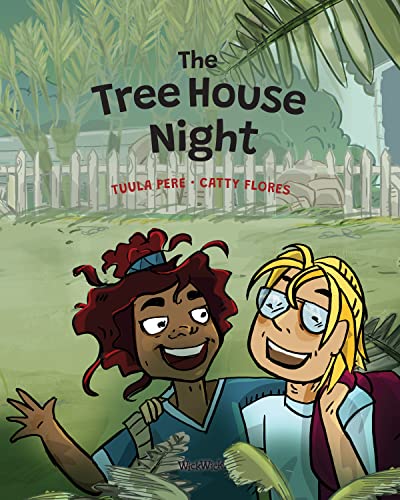
Emma and Oliver are best friends that live next door to each other. They decide they are going to build a treehouse in the backyard between their homes. Oliver is apprehensive, but Emma encourages him to help her make it. At one point, Oliver decides he is uncomfortable with the treehouse and refuses to climb up and leaves Emma to finish the job herself. Once it is finished, she proudly shows her work off to her parents and tells them she wants to spend the night up in the tree. They tell her no, it is not safe. Later, Oliver climbs up the tree to talk to her and tells her he heard what she said and wants to support her plan. That night when Emma sneaks out to stay in the treehouse, Oliver watches over her from his bedroom window.
The Tree House Night, written by Tuula Pere, is another fantastic work by this author. This excellent picture book focuses on friendship. Two friends who do not always agree still find a way to remain friends and focus on what matters, supporting each other in their dreams and goals. Even though Oliver disagrees with Emma’s plan, he supports her in the only way he can, shining light and watching over her as she sleeps in the treehouse. Knowing her best friend is watching over her gives Emma the strength to overcome her fears of the dark and the noises she hears.
So many children’s books on friendship focus on the good times children have. I like that this book showed that friends do not have to always agree on the same things or have the same goals. Even with these differences, they can still support one another and help each other make their dreams come true. This is the beauty of people. They don’t all have to be the same or have the same ideas and goals to be kind and be friends. This excellent picture book shows children they can be friends with people different from themselves and support one another.
The artwork done by Catty Flores is genuinely superb. The characters have so much personality children who can’t read will still be able to feel Oliver’s mood as he is concerned about things happening. But, equally, Emma’s excitement and confidence radiate off the pages as she builds her dream treehouse. The bond they share shines through the pages, and children will relate to the images presented in this captivating story.
The Tree House Night is a beautifully written picture book with an inspirational message about friendship and supporting those you care for. Children, teachers, and parents will all enjoy reading this remarkable story and will be able to relate to the message that the author has presented.
Pages: 32 | ASIN : B09K6MNF52
Raspberry Red

Aino doesn’t understand why her father has left with the other village men during autumn. She doesn’t understand why scary noises are coming from the forest and why her mother wants her to play near home. Forced to leave their home when soldiers arrive, Aino quickly grabs her doll running for the trucks that will take the family to safety, but they have left without her. Looking back to where she ran, she sees the bright red doll’s apron lying on the pure white snow. It is then that Aino realizes two soldiers are standing near her house, and they too have seen the apron and her footprints. The young soldier sees her and sends the older one into the house. He then lets Aino escape, leaving her doll’s apron behind.
Aino, her family, and her friends must learn to live in strange homes and rely on people they do not know. Then, when the war is winding down, they can finally go back home. Arriving home to a burnt-down home, she is shocked to find her raspberry red apron that belonged to her doll hanging from a clothesline.
Raspberry Red by Tuula Pere and illustrated by Georgia Stylou is a story that I was not expecting, but the ending made me smile. This stirring story starts out on the darker side with questions and uncertainty for all the characters. The images in the story are impressive as they look lifelike and like they are hand-drawn. Aino’s eyes especially will draw in readers and convey her feelings throughout this inspirational book.
Aino’s character is impressive as she is a child but still aware of her surroundings and she is responsible and helpful to her mother. Raspberry Red is a short but powerful read that will leave the reader with complex emotions. Pere’s writing is remarkable in having the ability to affect readers. The best part of this book is the end, where readers will learn the meaning of the title Raspberry Red.
Raspberry Red is an emotionally charged children’s book that deals with war, displaced families, and the struggle to survive and rebuild in a war-torn country. Given current events, this insightful book will help readers understand the plight of those living in these conditions. This book would be a great way to open discussion with children.
Pages: 20 | ASIN : B077LXS2VQ



 LITERARY TITAN