Blog Archives
Ava as a Top Seller


Ava as a Top Seller by Tuula Pere is a charming tale of a young girl named Ava who dreams of becoming a market vendor. One weekend, Ava gets the chance to help Mr. Stuff, a friendly shopkeeper at the local market, and her entrepreneurial spirit is put to the test when he leaves her in charge of his stall for the first time. This opportunity allows Ava to demonstrate her sales skills and learn valuable lessons about responsibility and the value of money.
From the outset, I was captivated by Ava’s vibrant and enthusiastic character. Her excitement about selling and her interactions with Mr. Stuff are beautifully depicted, creating a warm and engaging atmosphere. The narrative is straightforward and easy for children to follow, making it an excellent read for young audiences. The illustrations by Nyamdorj Lkhaasuren perfectly complement Pere’s storytelling. The bright, colorful artwork brings the bustling market to life and adds a layer of visual appeal that keeps young readers engaged. The characters are expressive, and the scenes are detailed enough to spark curiosity and imagination. Ava’s relationship with Mr. Stuff is heartwarming and central to the plot. A significant highlight of the story is the role of Ava’s best friend, Axel, who helps her problem-solve when things go awry. When Ava realizes she forgot to charge customers, Axel is quick to suggest a solution, showing the importance of friendship and collaboration in overcoming challenges. This aspect of the story not only enriches the plot but also provides a valuable lesson in teamwork and thinking on one’s feet.
Ava as a Top Seller is a delightful and educational story that I would highly recommend for children. It encourages young readers to pursue their interests, understand the importance of money, and learn from their experiences. This book is perfect for parents and educators looking to inspire entrepreneurial thinking and independence in children, all wrapped up in a fun and engaging narrative.
Pages: 36 | ISBN : 9528200451

The Bird Prison
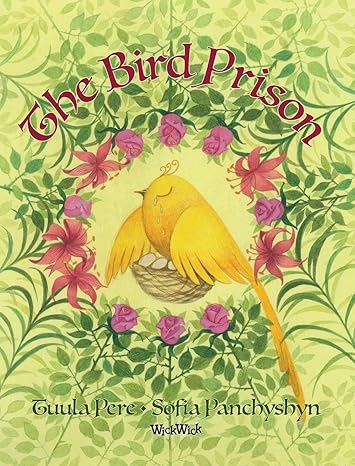

Living together allows us to learn from those around us. Unfortunately, not everyone is willing to embrace the diversity of others, making it crucial for children to learn this concept early on. In The Bird Prison, Tuula Pere introduces young readers to the idea that every action has consequences through the story of Griselda, who meticulously maintains her garden to perfection, even matching her clothes to the flowers. When colorful birds arrive, their singing and vibrant hues disrupt Griselda’s perfect world, leading her to increasingly push them away.
Tuula Pere effectively conveys essential lessons about intolerance and the lack of acceptance, illustrating how these attitudes can lead to loneliness and deprive us of the joy others bring. The somewhat somber yet realistic message is powerful: Griselda’s lack of empathy serves as a cautionary tale, encouraging children to be compassionate and consider others’ feelings and needs. The story also emphasizes the importance of respecting and caring for natural habitats and animals, teaching young readers about the necessity of coexisting with nature. The illustrations are delightful, enhancing the natural beauty depicted in the story. The bird designs are simple yet beautiful and expressive, adding a visual charm that complements the narrative. Tuula Pere’s writing is fluid and conveys much with few words, making it accessible and engaging for children. The language is straightforward and easy to understand. However, the moral might be slightly complex for younger children, as Griselda does not learn to live harmoniously or display positive traits throughout the story. Despite this, the interaction between the characters is unique and natural, highlighting the need to avoid rigid attachment to fully enjoy life. The Bird Prison is both entertaining and thought-provoking, showcasing the ingenuity of both the birds and Griselda as they strive to achieve their goals.
The Bird Prison is an engaging and educational story that I would recommend for children. It’s perfect for parents and educators looking to teach important lessons about empathy, acceptance, and the value of nature. While the moral complexity may require some guidance for younger readers, the book’s beautiful illustrations and compelling narrative make it a worthwhile addition to any child’s library.
Pages: 38 | ISBN : 9528200052

Do You See Me Playing Sports?

Ever wondered how a young kid perceives their first sports experience? Do You See Me Playing Sports? is a delightful children’s book that takes you right into the heart of that journey. It’s a charming tale of a young child, affectionately part of the Chipmunks sports group, navigating the big, noisy, and often intimidating world of sports.
Author Tuula Pere’s use of simple language and relatable situations makes it easy for young readers to connect with the protagonist’s feelings of excitement, fear, and eventual joy. The narrative flows smoothly, capturing the child’s emotions brilliantly as they face various challenges. One moment that stood out was when the child felt overwhelmed by the huge stadium and the idea of competing on such a large field. It’s so relatable for anyone who’s ever felt out of their depth in a new environment.
The illustrations by Majigsuren Enkhbat are vibrant and playful, perfectly complementing the story. Each page is a visual treat that keeps things fun and light. I particularly loved the sequence where the Chipmunks are encouraged to jump over a stretchy band instead of a high bar. It’s a great example of how the book encourages adapting sports to fit the needs of younger kids, making the experience less daunting and more enjoyable.
What I appreciate most about this picture book is its gentle approach to introducing sports. It acknowledges that sports can be scary and overwhelming for young children but also offers solutions to make them more accessible and fun. The idea of starting races with a clap instead of a pistol or playing barefoot soccer are fantastic ways to ease children into sports without the pressure of competition and noise. This book has the ability to make children feel less intimidated by sports, instilling a sense of reassurance and comfort in parents.
Do You See Me Playing Sports? is a heartwarming read that would be a fantastic addition to any child’s library. I think it’s perfect for parents who want to introduce their kids to sports in a gentle, fun, and supportive way. Highly recommended for ages 3 to 7, and a must-read for any parent looking to make their child’s first sports experience a positive one.
Pages: 32 | ISBN : 9528200370
A Reflection of My Childhood

Stella and the Berry Bay follows a little girl about to start school who finds out her family is moving to a new house and town. What was the inspiration for your story?
Stella and the Berry Bay like the other books in the Stella Series, are very dear to me. They contain many things that I have experienced myself.
Stella is not just a character but a reflection of my childhood. Many events and places from my past have found their way into the books about Stella and her friends. This story is a journey back to the time when I, like Stella, enjoyed the freedom of riding a little red bike in a safe country village.
But before I reached that point in my life, I had to experience the same challenges as Stella when she unexpectedly had to move. Writing a book about families moving to new places felt important because it has become increasingly common. Many children have to experience leaving their roots. As parents or educators, we must know how to treat the pain and discomfort associated with moving. Rooting in a new environment needs support.
It’s not easy for all children to get to know new schools, classmates, friends, places, and hobbies. In the worst case, a family move can instantly turn everything familiar upside down, making the child feel insecure. Parents don’t always pay enough attention to a child’s troubles because they might change jobs simultaneously. Also, making everything work in a new home takes time and energy.
What were some ideas that were important for you to share in this book?
Many things in this book are essential to consider when a family moves.
The children must be included in the preparations as early as possible to have enough time to prepare for a significant life change. This includes practical tasks like packing and arranging new living situations, which are important. However, the utmost importance lies in the mental transition from familiar surroundings to new experiences.
Primarily, it revolves around fundamental safety, focusing on whether the family remains united and addresses core family concerns. The subsequent consideration involves friendships, anticipating adjustments, especially with long-distance moves.
This book aims to emphasize the indispensable role of adults in the family’s moving journey. They contribute at various stages—from preparations and farewells to embracing the new chapter. Even seemingly insignificant keepsakes and memories can hold profound sentimental value.
Initially portraying Stella’s poignant challenges, the book gradually shifts focus towards the opportunities and friendships awaiting her in the new locale. These connections provide her with the strength to confront another hurdle, particularly the strict teacher overseeing her class at the new school.
Did you include any memories or emotions from your own childhood in the character of Stella?
I have used plenty of my childhood memories and personal experiences in all three Stella books I have published so far. Writing them gives me lots of fun because I can relive the best moments of my early years—not forgetting some challenges I had to conquer. I hope that both the ups and downs are something the young readers can enjoy and also use as building blocks in their own lives. Stella reminds me a lot of myself as a child. She loves independent nature trips, makes a lot of friends of all ages, and enjoys her little red bike.
In the first Stella book, Stella and the Magic Stone, I describe a particular summer in her life. She enjoys the freedom her little red bike represents and is not particularly intrigued by her parents’ constant blueberry picking – both very familiar elements in my childhood. Trying to find valuable or at least beautiful stones by hitting them to pieces was something I used to do. Thunderstorms with lightning were common in Eastern Finland’s lake district; they even burnt houses and destroyed forests and fields. However, the most prominent theme in this book is Stella’s relationship with her Grandpa, which reflects my Dad, who ended up in the hospital decades later and had to be woken up.
This book, Stella and the Berry Bay, is also very personal. As a child, I experienced the same situation as my main character. I was looking forward to getting into a nearby school, but things changed when our family moved to a country village twenty-five kilometers away. I said goodbye to my friends and headed towards the unknown. In my hand, I was tightly holding the teddy bear postcard given by the club aunt. I didn’t meet her ever after. Fortunately, the change turned out well for me in the end, and I have many good memories from that small village and a lot of inspiration for children’s books.
Also, the third book, Stella and the Spiky Friend, is based on my childhood and focuses particularly on one of my extraordinary adult acquaintances in the village—namely, the pharmacist who was feared by children and adults as well!
To put it short, Stella and her environment reflect, in many respects, my person and my life. I guess that village and its people meant to me the same as “Noisy Village” with its people meant to Astrid Lindgren.
Is there a topic you have always wanted to write about but have not yet found the right storyline for?
As for the children’s stories, I have been lucky to publish over sixty books in English already and even more in Finnish. The flow is constant, and new ideas keep developing smoothly in my mind.
The challenges of unfinished book plans and ideas mainly relate to my dreams of writing even more for adults. So far, I have published primarily short stories. But it would be wonderful if I could sometimes write something “longer” for adults. My life experience and the winding road from a small village to completely different environments and responsibilities would undoubtedly help me with this task. I feel that even we adults are all surprisingly small in front of the greatness of life – we carry inside us birth and death, joy and sadness, dreams and disappointments from the beginning till the end.
At least, that’s how I feel, although I tend to offer children the brighter side of life and encouragement for surviving even the more challenging days.
Author Links: Facebook | Website
In her new neighborhood in Berry Bay, Stella makes some new friends. But at Berry Bay School, Stella has more trouble getting used to things–especially Casserole Day in the cafeteria and her strict new teacher.
Through the Eyes of a Child
Giant Legs follows Elliot who becomes overwhelmed by the crowd at his grandpa’s garden party until Uncle Stephen takes him on a unique adventure to conquer his fear and rejoin the celebration. What inspired you to write a story about a child’s fear of crowds and how did you come up with the idea of using stilts to overcome this fear?
I often accidentally find myself in situations where some little child I don’t even know has a problem and needs my help. Let me give you a few examples. I have often supported lost children in shopping centers and sightseeing areas. I have cared for some little ones left alone in the family car or those who have run off to rush unsupervised between the vehicles in the parking lots.
I’ve also witnessed the distress of some children amid crowds of strange people, which inspired me to write this story. Sadly, even a party can turn into a nightmare for sensitive and shy children. Maybe their parents dress them in too fancy clothes that must be kept from getting dirty all the time, or if they are expected to behave like grown-ups and make acquaintances with strangers, the party can become a nightmare for a child.
A little humorously said, this story, Giant Legs, defends children’s rights in the setting of a family party. In my childhood, I was an active and social child who enjoyed large groups, but there were also those close to me who needed hand-holding and support.
The stilts came into the story because they offered a fun element with which the child could be tangibly raised above the others. Elliot learns, succeeds, and shines. With the help of wooden legs, I also built a bridge between the adults and children of this story. It is liberating—for both parties—to realize these unifying, fun things and share experiences and memories.
Did you draw from personal experiences when creating Elliot’s character, or was he purely fictional?
Elliot was born in my imagination, or rather, he is a collection of observations I made as a child and later as an adult about similar party-related situations.
I had a large family circle in the old days, including about tens of cousins. We often celebrated birthdays, christenings, weddings, and funerals together. Then, family members, relatives, and friends of all ages gathered. I participated in those events with enthusiasm and courage, but some children were shy and avoided the company of others.
These childhood memories help me see things through the eyes of little people. Besides, I have another asset, which I sometimes call a Mommy Radar. I use it to map the possible dangers in the immediate area and try to prevent damage in advance. I try to do this discreetly so that the children don’t feel like they are being watched or restricted all the time.
My “childish” mind and vivid memories help me understand what interests, inspires, or worries children in different situations. This story is an example of a situation where the understanding and support of adults are necessary. I try to offer my support subtly by writing books suitable for children and their families.
The theme of facing fears is prevalent in your book, why is it important for children’s literature to tackle this topic?
It’s important to remember that the world looks completely different through the eyes of a child. On the other hand, there is a lot of joy and light in it, which adults sometimes forget under their rushes and pressures.
Children’s lives are constantly changing, too! They face new situations, changing environments, various demands, and skills they must learn. These can be exciting challenges, but they can also involve scary situations. There are thousands of questions circulating! The children wonder if they can or are allowed to do things or are good enough and accepted. Are they safe? What if something happens? Who will take care of them? Will others like them, and will they make friends?
Adults have a lot to do to support their children. We must know how to do this delicately, not underestimate children’s skills but also let them learn from their mistakes. However, sometimes the help of an adult is necessary, depending on the situation. In understanding our role, we adults can make use of our own childhood experiences – or maybe The Little Fears Series, too! My series currently has eight volumes, and more are on their way. Last time I was on vacation, I came up with a suitable way to deal with one fear people often ask me to write about. But let it remain a secret.
What is the next book that you are working on and when will it be available?
I’m almost out of breath when I think about the answer to this question. It’s because I have so many book projects in various stages.
Within the framework of a small family business, I’m connected to all phases of my stories in different ways—the translation and editing phase, collaboration with illustrators, and contacts with international publishers. Many things are happening at each stage right now—I’ll name a few examples next.
I have already received a few book illustrations from Brazil for the new Activ Kids Series. It has happy functionality and children’s usual activities with little surprises and some excitement. The first three books will be A Museum Robbery, The Ghost of the Deserted House, and Luke’s Sailing Adventure.
I’m also looking forward to proceeding with the layout of two unique stories – The Old Rose Villa and The Dream House – both set in India. The books are hand-illustrated by an Indian artist, and the exquisite pictures are ready! These books are precious to me because the subjects are based on real life, and my friend, who is of Indian origin, has inspired me to write children’s books about them. The stories contain sensitivity and respect for people’s dreams and their fulfillment.
There would be much more to mention, but let it suffice for now that my writing enthusiasm is the same after more than sixty publications in English, and more texts are constantly being created! I hope to present a cavalcade of interesting new picture books at the Bologna Children’s Book Fair, where I will again have the pleasure of meeting publishing partners who publish my stories in their own countries! And the number of readers is increasing!
Author Links: Facebook | Website
It’s Grandpa’s birthday, and the whole family is invited to a garden party. Everyone is looking forward to the celebration, except for Elliot, who’s worried. He doesn’t like being in a crowd, and during the party, he escapes to his grandparents’ attic.
Fortunately, Uncle Stephen comes up with a fun way to get Elliot back to the garden with others. While walking on high wooden stilts, the whole world looks different – the adults down below, too!
Honest Actions Always Win
The Fox’s Tower follows a cunning and sneaky fox who wants to build the tallest building in the city at any cost. What was the inspiration for your story?
The Fox’s Tower is the third book in my Fox Series, and the next three are already well underway. The whole series is inspired by people throughout society who promote their individual interests and power. The main character, Francis the Fox, is an archetype who sees the community as his playing field and is ready to use any means to reach for power, position, and wealth.
This third part of the Fox Series emphasizes the theme of competition. When the desire to beat everyone else and stand out from the crowd grows to extreme proportions, the result can even be a disaster. At worst, the dishonest pursuit of financial gains can lead to severe social phenomena, such as bribery and circumventing the rules—even at the expense of safety, as in my Fox story.
Construction can sometimes become a means of exercising power and showing off. We witness exaggerated constructions around us, where maximum attention value is often sought in addition to financial profits. Sometimes, massive structures—bridges, monuments, palaces—also proclaim the strength and importance of their builders. Even today, some want to leave behind their pyramids.
What were some educational aspects that were important for you to include in this children’s book?
Making children realize that selfish and inconsiderate behavior has consequences is essential. Although everything may seem to be going well initially, the victory may be short-lived. I want to emphasize that honest action always wins in the end. Although this does not instantly seem true in real life, justice will eventually prevail. The profit it gives can be more than money and power. The victory of justice can enhance humanity, cooperation, and a balanced, harmonious life.
The persistent planning and goal-oriented actions of Francis the Fox with his projects could be seen as an educational element in this book. We could admire his enterprise and consistency to a certain extent as long as we simultaneously realize the skewed morals involved. As I write about Francis, I often think how much good could be achieved if the fox’s enormous potential and enthusiasm were directed toward a decent course. With the right attitude, such a person could be helpful to others. But, sadly, Francis is just looking for his rewards.
Along with the adventure elements, I also want to highlight the importance of following the rules agreed upon in society. Here, building regulations serve as such an example. At least when it comes to a well-functioning and developed society, the established procedures also have reasonable justifications and aim to improve overall functionality and citizen’s safety. Unfortunately, we often hear news about how inadequate obeying and controlling building regulations has led to loss of life. For example, many drastic consequences of natural disasters could have been avoided with responsible foresight. Human lives are a high price for the builders’ neglect and greed and the authorities’ incompetence!
What were the morals you were trying to capture while creating your characters?
When I write a story, the characters belonging to it are also found somewhere in my subconscious. I feel like they’re in my mind, and I don’t have to create them. Persons, or at least some of them, represent some counterforce to others. That’s how human relationships are in real life, after all. A certain amount of confrontation and challenging each other is part of life. Even in a fairy tale, it is possible to present complex moral considerations through such compositions.
My characters usually have different sides, but especially in the Fox Series, the two main characters are rather black-and-white as personalities and influencers. Finding much good in Francis the Fox is difficult, as his actions are usually utterly self-centered.
On the other hand, the old and experienced mayor, William the Wolf, represents honesty and reliable management of societal issues. In addition to all the good features, he is incredibly patient. From book to book, time after time, he gives his young protégé Francis yet another chance to get his life back on track. But I can reveal to you that the fox’s dubious behavior in the future parts of the series exceeds all the acceptable limits. Mayor Wolf realizes that he can no longer control the young fox. All that remains is exposing his tricks, providing fair punishment, and minimizing the damage.
Several other characters with morally different action models exist between these two opposite extremes. Some are weak but kind. Others may be weak and succumb to temptations to gain fame and money or fulfill their dreams in the wake of a fox.
It is exciting to transfer the complex relationships and power games of real life into the world of a fairy tale. This way, it is possible for children to notice the injustices around them early on and learn to fight for good.
Will Francis the Fox have another chance at making one of his big dreams come true?
The Fox’s Tower is the third book in the series. Until now, each book describes a new attempt by a young fox rogue to get something that doesn’t belong to him. At least the means he uses are questionable time and time again. The fourth part of the series has already been illustrated, and the texts for the next two are ready, so I know what will happen to him very well.
I can assure you that Francis the Fox has enough dreams! They relate to the media world, leadership positions in society and elections, and financial interest in waste management and research. As you see, he has plenty of activities where he can dream, try, and fail again.
Even if the fox’s evil plans fail repeatedly, he doesn’t understand any wrongdoing in his actions. That is his fate, and he learns nothing from his previous mistakes this way. He imagines that he is aiming for something great and good, but in reality, it is quite different: he commits crimes for his benefit, and punishment follows his failure. This is pretty sad. — I hope that by reading about the life of a crooked fox, children will learn to set better goals for themselves in the future.
Author Links: Facebook | Website
How long will his money and building materials last? Could the tallest tower in the city collapse, along with Francis’s dreams?
Sincerity and Authenticity
The False Queen follows a young fairy who arrives on an island and is thought to be royalty due to her appearance and she does her best to give back to the islanders. Where did the idea for this fantasy story come from?
The answer to this question takes place at an inspiring moment. I’m just now writing a story for a fantasy anthology, which includes the same protagonist, Viola. In the book The False Queen, I didn’t reveal why Viola left her former life behind and arrived at Swing Island. My separate story goes back in time and shows the background of the escape – but it is a story of its own and may now remain a secret. My novel involves many real-life events, modified, of course. I know people who have gone through the same situations. They have failed, left the old life behind, and tried to make a fresh start elsewhere. Depending on the person, the results have been different. For some, a new beginning allows correcting past mistakes, but others become even more entangled in the same sorrows. In The False Queen, Viola is an ambitious and stubborn fairy girl. Initially, she is just looking for possibilities to benefit from others’ trust and faith and enjoys the opportunities and attention brought by misunderstandings. Even after her deception is revealed, the essential motivation in her actions is still realizing her dreams—to some degree, surviving in a difficult situation, making up for the fraud, and finding a place in this Swing Island fairy society.
What creative element about this story inspired your imagination the most?
The book’s other crucial main character, the fairy boy writing a play in the treetop hut, is close to me. I sometimes feel like a similar observer of life. It was nice to write about how he saw much more from his viewpoint than others and was then able to influence the course of events in his gentle way.
I can relate well to this quiet playwright’s passion for writing down and expressing, through art, everything he saw and experienced. He also gets to live those moments when the results of his work come out and bring joy to others. I feel happy thinking about the fairy boy’s play becoming—under the drama director Viola—an event that finally unites the entire fairy community. This play is like life itself. It can accommodate various types, and the best result is achieved if everybody flourishes in their role.
As a source of inspiration, I would like to mention the old villa at the center of the events of The False Queen. It has its counterpart in reality. In a small town on the west coast of Finland, there is a beautiful yellow villa where I’ve had my summer bookstore for the eighth summer. I’ve imagined many stories to take place in that old building and the surrounding garden. Some of them I have written as separate books or short stories in children’s magazines; some are still waiting, ready in my head.
What were some themes that were important for you to explore in this book?
The most essential theme in this story is sincerity and authenticity. People should learn to be honest with themselves and others. Lies and pretense do not create a sustainable result. Cooperation should be based on mutual trust. That is, it must extend to both one’s own and others’ abilities, and it must not be deceived. Patching the losses is difficult and takes a lot of time!
Many of us desire and aspire to achieve something bigger and better. Still, the goal should be more than one’s personal interests, reputation, and honor. And the means used should not be exploitative or unfair.
The False Queen is yet another story about the power of collaboration. It is valuable that we learn to function as part of different communities and to respect the contributions and goals of others. A well-functioning group needs various members. The community becomes even more vital when we learn to tolerate, understand, and appreciate differences.
In a way, this book also praises art in its various forms. It shows multiple opportunities for self-expression. Using them awakens new sides in people or brings back to the surface previous skills and abilities. The enthusiasm of former amateur actors in my story makes me happy, too!
Do you enjoy writing longer fairy tales, or do you prefer writing picture books?
I have to admit right away that I’m happy with both! The main thing is that I get to write for different target groups to whom I have something to say.
Writing longer texts allows me to express my thoughts more efficiently and in detail because the book’s scope does not set strict limits. Also, thinking about and coordinating the illustration with the story’s narration does not cause an extra headache.
On the other hand, the challenge of a short fairy tale is fascinating. It is rewarding to notice that even a small story can fit a whole world. Even a text that is short in terms of words can convey essential and significant questions for the reader to think about. I often talk about the space between the words and the lines. That is truly important because it carries tremendous emotion and energy – messages that travel directly between the hearts of the writer and the reader.
Cooperation with my network of international illustrators has also given me a lot of joy. I appreciate the work of skilled visual artists. The enthusiasm and effort of young and novice illustrators are refreshing. More experienced artists bring their expertise and, sometimes, more independent interpretations. I recognize when the illustrators are involved with their hearts. Such cooperation creates incendiary moments both for the book’s author and later for the readers.
I write stories with motifs from many countries or cultures, or they are set worldwide. I also like to work with artists from various countries to illustrate my stories. I trust that we all have much in common, wherever we come from.
A new way of combining authors and illustrators from different cultures also stimulates fresh thoughts in the readership. Building cultural bridges is essential in children’s literature, and a certain amount of open-mindedness is an asset. Both the longer stories for children and lovely picture books can equally cherish and develop our lives worldwide!
Author Links: GoodReads | Facebook | Website | Amazon
Following Your Own Heart and Reason
A Butterfly’s Song follows a young plain butterfly who feels that there is nothing special about herself, making her feel all alone. What was the inspiration for your story?
The story of the Pupa butterfly has ingredients from the reality of today’s children and young people. From that world where often the loudest, bravest, and, in different ways, the most “colorful” personalities get the most attention.
Of course, not everyone is an extrovert who loves to show off and enjoys performing in front of others. Such persons are often idealized and presented as admirable role models in public, though. This perception quickly spreads, especially among children and young people at a tender age, putting their developing self-esteem to the test.
I wrote my story to encourage those who feel they can’t live up to the expectations placed on them. Sometimes, those expectations come from around the individual in the form of different requirements regarding appearance, behavior, or skills. Sometimes, the person is unsatisfied with himself and feels inferior to others, even if no one notices it.
Of course, those who feel alone, insecure, and without support are in the most challenging position with their insecurities. In my story, the wind represents the help that can sometimes come from a surprising direction.
We all have moments when we wish such a gentle wind would take us in its arms and blow our wings with new energy. It might help us regain confidence and trust in flying – or singing – our way.
Pupa worries about being plain and ordinary and not standing out. What were the driving ideals behind her development in this story?
In my story, A Butterfly’s Song, we follow Pupa’s first moments when she emerges from her cocoon as a butterfly. It is a shock to enter a new life situation and adapt to an unfamiliar environment. Just getting her wings open and ready to fly is challenging.
The first task is facing that initial shock. After figuring it out, Pupa is even happy and enthusiastic momentarily and tries to adapt to the company of colorful butterflies she admires. She fails.
An individual who is more modest than the others is overlooked and ignored. In addition to sadness, we can also notice some envy toward others in Pupa. She should get those feelings under control, but how? As the next step, she tries to imitate the nightingale, but the butterfly cannot sing. So, Pupa runs into her unrealistic dreams.
The encounter between the butterfly and the wind is a crucial moment in this fairy tale. The wind represents a gentle and understanding helper, and Pupa is lucky to find such help. Our modest butterfly overcomes her most difficult feelings of loneliness and inadequacy with the help of the wind, but she must eventually learn to accept herself as she really is.
At the end of the story, Pupa finds and accepts her own place and role in life. She even understands that being alive with all the beauty around her is a gift from life.
What were some educational aspects that were important for you to include in this children’s book?
Through this butterfly’s life, we go through many growth phases and situations familiar to everyone – child or adult. The story highlights the difficulties one faces in new situations. The reason may be an unfamiliar environment and a missing support network. Our self-esteem and trust in survival may also be weak.
This little story helps us imagine and experience living in such situations by allowing us to see the unknown world through the eyes of a fairy tale character. Encountering anything new and unknown is always challenging. Even in a familiar place, you can face difficulties if the people around you change or the demands increase. Facing and mastering the changed situation takes energy and time.
Finally, I would like to emphasize two more educational aspects that must be remembered. The first is that in times of trouble, it is important to seek reliable help. Inadequacy of one’s skills or strength is not a shame. Equally important is not to let anyone outside define what we should be like. Following your own heart and reason usually shows the best way.
What is the next book that you are working on and when will that be published?
I’ve just received the artists’ illustrations for several of my stories. So I can transfer them out of my hands for the next steps of book projects.
Of course, I still participate in the commentary of the layout stage. For example, I’m working on two stories about exceptional houses set in India – The Old Rose Villa and The Dream House. That pair of books is exceptional in many respects. Namely, I have received the stories’ subjects and a request to write them from an Indian friend.
I also wanted to find an Indian illustrator for the books because I want them to respect and reflect Indian culture. I came across Akanksha Priya, who interpreted the stories beautifully in hand-painted pictures. The results of our cooperation will be available for everyone to see later this year.
Finally, I would like to mention another story that is very close to my heart. I won’t even reveal the book’s name yet, but I hope the story fits in with UNESCO’s Indigenous Languages Decade (2022–2032). It would be great to work on this important issue. With my story, I want to bring out the uniqueness and sensitivity of human communities, nature, and different life forms. That is one of my dreams.
Author Links: GoodReads | Facebook | Website | Amazon
Lonely, Pupa tries to learn to sing. When her efforts are futile, the night wind feels sorry for her and wants to help. Can Pupa ever sing beautiful melodies?



 LITERARY TITAN