Blog Archives
From Wounds to Purpose


Pain threads itself through every life. No one escapes it, yet our response to that ache becomes the defining choice. We can surrender to it and let it sculpt our identity, or we can press upward and reshape the narrative. From Wounds to Purpose embraces this truth and pushes deeply into its terrain. Readers carrying loss, heartbreak, or trauma will find a guide here, one that encourages honest reckoning, steady processing, and, ultimately, transformation. The book urges individuals to gather the fragments of their hurt and redirect them toward something constructive, even hopeful.
Sharon LaCombe Been’s work fits the self-help genre, but it doesn’t stay confined there. It stretches outward, functioning as a meditation on the human condition and a testament to what grit, intention, and inner resolve can accomplish in the face of what once felt immovable.
The author champions a courageous act: turning toward one’s wounds instead of burying them. Simple to articulate, difficult to live. Healing requires effort, and the author never pretends otherwise. Still, she offers practical pathways, approaches accessible to anyone, regardless of how deep or long-standing their suffering may be.
The book’s most striking strength lies in its universality. Heartbreak, bereavement, and sudden upheaval can halt a life in its tracks. Been writes with care and clarity, outlining ways to acknowledge these experiences without allowing them to dictate who we become or where we go next.
Not every reader will find the work easy to internalize, yet those willing to lean into its message may discover something transformative. Brimming with insight, resilience, and quiet encouragement, From Wounds to Purpose stands as a tribute to human courage and might be exactly the companion you need when life feels unbearably heavy.
Pages: 101 | ASIN : B0FR3P8SGQ

Creating Community

In The Break, you share with readers your experiences battling addiction and codependency and offer an intimate look into the unraveling of your marriage. Why was it important for you to write this book?
It was important for me to write The Break and share my experiences with codependency as my ex-husband and I came to terms with his alcoholism because I remember how alone I felt as I looked for community and understanding. I found more stories of people becoming sober than I found of those caring for someone going through alcoholism. The examples of alcoholism that were readily available were stories of various forms of abuse, mood swings, police interactions, empty bank accounts and houses built on fear. None of that was my story and I wanted to show others what high functioning alcoholism can look like. As I looked for my community, I realized there were more programs to assist the individual going through addiction than there were to help guide the loved ones. Alcoholism is a full life disease – it affects family, friends, co-workers and acquaintances – so I found it very odd that there was not just as much support for those around the alcoholic. I wanted to add to that community and that conversation because we, the co-dependents, need a strong support system as well.
I appreciated the candid nature with which you told your story. What was the hardest thing for you to write about?
The hardest part for me to write about was our wedding and accepting the fact that I really didn’t want to get married at the age of 25. It wasn’t that I didn’t want to marry my now ex-husband, it’s simply that I felt like I was up against societal standards and I was behind. I felt like I needed to get married because it was the next right step. Yes, I loved my now ex-husband and I should not have gotten married. While it was the next right step based upon societal measures, it was not the next right step for me and I was too young and too scared to recognize that truth.
What is one piece of advice you wish someone had given you when you were younger?
There is a lot of advice that I wish my younger self had been told, however it does not mean I would have been ready to accept it. If someone had told me that I didn’t have to get married, that there is always another way and to make sure I take the time to listen to myself, I can’t say I would have fully listened to them or understood what they meant. Especially since all the women close to me modeled a very different belief system. Even the women in the news were heralded more for their looks and who they were dating, than the accomplishments they created on their own.
What is one thing you hope readers are able to take away from The Break?
The biggest take away that I hope readers carry with them after reading The Break,is to give that inner voice space. Take the time to listen to the quiet nudging and pulling that says Try this or Are you sure?. It can be scary to give that voice a chance to be heard, especially if she’s been quieted for so long, AND it will be very worth it.
Author Links: GoodReads | Websites
This quieting leads us towards a life out of alignment with our truest and most authentic selves. This leaves us feeling anger, exhaustion and constantly stuck. A life the author was too familiar with as she struggled to accept her then husband’s alcoholism and the part she played in the cycle.
The Break is a story of Brandee’s unlearning, seeking truth and finally allowing herself to trust her inner own knowing. The journey back to herself was not easy and it was completely necessary. This story is shared with the hope it will guide you back to your own inner knowing as well.
Themes in this book include:
Addiction
Separation
Learning to trust ones self
Strengthening your inner knowing
Order your copy today!
The Break: Rediscovering Our Inner Knowing

The Break is a raw and soul-baring memoir about the unraveling of a marriage caught in the quiet storm of high-functioning alcoholism and the slow rebirth of a woman learning to trust her own voice. Brandee Melcher takes readers on an intimate, winding journey through love, codependency, addiction, motherhood, and self-liberation. The book is structured in short, potent chapters that trace the trajectory of her life — from a childhood shaped by domestic violence to a marriage strained by denial and rules designed to fix what couldn’t be fixed. With startling honesty, Melcher offers readers not a step-by-step how-to, but a companion in the dark. This is a book about listening to the gut, especially when the heart wants to pretend everything is fine.
I enjoyed Melcher’s writing. I liked how sharp and tender it is all at once. She doesn’t hide from the uncomfortable. She walks right into it, like in Chapter 7, “The Long Ending,” where she describes the heartbreak of discovering that her husband had lied about drinking. Her rage, disbelief, and exhaustion are palpable. And yet, she never lets herself or the reader off easy. She owns her part, too — the enabling, the rationalizing, the excuses, the countless “rules” in Chapter 4 that were made and broken. There’s no polish here. No clean endings. Just someone standing in the ruins of what she thought marriage should be, slowly sweeping up the truth. I felt her weariness. I felt her clarity when she says, “It became too much to keep up with… and I was tired of the discussions.” That kind of fatigue isn’t just emotional — it’s physical. And she writes it like it is.
And then there’s the bravery — not just in leaving, but in staying so long and still trying. In Chapter 10, “Soul Break,” Melcher recounts the moment her partner admitted he drank simply because “he wanted to.” There’s no villain here, only a man in pain and a woman who couldn’t carry both of their stories anymore. I admired how she didn’t demonize him. She held grief in one hand and compassion in the other. And in doing that, she gave readers permission to feel both at once, too. Melcher’s ability to distill big, messy truths into plainspoken sentences is one of her greatest strengths.
This isn’t a book for people looking for easy answers or perfect closure. But if you’ve ever doubted your own instincts, if you’ve stayed too long, if you’ve bargained your way through a relationship thinking “at least he doesn’t…” — then The Break will feel like a mirror and a lifeline. I’d recommend this book to anyone healing from emotional exhaustion, codependency, or the quiet heartbreak of unspoken truths. Especially women. Especially mothers. Melcher’s voice is a steady hand on the shoulder — one that says, “You’re not crazy. And you’re not alone.”
Pages: 83 | ASIN : B0CH94Q63N

Pinnacle Goddess Principles – RED STAR
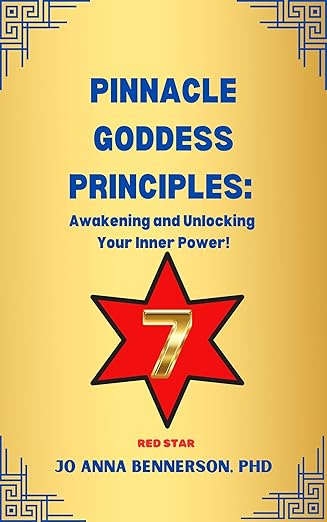

Jo Anna Bennerson’s Pinnacle Goddess Principles: Awakening and Unlocking Your Inner Power! is a captivating guide blending Greek mythology, self-help, and real-world inspiration. The book explores seven transformative principles; resilience, energy, devotion, strategic thinking, transformation, accountability, and renewal, each represented by a Greek goddess and tied to relatable modern figures. Bennerson’s aim is to guide readers toward achieving “C” Excellence, defined as healthy competition, conviction, clarity, courage, creativity, compassion, and cycles of growth.
The writing feels both poetic and direct, a combination that’s uplifting and engaging. I particularly enjoyed how Bennerson weaves mythological stories with actionable advice and real-life examples. This kind of storytelling made the lessons more memorable and gave me a sense of empowerment while reading.
One standout section was the chapter on energy, embodied by Aphrodite. Bennerson’s discussion on the vibrancy of life and passion, punctuated by Eleanor Roosevelt’s tireless advocacy, hit home. Her call to tap into our “reservoirs of vitality” resonated deeply. While I feel the language occasionally veered into flowery territory, the sincerity of Bennerson’s tone kept it authentic. The chapter on accountability, inspired by Nemesis, stood out as particularly impactful. The inclusion of Prince’s commitment to his craft and integrity as an artist made the abstract concept of accountability more relatable. Bennerson also challenges readers to embrace their own creative potential while taking responsibility for their actions. This balance between empowerment and accountability felt refreshing.
Some sections of the book leaned a bit heavily on rhetorical questions, which could feel repetitive at times. The emphasis on letting go of the past to embrace future possibilities felt like a gentle nudge to pause, reflect, and reset. Her advice here is universal, and the examples of both mythology and Robbins’s work tied the book’s lessons together beautifully.
Pinnacle Goddess Principles is a heartfelt and motivating read for anyone seeking a mix of mythology, personal growth, and practical life advice. Jo Anna Bennerson’s ability to connect the ancient with the modern creates a unique and empowering narrative. I’d recommend this book to readers who enjoy introspective self-help books or those looking for inspiration to tackle life’s challenges with grace and determination. It’s not just a book; it’s a call to awaken the goddess—or god—within you.
Pages: 90 | ASIN : B0DGQ3S57M
What Not To Do When Your Husband Dies: Neuroscience & Mindfulness As Tools To Navigate Grief
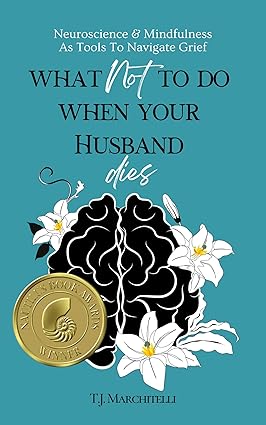
Grief is a profoundly personal experience, and while there is no universal solution, certain guidelines can help navigate the journey. T.J. Marchitelli, in her deeply personal and poignant book, What Not to Do When Your Husband Dies, offers an insightful guide on coping with grief and life after the loss of a spouse. Drawing from her own experiences, Marchitelli shares intimate stories, particularly the events surrounding her husband’s sudden death. She chronicles their life together, from their meeting in the vibrant Buddhist community of Manhattan to raising a family in East Hampton. This narrative backdrop sets the stage for a thoughtful exploration of grief, illustrating how our past and relationships influence our grieving process.
Marchitelli’s writing is both heartfelt and practical. She explores common pitfalls of grief, using her own mistakes and learnings to highlight what others might avoid. This approach makes the book relatable and accessible, offering readers a sense of companionship and understanding. Her reflections on her husband’s sudden death and its immediate aftermath are raw and unfiltered, providing a candid look at the shock and disorientation following such a profound loss. Her honesty about the debilitating nature of grief is refreshing, emphasizing that this book is not a way out but a way through. One of the author’s strengths is maintaining an approachable tone even as she discusses profound loss. She balances personal anecdotes with research-based insights, explaining how grief affects the brain and providing a framework for readers to understand the physical and psychological impacts of loss.
A key takeaway is the importance of self-care and a strong support network. Marchitelli emphasizes that losing a loved one is not a time to test one’s strength but to let others provide support. She suggests mindfulness and meditation as coping tools, adding a spiritual dimension to the narrative. Throughout the book, Marchitelli’s tone remains compassionate and encouraging. She acknowledges the uniqueness of each person’s grief journey while providing universally applicable advice. She hopes to serve as a beacon of light for those navigating the dark and confusing emotions of grief, guiding them toward rebuilding their lives with strength and grace.
Writing about grief with such openness is incredibly brave, and allowing readers into such a personal space is admirable. What Not to Do When Your Husband Dies is emotive, informative, and transformative. Its foundation on real-life experiences, supported by scientific insights, makes it a credible and valuable guide to grief. T.J. Marchitelli’s heartfelt writing is both comforting and helpful, making her unafraid exploration of her own pain a generous gift to her readers.
Pages: 154 | ASIN : B0CJKSZ111



 LITERARY TITAN