The Making of a Warrior of Light is part memoir, part motivational guide, and challenges readers to turn survival into strength through discipline, truth, and relentless self-reinvention. Was there a particular moment when you realized your experiences could help others?
I first realized my story could help others when I was in college at Alverno. Until that point, I carried a lot of shame about my childhood and almost never spoke about it. My focus was simple: survive it, bury it, and move forward.
Then I read A Child Called “It.”
While reading that book, something shifted inside me. For the first time, I saw how a painful story, when told honestly, could become a source of strength for someone else. Instead of something to hide, it could become something that helps others feel seen and understood.
At the same time, I was confronting the beliefs I had carried about myself for years. Growing up, I had internalized the message that I was dumb and worthless. Simply believing that I could succeed in college felt like a radical act of defiance against the past I came from.
In that moment, I made a quiet but powerful decision: my past would not determine my future. And I promised myself that when I made it to the other side, I would share my story so others could see what was possible. If I could overcome those beliefs and rebuild my life, then maybe someone else reading my story would begin to believe they could too.
That promise eventually became The Making of a Warrior of Light.
You describe how survival behaviors can look like personality. Can you explain that idea?
Most people don’t realize how much of their personality is actually built around survival. When we grow up in environments where we feel unsafe, unseen, or unsupported, the mind adapts quickly. It creates strategies to protect us, and over time, those strategies can start to look like personality traits.
Hyper-independence can look like strength. Perfectionism can look like ambition. Emotional distance can look like confidence. But often those patterns began as ways to stay safe.
One of the biggest survival patterns in my own life was overworking. From the time I was fifteen, I was working two to three jobs while going to school. That pattern continued through college and into adulthood. Even after I started my own business, I was working seventy-hour weeks while also being a full-time caregiver for my son and pursuing multiple degrees and certifications.
For a long time, I framed that as a positive identity. I told myself I was a “growth goddess,” someone who loved learning, building, and achieving. But underneath that drive was a deeper belief I hadn’t yet questioned: if I wasn’t producing, learning, or accomplishing something, I didn’t feel valuable.
What looked like ambition was actually survival.
Recognizing that was a turning point for me. When we start to see the difference between who we truly are and the version of ourselves we built just to get through hard circumstances, we can begin to release the patterns that keep us exhausted and disconnected from our worth.
Because the truth is, our value was never meant to be measured by how much we produce.
Worth is not something we earn through survival. It’s something we remember when we finally stop trying to prove we deserve to exist.
What does “Beast Mode” mean in the context of personal growth, and how can readers apply that mindset to their own challenges?
In the context of personal growth, “Beast Mode” means making a non-negotiable decision that you are done living the old way. It’s the moment when you stop negotiating with your limitations and commit to doing whatever it takes to transform your situation.
A lot of personal development advice focuses on gentle, daily practices, and those are incredibly valuable. A few minutes of meditation or a short coherence practice each day can create powerful shifts over time. But there are moments in life when things are collapsing all at once—your finances, your health, your emotional stability, your sense of direction. In those moments, transformation often requires a different level of commitment.
Beast Mode is when you decide that your breakthrough is the priority.
For example, creating heart-brain coherence through practices like breathwork or HeartMath can absolutely be done with a few minutes a day. But when I’ve gone through intense seasons of my life, Beast Mode meant something much more devoted. It meant practicing coherence every hour for several days, or committing to that level of discipline for weeks if necessary. It means regulating my nervous system, aligning my thoughts, and staying spiritually anchored again and again until the internal shift became undeniable.
Anyone can wait for life to improve. Beast Mode is when you become the person who decides it will. It requires devotion–a willingness to show up for your transformation with extraordinary focus until the old pattern breaks.
Because ultimately, a breakthrough doesn’t belong to the most talented people. It belongs to the ones who become relentless about their own evolution.
What advice would you give someone who feels stuck in survival mode?
The first thing I would tell someone who feels stuck in survival mode is this: start by regulating your nervous system. When your body is constantly operating in stress, fear, or overwhelm, it becomes almost impossible to see clearly or make empowered decisions. Practices that bring your body back into coherence—breathwork, stillness, movement, prayer, or meditation—create the internal safety required for real change.
But regulation alone isn’t enough. You also have to become devoted to aligning with your highest timeline.
What that means in practical terms is that you begin disrupting anything in your life that dishonors who you are becoming. Sometimes that’s a habit. Sometimes it’s an addictive coping pattern. Sometimes it’s the way you treat your own body through food or self-neglect. And sometimes it’s the dynamics within your relationships.
Growth often requires a reordering of your life. I’m not saying people need to abandon their families or cut everyone off. But many people do need to establish stronger boundaries around their time, their energy, and the environments they allow themselves to stay in. Survival mode thrives in chaos, depletion, and misalignment. When you begin protecting your energy and choosing environments that support your expansion, everything starts to shift.
Moving out of survival mode is rarely a single decision. It’s a series of courageous choices that gradually reshape your life.
Because ultimately, the life you’re meant to live can’t fully emerge until you stop making space for the patterns that keep you small.
#1 International Bestseller Unleash Your Inner Warrior: A Journey of Resilience and Hope
Discover the transformative power of resilience and hope in “The Making of a Warrior of Light” by Theresa Rubi Garcia. This gripping memoir delves into the heart-wrenching struggles and triumphant victories that have molded Theresa into a beacon of strength and inspiration. If you’ve ever felt overwhelmed by adversity or sought a beacon of light in your darkest moments, this book is your guide to finding that inner strength and forging a path to a brighter future.
As you read, you will find: A Journey of Courage: Traverse the raw and unfiltered path of Theresa’s life, from the shadows of abuse and prejudice to the radiant light of hope and empowerment.
Empowering Narratives: Discover the power of resilience through Theresa’s heartfelt stories that encourage you to find your own inner strength.
Universal Inspiration: Whether you face personal challenges or systemic obstacles, this memoir offers universal lessons on overcoming adversity and achieving personal transformation.
A Beacon of Hope: Theresa’s story serves as a guiding light, demonstrating how love, inner strength, and unwavering determination can lead to a brighter future.
A Call to Action: This book is more than a memoir; it’s a motivational call to rise, confront your struggles head-on, and emerge stronger and more empowered.
Heartfelt Connection: Feel a deep sense of solidarity and support as Theresa’s journey resonates with your own experiences, fostering a sense of community and shared purpose.
Join Theresa Garcia in “The Making of a Warrior of Light” and be inspired by the story of a woman who turned her darkest moments into a luminous future. Let her journey guide you to uncover your inner warrior and rise above life’s challenges. Embrace your own journey with the good, bad, and ugly, and find the strength to close the cycles that hold you back.
Theresa Rubi Garcia’s The Making of a Warrior of Light is a memoir that refuses to stay in one lane: it’s a childhood survival story, spiritual manifesto, and practical “keep going” manual braided into one voice. Garcia opens with the blunt architecture of her life, racism inside her own family, neglect, violence, early exposure to sex and substances, and the way hunger for love can shapeshift into self-sabotage, then tracks her evolution into a mother, a relentless self-rebuilder, and eventually the founder of Rubi’s Positive Empowerment. The book is explicit about its intent: don’t pity her; use the story as a roadmap for turning pain into power.
Garcia doesn’t narrate from a safe distance. She brings you into the room with the kid-version of herself who is trying to compute the uncomputable, then shows you how those early equations (fear = safety, pain = love) keep solving for the same misery. What hit me hardest wasn’t just the severity of what happened; it was the candor about the coping: the people-pleasing, the volatility, the chase for intensity, the way “survival mode” can look like personality from the outside.
The second half shifts from bleeding to healing. I liked that Garcia doesn’t sell healing as a scented candle. She frames it as discipline, choice, repetition, and sometimes sheer refusal. Her “Beast Mode” section is essentially a field guide for forward motion, adaptability, resiliency, fearlessness, a “thirst for truth,” and the insistence that even overwhelm can be met with surrender and embodied practices (she talks about going into nature, running, hiking, and re-centering so she can show up as a steadier presence). It’s motivational, yes, but with bite marks: she keeps reminding you that growth is incremental, that habits are built in “micro-shifts,” and that the point isn’t perfection, it’s traction.
This is for readers who want memoir, trauma recovery, and spiritual self-help in the same mouthful: survivors who are tired of being handled with velvet gloves, faith-adjacent seekers who like their mysticism practical, and scrappy strivers who need proof that a past can be an origin story, not a sentence. In spirit, it reminded me of Tara Westover’s Educated, but with more direct coaching energy and a metaphysical vocabulary that aims at empowerment rather than academia. If you’re ready, this book is a match struck in a dark room, and it leaves you wanting to see.
Pain threads itself through every life. No one escapes it, yet our response to that ache becomes the defining choice. We can surrender to it and let it sculpt our identity, or we can press upward and reshape the narrative. From Wounds to Purpose embraces this truth and pushes deeply into its terrain. Readers carrying loss, heartbreak, or trauma will find a guide here, one that encourages honest reckoning, steady processing, and, ultimately, transformation. The book urges individuals to gather the fragments of their hurt and redirect them toward something constructive, even hopeful.
Sharon LaCombe Been’s work fits the self-help genre, but it doesn’t stay confined there. It stretches outward, functioning as a meditation on the human condition and a testament to what grit, intention, and inner resolve can accomplish in the face of what once felt immovable.
The author champions a courageous act: turning toward one’s wounds instead of burying them. Simple to articulate, difficult to live. Healing requires effort, and the author never pretends otherwise. Still, she offers practical pathways, approaches accessible to anyone, regardless of how deep or long-standing their suffering may be.
The book’s most striking strength lies in its universality. Heartbreak, bereavement, and sudden upheaval can halt a life in its tracks. Been writes with care and clarity, outlining ways to acknowledge these experiences without allowing them to dictate who we become or where we go next.
Not every reader will find the work easy to internalize, yet those willing to lean into its message may discover something transformative. Brimming with insight, resilience, and quiet encouragement, From Wounds to Purpose stands as a tribute to human courage and might be exactly the companion you need when life feels unbearably heavy.
In The Break, you share with readers your experiences battling addiction and codependency and offer an intimate look into the unraveling of your marriage. Why was it important for you to write this book?
It was important for me to write The Break and share my experiences with codependency as my ex-husband and I came to terms with his alcoholism because I remember how alone I felt as I looked for community and understanding. I found more stories of people becoming sober than I found of those caring for someone going through alcoholism. The examples of alcoholism that were readily available were stories of various forms of abuse, mood swings, police interactions, empty bank accounts and houses built on fear. None of that was my story and I wanted to show others what high functioning alcoholism can look like. As I looked for my community, I realized there were more programs to assist the individual going through addiction than there were to help guide the loved ones. Alcoholism is a full life disease – it affects family, friends, co-workers and acquaintances – so I found it very odd that there was not just as much support for those around the alcoholic. I wanted to add to that community and that conversation because we, the co-dependents, need a strong support system as well.
I appreciated the candid nature with which you told your story. What was the hardest thing for you to write about?
The hardest part for me to write about was our wedding and accepting the fact that I really didn’t want to get married at the age of 25. It wasn’t that I didn’t want to marry my now ex-husband, it’s simply that I felt like I was up against societal standards and I was behind. I felt like I needed to get married because it was the next right step. Yes, I loved my now ex-husband and I should not have gotten married. While it was the next right step based upon societal measures, it was not the next right step for me and I was too young and too scared to recognize that truth.
What is one piece of advice you wish someone had given you when you were younger?
There is a lot of advice that I wish my younger self had been told, however it does not mean I would have been ready to accept it. If someone had told me that I didn’t have to get married, that there is always another way and to make sure I take the time to listen to myself, I can’t say I would have fully listened to them or understood what they meant. Especially since all the women close to me modeled a very different belief system. Even the women in the news were heralded more for their looks and who they were dating, than the accomplishments they created on their own.
What is one thing you hope readers are able to take away from The Break?
The biggest take away that I hope readers carry with them after reading The Break,is to give that inner voice space. Take the time to listen to the quiet nudging and pulling that says Try this or Are you sure?. It can be scary to give that voice a chance to be heard, especially if she’s been quieted for so long, AND it will be very worth it.
Within each woman there is an INNER KNOWING that the dominant culture has encouraged us to quiet and ignore.
This quieting leads us towards a life out of alignment with our truest and most authentic selves. This leaves us feeling anger, exhaustion and constantly stuck. A life the author was too familiar with as she struggled to accept her then husband’s alcoholism and the part she played in the cycle.
The Break is a story of Brandee’s unlearning, seeking truth and finally allowing herself to trust her inner own knowing. The journey back to herself was not easy and it was completely necessary. This story is shared with the hope it will guide you back to your own inner knowing as well. Themes in this book include: Addiction Separation Learning to trust ones self Strengthening your inner knowing Order your copy today!
The Break is a raw and soul-baring memoir about the unraveling of a marriage caught in the quiet storm of high-functioning alcoholism and the slow rebirth of a woman learning to trust her own voice. Brandee Melcher takes readers on an intimate, winding journey through love, codependency, addiction, motherhood, and self-liberation. The book is structured in short, potent chapters that trace the trajectory of her life — from a childhood shaped by domestic violence to a marriage strained by denial and rules designed to fix what couldn’t be fixed. With startling honesty, Melcher offers readers not a step-by-step how-to, but a companion in the dark. This is a book about listening to the gut, especially when the heart wants to pretend everything is fine.
I enjoyed Melcher’s writing. I liked how sharp and tender it is all at once. She doesn’t hide from the uncomfortable. She walks right into it, like in Chapter 7, “The Long Ending,” where she describes the heartbreak of discovering that her husband had lied about drinking. Her rage, disbelief, and exhaustion are palpable. And yet, she never lets herself or the reader off easy. She owns her part, too — the enabling, the rationalizing, the excuses, the countless “rules” in Chapter 4 that were made and broken. There’s no polish here. No clean endings. Just someone standing in the ruins of what she thought marriage should be, slowly sweeping up the truth. I felt her weariness. I felt her clarity when she says, “It became too much to keep up with… and I was tired of the discussions.” That kind of fatigue isn’t just emotional — it’s physical. And she writes it like it is.
And then there’s the bravery — not just in leaving, but in staying so long and still trying. In Chapter 10, “Soul Break,” Melcher recounts the moment her partner admitted he drank simply because “he wanted to.” There’s no villain here, only a man in pain and a woman who couldn’t carry both of their stories anymore. I admired how she didn’t demonize him. She held grief in one hand and compassion in the other. And in doing that, she gave readers permission to feel both at once, too. Melcher’s ability to distill big, messy truths into plainspoken sentences is one of her greatest strengths.
This isn’t a book for people looking for easy answers or perfect closure. But if you’ve ever doubted your own instincts, if you’ve stayed too long, if you’ve bargained your way through a relationship thinking “at least he doesn’t…” — then The Break will feel like a mirror and a lifeline. I’d recommend this book to anyone healing from emotional exhaustion, codependency, or the quiet heartbreak of unspoken truths. Especially women. Especially mothers. Melcher’s voice is a steady hand on the shoulder — one that says, “You’re not crazy. And you’re not alone.”
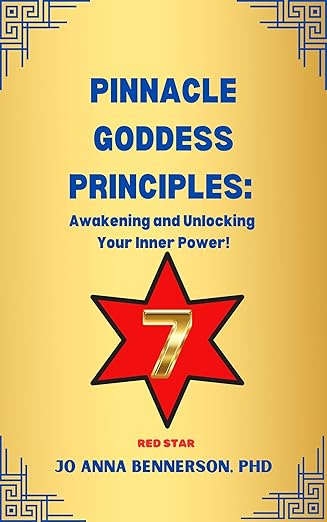
Jo Anna Bennerson’s Pinnacle Goddess Principles: Awakening and Unlocking Your Inner Power! is a captivating guide blending Greek mythology, self-help, and real-world inspiration. The book explores seven transformative principles; resilience, energy, devotion, strategic thinking, transformation, accountability, and renewal, each represented by a Greek goddess and tied to relatable modern figures. Bennerson’s aim is to guide readers toward achieving “C” Excellence, defined as healthy competition, conviction, clarity, courage, creativity, compassion, and cycles of growth.
The writing feels both poetic and direct, a combination that’s uplifting and engaging. I particularly enjoyed how Bennerson weaves mythological stories with actionable advice and real-life examples. This kind of storytelling made the lessons more memorable and gave me a sense of empowerment while reading.
One standout section was the chapter on energy, embodied by Aphrodite. Bennerson’s discussion on the vibrancy of life and passion, punctuated by Eleanor Roosevelt’s tireless advocacy, hit home. Her call to tap into our “reservoirs of vitality” resonated deeply. While I feel the language occasionally veered into flowery territory, the sincerity of Bennerson’s tone kept it authentic. The chapter on accountability, inspired by Nemesis, stood out as particularly impactful. The inclusion of Prince’s commitment to his craft and integrity as an artist made the abstract concept of accountability more relatable. Bennerson also challenges readers to embrace their own creative potential while taking responsibility for their actions. This balance between empowerment and accountability felt refreshing.
Some sections of the book leaned a bit heavily on rhetorical questions, which could feel repetitive at times. The emphasis on letting go of the past to embrace future possibilities felt like a gentle nudge to pause, reflect, and reset. Her advice here is universal, and the examples of both mythology and Robbins’s work tied the book’s lessons together beautifully.
Pinnacle Goddess Principles is a heartfelt and motivating read for anyone seeking a mix of mythology, personal growth, and practical life advice. Jo Anna Bennerson’s ability to connect the ancient with the modern creates a unique and empowering narrative. I’d recommend this book to readers who enjoy introspective self-help books or those looking for inspiration to tackle life’s challenges with grace and determination. It’s not just a book; it’s a call to awaken the goddess—or god—within you.
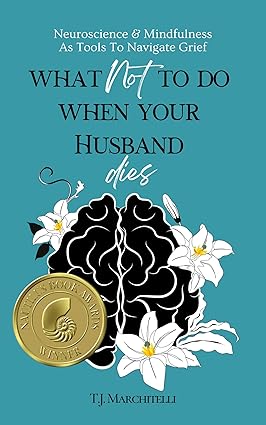
Grief is a profoundly personal experience, and while there is no universal solution, certain guidelines can help navigate the journey. T.J. Marchitelli, in her deeply personal and poignant book, What Not to Do When Your Husband Dies, offers an insightful guide on coping with grief and life after the loss of a spouse. Drawing from her own experiences, Marchitelli shares intimate stories, particularly the events surrounding her husband’s sudden death. She chronicles their life together, from their meeting in the vibrant Buddhist community of Manhattan to raising a family in East Hampton. This narrative backdrop sets the stage for a thoughtful exploration of grief, illustrating how our past and relationships influence our grieving process.
Marchitelli’s writing is both heartfelt and practical. She explores common pitfalls of grief, using her own mistakes and learnings to highlight what others might avoid. This approach makes the book relatable and accessible, offering readers a sense of companionship and understanding. Her reflections on her husband’s sudden death and its immediate aftermath are raw and unfiltered, providing a candid look at the shock and disorientation following such a profound loss. Her honesty about the debilitating nature of grief is refreshing, emphasizing that this book is not a way out but a way through. One of the author’s strengths is maintaining an approachable tone even as she discusses profound loss. She balances personal anecdotes with research-based insights, explaining how grief affects the brain and providing a framework for readers to understand the physical and psychological impacts of loss.
A key takeaway is the importance of self-care and a strong support network. Marchitelli emphasizes that losing a loved one is not a time to test one’s strength but to let others provide support. She suggests mindfulness and meditation as coping tools, adding a spiritual dimension to the narrative. Throughout the book, Marchitelli’s tone remains compassionate and encouraging. She acknowledges the uniqueness of each person’s grief journey while providing universally applicable advice. She hopes to serve as a beacon of light for those navigating the dark and confusing emotions of grief, guiding them toward rebuilding their lives with strength and grace.
Writing about grief with such openness is incredibly brave, and allowing readers into such a personal space is admirable. What Not to Do When Your Husband Dies is emotive, informative, and transformative. Its foundation on real-life experiences, supported by scientific insights, makes it a credible and valuable guide to grief. T.J. Marchitelli’s heartfelt writing is both comforting and helpful, making her unafraid exploration of her own pain a generous gift to her readers.