Blog Archives
From Battlefield To Breakthrough: The Foundation Taking Authority Over Your Mind And Identity


Kristina Gibbons’s From Battlefield to Breakthrough is an expansive Christian workbook centered on spiritual formation, mental renewal, and the believer’s identity in Christ. Gibbons presents spiritual warfare as a daily discipline shaped by Scripture, prayer, repentance, discernment, and obedience. The book moves from recognizing destructive thought patterns to developing practical habits involving prayer, the Armor of God, fasting, rest, and remembrance. Its progression gives the reader a clear sense of movement from self-examination toward a more confident and sustained practice of faith.
The workbook’s most effective feature is its integration of teaching with structured participation. Gibbons regularly follows biblical instruction and personal testimony with written questions, prayer prompts, declarations, habit-building exercises, and multistep sections called “Rounds.” Readers are asked to identify recurring lies, trace their origins, find relevant Scripture, and translate what they’ve learned into specific actions. Her statement that “You do not earn identity. You stand in it” captures the book’s central conviction that spiritual authority begins with receiving one’s position in Christ.
Gibbons writes with urgency, warmth, and pastoral directness. Her battlefield, courtroom, armor, and property metaphors give abstract theological ideas a concrete vocabulary that readers can apply to their inner lives. Repetition is an essential part of this method because the workbook treats transformation as the result of consistent practice. Its discussions of neuroplasticity support this emphasis by connecting repeated patterns of thought with the biblical renewal of the mind. The book also demonstrates valuable discernment when it distinguishes among spiritual attack, unrepented sin, and emotional wounds, guiding readers toward responses appropriate to each situation.
From Battlefield to Breakthrough is a substantial devotional training resource for Christians who want a disciplined framework for examining their thoughts, strengthening their prayer lives, and applying Scripture to recurring struggles. Its combination of theological instruction, personal reflection, and practical exercises makes it particularly suitable for extended individual study, mentoring relationships, or small groups. One of its most balanced insights appears late in the workbook, where Gibbons describes rest as an act of trust that releases the outcome to God while maintaining faithful obedience. That emphasis completes the book’s larger vision of spiritual maturity as an active, humble, and sustainable way of living.
Pages: 291 | ASIN : B0H58KPNC2

Armor of God: A 7-Day Devotional

Aneasa Perez’s Armor of God is a faith-centered devotional that guides readers through the spiritual armor described in Ephesians 6, then expands into broader reflections on prayer, forgiveness, endurance, worship, authority, and victory in Christ. Structured in daily readings with prayers, reflection questions, and declarations, the book moves from the belt of truth and breastplate of righteousness into deeply practical territory, such as guarding the heart, taking thoughts captive, standing in the gap for others, and learning to rest in God’s defense rather than striving in one’s own strength.
I appreciated the book’s steady insistence that spiritual strength doesn’t have to look frantic. Perez writes with a warm, commanding confidence, but the devotionals are at their best when they soften into tenderness. The bonus devotional on resting in God’s defense stayed with me because it recognizes a tension many believers know intimately: the call to stand firm without slipping into anxious control. The image of the Israelites at the Red Sea and Jehoshaphat sending worshipers to the front lines gives the reader something more substantial than encouragement. It gives shape to surrender. There’s a grounded beauty in the idea that faith can be both active and quiet, both armored and at rest.
The writing is direct, rhythmic, and often stirring. Perez favors repetition, declarations, and strong spiritual contrasts, which gives the book the cadence of a sermon and the intimacy of a prayer journal. The intensity can feel slightly relentless, especially when the language returns again and again to warfare, breakthrough, and victory. Still, that repetition also serves the purpose of the book: it reinforces truth until it begins to feel inhabitable. I was especially drawn to the sections on forgiveness and the battle for the mind. The passage on unforgiveness as a self-made prison is emotionally sharp, and the call to “grab” a thought before it grabs you makes a familiar biblical principle feel immediate and personal. The book’s ideas are not abstract theology. They are meant to be practiced in the kitchen, in the car, in the weariness after a hard season, in the private ache of wanting to quit.
Armor of God is a sincere and spiritually earnest devotional with a strong pastoral heartbeat. Its strength lies in its conviction, its accessible structure, and its repeated reminder that believers are not fighting for victory, but from it. I’d recommend this book to Christian readers who want a devotional that feels bold, prayerful, and strengthening, especially those walking through discouragement, spiritual fatigue, or a season where they need Scripture framed as both comfort and weapon.
Pages: 63 | ASIN : B0H1K8Q9Q8
From Wounds to Purpose

Pain threads itself through every life. No one escapes it, yet our response to that ache becomes the defining choice. We can surrender to it and let it sculpt our identity, or we can press upward and reshape the narrative. From Wounds to Purpose embraces this truth and pushes deeply into its terrain. Readers carrying loss, heartbreak, or trauma will find a guide here, one that encourages honest reckoning, steady processing, and, ultimately, transformation. The book urges individuals to gather the fragments of their hurt and redirect them toward something constructive, even hopeful.
Sharon LaCombe Been’s work fits the self-help genre, but it doesn’t stay confined there. It stretches outward, functioning as a meditation on the human condition and a testament to what grit, intention, and inner resolve can accomplish in the face of what once felt immovable.
The author champions a courageous act: turning toward one’s wounds instead of burying them. Simple to articulate, difficult to live. Healing requires effort, and the author never pretends otherwise. Still, she offers practical pathways, approaches accessible to anyone, regardless of how deep or long-standing their suffering may be.
The book’s most striking strength lies in its universality. Heartbreak, bereavement, and sudden upheaval can halt a life in its tracks. Been writes with care and clarity, outlining ways to acknowledge these experiences without allowing them to dictate who we become or where we go next.
Not every reader will find the work easy to internalize, yet those willing to lean into its message may discover something transformative. Brimming with insight, resilience, and quiet encouragement, From Wounds to Purpose stands as a tribute to human courage and might be exactly the companion you need when life feels unbearably heavy.
Pages: 101 | ASIN : B0FR3P8SGQ

Identity Crisis: Who Am I, Really?
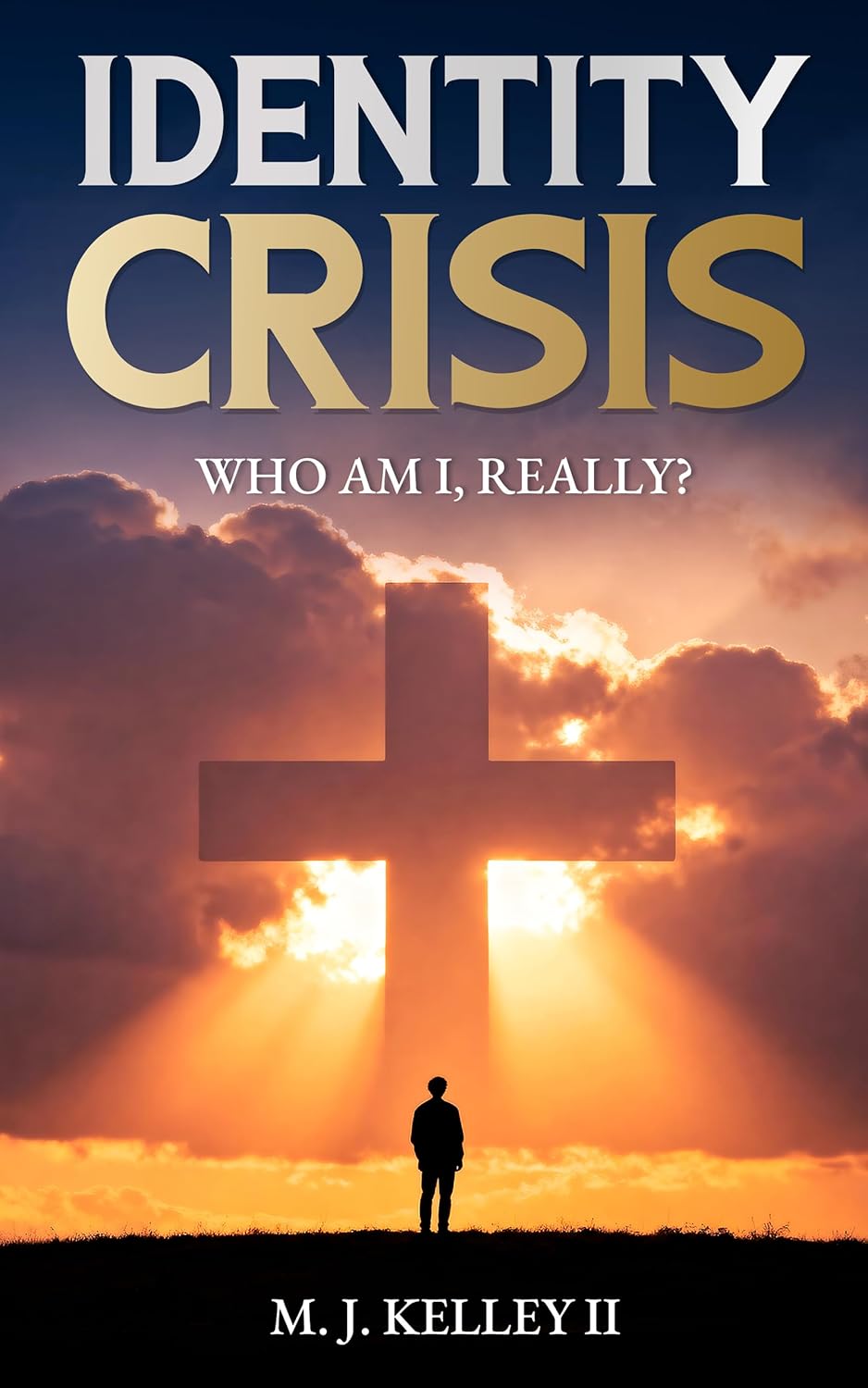
Identity Crisis blends memoir and spiritual teaching to explore what it means to find your true identity in God. Kelley opens with the raw story of his childhood in foster care, marked by neglect, abandonment, and the hurtful names that shaped how he saw himself. He then walks through his journey as a police officer, a husband, a new believer, and eventually a student of theology, all while learning to trade the labels of his past for the identity Scripture offers. From the early chapters on cultural confusion about identity to later ones on adoption, community, and endurance, the book reads like both a testimony and a guide for anyone asking who they really are.
Kelley’s reflections on trauma, performance, and the old names he carried hit with an honesty that doesn’t try to dress anything up. When he describes sitting in church week after week, slowly realizing God was dismantling the identity he had built on strength and achievement, it feels both vulnerable and relatable. The mix of personal story and teaching creates a rhythm that kept me leaning in rather than feeling preached at. Even when he steps into theological territory, the tone stays grounded in real experience, which helps the ideas land with more weight.
What stood out most to me was the way he keeps circling back to the tension between the world’s noise and God’s steady voice. His chapters on misplaced significance, false labels, and the limitations of self-discovery felt especially timely. The way he writes about social media, comparison, and the cultural pressure to self-construct shows he’s paying attention to the world we actually live in, not just the one inside church walls. His explanation of spiritual adoption later in the book adds depth, giving the reader something solid to hold on to. I appreciated how he acknowledged the slow, sometimes clumsy process of renewing the mind rather than offering a quick fix.
By the end, I felt the book had given me both a mirror and a map. A mirror, because so many of the fears and questions he names are ones most of us carry quietly. And a map because he lays out what it looks like to move from old identities into a new one shaped by faith, community, and Scripture. If you’re drawn to Christian nonfiction that blends story with teaching, or if you’ve ever felt weighed down by the labels life has handed you, this book will likely speak to you.
Pages: 241 | ASIN : B0G1NK5V76
Self-Worth in God’s Love

Identity Crisis: Who Am I, Really? shares my journey from abandonment and anger to spiritual renewal, offering readers a thoughtful, faith-centered examination of identity. Why was this an important book for me to write?
Writing Identity Crisis: Who Am I, Really? was profoundly important because my personal journey from confusion about who I truly was to clarity about my ultimate identity mirrors a struggle that I believe is universal. The book is the story of how God took me—a man defined by the lies of his past, which was marked by abandonment, neglect, and abuse—and taught me who I truly was.
My motivation stemmed from my understanding that the “spiritual chains” that bound my heart were from society’s definition of who I was, and the deepest help I could offer to others was to show them the path away from this cobweb trap. I wanted to give my readers the euphoria of their own enlightened journey from a life of angry entitlement to one of humble gratitude, from anxious performance to restful security. By surrendering my story to the “divine Author,” I found that my entire path from early childhood, including my former orphanhood, abuse, and anger, could be transformed into the very tools of faith that could help others discover their own freedom. In short, the book was necessary for me to share – I felt a deep obligation to offer a roadmap that others might use on their quests for their own true identities.
What were some ideas that were important for me to share in this book?
I emphasized several foundational, Christ-centered ideas designed to dismantle a performance-based identity in favor of establishing true self-worth in God’s love. Key ideas that are important for me to share include:
- Identity is Found in Divine Design, Not Self-Creation: The central truth is that everyone’s identity must begin with the Creator, rooted in the Bible telling us we were created in the Imago Dei (Image of God). This inherent value is endowed, intrinsic, and immutable, and it cannot be increased by success or diminished by failure. True self-discovery comes not from looking inward, but from looking up to the Creator.
- The Radical Nature of Divine Adoption: A paramount idea is that as a believer, I am not merely forgiven, but am legally and lovingly adopted as a child of God. This concept, drawn from the irreversible Greco-Roman legal practice of huiothesia, means my old debts and legal ties have been erased, and I gain all the rights of a natural-born heir. This status is permanent, unbreakable, and the ultimate antidote to spiritual orphanhood and shame.
- The Freedom of Resting in Christ’s Finished Work: Crucially, the book aims to show that the only remedy for the soul-crushing performance trap is the reader learning how their identity is obtained by stripping away old facades with the freedom obtained through grace. Their righteousness is not earned but imputed (credited) to their accounts through the substitutionary work of Christ on the cross. Because Christ bore the divine wrath, each and every one of us is given the credit of having rendered perfect obedience to the law and thus is declared righteous by God. No earthly accomplishment can achieve that! Our standing is secured by Christ’s perfection, not our own, and certainly not by how we are evaluated or judged by others.
- The Battle for the Mind: It is essential for readers to understand that the enemy’s primary tactic is deception, accusation, and distortion of truth. This will never go away, and so our ongoing work is to continuously renew our minds by demolishing all the strongholds of lies and replacing them with the truth of God’s Word. My book shows how we can do this through Scripture, prayer, and community.
What was the most challenging part of writing your memoir, and what was the most rewarding?
- Most Challenging: The most difficult aspect involved confronting, and then allowing myself the vulnerability of exposing, the raw experiences of my childhood—the horrible feelings of abandonment and being neglected by those who were supposed to love andcare for me, the “searing, silent language” of being branded with negative names, and myabsolute, deep-seated anger toward God for all of it. It was very difficult going back to reveal this journey, all the way from being an unwanted foster child to my role, striving to become a respected police officer who was trying to earn his own sense of worth, all the while finding a way to silence those “old, familiar names” with all their various earthbound identities. This process required immense spiritual meditation and emotional honesty.
- Most Rewarding: The most rewarding element was clearly the process of discovering and then presenting to others the glorious truth of my new identity in Christ. This “new journey” transformed my path from a life of anxious performance to one of a restful and secure identity. The reward turned out to be knowing that my most painful chapters—my orphanhood and abuse—were used by God to give others a “roadmap” to their own God-given identity and the freedom which comes from their true name as a child of the King.
What do you hope is one thing readers take away from your story?
The single most important takeaway I hope for my readers is that they will understand they are created in God’s image and must stop searching for any identity in worldly evaluations, that by stripping away secular manifestations of identity, they can immediately reveal the truth of their own perfect identity already given to them through God’s love and sovereign design.
I am praying that my readers will:
- Hear God’s quiet and still voice, which cuts through every one of the competing voices.
- See themselves as God sees them: not as an orphan, but as a legal heir and child of the King.
- Understand at their core that their identity is not bound to anything from their past or anything related to achievement or performance, but that they are seen as righteous and deserving in God’s sight, forgiven and freed through the actions of His Son.
My final call to action is for readers to reject the exhausting slavery of performance and step into the joyful freedom of grace, living fully in the light of their true identity in His name, and now theirs, as well.
Author Links: GoodReads | X (Twitter) | Facebook | Website | Amazon
Why I Wrote This Book
My childhood was a chaotic collage of broken places and broken people, defined by the searing, silent language of abandonment. I learned the cold linoleum hallways of foster homes, where I tried to survive by becoming invisible, believing the cruel labels hurled at me: “stupid,” “worthless,” and “trouble.” For years, my identity was forged in a furnace of neglect, and I was utterly alone, desperately fighting for a sense of worth. I tried to seize control, to write a new story for myself through performance and success, even choosing to become a police officer as the ultimate expression of control and strength. But beneath the uniform, the armor was heavy and hollow—my self-made identity was a painkiller, not a cure.
I spent years looking around and inside me for the answer to the fundamental question, “Who am I?” It wasn’t until I stopped trying to write my own story and started looking up that I found the truth. Through His relentless grace, God took a man who was defined by the lies of his past and taught him who he truly was. The Bible became a mirror that shattered my self-made identity and revealed a glorious, God-given identity I never knew was possible.
This book, Identity Crisis: Who Am I, Really?, is a roadmap born from that journey. My prayer is that my story of moving from an angry, anxious life of performance to one of restful, humble security will help you, no matter your past failures or struggles. It is an invitation to every person asking to fill an inner void to discover that the struggle for identity ends in the heart of the God who made you. He sees you not as an orphan or a failure, but as a child of the King, beloved and secure. It’s time to stop striving, surrender your story to the divine Author, and finally come home to your true name.
Identity Crisis: Who Am I, Really?
Identity Crisis: Who Am I, Really? offers a striking blend of memoir and theology, tracing one man’s journey from abandonment and anger to spiritual renewal. The author begins with a vivid recollection of his upbringing in foster care, marked by instability, neglect, and emotional wounds. His story unfolds through a lens of deep honesty, moving from survival and self-reliance to the gradual recognition of divine purpose. What begins as a personal account of loss transforms into a broader reflection on how individuals construct their identities in an age of distraction, performance, and comparison.
The opening chapter establishes both the emotional and philosophical weight of the work. When the author describes “the names I had been called were weapons,” the reader is immediately drawn into his internal conflict between strength and brokenness. His career as a police officer becomes a metaphor for control, an outward display of stability masking an inward fragility. This contrast anchors the book’s central theme: that human worth cannot be secured through achievement, image, or reputation. The author’s eventual encounter with faith reframes identity not as something earned, but as something received.
Beyond the personal narrative, the book engages thoughtfully with cultural issues. In “The Crisis of Identity,” the author critiques the social and psychological consequences of the digital age, arguing that social media’s obsession with validation has eroded authentic self-worth. His discussion of the “comparison trap” is particularly compelling, weaving together research on narcissism and mental health with theological reflection. The prose maintains clarity even when exploring complex ideas, inviting readers to think critically about how technology shapes the self.
One of the most powerful sections, “When Labels Become Limiting,” exposes the damage caused by societal categorization and contrasts it with the Christian understanding of identity as being “created in the image of God.” The author’s exploration of spiritual adoption, our becoming children of God with a new name and inheritance, provides the emotional and theological resolution of the narrative. This theme of restoration lends the book both its moral force and its hope.
Identity Crisis is deeply personal yet widely relevant. It speaks to anyone wrestling with self-worth, purpose, or belonging in a world that prizes performance over authenticity. The author’s courage in revisiting his past, combined with his grounded biblical insight, makes the work both reflective and redemptive. Readers seeking a thoughtful, faith-centered examination of identity will find this book profoundly moving and intellectually satisfying.
Pages: 241 | ASIN : B0G1NK5V76
God Is Your Direct Source

Dear New Believer, Love God shares with readers your personal insights and provides practical advice on how to develop a personal relationship with God while explaining complex spiritual concepts in a way new believers can understand. What were some ideas that were important for you to share in this book?
Developing a personal relationship with God is what Christianity is all about. Although I don’t discourage anyone from doing so, going to church, reading the Bible, tithing, and any other legalistic rituals are not a must in order for you to develop a personal relationship with God. My book advocates for reliance directly on God rather than church and other Christians.
What is one piece of advice you wish someone had given you when you were starting out on your spiritual journey?
I wish someone would have told me that I am able to develop a personal one-on-one relationship with God and that I can reach out directly to Him for the help I so desperately needed. I became reliant on the churches I attended and the fellow Christians I met for the help that only God could provide. Furthermore, I wish someone would have taught me more about the devil. I was so spiritually immature, not only God’s ways, but to the devil’s tactics, and it led me to become fully taken over by him. I was in bondage for years before I learned (directly from God), to call out for His help and to stop looking to the church and others for help.
What do you hope is one thing readers take away from your book?
Going to church, reading the Bible, tithing, and any other legalistic expectations are not necessary in order to develop a personal one-on-one relationship with God. He is your direct source for everything you need. Furthermore, the enemy is very real and can be very dangerous if you are unfamiliar with how he operates. God can teach you all you need to know.
Author Links: Facebook
anyone seeking answers, for anyone battling spiritual warfare, and for anyone
who has fallen into Satan’s trap and can’t find a way out. If you’re struggling
to learn who God really is and if you’re seeking help by following the usual traditional
teachings of the church, Dear New Believer, Love God is the book for you!
This book offers understanding guidance on developing a relationship with God
without becoming dependent on the church and fellow Christians.Author
Leigh Trupin wrote this book as a struggling new believer who became entangled
in Satan’s trap herself. It is the book she was desperate to read as she sought
answers and sought to understand who God is by following the teachings of the
Church. In the end, Leigh found freedom from Satan and answers to her questions
only when God Himself revealed them to her. For Leigh, the answers were not
found in church, they were not found by giving tithings and offerings, and they
were not found by regular reading of the Bible. They were found when God showed
her what the church never did – that having a personal one-on-one relationship
with God transcends any religious and legalistic expectations. A relationship
with God is where it all begins!
Dear New Believer, Love God


Dear New Believer, Love God is a heartfelt guide for those new to Christianity. It offers personal insights and practical advice on developing a personal relationship with God. Through vivid anecdotes and candid reflections, the author shares her journey from spiritual confusion to clarity, emphasizing the importance of a direct connection with God over traditional religious practices.
One of the book’s most compelling aspects is its relatability. Author Leigh Trupin’s writing is down-to-earth and engaging, making complex spiritual concepts easily understood by anyone. For instance, in the first chapter, she recounts an intense experience in Walmart where she felt a divine urge to check on her dog, Cha-Chi. This story sets the stage for the book’s central message: God communicates with us in personal and sometimes unexpected ways. This relatable narrative style makes it easy to connect with the author’s experiences and understand her spiritual insights.
Another strength of the book is its emphasis on the pitfalls of relying too heavily on religious institutions or practices to define one’s faith. Trupin discusses her struggles with understanding God through conventional means, like church and theological books, which she found too advanced and impersonal. Her journey underscores the idea that personal experiences with God are crucial. I think this perspective is refreshing and comforting, especially for new believers who may feel overwhelmed by traditional religious expectations.
While I found the book compelling and enjoyed the depth to which the author explores personal stories and spiritual experiences, I feel that some sections tend to be a bit lengthy. I believe mixing in more practical advice or reflections would make the book even more engaging and these sections easier to follow.
Dear New Believer, Love God is a valuable resource for anyone seeking a personal and practical approach to Christianity. Leigh Trupin’s honest and relatable writing style makes the book an easy and engaging read. It is particularly well-suited for new believers who feel lost in traditional religious settings and are looking for a more personal connection with God. If you’re someone who has struggled to find your place within conventional religious practices or simply want to deepen your personal relationship with God, this book offers a compassionate and insightful guide.
Pages: 58 | ASIN : B0D5NVC7FV


