Blog Archives
Echoes of Memory: War, Testimony, and Survival on Sanzao Island


Echoes of Memory is a deeply personal work of public history by Robert Cupchoy and Lani Cupchoy, rooted in survivor testimony, family archive, poetry, and scholarly reflection. It traces the Japanese occupation of Sanzao Island during World War II, beginning with the shattering recollections of Fook Im Chen as planes descend over rice fields, moving through starvation, forced labor, cultural suppression, and the devastating history of the comfort women system, then widening into questions of inheritance, healing, and remembrance. What makes the book distinctive is its refusal to separate history from kinship. The authors present Sanzao not as an obscure footnote to larger wartime narratives, but as a wounded, living place whose people carried memory in stories, rituals, photographs, silence, and even in the later transformation of the family home into the Cupchoy Café.
Fook Im’s memories of bombs falling, villagers hiding food, and families clinging to one another have an aching immediacy that formal history often struggles to hold. The chapter on the comfort women is especially harrowing, not because it reaches for shock, but because it understands the intimacy of violation. Jin Yuan Lin’s presence in the comfort house, his memory of the women staring out windows, and his fear that forgetting them would mean losing them again, left me with a quiet grief that lingered after the page ended. The writing is sometimes at its strongest in these moments of restraint, when the authors trust a remembered image to carry the weight. The prose can become academically dense, with theoretical frameworks crowding the emotional field, but even then, I sensed the urgency behind it. The book wants to protect these stories from being dismissed as anecdote, and that protective instinct gives the scholarship its moral heat.
What I admired most is the book’s central idea that memory itself can be a form of evidence. That argument feels both intellectually persuasive and emotionally earned. The poems that open chapters don’t always have the precision of the testimonies, but I appreciated their function: they create a ritual threshold before the reader enters material that is painful, fractured, and sacred. I was also moved by the book’s attention to cultural survival, especially its insistence that festivals, language, family meals, and oral storytelling matter as much as destroyed homes and ruined fields. The Cupchoy Café section could easily have felt sentimental, yet it becomes one of the book’s most affecting gestures, a cup of Hawaiian coffee in Sanzao carrying the long route from violence to diaspora to renewal. That image feels humble and profound, proof that remembrance doesn’t only live in monuments. Sometimes it lives in a room where people gather again.
Echoes of Memory is a work of witness rather than a conventional history, and that is its strength. Its emotional truth is unmistakable. I closed it with a fuller sense of how war survives inside families, landscapes, and inherited silences, and with real respect for the labor required to turn private grief into communal memory. This is a thoughtful, affecting book for readers interested in World War II history, Asian and Pacific studies, oral history, trauma studies, family archives, and anyone drawn to histories told from within the circle of those who still carry them. Its lasting gift is its conviction that to remember the dead with care is also to restore dignity to the living.
Pages: 232 | ISBN : 9798279679836
Metaphor for the Good Things

Altamara’s Gift follows a gifted southpaw who finds refuge in baseball as a child and whose adulthood is marred by the Vietnam War. What was the inspiration for the setup of your story?
I am a Vietnam veteran, and I never really cared for how vets were often depicted in films and on television. I wanted to write something that to me felt true and genuine. Most of the guys I served with were skinny 18- and 19-year-old kids thrown into a war they didn’t fully understand. Many were draftees just out of high school, and seemingly went from being the kid you sat next to in your English class, to young soldiers living like cavemen armed with automatic weapons. They missed their moms, girlfriends, and families. These valiant young men formed an unlikely and unshakeable brotherhood that allowed them to seemingly endure every hardship. However, they carried that war the rest of their lives. Combat is what I attempted to write about. There were long moments of boredom punctuated by seconds of sheer terror. They survived on letters from home, profane humor, their brotherhood, and, in Altamara’s case, memories of baseball.
I enlisted when I was 18 and served in the US Army from 1967-1971, spending most of my tours in combat units in the Central Highlands. Altamara’s Gift is the first part of a trilogy that follows many of the same cast of characters from age 18 and how they navigate life after they survive combat and try to return to normal lives.
Why did baseball feel like the right counterpoint to war — not just as subject matter, but as emotional language?
Baseball is simply a metaphor for the good things in life for Sergeant Lefty Altamara. Despite the fear, chaos, and death around him in Vietnam, Altamara always drifts back to baseball as his safe place.
Altamara is a paratrooper placed in charge of the recon platoon. However, his closest friendship is with the company medic Doc Hood, a former Duke Divinity student who failed to gain “conscientious objector status” and was drafted. They form an unlikely alliance trying to save the men of Delta-Double-Deuce.
Doc’s girlfriend, Kate, back home in North Carolina literally writes to him every day. She is the light and the hope of his life. However, Altamara gets very little mail from home except a weekly edition of the Sporting News (baseball), which he reads religiously. While the other men are resting and trying to stay out of the heat back at base camp after missions, Altamara has 5 worn baseballs that he fires repeatedly into sagging sandbags near their fortress. Baseball and the art of throwing them represent Lefty’s salvation.
I was an anchor, writer, and reporter for close to four decades, covering Major League Baseball for NBC, ESPN, and ABC. Baseball and what it represents to so many people all played an underlying theme in the novel.
Did you think of the book as partly about survivor’s guilt, or was redemption the deeper center?
The deeper center of the novel is about endurance. The core of the book is about the men and how they endure brutal conditions, the possibility of death, the loss of friends, and the hope and dream of returning home. The combat wears everyone down, but somehow, they still maintain a sense of humor. The expression they all use and say to each other is “WETSU.” An acronym that stands for “We Eat This Shit Up.” The men maintain a gallows sense of humor that they can take anything and everything that is thrown at them; you cannot grind them down.
If Altamara’s Gift leaves readers with one enduring image — whether a baseball, a battlefield, or something quieter — what image do you hope stays with them, and why?
My fondest wish is that the reader will come away with a greater understanding about the soldiers and nurses who served in Vietnam. Hopefully, the reader will cry a little, laugh a little, and gain a bit of understanding about the emotional baggage Vietnam veterans have carried around with them all their lives. The loss, the heartbreak, and the brotherhood. Perhaps Doc and Lefty represent the best of us.
Author Links: GoodReads | Facebook | John Gregg | Amazon
Altamara’s Gift

Altamara’s Gift follows Lefty Altamara, a damaged but gifted southpaw whose childhood refuge is baseball and whose adulthood is scorched by Vietnam. The novel moves between the diamond, the San Fernando Valley, the Battle of Hue, Delta Company Double-Deuce, and the lives of soldiers like Doc Hood and Tran Binh Trong, building a war story that is also about memory, loyalty, shame, tenderness, and the brutal search for redemption.
I was struck by how physical this book feels. Baseballs are not just baseballs; they have seams, age, smell, and a kind of private liturgy. War is not abstract either; it’s noise, rot, sweat, panic, gallows humor, and the terrible discipline of doing what must be done when the soul is trying to flee the body. The prose can be blunt and profane, but it also has surprising pockets of lyricism, especially when it turns toward gardens, rivers, music, or the clean geometry of a thrown ball.
I liked the novel’s refusal to make bravery simple. Lefty is heroic, but not polished; Hood is gentle, but not weak; even enemy soldiers are allowed fear, poetry, and longing. The book is capacious, sometimes sprawling, and that sprawl gives it the feeling of an oral history told by someone who cannot separate the jokes from the corpses or the love stories from the firefights. I found that messy abundance moving because trauma rarely arrives in neat chapters.
One other thing I liked was the book’s sense of texture. The way it lets ordinary objects carry emotional weight. A baseball glove, a scarred weapon, a garden, a Vespa, a letter from home, even the smell of gun oil or tomato plants can suddenly become charged with memory. That attention to tactile detail makes the story feel authentic, and it gives the violent scenes a stronger contrast because the world outside the war still feels vivid, specific, and worth saving.
This book is best suited for readers of Vietnam War historical fiction, military fiction, baseball fiction, literary war fiction, and stories about brotherhood, PTSD, and redemption. Fans of Tim O’Brien’s The Things They Carried may appreciate the way this novel blends battlefield horror with memory, absurdity, and aching human detail, while readers of W.P. Kinsella may recognize the almost sacramental treatment of baseball. Altamara’s Gift is a bruising, big-hearted novel about the men who come home from war carrying more than anyone can see.
Pages: 305 | ASIN : B0DYLJSZ8P

Nothing So Broken
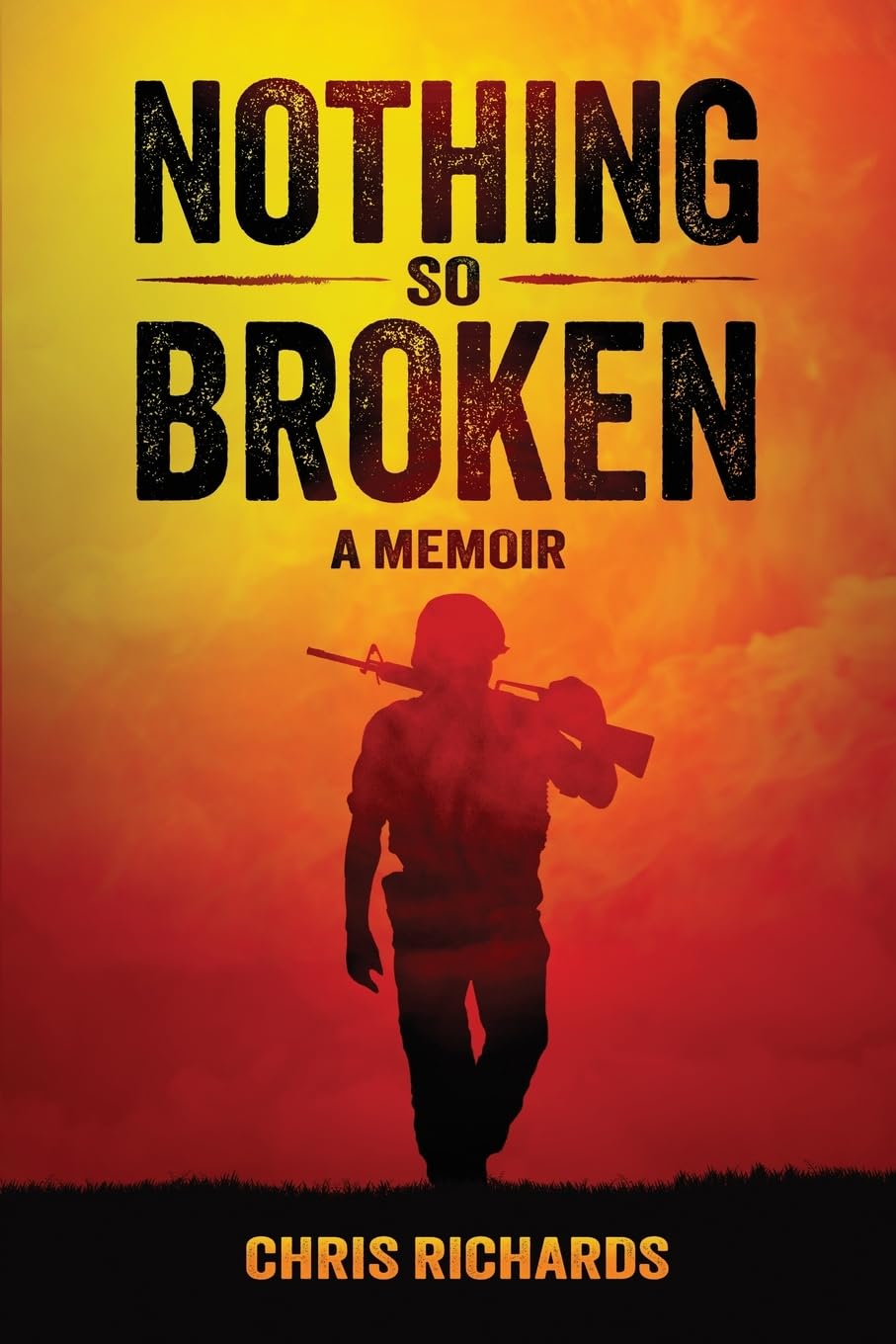
Chris Richards’s Nothing So Broken is a heartfelt memoir that weaves together family, friendship, and the long shadows cast by war. It’s told through a lens that shifts between generations, the Vietnam experiences of Richards’s father, and the tangled, messy journey of growing up in small-town America. The book captures what it means to inherit pain without ever being in the war yourself. It’s not just a story about Vietnam or divorce or youth; it’s about how those things mix together to shape who we become. Richards writes with a storyteller’s rhythm, turning memory into something vivid and cinematic, but also deeply personal.
The writing feels alive, sharp and tender at once. The way Richards talks about fathers and sons, love and loss, is both funny and painful. Some scenes had me smiling because they reminded me of my own childhood, while others just sat heavy in my chest for hours afterward. The tone is conversational, like he’s sitting across from you with a beer, just telling you how it all went down. The shifts between boyhood memories and reflections on his father’s war experiences work beautifully. They pull you into the idea that trauma doesn’t stop at the person who lived it. It seeps into the next life, quiet and steady. His language is simple, but it hits deep, no fluff, just truth.
The family stuff, especially the divorce and the father’s illness, his a deep emotional chord. But I loved that honesty. Richards doesn’t clean up the mess or try to make anyone a hero. Everyone is human, flawed, and trying their best. That’s what makes the book work. The emotional range, grief, humor, confusion, hope, feels real because life feels like that. He captures that strange middle ground between heartbreak and gratitude, and it made me feel like I knew these people, like I’d grown up right next door.
If you’ve ever wondered what it’s like to live with the echo of someone else’s war or if you just like stories about complicated families and growing up, this one’s for you. I’d recommend Nothing So Broken to anyone who appreciates honest, character-driven stories that don’t sugarcoat real life.
Pages: 201 | ASIN : B0FCSHMDMW

The Saigon Guns
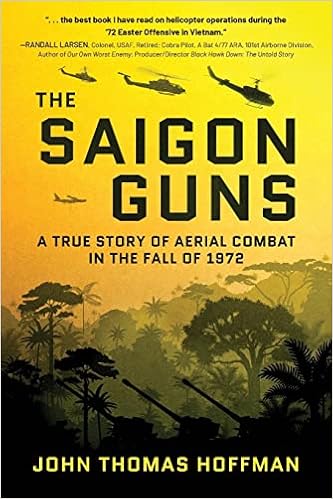
In The Saigon Guns, John Thomas Hoffman offers a riveting narrative of his time serving in the Republic of Vietnam. While many Americans who valiantly fought alongside him in the early 1970s found themselves marginalized and disregarded upon their return, Hoffman courageously shines a light on their lived experiences, juxtaposed against the backdrop of the growing influence of Russian advisors aiding the North Vietnamese.
Beyond merely chronicling war tales, this book seamlessly weaves in elements of a personal memoir. Before enlisting, John led an ordinary life, working as a part-time fireman and ardently pursuing his studies at Georgetown University. These rich anecdotes provide a layered understanding of the man before his immersion in the tumultuous world of warfare.
Hoffman’s detailed descriptions, such as the intricacies of the TH-55 helicopter or the nuanced differences between the M-14 and M-16 guns, showcase the depth of his research and commitment to authenticity. Throughout, he punctuates his account with profound reflections, signaling his lived experience and the wisdom gleaned from it.
The book explores significant socio-political events of the era, such as the racial tensions of the late 1960s and the mounting resistance against the Vietnam War – with figures like Jane Fonda playing pivotal roles.
The Saigon Guns stands as a testament to Hoffman’s courage. To share a narrative that has largely been erased from official histories and to do so with such raw honesty is genuinely commendable. It’s a sweeping journey: from the heart-wrenching sorrows of war, exhilarating adventures in the skies, and intense training sessions to introspective reflections on pivotal life moments. I wholeheartedly recommend this illuminating read to military veterans, history enthusiasts, and anyone keen on uncovering the intricate facets of the Vietnam War.
Pages: 465 | ASIN : B0BTZXZ54X
Musical Nationalism in Indonesia: The Rise and Fall of Lagu Seriosa

In Musical Nationalism in Indonesia: The Rise and Fall of Lagu Seriosa, author Sharifah Faizah Syed Mohammed meticulously dissects Lagu Seriosa, a unique musical genre, and its instrumental role in shaping post-colonial Indonesia. Mohammed’s exceptional narrative transports readers into the heart of Indonesian culture, history, and society, all through the lens of this captivating music form.
The book reveals a profound comprehension of Indonesia’s historical context and its societal dynamics. Throughout its pages, Mohammed beautifully illustrates the nation’s identity, from its political evolution to the vibrant individuals that comprise its population in both Indonesia and Malaysia. Readers become more than mere observers; they are offered a seat at the grand banquet of Indonesia’s rich culture, experiencing an in-depth exploration of the local traditions, customs, and references.
Mohammed’s writing, strategic and systematic, orchestrates an enlightening journey into the intricacies of Indonesian and Malay languages. She illuminates their similarities and differences, cleverly intertwining this linguistic discussion with the essence of music as an art form. Furthermore, the insightful examination of Lagu Seriosa legends underscores the influential role of musicians and the arts in societal development.
The book transcends the mere exploration of Lagu Seriosa, shedding light on the impact this genre has had on the construction of Indonesian nationalism and the emergence of iconic figures within the country. The narrative seamlessly weaves together historical strands, making the decades of the 1950s and 1960s come alive with vivid nostalgia, even for readers who never personally experienced those times.
Mohammed’s engaging storytelling is paired with impressive patience and precision in explaining unfamiliar and indigenous terms, practices, and traditions. As a result, readers gain a deep, nuanced understanding of Indonesian culture. Her writing reflects an admirable composure that deepens the reader’s immersion in every aspect of Indonesia portrayed in this fascinating book.
The crown jewel of this book is its compelling depiction of art’s societal role, exemplified by the enduring legacy of Lagu Seriosa. By highlighting this genre’s longevity, the author invites a broader contemplation of colonial and post-colonial music forms in different cultures. Despite the modern rise of pop culture, Lagu Seriosa stands as a timeless genre, respected by music enthusiasts and cherished by senior citizens of Indonesia.
Musical Nationalism in Indonesia: The Rise and Fall of Lagu Seriosa is a remarkable exploration of music, history, and culture written by a talented Asian / Muslim woman. In a field that is dominated by men, her work with music stands out with a unique voice and comprehensive analysis. With its thorough historical examination, engaging tone, and authentic portrayal of Indonesia, it fully deserves my recommendation. This book is a rewarding read for those interested in understanding the vibrancy of diverse cultures, particularly those related to Indonesia.
Pages: 412 | ASIN : B08ZLKMJ44
Letters from Vietnam


The United States entered the Vietnam War conflict in August of 1964, though the US had been involved in the conflict in a limited capacity since the end of World War II. After an American battleship was allegedly attacked, President Lynden Johnson called for air strikes, thus taking a stand in the ongoing conflict. The United States’ involvement in the Vietnam War was heavily criticized for many reasons, but despite that, hundreds of thousands of US troops made their way to Vietnam to fight.
Letters from Vietnam by Dennis Hoy is an autobiographical account of Hoy’s time in the United States military during the Vietnam war. He details his time from basic training to the jungle swamps of Vietnam and provides a first-hand account of the dangers and perils for a young man at war. However, Hoy keeps a thread of hope alive by sending letters back and forth to the love of his life, Beth.
Hoy and his wife, Beth, kept every letter they exchanged during Hoy’s time in Vietnam. Encouraged by some friends, Hoy wrote down his experiences in Vietnam to preserve the story of a dark time in the United States and World history.
The oddest thing about this book is that there are no actual printed letters between Dennis and Beth, which could have enhanced the book’s drama by showing their thoughts and feelings straight from the time of the war. However, Letters from Vietnam is a well-written book in a very conversational tone that helps an average reader understand this point in history without the language being overcomplicated. As the reader, you can tell that Hoy’s time in Vietnam affected him profoundly and continues to affect him even to this day. I highly recommend Letters from Vietnam to anyone who loves history and wants a first-hand account of a soldier’s days in Vietnam.
Pages: 164 | ASIN : B09GXQMCJD


