Blog Archives
Appetizers with Judith – Yummy Nibbles and Starters that WOW!


Appetizers with Judith feels like spending an afternoon in Judith Briles’s kitchen while she gets ready for friends to arrive. The book is built around her genuine enthusiasm for gathering people around food, whether that means a holiday spread, a neighborhood potluck, or an assortment of appetizers that becomes dinner. Briles describes herself as a hands-on cook who likes to open the refrigerator or pantry, see what appeals to her, and play with ingredients from there. That spirit runs through the whole book. She wants food to taste good, look inviting, and encourage conversation, and she prefers ingredients that are familiar and reasonably easy to find.
There’s an impressive amount of variety here. The recipes move through beef, chicken, eggs, fruit, seafood, vegetables, charcuterie-style offerings, crostini, bruschetta, puff pastry bites, dips, sauces, and plenty of cheese. You can go from Easy Peasy Grape Meatballs to French Onion Baked Brie, Chicken Salad Sliders, stuffed dates, crab cakes, Shrimp Scampi Toasties, Sweet Potato Crostini, or Yellow Zucchini Soup Sippers without the collection feeling locked into one kind of party food. Briles is especially good at showing how one idea can branch into several possibilities. A cheese can change, a topping can be swapped, a homemade component can become a shortcut, or a recipe can shift from appetizer to lunch or light meal. That flexibility makes the book useful for cooks who like recipes but don’t want to feel boxed in by them.
The strongest personality in the book comes from Briles herself. She tells stories about friends, neighborhood gatherings, travel, ingredients she loves, things she keeps in her freezer, and the foods that disappear first when she puts them out. Her language is playful and unmistakably hers, with plenty of “easy peasy,” “a kiss” of this or that, and enthusiastic commentary about what makes her taste buds happy. Recipes also include practical details such as make-ahead advice, serving temperatures, substitutions, shopping shortcuts, portion estimates, and reminders about allergies. The later sections on cheese and kitchen essentials extend that same practical approach, giving readers a sense of how Briles stocks and organizes a kitchen for the kind of spontaneous cooking and entertaining the recipes encourage.
I recommend Appetizers with Judith to people who enjoy having friends over, bringing something memorable to a potluck, or turning a table of small bites into a meal. It should also appeal to cooks who appreciate permission to use a rotisserie chicken, prepared pesto, frozen puff pastry, or another useful shortcut when it makes sense. More adventurous home cooks will find plenty of combinations to riff on, while less experienced cooks can start with the many recipes that need only a handful of ingredients and a short prep time. Most of all, this is a cookbook for people who see appetizers as social food. Briles treats those little plates, skewers, dips, crostini, and warm bites as an invitation to linger, graze, talk, and reach for one more. That generous, convivial attitude is what gives the collection its character.
Pages: 212 | ASIN : B0HC4WY4YX

Informed Consumers of Health Information

Diabetes: A 21st Century Health Crisis goes beyond glucose numbers to explore the science, prevention, management, lifestyle strategies, and evolving treatments surrounding diabetes. How did your own experience living with type 2 diabetes influence the way you approached the book?
My experience living with type 2 diabetes profoundly shaped how I approached this book. When I was diagnosed in 2003, I quickly realized that receiving a diagnosis and truly understanding the disease are two very different things. Patients are often given glucose readings, lab results, medications, and dietary recommendations, but many never receive a clear explanation of what is happening inside their bodies or why the disease developed.
That experience motivated me to become a serious student of diabetes. I wanted to understand not only how to control blood glucose but also the underlying physiology of insulin resistance, pancreatic beta-cell dysfunction, hormonal regulation, inflammation, obesity, nutrition, physical activity, and the many organs and biological pathways now known to contribute to type 2 diabetes.
As my research progressed, I came to appreciate how dramatically diabetes science has evolved. Type 2 diabetes is no longer adequately explained as a simple problem of insufficient insulin or elevated blood sugar. It is a complex metabolic disorder involving multiple organs, hormones, genetic and environmental factors, and lifestyle behaviors. That broader understanding became one of the book’s foundations.
Living with the disease also shaped how I wrote it. I deliberately tried to view the subject from two perspectives: What does the science tell us, and what does a person living with diabetes need to know? Those are not always the same question. Scientific accuracy is essential, but information has limited value to patients if it is presented in language they cannot understand or apply to everyday decisions.
For that reason, I tried to bridge the gap between medical science and practical application. I wanted healthcare professionals to recognize the scientific foundation of the discussion while enabling those without medical training to understand concepts such as insulin resistance, the Egregious Eleven, hormonal regulation, diabetes complications, nutrition, exercise, medications, and remission.
Perhaps most importantly, living with diabetes taught me that knowledge can transform the emotional experience of the disease. A diagnosis can initially evoke fear and uncertainty, but understanding creates opportunity. Once people understand what is happening in their bodies and why their daily choices matter, they can become active participants in their health rather than passive recipients of treatment.
That is ultimately the perspective I brought to the book: A type 2 diabetes diagnosis is not the end of the story. Knowledge gives us the opportunity to write the chapters that follow.
One of the book’s goals is to help readers understand diabetes as more than a blood-sugar problem. What are some of the biggest misconceptions people still hold about diabetes?
Perhaps the most persistent misconception is that diabetes is simply a disease of high blood sugar. Elevated glucose is certainly one of its defining characteristics, but it is better understood as the visible manifestation of a much more complex metabolic disorder.
Modern diabetes research has shown that multiple organs, hormones, and biological pathways contribute to the development and progression of type 2 diabetes. These include insulin resistance in skeletal muscle, excessive hepatic (liver) glucose production, declining pancreatic beta-cell function, abnormal glucagon secretion, altered incretin (gut) hormones, kidney glucose regulation, adipose (fat) tissue dysfunction, changes in the brain and the gastrointestinal (microbiome) system, inflammation, and other mechanisms. Models such as the Ominous Octet and, more recently, the Egregious Eleven have broadened our understanding beyond the traditional pancreas-centered view of diabetes.
Another major misconception is that type 2 diabetes begins when blood glucose rises. In reality, insulin resistance can develop 10 to 15 years before conventional diagnostic criteria identify diabetes. During those early years, the pancreas may compensate by producing more insulin (hyperinsulinemia), keeping glucose levels relatively normal even as metabolic dysfunction progresses.
That is why I believe insulin resistance deserves far more public attention. Blood sugar is often the last chapter of the story—not the first. Recognizing metabolic dysfunction earlier creates a window of opportunity to intervene before diabetes becomes firmly established.
Another misconception is that people develop type 2 diabetes simply because they ate too much sugar or lacked self-discipline. Lifestyle certainly matters, but diabetes results from a complex interplay of genetics, age, body composition, environment, nutrition, physical inactivity, sleep, stress, hormonal and metabolic factors, and individual susceptibility. Reducing this complex disease to personal failure is scientifically inaccurate and can create stigma that discourages people from seeking help.
There is also a misconception that diabetes inevitably leads to severe complications. Diabetes is unquestionably serious, and poorly controlled disease can damage the cardiovascular system, kidneys, eyes, nerves, and other organs. But those outcomes are not inevitable. Earlier diagnosis, improved glucose management, blood pressure and lipid control, healthier lifestyles, patient education, modern medications, and regular screening can substantially alter the disease’s trajectory.
Finally, many people still assume that once type 2 diabetes develops, nothing can fundamentally improve except the glucose level. We now know that some individuals can achieve remission, particularly when intervention occurs early and substantial metabolic improvement is achieved. Remission is not the same as a permanent cure, but its possibility fundamentally changes the conversation.
I, therefore, want readers to move beyond thinking, “Diabetes means my sugar is too high. The better question is, “What is happening across my metabolic system, and what can I do about it?” Replacing blame and oversimplification with understanding is one of the most powerful steps we can take to improve diabetes care.
Of all the diabetes treatment developments you researched, which do you believe have had the greatest impact on patients?
Several advances have transformed diabetes care, but I believe one of the most important changes is conceptual: we have shifted from treating a glucose number to treating the whole patient.
For decades, the primary goal of diabetes therapy was to lower blood glucose. That remains essential, but we now understand that successful diabetes management must also address cardiovascular disease, kidney disease, obesity, blood pressure, lipids, and other factors that ultimately determine metabolic health, longevity, and quality of life.
The development of newer medication classes has played an important role in that transformation. Glucagon-like peptide-1 (GLP-1) receptor agonists, such as Ozempic, Wegovy, and Rybelsus, have attracted significant attention because they can improve glucose control while also promoting substantial weight loss in many patients. Some agents have also demonstrated cardiovascular benefits. The emergence of medications targeting multiple incretin pathways has further expanded this therapeutic approach.
Sodium-glucose cotransporter 2 (SGLT2) inhibitors have transformed modern medicine, evolving from standard blood sugar medications into a cornerstone therapy for cardiovascular and renal protection. Their importance extends well beyond glucose lowering. These medications have demonstrated significant cardiovascular and renal benefits in appropriate patients, fundamentally changing how clinicians approach organ protection in diabetes.
Continuous glucose monitoring has also been transformative. Historically, glucose testing provided patients with isolated snapshots. A continuous glucose monitor can reveal patterns throughout the day and night and show how meals, exercise, medications, sleep, illness, and other factors affect glucose levels. That information can turn glucose monitoring from a simple measurement into an educational tool.
For people who require insulin, advances in insulin formulations, pumps, continuous glucose monitoring, and automated insulin-delivery systems have also eased the burden of managing the disease. Yet I would hesitate to identify any single drug or device as the greatest advance. To me, the most consequential development has been the recognition that diabetes requires a multi-target approach.
Medication, technology, nutrition, physical activity, weight management, adequate sleep, stress management, smoking cessation, education, and appropriate monitoring should not be seen as competing strategies. They are complementary tools.
Modern medicine has given us extraordinary therapies, but no medication can reproduce every benefit of a healthy lifestyle. Conversely, lifestyle should not be used as an argument against medication when medication is medically indicated. The best diabetes care brings the two together.
The question is therefore no longer simply, “How do we lower this patient’s glucose?” It is increasingly, “How do we help this person live longer, protect the heart and kidneys, prevent complications, maintain independence, and enjoy a better quality of life?” I believe that this shift in thinking may ultimately prove as important as any individual therapeutic breakthrough.
How can patients become more active and informed participants in discussions with their healthcare professionals?
The first step is to recognize that good diabetes care should be a partnership. Healthcare professionals bring medical knowledge and clinical experience, but patients bring something equally important: intimate knowledge of their lives, habits, symptoms, priorities, concerns, and ability to adhere to a treatment plan.
Patients should therefore never be afraid to ask questions.
They should understand their key numbers—not just whether a result is “good” or “bad,” but what it means. That includes HbA1c, fasting glucose, blood pressure, cholesterol and triglycerides, kidney function measurements, weight, and other relevant metabolic indicators. When a laboratory value changes, patients should ask why it may have changed and what can reasonably be done about it.
The same principle applies to medications. Patients should know why a medication has been prescribed, what benefit is expected, what important adverse effects to watch for, and whether it offers benefits beyond lowering glucose. If a treatment is difficult to tolerate, too expensive, or unrealistic in someone’s daily life, that information needs to be communicated. A theoretically excellent treatment accomplishes little if the patient cannot adhere to it.
Preparation before an appointment can make these conversations far more productive. I encourage patients to keep a short list of questions, bring relevant glucose information when appropriate, keep an accurate medication list, and note meaningful changes in diet, exercise, sleep, weight, symptoms, or overall health. A spouse, family member, or caregiver can also participate when helpful.
Patients should also become informed consumers of health information. The internet provides extraordinary access to medical knowledge, but it also offers unprecedented access to misinformation. Claims of miracle cures, guaranteed reversals, secret treatments, or therapies supposedly hidden by the medical establishment should immediately raise questions. Patients should ask: What is the evidence? Where did this information come from? Has it been supported by credible research?
Information found online can certainly be shared with a physician or other healthcare professional. In fact, I encourage it. The goal should not be for patients to diagnose or prescribe for themselves, but to use reliable information to ask better questions and participate more intelligently in decisions about their health.
Finally, I believe patients should understand that most diabetes management happens outside the physician’s office. A healthcare professional may see a patient several times a year, while the patient lives with the disease every day. Nutrition, physical activity, medication adherence, sleep, stress management, glucose monitoring, and hundreds of seemingly small decisions accumulate over time. That is why patient education is so important. Knowledge does not replace the healthcare professional; it strengthens the partnership. The most successful patient is not necessarily the one who knows the most medical terminology. It is the one who understands enough about the disease to ask informed questions, participate in decisions, and consistently apply that knowledge. Ultimately, I want readers to understand that they are not simply passengers on their healthcare journey. The healthcare professional may help provide the map, but the patient still has a hand on the steering wheel.
Author Links: GoodReads | Amazon
For many years, traditional management of Type 2 Diabetes (T2D) focused on persistent efforts to control blood glucose. However, recent scientific advances have expanded our understanding of diabetes. It is now recognized as a complex, multi-hormonal disorder caused by systemic metabolic dysfunction—a condition that, in many cases, can be reversed.
DIABETES: A 21st Century Health Crisis—Understand It, Prevent It, Manage It is a comprehensive guide that offers a clear overview of modern metabolic science. Its goal is to equip patients with essential knowledge to move beyond basic glucose management toward precise metabolic control and, potentially, lasting remission.
Inside, you will find the research-backed methods that are transforming diabetes treatment.The Modern Truth: Move beyond the “Triumvirate,” the Ominous Octet, and the Egregious Eleven—the eleven physiological defects that cause type 2 diabetes. Recognize the vital importance of Insulin Resistance (IR) and why early detection is essential for prevention.
Targeted Therapies: Explore the latest treatments, from the strategic advantages of SGLT2 inhibitors and GLP-1/GIP dual agonists to the specialized use of Hyperbaric Oxygen Therapy (HBOT).
The Power of Lifestyle:Discover how scientifically-supported Medical Nutrition Therapy (MNT), targeted exercise, and strategic fasting methods like Intermittent Fasting (IF) provide a practical, non-drug approach to blood sugar management and remission.
The Future is Now: Discover the revolutionary potential of the microbiome as a “second genome” that affects everything from drug response to islet cell health, along with advancements in Stem Cell Therapy and Precision Medicine.
This is not just a book about managing symptoms; it is a declaration that knowledge is power. It helps you understand the root causes, make informed health choices, and embrace the most hopeful chapter yet in the fight against diabetes.
Diabetes: A 21st Century Health Crisis: Understand It, Prevent It, Manage It

Gustavo J. Gomez’s Diabetes: A 21st Century Health Crisis is an ambitious, research-driven guide to one of the most complicated and consequential health issues of our time. Gomez approaches diabetes as a metabolic condition with biological, behavioral, historical, and social dimensions, giving readers a much fuller picture than blood sugar numbers alone can provide. Drawing on his research and his own experience managing type 2 diabetes since 2003, he writes with the urgency of someone who understands what’s at stake and the patience of an educator who wants readers to understand the science before making decisions about their health.
The book’s greatest strength is its range. Gomez begins with the pancreas, insulin, glucose metabolism, and the distinctions among type 1, type 2, gestational diabetes, LADA, and less common forms of the disease. From there, he traces the history of diabetes, explains insulin resistance and beta-cell dysfunction, and surveys conventional medications, nutritional strategies, intermittent fasting, exercise, and complementary therapies. Later chapters explore subjects that many general health books barely touch, including the microbiome, hyperbaric oxygen therapy, regenerative medicine, precision treatments, and emerging diabetes technology. The result is part medical reference, part prevention manual, and part field guide to the changing landscape of diabetes care. Its fourteen chapters, glossary, question-and-answer appendices, and supporting reference material make it especially useful as a book readers can return to as new questions arise.
Gomez has a talent for breaking large physiological processes into manageable pieces. Terms such as hyperinsulinemia, glycosylation, autophagy, incretin hormones, and insulin resistance are introduced in context. Tables, diagrams, examples, definitions, and recurring summaries reinforce the central ideas, while the extensive citations give curious readers clear paths for further study. The book is deliberately thorough, and its repetition works much like repetition in a classroom: important mechanisms and recommendations reappear until their relationships become easier to recognize. Readers will come away understanding that diabetes management isn’t a single intervention. It’s a coordinated process involving monitoring, medication when appropriate, nutrition, movement, sleep, stress management, education, and ongoing communication with qualified healthcare professionals.
The final chapter, focused on habits, gives the book an effective human conclusion. After hundreds of pages of physiology, treatment options, risks, and research, Gomez returns to the daily choices through which knowledge becomes useful. His tone is direct and encouraging, emphasizing ownership without ignoring genetics, access to care, individual circumstances, or the need for professional guidance. That balance makes this a valuable resource for people living with diabetes, those at risk of developing it, caregivers, and readers who want a serious understanding of metabolic health. Gomez turns the science of diabetes into something readers can understand, discuss, and act on, one informed decision at a time.
Pages: 608 | ASIN : B0H7LGB159
The Flavors Factor

The Flavors Factor is Bill Rennie’s practical, earnest guide to building a genuinely nourishing vegan, whole-food plant-based life without falling into the junk-food vegan trap. The book begins with Michelle and James, two well-meaning people who misunderstand plant-based eating in opposite ways, and then builds its case around “The Flavors Factor,” a foundation of eight food groups: fruit, legumes, alliums, vegetables, whole grains, mushrooms, seeds, and spices. From there, Rennie moves through nutrition, history, sustainability, recipes, and finally meal design tools like the Flavors Wheel and the playful F-Factor card-draw method, all with the larger promise that healthy eating can be flavorful, flexible, affordable, and sustainable.
I found the book most persuasive when Rennie gets personal and concrete. His childhood memory of chips and Heinz beans in Scotland gives the legumes chapter a lived-in warmth, and the opening contrast between Michelle’s vegan pastries and faux nuggets and James’s half-hearted side salads makes the book’s central argument feel immediately human rather than abstract. I liked that he doesn’t treat “vegan” as a magic word. He keeps returning to structure, which I appreciated, because that’s where a lot of diet books either get vague or punitive. Here, the message is gentler: don’t just subtract; build. Fruit isn’t scolded into the diet; it’s described as pleasure, memory, biology, and color. Beans aren’t framed as penance; they’re comfort food, protein, soil care, and cultural inheritance. That generosity gives the book its best emotional texture.
The writing has an appealing enthusiasm. “Life Favors the Flavors,” “Take the LEAD,” “flavorite,” and the many factor-based labels create a strong identity. Rennie’s ideas have real force. I admired the way he ties taste to adherence with the “6 F’s,” especially the blunt little truth that if food doesn’t taste good, it won’t last. The recipe section also helps the book avoid becoming merely theoretical. Moving from oat milk, lentil chili, Thai vegetable curry, mushroom Wellington, peach cobbler, and cashew-based sauces into the Apply and Design sections gives the book a nice arc from conviction to practice. I also appreciated the sober supplement section near the end, especially the attention to B12, vitamin D, omega-3s, iron, zinc, calcium, and iodine. It adds credibility because Rennie isn’t pretending plants solve everything automatically.
What stayed with me most is the book’s insistence that nourishment should feel abundant rather than grim. It’s not a flawless book, and its rhythms can be repetitive, but there’s a sincere intelligence underneath the repetition, a desire to make health feel doable instead of elite or joyless. I came away feeling that The Flavors Factor is best for vegan or vegan-curious readers who want a warmer, more structured path into whole-food plant-based eating, especially people who’ve been living on processed substitutes and need a kinder way back to the plate.
Pages: 502 | ASIN : B0H1T5FZYF
Cooking With Judith

Cooking with Judith is a warm-hearted cookbook from Judith Briles, who is less about fussy culinary rules and more about flavor, fun, and feeding people with love. The book walks through an impressive list of comfort food recipes, from cheesy crostinis and zesty soups to sweet treats like Kahlúa cake and baked pears. The tone is chatty and welcoming, with personal stories tucked between ingredient lists. Briles isn’t afraid to break rules, get messy, or adjust a recipe on a whim. This is a peek into the kitchen of someone who truly enjoys making people happy with food.
Judith’s writing is casual, quirky, and kind of addictive. She doesn’t pretend to be a professional chef, which actually makes the book feel more real and usable. Her voice jumps off the page and reminds you this book was written by someone who actually cooks, not someone trying to impress a food critic. The recipes themselves are solid. Some are simple classics, and others are fun twists with a personal flair. The Chioppino, for example, had me planning a dinner party before I even finished reading the recipe.
At times, the measurements were a little loosey-goosey. “A glob of mayo” and “adjust to taste” work great if you have some experience, but I feel that beginners might wish for more specifics. That said, I found it refreshing. It gives permission to play, to experiment, to mess up, and still serve something amazing. The little asides like freezing baguette slices or using Costco shortcuts made this feel like advice from a savvy home cook, not a textbook. The layout is friendly, the stories are sweet, the accompanying images are high-quality, and the love for food is front and center.
This book is a gem for people who cook from the heart. It’s ideal for folks who like to feed family and friends, who don’t mind a little improvising, and who believe food is meant to be shared. If you want joy in your kitchen and recipes that come with a side of laughter, Cooking with Judith belongs on your counter.
Pages: 106 | ASIN : B0DVNHFPG9
The Imperfect Vegan: Making a difference on a (mostly) plant-based diet

In an age where understanding varied perspectives is paramount, Cat White’s The Imperfect Vegan delves deep into her personal transition to veganism. The book meticulously outlines her motivations, particularly highlighting the environmental repercussions of the animal industry. White emphasizes the essentiality of consumer decisions in our ongoing battle against climate change, suggesting that opting for a vegan or plant-based diet can substantially diminish the demand for animal products. Furthermore, she reassures readers that while the quest for sustainability is desirable, absolute perfection isn’t the goal—every effort plays a part in sculpting a greener future.
White’s narrative is immediately captivating with its accessible and conversational style. Readers are swiftly drawn into her world through anecdotes and reflections, establishing a genuine connection. Despite broaching intricate subjects like the ramifications of climate change and the extensive footprint of the animal industry, she crafts her message in a digestible format suitable for a broad readership. Factual data supports her articulate delivery, ensuring a firm grounding for her perspectives. Organized thoughtfully into distinctive sections, readers can easily trace the evolution of White’s insights.
Interspersed with humor and self-aware commentary, the book successfully balances gravity with levity. White’s candid admission of her own vegan journey’s imperfections strikes a chord, especially with those grappling with their own challenges and aspirations within veganism.
The Imperfect Vegan is an indispensable guide, weaving together personal anecdotes, ecological consciousness, and actionable advice. It’s an ideal read for those curious about embracing veganism both for planetary health and personal wellness. Rather than prescribing perfection, White encourages meaningful contributions and practical steps toward a sustainable lifestyle. Topics, including making informed food selections, deciphering scientific data, and transitioning smoothly to a plant-based diet, equip readers with tools for change.
Recognizing the pressing need to address our climate’s precarious state, White’s narrative serves as a clarion call for action. She amplifies each individual’s pivotal role in reducing the appetite for animal-derived products and champions the collective pursuit of mitigating climate change effects. The Imperfect Vegan is both enlightening and empowering, reinforcing the mantra that every small step matters in this global endeavor.
Pages: 306 | ASIN : B0CKLG3PBK
We “Flipped The Script”

Food As A Prescription is a handbook for those that wish to alter their diet due to food allergies or for anti-inflammatory health benefits. Why was this an important book for you to write?
When you go through a traumatic experience and come out better on the other side it is quite significant. It makes you want to shout about that experience from the rooftops so others who are suffering in similar ways know they are not alone and that there is a light at the end of the tunnel. That said, changing something as fundamental as your diet can be overwhelming, but it doesn’t have to be. Food As A Prescription eliminates the confusion and guesswork of evolving into a “restrictive” diet. We wrote this book to enlighten and empower others, as well as ensure they find a path to success as they embark on their own journey.
What is a common misconception you feel people have about food allergies?
The most common misconception is that nothing will ever taste good again and that it will be impossible to go out and enjoy life the way you did prior to changing your diet. While there are always challenges in life, nothing could be further from the truth. We have personally found all sorts of new ways to approach food that not only allow us to eat within our parameters, but also introduced us to wonderful new things to enjoy. People typically concentrate on what they can NOT eat, but we “flipped the script” to concentrate on what we CAN eat. These common misconceptions eventually led us to create LOCA Foods Inc, where we provide foods free from gluten, dairy, soy, and corn, yet they are still amazing in flavor and texture. Our company motto is “All We Do is Delicious”!
What do you hope is one thing readers take away from your book?
Mindset matters! While modern medicine is great at setting bones, it still takes a predominantly generalized approach to most health and wellness. If you are struggling to be heard, some of our best advice is to never give up and always be your own advocate.
What is the next book that you are working on and when will it be available?
Our next book, All We Do is Delicious, is a cookbook which will focus on delicious recipes free from gluten, soy, corn, and/or dairy. At the moment we are currently focused on getting our online bakery up and running smoothly. We plan for All We Do is Delicious to be available before the end of 2023. You can follow us online via Facebook and Instagram (@LOCAFoodinc), where we will announce updates for the book, or visit our website, LOCAfoodsinc.com, to get a handful of our favorite recipes for free right now.
Author Links: GoodReads | Twitter | Facebook | Website
Have you or a loved one been prescribed a dietary change because of autoimmune issues, skin irritations, or digestive complications? Or, do you simply want to live an anti-inflammatory lifestyle?
Making changes in something as fundamental and important as your diet can be overwhelming, but it does NOT have to be!
Food As A Prescription is THE perfect guide for those who need to change their diet for a healthier life! This best-selling handbook will enlighten, empower, and support you on your gluten-free, soy-free, corn-free, and/or dairy-free journey. Filled with tips, tricks, recipes, and recommendations. Food As A Prescription, will help you focus on what you’ll gain in life and help you eliminate the stress of living with modern-day food allergies.
Food As A Prescription
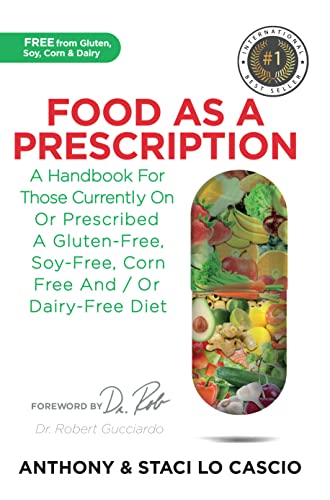

Food As A Prescription is an essential book for anyone conscious about what they consume. Authors Anthony and Staci Lo Cascio write in-depth about food and how we should consume it to work effectively in our bodies. In the book, the authors go into detail about the nutrients each food provides. This handbook will help readers make the change to an anti-inflammatory diet, be it for medical reasons or just a desire to be healthier.
In this educational book, readers will learn about healthy eating habits, allergies, food intolerances, and much more. The authors provide crucial knowledge about food consumption and the impact it has on the body. The authors speak from research and experience, giving readers their life-changing advice on how to gradually improve their health while still being able to enjoy their favorite foods.
One of my favorite parts of this informative book is that the authors share different foods you can eat so as not to have a bland diet. They show that living healthy is not boring and provide delicious recipes in the book. The recipes are simple, straightforward, require few ingredients, are healthy, and taste good. Readers will gain the confidence they need to make meals from scratch. My favorite section was how to make staples for your pantries like All-Purpose Flour Mixture, pancakes, homemade dressing, dry rubs, and even chocolate chip cookies. In other chapters, readers will find helpful information such as food diary examples, safely eating out, and what a change in lifestyle can do for your health.
One important tip from the book is on reading the ingredients of everything. The authors advise that if you are not able to pronounce an ingredient, Google it or don’t buy. The authors are honest and upfront about why they chose this lifestyle and what made them decide to write this book, and I found their view to be refreshing.
Food As A Prescription: A Handbook for Those Currently On or Prescribed a Gluten-Free, Soy-Free, Corn-Free and/or Dairy-Free Diet is an illuminating book for those that are faced with making drastic dietary changes in their life. This book offers information on how food impacts your health and teaches readers how to integrate changes into their life without feeling the loss of a food group, leading to longer and more lasting health changes.
Pages: 79 | ASIN : B092312HHT


