Category Archives: Interviews
Finding Joy

The Joy Molecule is a soulful blend of memoir and life guide that follows your journey from achievement-chaser to purpose-driven connector, revealing how real joy grows from self-awareness, compassion, and meaningful relationships. Why was this an important book for you to write?
For most of my life, I’ve seen personal growth as an ascension ladder. We climb through experiences, challenges, insights, and relationships. And wherever we are on that ladder, we have two responsibilities: to reach down and help those coming up behind us, and to reach up and learn from those who have already climbed higher.
At certain points on that ladder, something shifts. Instead of stepping onto the next rung, we feel called to build a platform, something sturdy enough for others to stand on, something that can support more than just our own next step. The Joy Molecule came from one of those moments for me.
I realized that the concepts in this book, understanding what we are, who we are, and why we are here, and how joy arises from conscious connection and purpose, were too important to keep climbing quietly with. They deserved a platform. They deserved to be shared in a way that could help others navigate their own journey, especially those who, like me, spent years chasing achievement while longing for something deeper.
Writing this book was my way of building that platform: a place where people can pause, reflect, reconnect with themselves, and find a more joyful, aligned path forward.
What moment or relationship first made you realize that joy and achievement weren’t the same thing?
There wasn’t a single moment, there were dozens. But the clearest shift happened during my trip to Africa in 2012. I met people with far fewer material resources than I had ever known, yet they radiated a depth of joy and connectedness that I couldn’t quite understand. Meanwhile, I had all the “achievement boxes” checked and still felt empty. That contrast shook something loose in me. It exposed the illusion that achievement automatically leads to fulfillment. Becoming a father to two extraordinary children deepened that lesson. Their struggles, and my desire to support them without projecting my own expectations, also showed me that joy comes from presence, compassion, and connection, not accomplishment.
How did writing this book change your own understanding of joy, if at all?
The title of the book came from the concept that Conscious Connection + Purpose (C2P) = Joy. When I started writing the book I thought I would focus on the concept of connection, yet when I started digging and reviewing the people that I know who have deep, meaningful joy, they all had something in common. They all knew What they were, Who they were and Why there are here. That concept came after I started writing the book, so that was a huge piece of awareness I didn’t have before writing this book.
For readers who feel stuck in their careers or identities, what’s the very first small step you’d urge them to take toward reconnecting with joy?
I think joy is about connection and knowing What you are, Who you are and Why you are here. The metaphor I use in my talks is a closed door. Most of us live in a very comfortable room, especially here in the US. We live for ourselves, rugged individualism, raising our children as isolated families rather than in community. With this in mind, if we want to find more joy we don’t need to look outside of ourselves, this is an inside job. By opening the door to a journey to finding self, we begin to shed the identity we’ve created since our birth and seek connection. Finding ourselves allows us to connect more deeply with others and I believe that is one of the biggest reasons we are here. The Harvard Study on Happiness over the past 85 years is clear that those who have deep meaningful relationships at 50 will be happy at 80. To me it all comes down to connection and connecting to self is the first step.
Author Links: GoodReads | Facebook | Website
In The Joy Molecule, author Larry Kesslin introduces a simple but powerful idea:
Joy comes from knowing What you are, Who you are, and Why you are here. And it is deepened by personally connecting with others. Joy is not something to chase … it is something to live.
Kesslin reveals that joy isn’t about perfect circumstances. It’s about clear alignment.
Within these pages, he shares the stories of individuals who have taught him the most valuable lessons of his life.
Most spend their lives trying to succeed, impress, and keep up. But deep down, what they are really searching for is joy.
Through personal stories and the lives of remarkable individuals—from blind athletes to social impact leaders—each became the lightning rod for him to see a path to joy. Now he shares them with you. Their stories are profound. Their resiliency, creativity, and courage to take another step forward when no steps were readily apparent will leave you with wonder. Their lives are to be celebrated … as yours is.
Joy is rooted in deep human connection. It is a journey to love yourself, your life and surround yourself with peace that enables you to breathe with clarity and vision.
If you’re ready to live with more purpose, more connection, and more joy—
The Joy Molecule is your invitation to begin.
Blurred Lines Between Reality & Nightmare

The Dreaming at the Drowned Town follows a haunted Filipino translator whose nightmare-plagued diary unravels a deadly expedition to a newly risen island where history, paranoia, and ancient horrors collide. What was the inspiration for the setup of your story?
We’ve always been drawn to overlooked corners of Philippine history, especially the transitional period of the 1920s, when cities like Cebu were rapidly modernizing under American rule while remaining at the cultural crossroads that decided the modern Filipino identity–between the legacy of three centuries of Spanish-style hacienda communalism and the enduring influence of the Church, the new American nation envisioned by the suit-wearing, English-nicknamed Sajonistas, and the vision of a country free from both that endured in places like Eastern Visayas. We’ve wanted to write a story in that setting for the longest time, portraying the interaction between people trapped between any of or perhaps none of the paths the Philippines was on the verge of walking, and the conflict that would arise from the clash between their different values and cultural contexts.
The core of the novel, however, came from two major sparks. The first was a love for early 20th-century cosmic horror, particularly the works of H.P. Lovecraft. Kyle has been a devoted fan for years before we ever started writing professionally, and he always wanted to craft a proper homage grounded in our own cultural landscape. The second—and more unexpected—inspiration came from real life. Around the time of the 2024 Manila International Book Fair (MIBF), when we launched our debut novel, Answering the Human Question, Kyle had come up with the concept of a protagonist troubled by vivid and terrible dreams, inspired partly by his own string of nightmares that he had been dealing with at the time through journaling. This entered the story as the main character and narrator of Enrique, who would write about his dreams as Kyle did. It also shaped in some aspects the book’s dream logic–its many false awakenings and the often blurred lines between reality and nightmare.
We also pulled from real historical curiosities like the desolate, sunken town of Pantabangan, the very real Drowned Town that exists here in the Philippines. It’s located in Luzon and in the province of Nueva Ecija, and it resurfaced during the El Niño droughts of both 2020 and 2024. We also combined the aesthetic of that place with Dawahon Islet, which, like the titular Drowned Town, is found near Leyte. Dawahon is a tiny yet densely packed community built on a reef that Kevin often flew over during pilot training. The distant glances and later images of empty, almost liminal spaces in both locations created an uncanny timelessness. It immediately planted in our minds the place where the book’s central mystery would unfold: a drowned town rising again after centuries beneath the sea.
The atmosphere is incredibly vivid. What research or techniques did you use to capture the sensory overload of the island and Enrique’s nightmares?
Much came from layering real-world observation with psychological insight. Research and a little bit of Kevin’s background in biology gave us a foundation for sensory detail—how bodies react to exhaustion, how coastal environments smell, sound, and move. Our travels to parts of the Visayas gave us firsthand experience of environments that feel both crowded and isolated, which helped shape the island’s suffocating atmosphere.
On Kyle’s end, his study of psychology—as well as a few readings of old court decisions for Philippine Law—taught him how perception breaks down under stress. Around the time of MIBF 2024, he was having recurring nightmares, and journaling them became the seed for Enrique’s dream sequences. Those dreams were chaotic, absurd yet vivid, and he translated that rawness into the book’s “dream logic.”
In addition to being partly inspired by Kyle’s own journaling, we employed Enrique’s diary as a framing device. In doing so, we hoped to keep the nightmares disorienting but maintain that they were narratively coherent. The diary form lets us narrow the focus to Enrique’s senses: the heat sticking to his skin, the sulfur that burns the throat, the texture of the drowned town rising from the sea. When those sensory details begin to distort or repeat, the reader feels Enrique’s unraveling in real time.
How did you approach blending real historical tensions of the American-occupied Philippines with cosmic or supernatural horror elements?
We began by grounding the story firmly in Philippine history. The 1920s was a pivotal transitional period in our hometown and province—Cebu was rapidly modernizing under American rule, yet memories of the Philippine-American War and the Revolution before it still lingered. A younger generation of Sajonistas emerged, eager to embrace American culture and modernity, and they often clashed with their elders, who had been shaped by centuries of Spanish influences and even hateful opposition to the betraying, conquering Americans themselves. Naturally, we wanted readers to feel that political and cultural tension in every scene, long before the supernatural appeared.
From there, the horror grew from two sources: Lovecraftian atmosphere and Filipino folklore. Lovecraft shaped the tone and structure—the slow unraveling of sanity, the tension between logic and the unknowable. But we never wanted to imitate Western cosmic horror wholesale. Filipino folklore, possessing tales of otherworldly spirit realms and the phantasms of the restless dead in spades, also played an important role in shaping the story’s identity. In our culture across its history, dreams have often held great power and importance, heralding either auspices of fortune or warnings of a coming malevolence. The sea has long been the place of both the dead as well as the living, and so it seemed natural as well as Filipino for us to portray the water with that same mystic aura.
When these folkloric themes collide with the real political tensions of the American occupation, they amplify each other. The characters themselves reflect this clash–to name a few, the American who believes he brings enlightenment and progress, the Western-educated Filipino guide plagued both by nightmares and generational trauma brought on by war, the old revolutionary who compromises his morals by relying on the wealth of his oppressors, and a corrupt constable armed by the law of a distant empire to fulfill his personal depravities. All of them come together in a chaotic misalliance of pathologies and dysfunctions beneath the cross of a condemned Spanish village, in the caves where the ancestors before told their stories, and above the depths of what came before them all.
Lita’s character goes through some of the most surprising twists. What was your process for constructing her arc?
When we were constructing the original skeleton of the story for Drowned Town, we wanted to explore imperialism—not just as the domination of one country over another, but on a smaller, interpersonal scale through the abuse and conflict that occurs between people. Every character written in this story speaks to or personifies that concept in some way, and Lita began as no different. The age gap between wife and husband, the bursts of passion punctuated by periods of ignorance from one side and betrayal from the other—she represents the country in her own way, a young and beautiful person being taken advantage of by a much older figure. We wanted another victim of imperialism, and in her case, we told the story of a kind of sex tourism and all the sordid perceptions that come with being someone in that world. However, we also wanted her to be aware of that dynamic, so she could play that game and defeat those who would take advantage of her or hold her in low regard. She needed to bear an innate refusal to be victimized, so that by the end she could be the true writer of the story—the architect of her own fate—rather than simply a supporting role in someone else’s narrative. That’s where her most surprising twists come from: the realization that she was never the object of the story, but its author all along.
Author Links: GoodReads | Facebook | Website
When an ancient town mysteriously emerges off the coast of Leyte, Enrique has no choice but to follow his employer to investigate. But as the expedition unravels, so too does the boundary between dreams and reality. With the island’s dark secrets coming to light, Enrique must face the horrors of its past before he too is claimed by the Drowned Town.
Bringing Magical Worlds to Life

Little Creatures follows a science-loving twelve-year-old girl who recently moved from the city to a quiet town and discovers that her backyard and bedroom wall are hiding a magical mystery. What was the inspiration for the setup of your story?
“From an early age, I was captivated by tales of fairies and elves—”Peter Pan” was my favorite. Alongside my love for stories, I had a deep passion for art, often spending hours sketching in my room. Around the age of twelve, I dreamed of writing a story about tiny elves hidden within the walls of a house. Life moved on, and that idea remained just a dream.
Today, as an author of adult fantasy, I decided to challenge myself by creating a children’s book. Instantly, my imagination returned to that twelve-year-old version of me—the one who longed to bring magical worlds to life. Now, I’ve finally fulfilled that dream and proudly checked it off my bucket list.”
In fantasy novels, it’s easy to get carried away with the magical powers characters have. How did you balance the use of supernatural powers?
“Because “Little Creatures” is a children’s story, I aimed to keep the supernatural powers simple and the narrative easy to follow—engaging young readers without overwhelming them with excessive detail.”
What were some themes that were important for you to explore in this book?
“The central theme of “Little Creatures” is that good always triumphs over evil. In a world often filled with chaos and destruction, I believe it’s important for children to experience stories with hopeful, fairytale endings—nurturing their imagination and reinforcing the power of positivity.”
Will this novel be the start of a series or are you working on a different story?
“Absolutely! I’ve already completed the sequel, “Rise of the Thramgrim,” and I’m excited to share that a third installment, “Curse of the Sandman,” is also in the works. This series is just beginning to unfold, and I can’t wait for readers to experience the journey ahead.”
Author Links: GoodReads | X | Facebook | Instagram | Website
Can a science-loving girl save a place where magic rules?
When twelve-year-old Zowie Lillian Saintclair moves from bustling Houston, Texas, to the quiet town of Greenwood, Arkansas, with her family, everything seems normal until she begins to spot little creatures that only she can see hiding in the shadows of her backyard.
And just as she thought things couldn’t get any more bizarre, she discovers something otherworldly living within her bedroom walls. That’s when she realizes her life is about to change in ways she never imagined.
Perfect for readers of all ages who love fantasy, adventure, and a smart heroine who isn’t afraid to explore the unknown.
The Universe’s Playground
Talisman: Subterfuge follows a shattered war hero who becomes a secret superpowered vigilante after a cosmic force offers to resurrect his wife, if he can save one thousand lives before his darker self destroys him. What inspired the moral dilemma at the heart of Liam’s deal with the Aeterium Axis?
My first thought was that there’s something or someone that just won’t leave Planet Earth alone. Either we’re the universe’s playground, or we just haven’t learned from previous lessons, and now we must do so again. Liam “Foxy” Mayfield happens to get caught up in this conundrum, just as Jet and others were in the “Dissonance” saga. I thought, wouldn’t it be interesting if there were someone sentient out there, far more galactically nefarious than the gorgons, who come with a seemingly innocent demand of restoring the balance?
The Zorander is terrifying. How did you approach crafting a villain who is essentially the hero’s twisted reflection?
There’s always a backstory. It’s a bit of “been there, done that.” The Zorander used to be, for all intents and purposes, the Iskander / Talisman. But he was betrayed, and you’re beginning to learn that the Aeterium Axis might not in fact be all that they claim to be; they certainly didn’t do the Zorander any favors, and that’s why he has become bitter and hardened.
Liam’s grief feels incredibly real on the page. Did you draw from any personal experiences or research when writing his emotional arc?
Anyone who has been bereaved can relate to Liam. However, beyond that there is the earnest hope that he can essentially become UN-bereaved, and, taxing though his charge may be, he follows through on it and delivers the goods, pursuing that hope to its end. I’ve been there…kind of a sunk-cost fallacy mindset: he’s too far in now to reverse course. He’s too committed and has come too far now to abandon hope, even though on paper it seems that this pursuit is nothing more than a vain one. Hope always pushes us on. The question now is, is this hope tangible? Trustworthy? Or…even likely?
Are there hints about the larger universe or future installments hidden in the reporter’s storyline or the nature of the Aeterium Axis?
Perhaps? 😊 That’s all I’ll say for now. I will say that Liam Mayfield is a direct pull from the ‘Dissonanceverse,’ as Rosie Campion is – she has appeared in several of my other novels. Liam seemed a natural fit for this spinoff series, but I’m not convinced there is another storyline for him or Onyx beyond this. I’m a pantser, an organic writer, so I have to write it and see how it all plays out before I commit to anything additional beyond the end of this trilogy.
Author Links: GoodReads | X | Facebook | Website
Fail, and another soul he cherishes will be lost forever.
Armed with supernatural abilities and a relentless drive, The Talisman operates in the shadows, leaving only golden talismans as proof of his existence. But as a determined journalist closes in on his secrets and a vengeful former talisman hunts him across worlds, The Talisman’s quest for redemption becomes a desperate race against time—and fate.
Talisman: Subterfuge is a pulse-pounding blend of sci-fi intrigue and raw human emotion, where every rescue comes at a devastating cost and every choice could tip the balance between hope and oblivion. Will The Talisman’s sacrifice be enough to save those he loves, or will the darkness claim him first? For fans of high-stakes thrillers and cosmic mysteries, Talisman: Subterfuge is an unforgettable journey into the heart of loss, loyalty, and the price of second chances.
In Spectacular and Memorable Fashion

In the Wrath of Legends follows a Nez Perce woman torn between two worlds, as she confronts military secrets, supernatural horrors, and her own haunted past in a battle where myth and history collide. What inspired you to blend indigenous spirituality and supernatural elements in a historical setting?
This similar genre mishmash was previously utilized in my first novel (“In the Lair of Legends”) in spectacular and memorable fashion, but for the sequel I wanted to delve deeper into those unique facets of the story by exploring even more of the culture and history pertaining to the Nez Perce and the historical context in which these exciting stories take place. For me, the supernatural elements have allowed me to highlight some very difficult and challenging (and hugely important) political and racial themes by allowing the reader to experience them through the lens of spirituality, legends, and incredible action. I tend to think of these stories as character-driven adventure tales anchored by a foundation of history and faith.
Chenoa Winterhawk is such a layered, resilient protagonist. Was she inspired by a specific person or story?
Chenoa is absolutely my favorite character that I’ve ever written! (And I actually felt that way about her in the previous book when we meet her as a 6 year-old girl who becomes Chief Jolon Winterhawk’s motivation to not only survive, but to completely alter his perception of what duty and fatherhood truly means.) In this book, Chenoa is dealing with the loss of hope, struggling with the concept of fading honor, and feeling betrayed by the very ideals that her father fought for. In these types of action/adventure stories, it’s customary to launch the story with physical threats. But here, I wanted to introduce Chenoa to gigantic emotional obstacles before having her face those monsters of legends and monsters of men. She’s very different from her father, so I wanted to approach her character atypically for the genre. She’s a warrior, certainly, but her motivations and actions are driven by something much more deeply-rooted than what uniform she wears, or what enemy she’s facing. She sees everything from the inside-out, which is a unique perspective for an action hero. Her resiliency stems from faith which allowed me to richly layer and explore her character in fascinating and unforgettable ways.
I felt that some scenes explore the cost of survival and the moral weight of violence. What truths were you hoping readers would wrestle with?
Violence casts a shadow in our lives and in our world; sometimes, it follows behind us for the rest of our lives. In this particular story, characters use violence as both a means of survival and of opportunity; selfish as well as selfless. The human antagonist in the book experienced a great violent injustice, so his retribution was to inflict that same pain and suffering tenfold. He took everything bad he’d experienced and made it worse because he felt that blood (innocent or otherwise) was the only way through his own suffering. Chenoa Winterhawk is a warrior and her own father was a decorated Civil War soldier. Her dichotomy is that she recognized violence as being the answer but wrestled with it as the only solution. Our actions have consequences, and the book deals with how they impact us through generations and into eternity.
What is the next book that you are working on, and when will it be available?
My next novel is called “Suspension.” It’s a standalone adventure/thriller set in 1990 that’s a literary homage to some of my favorite action movies like “Die Hard 2” and “Sudden Death.” It will be published by Black Rose Writing on November 19, 2026.
Author Links: GoodReads | X | Facebook | Website
Chenoa Winterhawk is a battle-hardened member of Oregon’s elite U.S. Army Indian Scouts, sworn to protect travelers across treacherous mountain terrain and dark forests whispering of ancient terrors. As the daughter of legendary Civil War hero Chief Jolon Winterhawk, Chenoa is also a warrior bound by duty, struggling with injustices brought upon the Nez Perce amidst the broken promises that have forced another relocation of her tribe.
While escorting a military leader carrying a mining map of an underground river hidden deep inside the Blue Mountains, Chenoa is ambushed by a rogue Army unit in a deadly dirigible assault. Their sadistic leader is a traitor from her past, driven by revenge to destroy her family’s legacy. The diabolical plan-destroy the mine and unleash the underground river, bringing a destructive flood onto sacred tribal lands to avenge personal betrayals.
Engaging ruthless military forces throughout unforgiving mountain wilderness and abandoned mines, Winterhawk wages the fiercest battle of her life. But she soon discovers that a much darker terror is also stalking her. Monstrous legends, roused from their ancient lair. These enormous creatures of myth were once faced by her father in an epic battle to the death. And now, it’s her turn…
Open the Mind of Some Poor “Nitwit”
Revolutionary Women A Little Left of Center, weaves together your personal history with your artistic, and ideological journey, starting with your early life in Toronto to your awakening as a gay artist and the experiences that shaped your identity and worldview. Why was this an important book for you to write?
“The book, Revolutionary Women, a Little Left of Center, is meant to be a work of revolution and revolt. Rejecting stale outdated notions and inspire people to think and see things differently.”
“The old dysfunctional thinking wasn’t working and needed to be laid bare. I wanted to create humorous imagery for all people, who were craving “phycological relief” and “counter-balance,” to the endless outpouring of “agony” and “hate” from the “extreme right.” I wanted to lift up the “left” and show it too, was an important human ingredient.”
“Women, more often than not, embody the left; more subtle in tone, soft, gentle, caring, uncanny intuition, creative and intelligent. These are the same characteristics shared by artists, musicians, gay people and any intelligent free-thinking person. What’s needed is real acceptance by society at large of people who are different. The standing order from idiotic religious & xenophobic ideologies is…. “You’re different and our leaders are telling us who to hate & to join-in their agenda of taking power by suppression and annihilation of others.”
“Let’s look at it from a gay women’s point of view and learn to lean a little to the “left.”
Your book expertly blends memoir with satire, offering readers a dash of humor alongside serious topics that impact modern day women. What is one thing that you hope readers take away from your story?
“What’s happening in the United States right now, sickens and horrifies me. It is my heart felt wish to connect and ease the hearts that ache for the planet and all its living creatures.”
“The “Left” is often attacked, and certainly regarded as less important than the ideas associated with extreme masculine notions of the “Right.” The extreme right rigid binary people are stuck in their own conflict of what is right and what is wrong. Unfortunately, they’ve been misinformed.”
“So, let’s laugh in the face of the ridiculous societal norms. Lay bare the faulty logic in religious beliefs and open the mind of some poor “nitwit” saturated in bigotry and speak out for those who cannot!”
What part of the book did you have the most fun illustrating? Was there one particularly hard section?
“I had the most fun actually drawing all the illustrations. The first four illustrations really set the tone. Firstly, imagine a fantasy of women cleaning up a war scene in WOMEN DO ETHNIC CLEANSING. Or next, envision a 3,000-year-old scene, at the ancient monument STONEHENGE, where women are included in the construction and joke about a huge fear known to all mankind.”
“Thirdly, a reenactment of the famous first moon landing, with women astronauts in MOONWALK. And fourthly, I introduce the character of Mother Nature in the illustration called GOD AND MOTHER NATURE DO THE REVIEW.”
“I suppose THE PHOBE FAMILY was a particularly hard section to finish, as it took me 10 years to resolve the problem presented in THE PHOBE FAMILY and answer it in WHY MAKE IT LEGAL? In the “Phobe Family,” I wanted to hi-light the fear, isolation & denial families go through, when it turns out they have a Gay child. It’s funny but hints of dark undercurrents.”
What is the next book that you are working on, and when can your fans expect it to be out?
Work in progress.
Step into a world where sharp wit meets unapologetic truth. A collection of full color illustrations/cartoons delivers a fierce and funny feminist punch, from the absurdity of gender roles to the hypocrisy of historical myths. With a clever commentary of edgy humor, and a wink into gay culture. These pages don’t just make you laugh; they make you think. Whether poking holes in patriarchy, challenging religious relics or spotlighting modern day madness, these cartoons are radical in the best way. Some are satirical, some are heart felt and sincere. All of them are drawn with a love for justice a questioning spirit and a mischievous pen. Perfect for anyone who’s ever rolled their eyes at the status quo or laughed in its face..
Laura M. Duthie was born in Toronto. Attended the Ontario College of Art from 1976 to 1980. Studied Fine Art. Worked in Real Estate Graphics, Woodworking and Carpentry. Also worked in property management and Security. Recently retired to become a full-time artist.
About the Author:Laura M. Duthie was born in Toronto and studied Fine Art at the Ontario College of Art (1976–1980). Her diverse background spans real estate graphics, woodworking, carpentry, security, and property management. Now retired, she has returned to her true passion as a full-time artist—using her art to speak truth with humor and heart.
What Happens Next?
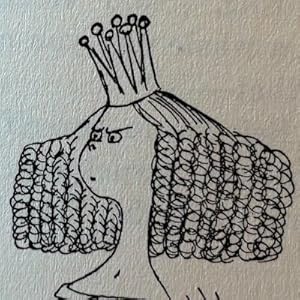
The Countess and the Spatula follows a disheveled noblewoman who finds solace in baking after her husband’s death until her peaceful life of flour and philosophy is upended by a melodramatic opera singer. What was the inspiration for the setup of your story?
The Spatula of Power came first. The characters of the countess; Claudio, the Man with the Black Mustache; and Isabella of Alberthane followed.
What inspired your characters’ interactions and backstories?
Once you know the characters, their interactions follow more or less logically.
I found this novel to be a cutting piece of satire. What is one thing that you hope readers take away from your novel?
I hope readers take away the desire to read the sequel and find out what happens to the countess next.
What is the next book that you are working on, and when can your fans expect it to be out?
The sequel to THE COUNTESS AND THE SPATULA is called NOBODY EXPECTS THE SPANISH INQUISITION. It’s about an inquisition that is also a soap opera.
Author Links: X
Skilled At Handling Lies

Angus Sliders follows Max as he struggles to remember what versions of history are real and what is made up from Mirror’s effects, causing history to fracture further, and possibly in irreparable ways. What was the inspiration that created the journey Max goes on in this book?
Max’s journey in Angus Sliders originates from a core question. What happens to a spy when his most trusted asset, his memory, fails him? The Mirror has always posed a threat because it warps time, but the greater threat is psychological. I aimed to examine how an experienced intelligence officer, skilled at handling lies, disinformation, and shifting loyalties, would react when his internal compass fails him.
The inspiration came from three connected ideas. The first is the fallibility of memory in espionage, where spies operate within constructed realities such as covers, legends, and half-truths. The second is what could be called post-war trauma. The fear of misremembering. Lastly, there’s the ethics of changing history. If altering one moment could save lives or end them, how does someone like Max resist the temptation or cope with the guilt of decisions made in unstable times?
So, his journey ultimately revolves around identity under pressure. Max becomes a man forced to navigate through multiple versions of his own past, aware that each step could deepen the cracks. The tension in Angus Sliders comes from whether he can hold onto the truth long enough to repair the present, or if the Mirror will completely overwrite him.
I find that authors sometimes ask themselves questions and let their characters answer them. Do you think this is true for your characters?
Absolutely. For me, that’s one of the engines behind the entire Sliders universe. I often start with a question I’m unsure how to answer, for example, what would it feel like to step into a version of history that remembers you differently? How much of your identity remains when memory becomes negotiable? What does loyalty mean when time itself can be rewritten? Then I stop answering as the author and begin listening to the characters.
Max and Alicia are both shaped by the worlds they navigate. Max, for example, rarely gives the easy answer; he provides the necessary one. Alicia responds with accuracy and restraint, revealing the cost of knowing more than she can admit. So yes, my questions start the conversation, but the characters finish it. That’s the value of writing in this universe: the characters live close to points of fracture such as history, memory, and time, and their answers often reveal truths I wouldn’t have reached on my own. In that sense, I’m not just writing them. I’m discovering what they’re willing to tell me.
I felt that there were a lot of great twists and turns throughout the novel. Did you plan this before writing the novel, or did the twists develop organically while writing?
The honest answer is both. I always start with a skeleton. The main plot points, structural pivots, and key revelations that the whole story depends on. In a book like Angus Sliders, where the narrative twists around time distortion and espionage, those anchors are crucial. Certain twists must happen for the story to have the right impact. But the best twists are the ones that seem inevitable in hindsight yet are surprising in the moment. They tend to happen naturally. They appear when characters react honestly to pressure. They surface when a secondary detail suddenly becomes essential. They occur when the logic of the world requires a new fracture in the timeline.
As I write, the characters often reveal parts of the story I didn’t fully see during the outline stage. Max, for example, rarely acts like someone who wants his arc to stay linear. The Mirror’s influence almost encourages unexpected angles. Alicia makes choices that challenge the neat structural plan, deepening the stakes. So, the process becomes a balance. Plan the structure and, to some degree, let the characters decide how to move through it. That’s where the twists come from. Structure supported by surprise, and surprise supported by character truth. If I’ve done it right, the reader feels both the inevitability and the shock.
Can you tell us more about what’s in store for Max Calder and the direction of the third book?
Without revealing too much, the third book pushes Max into the most dangerous territory he’s faced yet. Not because the enemies are stronger, but because the consequences of what he’s already survived finally catch up with him. Cuban Sliders, based in the Caribbean, leaves Max standing at the edge of a world where the Mirror has been dismantled, but its influence hasn’t disappeared – it’s just increased. The third book poses a more complex question: What does a man do when the past he fought to fix begins rewriting itself around him? Max has learned to navigate fractured histories. But now he must decide which version of himself he’s willing to live with. The third book will force him to confront timelines he thought he’d closed and choices that refuse to stay buried.
Max no longer knows if he’s fighting for the right side or if the right side even exists. If the first book broke Max, and the second tested him, the third questions whether he can survive the truth he’s spent his life trying to uncover.
Author Links: Facebook | Instagram | GoodReads | Website | Amazon | Apple Books
It’s 1948. Max Calder thought he’d escaped the Mirror’s grip. But when an encrypted MI6 radio message pulls him from the shadows, he finds himself trapped in a deeper conspiracy involving Kim Philby – one that spans timelines, and versions of himself he can no longer remember… or trust.
Partnered once again with Alicia Rayes, Calder races from Lisbon to London to Edinburgh to uncover Project Oracle, a secret MI6 experiment buried at a black site called ANGUS beneath a loch at Invershiel. There, an unstable Mirror still hums. And waiting for him is Variant 6F… a doppelgänger who might be the last warning before history fractures for good. As enemies close in and memories slip through the cracks, Calder must face the truth: the timeline isn’t broken – it’s being rewritten.
Angus Sliders is a taut, cerebral spy-fi thriller steeped in Cold War tension, noir grit, and mind-bending science fiction.



 LITERARY TITAN