Category Archives: Interviews
Funhouse Mirror

DimWitts: The Big Stupid is a genre-crossing novel with elements of fantasy, dystopian, and satire as well. Did you start writing with this in mind, or did this happen organically as you were writing?
I wanted to write something funny in the speculative fiction category without committing entirely to one genre. Admittedly, a few subplots emerged organically along the way, but the core story and the character arc of the protagonist remained largely consistent with my original outline.
Some events in the book were chillingly similar to real-life events. Did you take any inspiration from real life when developing this book?
My inspiration came directly from the last American election. It occurred at the same time the Canadian Parliament was being prorogued, and the rest fell into place around it.
I found this novel to be a cutting piece of satire. What is one thing that you hope readers take away from your novel?
Fulfillment. Enlightenment. The best satire is a funhouse mirror; it exaggerates flaws to ridiculous proportions, allowing an audience to see what could happen if a bad idea is given too much credence. I hope to scratch that surface, at least a little, and maybe get some laughs along the way.
Will this novel be the start of a series, or are you working on a different story?
This is book one of three. I am currently working on the “dark middle child” of the series and hope to have it finished by the spring of 2026. Book three is stewing nicely on the back burner and will likely be in print shortly thereafter.
Author Links: GoodReads | Website | Amazon
Lancaster Dirk, the newly elected American president, is on a race to destroy his enemies and restore the glory of the republic. But to do it, he needs something extremely important. Something Canadian.
A dirty old smelter in a dirty old B.C. mountain town — with an even dirtier old secret.
Balanced between worlds, the past and future collide in a tale that spans the globe — and the very edges of reality itself.
Respect for Nature

Walk With Me follows a former park ranger and his grandson who bond through hikes and camping trips, and through their adventures learn valuable lessons about passing down knowledge, love, and courage. What was the inspiration for the setup of your story?
Walk With Me was inspired by my three grandsons, and I dedicated the book to them. As they’ve grown, I have tried to be their window to the outdoors, and it has rounded my life in amazing ways.
What were some themes that were important for you to explore in this book?
Important to me in my novella is the passing of valuable information – life skills – from one generation to the other. Respect for nature is a critical concept to pass on to all who will read my novel.
What experience in your life has had the most significant impact on your writing?
Influence from my parents, especially my mother, who encouraged my passion for written expression.
What story are you currently in the middle of writing?
I’ve written books in many genres, and Walk With Me is my latest. My favorite genre to write is historical fiction, and my thoughts are trending there again. Time will tell…
Author Links: GoodReads | Amazon
Time to Publish

The Long Red Hair and Other Short Stories is a collection of short stories, flash fiction, essays, and some true stories, shifting seamlessly between humor, nostalgia, and reflection. What was the inspiration for this collection of stories?
I felt it was time to publish a collection.
How did you decide on the themes that run throughout your book?
There were no particular themes. The author notes best describe what happens in the book.
Were there any stories that were particularly difficult to write? If so, why?
Writing about both childhood and adult sexual abuse, such as in my story, “Evie’s Shadows,” was challenging.
What is the next book that you are working on, and when can your fans expect it to be out?
I am in the process of writing a novel. Sorry, no spoiler on the topic. It is going slowly. I hope to complete it within a year.
Author Links: GoodReads | Facebook | Website | Amazon
I am indebted to the many good folks taking part in various writing groups who have included me over many years. We shared our work, listened to others’ writing, and offered writing prompt suggestions; some of the fiction stories here originate from these suggestions.
From Pain to Reflection to Action

No Filter: From Skateboard Kid to Entrepreneur shares your story about growing up in an abusive home, joining the Army at 19, and after living through combat, trauma, and broken relationships, before turning your pain into purpose. Why was this an important book for you to write?
No Filter was the book I couldn’t keep inside any longer. For decades I carried pain — from an abusive childhood, from what I saw and did in combat, from the way I failed as a husband and father — and it was eating me alive.
This wasn’t just a “next book project.” This was my line in the sand. When I came back from Phoenix, Arizona, after attending a book award event where I felt invisible and out of place, I had an awakening. I realized I could either keep playing nice and hiding behind polite words, or I could tear the mask off and tell the truth, even if it made people uncomfortable.
That’s why No Filter is written the way it is — blunt, messy, unpolished. Thomas Anderson said in his review that it feels “alive and immediate,” like I’m sitting across from the reader, telling it straight. That was intentional. I wanted people to feel like they’re in the room with me, hearing my story unfiltered, hearing the pain in my voice, and watching me fight my way through it.
I didn’t write No Filter to be liked — I wrote it to be heard. Because survival means nothing if you stay silent about what almost killed you.
What were some ideas that were important for you to share in this book?
This book was built on three core pillars: truth, accountability, and hope.
Truth was the foundation. The world is flooded with filters and fake perfection — I wanted the opposite. That’s why No Filter is unapologetically raw. As Thomas Anderson wrote in his review, the “short bursts of thought, the blunt admissions, the cursing when softer words won’t do” make the story feel alive and immediate. I wanted readers to feel like I was sitting across from them, looking them in the eye, telling them what really happened.
Accountability was the second pillar. I’m not just telling my story as a victim — I’m standing trial in front of every reader. I’ve hurt people I loved, including my daughter, and by letting her write the first entry, I opened this memoir by facing my own guilt and her forgiveness head-on.
And finally, hope is what carries the book through the darkness. The stories are painful, yes, but I wanted readers to see the redemption too. I wanted them to feel that even if they’ve been broken, they can still rebuild.
No Filter was never about telling a pretty story — it was about building a platform readers can stand on when life knocks them down. These three pillars hold that platform up.
What was the most challenging part of writing your memoir, and what was the most rewarding?
The most challenging part wasn’t the writing — it was tearing open wounds I’d tried to keep buried for decades. No Filter forced me to relive nights I tried to drink myself numb, the deployments that left ghosts in my head, the years I watched my daughter grow up from a distance because I was too broken to be there.
But it was also physically challenging. I live with severe tremors in my left hand, a lasting effect from years of medication prescribed through the VA. I can’t sit at a keyboard and type like most writers. I don’t use AI, and I don’t hire ghostwriters. Every single word of this memoir came from my own raw voice — recorded into my phone, turned into notes, and shaped into this book. That’s why, as Thomas Anderson wrote in his review, it feels “alive and immediate.” It literally is me, speaking directly to the reader.
The most rewarding part was turning that pain into something that could help someone else survive. When a reader tells me my words made them put the gun down, pour out the bottle, or call their kid after years of silence — that’s when I know No Filter has done its job.
I fought my past, my trauma, and even my own body to get these words out — and if they give just one person the strength to stay alive one more day, then every second of that fight was worth it.
What do you hope is one thing readers take away from your story?
I want readers to finish No Filter with one truth burning in their chest: you are not alone — but you can’t keep hiding from yourself.
That’s why the cover is black and white. It’s not an accident — it’s a statement. That cover is the darkness I was in. It shows me slouched, looking like the weight of the world is crushing me. Then you turn to the back and see the only color image in the entire book — a hint that there’s light on the other side if you’re willing to walk through the darkness.
When readers turn that last page, I don’t just want them to close the book. I want them to put it down, stand up, walk into their bathroom or bedroom, and stare into their own mirror. I want them to ask themselves: “Have I been living as the real me? Or have I been hiding this whole time?”
Because that’s what No Filter is — a confrontation. It’s not just my story. It’s an invitation for readers to strip away their own filters and face the person staring back at them.
And when they scan the QR code on the back cover, I want them to realize this book is just one piece of a bigger mission — The Mirror, The Broken Mirror, and now No Filter. It’s a trilogy designed to move readers from pain to reflection to action.
If just one reader closes No Filter, looks in the mirror, and says, “I’ve been hiding long enough — it’s time to face my life head-on,” then I’ve done what I came here to do. This book isn’t just a memoir — it’s a mirror, and it dares you to look.
What happens when the kid on the skateboard grows up, trades wheels for boots, and finds himself on the frontlines of war, fatherhood, and mental health?
William A. Stephens Jr. takes you on a no-holds-barred journey through the highs and lows of a life lived at full throttle.
This book doesn’t ask for sympathy — it demands honesty. No Filter is the third installment in William’s powerful trilogy that began with The Mirror and The Broken Mirror.
Here, he dives even deeper, peeling back the final layers to reveal a man who has been broken, rebuilt, and refuses to stay silent.
It’s about facing the demons that haunted him after the battlefield. It’s about the toll of PTSD, the pain of fractured relationships, and the unrelenting fight to keep going — not just for himself, but for the ones he loves and the community he serves.
If you’ve ever wondered what resilience really looks like, this book is your answer.
🔥 What You’ll Discover Inside:
• 🛹 Childhood on the Edge – From the streets to the skate park, where rebellion and resilience were born.
• 🎖 Life in Uniform – A front-row seat to deployments, leadership, and the toll that service takes on the soul.
• 💔 The Breaking Point – PTSD, loss, and family struggles laid bare with brutal honesty.
• 🧠 Mental Health Uncensored – No sugarcoating. Just real talk about trauma, therapy, and survival.
• 💼 Entrepreneurship with Purpose – How 1821 Productions became a platform to give “Voice to the Voiceless.”
• 🎃 The Final Chapter – Why No Filter is dropping on Halloween 2025, and what it means to confront your demons.
💡 Why This Book Matters:
• ✅ Perfect for readers who crave real, unfiltered storytelling.
• ✅ A lifeline for veterans, survivors, and anyone navigating their own mental health battle.
• ✅ Proof that you can lose it all, fight back, and still build something bigger than yourself.
⭐ Reader Takeaways:
• 🌌 Hope in the darkness.
• 💥 Courage to speak your truth.
• 🔑 Permission to build your own legacy.
🎯 Ideal For:
• 📚 Fans of military memoirs & survivor stories
• 🎙 Advocates of mental health & PTSD awareness
• 🚀 Dreamers & doers chasing purpose
What Might Be Possible

Dark Place centers around three students who stumble on an unsettling truth that society is being manipulated, and those labelled as “dispossessed” are being erased from existence. Where did the idea for this novelette come from?
I wanted to develop a near-future story in which a worldwide authority invokes extreme emergency powers to control a burgeoning population, resulting in the loss of freedom and rights.
The idea of a hidden penal colony came to mind, and a social scoring system would be the mechanism to segregate and banish the dispossessed.
My writing of the story started as a typical dystopian trope, but as it grew, I didn’t want it to be stark black and white: ‘good’ idealistic rebels versus ‘evil’ authority. So it becomes more nuanced when the three protagonists are stranded in the Dark Place and learn that it has a greater purpose with profound consequences. The protagonists must navigate not only external dangers but also their own internal struggles, confronting differences between themselves and moral dilemmas.
Dark Place has been described as subverting dystopian tropes and I hope readers find that rewarding.
What are some things that you find interesting about the human condition that you think make for great fiction?
There is a degree of anxiety in the world today about the future. Perhaps every generation in the past has had similar misgivings.
My intention is to write about what might be possible a few steps down the road. I don’t want to write far-future settings with fantastical technologies far removed from what we have now. Grounding the story in a familiar world, echoing some of today’s challenges, has more resonance.
The science inserted in the fiction, I felt, was well-balanced. How did you manage to keep it grounded while still providing the fantastic edge science fiction stories usually provide?
A lifelong interest in the societal implications of technology began in the 1980s when I taught the new technologies of microelectronics and microcomputers in colleges and universities. This early professional life directly influenced my creative pursuits, leading to my first story Larrs’ Ghost (published in a computing magazine) which explored a “computer-generated world” long before virtual reality was a common term. More recently Close To You is a cautionary tale about the imminent dominance of big corporations developing ever more powerful artificial intelligence and virtual reality.
Dark Place is set in a time just down the road from now, so the technology is a plausible extension of today: drones are becoming more advanced; flexible microelectronic circuits (I call them membranes) already exist in rudimentary form; AI is advancing at speed.
Can we look forward to more work from you soon? What are you currently working on?
I feel there’s a lot more to develop with the premise of Dark Place. Although the ending finished with a profound reveal, I deliberately left some aspects of the story open-ended that mirrors the uncertain future facing the characters and the broader society. The lack of a neat, conclusive resolution hopefully encourages readers to reflect on the story’s themes beyond the final page.
So now I’m working on parts two and three. Part two is how the people in the camps progress in the knowledge that the outside world is in total collapse and how they rise to the challenges they face. Part three is how they defend themselves from an external existential threat. How much will they fall back on technology to protect their new world? The three protagonists will have increasingly conflicting ideas on how they see their future world.
Author Links: Facebook | Website
In a near-future world ravaged by resource depletion, society is controlled by the Authority, which enforces a strict social credit system. Failure to maintain a high enough score means banishment to the mysterious “Dark Place.”
When three inquisitive students, Ros, Femke, and Domhnal, discover that parts of a hidden Earth have been concealed from the privileged population of the “Light Place,” they are determined to expose the Authority’s brutal culling system. To do so, they must intentionally lower their scores and enter the Dark Place, only to discover it holds secrets far more profound than they ever imagined.
Dark Place is a gripping novelette that transcends typical dystopian narratives. Praised for its compelling dialogue and nuanced characters, a testament to author Christopher Kell’s experience as an award-winning playwright, the story is a masterful exploration of moral ambiguity, technology’s ethical implications, and the enduring resilience of the human spirit. It is a thought-provoking journey that invites readers to reflect on the nature of freedom, the quest for truth, and what it truly means to survive. This powerful and multi-layered examination of contemporary issues through a dystopian lens is a key element of the novelette’s intellectual value and demonstrates the author’s ability to imbue a short work with significant philosophical weight.
Before They Are Lost Forever

Toward a Theory of Everything is a mix of science, spirituality, and poetry that examines the connection between the physical and the spiritual on a quest to make sense of existence. What were some themes that were important for you to explore in this book?
The first section of my book, about a “theory of everything,” was difficult to write, because I was challenged with concisely presenting and integrating ideas from my lifetime experiences with my current knowledge, beliefs, and worldview. In addition, I had to search for scientific research to back up some of my assumptions, while at the same time realizing that scientific findings and theory can and should be challenged.
What was the biggest challenge you faced in putting together this poetry collection?
Poetry has always been easy for me, because poetic ideas and phrases come to me as a gift. It is my awareness of the need to write poems and poetic thoughts down as they come to me during dreams or in my conscious state, before they are lost forever. I seldom or never experience writer’s block. All of my memorable lifetime, I have been a thinker.
What is one thing that you hope readers take away from Toward a Theory of Everything?
I write for my readers to expand their worldview vis-à-vis what they have been taught by their parents, culture (including religion), and formal education. Also, in all of my writings, if not most, I communicate for the purpose of helping and healing the reader.
Author Links: Amazon | GoodReads
Cutting Through the Lies
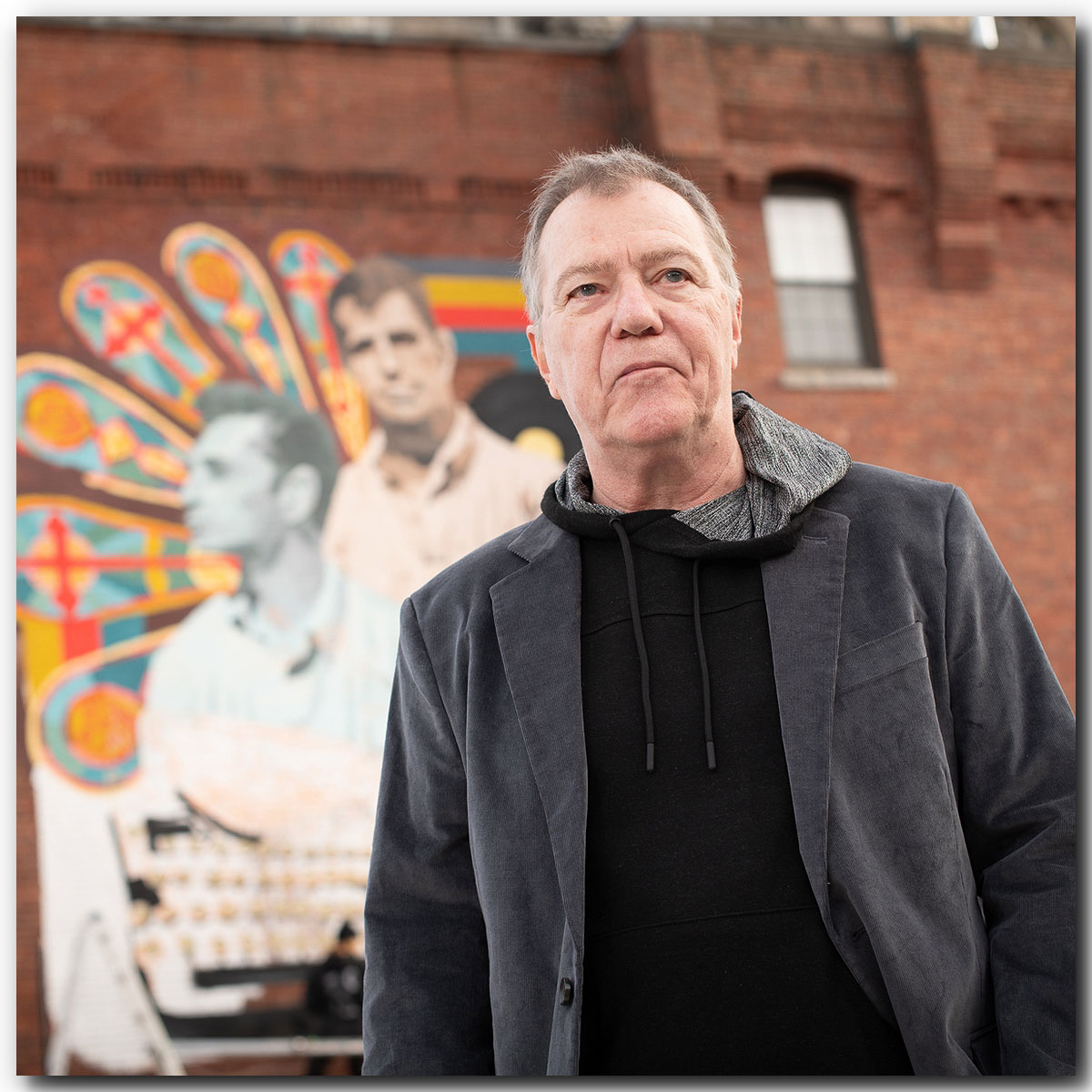
(Photo credit: Kevin Harkins Photography)
Legends of Little Canada is a memoir that shares the story of growing up in a neighborhood in Lowell, Massachusetts, which was eventually destroyed by urban renewal in the 1960s, and how this experience shaped you into who you are today. Why was this an important book for you to write?
For too long the issue of “urban renewal” projects, which forcibly displaced people from their homes and long-established small businesses, has been dispassionately debated by academics and policy makers. The “debate” has been between those who condemned the policy as cruel and systematically unjust because it always came at the expense of the most marginalized people to further the interests of the powerful, and those who defended the policy by arguing that, even if the plans ended up failing, the intent was a benevolent one aimed at improving the lives and conditions of the people living in substandard housing.
After spending my adult years learning about the systemic forces that class and race play in dehumanizing the poor and people of color, I utilized that knowledge to resist, organize and empower others by developing strategies to protect them from meeting the same fate I couldn’t prevent happening to me and my loved ones as a child. To do for them what I wish others would have done to defend and protect the rights and dignity of my Aunt Rose and those I loved from being denied to them.
It would have been totally appropriate for me to have written a historical account of what happened and cried out about the injustice of what was done. But, I also observed the insidious trap of how writing such a book would have little use because it would just be dismissed, or minimized, by labelling it as a book with an “agenda,” to be taken with a grain of salt because of my political leanings. As a result, in this age of harsh ideological divisiveness, those who agree with my positions would accept it to confirm their own convictions and those who opposed my political persuasions would reject the book without even reading it. Or to read it only with the intent to find ways to “cherry-pick” parts out of context to try and discredit it among others who might be persuaded by my conclusions.
It was bad enough that the people of Little Canada were powerless to prevent the destruction of the community they loved and were forcibly displaced from their homes, but what makes that injustice even more insidious was that the same power structure also controlled the ability to shape the historical narrative to justify the wrongs they did. They used their power to shape and concoct a false narrative which whitewashed their human rights violations against the people of Little Canada by claiming that their true goal was to improve our lives rather than admitting it was done for their own economic interests.
For the reasons I already stated, I realized that I would not be able to reclaim the narrative if I wrote a scholarly historical account, a polemic or even a memoir in my present adult voice because those who created the false narrative would seek to dismiss my efforts to reclaim the narrative as ideologically driven. They would be allowed to maintain the revisionist history that their prime intention was to create better living conditions for the people of Little Canada. That they did it for us.
I am not powerful enough as the man I am today to overcome their ability to continue to spin that false narrative and get away with it. But I knew somebody who was. The boy I was when I lived through what they did to me and the people of the community I loved. So I chose to write a memoir of that experience, not in my adult voice recalling what was done, but to write it by reliving it as the young person who had no formed politics or understanding of who was doing this to us.
By taking readers back through the innocent eyes of a 13 year old boy who didn’t have any comprehension of the economic forces and political machinations he only heard identified as a faceless entity called “urban renewal,” “young Charlie’s” voice, not only gives witness to those who are no longer here, his innocence blows apart the false narrative that the destruction of Little Canada was done for his and his loved ones benefit.
“Young Charlie’s” painful experience enabled him to cut through the lies and revisionist history by his simple ability to tell right from wrong and reclaim the narrative for the people who were victimized by what those in power did to them and their community.
You grew up in a neighborhood that supported one another and formed a genuine community, not just people living in the same place. What were some ideas that were important for you to share in this book?
You are correct, Little Canada was a community not just a place to live. By community, I mean that everyone felt more like an extended family who knew and cared for each other and felt pride in that unity. A feeling like everyone mattered and each person was loved for who they were and the whole gained by the strength that comes from being able to appreciate and pool all of the unique quirks and characteristics each person brings to the community.
I also learned that to keep oneself and a community strong one has to stand firm against bullies and others who seek to bend a community’s will to their own selfish quest for domination. If they succeed then a community based on sharing and compassion can be turned into an oppressive domination that the demagogue or bully can use to intimidate anyone who threatens their power by enforcing conformity to their demands.
That’s not community, that’s blind tribalism. I have been searching all of my life to find the sense of community I lost that I had living in the Little Canada community that was destroyed by urban renewal.
My success as a leader and organizer has come when I was able to build a community where it didn’t exist. Where I was able to show people that strength comes from diversity, not division and that instead of remaining intimidated by bullies and feeling too weak and hopeless to resist, that they must stop believing the myth that compassion is weakness. In fact, compassion, unity and love is the only thing powerful enough to defeat a cruel bully or oppresser. Think of it. Even the sheer lust for power or greed will never generate more ferocity within a person than somebody fighting to protect somebody they love from being taken from them.
What is one piece of advice someone gave you that changed your life?
I think the faith and moral teachings my Aunt Rose taught me that God doesn’t stop bad people from what they’re doing, that God expects people to do it. And that prayer does not produce supernatural miracles like parting the Red Sea, but it’s something we draw on to give us the internal strength “to do what’s right, when it’s easier to do wrong, or to keep hoping when all appears hopeless. It’s not that goodness or hope always comes out on top, but they have NO chance if somebody stops believing in them.”
Whether one believes in God or not, the wisdom of this advice has changed my life by recognizing that I must make the choice and be responsible about what kind of moral path I will follow.
What was the most challenging part of writing your memoir, and what was the most rewarding?
It was a very painful experience because I had to reopen the raw pain and trauma I spent years trying to repress as I saw one friend after another disappear from my life as each eviction came and the devastating emotional toll it had on my family and neighbors unable to comprehend how this thing called urban renewal could force thousands of us out of our homes. I had to relive the horror of being powerless to protect my beloved Aunt Rose from being forced out of the home she lived in all 65 years of her life and the ensuing tragedies that befell her and so many others.
The most rewarding part of writing the memoir is that it allowed me reconnect with these very same people I loved and lost and the more I opened up my memories to the details I had repressed the more they felt alive again, as if I was transported by a time machine and I had another chance to be with them. And to keep revisiting them anytime I want by rereading my book.
Author Links: GoodReads
A Chance to Use My Knowledge

The Right Time is a time-slip romance where a woman escaping an abusive marriage wakes up in the 1980s, finding a second chance at freedom, love, and self-discovery amid the ache of what she’s lost. What inspired you to blend time-slip elements with a story of domestic survival and healing?
I was continuing my Time Slip series that started in The Wish: A Time Slip Novel, the first of a series of stand-alone women’s fiction stories that will take place in various times. The therapist from The Wish, Dr. Maeve Fossey, is the only recurring character, as she hears the wishes and mysteriously causes them to come true.
A couple of years ago, Taylor Jenkins-Reid’s Malibu Rising won a Reader’s Choice award for best Historical Fiction. It was set in the 80s, and this blew my mind! I grew up in the 80s. I love reading historical fiction, but I hadn’t written any. If the 80s are historical fiction, I can finally write a “historical” story set in a time I remember and provide details that feel authentic without a ton of research. I loved 80s music, movies, and TV, so this was my chance to use some of that knowledge.
How did you approach writing the 1980s setting in a way that felt nostalgic but not overly romanticized?
In 1985, I was thirteen years old, so I was old enough to remember a lot about the time. I think because I was there, I didn’t over romanticize it. There are advantages and disadvantages to every time.
Andie’s journey feels deeply personal. Was any part of her story drawn from real experiences or people you’ve known?
There are several pieces of this story that are based on real events, and writing about them was a type of therapy. The late-night fights between my mom and her boyfriend from when I was ten were real. On at least two memorable occasions, I heard them fighting, mostly his loud voice. Once, he tried to hit her and missed, punching a hole through the drywall of their bedroom wall. The second time, he broke a sturdy homemade stool in the kitchen, smashing it to pieces for emphasis as he berated her. For the next several months, until we moved, I had trouble sleeping. The cat and dog were also real. My cat would climb up to my loft bedroom to sleep, and the boyfriend’s dog would guard the base of the ladder.
My mom’s excuse about hitting a doorknob when trying to explain a black eye is something I also remember. The black eye was a turning point because she was unable to hide the abuse at work after that. Usually, he hit her where it didn’t show. Her co-workers all drove trucks and helped us move that Friday.
Also, real was being stood up by my co-workers for a Starbucks gathering in 2018 or 2019 that many said they would attend. In the story, nobody shows up. In real life, after waiting 75 minutes alone, I left and was walking home when someone else texted to ask if we were still there. I didn’t tell her I’d given up. I went back and met her for twenty minutes before heading home again. On the way, I ran into 5 others from work who’d gone out for drinks instead. I was hurt because they’d been no-shows for me and had gone out in the neighborhood anyway. They hadn’t bothered to tell me they’d changed their mind or invited me to go to Browns instead. I’ve never tried to have an after-school get-together again. If invited to a book launch, my co-workers don’t even RSVP, so I stopped including them. Like Andie, I struggle with personal connection daily.
And, who hasn’t been stuck in a Customer Service loop somewhere, trying to use authenticator apps and personal verification questions? Most of the time, all I want is to get through to a person who can help, not AI Customer service or endless menu loops that don’t answer your question or let you choose a team member to speak to. The frustration is real.
The other piece that was more fun to use was my experience working at video stores. I worked in one from April 1989 to July 1990 in high school. I worked at another through my third to fifth years of university from 1992 onward, keeping one shift a week through my substitute teaching years, only giving it up when I was hired for a full-time teaching position in September 1996.
What can readers expect in book three in your A Time Slip series?
I am toying with a few different ideas, but the one calling to me the most is related to The Right Time. One of the tertiary characters may suffer a heartbreak and find herself somewhere new. She is in her early thirties in 1985, and I think she will wish herself into the future, but I’m not sure where yet, but I hear Canada is lovely.
With two more Racing books planned, a dystopian heist clamouring for attention, and romantic suspense in progress, my next time slip story is still swirling through my thoughts without feeling concrete. Not yet.



 LITERARY TITAN