The “Hard Question”

The INCARNEX Rebellion follows a scientist and the girl he is raising in hiding as they try to survive the aftermath of a Britain reshaped by mind-transferring technology. Where did the idea for this novel come from?
The idea began with the “hard question” in consciousness theory, which asks where consciousness truly resides. Is it biological, something created by the mind and body working together, or something that exists beyond our physical form? That led me to wonder what happens in the moments after death and when exactly consciousness disappears.
Of course, if we ever discovered exactly where consciousness exists, someone would inevitably try to control it. That idea formed the core of The INCARNEX Compound, where resurrection is possible but comes with consequences.
For The INCARNEX Rebellion, I wanted to take things a step further. A company that could restore consciousness into a new host body would no doubt eventually try shifting it between bodies. Body-swapping is a classic sci-fi trope, but I wanted to explore it from a different angle, asking what happens when consciousness itself becomes something that can be transferred, stolen, or turned into a weapon.
The science inserted in the fiction, I felt, was well-balanced. How did you manage to keep it grounded while still providing the fantastic edge science fiction stories usually provide?
Thank you. That balance was something I worked hard on. My approach was to let the science serve the characters instead of overshadowing them. At its core, the story is about David and Celia and the people they join along the way. Their emotional journey keeps the technology grounded. If the characters feel real, the science feels more believable as part of their world.
I also made sure that INCARNEX had limits and real-world implications. These flaws helped keep it realistic and also added pressure and urgency to the story. The science needed to feel like a step forward from what we understand today, not something so advanced that it loses connection to reality.
What is the most challenging aspect of writing a trilogy?
The biggest challenge for me was developing character arcs that felt authentic across all three books. The events of the first novel have long-term consequences, and I needed to reflect how those experiences shaped everyone’s goals, fears, and choices in the second book. I did a lot of reading on trauma and psychology to help keep those reactions believable.
Another challenge was keeping everything cohesive while still escalating the stakes. I had to blend action, science, and character development into one larger narrative that still allowed the second book to stand on its own. It was a difficult balance but has also been one of the most rewarding parts of writing the trilogy.
Can you give us a glimpse inside the final installment of the INCARNEX trilogy? Where will it take readers?
Certainly. The final book is titled The INCARNEX War. Britain has split apart, and the events of the second book have pushed the country into full-scale civil war. David and the rebels lead the south, while the north is controlled by a regime built on fear, control, and ruthless ambition. It becomes a classic struggle of fascism and corporate power on one side and the hope for freedom and liberty on the other.
But war is not the only threat. A terrifying discovery forces the characters to confront choices far more difficult than they expected. They are no longer fighting only for freedom but for the survival of everyone touched by INCARNEX. A few familiar faces return, old rivalries resurface, and the stakes rise to their highest point.
Readers can expect a dramatic and intense conclusion, with twists, sacrifices, and the largest war dystopian Britain has ever seen!
David Harris has spent years in isolation, desperate to protect his adopted daughter Celia. But when his technology is weaponised in horrific new ways, hiding is no longer an option.
As Celia flees to New London, determined to take vengeance on the man who murdered her mother, David faces an impossible choice: join the rebels’ brutal scorched earth campaign and risk becoming the very thing he’s fighting, or lose Celia and any hope of a normal life.
Hunted, deceived, and pushed to their limits, both are forced towards lines they swore they’d never cross. To defeat a monster, they may have to become something worse.
Etched Into the Magic User’s Flesh
Bathed in Ink and Blood follows two threads: the Butcher of Greenlake’s desire for revenge, and twin siblings, as they undergo the Test that reveals their signamantic abilities. What was the inspiration that drove the development of the world the characters live in?
A large inspiration for me was Brandon Sanderson’s Mistborn and its magic system. I had an idea for a hard magic system built around symbols etched into the magic user’s flesh and took that idea into Dave Wolverton’s Advanced Story Puzzle course, and Bathed in Ink and Blood was born. A caste system grew around the magic system, one that would lend itself well to the darker world I was attempting to craft. Then, I dove into how this magic system would impact the world as whole, and found myself asking a variety of questions. How could the magic users be used for benefit or detriment? How would technological advancement be different with the presence of this magic? This basically a long way of saying, Signamancy was born and the world grew around it.
I felt that your novel delivers the drama so well that it flirts with the grimdark genre. Was it your intention to give the story a darker tone?
I always planned for Bathed in Ink and Blood to be darker. I wanted to explore if a character was pushed too far, what they would do in response. You can call it a spectrum, each of the characters, Brist, Dacre, and Raya, are at different spots at the start of the novel, and move across that spectrum throughout it. For example, with Brist, easily the most morally gray character in the story, he’s on the far side of the spectrum. His objective is all that matters, no action too brutal if it takes him a step closer to his goal. Having a character like that, the darker tone seemed the only choice. Then you are provided the opportunity to push your other characters and explore questions like “What is too far?” or “What will I lose if I do this?”.
What were some themes that were important for you to explore in this book?
The main themes I explored were revenge, coming of age, found family, and belonging/acceptance. Of course, there are other themes, but there were the big four, each one mainly applied to one of the three POV characters. Brist’s main theme was revenge and that is what he becomes, it is his singular focus and he blocks everything else out. With Dacre it is coming of age and found family; we have a teenager with a new found power that destroys his family. He has to navigate a new power and finds himself with Brist and his team. What starts as a need, turns into a family. For Raya it is belonging/acceptance. She wants her father’s approval, but to him, her only use is to form a relationship with a former king through a marriage, a marriage she does not want.
What will your next novel be about, and what will the whole series encompass?
My next novel will be the sequel to Bathed in Ink and Blood and will start directly after the events of the first novel. Readers will find certain characters on a similar path they were previously on, while other characters start new ones. The main theme that will be explored in the sequel will be “war”. The series, Ink, Brand, and Knife, is a planned trilogy and will include at least two novellas, one of which I’m actively working on, before I move to the sequel.
Author Links: GoodReads | Facebook | Website | Instagram
Signamancy opens a world of possibilities for a low-born teen. However, a power that gives can also take away. Dacre Caeinn finds himself in the company of the Butcher of Greenlake. Will the most wanted man in Camoria help Dacre save the one he loves most or will he be another victim buried in the Butcher’s trail of revenge?
The life of the standard noblewoman was one Raya Adan never wanted despite her father’s insistence. Now, she finds herself betrothed and the idea of being shipped across the sea as little more than a commodity does not sit well with her. To gain her father’s approval and show her worth as more than a bargaining chip, she dives into the investigation of recent attacks on the family’s ventures. However, not all is as it seems and Raya slowly unravels truths that will upend the world she knows.
Dementia Man


Dementia Man tells the story of Sam Simon as he moves from early memory lapses to a diagnosis of Mild Cognitive Impairment and then early-stage Alzheimer’s. He shares vivid scenes from his life. He brings the reader into the raw moments of confusion, fear, stubborn hope, and even humor as he and his wife, Susan, navigate a medical system that often leaves people like him stranded. The book blends memoir, social critique, and a call for change. It follows Sam’s love story, his activist past, his moments inside what he calls The Nothingness Place, and his determination to choose life for as long as he can.
This is an emotional memoir. The writing feels close to the skin, almost like Sam is talking straight at me from across a kitchen table. His descriptions are sharp and strange at the same time. I kept pausing because the images stayed with me. His voice has this mix of clarity and fog that mirrors the disease he is trying to explain. Some passages made me laugh because he can be blunt and warm in the same breath. He shows how lonely and scary cognitive decline can be when the world does not know how to help. What struck me most was how he refused to let fear become the whole story.
He questions the medical system in a way that feels earned, not angry for the sake of it. He wants navigators for people with cognitive disorders. He wants society to change the way we talk about brain diseases. He wants families to have real support. His push for dignity feels bold and simple at the same time. The honesty about his own confusion and frustration gave the book a heartbeat. It is not a tidy narrative, and that is exactly what makes it feel real.
I would recommend this book to caregivers, medical professionals, families who are beginning this journey, and anyone who wants to understand what cognitive decline feels like from the inside. It is also a strong read for advocates and students in health fields who need to hear a patient’s voice in full color. Above all, it is for readers who want a story about choosing life even when life gets hard.
Pages: 209 | ASIN : B0G1TZRVXL

It Became Much Darker

Dark Threads tells three haunting dark-fantasy stories where desperate survivors endure brutal magic and impossible choices in worlds crumbling under their own shadows. What sparked the initial idea for Dark Threads, and did one story come first?
The Breath Borrower was the first dark-fantasy story I’d ever written. I wrote it specifically for the Writers of the Future contest about five years ago. When I first had the idea, I don’t think it was dark, per se, but as the story developed, the weight of it grew, and it became much darker.
It received a Silver Honorable Mention in the contest, and I really loved the story, but after trying for a few years to get it published—and receiving a few quite nice rejection letters—I decided to share it with readers on my own. The other two stories in this volume had also received HM’s in the contest, and since they were also rather grim and dark, I thought they’d work well together.
I plan to continue the series, since I enjoy dwelling dark occasionally, but their release may be erratic since I write across multiple genres, and these types of stories can be emotionally intense to create.
The magic systems are uniquely brutal. How did you approach designing magic that feels both inventive and emotionally costly?
I think because of the depth of magic involved in these stories, the giving or receiving of something from inside the characters themselves, it made the cost automatically become greater and more intimate. Very personal. And because of that, it became a choice for each character. Risking their own life for others. Even in the case of Vapors of Misuse, the twins are seeking revenge, but also an end to the misery their lives are a part of, either for each other, or for the community after they’re gone.
Your characters often operate in moral gray zones. How do you balance empathy with their harsher decisions?
Once I started coming up with the ideas, the characters themselves took over. That often happens in my writing. They flesh themselves out. They become very real, and real people often have far more gray in them than edging toward black or white. And the gray is interesting to explore.
It goes back to the choice thing. Under “normal” circumstances, the main characters would be ordinary people, but I’ve thrown them into some type of chaos, and they have to react while trying to still keep part of themselves…well, themselves.
The endings are powerful but intentionally not tidy. How do you know when a story with this much darkness has reached its conclusion?
Life isn’t very tidy. A lot of my short stories feel like vignettes of the character’s life to me. You know things were happening before this moment, which are sometimes alluded to, giving the reader more background, but you also get the feeling something else will probably come after the story, though perhaps not with the central character.
The vignette ends at a pause, like the end of an exhale. The flow of that particular moment narrows until you break away. It’s not always a clean break. Something might not be fully resolved. It’s a bit like ending on a discordant note in music. It might leave you feeling a little disturbed, but glad it’s fading away at the same time.
Author Links: GoodReads | Facebook | Website | Instagram
In this collection of haunting dark fantasy tales, mortals and spirits alike wrestle with destiny, sacrifice, and the cost of power.
In The Breath Borrower, a sacred thief of breath must choose between duty and mercy in a city where life and death hang on a whisper.
The Withering follows a lone scholar through the dream-infested Underland, seeking a cure for a dying world—even as her own body fades.
And in Vapors of Misuse, a cursed twin races against time to use forbidden magic against a ruthless tyrant—before he is consumed by the very power he wields.
These are not stories of easy victories or neat endings. They are stories of survival, of sacrifice, and of what lingers when hope is gone.
Crossfire


Crossfire follows Moirin Garrett, a high-powered executive juggling corporate pressure, family expectations, and the uneasy beginnings of an environmental partnership that forces her into the political, personal, and ethical “crossfire” she’s spent a career avoiding. From the first chapters, the story grounds us in her world of boardrooms, complicated family brunches, and the shimmering social circles where everyone wants something from her. As the plot widens, the book becomes a layered look at ambition, reinvention, and the messy overlaps between public responsibility and private longing.
Reading this in first person, I found myself rooting for Moirin even when she frustrated me. She’s sharp, driven, polished on the outside, and quietly unraveling beneath the surface. The writing makes room for that contradiction. The scenes move with a steady rhythm, sometimes clipped and tense, sometimes opening up into softer, more reflective moments that show how lonely success can feel. I liked how Herman lets small details do the emotional lifting: the staleness of office coffee, the weight of a family legacy, the flicker of discomfort when Moirin realizes she’s being sized up not just as an executive but as a woman in a room full of men with agendas.
What stood out most was the author’s choice to frame the story’s tension around both career stakes and personal awakening. The environmental study storyline sets up a believable moral tangle, especially as shady players circle around Moirin’s work. At the same time, the book gives her space to question what she actually wants beyond the next professional milestone. Moments with her friends feel warm and real, and her slow steps toward vulnerability make the corporate drama feel more human, not just high-stakes business maneuvering. The writing stays simple, grounded, and clear, letting the emotional beats land without theatrics.
The book feels like a story about a woman stepping out of a life she mastered and into one she’s still learning how to want. It’s women’s fiction with corporate intrigue woven in, built for readers who enjoy character-driven arcs, workplace complexity, and the slow burn of personal transformation. If you like stories about strong women navigating reinvention in midlife, or if you enjoy fiction set at the intersection of power, family, and identity, Crossfire will hit the mark.
Pages: 365 | ASIN : B0FTDX5MML
Reservations: A Samantha Wright Crime Series
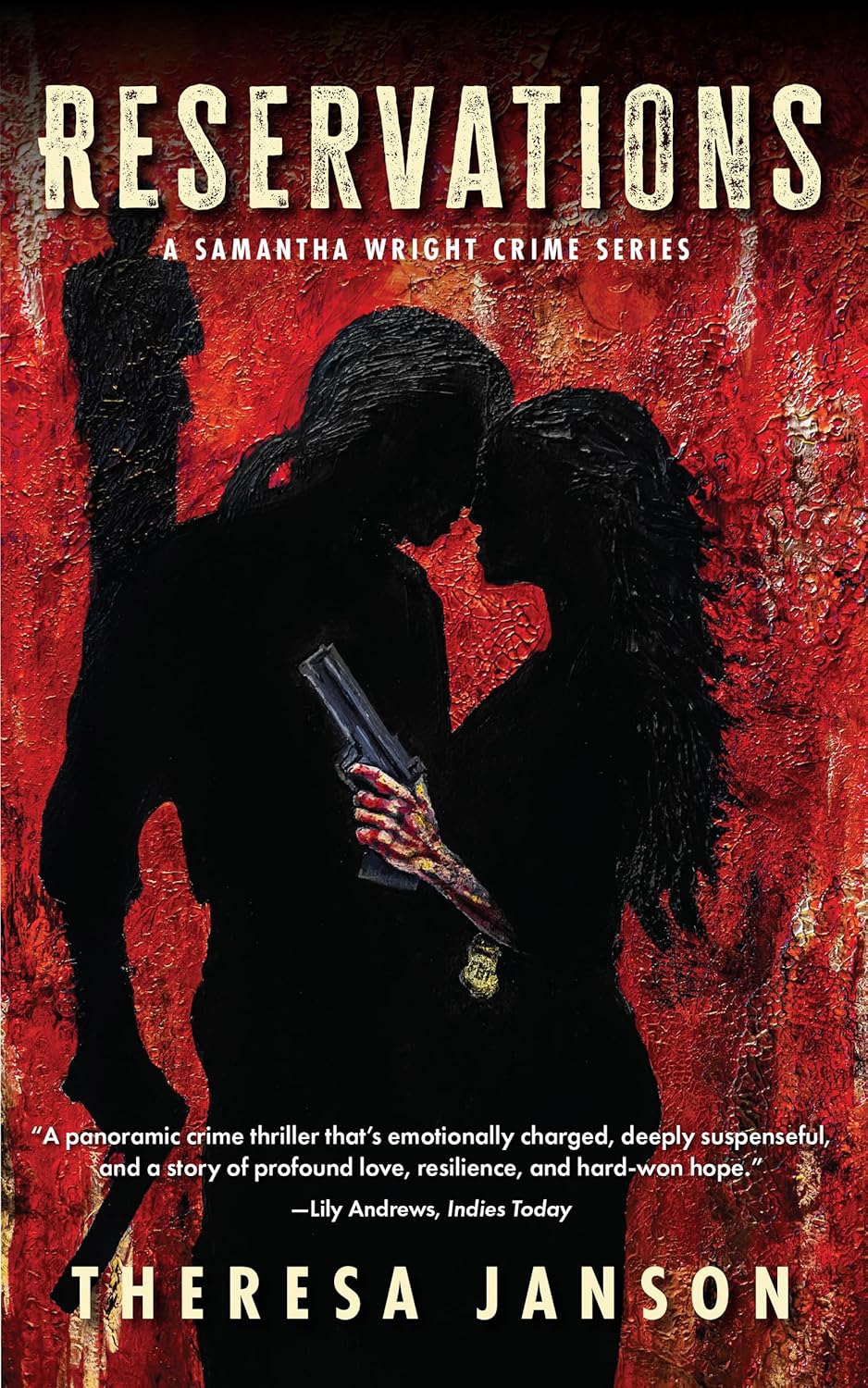
Reservations follows FBI profiler Samantha Wright as she’s pushed back into the hunt for a serial killer after the sudden death of her mentor and closest friend, Dr. Edmond Sampson. The story opens with grief, then moves fast into danger as Sam takes over the RESERVATIONS case, a string of murders involving young boys on reservations across the American West. Her past traumas, messy romantic entanglement with Special Agent Charlie Falken, and deep loyalty to Dr. Sampson color every choice she makes. The book blends crime, trauma, culture, and romance in a way that feels raw and intimate, almost like sitting beside Sam as she thinks her way through every dark corner of the investigation.
I liked how emotional the writing feels. The author doesn’t rush through Sam’s pain. She lets it sit there, real and jagged. Sam grieves her mentor with this quiet, private sorrow that feels heavy and familiar. At the same time, the pacing snaps between slow internal moments and sudden shocks. The memories of the BAKER’S DOZEN case are especially rough. The writing keeps things personal. It doesn’t pretend Sam is made of steel. She’s brilliant, but she’s tired, haunted, and sometimes unsure, and I liked her more because of that.
The mix of genres also surprised me in a good way. The romantic scenes with Charlie are blunt, sweaty, flawed, and full of emotional landmines. They’re not polished or dreamy. They feel like two people clinging to each other because they don’t know what else to do with their hurt. Then the story swings into investigative mode with sharp detail and a steady buildup of dread. The casework feels grounded and tense, especially when Sam revisits crime scenes or pieces together old trauma with new evidence. The writing is vivid.
I’d recommend Reservations to readers who enjoy crime fiction with strong emotional depth and a protagonist who feels human in all the best and hardest ways. It’s especially fitting for people who like stories that dive into trauma, culture, identity, and the complicated ties we form with the people who shape us. If you want a thriller with heart and heat, something that grips you and makes you feel a little raw by the end, this book will get you there.
Pages: 332 | ASIN : B0FHYLFVBZ
Desperate Souls

Desperate Souls follows several lives caught in moments of fear, loss, and fragile hope. The story opens with young Joseph watching his world collapse in a violent attack on his family’s mission, then shifts to Grace, a talented ballet instructor whose body begins to betray her just as her future seems set, and to Nathan, a new father fighting to keep his wife alive. Each thread builds toward a picture of people pushed to the edge of what they can endure and reaching for faith, purpose, or simple survival. The writing leans heavily into emotion, and the pacing keeps the reader on alert as tragedies unfold without warning.
This book pulled me in fast. The emotional punches land hard, and I found myself bracing during several scenes. The details of Joseph’s escape, Grace’s slow unraveling, and Nathan’s desperation created a steady tension that made me keep turning pages. The writing is clear and direct, and it leaves room for the reader to feel the weight of each character’s fear. At times, I wanted a moment to breathe, yet the speed of the story felt true to what these characters were living through. Their worlds were breaking apart.
I also enjoyed how the story handles faith and suffering. It does not drift into heavy explanations, and it avoids preaching. Instead, it shows characters trying to cling to what they believe while everything they trust falls away. Some moments really resonated with me. Grace trying to keep her life together while hiding her symptoms felt painfully real. Nathan stumbling through fear with a baby in his arms made me tense in my seat. I felt frustrated with these characters sometimes, and I felt protective of them too. That mix made the story stick with me.
Desperate Souls will appeal to readers who enjoy character-driven drama with high emotional stakes. It is well-suited for people who like stories about ordinary lives facing sudden upheaval and who appreciate a blend of suspense, faith, and personal struggle. If you want a book that makes you feel something deep and keeps you thinking after you close it, this one will do exactly that.
Pages: 414 | ASIN : B0FHQKDM88
the quiet calendar
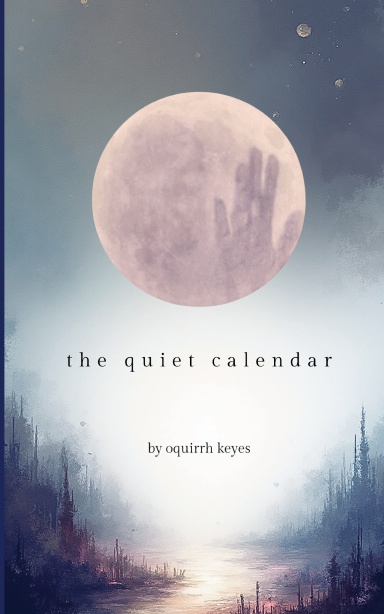
The Quiet Calendar feels like a month of someone’s inner world laid bare. It traces day by day how a woman crawls out of a long, damaging entanglement and slowly learns to hear her own voice again. The book moves through grief, shock, anger, clarity, and finally something like peace. Each poem marks a moment in time. Some are sharp. Others feel like exhaling after holding your breath. The drawings scattered through the book soften the blows a bit. They echo the mood of the poems and give everything a floating, ghostly feel. The whole collection reads like a journal.
As I moved through the pages, I felt myself pulled into her emotional rhythm. The writing is simple on the surface, but it hits hard because of that simplicity. Some lines shocked me with how plainly they revealed the manipulation she endured. Other lines made me root for her like a friend who keeps getting stronger each day without realizing it. The pacing is tight. The shift from longing to clarity feels natural. It never rushes.
I also loved the way the book explores self-return. Many poems break open the idea that healing is not one big moment. It is a series of tiny decisions that build you back up. I felt myself smiling at her small victories. A cup of coffee alone. A morning without checking the phone. A song that once hurt now simply playing in the background. These little moments felt huge and real and made me weirdly proud of her. The writing carries a lot of tenderness, even when it stings, and I kept thinking about how many people will see bits of their own story in hers. The art deepened that feeling. The cracked hourglass. The key with wings. The feather.
The book is honest about the messy parts of leaving someone who should never have been held so tightly. It is gentle about the slow return to a life that was waiting the whole time. I would recommend The Quiet Calendar to anyone who is coming out of a breakup that left them confused, guilty, or hollow. It is soft, real, and full of small truths.
Pages: 112 | ISBN: 9798218838591



 LITERARY TITAN