The Moment I Stopped Disappearing

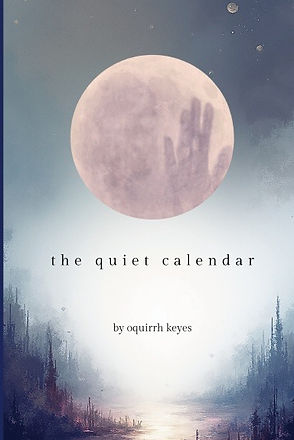
The Quiet Calendar follows a woman day by day as she leaves a damaging entanglement and rebuilds herself through small, tender moments of clarity, grief, and hard-won peace. Why was this an important book for you to write?
The Quiet Calendar was important for me to write because it marks the moment I stopped disappearing inside someone else’s narrative. I didn’t write it to explain what happened or to assign blame. I wrote it to reclaim myself. At the time, I was moving through grief quietly, functioning outwardly while unraveling inwardly. Writing gave me a place to be honest without performing strength.
This book documents the shift from survival to clarity. It captures how healing actually happens, not in grand gestures, but in small, private recognitions: a day without checking a phone, a breath that doesn’t hurt, a morning that belongs to you again. Writing it helped me turn silence into something useful. It became proof that I could leave, endure, and rebuild, one day at a time.
Why did you choose a day-by-day structure, and how did time shape the emotional arc of the book?
The day-by-day structure mirrors how grief behaves. When you’re in it, time becomes both oppressive and necessary, you count days because surviving them feels like an accomplishment. I needed the structure to ground me, to make the intangible measurable. I was writing in real time to replace texts I no longer sent.
Time shapes the emotional arc by revealing patterns. Early days are raw, repetitive, desperate. Later days are quieter, less dramatic, but more honest. The absence of intensity becomes its own kind of progress. By the end, the act of counting is no longer needed. That’s the real arc: not closure, but release. The calendar eventually dissolves because the life underneath it returns.
How did you decide when simplicity was enough, especially when writing about manipulation and pain?
Simplicity became a boundary. When you’ve lived through manipulation, language can become tangled, over-explained, defensive, performative. I stripped the poems down because clarity is an act of self-respect.
I trusted that naming a truth plainly was more powerful than dramatizing it. Pain doesn’t always need elaboration; often it needs space. Short lines, lowercase, and restraint allowed the reader to feel without being told how. When the words felt quiet but steady, when they no longer asked for validation. That’s how I knew simplicity was enough.
I’ve spent decades in an operating room, where time matters and conversations are often brief, interrupted, or unfinished. That environment teaches you to speak clearly and only when it counts.
My writing carries that discipline. I trust simplicity because it gets to the truth faster. When words are chosen carefully, they don’t need to be loud.
What role did the drawings play in your own healing process while creating the book?
The drawings were a parallel language. When words felt too loaded, drawing allowed me to process without narrative or justification. They slowed me down. They asked for presence, not explanation.
Visually, they echo the themes of the book—keys, time, absence, return—but emotionally, they served as anchors. They reminded me that creation doesn’t always require articulation. Sometimes healing happens through the hands before it reaches the voice. The drawings helped me stay connected to myself while the poems helped me name what I was leaving behind.
The sketches invite the reader into my internal landscape. They aren’t explanations, they’re presence. I wanted the reader to feel immersed, to experience the emotional weight of the book not just through words, but through what is seen and held in silence.
Author Links: X | Facebook | Website
What do you do when the person you loved disappears into silence?
You count. You write. You learn to breathe again.
the quiet calendar is a day-by-day descent into heartbreak—and the unexpected rise that follows. With stark honesty and gentle restraint, these poems illuminate the stillness after loss and the strength found within it.
For anyone who has ever held on too long or had to let go without closure, this collection offers recognition, release, and the quiet beginning of renewal.
True Meaning of Home
Have a Good Trip, Lucky! follows a sweet little dog from Conakry, Guinea, who gets adopted by a U.S. diplomat and then has to travel across the world when his owner gets transferred to Washington, DC. What was the inspiration for the setup of your story?
The Dog Diplomat Adventure series is actually inspired by my real-life rescue dog, Lucky! This book, Have a Good Trip, Lucky! – is the second book in the series.
Lucky found me when I was posted to the U.S. Embassy in Conakry, Guinea, in West Africa. After becoming part of both my family and the U.S. Embassy community family, Lucky was surrounded by love and friendship. However, as those in the foreign service and military service know, new assignments often lead to new destinations. Lucky’s Diplomat Mom receives new work orders, and she is being transferred back to a job in the United States. Lucky is about to embark on his overseas move or trip!
What were some educational aspects that were important for you to include in this children’s book?
There are three themes in the book that I hope children and families take away after reading it.
INNER COURAGE – Lucky must find his inner courage in order to embark on his first overseas move and trip. Life inevitably presents challenges, and both children and adults need to summon their inner strength when confronted with difficulties.
LOVE – This story depicts a temporary separation between Lucky and his Mom. She arranges for Lucky to stay with her sister’s family until they can be reunited. This mirrors real-life situations where parents might leave their children for school, camp, or other commitments. Lucky learns that even in her absence, his Mom continues to care for him through trusted family members and friends.
TRUE MEANING OF HOME – Lucky discovers that HOME is not a building or place but is comprised of family and friends. And as long as you have your loved ones with you, you are at HOME, no matter where in the world you may land.
What scene in the book did you have the most fun writing?
Actually, the ending of the book was the most enjoyable to write. When Lucky arrives in New York and meets my sisters and their families! I had the opportunity to honor my family in this story. Without their love and support, I wouldn’t have been able to accomplish my job.
This book is a tribute to all family members who stand by their loved ones serving in the foreign service and military.
Will this book be the start of a series, or are you working on a different story?
Yes – this book is the second installment in the Dog Diplomat Adventure series!
The first book – Lucky Puppy Finds Two Families – narrates Lucky’s journey from being a homeless puppy on the streets of West Africa to finding not just one, but two loving families. Inspired by my real-life rescue dog Lucky, this series chronicles his adventures.
In Have a Good Trip, Lucky! – the second book, I share how Lucky became an integral part of both my family and the U.S. Embassy community, surrounded by love and friendship. However, as is common in foreign and military service, new orders often lead to new destinations. Lucky’s Diplomat Mom receives orders to transfer back to the United States, leading to Lucky’s exciting overseas adventure!
Have a Good Trip, Lucky! – follows Lucky’s first big trip and explores courage, change, and the comfort of finding the true meaning of “home.”
Author Links: GoodReads | Website | Instagram | Amazon
Lucky is a Dog Diplomat with a nose for excitement and a big heart! His life in West Africa is full of sunshine and friends-but everything changes when his Diplomat Mom moves across the world. Now, Lucky has to take a huge trip all by himself, from West Africa all the way to the United States! Facing travel surprises, delays in Paris, and wondering who will be waiting on the other side, is Lucky brave enough to conquer these challenges?
Join Lucky as he discovers his inner courage and the true meaning of home! Perfect for any child who’s ever moved, missed someone far away, or simply loves dogs and adventures. This fun-filled journey proves that a brave heart can find fun, friendship, and a place to call home-no matter where in the world your paws may land!
Steamy Distraction
Sydney and Heather are both interesting characters trying to move past their last bad relationships. What character did you enjoy writing for? Was there one that was more challenging to write for?
The Unwritten Rule’s two main characters were both a pleasure to write about. I loved discovering their slow-burn relationship and the sizzling chemistry that ignited amidst global travel, high-stakes sports events, and Formula One’s glamour.
Heather’s experience as a writer definitely made her an easier character to write. I connected with her motivation of wanting a career that her entourage could understand, but she was also keen to write about people falling in love. I wanted her to be a heroine readers could identify with, a character who, like newcomers to the Formula One romance genre, was also unfamiliar with the world of motorsport. But as I wrote more about Heather, she became much more than that—she had her own dreams and insecurities, which made her so endearing.
Sydney was more challenging because he’s more guarded—the sting of his past relationship still raw. But throughout the writing process, he revealed himself to be also sweet and considerate towards Heather and others. Everything a reader would expect and more from a modern and sexy Highlander. I loved seeing him open up to Heather during their interview questions for his biography. Writing about him falling in love again was satisfying after months of having to pull answers from Sydney—much like Heather did during the course of the story!
What scene in the book did you have the most fun writing?
There were many scenes I had fun writing for The Unwritten Rule, from the meet-cute in the Canadian Rockies to the action on track across the racing season, so it’s hard to find just one! Especially since I wrote it with dual points of view, as I wanted to create an immersive reading experience. I enjoyed writing about Heather’s first meeting with Sydney, and how it parallels the romance book she’s writing in the story. For fans of romantic comedy, I think they’ll laugh as hard as I did when I was writing it!
I also had fun integrating motorsport elements into the storyline and getting the reader to feel like they are in the car with Sydney. To do so, I rewatched old footage of past Australian and Canadian Grands Prix—among many others—which helped me realistically assess his championship ambitions, along with the difficulties he encountered on track. As an F1 fan, adding those small details from the driver’s point of view is key to writing my Formula One romance novels.
It might not be a scene, but compiling the glossary to help new readers understand all the motorsport terms and Scottish slang peppered throughout the story was a fun exercise. Since my contemporary romance novel is set in a more niche subgenre, I don’t expect all the readers of The Unwritten Rule to be Formula One fans just yet, but maybe by the end of the book, they will be!
When will Book Two be available? Can you give us an idea of where that book will take readers?
The Rival Hearts, the second book in The Racing Line series, is scheduled for publication in Spring 2026. It follows the story of Ethan and Maggie, two side characters from The Unwritten Rule, as they go from being rivals to lovers.
Here’s book two in a few sentences: She’s the first female F1 title contender. He’s the steamy distraction on track. The race weekend plan didn’t include waking up married to the rival rookie driver. What happens in Vegas, stays in Vegas, right?
Readers can expect to see familiar faces, discover new racetracks, as well as plenty of banter and spice. As with all the interconnected stand-alone books in The Racing Line series, they are filled with international travel, irresistible chemistry, and a swoon-worthy hero in a race suit.
Author Links: GoodReads | Instagram | Website | Amazon
Sydney
To match his legendary father’s record on the track, Sydney McKinnly needs a third world championship win. But after a dreadful year in and out of the cockpit, the only way he’s keeping his driver’s seat is by agreeing to have his bloody biography written.
It wasn’t supposed to challenge his decision of not getting distracted by love this season. Harder said than done when the biographer is none other than his Rockies holiday fling. And the sparks are still flying high.
Can he keep to their no-strings-attached deal? Or is their chemistry putting everything he’s been working for this season at risk?
Heather
Heather Everett-Fortier is a successful biographer, yet each new book brings her further away from her dream of writing romance novels.
After a bad breakup, travelling the world with the St-Pierre Racing team provides Heather with unparalleled opportunities for gathering romance story-setting inspiration. But it also brings Heather closer to her one-night stand. As strangers, they weren’t supposed to see each other again, let alone work together! And yet, when they meet again, they can’t pull away. Writing Sydney’s biography brings Heather closer to her dreams, but will their steamy attraction steer her off track?
Can Heather and Sydney keep their passion in check long enough for them to finish this biography?
The Unwritten Rule is book #1 in the Racing Line Series. Each book can be read as a stand-alone, but they are interconnected. This is a high-octane contemporary sports romance filled with open-door spice, swoon-worthy moments, and a guaranteed happily ever after.
Opportunities to Lead

In Scaling Pyramids, you present an in-depth look at the three layers of successful leadership and share with readers your own reflections on what it means to lead with patience. Why was this an important book for you to write?
A lot of the leadership training that focuses on the entry and mid-level is really focused on managing, not leading. A lot of the core leadership literature is focused on the leader at the top. So there is a gap – how to shift from managing to leading, how to lead without authority, how to make meaningful change from the middle.
I had my own struggles with managers who believed they were leaders, but more people fled them than wanted to follow them but I also had some really great role models and influencers, so I wanted to share lessons I learned from both. I also recognized I made (and can continue to make) some mistakes and learned some lessons along my leadership journey. I know I am not the only one, and I know from my leadership journey that more people than just me can learn from those lessons, so I wanted to share them to benefit others. Not Pollyannaish, not “follow these steps and become an instant success,” but real lessons, hard won in the course of a real life.
What is a common misconception you feel people have about becoming a successful leader?
That you have to have a title, rank, or position. The truth is, if you have one follower, you are a leader. The question then becomes, what do you do with that? How can you nurture that flame and grow as a leader? Do you even want to? If the answer is yes, then look for opportunities to lead where you are, regardless of title, rank, or position. I think a second misconception is, “leadership is lonely, I have to do it on my own.” The truth is that to be successful you need to surround yourself with others: role-models, mentors, and coaches that can support you in your leader development and that you in turn can support as you grow.
What is one piece of advice someone gave you that changed your life?
“You know, you seem to carry a lot of anger, and I think you don’t realize how it affects you and those around you.” He actually started the conversation with, “Can I speak into your life?” which was a shocking question for me. And it was a conversation that changed my life because it was a big blind spot that I had, and working with him to recognize it and overcome it changed a lot for me and made me a much better leader. For you, it may not be anger, but recognizing that you have blind spots and finding trusted confidants who will tell you the truth about them and help you work through them is incredibly important.
What is one thing you hope readers take away from your experiences?
For those in the middle, you can lead and make a difference from wherever you are. There is a graphic in the introduction to my book that illustrates my journey through my bureaucratic pyramid. I never made it to the top. I have not been Secretary of State. But I made a difference and an impact on the entire organization, in more ways than I realized. You can, too.
For those at the top, investing in the leadership development of those at the bottom and middle of the organization will make your organization stronger, lead to improved employee retention, and better outcomes. Letting toxic managers flourish will have the opposite effect.
Author Links: GoodReads | Facebook | Crisis Lead | Website | Scaling Pyramids | LinkedIn | Amazon
Scaling Pyramids: Leadership Lessons from a Mid-Level Bureaucrat is an honest, engaging, and research-informed exploration of what it means to lead from the bottom and middle of an organization—especially within complex systems that aren’t always built for innovation, agility, or humanity.
Drawing on more than 25 years of experience as a federal law enforcement officer, diplomat, educator, and public servant, author Christopher Stitt brings a rare combination of street- level credibility and scholarly insight to the leadership conversation. Throughout the book, he weaves together personal stories from his global assignments with contemporary leadership research from behavioral science, organizational psychology, and decision- making theory.
The result is a practical and thought- provoking field guide for those who are tired of waiting for permission to lead—and ready to make a difference right where they are. In these pages, you’ll find lessons on how to influence up, down, and across your organization. You’ll learn how to build trust, coach others, think strategically, and maintain your integrity even when politics or process get in the way. You’ll discover why the middle of the organizational pyramid isnot a waiting room for the next promotion—it’s the center of gravity where culture, performance, and credibility are either built or broken.
Whether you’re managing teams in a government agency, navigating the corporate hierarchy, or trying to make change from within a large institution, Scaling Pyramids offers you a road map grounded in both lived experienc and real evidence. With a voice that is both candid and deeply practical, Stitt reminds us that leadership isn’t about rank—it’s about showing up, stepping up, and speaking up in the moments that matter.
If you’ve ever felt overlooked, underutilized, or underestimated in your role, this book is for you.
It’s time to lead. Not someday—now.
Mythology or Comparative Religions
Dead and Buried follows a woman learning to manage her Kitsune heritage and magic, who keeps having curveballs hurled at her from psychic attacks, supernatural creatures, and restless spirits. What was the inspiration for the setup of your story?
If I can quote Aerosmith, “Half my life’s in books written pages. Live and learn from fools and from sages.”
That pretty well sums up my life. Especially my younger years. I was a “surprise” baby, and my siblings were much older than I was. While I was loved, I really didn’t fit in. Then my father died when I was in grade school. By Junior High, my brothers and sister had all married and moved out of the house. So, I learned early to roll with the punches using books as my escape and humor as my armour.
Many of those books were in the Sci Fi/Fantasy realm, and I’ve always had a particular fascination with mythology or comparative religions.
I found Tai’s character to be believable and relatable; her emotions and responses felt real even when dealing with all the paranormal situations she was thrown into. Are there any emotions or memories from your own life that you put into your character’s life?
As I indicated, I had to learn to roll with the punches as a child. I kept Tai as human as she rolled with her punches. She also uses humor as armour, even though she has less of a filter on her mouth than I do.
What were some themes that were important for you to explore in this book?
It is a lesson that we all need to learn – acceptance, resiliency, and personal growth.
Can you tell us where the book goes and where we’ll see the characters in the next book?
There are a planned nine books in the series – literally one for each of the nine tails that a Kitsune can have.
Book three has Tai and friends in New Orleans, where she meets distant family and makes new friends. Of course, there is plenty of growth – and it is not all for her. I hope to have the book available on Amazon in February.
Author Links: GoodReads | Amazon
Join Tai, Nico, and Magoo as they navigate contractors, heartbreak, and the undead.
All I wanted was a moment to myself. Being back in High School was exhausting. I groaned, contemplating the absurdity of the situation. Having to take summer school classes was lame at the best of times. But taking a High School class when you were eight-plus years out of school was even worse. Especially when it was a class I had technically already passed. Technically. By the skin of my teeth. Which, if I am to understand correctly, is a trait of certain gnomes. Not sure which ones, though.
Share and Accept Feedback

The Magic of Imperfection uses stories from real people to show that embracing imperfection helps people make more progress, take smarter risks, and actually enjoy their work without overthinking. How much research did you undertake for this book, and how much time did it take to put it all together?
The Magic of Imperfection is a summary of my work philosophy and approach I’ve honed over three decades – it didn’t require outside research – as my work has been the driver for the book. The act of writing the book was fairly quick, given it was information I’ve used for years – from start to finish it, was a 6-month project.
What is the 3/4 baked philosophy, and how does it help improve people’s quality of work?
The idea is that people hold onto their work too long, and many great ideas don’t get out in the world as a result. The 3/4 baked philosophy asks people to find a sweet spot to share and get feedback from others, precisely when the work isn’t yet perfect – but has enough form and clarity that your intentions are clear – not half baked – and not fully baked…. But 3/4 baked.
Over time, when we are willing to share and accept feedback (good or bad) sooner and more rapidly, we develop tools and an inner compass that makes our work stronger over time. We learn the most from failure – and a willingness to test ideas as widely as possible.
What is one thing that you hope readers take away from The Magic of Imperfection?
Stop trying to be perfect with what you do – and magically – by using the 3/4 baked approaches in the book – your work will get more perfect over time…. But with less effort, stress, and drama – giving you more time to spend on things you love and people you care for – or just getting a lot more shit done!
Author Links: GoodReads | Amazon
Break free from perfectionism and finish your creative projects. This unconventional guide shows you how to overcome creative blocks and finally complete your work through strategic imperfection.
The world is full of creative people. So why do some get their ideas out in the world while others don’t? Why are some incredibly prolific while others struggle with deadlines or can’t complete projects? In this book, Jason F. McLennan-a master in “getting stuff done”-shares secrets to boosting productivity, innovation, and personal success. By adopting his “¾ baked” philosophy and the key lessons that surround it, readers will be able to dramatically increase their output while also keeping their creative juices flowing.
McLennan’s recipe for creative success includes the following ideas:
• Look forward to failure
• Discover the power of feedback
• Learn to become a “trim tab”
• Harness the power of momentum to drive creativity
We’ve all heard the phrase “the perfect is the enemy of the good.” Perfection is often what holds so many people back. Trying to reach it means that nothing much can get completed, and inspiration itself is often blocked as people either procrastinate or endlessly self-edit. By chasing perfection, it remains elusively further away.
The world is full of half-baked ideas-but almost no perfect ones. With The Magic of Imperfection, readers will learn how to seriously amp up what they do, how fast they do it, and simultaneously how well it gets done.
Our Unfinished Selves

The Courage Gap explores fear and courage, walking readers through five steps to help them shift their focus, rewrite the stories they tell themselves, regulate fear, step into discomfort, and learn from the moments when things fall apart. Why was this an important book for you to write?
Because I’ve watched too many capable people—including myself—stay stuck in the space between knowing and doing. This wasn’t because we lacked the ability to take action but because our fear kept us stuck in place, distorting the risk-magnifying the danger of acting, minimizing the cost of staying put, and shrinking our courage to step forward and back ourselves fully.
Over 25 years coaching many diverse people across the world to meet their challenges and navigate change, I’ve heard countless versions of the same story: “I knew what I needed to do, but I couldn’t bring myself to do it.” The woman in the soul-draining job. The parent avoiding a hard conversation. The person with a dream who keeps finding reasons to wait.
What struck me wasn’t that people feel fear—we all do—but how often they mistake its source. They think they’re being prudent when they’re actually protecting their identity in some way, avoiding disapproval, or clinging to what’s familiar because it feels safer and less confronting than making a change.
Finally, I wrote this book because often we end up suffering more over time from not taking the brave action we know we should be taking than by risking what we fear. That suffering shows up in many forms – ongoing tension and hurt in relationships, the quiet ache of unfulfilled potential, roads not taken, words left unsaid. Right now, when everything feels uncertain, that gap has never been wider. This book offers a practical step-by-step path to move through it.
How did you come up with your five-step process for helping people reprogram their patterns of thought and behavior that are self-sabotaging?
By distilling a lot of research and insights from broad spheres as well as watching what actually worked—not just with clients, but in my own life when fear and doubt have grown really loud or when I’ve come to a moment and hesitated for fear of being ‘exposed’ as not wholly worthy of sufficient in some way. The five steps are a synthesis of research, and experience, and observing people who consistently lead brave and meaningful lives.
The people who closed their courage gap followed a pattern: They shifted focus from worst-case scenarios to what becomes impossible if they don’t act. They chose the mindset they would operate from, rewriting their stories—recognizing narratives about risk were often inherited or outdated. They regulated fear instead of waiting for it to disappear (it never does). They braved awkward moments we are wired to steer away from, and stepped into discomfort incrementally through small acts of bravery. And they learned from setbacks, seeing them as information rather than proof they shouldn’t have tried and made some semblance of peace with the fact that they are innately fallible and a ‘work in progress.’ As I wrote in the book, extending grace and compassion inward, forgiving our ‘unfinished selves’ is a foundational act of courage that can be profoundly transformative.
It’s not linear—it’s messy. But the sequence matters because you can’t regulate fear you haven’t acknowledged, and you can’t step into discomfort if you haven’t challenged the story that discomfort equals danger.
How can implementing the ideas in your book help shape better leaders and encourage growth?
The book helps anyone—leaders, parents, people in transition—close the gap between who they are and who they’re capable of becoming.
As I wrote in the book, sharing a story of my childhood on my parents’ farm, “Growth and comfort can’t ride the same horse.” That is, growth doesn’t happen without exertion or discomfort. It happens when you speak up with a shaky voice. When you try something new, knowing you might fail. When you have the difficult conversation instead of letting resentment build.
The book helps people distinguish between real dangers and magnified fears. Your brain evolved to overreact to threats, which kept ancestors alive, but now makes a tough conversation feel as dangerous as a physical threat. It makes starting something new feel riskier than staying in a situation that’s slowly diminishing you.
When you recognize that fear of judgment isn’t actual danger, or that doubt isn’t incompetence, you can take action despite fear rather than waiting for it to disappear.
For anyone leading—a team, a family, their own life—this matters because people become what they’re willing to confront. Those who act despite fear create environments where others feel permission to do the same. That permission to be imperfect while stepping forward? That’s how everyone grows.
What is one thing that you hope readers take away from your book?
That not only can anyone become a braver version of themselves, but that courage isn’t the absence of fear—it’s choosing to act while fear tags along.
Most people wait to feel brave before acting. But courage doesn’t work that way. You don’t eliminate fear; you change your relationship to it. You learn to distinguish between real dangers and magnified fears.
The shift I want readers to make:
When you ask “What’s the risk?” also ask “What’s the cost if I don’t act?”
That reframe—from “What could go wrong?” to “What will definitely go wrong if I don’t?”—unlocks stalled decisions, avoided conversations, deferred dreams.
I want readers to finish with a quiet push toward things they usually avoid. Not because fear disappeared, but because they realize staying stuck hurts more than stepping forward. The courage they think they lack isn’t something you’re born with—it’s something you build, one uncomfortable step at a time.
If readers take even one brave action they’ve been avoiding, that changes something fundamental. Not just for them, but for everyone who would benefit from them showing up more authentically and backing themselves more boldly – toward their bold goals but also in meeting their biggest challenges too. We all have them.
Author Links: GoodReads | Amazon
Fear creates the gap. Courage closes it.
This powerful guide from the bestselling author of You’ve Got This! cuts through the hype to connect the ‘why’ of courage to the ‘how’ of courage. Drawing on cutting-edge research woven together with stories that compel head andheart, The Courage Gap will help you bridge the think/do gap between what you’ve been doing and what you can do; between where you are and where you want to be—in your career, relationships, leadership, and life.
Distilling theory and hard-won wisdom spanning from Margie’s childhood in rural Australia to her decades of living around the world and coaching ‘insecure overachievers’ in Fortune 500 organizations, Margie shares a powerful 5-step roadmap to reprogram the self-protective patterns of thought and behavior that sabotage success to bring your bravest self to your biggest challenges and boldest vision.
At a time when courage seems in short supply, in a culture continually stoking insecurity and anxiety, this book will transform your deepest fears into a catalyst for your highest growth and the greatest good.
Applying the five steps will:
Ignite passion and unlock the potential fear holds dormant
Rewrite the scripts that have kept you stuck, stressed, and living too safely
Reset your ‘nervous’ system and embody courage in critical moments
Transform discomfort as a cue to step forward and expand your bandwidth for bold action
Reset your relationship to failure and make peace with the part of you that wimps out
For leaders, The Courage Gap provides a guide to operationalize and scale the courage mindset across your team and organization to deepen trust, dismantle silos, foster innovation, accelerate learning, and unleash collective courage toward a more secure and rewarding future.
Out Of the Drawer
Stupid Gravity follows a sharp but disgraced software engineer who is on probation, witnesses the abduction of a girl from a homeless shelter, and has to find a way to save her without breaking her parole. What was the inspiration for the setup of your story?
I created Alex/Liliane as a secondary character in my first attempt at writing a novel. That particular Not Ready for Primetime manuscript went into a drawer and never came back out, but the rocky backstory of the strange little hacker girl with the gray-fendered Mustang stuck with me. A few years later, I brought her back in a NaNoWriMo project that morphed into a full first draft, Shadow Girl. A discussion with Hank Phillipi Ryan at a writer’s conference led me to realize that what I had really written was the second book in the series and that I needed to go back and develop the origin story. The result was Stupid Gravity.
Alex can’t seem to catch a break and just wants to get her life back on track, but the universe seems to have other plans for her. What was your inspiration for their characters’ interactions and backstories?
Back in the Nineties and Aughts, I used to hang out at a carriage house on Capitol Hill where first one and then another of my friends lived and sold weed. I’ve sometimes reflected on the irony of that little business operating comfortably and profitably for over twenty years while hundreds of more technically legitimate Denver businesses came and went. Visitors stopping in for pot or just a cup of coffee and conversation included lawyers, college professors, two dominatrixes who lived next door, one published poet, a former Penthouse pet, numerous players in the local recreational pharmaceuticals scene, a PO stopping in to buy weed from his probationer, and many more unique Capitol Hill specimens. The incidents and people from that carriage house still provide a wealth of inspiration.
Do you think there’s a single moment in everyone’s life, maybe not as traumatic, that is life-changing?
I think many people have dramatic changes in their life path due to some personal or shared tragedy. We certainly hear about individuals driven to careers in medicine, law enforcement, religion, etc., by such events. In recent years, it would be hard to calculate how many lives were drastically altered by 9/11. For most of us, though, I think life is a little more like billiard balls caroming about on a pool table. I know I’ve frequently thought back on the way seemingly innocuous decisions changed my life—a college course taken, a chance encounter in a bar, a job offer accepted or turned down, etc.
Can you tell us what the second book will be about and when it will be available for fans to purchase?
Set two years after the series opener, Shadow Girl is in the final stage of beta reads and should be released in early 2026. Still the employee-from-hell at HappyMart, still rooming with Cici, and still on probation, Alex/Liliane has developed a side gig doing what she likes to call street-level detective work. That knife-edge balance of an existence comes under threat when a stalker threatens to expose her litany of probation violations. His price for keeping quiet is a hacking job as liable to land her in prison as keep her out.
Author Links: GoodReads | Website
Disgraced software engineer Liliane Dupuis is genius-level smart, wise in the way of sarcasm, and incurably socially inept. She’s also living in her car, a forty-year-old blue Mustang fastback with one primer gray fender. She’s on probation, having allowed a manipulative ex-boyfriend to drag her into a failed ATM hacking scheme. And she’s unemployed in 2010 when finding a job is tough even for those unburdened with a felony conviction. When Liliane witnesses the abduction of a little girl from a homeless shelter, she doesn’t figure her new bottom-rung reality carries the risk tolerance for getting involved.
With funds dwindling to desperation level, she uses a fake ID to land a job at a convenience store on a seamy stretch of Denver’s Colfax Avenue. Less than a week into her new salesclerk career, Liliane watches as the shelter kidnapper walks into her store. It’s not a coincidence, she knows. Just karma continuing to mess with her. A call to the police might or might not get the abductor locked up, but the exposure of Liliane’s parole violation will absoluely land her on a Sheriff’s bus headed for the state pen. Instead, she must use her resourcefulness, hacking skills, and ruthlessly logical gray matter to track down the kidnapper and rescue the little girl.


 LITERARY TITAN