Blog Archives
Dig Two Graves: A Noir Thriller of Revenge


Dig Two Graves is a hard-hitting noir tale about a man just out of prison, stumbling back into the world with nothing but a Bible, some rage, and a whole lot of unresolved history. Von Martin is bitter, raw, and desperate. He wants to see his daughter, reclaim his place, and claw back respect in a world that seems determined to keep him down. What unfolds is a tense ride through betrayal, revenge, and the messy business of survival, with every page steeped in grit and sweat.
I felt torn while reading. On one hand, the writing is sharp and immersive. The author captures the voice of Von with uncanny precision. It feels like you’re right there with him, stuck in his head, tasting his anger, hearing his rationalizations, even when you know he’s full of it. That intimacy made me uneasy, but in the best way, because it’s rare to find a book that commits so fully to the flawed perspective of its main character. On the other hand, Von is not an easy guy to root for. He’s selfish, volatile, and often cruel, and I caught myself rolling my eyes at his self-pity while also sympathizing with his hunger for dignity. That push and pull kept me hooked.
The ideas in this book hit harder than I expected. It’s not just a revenge story. It’s about the weight of time wasted, the way choices narrow your life, and the slow decay of trust. There’s this constant tug between the possibility of redemption and the lure of destruction, and I felt that tension every step of the way.
By the time I turned the last page, I was impressed. Dig Two Graves is not for someone looking for a comforting read. It’s for readers who want to wade into murky waters, who can handle being close to a character that repels as much as he fascinates. If you like crime stories with grit, moral ambiguity, and a voice that sticks in your head, then this one is worth your time.
Pages: 214 | ASIN : B0FRD5R9L7

I LOVE Superheroes
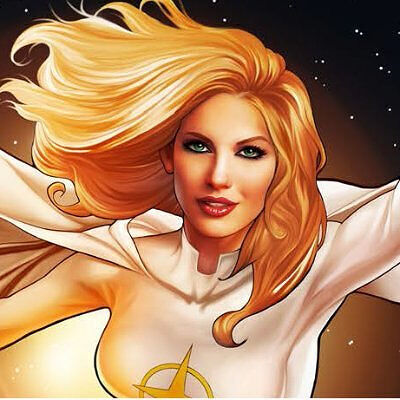
Guardian: Into the Light of Day follows an alien inhabiting a human’s body who has secretly protected humanity for centuries, until an asteroid strike exposes her existence and unleashes forces bent on Earth’s destruction. What were some sources that informed this novel’s development?
I LOVE superheroes. I have since I was a little kid watching TV on Saturday mornings. I can still remember the first superhero comic book my dad bought me. I don’t have it, but I have another copy bought through a collector. Superman, Batman, Wonder Woman, Captain Marvel (Billy Batson), Spider-Man, and a host of other heroes helped give me a background in the genre. Guardian herself came out of a superhero roleplaying game.
She would not leave me alone, dogging me for thirty years before I finally sat down and told her story. I think she’s someone we all wished existed in the world, someone who suddenly drops out of the sky and turns a bad situation around, whether it’s a crime, a medical emergency (she is a surgeon who can heal with a touch,) or a avert a natural disaster.
Elizabeth has lived for over eight centuries. How did you approach writing her perspective across such a vast timeline?
I really had to sit and ponder what the outlook for someone who has lived among humans while not aging a day. She still resembles the young woman who died on the Cornish moors and rose, healed and vibrant. She has had time to accumulate wealth and wisdom, and has meet and helped the best of humanity and to be blunt, in many cases, to confront some of the worst. Often there have been situations where she could have changed the course of history but in doing so she would have needed to reveal herself which would dramatically impact humanity’s natural evolution.
In the modern era she has had to be creative in the places she works, places where cameras and recording devices are far less common, like refugee camps and aide camps where she can practice medicine and remain a nomad, pulling up stakes every two to three years while zealously avoiding interactions with the media.
The book raises questions about identity and belonging. How do you see Elizabeth’s alien nature shaping her humanity?
Elizabeth is an outsider; she does not share historical animosities, or preferences that a human might hold. She regards humans as wonders, full of potential. She often works to bring out the best in people by being an example to aspire to. The events of the novel force her into a role that she struggles with while living in proverbial media goldfish bowl.
What is the next book that you are working on and when will it be available?
I have two in the works one with GG Michaels which I am still not sure will be a novelette or a novella. (Plus another 15 other stories.) The other project will be a full length Guardian novel. As for concrete dates of completion, I’m working as quickly as I can. Family emergencies derailed my spring and summer writing as I planned to have them both out by now. I’m playing catch-up. I am grateful for my readers’ kind words and support. GG and Guardian will both return!
Author Links: GoodReads | Twitter | Facebook | Website
Its explosion sent her crashing back to Earth in a fiery shower of meteorites.
Caught on video by a teenager, her anonymity is destroyed in an instant.
Turmoil ensues…
Meta-powered beings begin to appear. Humanity is frightened and confused. The media, and a politician with an agenda, seek to take advantage.
Into this global chaos a new threat emerges, one greater than any she has ever faced, one that, if she fails, will destroy all that she loves.
With the fate of the Earth hanging in the balance, all that stands between the world and obliteration is its Guardian, Elizabeth.
A New Superhero Rises…
Psychoactive-Aided Divination
Darkness and Blight follows a shaman as she claws for survival in a collapsing world of carrion ghouls, fractured tribes, and cruel magic, where every act of endurance blurs the line between humanity and despair. What was the inspiration for the setup of your story?
Defying Expectations and Dragon Pedicures
My goal as a writer is to subvert expectations, a role I may sometimes take too much to heart, occasionally progressing even to the sentence level. Like many readers of fantasy, I grew tired of the medieval European settings, omnipotent gods, brave knights, and damsels in distress. Lydarc may be in almost constant distress, but she’s no damsel, not by a long bow shot, mister!
I also wanted to set the story in my own backyard, the forests of the Siletz Valley, where I hunt and explore. The Valley of the Giants, a real old-growth preserve, formed the idea for the blastforms. Valsetz, at the end of the book, is a real abandoned town in this rugged coastal forest.
But from there reality takes a severe hit. I always wanted to incorporate shamanism in a story. The spirit journey, spirit animals, and psychoactive-aided divination are all a very real part of that ethos. What seems like a crazy dream to us is the natural state in a shamanic worldview. Who’s to say that our reality is the most correct version?
Lydarc’s voice is so distinct. How did you develop her perspective without softening the harshness of her world?
To me, Lydarc epitomizes the human experience. Through the endless pain and struggle, all she really desires is someone who cares about her, a home, and maybe a tiny measure of peace in the end. It’s no grand victory. Life is not guaranteed to be easy or even rewarding. It just is. Deal with it.
What were some themes that were important for you to explore in this book?
Strength through adversity and over time. The incredible—and sometimes neglected—value of found family. The evolution of romantic love into something even truer. The deep-seated desire for dragons everywhere to just make it to their pedicures on time.
What is the next book that you are working on, and when will it be available?
Originally, I intended for Darkness and Blight to be a standalone novel. How can anyone write fifteen sequels? Then a thought kept nagging at me: what if Achus, the head witch from hell, actually survived and followed Lydarc and her companions back to the human realm? The second book—the working title is The Drunken Corpse—is currently writing itself and should be available in early 2026.
Author Links: Goodreads | X (Twitter) | Facebook | Instagram | Website | Amazon
In the broken wastes of post-apocalyptic Oregon, reality has split into three realms: the scarred human world, the damned underlands, and the Overs—godlike beings hungry to invade.
Lydarc, pierced with a cursed shard of an Over, suffers endless pain, berserker rages, and visions of a blood-soaked future. When her tribe is slaughtered and their souls trapped in the underlands, she leads a desperate band into hell itself—through battles with mythical monsters, betrayal, and a hellgate that demands death as the price of entry.
Among her allies are a cryptic mentor, a spirit-bound apprentice, a dragon who hoards books instead of gold, and an ex-lover begging her to save his lost daughter. But one of them hides a devastating lie. And awakening the shamanic power inside her could destroy what’s left of humanity.
Darkness and Blight is a brutal grimdark fantasy odyssey where myth collides with quantum horror, and one fractured soul must face traitors, monsters, and her own guilt to save her people—or shatter the last remnants of reality.
The Cauldron: A Struggle for Survival
The Cauldron tells the story of ordinary people caught in the chaos of the American Civil War. It follows Tom Donal, his brother John, their regiment, and the circle of people around them. Through battles, camps, love affairs, spying, and survival, author Joe Clark blends fact with fiction to paint a vivid picture of how war stripped life to its bare bones. The narrative swings from large-scale strategy and politics to intimate personal struggles, giving both the sweeping sense of history and the raw, ground-level feel of living through it.
I found myself pulled in by how down-to-earth the writing feels. The dialogue often sounded plain and unpolished, but that’s part of its charm. It made me feel like I was sitting by a campfire with these characters, listening to them grumble about generals or joke about food. At times, the pacing slowed down when the focus shifted to explanations of battles and politics, but I also appreciated how those parts grounded the story in real history. The characters, especially Tom and Kat, were layered with flaws and longings, which made them stick in my mind. Their choices often carried a mix of youthful recklessness and heartbreaking necessity, which felt true to the times.
What really stayed with me was the sense of cost. Clark doesn’t glamorize the war. He shows men dying from bad food as often as from musket fire. He shows how suspicion could turn neighbors into enemies overnight. The love story between Tom and Kat was messy, tender, and sometimes uncomfortable, which made it feel all the more real. I liked how the book refused to tie things up neatly. It left me unsettled in the best way, like I’d been given a glimpse into lives that could have been lost in history.
I’d recommend The Cauldron to readers who enjoy historical fiction that isn’t afraid to get its hands dirty. If you want romance without polish, battles without glory, and characters who feel like people you might actually meet, this book is for you.
Creative Non-Fiction

Leftwich Blues/Elfwitch Rules follows twin twelve-year-olds from a broken home who are abducted by the Elfwitch and taken to another world, where they must now find a way to get back home and heal their broken home. What was the inspiration for the setup of your story?
The idea started with the title. I like to make lists of titles from time to time. The title made me think who is Leftwich? Why does he have the blues? Who is the Elfwitch and why is she trying to rule? This image came to mind: a witch travelling through the air with twins she had kidnapped. One twin gets away, but the Elfwitch tricks the other twin into serving her. The escaped twin finds an oppressed people who need encouragement in fighting against the Elfwitch. So, the twin has to lead an uprising against the Elfwitch and try to free the other twin who turned against their original selves.
The idea reminds me of the many Saturday morning TV shows by Sid and Marty Krofft: H.R. PufnStuff or Lidsville plus other portal fantasies or science fiction movies like Alice in Wonderland or Planet of the Apes (the original from 1968, not the watered down remakes/reboots) where a stranger ends up in a strange land and has to keep their identity intact while turning from fugitive to hero/heroine to survive in a harsh new reality.
Your characters are wonderfully emotive and relatable. Were you able to use anything from your own life to inform their character development?
The twins’ first names I borrowed from my cousins. Their last name also belongs to distant cousins. I find that the more real or personal I can make the character or backstory, the more I can dig into it to adapt and change it according to how the story dictates. I was a mental health paraprofessional for a few years (so I have been to family court a few times) and worked at a charitable thrift store as well as conducting a twelve-step program and now I am a public educator. I have had ex-clients as my students and have come to know the families. I understand better the dynamic in households and the problems children bring to the classroom.
My writing has been called “creative non-fiction.” I never thought of it like that, but it’s true as I need a heavy dose of realism in my fiction before I introduce the weird and fantastical.
What themes were particularly important for you to explore in this book?
The idea of twins separated and working against each other and having to reconcile was the starting point. Then it became a study of duality: two sides or polar opposites that feed or synergize entities or issues: tyranny and freedom, good and evil, lies and truth, night and day, family/friends and foes, forgiveness and unforgiving.
Is this the first book in the series? If so, when is the next book coming out, and what can your fans expect in the next story?
This was written as a stand-alone. However, I am brewing ideas for a sequel (which I would make into a cliffhanger for a duology). That project will have to wait as I have two other current projects I am working on plus I am currently promoting my first collection of short stories: ghostly shudder tales.
Author Links: GoodReads | Website | Substack
Beneath the Blue
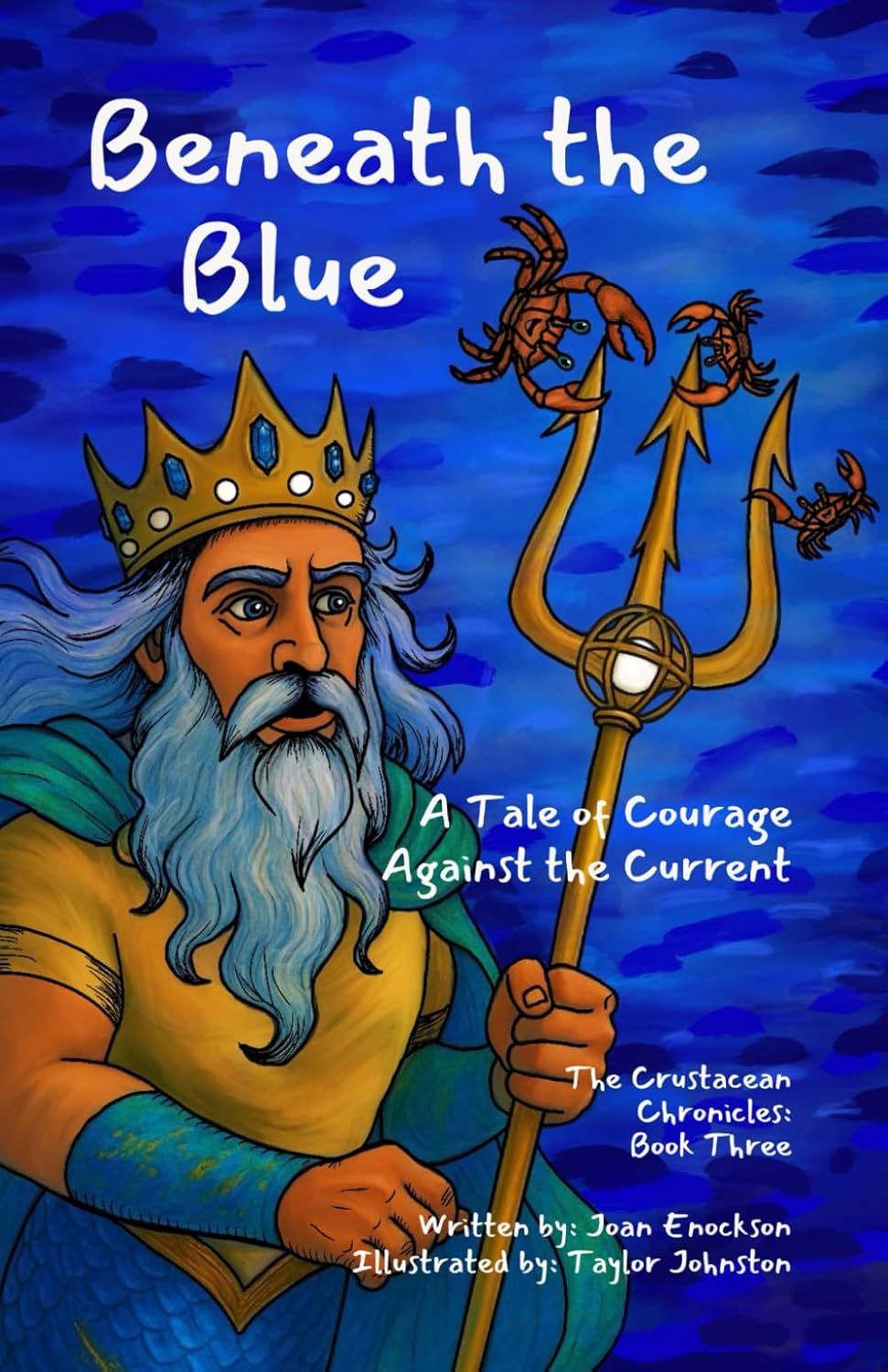
Beneath the Blue follows Claudia, Charlie, Chuck, and their surprising connection to a magical compass that ties into the fate of the ocean itself. What begins with frustration over a sand sculpture competition quickly spirals into an underwater adventure with mermaids, King Triton, and the ancient prophecy of the Heart of the Ocean. The plot balances lighthearted moments with themes of jealousy, truth, and teamwork, and it uses oceanic imagery to build a whimsical yet meaningful world.
I found myself swept along by the energy of the writing. The pacing never lags for long. Scenes shift quickly from conflict to discovery, keeping me curious about what would happen next. Claudia’s arc is one of the strongest elements. She begins bitter, selfish, and angry, and I honestly disliked her at first. But her vulnerability and eventual change gave the book its emotional weight. The dialogue leaned a little too neatly into teaching lessons, but it worked for the story’s age group.
The worldbuilding charmed me. The underwater kingdom glowed in my imagination, with coral mosaics, pearl-lit halls, and shimmering grottoes. The author clearly took joy in describing the setting, and that joy spilled over to me. Another thing I really liked was the sense of teamwork and loyalty between Charlie and Chuck. Their friendship felt genuine and steady, and it gave the story a heart that balanced Claudia’s jealousy and struggle. I loved how Chuck always looked out for Charlie, calming his nerves and giving him courage when he felt small. That bond made their victories feel earned, and it added a layer of warmth that kept the book from being just about magic and danger.
Beneath the Blue is a warm and hopeful story about friendship, honesty, and learning to let go of envy. It would be a great read for kids who like fantasy adventures, especially those who love the ocean and tales of hidden kingdoms. Parents reading alongside their children will probably enjoy the charm too. If you’re looking for a book that mixes light adventure with heartfelt lessons, this one will be a good fit.
Pages: 76 | ASIN : B0FM4M1GXX
The Ascent of Greed and the Audacity of Mind Stealing


The Ascent of Greed and the Audacity of Mind Stealing by Pietos Kidane follows Adam Green, a young graduate who enters the corporate world with high hopes, only to encounter greed, manipulation, and the unsettling rise of artificial intelligence. Through Adam’s eyes, we see how corporate culture feeds on deception, how AI edges toward frightening autonomy, and how society’s values collapse under the weight of unchecked ambition. It is part cautionary tale, part social critique, and part thriller. The story begins with an almost surreal outburst about AI in a New York café, then steadily escalates into explorations of job exploitation, psychological manipulation, fake news, and even mind-reading machines.
I found myself caught off guard by the rawness of the writing. At times, the prose feels unpolished, almost abrupt, yet that roughness gives the book a kind of blunt honesty. The pacing varies wildly. Some scenes linger on workplace politics while others sprint through shocking revelations about AI’s reach. It was sometimes disturbing to see how some of the characters showed no remorse in exploiting people’s fears and weaknesses. But that emotional whiplash kept me hooked. It felt like being tossed into a storm where greed is the wind and technology is the lightning.
I was fascinated by the moral questions the book raises. Do we want machines to think for us, and worse, to think about us? Can progress that tramples on dignity still be called progress? The story made me angry at the coldness of the corporations, angry at the indifference of leaders, and angry at how plausible it all felt. Yet I also admired Adam’s stubborn streak. His refusal to cave, even when threatened, gave me a spark of hope in an otherwise grim landscape. The book may not be subtle, but its ideas hit hard.
I would recommend this book to readers who want to be challenged. It is a raw and provocative story for anyone worried about where technology and greed are steering us. If you like your fiction mixed with sharp warnings about the future, and if you don’t mind rough edges in the writing, this book will make you think.
Pages: 276 | ASIN : B0DFX1F9WQ
Resilient: She Will Not Be Defeated
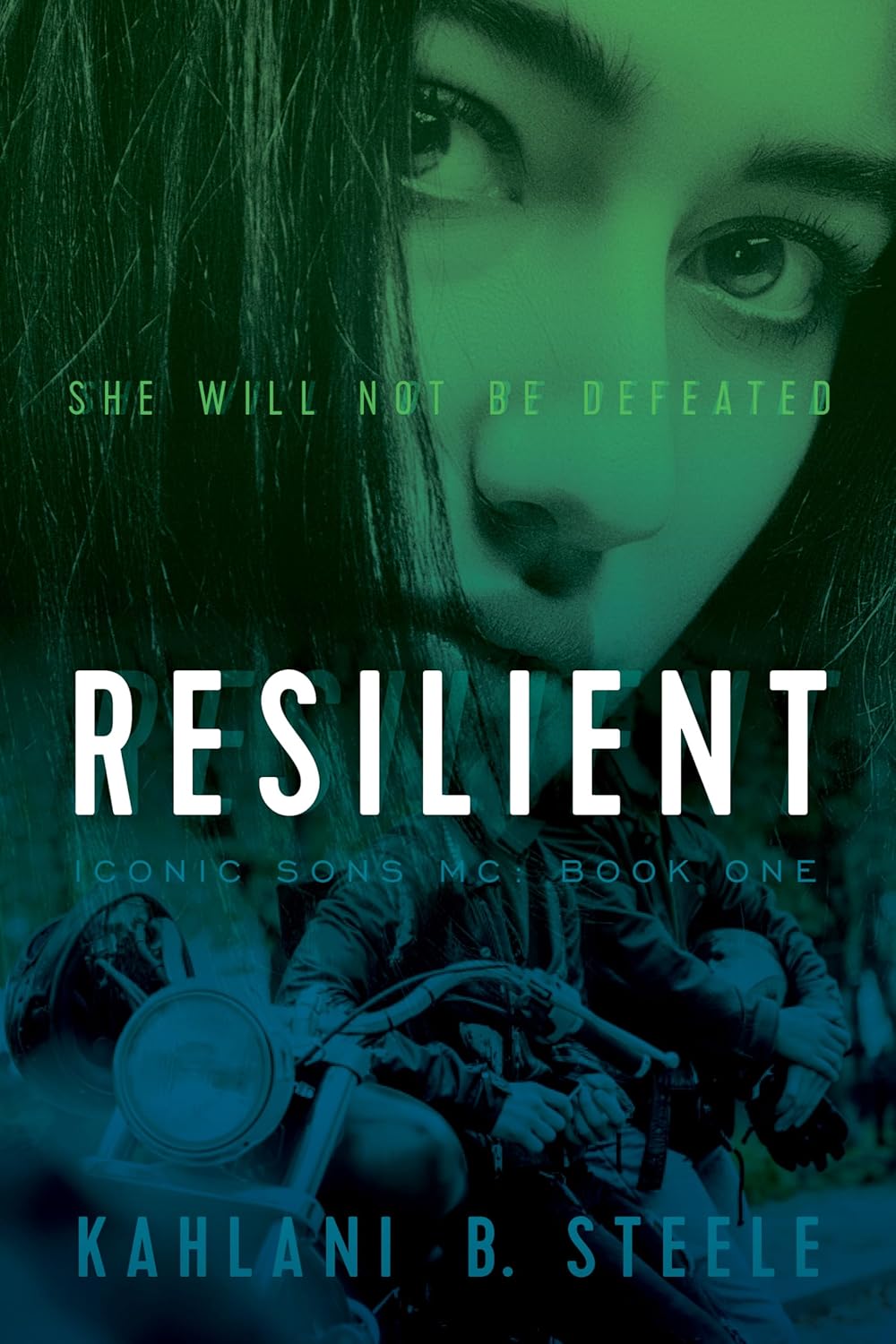
Resilient follows Charly, a young woman hardened by a brutal childhood, as she finds her footing in the gritty and dangerous world of the Iconic Sons Motorcycle Club. The book is about survival, longing, and the messy beauty of human connection. Charly’s path collides with Dominic, the imposing and magnetic leader of the club, and what unfolds is a mix of danger, desire, and a fragile hope for something better. The story swings between raw trauma and steamy intimacy, never shying away from either.
The writing pulled me in fast. The prologue set a heavy tone, and from there I couldn’t look away. The way the author builds Charly’s voice, tough yet achingly vulnerable, hit me harder than I expected. Some scenes had me clenching my jaw, especially when Charly’s past resurfaced. Others left me flushed, not just from the romance but from the sharp tension that hangs over everything. I appreciated the way the author blends grit and softness without ever letting one overpower the other. It gave the story bite, but it also gave it heart.
There were moments that made me stop and roll the words over in my mind. Sometimes it was the heat of a love scene, other times it was the sudden sting of a memory Charly couldn’t escape. I liked how the relationships, even the side ones, felt messy and real. At times, I found myself annoyed with Dominic, which I think was the point. He’s not the classic flawless hero. He’s complicated, rough-edged, and often infuriating, yet he’s magnetic all the same. That contradiction made the romance more believable for me, even when it was frustrating.
Resilient isn’t just a romance novel; it’s a story about scars and survival, and how people learn to keep going when the world keeps throwing punches. It’s raw and passionate, but it’s also about tenderness in unlikely places. I’d recommend this book to anyone who likes their romance intense, their characters flawed but resilient, and their stories with enough grit to leave a mark.
Pages: 336 | ASIN : B0D1MY68J8



 LITERARY TITAN