Blog Archives
Return to the Galaxy


Return to the Galaxy is a wild ride that blends gritty military realism with classic sci-fi adventure. At its core, it’s the story of Ewan Scott, a retired British Special Forces officer lying on his deathbed in 2038 who is offered a second chance at life by Jera, a mysterious alien AI avatar. In exchange for healing, youth, and purpose, Ewan must help prepare humanity for an interstellar future and a looming war that threatens Earth’s existence. The book weaves between Ewan’s vivid flashbacks of the Falklands War, present-day emotional reckonings, and a galactic history lesson that unfolds like a cosmic epic.
The book starts grounded, with grim and deeply human moments from Ewan’s military past, like the chaotic bayonet charge during the Battle for Mount Tumbledown. The details there felt raw and real: the terror, the gallows humor, the sheer physicality of it. Then, bam, we’re in a hospital room in 2038, talking to an avatar who injects nanites and heals cancer with a touch. It could have been too jarring, but somehow, Gillies makes it work. The emotional contrast between war and future tech gave the whole story more weight than your usual sci-fi romp.
The world-building is absolutely bananas but in the best way. We get a full-on download of galactic history, like this whole layered explanation of the Saret Federation and their colony systems: Light, Foster, and Wild Colonies. The way Gillies uses AI-driven flashbacks and Jera’s direct brain-to-brain communication with Ewan to show us these massive space empires was surprisingly effective. I was especially hit by the bittersweet moment when a pregnant colonist says goodbye to her children before leaving for a distant planet. It made this massive world feel very personal. That’s rare in sci-fi, and I loved it.
At times it feels like a mashup of a war memoir, a space opera, and a philosophical chat about humanity’s future and not all the transitions are smooth. Some exposition dumps, especially Jera’s monologues about history, dragged a bit, like the detailed timeline of colonization. But just when I felt bogged down, Gillies would toss in a zinger, like a van-driving blow-up doll named “Bouncing Betty” or a flashback to dodging landmines. Ewan’s dry humor and lived-in sarcasm saved the tone whenever it got too heady.
Return to the Galaxy is emotional, funny, high-stakes, and thought-provoking. It asks big questions: What do we owe our species? What makes a life worth living? And how far would you go to start over? I’d recommend Return to the Galaxy to fans of Old Man’s War by John Scalzi, military fiction lovers who are curious about space, and anyone who likes their sci-fi with a side of heart. It’s a bit rough around the edges, but it punches way above its weight.
Eramus of Hares End

Eramus of Hare’s End is a deeply heartfelt and surprisingly rich tale about survival, grief, and finding purpose when everything around you seems to be crumbling. It follows Eramus, a humble village farmer, who’s burdened with the task of saving his drought-stricken village from starvation. The journey that follows is as much inward as it is outward — full of painful memories, reluctant hope, and unexpected encounters that pull you into something much larger than you’d expect from the first few chapters.
What hit me first was how real Eramus felt. The writing here is simple in the best way — no fluff, no fancy prose trying to impress. Just raw emotion, hard choices, and lived-in characters. When the Ruling Hand decides to trade daughters for food, I swear I had to put the book down for a second. It’s brutal, but not in a shock-value way. It’s just the kind of awful decision people might actually have to make when hope is running on fumes. You feel the desperation — not because the author tells you to, but because it leaks from every word.
As the story unfolds, what really hooked me wasn’t just the survival stuff. It was the quiet, personal grief behind Eramus’s drive. The scenes where he visits his wife’s grave were emotionally difficult but in a good way. There’s this one part where he’s laying in the field at night, looking up at the stars, and you can just feel how much he misses her. It’s simple. Poignant. Beautiful. And then, boom — dreams, visions, whispers of something bigger stirring underneath the dirt and drought. The fantasy elements creep in softly, like mist, and I loved that slow burn. When he encounters Lewatollma — the mysterious, pointy-eared healer — I was fully in.
The book starts slow. It meanders a bit, especially in the early travel sections. But stick with it. There’s a subtle shift from a grim survival story into something laced with myth and destiny. And somehow, it works. The pacing feels intentional — like the world is slowly cracking open for both Eramus and the reader. When the wolves show up and Eramus is on death’s door, the story suddenly kicks into another gear, and I couldn’t stop reading. His hallucinations, his panic, that haunting moment where he thinks he’s being eaten by a demon — it’s weird and intense.
In the end, I was moved. Not just by Eramus’s journey, but by what the story says about pain, memory, and resilience. It’s not flashy fantasy. There are no sword fights, no magic duels. But there is magic — the quiet, earthy kind that shows up in healing hands, dream-visions, and the bonds between people. This book would be a great fit for readers who love character-driven fantasy, grounded world-building, and stories that feel like oral histories passed down by firelight.
Pages: 392 | ASIN : B0CW1D8T81

Seeing Beyond Appearances

Pretty in Purple follows a young girl on her 7th birthday who meets her spirit guide, and she is given a special gift: the ability to see auras. What was the inspiration for your story?
I’ve always been fascinated by energy, intuition, and the unseen connections between people. As a mother, I wanted to create a story that teaches children about inner beauty, kindness, and the energy we share with the world. Pretty in Purple was inspired by my daughters and the lessons I hope to pass down to them; lessons about self-worth, empathy, and seeing beyond appearances. The idea for Sophie’s story first came to me in 2014, after my first daughter was born, but it wasn’t until my second daughter arrived in 2024 that I truly felt the push to bring it to life.
What educational aspects were important for you to include in this children’s book?
I wanted to introduce young readers to the concept of auras in a way that feels both magical and relatable. While auras are often seen as a spiritual concept, I present them as a visual representation of emotions; helping kids understand that our energy, attitude, and kindness affect how others feel around us. The story also explores important social-emotional lessons, like making friends, dealing with unkind behaviour, and learning that true beauty shines from within.
The art in this book is fantastic. What was the collaboration process like with illustrator Katya Mo?
Working with Katya Mo was an incredible experience. I had a very clear vision for the book. I wanted it to be vibrant, whimsical, and full of energy to reflect the story’s themes. Katya beautifully brought Sophie’s world to life, especially in the way she portrayed the auras with soft, glowing colors. We worked closely to ensure each illustration complemented the emotions of the scene, from Sophie’s excitement to her moments of doubt. The end result exceeded my expectations, and I couldn’t be happier with how it turned out!
What next book are you working on, and when will it be available?
I’m currently working on the sequel to Pretty in Purple! In this next adventure, Sophie meets a boy named Alex, who spends most of his time indoors on his tablet and is afraid of the outside world. With Zoe’s guidance, Sophie helps Alex reconnect with nature, and he begins to heal; both emotionally and physically. This story highlights the power of nature, movement, and play in our well-being. I’m also adapting Pretty in Purple into a 24-page board book with rhyming text for younger readers, focusing even more on the concept of auras. I hope to release both books within the next year!
Author Links: GoodReads | LinkTree | Instagram | Facebook | Website | Amazon
The Oberon Stone


In this second installment of the Conjurers’ Prophecy series, the stakes are higher, the darkness is deeper, and the emotional gut-punches come harder. The Oberon Stone dives right back into the chaos where book one left off, with Liam’s powers growing out of control, old enemies regrouping, and new villains entering the game. We get a peek behind enemy lines—into the twisted mind of Montgomery and the broken-but-desperate heart of his daughter, Rachael. The story stretches across magical dimensions, haunting memories, and existential questions about fate, free will, and what it really means to be “good” or “chosen.”
The book kicks off with a literal storm of dark energy, grief, and desperation. Montgomery flying through chaos, clutching a dying Rachael is intense. And weirdly emotional. He’s awful—seriously, he’s terrifying—but seeing his panic over his daughter gives you this whiplash moment of almost-feeling sorry for him. The writing here is theatrical, like a twisted fairytale. The fairies trapped in a dark cave scrubbing stone for eternity is both horrifying and weirdly beautiful.
Then we’ve got the heart of the book—Chiara. Watching her spiral, question everything, and fall for Rachael’s manipulation felt like watching someone you love walk straight off a cliff while you’re screaming at them to stop. In the scene where she spies on Liam and Ada through water pipes I could feel her guilt like it was my own. But what really broke me was the final confrontation with Rachael. The choking spell, the pain, Chiara trying to survive and not wanting to hurt anyone was brutal. Rachael’s cruelty felt personal. The moment Chiara dies (or seems to—Franco loves to keep us guessing) was so vivid, so devastating, that I actually had to stop reading for a minute.
And Liam… poor Liam. He’s unraveling in real-time. One of my favorite moments is when he looks at Ada and says, “I’m tired.” It’s not dramatic. It’s raw. He’s lost so much—his mom, Chiara, maybe even Ada—and he’s still standing, still chasing birds and cryptic notes like his life depends on it. That moment when Titan (his maybe-dead, maybe-magical bird) leads him through the portal into a new world was actually kind of magical. For a second, there’s peace. Wonder. Then everything falls apart again, but that pause? That pink-sky, giant-mushroom pause? It gave the book a necessary breath before plunging us back into the deep.
I absolutely recommend The Oberon Stone. But be warned—it’s darker than book one. It’s emotionally heavier. It’s also bolder, messier, and richer. If you loved the first book, this one will break your heart and make you thank it for doing so. It’s for fans of character-driven fantasy who aren’t afraid to feel a little wrecked. Anyone into morally gray characters, epic stakes, and stories that feel like myths and memories wrapped into one—this is for you.
Pages: 277 | ASIN : B0CLDCT9D7
The Pandora’s Box
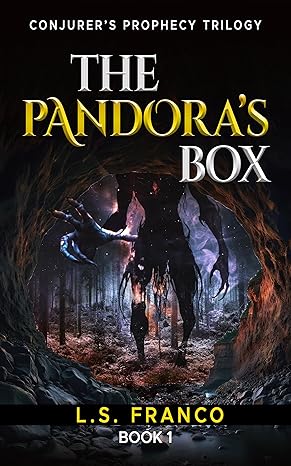
L.S. Franco’s The Pandora’s Box is a coming-of-age fantasy that throws you into the chaotic, heart-wrenching, and ultimately magical life of 14-year-old Liam Hale. After the sudden loss of his mother, Liam stumbles upon a hidden world full of demigods, cosmic wonders, and parallel universes. What starts off as a rough summer in Florida quickly morphs into an urgent quest involving magical schools, mysterious holograms, ancient mythologies, and a ticking clock to save the world from spiraling evil. Franco balances it all with humor, emotion, and a relatable teen protagonist.
What really stood out to me was the emotional depth in the opening chapters. Liam’s grief over his mom’s death felt raw and authentic. That moment where he holds the green hurricane-patterned mug she gave him was emotional. The mug becomes more than a memory. It’s almost like a stand-in for his mom, a symbol of comfort and loss, and the way Franco uses it later (as a literal gateway to magic) was both clever and poetic. I felt like I was right there with him—awkward, overwhelmed, and trying not to fall apart. Even when things got fantastical, the emotional throughline grounded the story.
The writing is fast-paced and dialogue-heavy, which made it really easy to get into, even during more expository moments. I especially liked the dynamic between Liam and his best friend Ada—her personality bursts off the page. She’s loud, bold, slightly chaotic, and totally loyal. Their banter adds so much charm. When she gifts him the matching LA pendant and calls him “bestie,” you can practically see Liam’s heart crack just a little. He’s totally smitten, and it’s adorably painful. Franco nailed that awkward, hopeful teen crush energy without being corny.
Then there’s the twist: Liam is a second-generation demigod and heir to the “Keeper of the Seven Wonders” throne. His mother’s hologram spills the beans in what might be the most emotionally charged info-dump I’ve ever read. It was wild, but also kind of epic. The idea of seven parallel universes, a magical school hidden within a regular university, and secret codes inside mugs and journals gave it this mash-up vibe—like Percy Jackson meets Spy Kids with a sprinkle of Inception. The dream sequence with the unicorn and the mermaid was unsettling and beautiful. I wasn’t always sure what was real, but I didn’t mind. That’s part of the charm.
The Pandora’s Box is an emotional rollercoaster wrapped in magic and teenage angst. It’s for anyone who ever felt like they didn’t belong or wanted to escape their reality just for a little while. It’s especially great for young teens who love fantasy but want stories with heart—and some very real-world grief. That said, even as an adult, I found it moving and imaginative.
Pages: 256 | ASIN : B0DKMVCVNS
Mica Powers and the Legend of the Superstitions
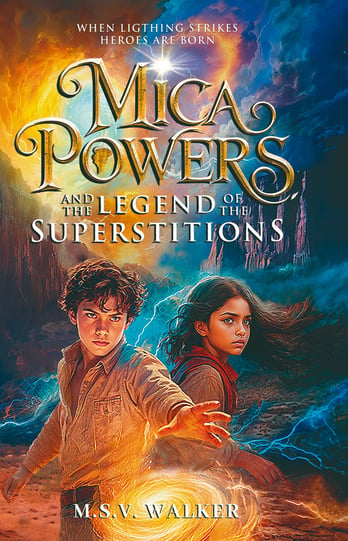
Mica Powers and the Legend of the Superstitions is a young adult fantasy adventure wrapped in mystery, myth, and self-discovery. The story kicks off with a tragic prologue, Mica’s family torn apart by something dark and unknown, then leaps ahead to present-day Mica, a smart, brave, and often sarcastic boy caught between reality and something more magical. From the Thunder Cycle to ghost encounters, ancient feathers, and secret portals, the book spins a fast-paced and emotionally charged journey through the Arizona desert and into realms unknown.
Right away, I was pulled into the story by the way M.S.V. Walker mixes vivid desert landscapes with a strange, almost dreamlike tension. The first chapter, “Be Brave My Little Mica,” hits hard. The writing is cryptic and frantic, almost like reading a memory on fire. You can feel Mica’s confusion and pain as his father tries to save her, and that emotional punch stays with you. Honestly, the disjointed text at the start threw me off at first; it felt chaotic, but once I realized it mirrored the trauma Mica was going through, it clicked. That rawness became part of the charm.
What I really loved was the world-building. Places like the “Thirst No More Oasis” and “Imperia 101” were just fun to imagine. Walker has a knack for names that sound both ridiculous and mysterious, like “The Channel of Light” or “Wakinyan.” And the characters! Estee Bradford, with her fierce loyalty and cutting wit, is probably my favorite. She and Mica have this banter that feels real and unforced. There’s this scene in “The Banquet Part Two” where they crack jokes while dodging literal chaos; it’s wild but also kind of hilarious. Walker manages to keep things emotionally grounded, even in the middle of fantasy madness.
There are chapters where the plot moves at a thrilling pace, sweeping you along so quickly that it’s easy to get caught up in the momentum. “Invasion” and “The Weapon” are especially fast-paced and packed with action. Mica’s voice is witty, sharp, and deeply heartfelt. He’s flawed, afraid, and constantly questioning, but he never stops moving forward. And I was with him every step of the way, through the dust, the danger, and the magic.
Mica Powers and the Legend of the Superstitions is a heartfelt, sometimes messy, but deeply imaginative ride. It’s perfect for teens and adults who love fantasy with a beating heart and don’t mind getting a little weird. If you liked Percy Jackson but wished it had more ghosts, mystery, and desert heat, this one’s for you.
Pages: 260 | ISBN : 9798992339109
The Girl Who Sold Time

V.S. Nelson’s The Girl Who Sold Time is a wild, clever, and surprisingly heartfelt ride through a world where time is not just something you experience—it’s something you can dig up and trade. The story follows Violet, a tough and resourceful young girl who mines for time marbles, which hold the power to freeze time for varying lengths. Alongside her sarcastic, robot-like companion Jackdaw, Violet navigates a dying world filled with desperate refugees, brutal thugs, and eerie mechanical beasts, all while searching for a way to fix the unraveling ecosystem. It’s a story about survival, ingenuity, and the consequences of power, and it wastes no time (pun intended) throwing you into its intricate world.
Right from the start, I was hooked by Nelson’s writing style. It’s fast, it’s sharp, and it knows exactly when to linger and when to push forward. The opening scene in the time mine, where Violet digs through dirt hoping for valuable marbles, sets the tone perfectly—it’s harsh, sweaty, and full of quiet desperation. I loved how Violet’s frustration builds, her hunger gnaws at her, and her friendship with Jackdaw is instantly clear in their banter. Jackdaw, by the way, is an absolute gem—think of the best sassy sidekicks in fiction, then make him a mechanical boy with a bit of a superiority complex, and you’ve got Jackdaw. There’s a moment where he sulks after an argument, and Violet says, “I was sulking,” to which he smugly replies, “It was a very good sulk, actually.” The dialogue feels natural and often hilarious, breaking up the bleakness of their world.
Speaking of bleak, the world-building is fantastic. The forest is mutating, trees are growing too fast to support their weight, and even the food is turning poisonous. The desperation in the village of Dean is gut-wrenching, especially when the refugees arrive, starving and hopeless. But it’s not just a grim dystopia—it’s layered with mystery and wonder. The time marbles themselves are an incredible concept, and the scene where Violet finds a year-long marble was one of my favorites. The way Nelson describes the eerie time confusion—how Violet sees herself pulling it from the ground before she even touches it—gave me chills. And, of course, there’s the terrifying moment when a sleek mechanical Pinscher appears out of nowhere, turning what was already a dangerous scavenging trip into a full-blown chase for survival. The action is intense, but it never feels over-the-top or exhausting. Every scene serves a purpose, either deepening the characters or pushing the plot forward.
The book left me craving more answers. The time marbles are fascinating, but the mechanics behind them remain a bit of a mystery. Maybe that’s the point—some things are just unknowable—but I kept hoping for a clearer explanation of their origins. And Caleb, the ruthless, manipulative antagonist, is chillingly well-written, but I wanted even more of him. His scene with Violet, where he recounts what happened to his ex-girlfriend in a casually horrifying way, made my skin crawl. He’s the kind of villain who gets under your skin, the one you love to hate, and I wish we got to see him even more unhinged.
The Girl Who Sold Time is a must-read for fans of imaginative sci-fi, strong female leads, and razor-sharp storytelling. If you like stories with survivalist grit, fast-paced adventure, and a touch of dark humor, this one’s for you.
ASIN : B0DXRFQ53R
CHANGE – RESTORATION

Change – Restoration throws readers headfirst into a galaxy teetering on the edge of chaos. This second installment of the Change Odyssey picks up in the aftermath of assassinations, betrayals, and shifting power structures. At the heart of it all is Bernadette Smith, a survivor of enslavement on the hellish swamp world of Es-Ra, and Major Patricea Markis, entangled in political machinations and the intoxicating mind-games of the enigmatic Lady Orphalia Darteane. The book is a fast-paced sci-fi epic, weaving together political intrigue, military operations, and personal vendettas in a universe brimming with corporate overlords, mysterious artifacts, and the ever-looming threat of war.
One thing that really struck me about N G Nelson’s writing is the rawness. The book doesn’t hold back on violence, addiction, and the psychological toll of surviving a brutal universe. Take Bernadette, for example—her escape from Es-Ra isn’t a triumphant, clean break. She carries that trauma with her, shaping every decision she makes. Her struggle to reclaim agency in a universe that sees her as expendable felt painfully real. There’s a particularly gut-punching moment when she reminisces about Es-Ra, the fog of captivity thick in her mind, as she stomps through the snow on an ice-covered world. The contrast between the suffocating swamp and the vast, frozen wasteland mirrors her emotional state, which is still trapped, just in a different kind of prison.
And then there’s Patricea. If you’re into morally grey characters, then you’ll like her. Her relationship with Orphalia Darteane is a tangled mess of power, seduction, and betrayal. The way Nelson writes their dynamic is electric. One minute, Patricea is under Orphalia’s spell, lost in the lingering effects of the mind-altering drug Sync; the next, she’s gunning her down in a dogfight. It’s this constant push and pull that makes their interactions so tense. Orphalia isn’t just an antagonist. She’s an addiction, a temptation, and a reflection of Patricea’s own divided loyalties.
Nelson also excels in world-building. The novel is packed with details. Whether it’s the Carmine Heart Foundation’s dubious peacekeeping efforts or the lost knowledge of Origin, every piece of lore feels meticulously thought out. But at times, there are moments where the sheer amount of exposition slows things down, especially when diving into the historical and political background. Still, the universe is so rich and textured that it’s worth pushing through the heavier sections. The tension is palpable when a mission goes south, and a small act of defiance—tampering with a reactor, despite being warned—spirals into a catastrophic chain reaction. When Bernadette and her team watch in horror as a fiery red half-bubble engulfs an entire city, you feel the weight of their recklessness.
Change – Restoration is an intense and gripping read that will appeal to fans of complex science fiction with a heavy dose of political maneuvering and deeply flawed characters. If you like your space operas messy, full of secrets, and teetering on the edge of disaster, this is a book worth picking up.
Pages: 293 | ASIN : B0DR2Y35RR



 LITERARY TITAN