Blog Archives
Take 3D Printers To The Next Level
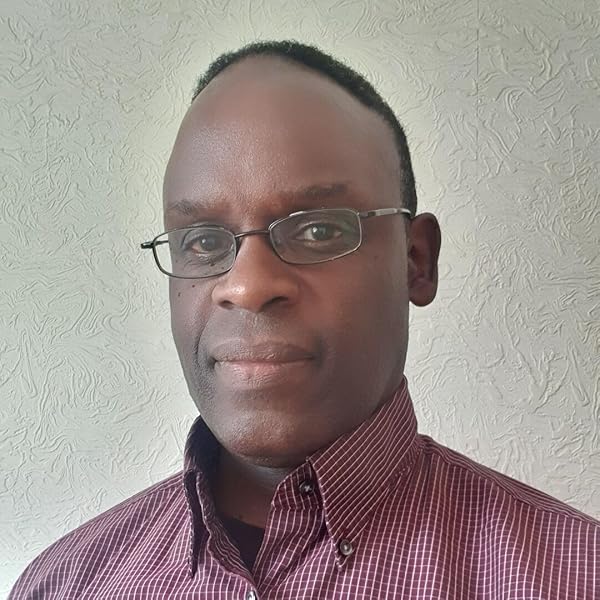
The Future of 3D Printing shares your journey to revolutionize the everyday by bringing 3D printing into every home, outlining potential eco-conscious solutions, and navigating the complex landscape of industrial reception. Why was this an important book for you to write?
Well, as I describe in my book, my journey began the day I started my 3D printing course and my mind started asking questions about the peripherals around the printer, which seemed to be missing. I wanted to print at home in a suitable environment and not place my printer on the floor or coffee table. But the expected furnishings to do so just weren’t there. I wanted to plug that gap by trying to do it myself and ultimately writing about my experiences.
From there, I started thinking about other aspects of 3D printing using my background in archaeology and anthropology, property management, and sci-fi writing. What makes a tool or appliance an essential cultural asset? Why would we need it? And how will it benefit us?
And then from there, as I tried to build a company around these concepts, the environmental and exponential technologies factors kicked in, with thoughts on recycling and energy harvesting. These aren’t just questions and thought experiments for 3D printing, but can also be applied across other industries. And with more people becoming more socially and eco-aware, it was important to tie 3D printing to such issues and to be a contributing solution to the problem.
What is a common misconception you feel people have about 3D printing?
Most people believe 3D printers are just for making cheap plastic reproductions and for hobbyists to make cosplay costumes. And with sci-fi shows presenting 3D printers as ultra-tech instant printers, it presents an unrealistic version of current capabilities.
What is one thing that surprised you when you learned about 3D printing?
There are a couple of things that surprised me. The first was the relationship between the intricacy of the designs combined with the settings of the printers. Change a detail of the design (like supports & infills – rafts, skirts, or lattice) or the settings on the printer (bed heat, print speed, layer height, etc) and the length of time to print or the product thickness can change drastically.
The other is the sheer number of types of printers on the market (and that’s just the domestic market). Every day, people are enquiring as to which type of printer to start out with and unless you have a specific requirement, there’s no right answer. The first printer I bought was the same type I used during my course, so it was easy.
What do you hope is one thing readers take away from your book?
I hope readers go away with new ideas on how to take 3D printers to the next level. My book is an open letter, a set of challenges to enable readers to create the future one 3D printer at a time.
Author Links: Amazon | GoodReads
Topics such as furniture for 3D printing, recycling, heat and CO2 harvesting, and what can be done to turn 3D Printing green are discussed, plus the potential of exploiting exponential applications like cryptocurrency, the metaverse, and AI to aid 3D printing.
There is also the chronicle of how the author created his own company to achieve this goal and his subsequent adventures.
This educational outlook for 3D printing industry serves as a starting point for those looking to change how the world perceives and uses 3D printing and provides readers with a look at what the future can bring.
Fascinated By Vampires
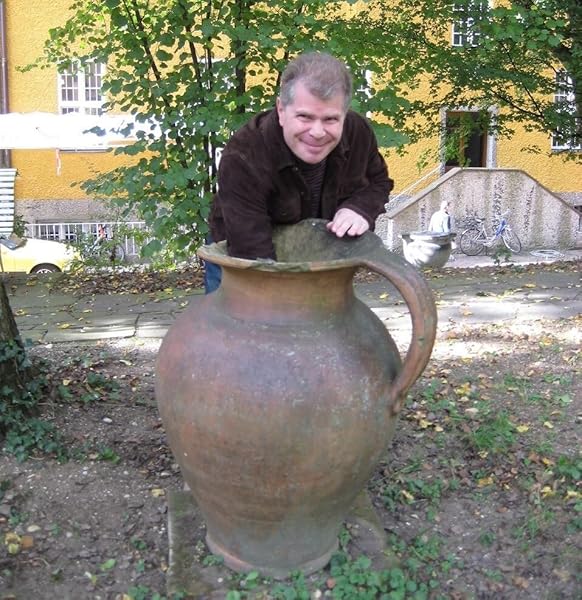
What inspired you to reinvent traditional vampire mythology and depict them as a civilized community coexisting harmoniously with humans?
I was always fascinated with vampires and stories about vampires since I was a young teenager, exploring the fascinating fictional worlds. Everyone knows the story of the legendary count Dracula, and most of the people curious about vampire lore have definitely seen the silent German movie from the 1920’s titled The Nosferatu. Initially, vampires were seen as predators, who hunted for human blood, and they did not look appealing in any way. I think that my interest in vampires came form reading Anne Rice’s The Vampire Chronicles and seeing a movie Interview With The Vampire based on her first book. Anne Rice made them beautiful and enchanting, seductive and powerful, and humans are naturally drawn to things that represent longevity, power and inhuman strength. Inspired by such knowledge, I wanted to create my own vampire story and give my vampires an aura of mystery, since they had to hide in plain sight in order to survive and do what vampires do. In my universe, vampires are beautiful but not all of them are nice. Just like humans they have their flaws, their desires and their dreams.
Could you share more about your process of creating such a diverse ensemble of characters and how you intertwined their stories with the main narrative?
“Before the Dawn” is a vampire story, but unlike my previous vampire story “Beyond Sunlight,” this one deals with vampire-human relationship on a whole new level. Because most of the vampire stories are focused on adult main characters, I thought about changing it and making it more interesting by approaching the plotline form another angle. I thought, why not make a young teenage romance between human and a vampire? This certainly has nothing to do with the vampire novel series Twilight and movies based on them. My main protagonists are young teenagers, but one of them is a human and another is a vampire. The story of Frank and Cindy is indeed a love story that is unique, because their characters are so different. I designed Frank Sunborn’s character as a regular young boy of thirteen, who is an explorer of places and senses. Cindy Condor is vampire who hides tremendous power behind her facade as a beautiful and seemingly vulnerable girl the same age as Frank. They are both creatures of different worlds and sometimes the opposites do attract in strange and fascinating ways. The other characters, who come form different backgrounds as both humans and vampires serve as an important background to a story focused on the unique relationship between Frank and Cindy.
How did you approach crafting the vibrant backdrop of New York City, and why did you choose this setting for your narrative?
I live in New York City for more than thirty years. It is a very interesting place, where many races and cultures are blended into a very interesting social and political nexus. New York, the city of the Big Apple, is known as the City That Never Sleeps. It was natural for me to choose this backdrop, because I am very familiar with the details of the city life. Humans are migrant creatures, and they move around and seek places that are comfortable for them to stay. Vampires in my story are also moving around, exploring the world of humans and seek places where they can feel safe and hide their mysterious nature. It is also easy to get lost in a big city like New York if you want to stay away form social life. But vampires, just like humans in my story are actively participating in social life of the big city, seeking new blood donors, associates and simply friends on whom they could rely on. In many vampire stories, big cities such as New York, Los Angeles, Berlin, Paris, London serve as a fascinating and necessary background to enhance the story’s social dynamic and spice it up with interesting and unusual situations.
Given the complexity of themes such as betrayal, trust, friendship, and companionship explored in the book, what do you hope readers will take away from these aspects of the narrative?
I think that writers by their nature should first entertain and second educate their readers about what they know. Our human world is complex enough, but in fictional stories about beings that do not exist, we secretly wish that they did exist among us. It is human nature to seek out magic realism, mysticism and occult to make their lives more interesting and fulfilling. In human world, complex relationships are inevitable. When it comes to the social interactions between humans and vampires, well, this is a whole new ballgame. I wanted to show parallel worlds that exit on the same plain and interact out of necessity for companionship, love and human blood, that allows vampires to maintain their power and immortality. Some humans, would naturally be deeply drawn into the vampire world, attracted to it by promises of eternal life and superhuman abilities. Of course, nothing in this world comes free of charge, and there are consequences for the choices we make. In my story, vampires are also answerable for their decisions, and just like humans, in spite of their great lifespan, they can make mistakes. I hope that the readers would take something from my novel, such as living by the rules that keep you safe, while allowing you to explore the world in the most unusual ways. My vampires look and act like humans, but they are very different from us biologically as well as psychologically. Their enormous lifespan offers them a great learning experience about the human world they live in. It is truly the world they cannot do without.
Author Interview: Facebook | Amazon
For All Of Us To Contemplate

A Story follows an amateur paleo-archeologist who discovers an ancient tiger skin with mystical properties that imparts to him the story of two early hominids. What was the inspiration for the setup of your story?
The setup for the story reflect a life long fascination with ancient artifacts. Although I have spent a good deal of my life outdoors, I have only found two arrowheads. The one on the cover the book and another smaller one I lost many years ago. I don’t go out on arrowhead hunting trips, I found them purely by chance. I am a geologist by training and spend lot’s of time outdoors. Over the years, I developed a passion for our ancient world. As we have begun to unfold our genetic code, I see the powerful linkages in our species and the path of evolution as our planet evolved. It is remarkable to me how nature has charted our genetic path. I wanted to frame the story of something that was tangible. Human nature, being what it is, is more tangible than we realize. I wanted to frame the story to be something more real than fiction based on what we observe and what traces of humanity we can find. Ancient tools, dwellings, and paintings give us the roots of our ancestry. Hamster Dunnigan, the protagonist in the beginning of the story, is symbolic of our human curiosity and the powers of good and evil. I wanted to project him as an anti-Indiana Jones who find redemption by sharing the story he tells and the physical similarities he shares with the characters in the story. Finding ancient artifacts is both good and bad, depending on what you do with them. A good example of this is Dr. Lee Berger of the University of Witwatersrand in South Africa, Taylor McCoy of Eastern New Mexico University, Dr. Leaky, Dr. Jane Goodall, and so many other researchers that share their findings with the world and helped frame “A Story” for all of us to contemplate. We humans are more than the sum of our parts and awareness of this fact is important to understand. I am trying to make that connection. But…this is just “A Story” to reflect on.
With the early hominids having different cultures and communication skills it was interesting to see their interactions. What was your approach to writing the interactions between characters?
We all share common traits and abilities. In my mind, the evolving brain was capable of lots of things we no longer access. Just as we have physically changed through evolution the changes of course include our brains. I use the term evolution loosely. I think it is totally possible that we carried lots of abilities to communicated purely by intuitiveness and understanding survival in a world and environments today’s humans would find extreme. Using what assets we have (and still carry with us, such as being able to make vocal sounds and using parts of our bodies to communicate,) has been a trait we carried and used since early evolution in our species. It is the same with all of the animal phylum and plants phylum as well. We all use the assets we have. It is a matter of survival.
What were some themes that were important for you to explore in this book?
Racism was one theme. In my book, the fact that the reader will not have to acknowledge race, because it did not matter, should resonate behind the scenes. Just because I did not say it specifically, one should view the interactions of the characters with a sense of bonding. Each one of the characters should reflect an emotional and physical linkage we all share. The characters should reflect an awareness of self, others, and spirituality. That includes shamanism, our earliest adventures into our sub-conscience mind and religious awareness. The discovery of Homo Naledi and research on those remains will open doors to so many possibilities and question connection to our ancient ancestors. We are more alike than different. We always will be, so stop the stupidity of thinking we are different just because of our skin color.
Will there be a follow-up to this story? If so, what aspects of the story will the next book cover?
Yes. But in truth, it depends on how this book is received. I have several aspects of the story that dive deeper into our collective past and the manifestation of our self-awareness, and cultural similarity. For example, what made an early hominoid successful and how did that genetic mutation present itself in our earliest ancestors lineage? My belief is that it was based on spirituality and not necessarily the strongest or the fittest. There is a story around that and I think it generates a lot of questions ripe for creative thought. But don’t misunderstand me. We are all unique individuals and I totally respect our ability to think freely and become contributing members of our planetary community. We should embrace our subtle differences, and embrace our collective humanity.
Author Links: GoodReads | Twitter | Facebook | Website
As the story evolves Noolan and Caek are two competing species of early hominoids, but separated from their clans, they depend on one another and become emotionally attached. Journey with them through many harrowing events as they try to reunite with their families. Making their way through an unrelenting environment with determination and grit, they grow closer together and closer to their ultimate enemy, the Jakkar. It is only through an intuitive power, deeply honed survival skills and a bit of luck that these two craftly and cleverly overcome the odds. As you get to know Noolan, Caek and their clans, you’ll reconsider what you thought you knew about our early ancestors.
The genesis of problem-solving abilities and what may happen with earlier hominoid ancestors demonstrates they were a lot smarter than we give them credit for. It was a human who created the wheel, and prayer and relational understandings.
Makes Them Hunger For More
The Dog Stays weaves diverse narratives of love, loss, and self-discovery, expertly painting the human condition amid the pandemic, and offering readers an engaging literary journey through an eclectic range of characters. What inspired you to write and publish this book?
I was a Registered Nurse in Critical Care Unit. (now retired) and never had time to write fictional stories. But I always had an interest. And once I started to write and submit my short stories to flash fiction sites, the positive feedback, and the sheer enjoyment motivated me to continue. And eventually, I chose some of my favorites for the book.
The stories in ‘The Dog Stays’ offer a balance of dialogue, vivid descriptions, and introspection. How do you maintain this balance when writing short stories?
I want to engage the reader on an emotional level and keep them interested, so I try to incorporate description, dialogue and introspection into my short stories. Sometimes this is a difficult task and the balance between the three elements shifts. For instance, if I have only one character, I necessarily won’t include dialogue but may use introspection. This will encourage the reader to draw their own conclusions about the characters. Although my ultimate goal is to create a story that captures the reader’s imagination and makes them hunger for more.
What were some themes that were important for you to explore in this collection?
LOVE: I had witnessed humanity at its most vulnerable in my workplace and in everyday life.
Love was such a powerful emotion and universally relatable, I wanted it to appear in some of my stories.
“A Blue Baby Hat.” James displayed his love, vulnerability and devotion as he waited by his wife’s bedside.
“Frailty of Life.” The Love of a daughter for a mother who had dementia.
HOPE: Barbara sat by her husband’s bedside in “Please Stay.” She hoped and prayed that she would hear his voice, one final time.
LONELINESS: “George.” George waited by the door in the nursing home for his family. And he hoped they would visit that day.
But loneliness was also present in some of my stories after a family member lost a loved one to death or dementia.
BELONGING: “Rudolph.” The reindeer felt a need to be one of the ‘gang.’
POVERTY: “The Shelter.” The sad and lonely life of a homeless gentleman who had become invisible.
FORGIVENESS: “Flame.” The dragon (flame) and film director (Cedric) who eventually learned to work together.
HUMOR: A few of my stories made me laugh. And if I could make my readers laugh, giggle and thoroughly enjoy themselves then that was a good thing.
SUFFERING: Some of my characters were subjected to grief and suffering through loss. I felt it needed to be addressed in my stories.
In summary, I tried to apply one major and a few minor themes to my stories. But it all depended on their length.
What is the next book that you are working on and when will it be available?
I am contemplating a second anthology of stories. Perhaps longer in length. I may even attempt a children’s story. I think my dragon “Flame” would make a wonderful subject. But I have yet to make a decision.
When is it available? If my creative juices continue to flow, it should be soon.
Author Links: GoodReads | Twitter | Website
Your phone rings just as you toss them on the kitchen table.When you answer, an automated messaging system causes your heart to rapidly beat in your chest. Your hands shake.Flustered, the phone slips from your grasp.
This collection of very short stories will delight readers interested in any genre.
Some may make you sad. Some may make you smile and laugh. Blush? Perhaps. But they promise to entertain. So please sit down, get comfortable and enjoy!
Some Of His Noir Grittiness

Endgame follows an operative in charge of enforcing the laws who investigates the murder of three executives in the predominant religious organization. What was the inspiration for the setup of your story?
Surprisingly, the murder of the three executives came late in the story’s development. The first thing I wrote was a final scene, which I swiftly deleted. At the time, I was only planning a short story, but over time the idea grew, so that by the time I returned to it a decade later, it had expanded into a novel. I wanted to explore a philosophical mystery – Descartes’ Evil Demon – so I thought a Blade Runner-esque future noir detective story would be the perfect vehicle. My next challenge was to work out how the whole thing started. I effectively ended up writing the story backwards!
With regards to the crime scene, I tried to imagine something that might appear in a James Ellroy novel, albeit one set in a cyberpunk future. I wanted some of his noir grittiness and to leave the reader feeling that this crime was a small part of something bigger – something that only Cynthia, with her philosophical mindset, could track down.
The result was a story that took inspiration from James Ellroy’s crime plots, Umberto Eco’s interpretation of signs and Philip K. Dick’s exploration of reality. Plus, I have to mention Alex Vrettos’s The Hereafter, which first inspired me to write about technological religion!
Cynthia is a strong woman who refuses to just accept the mass propaganda and seeks to find the truth. What were some driving ideals behind your character’s development?
Good question. It can be a challenge writing in the first-person, as you’re writing in a voice that it isn’t your own – and Cynthia Hemlock is most certainly not me! I wanted her to have a definite voice – one that would be both memorable and engaging. I didn’t want her to be exactly “nice,” but I didn’t want her to be “nasty” either. What I wanted was for her to have a strong sense of justice – justice she was quite prepared to dispense her own way.
As she’s a tough person living in a tough world, there was a danger of going too far in that direction, so I thought it necessary to give her a playful side. This would help lighten the darker moments and make her fun to read. Most of all, I wanted the reader to feel that when she speaks to them, they are the only people she can really trust.
If there is one ideal key to her, it is that she is prepared to challenge her own assumptions. All good stories are about human growth and development, and Endgame is the story of how Cynthia responds to the momentous events around her, questioning herself and what she is doing. I think it’s because she is prepared to question everything – even when it is painful to do so – that she makes the important discoveries, both in her investigation and as a person.
What were some themes that were important for you to explore in this book?
The most important theme is Descartes’ Evil Demon thought experiment – the question of how we can know anything about the world around us. Descartes famously asked how he could be certain of anything he knew – the sky, the earth, his own body, the entire physical world – as everything he considered real could be the result of a supremely cunning demon deceiving him. Phrased in the language of the 17th century, it sounds a little archaic. Phrased in the language of early 21st technology, it becomes much more immediate.
This was the purpose of Faithcorp’s religitech. If its Divinator can produce experiences that are completely convincing, how can its users tell whether they are genuine or not? Indeed, if those experiences were sufficiently convincing, then users might come to regard them as real and the physical world as illusory – which raises the obvious question: how could they tell what was real and what was illusory? Maybe their experiences were glimpses of a reality beyond the physical world. Maybe the Divinator was not a physical device but a portal through to this metaphysical reality. Maybe the illusory physical world was approaching the End Times….
Will this novel be the start of a series or are you working on a different story?
When I started, it was only meant to be a short story, then it grew into a novella, then a novel. I suppose a series would be the next logical progression!
Author Links: Website | Amazon | GoodReads
With Faithcorp’s spiritual simulations leading to widespread addiction and what’s left of law enforcement being administered by contract killers, it seems the Earth’s days are numbered. However, when three Faithcorp execs are found murdered, Licensed Operative Cynthia Hemlock makes it her mission to uncover the truth. Could this be the work of the mysterious Godhead and his underground Godly Resistance Army?
Unfortunately, as the Apocalypse approaches, Cynthia finds there is more at stake than money, and it’s no longer clear who her friends are – or what she is investigating. Is Faithcorp’s new religitech the work of the Devil or are its opponents spiritual Luddites hell-bent on destroying the world? And what has happened to its founder, the enigmatic Julia Greengage?
With the End Times approaching, Cynthia discovers she is not the only one facing their own personal Armageddon.
Author Steve Shahbazian talks to Licensed Operative Cynthia Hemlock
Good morning, Miss Hemlock.
Well, hellooooooo there Mr Steve and all of you in the 21st century.
I understand you’re a Licensed Operative. What does that entail?
Us Licensed Operatives maintain law and order—or whatever passes for it. We’re contract killers. We work for the state and get paid to shoot the bad guys. Typical day, we get our case from our Case Office, then we’re out whacking punks while punks try to whack us.
Sounds pretty dicey. Could you tell us a bit about your latest adventure?
Huh, you make it all sound so—what is it you guys call it?—“posh.” I was investigating these three execs who’d gotten themselves whacked, only the Case Office didn’t want me looking that way. They threw me some small-fry case to keep me quiet, but I knew something big was up, so it kind of became a private investigation, if you know what I mean.
What do you mean?
I mean, Mr Steve, that these three execs had “Trads” written all over their corpses.
Trads? Could you elaborate?
Sure. The Trads are the combined forces of the world’s traditional religions. I heard that, way back in your day, these guys used to fight each other. Not today. No sir. Today, they’re united and want to destroy the only power that counts for anything.
Which is?
Hah! You haven’t heard of Faithcorp? It’s a megacorporation, produces the “godbox,” a device that simulates religious experiences—experiences so convincing that folk become addicted and lose all grasp of reality.
A kind of Virtual Reality?
Who knows? Some say there ain’t nothing virtual about it—seems as real as the world around you. More real—you can’t tell what’s real and what’s illusory. It gets so bad you don’t know your face from your feet.
And how does this “godbox” work?
Hey! I ain’t no technician! And don’t get me started on those two Faithcorp “Managers” who were supposed to explain it to me!
If you didn’t know how it works, how did you tell apart reality from illusion?
Hah! You think I’m gonna tell you that and ruin it for your readers? Man, you’re worse than the penpushers at City Hall! All I’m gonna say is that smarts ain’t enough. Whether it’s a suspect or a stiff, you gotta look beyond the thing itself. You gotta understand the philosophy behind it. Most L.O.’s don’t got it.
You, on the other hand, do. What’s the most hair-raising moment in your life?
“Hair-raising?” You make me laugh! Definitely, the moment I got caught up in a Trad procession when it turned into a mob. Man, I didn’t think I was gonna make it out alive. Even today, that one makes my flesh creep.
One last question, L.O. Hemlock: what’s with this “Miss Lucilla Cabbagebottom” business?”
Well now, sweetie, I guess you’re gonna have to read the book….
Creating A Meta Narrative

Broken Hearts & Other Horrors is an anthology of horror stories focused on broken hearts and showing that sometimes a lost love is the least of your worries. What was the inspiration for this collection?
The inspiration came organically. Originally, there were only 10 stories but when my editor, Kayla Randolph, suggested the title Broken Hearts & Other Horrors I realized there was this connection of unrequited love running through the stories. Which inspired me to write “Past is Prologue” and “The Conversation” as bookends to the collection, creating a meta narrative throughline.
I read an article about how Victorian era novels and anthologies had illustrations and sometimes the author would have their illustrator sneak in details that were not in the text. This inspired me to start bringing back the illustrated book for grown-ups. I contacted Corey Galal and spoke to him about the project and what I wanted to do and he eagerly joined my production team! I’m looking forward to audience feedback to see if this works!
Are you a fan of the Gothic Fiction genre? What books do you think most influenced your work?
Yes. In terms of the influences on this collection, there are many: Shirley Jackson, Joyce Carol Oates, Frank R. Stockton, and Bram Stoker. Other inspirations come from random places. “Dokkaebi” is a retelling of a traditional Korean folk tales that I found in a collection when I was stationed in South Korea. Finally, the final story and narrative capstone “The Conversation” is inspired by Edgar Allan Poe’s “The Conversation of Eiros and Charmion”.
The artwork that is incorporated adds an extra layer to the horror and really brings the reader into the stories. What was the collaboration process like working with the illustrator Corey Galal?
I would highly recommend other indie or hybrid authors work with illustrators. Not only does it add a unique visual appeal, but it is just incredible seeing another artist bring your creation to life. There were a few stories that I had something specific in mind, but for the most part I was excited to see what parts of the stories he would pull from. I was never disappointed.
We’re continuing his illustrations in my next novel, A Mother’s Torment (release date: September 1, 2023), and I don’t think our fans are going to be disappointed.
Do you have more horror story collections planned? If so, when can your fans expect your next book?
I have two in mind, but they’re only in the conception phase. My ideas are either a collection of creative nonfiction stories that explore the history of UFOs in America or really digging into my influences in a collection I’d title Echoes.
But right now I’m finishing production on my first novel A Mother’s Torment and writing the first draft of Pea Ridge. I’m writing a novel based on a story in Broken Hearts & Other Horrors that became a 3-part story on the “Fear From The Heartland” creepypasta podcast.
Author Links: GoodReads | Twitter | Facebook | Website
Ryanne Maxine Meyersohn Author Interview

“Comprehensive Study of the Origin of Humankind” takes readers on a journey through Earth’s hidden history, unearthing and solving ancient mysteries, challenging traditional archaeology, and revealing our true origins. Why was this an important book for you to write?
This book contains the most important research I have done as a scientist, as it contains the answers to all the riddles about the remote past that I have encountered since I was a child. Archaeologists have proposed that the Genesis account of the Flood was written thousands of years earlier in Mesopotamian texts. This fact prompted me to carry out an exhaustive analysis of the ancient texts since there are translations made by the most renowned experts in ancient languages. An in-depth analysis revealed that there is a lot of information about the tablets that has not been deciphered or understood in its proper perspective until now. The large amount of new information that I discovered worthy of being known by all encouraged me to write the book. This book reveals the answers to questions that other writers in this genre or academics have left unanswered. Since I had access to new information, I feel it is my responsibility to make it known.
What research did you undertake to complete this book?
I analyzed all the most relevant Mesopotamian texts that have been translated by the most renowned experts in ancient languages. Many of the texts are found in various versions sometimes by 5 different translators but I have examined each and every one of them thoroughly. This fact is very important because it helped me confirm its meaning. It should be noted that translators differ from each other in style but in the end the meaning is the same and in many cases it helped me to have a complete picture of each text. It was so much fun, exciting, and amazing every time I made a discovery or found out what it meant. Just like when you find the puzzle piece to complete it. Each discovery in the texts prompted me to search the annals of scientific and archaeological finds for an explanation of the event and also the possibility that it actually happened. The details that I sometimes found in the texts were remarkable and I marveled that the ancients had such knowledge that it can be considered advanced. Thanks to those details I was able to go directly to find the corresponding information within the conventional scientific literature. And I always found the archaeological and scientific evidence that allowed me to support the interpretation of the texts.
Initially I didn’t even know exactly what I was going to write about, I just knew that I had to write a book. The analysis of the texts forged in my mind a structure to follow that helped me find the order or chronology of how things happened. I then realized that I had the information necessary to determine the chronology, which was key to untangling the skein of information that was coming into my mind. Every text and every word in it communicated something to me, and sometimes in the immediate moment I didn’t know the meaning but the information was still being processed in my brain. And many times when I woke up in the morning it was like a gift when the meaning appeared so clear in my mind. Sometimes I woke up at dawn and had to start writing because of the large amount of information that appeared before me. I couldn’t wait for fear that I would forget it, which was not going to happen since I have a photographic memory. When doing the chronology I used to wake up and start writing numbers in a notebook with no apparent logic and at the end it all suddenly made sense. I found the mathematical formula to do the calculations. The whole process was beautiful, especially when my intuition was enhanced.
In your view, what is the most surprising revelation drawn from your extensive research for this book?
I think the whole book is a startling revelation. There are so many very relevant things that I discovered and it would be very useful for scientists to consider them as they cover all aspects of our existence. But the basis of my work is derived from ancient texts, it is that the information is there and unfortunately subject to a lack of recognition of its great importance. The ancients left them there for us, it was a matter of understanding their meaning. The understanding of the texts led me to determine the most precise chronology since I found the equivalence of Anno Mundi with the Gregorian calendar. This added to the interpretation of the texts led me to decode the whole story. Using the new chronology, I would go directly to the information pertaining to the specific eras and find all the scientific information to support all my proposals which shows how precise was the chronology. Among the literature I perused are some books by leading archaeologists from the 1800s – 1900s. In one of these books I found a cylinder seal where there is an illustration that reveals the possibility that humans were developed by genetic engineering. Every time I think about it I feel like, could it be my imagination or is it true that this cylinder seal exists?
What do you hope is one thing readers take away from your book?
I wrote this book with the purpose of empowering readers so that they have a more solid foundation of our ancestral past and this together with the great capacity that we all have to question things and not take anything for granted, to unite all as if we were one. It is that there is no reason to be disunited, our origin is the same, and there is much to do, we have to focus on priorities. We must embrace everything that unites us and, knowing the past, fight for a better future.
Author Links: GoodReads | Facebook | Twitter
The book presents the detailed history in chronological order of everything that happened on Earth from the formation of the Solar System, the arrival of the Anunnaki to the time of Alexander the Great. It is a fact reported by archaeologists since 1900 that the Genesis account of the Flood was already described in Mesopotamian texts thousands of years earlier, which led me to evaluate the most relevant texts. Analysis of scholarly translations and ancient books revealed that many key details that are critical to understanding the story have thus far not been revealed as they actually happened. In addition, there are texts that contain metaphors whose message has not been properly determined. This investigation was a discovery process that revealed how the events happened. The research was supplemented by many sources, including the study of apocryphal books, reports from ancient historians, scientific research, and archaeological records. The extensive analysis and inquisitive reading of the contents in search of clues, provided the necessary knowledge to determine the most probable dates in which all the great events of human history occurred. In the end, the conclusion arises that the results and findings of this investigation deserve to be known due to the high probability that the events narrated in the ancient texts and most stories that we know like the Flood, Exodus and many others have actually occurred.
This research has provided the answer to all the hitherto unanswered riddles, including: Who were the Anunnaki and the Igigi (Watchers, Nephilim)? Why, when and how did H. sapiens originate and how did the other species arise and why did they become extinct? Why does modern H. sapiens have such a short lifespan? Who was Adam and why did his generation live not hundreds but thousands of years? What do the Mesopotamian texts reveal about the Hebrew patriarchs? What happened before and after the Great Flood and its aftermath? Who were Abraham and Chedorlaomer? Why did the event of Sodom and Gomorrah happen? When did the Exodus actually occur? When did the Anunnaki leave Earth? What is really the meaning of Daniel’s prophecy and the end of days in Revelation? When will Nibiru return? It is a revelation of who, how, when and why these events occurred in ancient times.
Magical Suspense
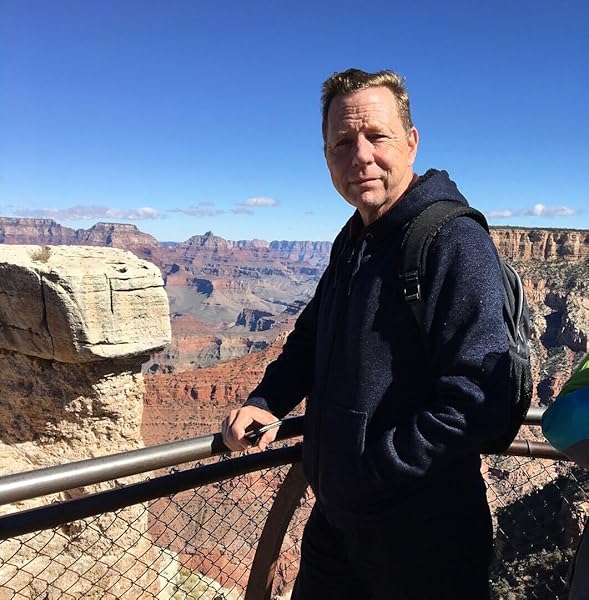
Trial and Redemption is an intriguing fantasy novel blending medical and legal fiction into the storyline. What was the inspiration for this book?
My inspirations were twofold. The first was to continue the entertaining storyline of magical suspense introduced in my first book, Chasing Time. Second, was the goal to describe to the reader the exciting, challenging, and very personal struggles of a biomedical researcher career.
What were some challenges you felt were important to defining your characters in this story?
As a writer, it was important for me to detail the characters’ struggles as they rebounded from their own personal tragedies. I wanted to provide a bit of magical realism in the form of the Janus key to aid them in their struggles, but not to lessen the degree of courage and persistence required to achieve their redemptions.
When you first sat down to write this story, did you know where you were going, or did the twists come as you were writing?
At the start, I had a central plot in mind, but many twists and turns occurred to me as I was writing and rewriting.
Will there be a third book in the Janus Key Series? If so, what can you tell readers about it, and when will it be available?
I am planning a third book in the Janus Key series. Once again it will combine magical suspense and medical fiction. No timeline is available.
Author Links: GoodReads | Twitter | Facebook
In his latest inspirational and suspenseful novel, Trial and Redemption, Reilly continues the saga of a mystical Janus key and its time-bending influence on 21st-century characters, first introduced in the award-winning Chasing Time.
Disgraced scientist Brian Ellis finds an improbable ally in Julie, a college student trying to reset her life after a family tragedy. Guided by a Janus key with magical powers to predict future events, they embark on a crusade to bring a corrupt pharmaceutical executive to justice, prevent a medical tragedy, and restore peace to their shattered lives. However, Brian guards a dark secret that may imperil both their mission and their redemption.
Filled with unexpected twists and turns, memorable characters, and heart-stopping suspense, Trial and Redemption is an emotive mix of medical and legal fiction with a touch of fantasy.



 LITERARY TITAN