Blog Archives
The Dangerous Fringe Of The City

Last Stop Slumberland follows an average guy trying to get by who gets mixed up in a horrific crime and murder thanks to his deceased sister’s cryptic message. What was your inspiration for the mystery that must be unraveled?
One of the inspirations for the mystery was the old true detective magazines and a true-life serial killer in the 1950s who posed as a photographer for these periodicals to lure young models. At the time, Hollywood desperately tried to stay relevant as television took a huge bite into the movie business. I wanted to paint this picture of the golden era of Hollywood sinking into obscurity while a darker element of the town rose to the surface. My main character works at a movie studio among movie stars, as I did for several years, while his sister lived among addicts and criminals on the dangerous fringe of the city.
Did you create an outline for the characters in the story before you started writing, or did the characters’ personalities grow organically as you were writing?
I don’t really create outlines. So, my characters grow organically. I try to make them as colorful as possible. I get a concept in my head and hear the voice of a damaged but likable character, then jump in and see where it takes me. On the main character’s journey, I try to make the characters as colorful and interesting as possible. This leads to a lot of backtracking and revising, which consumes a lot of time. But it’s the way I like to work.
How do you balance story development with shocking plot twists? Or can they be the same thing?
I do my best to make them the same thing. I think the twist in the story should propel the action, revealing something we weren’t aware of, which either explains the events or raises their stakes.
What is the next book you are working on, and when will it be available?
My next novel is entitled; You Gotta Die Sometime. Set in the 1930s, during the great depression, a mild-mannered salesman goes to Los Angeles one weekend to receive an award from his employers. But things go sideways when someone breaks into his hotel room and tries to kill him. When his assailant dies in the attack, our man goes on the run, knowing that his dark past may have finally caught up with him. TBR April 2023
Author Links: GoodReads | Twitter | Facebook | Website
Matthew Brooks is just a Tinsel Town nobody trying to keep a roof over his head and a loaded flask in his pocket. When his estranged sister dies, leaving nothing behind but a locked handbag and the address of a horrific crime scene, Brooks finds himself caught in a Hitchcockian plot built on obsession and murder.
Matthew’s spellbinding odyssey twists through the backlot of a major movie studio, the dark, dangerous streets of Los Angeles, and a notorious boneyard called Slumberland. A savvy detective and a group of daring women become entangled in the nightmare as they try to clear Matthew’s name.
Meanwhile, Brooks fights to stay one step ahead of brutal cops, an enthusiastic lynch mob, and a psychopath.
The Trial Was A Farce

Reaping the Whirlwind follows a deputy sheriff in a small town who is investigating a series of seemingly unrelated mysterious deaths. What was the inspiration for the setup of your story?
My family attended a seminar at the University of Delaware and the presenter said as an aside (it had nothing to do with the topic of the seminar), “The Scopes Trial was a complete farce. Nothing you have heard about the trial was true.” That spurred me to find out more. I immediately went to the library and checked out the biographies of William Jennings Bryan, Clarence Darrow, and John Scopes. They all agreed. The trial was a farce. That was enough to get me started.
What kind of research did you do for this novel to ensure you captured the essence of the stories theme?
Aside from reading the biographies, I purchased the trial transcript and traveled to the town, Dayton, Tennessee, twice. There I scoured through their local history archives and watched video accounts of people who had actually attended the trial. I also consulted with Scopes Trial expert Dr. Richard Cornelius in his office. Dr. Cornelius read the completed manuscript as well to assure that the account was factual.
What were some themes that were important for you to explore in this book?
Every life has value, whether the person has challenges or not. Just because something is in the news as a major event, that doesn’t mean what people are seeing and hearing is actually true.
What is the next story that you’re writing and when will it be published?
Thanks for asking. My next book is coming out in the fall of 2023. Titled SHAKEN BUT NOT STIRRED, it is a paranormal mystery set in northern Pennsylvania. You may read sample chapters at this link.
Author Links: GoodReads | Twitter | Facebook | Website
The doctor claims the old woman’s heart gave out, and Deputy Sheriff Trent Tyson doesn’t give the case another thought until the medical examiner finds poison.
This death is just one in a series of unusual deaths happening in Tyson’s quiet town, which takes the deputy sheriff on the hunt for answers while the rest of the town is cause up in local hysteria, starstruck by visiting celebrities William Jennings Bryan and Clarence Darrow. Within a week, Deputy Sheriff Trent Tyson is on the tenuous trail of a serial killer who snuffs out the unwanted, the disabled—the most helpless and lovable—without reason and with no mercy.
Reaping the Whirlwind is a historical mystery set during the real events of the Scopes evolution trial in 1925 Dayton, Tennessee. The mystery weaves through trial events in an accurate portrayal of this pivotal case that forever changed the U.S. education system.
“Into An Unknown Landscape”

Hiking Underground is “an exquisite meditation on the interplay of nurture, connection, and creativity.” What inspired you to write this book?
Each time I opened the page on the computer screen to write this novel it was like passing through a window into an unknown landscape—in nature, in art, in thought. This adventure was in and of itself inspiring, bringing with it explorations in language and silence. I was also under the spell of Yeats’s essay on Magic, which moved me to fathom consciousness as a shared phenomenon, rather than individually-bound. The narrative of Hiking Underground weaves its way in and out of the hearts and minds of three characters whose relationships are propitious for this kind of shared experience. I was traveling in this mental space when I wrote the story, inspired by questions of where do thoughts begin and end, and how are self and other independent of each other yet mingled.
Your characters are intriguing and well-developed. What were some driving ideals behind your characters’ development?
I was interested in the tensions between symbiosis and separation in general, and which I explored in the novel within the triad of mother, child, and babysitter. With caring at the core of this triad, it made it possible to work within a relational context that allowed for powerful intuitive connection. The fact that both mother and babysitter are visual artists counted tremendously for me as I wished to run a parallel between the canvas and relationships as fertile ground for creativity. I wanted these characters to have a kind of freedom of expression that would take them to compelling places in their imaginations and in their experience of the world.
What were some themes that were important for you to explore in this book?
The title of the novel, Hiking Underground, speaks to theme most obviously. In the first place, the activity of hiking as a way of discovering the natural world is near and dear to my heart. I’ve spent many summers in Acadia National Park and practically sleep with my hiking boots on. Those climbs lift me into a kind of reverie that becomes synonymous with hiking itself. There are important scenes in the novel that take place in this spirit on Mount Desert Island. I also wanted to introduce into the urban landscape of the book such possibilities of reverie. The free drift of images, emotions, thoughts, and ideas allows for the expansion of the characters in their understanding of themselves. Secondly, the underground component of hiking refers to the hidden world of the subconscious and all that wandering through it can reveal through dreams. This kind of underground is important to me as a psychotherapist in the exploration of the forces that shape our innermost desires and fears.
What is the next book that you are working on and when will it be available?
My next book will comprise many very short stories/prose pieces, which will be interrelated but not within a typical narrative arc. I’m in the dream phase of it and will start writing soon. I don’t expect the book to be ready for another few years.
Author Links: GoodReads | Website
With its subtle focus on the inner life, Amy Smiley’s prose conveys the beneficial power of reverie, teaching us that we need more of it, to help us each find meaning in our lives. Written under the star of motherhood, Hiking Underground is an exquisite meditation on the interplay of nurture, connection, and creativity.
Having Sailing Adventures

Jodie’s Adventure on Driftwood Island follows a young girl visiting the island with her classmates who ends up uncovering a sinister plot involving the wildlife there. What was the inspiration for the setup of your story?
When I arrived in Australia from Canada, over 40 years ago, some friends introduced me to sailing and I thought it was a wonderful experience to be out on the ocean, feeling the sun and the wind on my face. When we returned from the day out and put the boat back on its mooring, I’d look up at the boatshed next to the wharf and imagine a young girl living upstairs with her father. I thought how magical it would be to live there year round, and I dreamed up stories about a girl living above a boatshed, and having sailing adventures around the harbour.
The setting of Driftwood Island is based on a real island off the coast of Australia, called Fraser Island, or K’Gari, a world listed heritage site where I’ve holidayed with my husband and four children. It is a beautiful sand island with rainforests and lakes, and amazing wildlife. Off the coast there are dolphins and whales and turtles and so many marine animals. Unfortunately, wildlife smuggling is a large problem in Australia and it is difficult to control. Many animals perish by being stuck in suitcases and boxes and I wanted to highlight this activity by placing Jodie on a school excursion where she discovers this illegal activity and uses her courage and determination to help the rangers catch the criminals.
What were the morals you were trying to capture while creating your characters?
I love Jodie’s resilience and determination! Many children today struggle with issues of self-esteem and self-worth, and can feel anxious and lonely, especially with the pressures of social media. So, I want to show young readers that they too can cope with life’s challenges and develop a sense of self belief by being willing to get out and play sport, or go for walks, or just be in nature. Jodie’s interest in the natural world helps to take her away from her problems and leads her to amazing adventures and experiences.
What were some educational aspects that were important for you to include in this children’s book?
Jodie goes to a girl’s school, St Margarets, where her mother and grandmother attended and initially she is bullied and unhappy. It can be difficult for children starting a new school and Jodie struggles, but she eventually makes friends and learns to stand up to the bully. I like that she can support her friends when they are bullied, and she even tries to help the girl who bullied her when she is stalked by a dingo, during their school excursion.
I hope the series continues in other books. If so, where will it take readers?
This is my third book in the Jodie series and is set on an island off the coast of Australia. The other two books are based in Sydney Harbour. The first book deals with the death of Jodie’s mother and the problems she has of coping with a new school and a father who is locked in grief. The second book is based at a real place in Sydney called Crater Cove, where Jodie meets a homeless girl and comes to her aid when she is in trouble.
My fourth book is entitled Jodie’s Challenge at Sandpiper Hill. It is also based in Sydney Harbour where Jodie finds a colourful bottle washed up on the sand. She is determined to discover the mystery of the bottle and with her usual doggedness, is led to a series of adventures, where she learns about the value of friendship and family.
Author Links: Amazon | Website
Jodie sleeps in a tent with her best friend Sarah Chan and one afternoon they spot a mother dingo with two pups. One of the pups is limping.
Jodie finds a teddy bear in the car park and gives it to Andrea, who was teased because she had brought her own teddy bear to camp.
Jodie helps Teela, the senior ranger, try and save a beached dolphin but sadly it dies. Teela tells her a story about dolphins and living in Lemeuria.
Jodie and her friends go on a boat to see the whales and she finds some more teddy bears and some white tubes hidden in the bottom of the boat.
When they arrive back at shore, one of the girls goes off by herself to collect a piece of driftwood, and a dingo starts to stalk her. The teacher tries to help but falls over, so Jodie and her friends run over as a group, shouting and screaming and rescue her.
When Jodie stubs her toe on a tent peg, and can’t walk to the shipwreck, she accompanies Teela on her ranger duties. At the Resort, Jodie notices two men having an argument, and one of them drops a box filled with the same white tubes. Later she sees the same men at the creek at the Old Village where they act suspiciously.
Jodie and Maddie drive to a historic cabin and discover some boxes containing white tubes, and Maddie is bitten by a snake. Jodie tries to call for help on her two-way but can’t get reception. She tries to drive the jeep to the main road but the same two men appear and Jodie convinces them to drive Maddie back to the Ranger’s Office. They leave her at the shack.
Jodie notices a reptile coming out of one of the white tubes and finds more reptiles in other tubes, and realizes the men are wildlife smugglers. She releases the reptiles in the bush and the men return so she hides. They discover her and are angry at her for releasing the animals and they tie her up and leave with a baby dingo that they had captured.
One of the men drops a cigarette and a fire starts. Jodie struggles to free herself but one of the men returns and releases her and puts out the fire. Together they drive back and notify the rangers that the other man is boarding a ferry with the baby dingo.
The police arrest both men and Jodie is praised for her assistance with the smugglers. Teela promises to look after the rescued baby dingo.
Walk This Path Of Healing

Divine. Messy. Human. is a spiritual guide that helps readers prioritize their internal truth over external influences to take them from self-loathing to self-love. Why was this an important book for you to write?
I’ve lived much of my life in self-doubt and self-hatred, and know that I’m not the only one who either does, or did.
Questioning myself regularly about my choices I beat myself up in my head repeatedly about even the smallest perceived transgressions, and often in ways that far outweighed the “crime” I’d believed I had committed. I was a self-flagellator of the highest order, often because I’d been conditioned to see the worst in myself well before I saw the best.
A chronic people-pleaser, I lived to my personal perception of other’s expectations of, and for me. From childhood to adulthood, I consistently ticked all the boxes for appropriate behaviour, good grades, success, life path, and so much more. I regularly made sure that everyone was taken care of at my own physical, mental, emotional and spiritual expense. I martyred myself and became full of suppressed emotions and resentment.
All of the above combined to make me unhappy, full of self-hatred, and unwell with chronic fatigue.
In re-connecting, first to myself, and then to my spirituality, I turned around the way I felt about everything. This book was my way to share with others the tools and techniques that I used to walk this path of healing towards self-love and greater feelings of abundance.
What is the biggest hurdle you see people facing on their path to embracing their true selves?
The biggest hurdle is often that they don’t understand their deeply held trauma patterning and how they’ve been conditioned to go outside of themselves for all their life answers so regularly that they’ve lost touch with their own innate knowing of Self.
We are all surrounded by so much external noise and influence, much of it well-meaning but misguided, that we go external to ourselves before turning inward, if we turn inward at all.
Many hear their intuition, some even listen to it, but very few trust it and act on it.
What were some ideas that were important for you to share in this book?
The main premise was to make these deeply spiritual concepts easily accessible, bite-sized, and comprehensible.
I hope that through these pages I am able to help people move towards an acceptance of their natural messiness, to embrace and recognise their divinity, and to begin their journey of combining the two to create an increased experience of the human condition.
What is one thing you hope readers take away from your book?
An increased sense that they know all the answers to their questions in life, even if they sometimes need external help and professional support to translate those messages.
Author Links: GoodReads | Twitter | Facebook | Website
A Spiritual Guide to Prioritising Internal Truth over External Influence
Soar from self-loathing to self-acceptance, self-love and self-empowerment
We come to this Earth, and leave this Earth, in our most Divine state.
We develop, inherit and embody messiness – the beliefs and programming that do not serve our Divinity but create our individuality.
We learn to bow to external influence to keep ourselves safe and protected within our tribe. And we all too regularly silence our inner knowing, heart and soul for fear of rejection.
All this makes us the perfectly balanced humans we are – equal parts Divine and Messy.
Within these pages are realisations, tools and techniques that I discovered, and still use, in my personal journey from self-loathing to self-love and deep connection to the Divine. With these simple strategies, we can all create Quantum leaps in life, love and abundance.
The Process of Self Discovery

The Three Muscat Years is a memoir that shares the story of three years you spent as an Army doctor and the experiences that helped shape your life and period of self-discovery. Why was this an important book for you to write?
You have said it in the question! It was the process of self discovery that has guided me through all my professional and personal life since then. I was introduced to a multi cultural experience through my deputation to Oman at a very early stage in my career. That helped shape my view of people and things. I doubt I would have benefited as much, had I gone on such a deputation at a much later date in my career in the Army.
I appreciated the candid nature with which you told your story. What was the hardest thing for you to write about?
My relationship with Glynnis. For various reasons, I did not write about my relationships before the start of this book’s events. I felt that would be too close to an autobiography! But my failed relationship had saddened me, and Glynnis brought a freshness into my life for which I will remain forever beholden to her.
What were some ideas that were important for you to share in this book?
I come from a traditional South Indian background. Family ties, respect for elders and unconditional acceptance of all peoples as one’s equals, were traits ingrained in me by my parents. I wanted to highlight them, since they are more relevant today than ever before.
This included highlighting the common values shared by Indians and Pakistanis, who, for political reasons, are considered enemies of one another! The best part was that I did not have to bring in any imagined qualities in my friends to make them look good. They already were wonderful individuals!
Integrity is part of the psyche of all armed forces personnel – at least, they should be. I wanted to drive home this characteristic which we neophyte army chaps had already internalised.
What do you hope is one thing readers take away from your story?
That we are all good people at heart, regardless of nationality, faith, caste, or creed.
Author Links: Amazon | GoodReads
Love Found In Jesus
Poetry to Heal is an inspirational and emotionally charged collection of poetry and songs. What inspires you to write poetry?
I fell in love with Jesus when I received Salvation through Jesus in 2012. I love to write to tell others about Faith/Hope and love found in Jesus. We all have stories to tell, I write to inspire others, to lift them up that when they read said poem they can relate to it.
What are some emotions you find your poetry often explores?
Uplifting as the readers/fans can relate to said poem and it touches them, when they are feeling down. When said poem is read they feel peace and love of Jesus Christ through them.
What challenges did you set for yourself as a writer with this collection?
Hopefully one day the right reader/producer will read my book and want to turn some of my poetry into a movie. One day a band will see my lyrics and want to work with me to put music to my lyrics and hopefully they will get airplay for the World to listen to.
Do you have plans to write and publish more works of poetry?
Yes I’m working on my 3rd book that will be a mixture of song lyrics and poetry.
The Poems are Christian based, also about letting go of a loved one.
A New Novel, Coming To Life
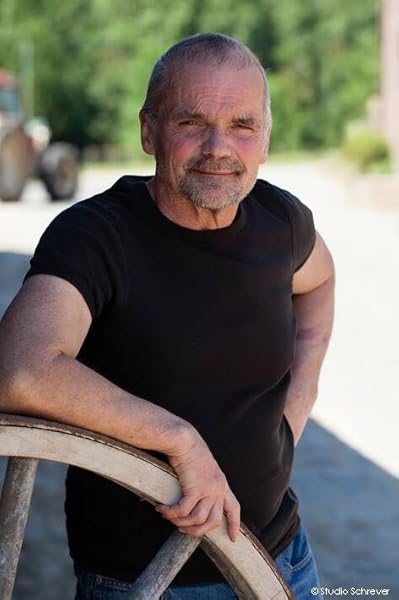
The Shadow of The Mole follows the intertwining stories of a man who believes himself dead, who is writing a story he claims is being recited to him, and the doctor caring for him during WWI. What was the inspiration for the setup of your story?
From 1990 to 2003, I was a freelance travel writer in conflict zones worldwide: Somalia, Liberia, Bosnia, Serbia, Sudan, Gaza, Iran, Iraq, Mozambique, Kosovo, and Burma(Myanmar)… to name but a few. I stopped when I was fifty and began to suffer from strange psychic symptoms. I struggled with the impression that something invisible followed me like a shadow. A leering, threatening presence mocked me, whispering that I wasn’t an actual human, just a walking mummy and that a terrible death would be my fate. So, of course, I sought professional help and soon learned that long periods of stress can produce all kinds of unusual mental phenomena. Intrigued, I began researching Post Traumatic Stress Disorder (PTSD). I learned that PTSD, even in Roman Times, was documented and that, in WW1, soldiers who showed signs of PTSD usually ended up in front of the firing squad as cowardly deserters who pretended to be lunatics.
And then, I stumbled across Cotard’s Syndrome, sometimes also called “walking corpse syndrome.” When I began to read about it, it was as if a cold finger prodded me in my neck, and I smelled the energy – still far away – of a new novel, coming to life.
In 1880, the French neurologist and psychiatrist Jules Cotard was the first to describe and analyze the psychiatric syndrome he called Le délire des negations (The delirium of negation). I read about different symptoms and cases, but the ones that I found highly fascinating were patients who were convinced that they were dead. One of them was a young man who told everyone that he was a corpse and that his ‘self’ (sometimes, he said ‘soul’) was standing behind his right shoulder.
That night, I had a nightmare in which a ‘gypsy’ played a frightening role. That made me think about thirty years ago when I published ‘Feria,’ (Funfair), my third book, a short story collection about the Romani – gypsies – a people of wanderers with a unique culture and myths of gods and demons that I found fascinating.
Subsequently, by chance, I read stories about soldiers in WW1 trenches who reported about ‘presences,’ benevolent or malicious, materializing during intense fighting. New trends in psychiatry and psychoanalysis didn’t limit these symptoms to stress or cowardice but, hesitantly, began to search for malfunctions in the brain and childhood traumas in Freud’s psychoanalysis, often of sexual nature.
Thus, puzzle after puzzle, the hidden entry in my subconsciousness opened itself slowly and gave me access to writing “The Shadow Of The Mole.” The road to completion took me three years, sometimes stumbling over wondrous details, sometimes following dead-end forks in the journey before I once again found the “silver thread beneath my feet” (Hermann Hesse: Steppenwolf). Buffeted by doubt, despair, illumination, wonder, and hope, I wrote like a mole, rooting deeper into my story…
When you first sat down to write this story, did you know where you were going, or did the twists come as you were writing?
Being a full-time author for over 30 years, I have published ( traditionally) more than forty books in Holland and Belgium, and each novel started with only a hunch, a flash of intuition, and a first sentence. Each time a first sentence of a book came to me, I knew that I was on my way and that I more than possibly would finish the novel, trusting the inspirations that would materialize when the story developed itself. Often, I felt a pass-through for insights given to me.
This ‘method’ was not always foolproof: sometimes, I made useless detours, or, on other occasions, I resisted an inducement because I was afraid of the artistic, commercial, or personal consequences. When this happened, I noticed that the story fell flat or just plain stopped, so I had to give in and sought for a style and an element of mysterious opaqueness to incorporate the inducement in my story. For instance, there is a family secret of sexual nature in “The Shadow Of The Mole” that plays a big part in the story, but I didn’t want it to be in the readers’ faces, so dispersed in the novel, you can find allusions, hints, metaphors. This mysterious atmosphere plays an essential part in this novel.
What were some themes that were important for you to explore in this book?
During my years as a travel writer, I noticed how war and violence could turn humans into terrible creatures committing horrible atrocities. Why and how does conflict trigger such savagery in us? And why don’t we learn from warfare in the past? For instance, in the nineties, I witnessed the Bosnian war’s ruthlessness, and now, thirty years later, I see the same horror in the Ukrainian conflict. Nothing has changed…Correction, something has changed: the weapons used on the battlefield have become even more sophisticated, deadly, and destructive.
Must we conclude that war alters something in the chemistry of our brain, or do we have to turn back to the old belief that humans can be possessed by demons who thrive on endless suffering? Hidden in “The Shadow Of The Mole” lies a possible and chilling answer.
What is the next book you are working on, and when will it be available?
I’ve chosen the working title “The Firehand File” for my next novel. Again, it’s a historical novel, this time situated in 1921 Berlin, the European “capital of sin.” In Flanders, critics described “The Firehand File” as a “worthy successor to “Baudelaire’s Revenge,” my first novel in English translation (2014), which won the Hercule Poirot Prize for best suspense novel of the year in Belgium, and the USA Best Book Award 2014 in the category “mystery/suspense. “Baudelaire’s Revenge” has been translated into English, French, and Russian. The novel centers around the poetic oeuvre of Charles Baudelaire, one of the greatest nineteenth-century French poets.
Likewise, the plot of “The Firehand Files” has a lot to do with the poetry of the Flemish Dada poet Paul Van Ostaijen who lived for a while in Berlin. Once again, it is a complex, thrilling, historical novel noir.
Maybe, it’s better that I disclose the first draft of a blurb. It will give readers a condensed picture of the novel’s soul.
Berlin is a city of extremes. Political violence plagues the streets during the day. A serial killer whom the media call “The Skinner” roams the streets at night. He is suspected to be a rabid World War I veteran, but he remains untraceable.
In this human pressure cooker, the relationship between Paul Van Ostaijen and his impetuous girlfriend, Emma Clément, is on edge. Like hundreds of thousands of others in Berlin, they live in poverty. They are addicted to cocaine and other drugs, while Van Ostaijen is convinced that the artistic Dada movement, rejecting the logic, reason, and aestheticism of modern capitalist society, instead expressing nonsense, irrationality, and anti-bourgeois protest, would change the world.
On a drug-induced whim, Van Ostaijen steals a document titled “The Firehand File” in the apartment of the spy Elise Kraiser. He finds the title “dramatically poetical.” Who could foresee that the poet, doing so, would set in motion a series of dramatic events that shed surprising light on a politician who is rapidly gaining influence?
His name is Herr Adolf Hitler.
The Firehand Files was one of the five finalists of the 2018 Hercule Poirot Prize in Belgium. I hope to see the translation finished this year and that Next Chapter, my publisher, will find it a worthwhile novel.
I sense that “The Firehand File” will be my last novel. I turn seventy this year, and my health is waning, so I’m preparing myself for the most fantastic adventure of all: death and the afterlife.
Author Links: GoodReads | Website
The Shadow Of The Mole is the Gold Category Winner for “Historical Literary” in the 2022 Historical Fiction Company Book Of The Year Contest
1916, Bois de Bolante, France. The battles in the trenches are raging fiercer than ever. In a deserted mineshaft, French sappers discover an unconscious man and nickname him The Mole.
Claiming he has lost his memory, The Mole is convinced that he’s dead and that an Other has taken his place. The military brass considers him a deserter, but front physician and psychiatrist-in-training Michel Denis suspects that his patient’s odd behavior is stemming from shellshock, and tries to save him from the firing squad.
The mystery deepens when The Mole begins to write a story in écriture automatique that takes place in Vienna, with Dr. Josef Breuer, Freud’s teacher, in the leading role. Traumatized by the recent loss of an arm, Denis becomes obsessed with him and is prepared to do everything he can to unravel the patient’s secret.
Set against the staggering backdrop of the First World War, The Shadow Of The Mole is a thrilling tableau of loss, frustration, anger, madness, secrets and budding love. The most urgent question in this extraordinary story is: when, how, and why reality shifts into delusion?



 LITERARY TITAN