Blog Archives
I Didn’t Know The Killer
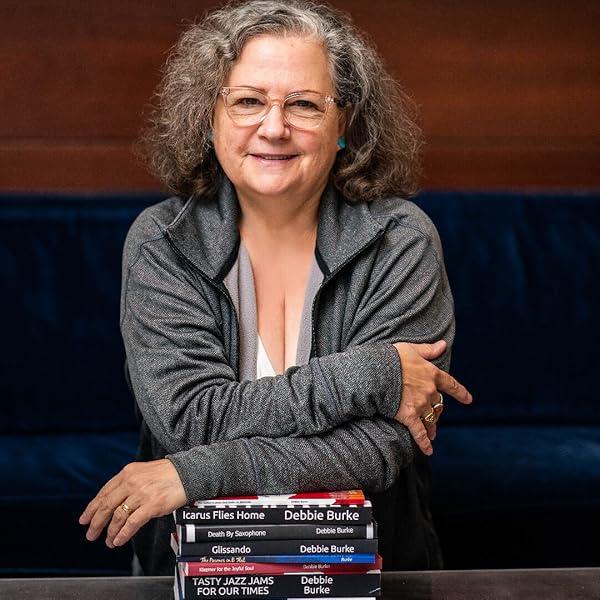
Death by Saxophone follows a radiology tech with a love for jazz who becomes embroiled in the unthinkable when a smooth jazz musician is found bobbing in the Verrazano Narrows. What were some sources that informed the development of this novel?
Well, I come from that area and know the vibe there, between the small restaurants and clubs with back rooms and spending time on the boardwalk and the handball courts. I grew up with all that. As far as music, I first came upon “bone records” as a thing from an article on the NPR website that I read around 2020 and I was fascinated by the whole idea. The Cold War and the fact that American music was forbidden in Russia (which was why bone records, also called “X-ray records,” were created) sparked the kernel of the idea for the book.
I enjoyed the mystery in this story. Did you plan it before writing or did it develop organically while writing?
Thank you! I planned the main arc but “organic” is a great way to describe how it unfolded. I didn’t know the killer till pretty deep into the process!
What were obstacles that you felt were important to developing Becka Rifkin’s character?
Traveling to Russia knowing it could become a real problem; political issues are brewing in 2016 that involve relations between the US and Russia, but Becka is determined to go there and see the bone records for herself. Plus, of course, her love interest. She can’t get this guy off her mind after all these years (they met when she was a teenager and he moved back home to St. Petersburg, Russia). When they reunite, she falls for him hard and becomes conflicted about going home but even more concerned about the secrets he doesn’t share. And there are plenty of those!
What is the next book that you are working on and when will it be available?
I’m working on Volume 3 of my nonfiction series Tasty Jazz Jams for Our Times. It’s a book filled with interviews of contemporary jazz musicians and will be out later this year. My amazing designer created another beautiful cover, and I can’t wait to show it off!
As far as my next novel, it’s another murder mystery; a coming together of the classical music world and the jazz world after a new symphony by a famous composer is accidentally discovered, and somebody, somewhere, is more than willing to kill for it. The musical score has a hidden meaning written into it that, once revealed, puts the main character, a middle-aged cellist, in harm’s way. Like all my main characters, she’s tough, smart and believe me, flawed.
It will probably be out in 2024.
Author Links: GoodReads | Twitter | Facebook | Website
Meanwhile, in the nearby neighborhood of Little Odessa, radiology tech Becka Rifkin is dying to reconnect with an old flame who moved back to Russia. Then he happens to mention a newly discovered bone record that just became available. Unable to turn down the chance to own this very rare collectible, Becka books her flight.
When Jerry Z is found bobbing in the Verrazano Narrows, Becka becomes embroiled in the unthinkable.
Conquering The Flying Mountain
And so Began the War follows a young roboticist who is swept away on an adventure to stop a war after a powerful government vies for control of a technologically superior nation. What were some sources that informed the development of this novel?
I’ve been a fan of science-fiction and fantasy my whole life, so things like Star Wars, Doctor Who and even a small touch of Game of Thrones, definitely played their parts in inspiring the creation of the world and how I approached some of the story telling.
Zoe Evelyn Lionheart is an intriguing character. What were some ideals you wanted her character to embody?
An unwavering relentlessness for her passion (Robotics), and how that is a main theme in her life, not something she puts off to the side while ‘life gets in the way’ (Her love of robotics is the way!). That, and bravery in the face of adversity, regardless of what the potential outcome may be.
What scene in the book did you have the most fun creating?
Oh, gosh … All of them! But if I have to pick just one, probably where Kensington is ‘conquering the flying mountain’ (i.e. the dragon).
Do you have plans to write more books in this world?
Yes, but I’m currently writing a book in my other series The Cities & Villages Saga. So once that’s done and dusted, I’ll likely revisit this world, although not necessarily as a direct sequel.
Author Links: GoodReads | Amazon
The Soul Seeker Collection
Embolden is a collection of poetry written to help readers understand how the universe communicates with us. Why was this an important collection for you to write?
Embolden is the last book in the Soul-Seeker Collection, which followed my journey of self-discovery. Book 1 was Embody, and it was about connecting within. Book 2 was Embrace, and it was about connecting with the cycles of life. Book 3 is Embolden, and it is about my connection to everything that is and with the universe. It was important for me to write Embolden because I wanted to showcase that we are all connected, that nothing occurs at random, and that we’re all in this game of life together. The more we see that we’re part of something bigger, the less alone we feel. It helps us see that there is a purpose for us.
What were some themes that were important for you to explore in this book?
I divided the book into five sections. The number five is all about change and transformation, and because this was the culmination of my own personal journey of transformation, it was important for me to use that as a theme. The five sections are 1) objects and places, 2) nature, 3) numbers, 4) practices and beliefs, and 5) symbols. These are all themes that I relate to and where I find signs and significance, feeling as if the universe is communicating with me. I hope that through my poems, others will find the same.
What were some goals you set for yourself as a writer in this book?
When I write poetry I follow my inspiration. I normally write poems only when I feel called to do so, and it was important for me to transmit some of this through my poetry. I didn’t see the themes until I had completed the collection and this is a way to honor that I was in flow when writing this collection. It really came from my soul, and it makes sense since the universe speaks to us in many ways, but the most important is through our soul.
Will there be a fourth book in the Soul Seeker Collection? If so, can you share what ideas it will cover and when it will be available?
There are only three books in the Soul Seeker Collection, and Embolden was the last one. I am working on a new collection of poems that will be called Journeys. It is about my experiences, perspectives, and lessons as I have traveled, healed, searched for a home, gone through change and transformation, endeavored to find self-love, and so much more. The first book in the collection should, hopefully, be released in 2023.
Author Links: GoodReads | Twitter | Facebook | Website
Book 3 of the hit Sonee Singh Soul Seeker collection.
The Power Of Resilience

Born Into Crisis shares your story of childhood trauma and growing up with mental health issues in yourself and your family members. Why was this an essential book for you to write?
It is essential to share stories of our journeys because they can help provide insight and understanding into the experiences of others dealing with similar issues and provide a sense of comfort and solidarity. By normalizing conversations around mental health, we can help create an atmosphere of acceptance and understanding. That is why I wrote this book—to show that it is possible to speak about complex topics and to share your story in a way that can help others. More importantly, those directly impacted have a vested stake in helping to compel change, and this book is just one step in that direction. As a person who has experienced trauma, I feel it is necessary to give voice to these stories. It is also an opportunity to bring awareness that we are all impacted differently by personal and collective crises, regardless of socio-economic status or race.
What were some important ideas for you to share in this book?
One of the main ideas I wanted to share was that trauma, especially early childhood, can have long-term impacts on our physical and mental health. People need to understand that traumatic experiences can manifest in various ways throughout life—from depression and anxiety to addiction to issues with self-esteem and relationships. I also wanted to emphasize the power of resilience and how we can use our pain as a source of growth and strength. I want readers to recognize that there is no shame in seeking help when dealing with mental health issues. The problem is that the current system in the US is not set up uniformly, in a coordinated way, to provide adequate access to care. Too often, the system over-prioritizes a criminal justice response to mental health concerns. I wanted to clarify that we need to actively advocate for change and more humane policies regarding mental health care. Mental health is not a sexy topic but is one of human importance.
I appreciated the candid nature with which you told your story. What was the hardest thing for you to write about?
The policy proposals and recommendations came quickly because I have been working on mental health-related issues for some time. Still, the raw, honest account of my experiences was the hardest to write. I wrote this book to help others understand how trauma and unresolved childhood issues can follow us into adulthood and affect our lives profoundly. I also wanted to maintain relatability in my writing, so I had to make sure that the story was not just about me but that it could be used as a portal for readers to explore their own experiences and see a concrete, actionable path forward. The book is very nuanced and complex, it’s an easy read in some ways too, but there are generational components, which can be challenging to communicate clearly and concisely. I am proud of the work that I have done, but it was a challenge.
What do you hope is one thing readers take away from your story?
Look, I am a very straightforward, realistic person. Everyone that is a reader of this book will have a takeaway. Some will have a valuable takeaway, others not so much, and there will be those who read this book who will believe they got absolutely nothing out of it. What I want everyone to take away is that this issue is complex and nuanced and needs every story, every voice, and spirit to work together to compel change. We need to listen, learn and be open – even if we don’t agree with each other. If we can push the conversation forward without silencing different people, we can find some resolution and acceptance. Mental health should no longer be taboo in our society, and we must discuss it openly and honestly. This book is my attempt to take a step in that direction, but I hope readers take away the importance of listening to all sides to create meaningful change. We have a mental health crisis in this country, and we all need to be part of the solution.

Secretly Exacted Justice

The Dead Kids Club follows grieving parents as they seek revenge against the son of the city’s most notorious mobster. What was the inspiration for the setup to your story?
This story was actually inspired by a dream—or rather, a nightmare. I dreamed that my son had been killed, and my ex-wife and I decided we were going to kill the man who had killed him. When I awoke, the emotions I felt were still with me, so much that I wondered if my son was really dead. Once I convinced myself that he was okay, and it was just a dream, I was struck with the idea for a novel surrounding the powerful emotions of parents who have lost their children—especially if there was a specific person responsible, and they had somehow escaped justice. I imagined what it would be like to participate in a support group for grieving parents, knowing that you had secretly exacted justice for the killer of your child, but there were so many other parents who would never feel that sense of completion… unless you helped. I won’t go any further (spoilers), but the story was so vivid to me, I knew it was a book I could write—that I needed to write—to fully process those emotions I took with me out of that dream.
Your characters are intriguing and well developed. What were some driving ideals behind your character’s development?
Much of the protagonist comes from me. The story is told in first person, so I’m driving the story, drawing on the emotions left over from the dream. I think of this story as an everyman thriller. That is, ordinary people in extraordinary circumstances. I worked for a time in an I.T. environment like the one the main character in employed in, so I was able to draw on that experience to answer the question: “How would an ordinary I.T. guy go about planning a murder?”
The members of the support group were a challenge. As a parent, I cannot imagine a greater grief than the loss of a child. And creating a roomful of them for those scenes, especially when they told their stories, was tough. I had to try to imagine myself in that situation. As the characters in the story make clear, it isn’t something you can know unless you’ve gone through it. So, I hope I got close to what that kind of heartache does to people and relationships. It’s a big part of the story, and when I was narrating the audio version, I couldn’t help but choke up during some of those scenes.
What were some themes that were important for you to explore in this book?
The tagline for the book is, “When we set aside our better angels to let loose our inner demons, there’s no turning back,” is the key theme. The protagonist is driven by grief and hope to motivate and justify his actions, but crossing that line, taking another human life, changes you and your circumstances forever.
What is the next book that you are working on and when will it be available?
My next book in this loosely connected collection of everyman thrillers is The Tenth Ride. It’s not as dark as The Dead Kids Club, but does also deal with a protagonist who is thrown into an extraordinary situation when he’s trying to make some extra money between jobs as a rideshare driver, and is seduced by an offer that is too good to be true, catapulting him into a deep, dark world of international intrigue. It also features a character from DKC, Eddie Horne, the Luddite crime reporter. He was a character I felt worthy of a repeat appearance and in the future his own stories.
Author Links: GoodReads | Twitter | Facebook | Website
Forced To Survive On Their Own

Periodic East follows a group of survivors of “the blast” who are trying to survive in the second ice age and keep humanity alive. What was the inspiration for the setup to your story?
I was living in Los Angeles and I was devastatingly unhappy. I worked in a very hostile working environment at the time that I started writing the book. I was dealing with co-workers and customers who were (to put nicely) very unpleasant people. Despite their personalities being very volatile, I often imagined what would happen if they were forced to survive on their own or off the land. That’s kind of how “Periodic East” started.
Did you plan the tone and direction of the novel before writing or did it come out organically as you were writing?
When I write, I often get into a trance. Particularly when I write in first person and write from the perspective of a main character. They decide what happens. They tell me where they want to go. I try not to fight it. I just let the character guide me. I try to learn from them. I always knew I wanted to have lots of twists and turns in the story, but I wanted them all to make sense. To be possible in the world where “Periodic East” takes place.
What were some themes that were important for you to explore in this book?
For me, forcing characters to see past and accept the differences of others was pivotal. If certain characters didn’t compromise or choose a more altruistic path, it led to their demise. The importance of being patient, which is something that I struggle with immensely, is also important for the survival and well-being of the characters. And also the fact that oftentimes, the most unlikely people can surprise you in the most amazing ways.
Can you tell us a little about where the story goes in book two and when the novel will be available?
Book two will be titled “Parallax.” It takes place immediately after the end of Book one. As I respond to this email, I’m four chapters in and I can already tell you, I intend to make it darker than the first. I want my characters to mature and to be more fearless within their environments and willing to take more risks for better or worse. “Parallax” should be available sometime first quarter 2024.
Author Links: GoodReads | Instagram | Facebook | Website
Conflicted Feelings Do Not Disappear

Tell Anyone You Want That I Was Here follows an up-and-coming journalist as she’s called back to her hometown where she partners with an unpredictable sheriff amidst the town’s opioid crisis. What was the inspiration for the setup of your story?
Lots of direct inspiration (except around opioids). The fictional town Willigsville is largely based on the small Missouri town, Higginsville, where I spent much of my childhood. The pros and cons of small-town America, such as loyalty and gossip, respectively, came from those memories.
Nikki Hightower is an interesting and well-developed character. What were some driving ideals behind your character’s development?
Even the tragic accident in the story is based on a similar event from my childhood. I have long wondered what internal conflict rages inside someone who may or may not have brought about the death or disability of someone else. How would that internal battle ever be settled? Even when Nikki learns the truth of what happened all those years ago, conflicted feelings do not disappear.
What were some themes that were important for you to explore in this book?
The obvious themes: dealing with one’s past, American small town values, when to defer to versus defy authority. Additionally, Nikki struggles to choose a path to her future. She’s torn between the expected path toward a high-profile job versus something lower profile that might be more fulfilling. So many of us struggle with that. So many writers do.
What is the next book that you are working on and when will it be available?
The new book is speculative fiction, imagining a time “a few decades” into the future when state-sanctioned euthanasia has gone mainstream. I explore what that feels like for a protagonist ushering people “across the bridge.” The story explores what it means to be alive, both here and in the next life. No, it’s not a religious book.
Author Links: GoodReads | Facebook | Website
Ten years earlier, on high-school graduation night, Nikki drove one of two cars involved in a bizarre crash that killed the town’s “princess” and left Nikki’s best friend with permanent brain damage. The townspeople blamed Nikki. Only two people took her side: her father, owner of the local newspaper, and Sheriff Joe Ransom who always viewed law enforcement as a form of creative expression.
Nikki returns to Willigsville, trapped between conflicting goals: escape the town’s condemnation or stay to uncover the truth of the crash. She partners with the unpredictable sheriff amidst the town’s greatest crisis, a tsunami of opioid addiction and overdoses fed by a brutal drug cartel and its local operatives. Meanwhile, rumors swirl of the sheriff’s corruption.
The past and present collide as Nikki realizes that her survival depends upon whom she chooses to trust.
Our Current Precipice of Environmental Disasters
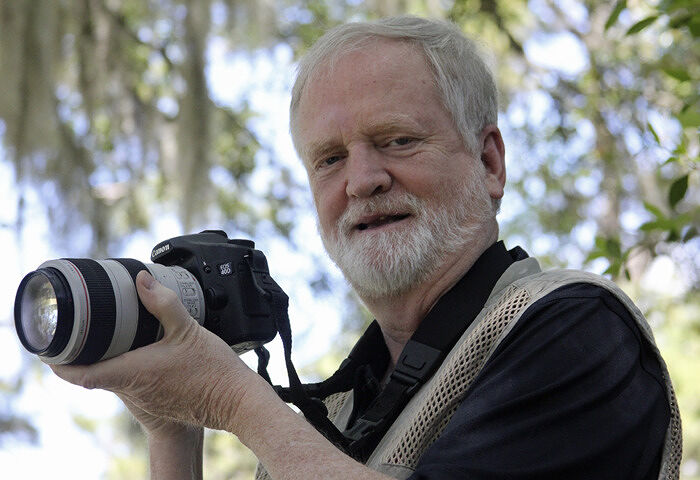
Coming Full Circle follows a multi-generational family across America and back again in an entertaining story that shines a light on the origins of the current conservation crises. What was the inspiration for the setup of your story?
As a lifelong wildlife ecologist and conservationist, I’ve always been both offput and discouraged by the still far too prevalent notion that humans have a “biblical right” to exert dominion over all creatures of the natural world. Over the course of 15 years, I wrote “Coming Full Circle (CFC)” to emphasize the exact opposite of this misguided thought. Heavily relying on the knowledge I gained and experiences I had throughout my career, my goal with CFC was to set the record straight and—in the process—bring readers to the understanding that we have always been “part of” and not “apart from” our natural world.
Also, “Coming Full Circle” is a fiction sequel to our 2016 non-fiction book, “Protecting the Planet”, in that it reaches the same positive conclusions about solving our twin ecological dilemmas of climate change and biodiversity loss. The main difference is that CFC uses an informative and entertaining blend of historical fiction and poignant truths to tell the story of how we “progressed” from colonial times to our current precipice of environmental disasters.
Your characters are intriguing and well-developed. What were some driving ideals behind your character’s development?
Thank you! Many of the characters in “Coming Full Circle” are derived from my personal learnings and experiences as a field ecologist and freelance natural history writer/photographer. My co-author and daughter, Mariah Tinger, also used her personal experiences as a career environmental scientist to craft some of the book’s characters.
What were some themes that were important for you to explore in this book?
In “Coming Full Circle”, life is represented as a circle because it is a constant loop. The idea of life as a circle exists across multiple religions and philosophies. This belief was prevalent throughout the early Indigenous Peoples of Earth. Unfortunately—owing to what some may term “progress”—this fervent belief in the circle of life is much less common in today’s world.
On the U.S. history side of the ledger, no group has ever been more disrespected and abused than our Native American tribes. Most valued all species as equals and managed their lands not just in sustainable ways, but in ways that enhanced the flourishing of ecosystems. Yet they lost both their ancestral lands and their cultural societies to colonial settlement.
Throughout CFC, Mariah and I emphasize our lifelong beliefs in the sanctity and equality of all living things—both human and non-human. Our belief system encompasses all races, religions, cultures, and lifestyles—but especially those of the Indigenous—or Native—Peoples of the world.
Since the environmental “regulatory heydays” of the late 1960’s and early 1970’s, we have seen numerous and significant improvements in the local quality of our air and water. Now we must realize that this fight is far from over and we have to expand our threat level to preserving the long-tern quality of human life on Earth. It is now time to transform our world from the “Industrial Revolution” to the “Renewables Revolution”.
What is the next book that you are working on and when will it be available?
Right now, I’m concentrating on producing an array of blogs that correlate to my existing books. Produced through WordPress, my blog posts are categorized as:
• https://environmentalheroes.blog
• https://thisbirdinglife.blog
• https://opedpieces.blog
• https://climatechangesolutions.blog
Meanwhile, Mariah is busy teaching sustainability courses at Boston University’s Questrom School of Business and obtaining her Ph.D. in environmental/climate communication from Otago University in New Zealand.
Author Links: GoodReads | Facebook | Website
Readers’ Choice—Five Stars: … “recommend “Coming Full Circle” to fans of issues-focused fiction who also enjoy family sagas and tales of growth, learning, and self-discovery.”
Reader Views—Four Stars: … there is a message within this eco-novel that we need to live in harmony with our living environment and respect and care for it … before it’s too late. there is a lot that makes (this book) a worthy read. It is a text for our times.
Book Excellence Awards: “(Titlow & Tinger’s) groundbreaking dive into the intricacies of conservationism … brings their unique perspectives to today’s issues from both modern and historical standpoints. … Despite their dire theme, their message is ultimately one of hope.
Highlight Review, US Review of Books: “Using a blend of historical fiction and poignant truths, the (book’s) narrative delivers a spirited discourse on conservation, our environment, oneness, and, chiefly the concept of coming full circle. Overall, the authors’ expertise in the topic of conservationism and their knack for storytelling is on full display, making for a highly recommended read.”
Online Book Club: … “recommend this book to environmentalists and lovers of nature. History lovers and academics can also learn some things from this book.”
Literary Titan—Four Stars: … “an impassioned and edifying book … a compelling story about conservationism for nature-lovers.“



 LITERARY TITAN