Blog Archives
History of Disease. Army


History of Disease: Army tells the compelling story of Serge Pospelov, tracing his journey from his early days at a military engineering school to his service in the Red Army. Pospelov’s path through the ranks, from a carefree youth running gambling rings to a disillusioned soldier grappling with corruption and inefficiency, unfolds in a way that highlights the sharp contrast between his initial hopes and the harsh realities he encounters. As his career advances—from military academy to active service—Pospelov’s growing frustration with the system ultimately leads him to pursue a personal mission to escape his homeland.
Though lengthy and dense, Pospelov’s autobiographical narrative is refreshingly easy to read. He writes in a natural, flowing style that pulls readers into his world without overwhelming them, despite the sheer volume of detail packed into each paragraph. While many of the names and events seem tangential or irrelevant to the core of his life story, they contribute to the rich backdrop he sets, adding texture and atmosphere to his experiences. One striking aspect of Pospelov’s writing is its narrow focus. The memoir is tightly centered on his experiences within the military and education system, with personal milestones like marriage or family life only mentioned in passing. This focused approach gives the narrative a clear direction, but it also underscores that the book isn’t meant to be a broad autobiography—it’s an anecdotal account, highlighting the aspects of his life most influenced by the institutions around him. Despite the heavy subject matter, the tone is far from dry. Pospelov injects a casual, sardonic humor into his writing that lightens the overall mood. His sharp wit and biting critiques of his superiors and the widespread corruption within Russian institutions make for an engaging and often entertaining read. The sarcastic asides and candid observations on the inefficiencies he witnesses add a layer of humor that keeps the reader engaged, even when dealing with weightier themes.
History of Disease: Army offers a detailed and personal glimpse into a life shaped by military service and institutional failure. Pospelov’s witty, accessible writing style ensures that this dense and information-rich memoir remains a captivating and insightful read. For those interested in personal accounts of military life, corruption, and resilience, this book provides a unique and highly readable perspective.
Pages: 380 | ASIN : B0DD62XB44

We Need More Thought Leaders

The Second-Best Business Book Ever Written: The Pursuit of Thought Leadership in Sales, Marketing, and Life encourages readers to rethink the principles of leadership and focus on what truly matters: knowledge, authenticity, and the pursuit of a better world. Why was this an important book for you to write?
It was important for several reasons. I was dismayed at the quality of business books that have flooded the market in recent years (as many as 350,000 per year). Nearly all business books are written to capture more business for the author, secure speaking gigs, or raise the author’s hourly rates. I write about that in my book, and there’s little doubt that writing a business book is a terrific lead generation strategy. However, it makes the book less authentic, somewhat suspect in it’s purpose and mission, and more about an alternative motive than the true motive of a book, which is to educate, create curiosity, and drive increased thoughtfulness.
Second, I was the only person in the country teaching thought leadership as part of the disciplines of market leaders all through the lens of the great Greek scholars. It just wasn’t right for me to take this information to my grave. That would have been overtly selfish, and that wasn’t the thinking behind Socrates, his ace student, Plato, and Plato’s top student, Aristotle. Those three philosophers had a great love and respect for education. It was my time to share the doctrines as well.
And finally, we need to begin to align the positive factors that businesses who are thought leaders can have outside the business world. Businesses get a bad rap on their impact on society, and in many cases it’s well-deserved. But thought leaders really do have a worldview beyond the business construct. I think it’s important to show how thought leadership can make people better humans.
What were some ideas that were important for you to share in this book?
By far and away it’s the notion of Eudaimonia. In part, it’s the Greek notion of happiness, but it doesn’t translate exactly to our happiness because being happy is fleeting. Thought leaders possess Eudaimonia, more aptly defined as a total and constant spirit of well-being. In addition to that, it was important for me to teach how to conduct Voice-of-Customer research (VOC), and how to sell your thought leadership and wisdom through my proprietary Critical Insight Selling technique.
What is one piece of advice you wish someone had given you when you were younger?
Well, for starters, it would have been to stop giving me so much advice. But in the end, I wish someone would have told me to keep a keen eye on the dirty ways of the world. I went into business blinded by so many half-truths. Frankly, around every corner there’s always going to be someone who is trying to game the system, who is more attentive to a money-grab than a grab for goodness, and those pursue shortcuts rather than cutting through the nonsense and doing it right.
What do you hope is one thing readers take away from your book?
We need more thought leaders in business as well as businesses who embrace the discipline of thought leadership. It’s an actionable business practice that is available to any size company in any industry. So, it’s my sincere hope that people who read this book see the benefits and advantages of pursuing thought leadership. If that happens, we’ll have better business, better business people, and a better world.
Author Links: Facebook | Website
Honesty, in its purest form, is a key characteristic of all thought leaders, so I’m going to hit you with the truth. Many business books today are written for the purpose of winning more business for an author, or acquiring new speaking gigs, and anyone who fits into that camp is A-OK with me. It’s a smart move. But after more than four decades in sales and marketing, I’m beyond those goals. Frankly, it feels great that I’m not anchored to those intentions anymore. I have only one intent in The Second-Best Business Book Ever Written, and that’s to teach the ins and outs of thought leadership to as many people as possible because that’s how corporations, and the individuals who run them, succeed.
There’s a process to becoming a thought leader; it’s methodical, detailed, and rewarding. After all, where’s the amusement in being a price-chopper? Or even a technology leader where the tenure is as short as my nephew’s attention span? The greatest thought leaders started sharing their thinking 2,500 years ago through the teachings of my four favorites: Socrates, Plato, Aristotle, and Aspasia.
I’m going to travel with you down the thought leadership road, known as the Via Egnatia, from the foothills that rise above Athens to the skyscrapers that tower above Madison Avenue. And along the way, I’m going to show you how I did it for Fortune 500 companies, and for small and midsize businesses, with a few wild detours along the way.
By all accounts, the Green Bay Packers future Hall of Fame quarterback Aaron Rodgers was born with a rock-solid throwing arm and an annoying chip on his shoulder. I’m no Rodgers fan; after all, I was born and raised in inner-city Chicago and have been a Bears fan since birth, but I recognize greatness, and Aaron Rodgers is a great football player. Some of his other qualities? Not so much.
But these aren’t lessons about tackle football. They’re insights about leadership; about what happens off the football field, and on a more important playing field; about greatness in sales, marketing, and business; and about thought leadership, the single most important differentiator in the business playbook.
Or, as Plato not so recently said, obviously unaware of Aaron Rodgers’s famous retreat into darkness, “We can easily forgive a child who is afraid of the dark; the real tragedy of life is when men are afraid of the light.”
I’d like to shed some light on what’s required in business, but frequently misunderstood. What every salesperson needs to know, but doesn’t always know how to achieve it. And what every marketing expert wishes they had in their bag of tricks. To simply say that thought leadership is an essential part of the disciplines of market leaders is like saying a stick is an essential part of a Popsicle. Well, it is, assuming you’re not interested in taste, color, packaging, name, price, quality, and the beat goes on.
Tom Marks survived forty-seven years in the advertising business and has lived to write about it. He’s the founder of TMA+Peritus, one of the leading marketing, thought leadership, and corporate ethics firms in North America and has won more than sixty-five American Advertising Awards for his writing. He spent many years on the professional speakers circuit and survived that, too. His thought leadership workshops for Fortune 500 companies have brought him national acclaim and has made him a favorite among the nation’s CEOs.
Dr. Black Widow

Dr. Black Widow is an intimate and deeply personal story about Mike Cromwell’s journey through a failed 38-year marriage and a subsequent disastrous relationship with a manipulative woman all leading to a whirlwind of legal battles, emotional torment and eventual self-discovery. Cromwell uses his experiences to spotlight issues within the justice system, particularly in how men can be treated unfairly in domestic disputes. He also reflecting on the lessons learned about family, love, and personal strength.
I found Cromwell’s writing to be raw and unfiltered which made the emotional impact of his story hit hard. His candid reflections on his marriages struck me as profoundly honest. He acknowledges his faults during his first marriage, like neglecting his wife for the pursuit of money. But he also describes the crushing blow of betrayal when he discovers her infidelity. His recounting of this moment, when the house that symbolized their life together becomes just a “house on a hill,” beautifully illustrates the transformation of a dream into disillusionment. It was one of those moments that made me pause and feel the weight of his heartache.
Cromwell’s later relationship, the one he calls his “insane” second marriage, is a wild, almost unbelievable ride of manipulation and control. Chapters like “Living with the Spider” and “Breaking Point” left me flabbergasted at the cruelty and deceit he faced. His second wife, whom he portrays as a gold digger, manipulated not just him but the legal system as well, which only compounded his suffering. There’s a gut-wrenching moment where he is physically assaulted, a vivid account of waking up to punches raining down on him. The way he conveys his shock, confusion, and eventual resolve to fight back is intense and emotionally charged.
What I found particularly gripping were Cromwell’s reflections on the justice system. His experience of being wrongfully detained, facing biased treatment from law enforcement and legal entities, is central to his mission. Chapters like “Legal Entanglements” highlight his frustration with how easily the system can fail to protect the innocent. I could feel his desperation and anger when he describes taking an Alfred Plea, despite his innocence, because the odds were stacked against him as a man in such cases. This part of the book not only serves as a personal lament but also as a call for reform in how domestic cases are handled.
Dr. Black Widow is a candid and sometimes brutal, exploration of love gone wrong, personal failure and societal injustice. It is a deeply personal book, and I would recommend it to anyone interested in true stories of resilience, especially men who may feel overlooked or misunderstood by the justice system. However, it’s also a story that resonates with anyone who has experienced betrayal or fought for justice in the face of overwhelming odds.
Pages: 67 | ASIN: B0D87CTFV1
Colours of the Fraud
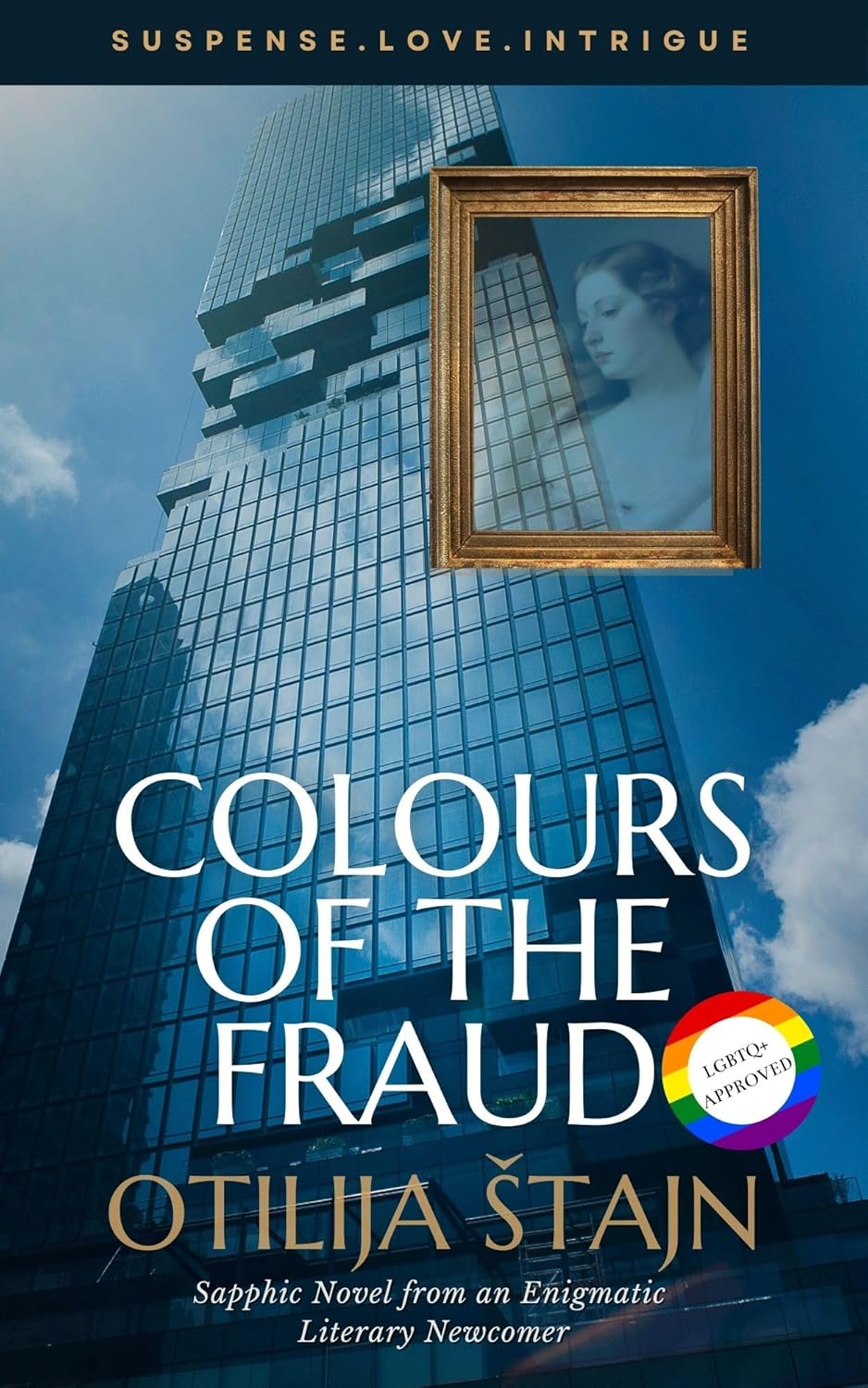

Otilija Štajn’s Colours of the Fraud is an atmospheric novel that weaves together mystery, personal drama, and an unsettling sense of foreboding. For over two decades, Ema has owned a mysterious painting, oblivious to its true significance. When a friend casually suggests that the portrait resembles his sister, Ema’s curiosity deepens. Soon after, an art instructor claims it to be the work of a 16th-century Italian master. As Ema searches for answers, her life starts to unravel in unexpected ways. Her long-term relationship falters just as her career seems to be on the upswing, and more paintings featuring the same enigmatic woman begin to surface. Confusion gives way to a growing certainty that something larger and more mysterious is at play, far beyond her control.
Set against the backdrop of modern life, the novel immerses the reader in Ema’s world, one marked by the crushing pressures of corporate existence and complex personal relationships. Štajn’s writing expertly conveys a mounting sense of dread, making each new discovery feel like a step deeper into an ever-tightening labyrinth.
The story begins with disorienting shifts between timelines, but soon settles into Ema’s present-day struggles. As an economist working in a large firm, she’s consumed by her career, but the painting—lovingly dubbed The Muse—takes hold of her mind. The deeper she delves into the painting’s origins, the more chaotic her life becomes. Štajn’s talent lies in crafting a suffocating atmosphere, where even the most mundane moments carry a sense of unease. The book is not overtly dangerous, yet it pulses with an underlying tension that keeps the reader on edge.
The novel is remarkably tight, with little wasted space. Every character serves a purpose, whether enriching Ema’s personal life or adding complexity to her professional world. Štajn explores her relationships thoroughly, ensuring that each dynamic feels fully realized.
Colours of the Fraud is a captivating blend of mystery, psychological tension, and rich character exploration. Otilija Štajn skillfully crafts a narrative that draws readers into a world where the past and present collide and where personal unraveling mirrors the deeper mystery of a seemingly innocuous painting. The novel’s moody atmosphere, complex relationships, and meticulous attention to detail make for a thoroughly engaging read. It’s a story that keeps you guessing, unraveling its secrets layer by layer, and leaves a lasting impression with its haunting, introspective tone.
Pages: 281 | ASIN: B0D366RQ8K
Gigglet The Happy Little Piglet Goes to Summer Camp

Gigglet the Happy Little Piglet Goes to Summer Camp perfectly captures the joy of outdoor play and the power of friendship. Gigglet is the most cheerful piglet around. She eagerly embarks on her summer camp adventure, where she enjoys a variety of activities with her friends. From the peaceful moments around the campfire, roasting marshmallows and singing songs, to the energetic team-based games and friendly competitions, the book shows how nature offers endless ways to have fun.
Author A.M. Berkowitz combines a heartwarming tale of camaraderie and adventure in this beautiful picture book. The story invites children to imagine themselves in Gigglet’s shoes and even try some of the activities like arts and crafts or creating their own camp-inspired games. The story paints a picture of a day filled with respect, trust, and positive interactions while promoting the simple pleasures of life.
The pacing is unhurried reminding us of the joy found in slowing down and reconnecting with the natural world. The author’s engaging and melodious narration, coupled with simple yet effective language, makes this children’s book accessible and enjoyable for young readers. The illustrations are equally captivating, with each scene bringing to life a different moment of camp fun. The characters are designed with a joyful charm, radiating enthusiasm that leaps off the page. The vibrant artwork and lively text create a picture book that is sure to hold a child’s attention from beginning to end.
Gigglet the Happy Little Piglet Goes to Summer Camp is focused on practical and cooperative activities that encourage children to move, explore, and work together. This delightful tale will inspire young readers to embrace the outdoors, appreciate their surroundings and treat others with kindness.
ASIN: B0DBFQS7NB
When Canaries Die
Luis Figueredo’s When Canaries Die is a gripping, fast-paced legal thriller that throws readers into a world on the brink of collapse. At the center of it all is Miami’s top attorney, Pierce Evangelista, whose survival becomes as precarious as the world around him. A deadly pandemic rages across the globe, and as I turned each page, I found myself constantly wondering: how will Pierce stay alive, and can he fulfill his crucial legal mission amidst such chaos?
From the opening chapter, Figueredo’s novel grabbed my attention. The plot is driven by Pierce’s high-stakes assignment, which is challenging the American government’s immigration policies while thousands of asylum seekers are left in limbo. The tension is palpable throughout, not only from the viral threat but also from the looming legal battle, which creates a high level of suspense. Each chapter builds on the urgency of the situation which left me on the edge of my seat until the very last page.
What sets When Canaries Die apart is not just its thrilling plot but the depth of Figueredo’s characters. Pierce Evangelista’s determination to pursue justice amidst global turmoil is compelling, but it was Maggie Malone, the immigration lawyer, who truly stood out to me. Her fierce dedication to advocating for immigrants resonated with me, especially as she navigated a crumbling system to save lives. Her justice-driven spirit and compassion made her an inspiring character I couldn’t help but admire.
Figueredo’s writing shines throughout the novel. It weaves relevant social issues seamlessly into the narrative. The depiction of a pandemic-ridden world paired with the fraught politics of immigration feels both urgent and timely. His ability to balance the personal struggles of his characters with broader societal challenges kept me fully immersed from start to finish.
When Canaries Die is a brilliantly crafted thriller that delivers both suspense and substance. Figueredo’s writing is sharp, his themes are relevant, and his characters are memorable. This novel is a must-read for anyone looking for a fast-paced legal drama that tackles real-world issues.
The Secret

The Secret by Eve M. Riley is a compelling exploration of love, loss, and the quest for truth, set against the vivid and raw backdrop of Africa and New York. At the heart of this novel is Liss, a fiercely independent woman who has navigated a life filled with heartbreak and betrayal. Her instinct to protect herself is strong, yet when she meets Dan during a volunteer mission in the Congo, something shifts. Unlike the deceitful charmers of her past, Dan meets her sharp wit with a disarming charm that draws her in, sparking an undeniable connection.
Liss’s journey is defined by her resilience and determination to chart her own course, even as her trust in Dan begins to waver. Initially, she chooses not to pry into Dan’s evasive responses, confident that his secrets will eventually surface on their own. However, as the truth starts to reveal itself, Liss’s confidence gives way to a relentless need to uncover the real Dan. This search for truth drives the narrative, pulling readers into Liss’s internal struggle as she faces the possibility that the answers she seeks might not be the ones she desires. Riley masterfully paces the novel, blending emotional highs and lows with suspenseful twists. The push and pull of Liss and Dan’s relationship is marked by moments of heartache, hope, and intense passion, creating a dynamic that keeps readers fully engaged. The narrative tension is skillfully maintained, particularly through Dan’s mysterious disappearance, which adds an edge of unpredictability to the story. The richly depicted settings, from the Congo’s rugged landscapes to the urban hustle of New York, serve as more than just backdrops—they mirror the characters’ internal struggles and add layers of depth to the narrative. The strategic use of time gaps allows for significant character development, making the eventual reunion between Liss and Dan even more poignant and impactful. Riley’s portrayal of their intense romance, with its blend of tender and dramatic moments, showcases her talent for crafting a multifaceted and emotionally resonant story.
The Secret is a standout romance that delivers both emotional depth and narrative complexity. Riley’s ability to create relatable characters with genuine struggles and desires makes this novel a must-read for anyone looking for a romance that goes beyond the surface. With its intricate blend of mystery, heartache, and ultimate redemption, The Secret is a powerful testament to the resilience of love and the courage it takes to face the unknown.
Pages: 288 | ASIN : B0CLN8RCZX



 LITERARY TITAN