Blog Archives
A Meditation On Greatness

Alexander, Pharaoh of Egypt (Ancient Egypt), follows Alexander the Great from his early years, where his education and family shaped him into the man he would become, and the path he took in his quest for godhood. Where did the idea for this novel come from, and how did it develop over time?
The idea for Alexander, Pharaoh of Egypt began in childhood. I first encountered Alexander the Great not as a conqueror, but as a boy—curious, brilliant, and shaped by the towering figures around him: his mother Olympias, his tutor Aristotle, and his father Philip II. That early impression stayed with me, and over time, I became fascinated by the tension between his human vulnerabilities and his relentless pursuit of divinity.
The novel developed over several decades of research, reflection, and writing. My academic background in Egyptology helped me reconstruct the coronation scene with historical precision, but the heart of the story lies in the relationships. I wanted to explore not just Alexander’s military campaigns, but the quieter, more intimate dynamics—his bond with Hephaestion, the resistance of Cassander, and the emergence of figures like Ptolemy and Seleucus who would inherit and fracture his empire.
What shaped the novel most, however, was the experience of physically following in Alexander’s footsteps. I was in Egypt during the Revolution of 2011, a time of immense upheaval and uncertainty. Despite the danger, I travelled out to Siwa—the site of Alexander’s legendary visit to the Oracle of Amun—under armed escort. That journey was transformative. Standing in the desert where he once stood, surrounded by echoes of ancient ritual and modern unrest, gave me a visceral sense of the stakes he faced and the myth he was becoming.
Ultimately, Alexander, Pharaoh of Egypt became a meditation on greatness—how it’s defined, who pays for it, and whether it can coexist with compassion. It’s a story of fractured ideals and enduring friendships, told through the lens of history but driven by timeless human emotion.
What intrigues you about the time period of Ancient Egypt and its history that led you to write this thrilling and insightful period piece?
What intrigues me most about Ancient Egypt is its duality—how it balanced the mystical with the administrative, the divine with the deeply human. It was a civilization obsessed with eternity, yet governed by people whose ambitions, flaws, and relationships were strikingly familiar. That tension between timeless ritual and personal drama is what drew me in.
As someone who studied Egyptology formally, I was intrigued by how much of Egypt’s history is preserved in fragments—temples, tombs, inscriptions—and how much is still open to interpretation. Writing historical fiction allows me to bridge those gaps, to imagine the emotional lives behind the monuments. In Alexander, Pharaoh of Egypt, I wanted to explore what it meant for a foreign conqueror to step into that sacred landscape and claim divinity. What did it cost him? What did it mean to the people who witnessed it?
Egypt’s coronation rituals, its symbolism, its obsession with legacy—all of it offered a rich canvas for storytelling. But ultimately, it was the human element that pulled me in — the friendships, betrayals, and moral choices that echo across centuries. Ancient Egypt wasn’t just a backdrop—it was a character in its own right.
What experience in your life has had the most significant impact on your writing?
It’s hard to pinpoint just one experience that shaped my writing—my early life was full of extremes. My family travelled constantly, which opened my eyes to diverse cultures, landscapes, and histories. But alongside that adventure came profound loss. We lived through the worst weather event ever recorded and later lost everything in a war. At one point, we spent two years living on a ship with no money, no school, no internet, and no music. My father controlled the radio, and as a girl, I wasn’t allowed to mix with the crew. Apart from a few kind cadets who were vetted to speak with me, I spent most of my time alone in a cabin studying. My mother was a trained teacher and set a relentless pace!
That isolation became a crucible for imagination. With no distractions, no peers, and nothing but silence, I turned inward—and that’s when ancient Egypt, art, storytelling, and Alexander the Great found me. I was captivated by the grandeur of lost civilizations, but even more by the emotional complexity of their leaders. Alexander, especially, fascinated me: a boy forged by myth and ambition, driven by a sense of destiny that reached beyond the mortal. He lived with one eye on the present and the other fixed on eternity. That dual gaze—earthbound and divine—is part of why we still remember him.
Writing became a way to make sense of the world—its beauty, its brutality, and the fragile threads of connection that hold people together. That ship, that silence, that solitude—they weren’t just hardships. They were the beginning of everything I write now.
Do you have plans to continue the Ancient Egypt series, or are you working on something new?
Yes, I do plan to continue the Ancient Egypt series—but Cleopatra, the Greek Pharaoh will be the final installment. I’m currently in the early stages of writing it, and it feels like a natural culmination. Cleopatra has always fascinated me—not just as a political strategist and intellectual, but as a woman navigating power, identity, and survival in a collapsing world.
This book will explore the final chapter of Egypt’s dynastic history through her eyes, blending historical rigour with emotional depth. While Alexander, Pharaoh of Egypt examined the cost of greatness through conquest, Cleopatra, the Greek Pharaoh will interrogate legacy and resilience in the face of cultural erasure. It’s a story I’ve wanted to tell for a long time, and I’m excited to bring her world—and her voice—to life.
Ending the series with Cleopatra feels right. She represents both the brilliance and the fragility of empire, and her story closes the arc I began years ago with Moses and Akhenaten.
Author Links: GoodReads | X | Facebook – author | Facebook – book | Website
Alexander III of Macedonia believes in his divine destiny. A golden child tutored by Aristotle while demonstrating qualities of leadership and brilliance, the sixteen-year-old heir rises quickly to prominence with a crushing victory over the Greeks. But when his father is assassinated, Alexander ascends the throne and sets his eye on conquest and godhood.
Surrounding himself with his band of childhood friends and allies, the young king swiftly blazes a vicious path through the East. And though walking in the footsteps of his idol Achilles, Alexander struggles to balance his surging ambition with grace for those beneath him.
Will the self-proclaimed Son of Zeus bring the world to its knees?
With careful research and well-crafted prose, Sharon Janet Hague brings the fourth-century Mediterranean and Asia to vivid life. Exploring the exploits of one of history’s greatest generals and his rival and companion, Cassander, she paints an insightful and unique view of these two fascinating figures.
Alexander, Pharaoh of Egypt is the thought-provoking fourth book in the Ancient Egypt historical literary fiction series. If you like fresh looks at well-known topics, understated humor, and drama of the past, then you’ll love Sharon Janet Hague’s epic tale.
Do What You Love

Singing Surya Dreams to Dance follows a young boy who loves to dance but hides his passion because of what others might think, till an encouraging teacher helps him learn that there is nothing wrong with following your heart. What was the inspiration for your story?
The premise of Singing Surya Dreams to Dance stems from age-old gender stereotypes. Pink vs. blue, dolls vs. cars, dance vs. sports, each of these stereotypes pigeonholes us from the time we are children. I wanted to create a story to inspire children to embrace what they love, explore what they are curious about, and the courage to share it with the world. I see Singing Surya Dreams to Dance as a path for children to give themselves permission to do what they love and share what they do. And the book can serve as a reminder to their peers and adults in their lives to support and encourage their journeys.
What were some educational aspects that were important for you to include in this children’s book?
Foremost, giving voice to children (honestly, even teens and adults) who make assumptions about what they are and are not “supposed” to do forms the backbone for this book. I believe we can all use education and discussion around what we need permission for, whose permission do we seek, the cost of hiding your passion, and the assumptions we make about people. I also wanted to explore the theme of support and encouragement; being in tune with how others may feel, and being willing to ask for (and take) help. The idea of assumptions was very important to me. What assumptions do we make and why? What purpose do they serve? And how can they be addressed in a constructive way?
The art in this book is fantastic. What was the art collaboration process like with the illustrator Vidya Vasudevan?
Vidya does beautiful, heartfelt work. This is our second collaboration, and it was another joy just like our work on my debut children’s book Dancing Deepa. Aside from her experience growing up in the Indian diaspora and raising Indian-American children, she connected with Surya’s journey. As an author, it was important to clearly communicate things important to me about the visual elements. It was equally important to give Vidya creative space to flex, and see how she saw the visual representation of the story. She came up with some ideas that jump off the page. Once again, she created some absolute gems for this book. I’m so grateful to collaborate with her, it’s been a wonderful partnership.
What story are you currently in the middle of writing?
I have 3 more stories connected with Surya and Deepa outlined, and I’m letting the ideas marinate in my head. I know one of them will jump out at me, and that’s what I’ll write next. I also have a non-fiction concept in mind, also connected to Indian culture in the diaspora. More to come there!
Author Links: GoodReads | X | Website | Instagram | LinkedIn
There’s only one problem.
Surya is a boy. And boys don’t dance.
They Could Be Saviors
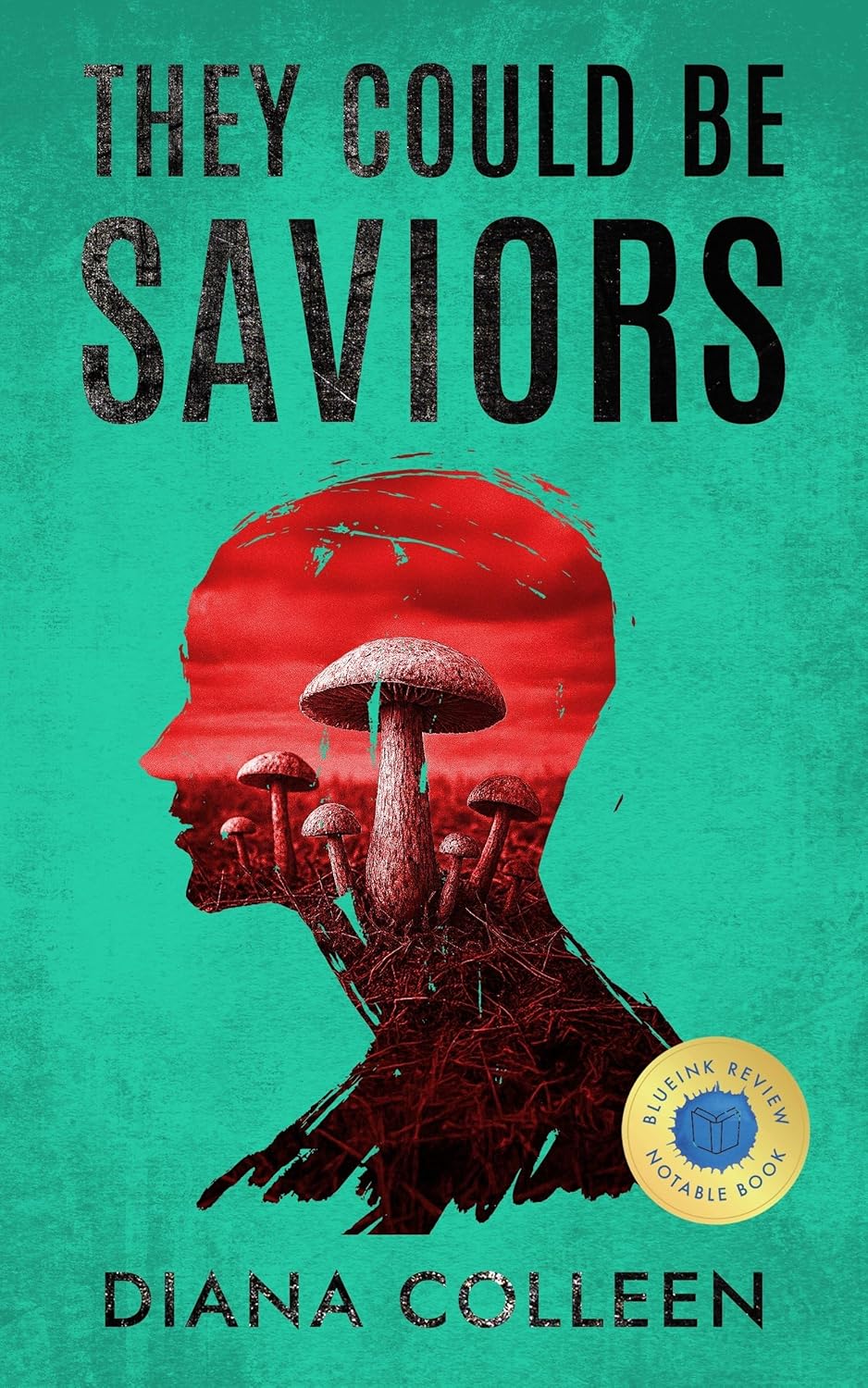

They Could Be Saviors is a wild and thought-provoking novel that blends psychological suspense with biting social critique. The story follows a group of billionaires kidnapped by a secret network of women, psychedelic therapists who believe the only way to save the world is to dismantle the egos of the men destroying it. As the captives awaken inside a high-tech facility designed for “healing,” the line between therapy and punishment blurs. It’s a heady mix of moral reckoning, hallucinatory experience, and social rebellion wrapped inside an eerie psychological thriller.
The premise sounds almost absurd at first, but author Diana Colleen sells it with conviction. Her prose crackles with sharp edges, alternating between satire and sincerity. The early chapters, especially those inside Josh Latham’s ruthless corporate mind, feel uncomfortably real. There’s a cold humor in watching a man who’s weaponized “sustainability” for profit wake up in a place that forces him to face himself. The writing feels cinematic yet claustrophobic, like being locked inside someone’s fever dream. At times, I felt disturbed, at others, unexpectedly moved. The story doesn’t let you sit comfortably, it pokes, prods, and dares you to care about people you’d rather despise.
What really grabbed me were the emotional undercurrents beneath all the sci-fi and social commentary. Mel, the therapist leading the operation, is a fascinating mess of empathy and control. Her struggle with addiction, grief, and idealism feels painfully human. I found myself torn between admiring her conviction and fearing her delusion. The women’s mission, noble on paper, curdles into something obsessive. Still, I couldn’t look away. The book doesn’t spoon-feed morals. It leaves you wrestling with big, ugly questions about power, redemption, and what “saving” the world might actually cost. The language swings from lyrical to brutal, sometimes in the same paragraph, which made it both exhausting and exhilarating to read.
If you like your fiction clean and uplifting, this one might rattle you. But if you’re ready for a raw, provocative trip into the psyche of our times, this book is worth every page. I’d recommend They Could Be Saviors to readers who crave stories that take risks and don’t shy away from moral gray zones. Fans of Black Mirror, Margaret Atwood, or Chuck Palahniuk will probably devour it.
Pages: 349 | ASIN : B0FP5X958N

The Reckoning of Chaos and Magic
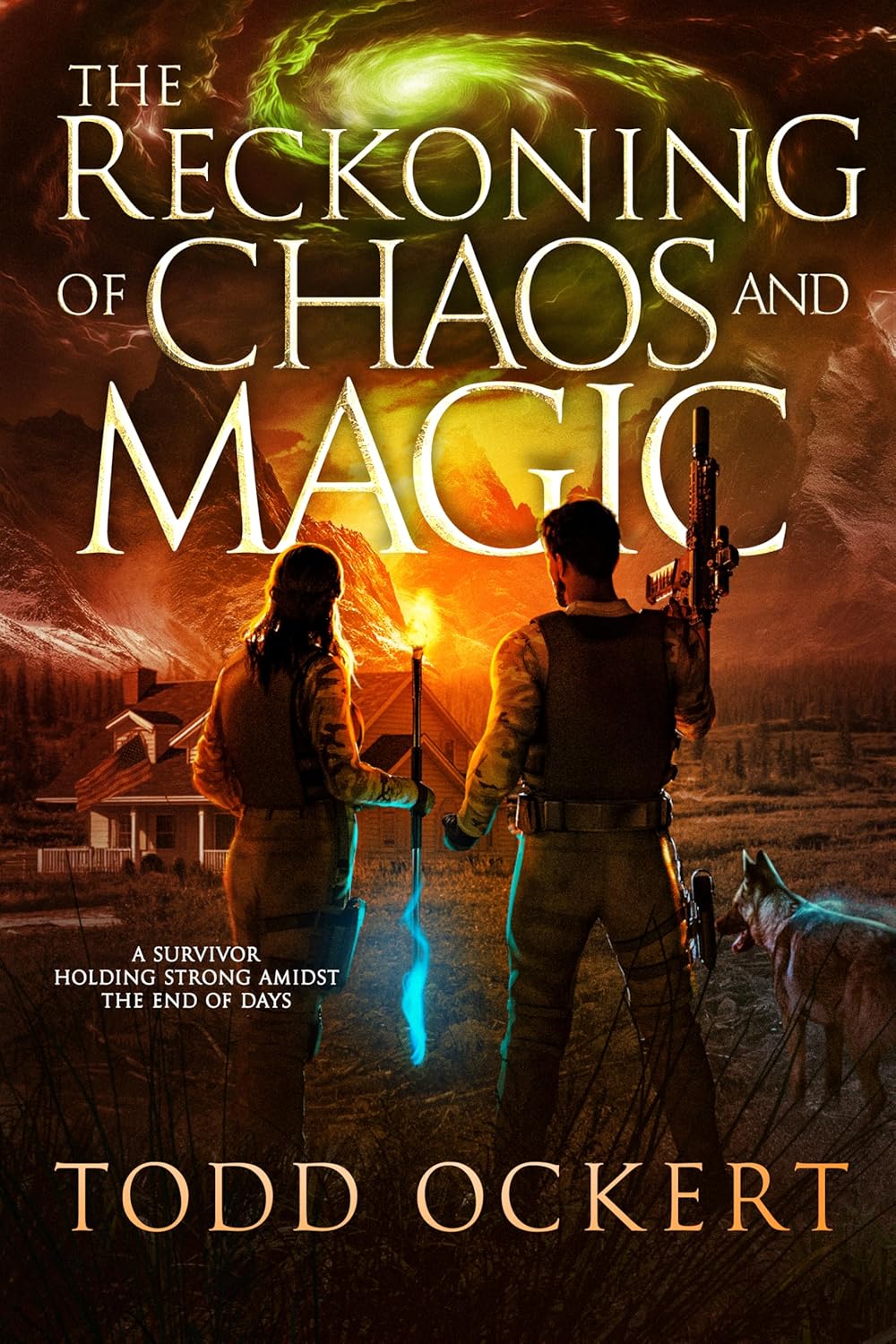

Todd Ockert’s The Reckoning of Chaos and Magic picks up in a world torn apart by disaster and violence, where ordinary people cling to survival through grit, loyalty, and a surprising spark of the supernatural. The story follows Mel and her crew from Freedom Ranch as they navigate a brutal new world after civilization’s collapse. Between biker gangs, gunfire, and a hint of midlife magic, Ockert weaves an intense and emotional tale of resilience and found family. It’s a mix of post-apocalyptic survival, combat realism, and mystical discovery, all grounded in friendship and love.
What really struck me about this book was how human it felt. The writing is raw, fast, and filled with emotion. You can feel Mel’s fear and fire. She’s strong, sarcastic, and flawed in all the right ways. The story never slows for long, yet it never loses sight of its characters. The world is cruel, and Ockert doesn’t sugarcoat that, but there’s warmth under the grit. I liked how the dialogue feels like real people talking under pressure. The moments of humor hit right when you need them, like a deep breath between storms. Sometimes the pacing felt jumpy, almost cinematic, but that also gave it energy, like watching an action movie unfold with heart. The magic side of the story adds a weird but welcome twist, it’s subtle, not sparkly, and feels more like power hidden in ordinary people than fantasy for its own sake.
I have to say, this book hit me harder than I expected. The writing isn’t about fancy turns of phrase; it’s about connection and survival. I found myself rooting for every battered, bloodied character. The scenes of violence are harsh, but they’re written with honesty, not shock value. The women in this story, Mel, Gail, Shelly, aren’t damsels or sidekicks. They’re the backbone of the book, and their friendship feels real, full of teasing and fierce loyalty. I also loved the touches of romance, especially between Mel and TJ, which felt tender and grounded in years of shared struggle rather than something sugary or forced. At times, the dialogue leans a bit heavy on exposition, but the sincerity of the writing more than makes up for it. You can tell Ockert loves these characters and the world he’s built for them.
It’s not just about chaos and magic, it’s about what people choose to protect when the world falls apart. I’d recommend this one to readers who love strong characters, action mixed with heart, and stories that don’t flinch from the dark. If you’re into post-apocalyptic tales like The Walking Dead but wish the heroes had a touch of witchy wonder, this book’s your jam. It’s rough, real, and full of hope where you least expect it.
Pages: 346 | ASIN : B0FG87T7T1
The Tralls of Colum
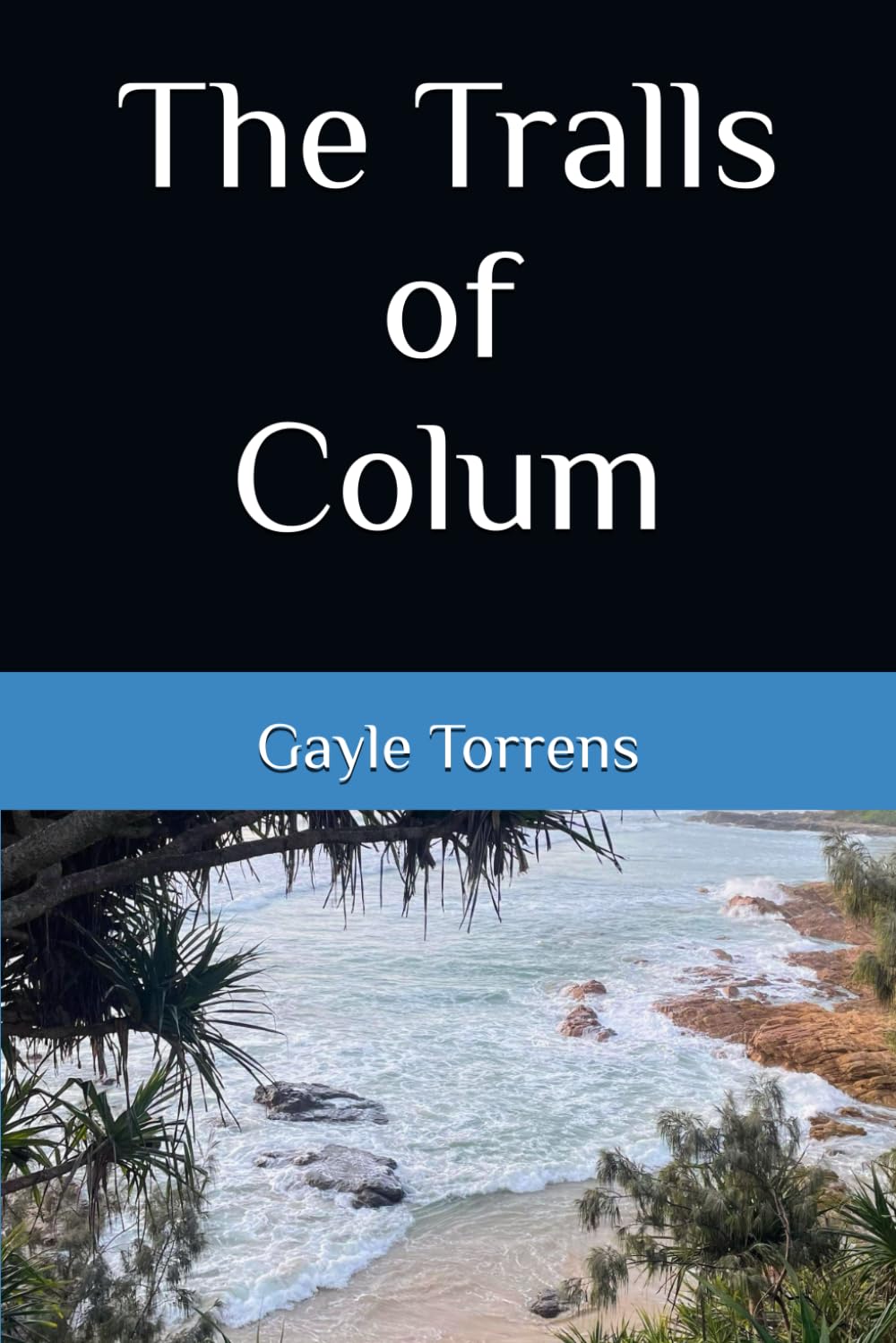
The Tralls of Colum is a heartfelt portal fantasy tale that carries young readers back to the mystical world of tralls, small magical beings living among the wild beauty of the Australian coast. The story follows Jai and Emi, siblings from the Tralldom of Colum, who face challenges tied to environmental changes, friendship, courage, and discovery. It’s a story of family, community, and the tension between nature and human greed, woven through vivid scenes of ocean life, lush forests, and fantastical creatures. Torrens’ world feels lived in, her writing is inspired by Australia’s land and sea. The book blends environmental awareness with adventure, never feeling preachy yet leaving a strong impression about the delicate balance of ecosystems.
Reading this, I felt both wonder and warmth. Torrens writes with sincerity, and her affection for the natural world comes through on every page. At times, I caught myself smiling at the innocence of Jai and Emi, then holding my breath when danger crept in. Her language is simple but rich with imagery. The ocean scenes shimmer, and the tension between the tralls’ traditions and the creeping modern threat of “Mr. Handley” feels hauntingly familiar. I did think the pacing slows in the middle, where dialogue stretches long, but the heart of the book kept me hooked. It reminded me of those childhood stories that stay in your bones, not because of big twists, but because of how honestly they treat bravery and loss.
What really moved me was Torrens’ sense of place. Her Australian voice is clear, proud, and authentic. I also liked how she wrote about courage, not as grand heroism, but as persistence, kindness, and faith in one another. Even the fantasy elements carry a quiet realism that makes the magic feel possible. I found myself thinking about climate change and how stories like this can plant seeds of care in younger readers without lecturing them. That, I think, is where Torrens succeeds most: she teaches through wonder.
The Tralls of Colum is a gentle yet stirring read. It’s perfect for children who love adventure, families who enjoy reading together, or anyone who still believes that nature holds secrets worth protecting. It has heart, honesty, and a deep respect for the world it comes from. I’d recommend it to readers who appreciate fantasy that feels close to home, and to anyone who’s ever stood on a beach and felt that the waves were whispering a story just for them.
Pages: 306 | ASIN : B08WYDVN7C
The Hunger of the Dragon

The Hunger of the Dragon is a brutal and immersive plunge into a grim world of Norse myth reborn in shadow. The story follows Märren, a haunted warrior mother carrying her daughter’s skull through rain-soaked mountains, hunted by trolls and later captured by the Sea Serpent clan. Her desperate quest to find the Dragon people, to claim a god’s scale, intertwines with Caëtin, a Raven berserker navigating shifting alliances and divine magic. It’s a saga thick with loss, myth, and raw survival, where every battle feels like it was written in blood and mud. The book draws from the bones of Norse legend but rebuilds the myth into something darker, stranger, and heartbreakingly human.
Author R.M. Schultz writes with a grim beauty that’s almost hypnotic. The language is visceral, heavy with texture and sound. It’s not a kind story. There’s no bright hero or warm victory, only people scraping meaning from ruin. Still, the characters burned themselves into me. Märren especially. She’s hard, bitter, tender in private moments. Caëtin feels carved from ice and fire, both ruthless and weary. I found myself pulled between them, torn by their choices.
By the time I finished, I felt wrung out. The book leaves you raw, sitting in silence for a while after closing it. Schultz doesn’t flinch from horror or grief. There’s love here, too, but it’s buried deep, found in loyalty and defiance more than tenderness. I liked that honesty. The pacing runs hot and cold, slow scenes steeped in myth and madness, then sudden violence that makes you jump. It’s harsh, yet beautiful. The kind of writing that crawls under your skin and stays there. I didn’t love every choice, sometimes the lore weighed down the emotion, but the ambition is staggering. The world feels ancient and endless, as if Schultz unearthed it rather than invented it.
I’d recommend The Hunger of the Dragon to readers who want their fantasy rough and full of heartache. If you like sagas that smell of smoke and iron, if you want women who fight and bleed and curse the gods, this is for you.
Pages: 574 | ASIN : B0FSYM7GK3
A Pawn’s Game
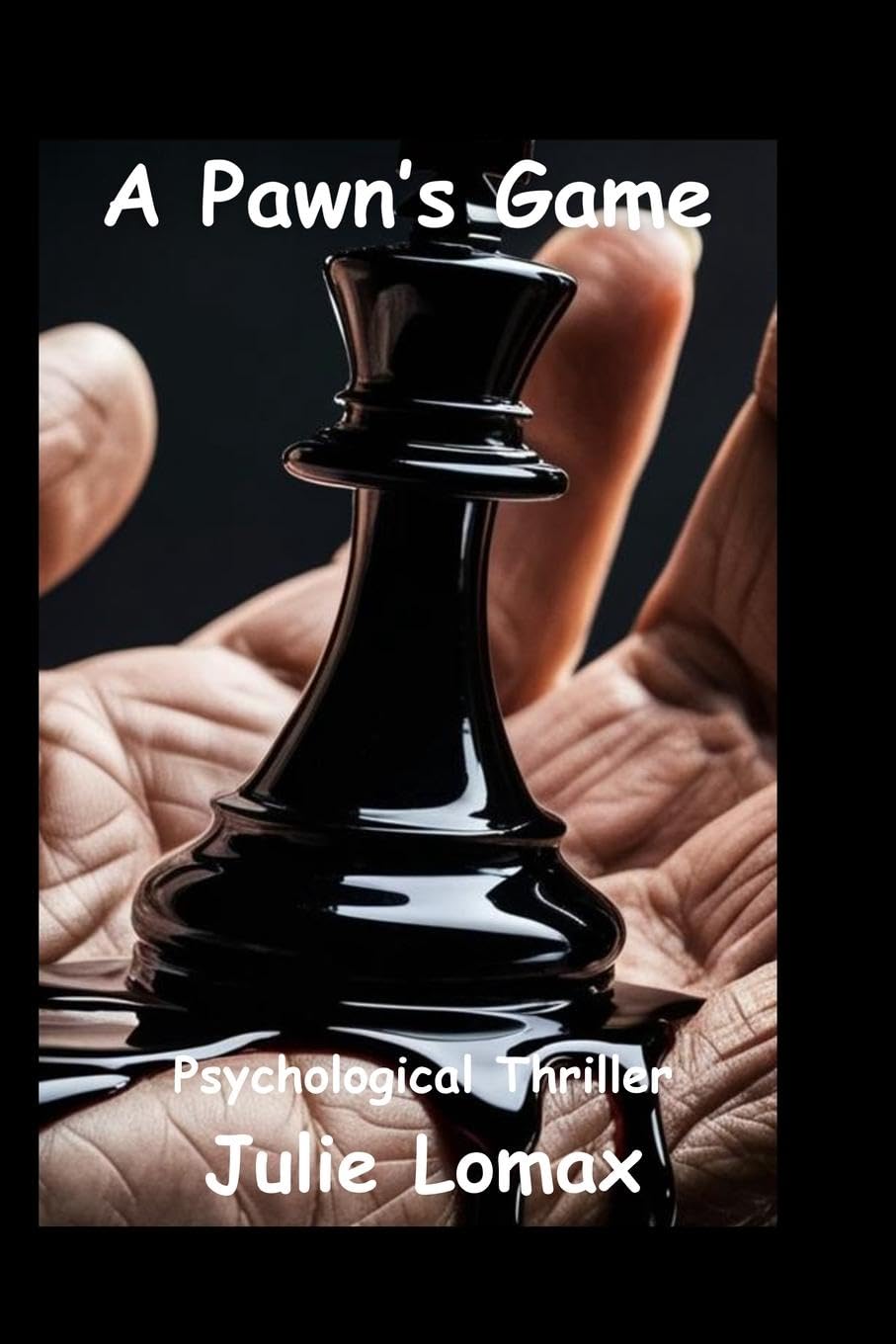
A Pawn’s Game begins with a mysterious chess match in a dimly lit park and never lets go of that eerie tension. What starts as a quiet story about David Morgan, a man juggling family turmoil, betrayal, and exhaustion, slowly unfolds into something darker, stranger, and far more psychological than I expected. The story weaves family drama with psychological suspense, bringing in a chilling undercurrent that turns the familiar into the threatening. Lomax builds a world that looks ordinary on the surface, a man, a wife, a daughter, a friendly neighbor, but underneath, every detail hums with unease. It’s a domestic thriller that plays out like a slow, inevitable game of chess, one where every move feels both deliberate and fatal.
I found myself torn between admiration and frustration with Lomax’s writing. Her prose is sharp, cinematic, and almost hypnotic at times. She knows how to draw out tension until it hums. But there were moments when I had to stop and take a breath because the story hit hard. The emotional weight is relentless, betrayal, guilt, obsession, and the pace can feel suffocating. I loved how every scene felt heavy with subtext. Lomax doesn’t waste words. She lets small details do the talking. A gesture. A look. The hum of a refrigerator. It’s unsettling in the best way. And while some of the dialogue leans dramatic, the overall writing keeps its edge. It’s intimate, haunting, and very relatable.
What truly hooked me were the ideas behind the story. The notion of control, choice, and consequence. The chessboard isn’t just a symbol, it’s a presence. The way Lomax uses the game to mirror the moral and emotional collapse of her characters is brilliant. Each move feels like a confession, each captured piece like a sin coming home to roost. I found myself thinking about it long after I stopped reading. The book left me uneasy because it reminded me how people can become pawns in their own lives, moving, reacting, obeying invisible rules they never agreed to. It’s bleak, yes, but honest.
I’d recommend A Pawn’s Game to readers who enjoy psychological thrillers that make you squirm a little. It’s perfect for those who liked Gillian Flynn’s Gone Girl or Paula Hawkins’ The Girl on the Trainm, not for the shock twists, but for the slow unraveling of human nature. It’s not light reading. It’s heavy, layered, and a little cruel. But it’s also deeply rewarding if you stick with it.
Pages: 122 | ASIN: B0DRLLZ8GG
The Chameleon Who Couldn’t Change Colors
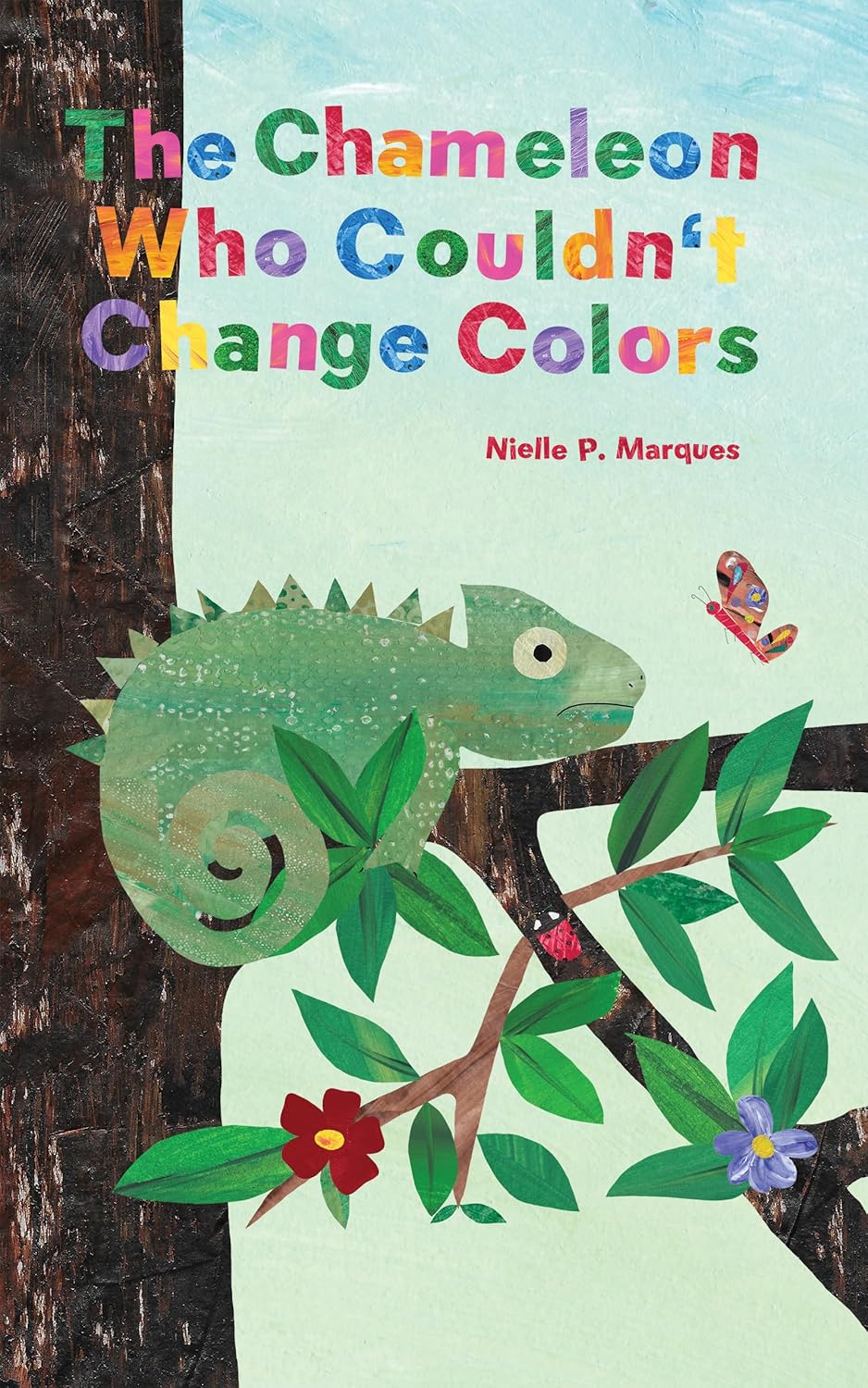
In this charming picture book, readers meet Frilly, a determined little chameleon who calls a lush rainforest home. Surrounded by her friends Camy and Oscar, both able to shimmer through endless hues, Frilly stays the same brilliant shade of green. More than anything, she longs to turn red, her favorite color.
Fueled by curiosity and courage, Frilly embarks on a spirited adventure filled with sunshine, laughter, and one daring plunge into a puddle of red paint. For a fleeting, radiant moment, she feels transformed, until danger slithers close. Mistaken for prey by a hungry snake, Frilly quickly realizes that her true green hue isn’t a flaw at all, it’s her saving grace. Through this heart-pounding yet illuminating encounter, she learns that being herself isn’t just enough; it’s extraordinary.
Marques weaves a story rich in warmth, humor, and gentle wisdom. The Chameleon Who Couldn’t Change Colors is a luminous celebration of individuality and the joy of self-acceptance. Frilly’s emotional journey captures the universal yearning to belong while reminding readers that authenticity shines brighter than conformity.
Camy and Oscar bring texture and tenderness to the tale, standing by Frilly as steadfast friends who help her see her worth. The acrylic collage illustrations are nothing short of stunning, each page alive with color, movement, and tropical vibrancy. Young readers will find themselves pausing to admire the details, immersed in a world that feels both wild and wondrous.
Tucked at the end are fascinating chameleon facts, adding an educational twist to an already captivating story. Heartfelt, imaginative, and visually delightful, Marques’s book belongs in classrooms, libraries, and bedtime rotations alike. It’s an inspiring reminder that our uniqueness is not something to hide, it’s what makes us shine.
Pages: 38 | ASIN : B0FPT1NPV8



 LITERARY TITAN