Blog Archives
Governance in the Quantum Era

Quantularity: A Quantum Framework for the Human Experience challenges the theory of Singularity by hypothesizing that, instead of one super-intelligence consuming everything, there is a world where many minds —human, artificial, cultural, and even biological —intertwine without collapsing into sameness. Where did the idea for this book come from?
The idea for Quantularity emerged from years of questioning whether the dominant narrative of Singularity truly captures the future we are heading toward. Ray Kurzweil’s vision of one all-consuming super-intelligence felt incomplete. I began exploring an alternative, a framework where many minds, whether human, artificial, cultural, or even biological, remain distinct yet interconnected. Instead of collapsing into sameness, they amplify one another through entanglement. That seed of thought became the foundation for this book.
In your book, you cover philosophy to technology to governance, weaving stories of history, myth, neuroscience, and quantum theory into a vision that feels both speculative and strangely practical. How did you approach researching this book, and what was your process for compiling it?
My research was intentionally multidisciplinary. I drew from neuroscience (especially work on the neocortex), philosophy of mind, cultural studies, and quantum physics. I also leaned heavily into myth, religion, and history. I believe meaning arises at the intersections. The process itself was nonlinear, much like the ideas I write about. I journaled, drafted essays, debated with colleagues, and mapped connections across fields until a coherent framework emerged. The writing then became an act of stitching these threads together into a narrative that feels both visionary and grounded.
What were some ideas that were important for you to share in this book?
Several core ideas guided me:
That cooperation and entanglement, not domination, are the forces driving the next chapter of human and technological evolution.
That consciousness is not limited to humans or machines, but can emerge across networks, cultures, and even ecosystems.
That governance in the quantum era must be decentralized, transparent, and adaptive, designed for multiplicity, not centralization.
And most importantly, that our humanity is not diminished by technology. Instead, it can be expanded if we build with intention.
What is one thing that you hope readers take away from Quantularity?
I want readers to leave with a sense of possibility. We do not have to accept a future of either machine domination or human obsolescence. Instead, we can imagine and design a world where multiplicity thrives, where diversity of thought and being is preserved, and where our interconnectedness becomes a source of resilience and creativity.
Author Links: GoodReads | X (Twitter) | Website | Amazon
In Quantularity: A Quantum Framework for the Human Experience, visionary thinker and technologist John Wingate dismantles the myth of the Singularity—that moment when artificial intelligence eclipses human thought—and offers a bold alternative: a future where intelligence doesn’t converge into one mind, but expands into many. A future defined not by domination, but by connection.
Spanning quantum physics, AI, distributed systems, neuroscience, and spirituality, this groundbreaking book explores the emergence of a new kind of consciousness—layered, networked, and co-created between humans and machines. Wingate weaves deep science with poetic insight, challenging readers to rethink intelligence, identity, value, and the very architecture of reality.
Inside, you’ll explore:
Why the Singularity is a flawed and incomplete vision of the future
How consciousness may be fractal, recursive, and quantum in nature
The role of AI as a mirror—not a master—of human dreams
How distributed ledgers can serve as society’s new trust fabric
The shift from scarcity economics to coherence economics
New models of education, governance, and collective memory
Why choice—not control—is the foundation of reality’s unfolding
This isn’t science fiction. It’s a blueprint for what’s already emerging.
With 20 thought-provoking chapters, Quantularity is a guide for leaders, technologists, spiritual seekers, and anyone who senses that something deeper is awakening in our relationship with intelligence—human or otherwise.
Wingate calls us to remember that we are not passive travelers in this next era. We are co-creators, resonant nodes in a conscious, evolving universe. As we move beyond mechanistic systems into fields of entangled awareness, the most important question isn’t “Will AI surpass us?”—it’s “Who do we become when we remember what we are?”
Whether you’re a futurist, founder, developer, or philosopher, Quantularity offers a bold new lens—and a call to action.
This is not the end of our story.
This is the beginning of our remembering.
Alive and Forgotten

The Lights of Greyfare follows a burned-out journalist who goes to a small seaside town on assignment, and she discovers the small town is hiding terrifying secrets. What was the inspiration for the setup of your story?
Greyfare began as a place in my imagination long before it had a name. I’ve always been fascinated by towns that seem both alive and forgotten, where the fog feels like another resident and silence carries its own folklore. I wanted a setting that could reflect Katherine Calder’s unraveling, a place where her grief and addiction would meet an environment that seemed to breathe and press back against her. Maine’s coastal isolation gave me the perfect canvas for that tension, where a story about strange lights could spiral into something much darker.
What intrigues you about the horror and paranormal genres that led you to write this book?
Horror has always been about intimacy, about getting uncomfortably close to the things we would rather avoid. The paranormal allows those inner struggles to manifest outward, in ways that are unsettling but true. Kat’s sarcasm, self-destruction, and longing all take shape in Greyfare’s uncanny atmosphere. I love that horror lets us put grief, obsession, and identity into forms that are at once monstrous and heartbreakingly human. It’s not about shock alone, it’s about resonance… leaving the reader haunted in ways they didn’t expect.
Were you able to achieve everything you wanted with the characters in the novel?
Kat fought me every step of the way. She’s painfully real. I wanted her inner spirals, her addictions, and her sharp humor to feel unvarnished, and I think that comes through. Some of the townspeople surprised me, too, especially in how their secrets entwined with hers. I don’t believe in tying everything up neatly. I prefer characters who linger with you after the last page.
What is the next book that you are working on, and when can your fans expect it to be out?
I’m currently in the early stages of my next novel. It will return to the gothic tradition, a story shaped by architecture, community, and the way hidden histories leave their mark on the living. While it won’t be set in Greyfare, it will share that same interest in place as a character. I hope to share more in the coming year. In the meantime, readers can follow updates and join my mailing list through my website, https://junoguadalupe.com/.
Author Links: GoodReads | Website | Amazon
A gothic horror novel about grief, obsession, and the monsters we become when the sea calls our name.
After a brutal divorce and the loss of everything she thought she was, journalist Katherine Calder is on assignment to the fog-drenched town of Greyfare. She’s come to write, to recover, and to disappear for a little while. But Greyfare has other plans.
The town is strange. Too quiet. Full of faces that seem familiar, even when they shouldn’t be. At night, something walks the shore—a reflection of Kat that mimics her, imperfectly. The harbor groans with secrets, and the townspeople cling to ancient traditions they won’t talk about.
When Kat meets Dean, a reclusive widower with a weather-beaten boat and a haunted past, she feels herself unraveling in ways that are both terrifying and intoxicating. Their bond deepens, even as Kat uncovers hints of a centuries-old pact—one that demands sacrifice to keep the devils in the deep.
But the sea is waking.
And Kat may already be part of the offering.
Darkly lyrical and emotionally charged, The Lights of Greyfare is a supernatural descent into love, memory, and the terror of losing yourself to something older than the tide. Perfect for fans of The Haunting of Hill House, this is a horror novel that lingers long after the last page
Military Kids
Seasons in Manana follows a boy growing up in a military family in the early 1970s, with a passion for baseball, who, after moving to Oahu, is kidnapped by a radical organization, leading to a lifelong trauma. What was the inspiration for the setup of your story?
My co-author, Scott, and I are brothers—only an 18-month age gap—and we actually did spend the better part of 1971 to 1974 as military dependent kids on the island of Oahu. And, as in the book, we actually were baseball-obsessed. So while the overall story is definitely fiction, there was very little of our baseball experiences that we had to make up. The counter-culture elements we experienced during our time in Hawaii were also very much the inspiration for what happens in the story—again, some of it fictional, some very much taken from real life. Also, it is my brother, Scott, who is the real-life counterpart of the main character, Alan. I would be closer to the Eric character.
Are there any emotions or memories from your own life that you put into your character’s life?
As mentioned above, both Scott and I made liberal use of our own experiences as military kids living in Hawaii for that three-year period in the early 70’s. That would include the stress and awkwardness of trying to fit into an island culture (albeit on the elementary school level) as “haole” mainlanders. In addition, there truly was a growing awareness of the dark and the menacing that surrounded us, even in a gated military housing area (and yes, it was named Manana). Much of that had to do with the current climate of the early 70’s. It actually was a quite unsettled time with America trying to wrap up the war in Vietnam, teenagers and parents often in bitter conflict with each other—not just over politics, but also over hair length, music, clothes, and yes, drug use. But having the Hawaii Five-O TV show on every week, also made that “menacing” aspect of island life seem all the more real (Oahu is a small place)! On the other hand, the emotion of discovering the glory of playing baseball for the first time—that is definitely in the book!
What were some themes that were important for you to explore in this book?
It wasn’t just simply exploring the glorious, and sometimes painful, world of all things baseball (Little League, following pro baseball, collecting baseball cards, etc.). Scott and I wanted to share how this captivating game could be viewed through the eyes of unjaded, elementary-school-age boys. Scott and I (as well as my younger brother, Kevin) were all on a mission during our Hawaii years: to play in the Little League World Series in Williamsport, Pennsylvania. After that, once we reached adulthood, the goal was to play in the Major Leagues. However, Scott and I were on the threshold of teenhood, so the flip side of our idyllic baseball-heavy island life was the aforementioned uneasiness with an often-scary youth counter-culture that was pervasive in the early 70’s. Throw an intense crush on an older teenage girl into the mix, and there’s a cauldron of mixed emotions going on!
What is the next book you are working on, and when can we expect it to be available?
I do know that Scott is working on another book. He hasn’t gone into it with me in detail, but it sounds like it will be a military thriller type novel. As for me, I do have a manuscript completed: it’s a novel having to do with the French Children’s Crusade of 1212. My goal is to have it published next year some time, but I don’t have a definite date yet.
I LOVE Superheroes
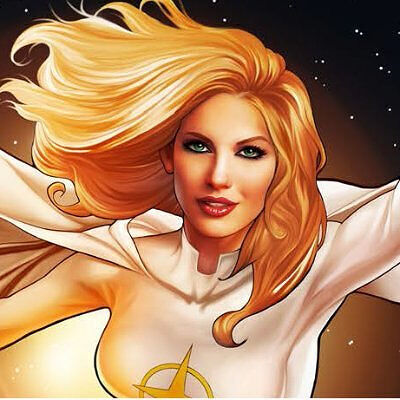
Guardian: Into the Light of Day follows an alien inhabiting a human’s body who has secretly protected humanity for centuries, until an asteroid strike exposes her existence and unleashes forces bent on Earth’s destruction. What were some sources that informed this novel’s development?
I LOVE superheroes. I have since I was a little kid watching TV on Saturday mornings. I can still remember the first superhero comic book my dad bought me. I don’t have it, but I have another copy bought through a collector. Superman, Batman, Wonder Woman, Captain Marvel (Billy Batson), Spider-Man, and a host of other heroes helped give me a background in the genre. Guardian herself came out of a superhero roleplaying game.
She would not leave me alone, dogging me for thirty years before I finally sat down and told her story. I think she’s someone we all wished existed in the world, someone who suddenly drops out of the sky and turns a bad situation around, whether it’s a crime, a medical emergency (she is a surgeon who can heal with a touch,) or a avert a natural disaster.
Elizabeth has lived for over eight centuries. How did you approach writing her perspective across such a vast timeline?
I really had to sit and ponder what the outlook for someone who has lived among humans while not aging a day. She still resembles the young woman who died on the Cornish moors and rose, healed and vibrant. She has had time to accumulate wealth and wisdom, and has meet and helped the best of humanity and to be blunt, in many cases, to confront some of the worst. Often there have been situations where she could have changed the course of history but in doing so she would have needed to reveal herself which would dramatically impact humanity’s natural evolution.
In the modern era she has had to be creative in the places she works, places where cameras and recording devices are far less common, like refugee camps and aide camps where she can practice medicine and remain a nomad, pulling up stakes every two to three years while zealously avoiding interactions with the media.
The book raises questions about identity and belonging. How do you see Elizabeth’s alien nature shaping her humanity?
Elizabeth is an outsider; she does not share historical animosities, or preferences that a human might hold. She regards humans as wonders, full of potential. She often works to bring out the best in people by being an example to aspire to. The events of the novel force her into a role that she struggles with while living in proverbial media goldfish bowl.
What is the next book that you are working on and when will it be available?
I have two in the works one with GG Michaels which I am still not sure will be a novelette or a novella. (Plus another 15 other stories.) The other project will be a full length Guardian novel. As for concrete dates of completion, I’m working as quickly as I can. Family emergencies derailed my spring and summer writing as I planned to have them both out by now. I’m playing catch-up. I am grateful for my readers’ kind words and support. GG and Guardian will both return!
Author Links: GoodReads | Twitter | Facebook | Website
Its explosion sent her crashing back to Earth in a fiery shower of meteorites.
Caught on video by a teenager, her anonymity is destroyed in an instant.
Turmoil ensues…
Meta-powered beings begin to appear. Humanity is frightened and confused. The media, and a politician with an agenda, seek to take advantage.
Into this global chaos a new threat emerges, one greater than any she has ever faced, one that, if she fails, will destroy all that she loves.
With the fate of the Earth hanging in the balance, all that stands between the world and obliteration is its Guardian, Elizabeth.
A New Superhero Rises…
Psychoactive-Aided Divination
Darkness and Blight follows a shaman as she claws for survival in a collapsing world of carrion ghouls, fractured tribes, and cruel magic, where every act of endurance blurs the line between humanity and despair. What was the inspiration for the setup of your story?
Defying Expectations and Dragon Pedicures
My goal as a writer is to subvert expectations, a role I may sometimes take too much to heart, occasionally progressing even to the sentence level. Like many readers of fantasy, I grew tired of the medieval European settings, omnipotent gods, brave knights, and damsels in distress. Lydarc may be in almost constant distress, but she’s no damsel, not by a long bow shot, mister!
I also wanted to set the story in my own backyard, the forests of the Siletz Valley, where I hunt and explore. The Valley of the Giants, a real old-growth preserve, formed the idea for the blastforms. Valsetz, at the end of the book, is a real abandoned town in this rugged coastal forest.
But from there reality takes a severe hit. I always wanted to incorporate shamanism in a story. The spirit journey, spirit animals, and psychoactive-aided divination are all a very real part of that ethos. What seems like a crazy dream to us is the natural state in a shamanic worldview. Who’s to say that our reality is the most correct version?
Lydarc’s voice is so distinct. How did you develop her perspective without softening the harshness of her world?
To me, Lydarc epitomizes the human experience. Through the endless pain and struggle, all she really desires is someone who cares about her, a home, and maybe a tiny measure of peace in the end. It’s no grand victory. Life is not guaranteed to be easy or even rewarding. It just is. Deal with it.
What were some themes that were important for you to explore in this book?
Strength through adversity and over time. The incredible—and sometimes neglected—value of found family. The evolution of romantic love into something even truer. The deep-seated desire for dragons everywhere to just make it to their pedicures on time.
What is the next book that you are working on, and when will it be available?
Originally, I intended for Darkness and Blight to be a standalone novel. How can anyone write fifteen sequels? Then a thought kept nagging at me: what if Achus, the head witch from hell, actually survived and followed Lydarc and her companions back to the human realm? The second book—the working title is The Drunken Corpse—is currently writing itself and should be available in early 2026.
Author Links: Goodreads | X (Twitter) | Facebook | Instagram | Website | Amazon
In the broken wastes of post-apocalyptic Oregon, reality has split into three realms: the scarred human world, the damned underlands, and the Overs—godlike beings hungry to invade.
Lydarc, pierced with a cursed shard of an Over, suffers endless pain, berserker rages, and visions of a blood-soaked future. When her tribe is slaughtered and their souls trapped in the underlands, she leads a desperate band into hell itself—through battles with mythical monsters, betrayal, and a hellgate that demands death as the price of entry.
Among her allies are a cryptic mentor, a spirit-bound apprentice, a dragon who hoards books instead of gold, and an ex-lover begging her to save his lost daughter. But one of them hides a devastating lie. And awakening the shamanic power inside her could destroy what’s left of humanity.
Darkness and Blight is a brutal grimdark fantasy odyssey where myth collides with quantum horror, and one fractured soul must face traitors, monsters, and her own guilt to save her people—or shatter the last remnants of reality.
The Cauldron: A Struggle for Survival

The Cauldron tells the story of ordinary people caught in the chaos of the American Civil War. It follows Tom Donal, his brother John, their regiment, and the circle of people around them. Through battles, camps, love affairs, spying, and survival, author Joe Clark blends fact with fiction to paint a vivid picture of how war stripped life to its bare bones. The narrative swings from large-scale strategy and politics to intimate personal struggles, giving both the sweeping sense of history and the raw, ground-level feel of living through it.
I found myself pulled in by how down-to-earth the writing feels. The dialogue often sounded plain and unpolished, but that’s part of its charm. It made me feel like I was sitting by a campfire with these characters, listening to them grumble about generals or joke about food. At times, the pacing slowed down when the focus shifted to explanations of battles and politics, but I also appreciated how those parts grounded the story in real history. The characters, especially Tom and Kat, were layered with flaws and longings, which made them stick in my mind. Their choices often carried a mix of youthful recklessness and heartbreaking necessity, which felt true to the times.
What really stayed with me was the sense of cost. Clark doesn’t glamorize the war. He shows men dying from bad food as often as from musket fire. He shows how suspicion could turn neighbors into enemies overnight. The love story between Tom and Kat was messy, tender, and sometimes uncomfortable, which made it feel all the more real. I liked how the book refused to tie things up neatly. It left me unsettled in the best way, like I’d been given a glimpse into lives that could have been lost in history.
I’d recommend The Cauldron to readers who enjoy historical fiction that isn’t afraid to get its hands dirty. If you want romance without polish, battles without glory, and characters who feel like people you might actually meet, this book is for you.
A Star Named Sky and Flynn the Firefly
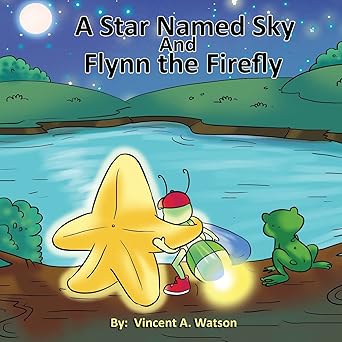
A Star Named Sky and Flynn the Firefly is a tender and uplifting tale that will leave both children and parents smiling. The story introduces Flynn, a little firefly who senses something is terribly wrong; his glow has vanished. Overcome with sadness, he begins to cry, but hope arrives in the form of Sky, a compassionate star who drifts down from above. Through a playful game filled with affirmations and encouragement, Sky gently reminds Flynn of his worth. With every uplifting word, Flynn’s light begins to shine again, and Sky leaves him with a lasting truth: never forget who you are.
Author Vincent Watson has crafted a beautifully inspiring narrative that speaks directly to young readers. The message is clear yet profound: every child is special, and recognizing their own value allows them to help others feel special too. The game Sky teaches Flynn becomes more than a moment in the story; it is an empowering tool for children learning self-love and self-expression. The simple yet powerful phrase, “I love me,” carries weight, especially for little ones navigating complex emotions.
The illustrations add another layer of magic, vibrant and full of life, almost as if the pages themselves were animated. A particularly delightful detail is the chorus of frogs in the background, cheering on Sky and Flynn with infectious joy. By the end, the bond between star and firefly has blossomed into a nightly ritual of encouragement, love, and friendship, a reminder that shining together makes the light even brighter.
Heartwarming, visually charming, and deeply affirming, this story is more than just a bedtime read, it is a gentle guide to embracing purpose, resilience, and self-love.
Pages: 30 | ASIN : B0C6RBPF4G

All Men Would Be Tyrants If They Could
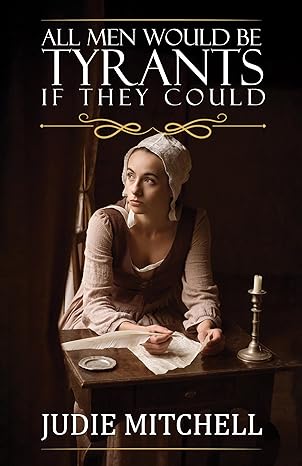

All Men Would Be Tyrants If They Could, by Judie Mitchell, tells the story of two sisters, Abby and Connie, living in New England in the years leading up to the American Revolution. Abby is trapped in a marriage to John, a man who shifts between charm and cruelty, while Connie both supports her sister and struggles with her own feelings of powerlessness. Through their alternating voices, the book brings to life the injustice of coverture, the fragility of women’s independence, and the private rebellions of two women caught in a society that denies them a voice. It’s a work stitched together from historical truth, personal pain, and quiet defiance.
Reading it felt like stepping into a private diary. The language is simple but heavy with feeling. I found myself both frustrated and protective of Abby, who clings to hope that love might reform John even as his behavior worsens. Connie, meanwhile, became the heart of the story for me. Her quiet observations, her curiosity, her occasional small rebellions all carried an honesty that made me ache. At times, the writing made me uncomfortable in the best way. It didn’t let me slip into easy judgments; it forced me to feel the tangle of love, loyalty, and oppression that defined their lives.
I do feel that the repetition of John’s temper and Abby’s endurance sometimes dragged, though maybe that was the point. Abuse circles and grinds. The historical details were fascinating, but occasionally they crowded the page with information on trade goods or church sermons. Yet even in those slower sections, I sensed the author’s passion for uncovering the hidden lives of women, and that kept me turning pages.
Reading All Men Would Be Tyrants If They Could reminded me of The Handmaid’s Tale in how it exposes the quiet violence of patriarchy, though Mitchell roots her story in history rather than dystopia, making the injustice feel even more immediate. I’d recommend it to readers who enjoy historical fiction that leans close to lived experience, who want to feel the weight of the past pressing on the present, and who are willing to sit with discomfort in order to better understand the silenced women history tried to erase.
Pages: 312 | ASIN : B0FFR7BKXW



 LITERARY TITAN