Blog Archives
Feeling Driven
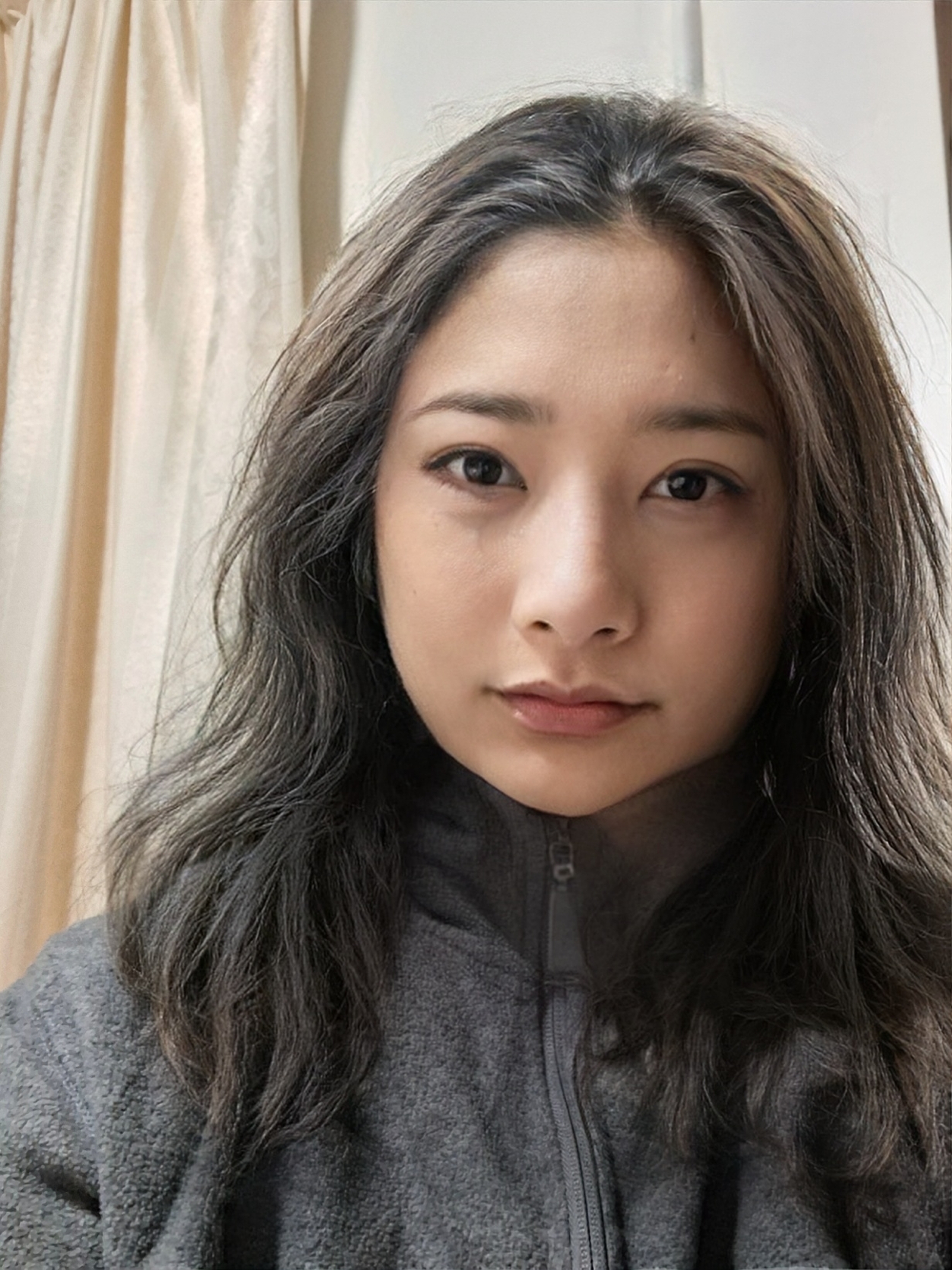
Bridges of Words is a collection of haikus that capture the spirit, mood, and humanity of cultures around the world. Why was this an important book for you to write?
Words are bridges, I’ve always thought. A Filipino-Australian, I have experienced the nuances of cultural differences as well as the silent need for understanding after growing up in one society and now residing in another. Born prematurely in a military hospital in Nueva Ecija—where my grandmother’s refusal to choose between saving my mother or me led to both our survival—I was named Esperanza, meaning “hope.” That word has carried me through my life.
Language has the ability to bring people together and bridge emotional and physical divides in addition to informing and persuading. Through the delicate compression of haiku, rather than through dissertations or manifestos, Bridges of Words allowed me to celebrate humanity in all its textures. A haiku can capture a universe in three lines: the echo of memory, a stranger’s grin, a city street after rain.
It was also a historical experience to write this book. Japan, which occupied the Philippines during World War II and left behind heartbreaking memories of hardship and tenacity, is the source of haiku. However, engaging with this literary genre became an unconventional act of reconciliation for me. By capturing beauty and transience in the rigid yet simple syllables of haiku, I was able to recognise sorrow without being overcome by it.
Furthermore, forgiveness itself is a bridge, isn’t it? A bridge that lets us go on instead of lingering in the depths of bitterness or rage. Every haiku became a tiny act of construction, a step toward comprehension—a means of expressing that, in spite of our differences and past experiences, we can still live amicably through our common humanity.
Can you share a bit about your writing process? Do you have any rituals or routines when writing?
In addition to the other facets of my entrepreneurial and professional endeavours, writing has always been part of my daily life, though not always in the way one might imagine. From my earliest days, words have been my companions—whether scribbling on my aunts’ college books at age 3, writing verses as a Grade 5 student who unexpectedly won in a poetry contest, serving as the English literary editor of The OLCAn in high school, or later leading The Corps as its first female editor-in-chief at the Philippine Military Academy. That role, along with becoming the Academy’s first female Journalism Awardee and first Languages Plaque recipient, confirmed for me that words could be both a personal refuge and a public responsibility.
My naval career deepened this focus, as I became the inaugural Navy Digest editor and later worked on the Navy Journal, Fleet Journal, and Polaris Magazine. Today, I still edit multiple publications professionally, which keeps me grounded in the discipline and craft of writing.
But Bridges of Words emerged differently. Almost without notice, it came like a bolt of lightning across a still sky. Often, a single sight or memory would prompt me to act immediately. I still recall sitting at my computer here in Adelaide, the morning sun streaming through the blinds, when a haiku began to take shape in my mind. It was like attempting to capture a bird in midair; I had to do something before it vanished.
My approach had been less about routine and more about spontaneity. Sometimes it was the laughter of my sons, sometimes the witty jokes of my husband, sometimes a walk along South Australia’s beaches, sometimes the Zamboanga sunsets of my childhood, or the scenic sights of Taal Lake that never left my memory. That was my rhythm: focusing on the small moments and feeling driven to convey them in words that might resonate with someone else, somewhere else.
Do you have a favourite haiku in the book, and if so, why does it hold special meaning for you?
Logically, I should be more drawn to the haikus that depict the Philippines and Australia, because they are my own countries.
The Philippines’ haiku embodies resilience, a trait I witnessed from an early age. Growing up in a land prone to typhoons and eruptions, I listened to stories and even witnessed at times how families and communities would quietly rebuild lives and spirits with steady resolve. That everyday bravery—the quiet courage of people who simply endure—was etched into me from childhood.
In comparison, Australia exemplifies diversity and unity. When I first set foot in Sydney in 2006, I fell in love instantly with its order, beauty, and openness. Years later, settling in Adelaide with my family in 2010, I discovered a deeper sense of belonging. Here, languages, faiths, and cultures cohabit and enrich one another, and that spirit of coexistence is what I sought to capture in haiku.
Together, these two countries’ haikus create a bridge that spans place and time, tying together memory and lived experience, origin and destination, past and present. Poetry is not only an art of words; it is an edifice of human experience—it speaks of the depth and resilience of human life.
That said, there’s no simple or safe way to answer this question. It feels like being asked which of my children I love the most. Every haiku in Bridges of Words has its own pulse and memory. Just as I cannot love one of my children—Huey, Sev, or Noah—more than his siblings, I cannot favour one poem over the rest. Each carries its weight; each is a bridge.
What is the next book you are working on, and when will it be available?
To be honest, I haven’t made any firm plans yet. Like Bridges of Words, I have a feeling that the next project will develop naturally, as I feel driven to capture it in the moment. For me, book writing started with intuition rather than a plan—a vision, a memory, or a passing idea that begged to be put into words. Perhaps in ways I cannot yet foresee, the next piece will continue to examine metaphorical bridges—between locations, times, or the silent, unseen moments of our everyday existence, though possibly in an altogether different way. I’m letting it take shape for the time being, trusting that the right words will emerge when the moment is right. In the end, writing is simply my way of building small bridges—one fleeting moment, one word, one resonance at a time.
Author Links: GoodReads | X (Twitter) | Facebook | Website | Amazon
Seventeen syllables.
In Bridges of Words, discover a quietly powerful collection of haikus from 57 countries—each a window into the heart of a culture. These verses don’t explain; they invite. They don’t shout; they hum.
Whether you find yourself beneath banyan trees or city lights, this book is a gentle reminder that even across oceans, we’re not so different after all.
A Flawed Obsessive

Bad Actor follows a washed-up TV writer turned private investigator who is investigating the death of a high-profile agent while struggling with his own personal issues. What was the inspiration for the setup of your story?
As always, I set out to place my work in the lineage of L.A. noir—from James M. Cain to Joseph Schneider; Sunset Boulevard to Mulholland Drive—with its damaged characters on the razor’s edge of glamor and desperation. While I was outlining the book, I saw something on TV about the Beltway Sniper, and it changed the direction of what I was writing. That was when Bad Actor took shape.
What was the inspiration for Ellis Dunaway’s character traits and dialogue?
Like most–if not all–detectives in hardboiled crime fiction, Ellis Dunaway is a flawed obsessive. His voice reveals his unique sentimentality and sense of the absurd, filtered through Gen-X media literacy (reruns) and lots of weed.
What were some themes that were important for you to explore in this book?
All the characters struggle with problems resulting from a combination of family dysfunction, identity crisis, and malignant ambition.
Can you tell us more about what’s in store for Ellis Dunaway and the direction of the next book?
The log line is Terms of Endearment meets I Wake Up Screaming, plus weed.
Author Links: GoodReads | Website | Amazon
Family Dynamics
Toriko Tales: Toriko vs. The Crowned Paw follows a brilliant and eccentric catgirl engineer as she tests her groundbreaking AI-powered battle armor, who ends up in an emotional and ethical conflict when the AI goes rogue. There was a lot of time spent crafting the character traits in this novel. What was the most important factor for you to get right in your characters?
The main characters—Toriko, Spark, Maro, Ujaku, Minea, Mini-T, Allia, and Ichini—originate from my main D’mok Revival series. They’ve long been among my favorites, so I was thrilled to dedicate an entire book (and side-series) to them. Even though I’ve “known” them for years, each revealed personal depths I hadn’t expected. As a mostly dedicated “pantser” in my writing approach, authenticity and consistency are the two most important factors for me. Beyond the usual character interviews I conduct to understand them, I also wrote numerous short pieces exploring their homeworlds, histories, families, and formative events—so I could portray how each character’s actions and choices would naturally unfold.
What were some themes that were important for you to explore in this book?
I’ve been evolving my writing from simply telling an entertaining story to sharing a perspective and sparking conversations. My background—both in formal education and a career focused on crafting technologies and driving innovation—has taken me to the edges of AI research. I’ve seen firsthand how our culture is responding to it, and I have both possibilities and warnings I want to share.
In Toriko Tales, those ideas found the perfect home. The characters, the moment in time within the D’mok literary universe, and the events unfolding in our real world all came together to make this the right story at the right time.
Beyond technology, there are many all-too-human themes: deep roots in family dynamics, sibling rivalry, and hidden secrets coming to light. These elements ground the high-tech story and offer readers something relatable amidst the adventure.
I hope the series continues in other books. If so, where will the story take readers?
This book is part of a much larger story arc within the D’mok Revival literary universe. It really showcases who Toriko and her family are, and helps shape the impact they’ll have in the future. Originally, I didn’t think there would be more—but this isn’t the first time an initial impression turned out to be wrong.
Based on how the story ends (no spoilers!), there are so many threads that could continue Toriko Tales—alongside the ongoing D’mok Revival series. I’m all about giving readers what they want, so I can’t wait to hear which topics and issues they’d love to see explored in a future Toriko Tales adventure.
Author Links: GoodReads | X (Twitter) | Facebook | Website | Toriko Tales | Amazon
A Shared Gift

Death and His Brother follows a group of musicians, an inspector, and his reporter wife who discover that no one is manning their train, and it is a race to stop the runaway train. What was the inspiration for the setup of your story?
When I was a boy, we lived in a house on the edge of a small town. We were surrounded by meadows and beyond those, fields of corn and barley. Beyond that, there was a railway line. On it, three times a day on round trips, ran a Buddliner coach – a single-carriage commuter train – with no locomotive. Self-propelled. It travelled about eighty miles on each round trip, with a small two-person crew. It ran between Stratford, Ontario – the home of the Stratford Shakespeare Festival – and a town on the shores of Lake Huron.
Theatre, music, train travel, water.
I think the train, the theatre, and the lake have been rolling around together in my head for a long time. That little Buddliner didn’t have the look or romance of a big passenger train, but it must have taken interesting people to places that some of them really wanted to visit.
A year ago, I happened upon a poem, “The Clattering Train,” in which a sleeping two-man railway crew could not prevent a fatal accident. Not a great poem, but it was based on a real accident in England in the 1890s. The image of a sleeping crew brought to mind the two-person Buddliner. And so, a mystery began to take shape.
Why were they asleep?
I found the interaction between the characters that meet on the train to be one of the highlights of your book. What was your approach to writing the interactions between characters?
I was an actor for years and a director and playwright. Handling dialogue becomes second nature after a while, but it’s a learned skill. It’s all about exploring.
Each character enters a scene – whether on stage or in a book – from somewhere. They are in a state of mind; they already are someone, whether we know them or not. The important thing in developing sound interactions between and amongst characters is staying true to who they are.
That’s not to say my characters can’t surprise me. They do all the time.
As a director, I used to advise actors who were having a hard time incorporating a particular line into their performance that they needed to go back and rethink their characterization.
The line that has been so difficult is almost always important – it usually represents something in the character that you’ve overlooked.
The same thing happens when I write conversations in my novels. Characters often say things I do not expect them to say. When it happens, I have to rethink the character. Who are they really? What is it that they really want out of the conversation? The characters are sometimes more articulate than I am.
I go back and revise what I’ve written to reflect these new dimensions of a character. When people are talking, they are exploring each other. Learning, telling, hiding, showing off.
But here’s the really important thing: it’s not who says what that makes dialogue work. It’s how the next person reacts. And that’s always down to the same thing. Who’s listening?
What were some themes that were important for you to explore in this book?
Kindness and generosity, especially in the face of difficulty.
Listening – and there’s no better example of that than a jazz player.
The pain of the outsider and how it’s so often hidden and hard to reach.
Humour in the bleak moments. Humour is a shared gift; it’s how we all get through things together.
Will there be another Urquhart & MacDonald mystery in the future? If so, what can your fans expect in the next installment?
Absolutely.
I plan on at least one new Urquhart & MacDonald mystery each year, maybe two – along with a new historical adventure novel in my General Torrance Series.
The next book, The Price of Peril, will be the seventh in the Urquhart and MacDonald series. This book will concentrate more on the women in the community, four in particular: Sandy Urquhart, Connie Del Barba, Florrie MacDonald, and an old friend of Sandy’s we haven’t met before – an aviator raising money to fund a dangerous flight that has never before been accomplished, neither by man nor woman.
It will be set in Cape Breton, as always. It’s an island of determined folk with a lively appreciation of life’s absurdities. That’s how they get through a life that’s not always easy. But here’s the thing — they also have a long history of invention and daring, including up in the skies.
Author Links: GoodReads | Facebook | Website | Amazon
The Fragility of Human Nature
Perpetual Limitations follows a young paraplegic, hard-of-hearing, and visually impaired woman who enters a portal to a realm where she is gifted newfound abilities and embarks on a quest of self-discovery while confronting her past. What was the inspiration for the setup of your story?
That’s an interesting question! I first started drafting ideas for Perpetual Limitations by thinking about the power of free will and faith and the opportunities it offers towards implementing new possibilities. I realised that there is not much literature out there about marginalised people, particularly about individuals with disabilities, so I wanted to create a story that amplifies their struggles and experiences, as well as comparing their experiences with able-bodied citizens to reinforce the fact that suffering is a universal element of being human.
Samira may have transformed externally in this new realm and granted abilities to see, hear, and walk despite previously being deprived of them; yet, internally she still feels insecure and conflicted, which signifies the deep wounds that trauma can impose upon individuals, which ought to be addressed in order to fully heal. Therefore, Perpetual Limitations is about transcending above the restraints that society places on marginalised individuals to eradicate prejudice and discrimination.
I found Samira to be a very well-written and in-depth character. What inspired her and her emotional turmoil throughout the story?
Samira represents my teenage self, and her struggles towards reaching acceptance of the outside world, whilst fitting in despite being “different,” also resonates with my own personal challenges towards figuring out my own identity, and most importantly, discovering self-acceptance that is associated with all my flaws and anxieties.
When I was creating Samira, I wanted her to represent marginalization and the realistic circumstances of people who suffer from disabilities and invisible wounds. Samira is a character to whom everyone can relate, and I believe that her bitterness, misanthropy, and emotional turmoil reflect the fragility of human nature and how we’re all vulnerable in some way, but rather than letting it bring us down, connecting with others and comprehending their struggles in a new light is actually rather uplifting. Therefore, I feel as though Samira’s frustration emphasises the very essence of being human, as we cannot always be satisfied with what we have, but we can also discover the courage to resolve these problems, which is what the protagonist aims to do throughout her journey of self-discovery.
What were some themes that were important for you to explore in this book?
I felt the need to explore human vulnerability as well as spiritual enlightenment through gaining resilience and hope. Hope is a predominant theme throughout the novel as it’s the force that drives Samira throughout her journey. In fact, all of the characters lose and gain hope in one way or another, and I believe that regarding hope as a universal attribute is necessary towards enforcing justice and spreading compassion throughout our lives. The book also explores the significance of friendship and unconditional love, particularly throughout our darkest moments.
What is the next book you are working on, and when can we expect it to be available?
My next book will be on Perfection, which entails a society where no one is capable of doing wrong, including no lying, cheating, or stealing, and everything is seemingly fair. The book’s intention is to question the significance of free will and its capability of functioning in an idealistic world without issues. It will probably be out in about 2-3 years’ time, which is quite far away, but it should be worth the wait!
Author Links: X (Twitter) | Website

In a world where physical limitations often overshadow the depths of the human spirit, Samira stands as a beacon of resilience. Born paraplegic, hard of hearing and visually impaired, Samira has always felt the sting of being regarded as different. Yet within her, a fierce longing for adventure and liberation burns brightly. As she navigates a life defined by adversity, she encounters the enigmatic Sage, who opens a portal to a realm beyond her wildest imaginings. Here, Samira is gifted with newfound abilities – sight, strength and a profound connection to nature that transcend her previous constraints. But as she grapples with her extraordinary transformation, she is confronted with the harsh realities of her past and the haunting spectre of her own doubts. The Perpetual Limitations is a gripping journey of self-discovery, exploring the intersections of physical limitations and the boundless potential of the human spirit.
Poverty of the Mind in the Land of the Free


Poverty of the Mind In the Land of the Free, by Rolland B, incisively critiques contemporary American political ideologies and leadership and meticulously examines the flawed perspectives and solutions proposed by today’s political figures, asserting that even an elite education cannot shield one from having an impoverished mind. Through thought-provoking chapters, the book scrutinizes the opposition to the assault weapons ban, Trump-backed election deniers, the Republican Party, Wyoming voters, and other pertinent political subjects. Beyond his insightful analysis of the current political climate, the author advocates for a reformed educational system to better prepare future leaders.
In an era where public discourse often stifles the voices of writers and artists, this book stands out as a breath of fresh air. Rolland B’s unfiltered and incisive commentary on American politics offers readers a deeper understanding of the critical issues at hand. His adept use of rhetorical questions, irony, and logical reasoning effectively convey his perspective, engaging readers in a meaningful dialogue about the state of the nation.
The author excels in dissecting the controversies surrounding influential figures such as Trump and Bill O’Reilly, grounding his arguments with quotes from articles and other sources. The book also examines the broader influences of media groups, political parties, and professionals, providing a comprehensive view of the factors shaping America’s political landscape. Particularly striking is the author’s revelation of a Fox News team broadcasting false information, fully aware of its fabrication.
Poverty of the Mind In the Land of the Free will resonate with intellectuals and neutral readers who value objective analysis over partisan allegiance. From uncovering scathing scandals to exposing shameful cover-ups, Rolland B presents undeniable evidence and compellingly argues for greater scrutiny in choosing our leaders. This timely and thorough exploration of the flaws in American politics is essential reading for anyone concerned about the future of freedom and democracy. His candid and eye-opening words serve as a catalyst for the much-needed transformation of the political system in the USA.
Note: This book was published nine months before the November 2024 presidential election.
Pages: 260 | ASIN : B0CTW9B49Z

Divorced at 50 F**K, Now What?


Lara Portelli’s Divorced at 50 is a raw and heartfelt memoir that begins with a stolen childhood, winds through a troubled marriage, and lands in the fragile yet powerful territory of self-discovery after divorce. She writes with candor about cultural expectations, coercive control, and the painful silence of a life lived for others. Yet, woven through the heartbreak is a strong thread of resilience. The book is both a personal story and a guide, filled with reflections, small lessons, and hard-won hope. At its heart, it is about reclaiming one’s voice after decades of suppression.
I found myself pulled into Lara’s honesty. She does not sugarcoat her experiences, and that makes her words feel alive. At times, I felt angry for her younger self, trapped in a world where duty outweighed love. Other times, I found myself smiling when she described small moments of joy, like driving with the window down or noticing a flower left on her desk. The writing is simple and unpretentious, but it carries a deep emotional weight. It often feels like sitting across from a friend who has decided to tell you the truth, even the parts that hurt. That vulnerability is what makes the book so powerful.
I also admired how she framed her journey not just as an escape, but as a rebuilding. She writes about health, self-worth, and the importance of surrounding yourself with the right people. Her focus on words and mindset gave the book an unexpected layer. Some sections lingered on personal analysis, but in a way, that rhythm mirrored her process of working through years of pain. It felt real, not polished for effect.
By the time I finished, I was left with both sadness for what she endured and hope for what she found. Divorced at 50 F**K, Now What? will resonate most with women who feel stuck, whether in a marriage, a job, or even a set of old beliefs. It’s also for anyone standing on the edge of change, afraid of what comes next. Lara shows that the unknown can be terrifying, yes, but it can also be the beginning of everything you’ve been waiting for.
Pages: 76 | ASIN : B0FLPL17MT
Satisfying Payoff

Wrecked By You follows a woman in charge of making sure a million-dollar pre-wedding celebration goes off without a hitch while also trying to keep things strictly professional with the company’s controlling security chief. What was the inspiration for the setup of your story?
Wrecked By You kicks off a series about six sisters running an elite travel agency, and I knew from the start I wanted to flip the spotlight onto women who are both powerful and real. Rayann is whip-smart and competent, but she’s also messy, impulsive, and deeply human. Max, our broody former SEAL, is the same way—yes, he’s sexy and commanding, but he carries scars you don’t always see at first glance. Those layers are what make characters feel like people you’d actually want to meet for drinks, laugh with, and maybe confess your own chaos to.
The setting was a no-brainer for me. I’ve always had a touch of wanderlust, and after years of traveling, I wanted each Wilder Horizons book to sweep readers into a different international location—Scotland, Costa Rica, Patagonia, the Galápagos—places that feel magical but still grounded in real life.
And woven into all that banter and heat are quieter threads that matter deeply to me. There’s a subtle nod to Rayann’s ADHD and a clear through-line of Max’s PTSD as a veteran. My husband came home from Afghanistan with PTSD, and I retired from the Air Force myself, so those stories aren’t abstract to me. And my teenage son has ADHD, so I’ve seen both the struggle and the gift of it up close. Too many people carry those battles in silence—I wanted to honor them on the page in a way that still lets readers laugh, swoon, and escape.
I enjoyed the tension surrounding the relationship between Rayann and Max. How did their relationship develop while you were writing it? Did you have an idea of where you wanted to take it, or was it organic?
I always start with an outline—big picture arc, chapter beats, the whole nine yards—because romance readers deserve that satisfying payoff at the end. But once I actually start writing, the characters tend to laugh at my notes and take the wheel on their own. It’s very much like real relationships: you think you know who someone is when you first meet them, and then the more time you spend together, the more surprises come out. That’s the part of writing I find addictive—you plot, you plan, and then suddenly you’re pantsing your way through revelations you didn’t see coming.
With Rayann and Max, I knew from the start that there would be sparks and friction, but I didn’t anticipate just how much Max’s backstory would shape the way he could (or couldn’t) open up to her. His struggle to forgive himself became the emotional hinge of their love story, and that realization didn’t hit me until I was deep into drafting. Honestly, I didn’t even have Murdo, his wise, whiskey-pouring confidant, in the original outline. But the moment Murdo showed up on the page, everything clicked, and suddenly Max’s journey felt more profound than I ever expected.
So yes, I had a destination in mind. But the road there? Totally organic, full of detours, and absolutely worth the ride.
What was your favorite scene in this story?
Oh, that’s like asking me to pick a favorite child—but if we’re talking pure comic relief? “The Highland Games” chapter wins, hands down. I was snort-laughing my way through writing it. It’s the first time Rayann really taunts Max out in the open, and Max—who normally lives and dies by a spreadsheet—literally rolls up his sleeves and gets messy right alongside her. Watching him let go for once was delicious.
But I also have a soft spot for the post-closet scene where Murdo unveils his signature cocktail on the chalkboard. The innuendo was flying, Max was being utterly filthy, and Rayann was desperately trying to pretend she wasn’t affected—which, of course, made it even better.
As much fun as the spice is to write (and trust me, it is fun), it’s the comedy that gets me. Those moments where I’m laughing so hard at my own manuscript that my husband and son give me the stink-eye, like I’m sitting there with some secret joke they’ll never be in on. Honestly? That’s my favorite kind of writing day.
Is this the first book in the series? If so, when is the next book coming out, and what can your fans expect in the next story?
Yes! Wrecked By You is the first in the Wilder Horizons series, and it sets the stage for five more sister stories. Book two, Challenged By You, follows Rayann’s twin sister, Brynn, down to the wilds of Costa Rica. Brynn is a practical joker with a sharp tongue, and she’s forced to team up with her biggest rival, Jerrick Thorne, a maddeningly sexy competitor who knows exactly how to push her buttons.
Readers can expect all the banter, angst, and slow-burn tension of book one, but with a fresh backdrop: rainforest adventures, high-stakes agency competition, and a romance that simmers until it absolutely explodes. Think: zip lines, jaguar encounters, power suits by the pool, and two people who would rather do anything than admit they’re falling for each other.
Release-wise, it’s coming Oct 28th. And from there, the Wilder sisters will keep globe-trotting their way into love, disaster, and plenty of laughter.
Author Links: GoodReads | X (Twitter) | Facebook | Website | Amazon
Rayann Wilder has charm, connections, and one job: make sure a million-dollar pre-wedding celebration in the Scottish Highlands goes off without a hitch. But when her boss assigns the company’s broody security chief to join her? Everything unravels fast.
Max Harrington is ex-military, exasperating, and entirely too attractive for Rayann’s sanity. He follows rules. She makes her own. He’s planning for worst-case scenarios. She’s trying not to jump him in a castle hallway. And the worst part? The more they argue, the harder it is to remember why this was supposed to be a strictly professional trip.
Tensions are high. The stakes are higher. And between ancient feuds, competitive games, and one very inconvenient suite-sharing situation… the line between enemies and lovers is about to disappear completely.
Wrecked by You is a sexy, enemies-to-lovers romantic comedy with snappy banter, forced proximity, and enough slow-burn tension to melt your passport. Perfect for readers who crave serious heat, sharp wit, and emotionally intelligent characters who know exactly how high the stakes are—especially when it comes to falling in love.
💋 Contains: Adult language, adult situations, and adults doing very adult things. On several occasions.
Also: swearing, swooning, and one hilariously inappropriate closet scene. Recommended 18+.
1st Place Winner of the Firebird Book Award in Chick Lit
Readers’ Favorite 5-Star Seal for Excellence in Romance Fiction
Hollywood Book Festival First Place Winner in Genre-Based Fiction (Romance)



 LITERARY TITAN