Blog Archives
Thriving In The Modern Workplace: A Gen Z Guide to Success
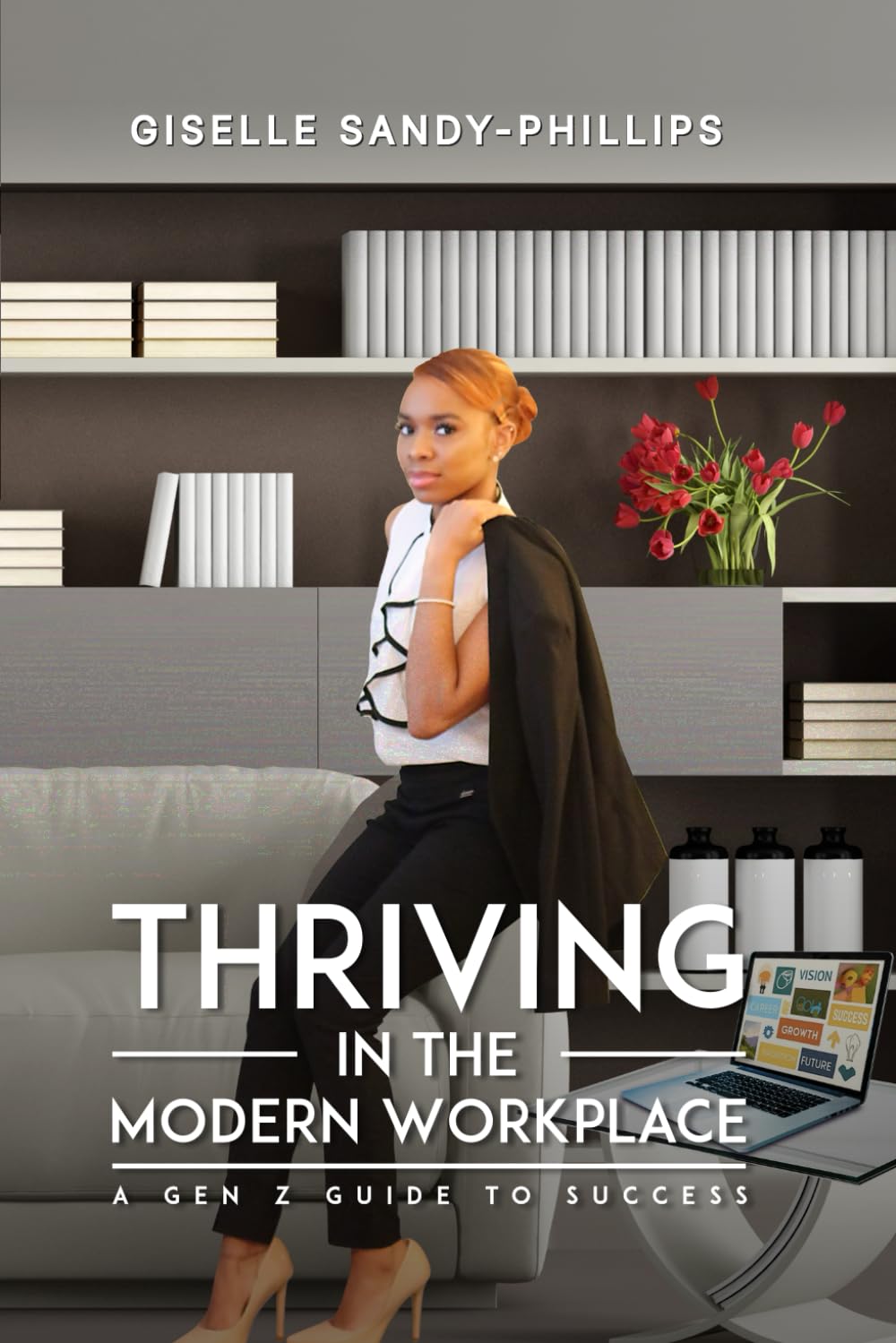

Giselle Sandy-Phillips’s Thriving in the Modern Workplace is a guidebook written straight to and for Gen Z professionals trying to find their footing in a constantly shifting job market. It’s part handbook, part pep talk, and part mirror for a generation raised online but forced to work within systems built before them. The book mixes structured lessons on communication, adaptability, and self-assessment with moments of warmth, humor, and raw honesty. It moves fluidly between coaching and storytelling, showing how to navigate everything from hybrid work models to mental health struggles, while still pushing readers to define success on their own terms.
What I loved most was how personal and conversational the writing felt. It doesn’t preach, it talks to you like a friend who’s figured a few things out and wants you to avoid her mistakes. The tone is direct and modern, full of personality yet surprisingly practical. Sandy-Phillips knows how Gen Z thinks and what they value, and she meets them where they are. The self-assessments are smart additions, turning the book into an interactive experience rather than just something to read passively. I found myself nodding along, sometimes laughing, sometimes pausing to think about how deeply this generation is shaped by chaos and connection at the same time. The balance of empathy and blunt advice worked well, it felt relatable and grounded, never performative.
The book feels like it’s both a therapist and a career coach. There were sections that revisited ideas or leaned into slogans that read more like social media captions. The sincerity always shines through. What really works is how Sandy-Phillips captures the anxiety and ambition of being young in a world that never stops moving. She never blames or patronizes; instead, she guides you toward finding rhythm in the noise. That’s what makes this book feel alive. It reflects the messiness of real growth, not a polished version of it.
I’d recommend Thriving in the Modern Workplace to anyone in their late teens or twenties who’s unsure how to start, or restart, their career without losing themselves in the process. It’s especially good for students, new graduates, and even mid-level professionals who need a reset. It’s not just about jobs; it’s about identity, purpose, and peace of mind. If you’re the type of person who wants to build a life that works for you and not just through you, this book is worth your time. It won’t hand you answers, but it’ll help you ask better questions, and that’s what thriving really looks like.
Pages: 212 | ASIN : B0FSVXNXJ4

Being Nefariously Inclined

Falling in Southport follows a young woman from a prominent Chicago political family who falls for a charming yet manipulative athlete she meets in college, who is hiding dangerous secrets. What was the inspiration for the setup of your story?
I actually built the story around the coat. I myself had been living in the same Chicago neighborhood and realized that wherever I went, women were wearing my identical jacket, albeit in different colors. Being nefariously inclined, I then thought, how would one use this to commit a crime? The premise for the murder was created and I built the characters around it.
What were the morals you were trying to capture while creating your characters?
A big part of this story is about the resilience of family and that sometimes, no matter how much you try not to rock the boat, bad things happen to good people. It’s in the most trying situations you realize who you can count on in your life, and for me, that has always been my family. I wanted Abigail to have that same solid foundation that she could turn to when her life fell apart, no matter if they had condoned or condemned her previous choices.
How do you balance story development with shocking plot twists? Or can they be the same thing?
I try to plan out the kind of plot twists I’d like to see and the spacing within the novel. I then build the scenes in between. I like doing it this way because I’m always surprised at the way the scenes unfold, with characters doing unexpected things to take us into the next phase of the novel.
What is the next book that you are working on, and when can your fans expect it to be out?
I am busy editing my new novel. The working title is The Arrow’s Reckoning. It’s about a young woman, Lizzie, who moves back home to a small resort town to take care of her dying mother. She meets a wealthy, new family who’s built a mansion nearby and gets swept up in their family dynamics, particularly the intrigue involved in holding on to their company. This book is near and dear to me. A lot of the novel is about coming to terms with her mother’s impending death and finding your place in a world that’s changing. I started writing it after my own mother’s sudden passing and it was a cathartic way for me to examine my own feelings. Hopefully, it will be out in the early half of 2027.
Author Links: Goodreads | X | Facebook | Website
Abigail Lethican’s world unravels when her husband admits to infidelity. Reeling from his betrayal, she follows him—only to become the prime suspect when he turns up dead. With her trial looming and the media circling, she finds an unexpected ally in her handsome and enigmatic neighbor. As they search for the truth, Abigail discovers her husband’s polished facade concealed a maze of dangerous secrets. Sometimes, the deadliest lies hide in plain sight.
Ringo the Ginkgo
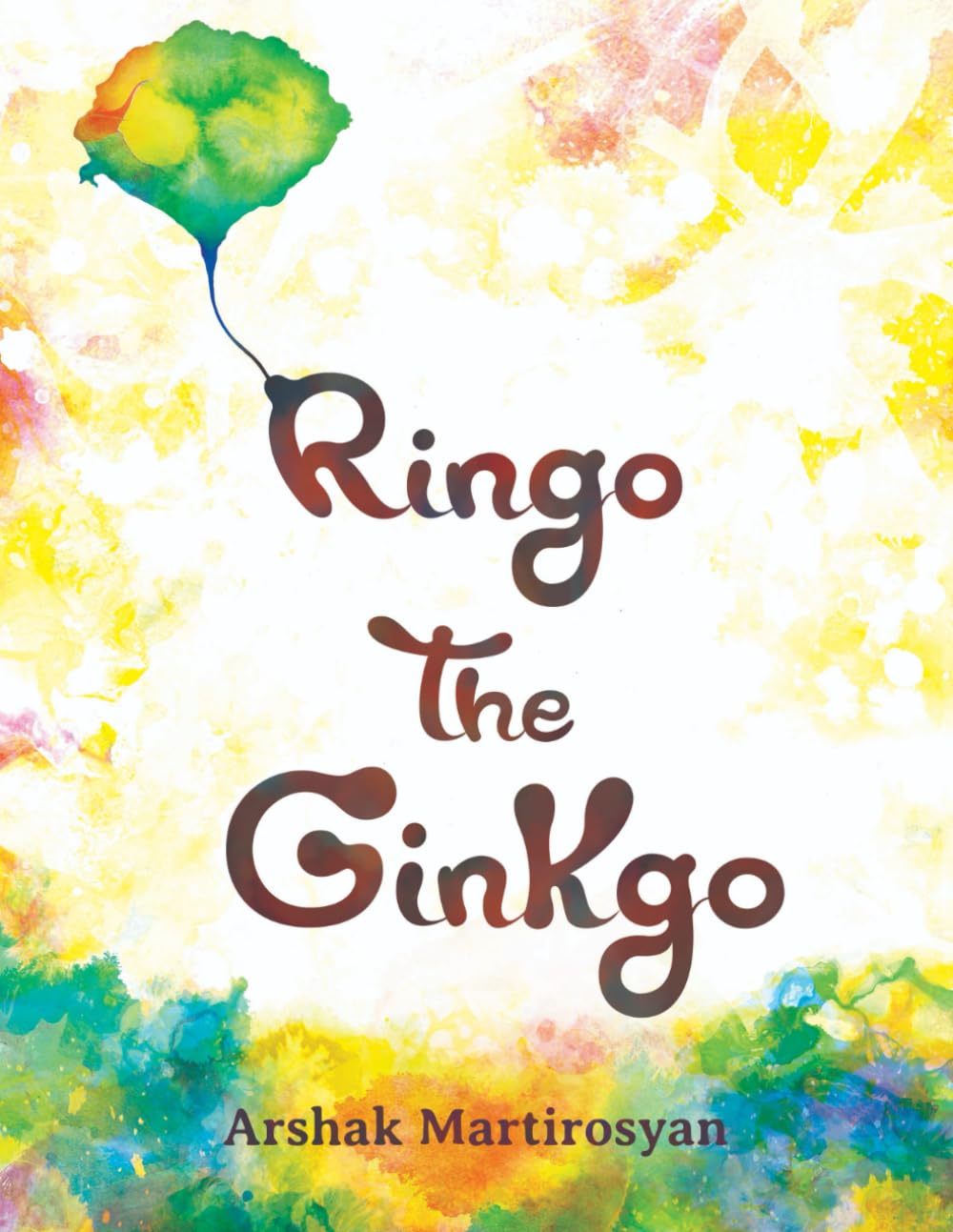

Ringo the Ginkgo is a radiant blend of science, imagination, and art, a picture book that whisks readers, young and old alike, on an extraordinary journey through time. Ringo is no ordinary leaf; it’s a “living fossil,” a witness to the Jurassic era, steadfast through millions of years of change. Readers encounter ancient dinosaurs, stroll through prehistoric landscapes, and uncover the remarkable legacy of the ginkgo tree, one of nature’s most enduring species.
Arshak Martirosyan delivers a masterful balance of education and enchantment. The language sparkles with playfulness, while the illustrations burst with color and life. Complex ideas, such as photosynthesis, unfold with delightful clarity. Scientific truth transforms into poetry here, each page a celebration of the invisible partnership between plants, oxygen, and the world we breathe into being.
What truly distinguishes Ringo the Ginkgo is its inventive design. The book invites readers to participate, not just observe. In the final pages, a simple flip turns the story on its head, revealing a “curiosity key.” This imaginative twist captures the spirit of discovery, urging readers to see the familiar from a brand-new angle.
At its heart, Ringo the Ginkgo is more than a story about a tree; it’s a gentle summons to wonder. It reminds us that science and art belong together, partners in sparking awe and expanding perception. Whether shared in a classroom or curled up at bedtime, this book hums with curiosity, creativity, and gratitude for the living world that sustains us.
Ringo is as memorable as the message it carries. Its shimmering leaves, bright green in summer and golden in fall, breathe life into every page. Born in the age of dinosaurs, the ginkgo stands as a testament to resilience and renewal. Through Martirosyan’s vivid words and joyful art, young readers meet a hero both ancient and alive.
Perhaps most importantly, Ringo the Ginkgo encourages questioning, an open invitation to explore, imagine, and never stop wondering. Its beauty lies not only in its science, but in its soul.
Pages: 39 | ASIN : B0CVNHJ8FL
The Depth That Horror Offers
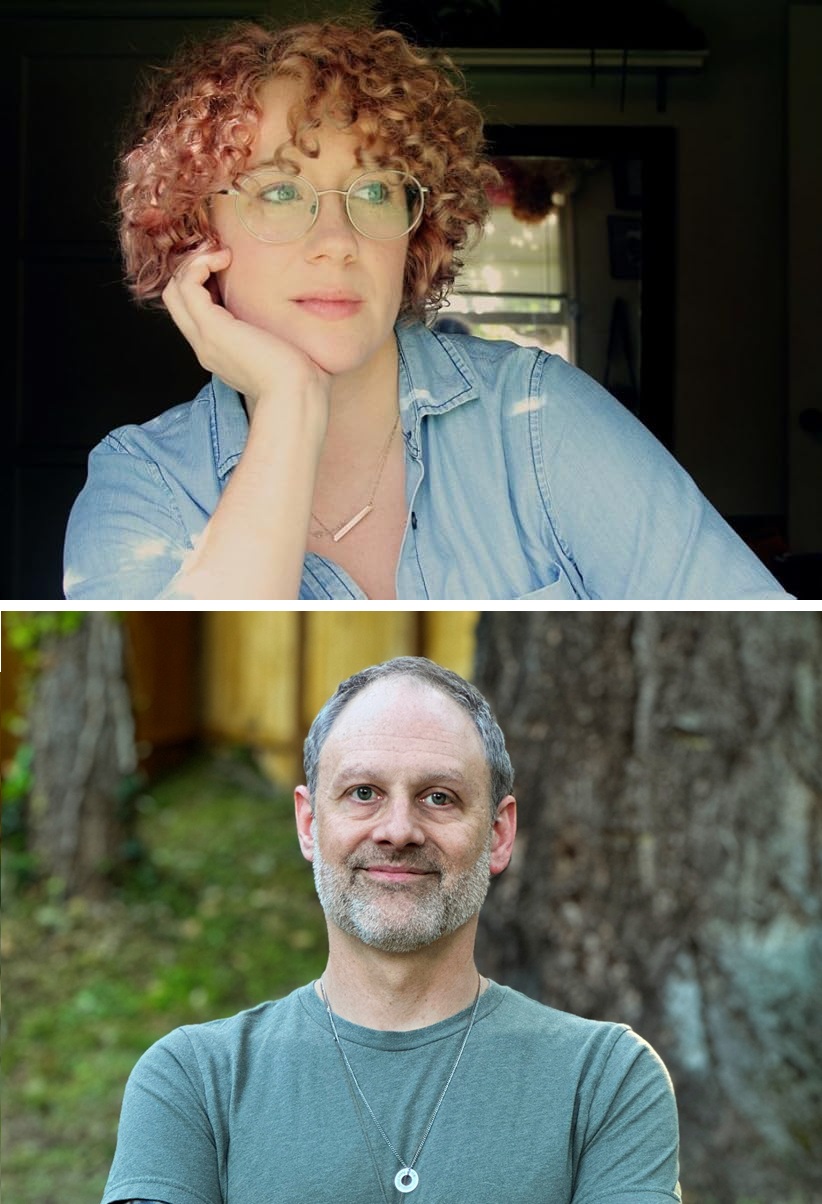
Blood on the Trailhead follows the Chief of Police for a state park who is investigating several cases involving a mutilated body, strange glyphs, and a missing child, all leading to a supernatural cause. What was the inspiration for the setup of your story?
Our inspiration all started around the Indigenous myth of the Tah-tah-kle’-ah. Feel free to Google it, but be warned, it will be a big spoiler. Therefore, we don’t want to elaborate here, knowing many people have not read the book yet.
We were also very inspired by the beauty and the vastness (Redwoods) surrounding Ferndale, CA, which is the town that we modeled the small city of Lost Grove after. There is still so much wilderness that holds pockets of secrets that we have yet to uncover. We found this fertile ground to explore in this story.
What were some ideas that were important for you to personify in your characters?
A big one for this book was nature conservation and the preservation of cultures, specifically the Wiyot tribe of Northern CA. Both of these are throughlines that run through the horror and mystery in the story. One of the other ideas we cling to in the Lost Grove series is the close-knit mentality of the small town of just under 1,500 residents, their resilience, and camaraderie. We see this among the teens and in the small police force. Lastly, and this is more so a focus for Alex, is always keeping a sense of humor in the characters that feels grounded and true to who they are.
What intrigues you about the horror and paranormal genres that led you to write this book?
Well, we both absolutely love horror in any fictional medium. We watch over one hundred horror films a year and host our own year-end Horror Oscars. We also love the depth that horror offers its lead characters, placing them in life-or-death situations that reveal everything about a person. The draw to paranormal is the intrigue of the unexplained that exists and persists in our world. The paranormal also gives us a chance to explore things beyond what we experience in most of our day-to-day lives. Charlotte, in particular, has always been fond of folklore and superstition, which are ripe to explore in this sub-genre.
What is the next book that you are working on, and when can your fans expect it to be out?
Regarding Lost Grove, they can expect book four next fall. The working title is The Devil’s Acre, and it will return readers to Lost Grove during one of its darkest winters. Cold Cases, isolation…it may be one of the more unsettling books in the series so far.
Charlotte is also wrapping up an epic fantasy trilogy, Trust of the Magdrid that she has been working on for some time now. She hopes to release the first in that series late next year as well.
Alex is in the midst of his own mystery trilogy. Book one, The Disappearance at Devil’s Churn, is complete. He is planning to begin work on book two at the start of 2026. He is waiting until he finishes book three before releasing any of the books, as they will be released in quick succession.
Charlotte Zang Links: GoodReads | Website
Alex J Knudsen Links: GoodReads | Website | Facebook
Just outside town, a local teen stumbles on strange, twisting glyphs scorched into the trees, eerily similar to those once studied by an Indigenous academic researcher who disappeared just years earlier. Desperate for answers, she turns to a friend with family ties to the Wiyot Nation, only to be warned off: some things are better left buried.
When a local teenager goes missing, town meetings turn ugly, campers cancel in droves, and the pressure mounts with each bloodied trail. On the eve of the county fair, Seth is faced with the burden of an old case threatening to resurface and unravel his career, along with the rising dread of a community coming apart.
Because what waits in the forest isn’t just an echo of the past. It’s hunting again.
Auberon Manor
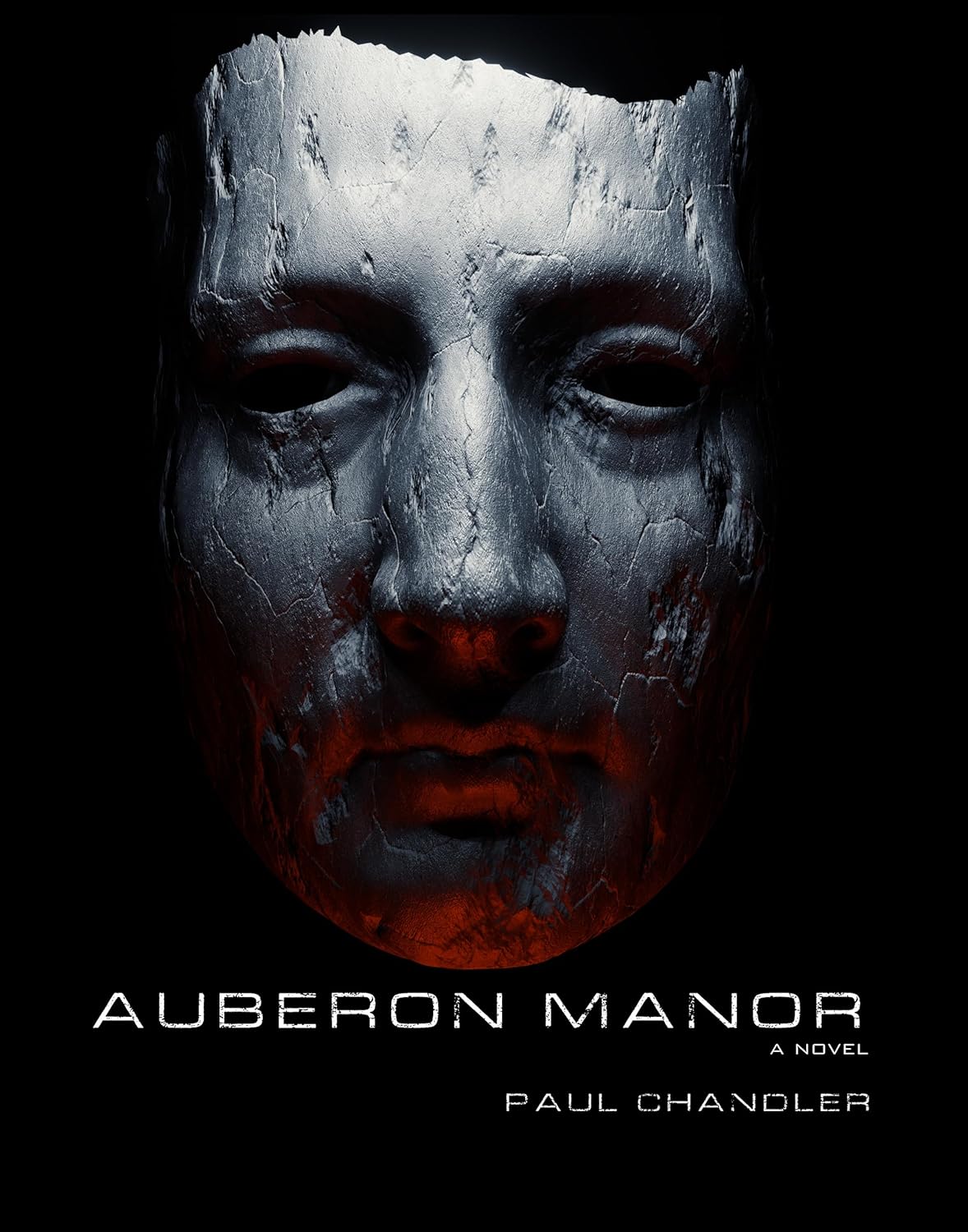
Paul Chandler’s Auberon Manor is a supernatural thriller that pulls you in slowly, like fog curling over the edges of a graveyard. It begins with Edison Elsher, a weary paranormal investigator whose skepticism is tested when he’s drawn into the mystery of Auberon Manor, a mansion with a long, dark reputation. Alongside Dane Ledger, a rich skeptic seeking proof that ghosts don’t exist, and a small team of experts, Edison steps into a place where logic falters and fear takes root. Chandler builds the dread steadily, layer by layer, and by the time the team realizes they’re in over their heads, it’s far too late to turn back.
I’ll admit, the writing surprised me. It’s clean, deliberate, and full of old-fashioned storytelling confidence. Chandler doesn’t rush. He lets the tension breathe. Some chapters read like a slow drip of unease, and others explode with sharp, unsettling energy. The characters feel grounded, flawed, and real. Edison’s weariness hits hard, and Dane’s arrogance cracks just when it should. The dialogue feels lived-in. People talk the way real people talk when they’re scared but trying not to show it. There’s a sense of decay throughout the book, not just in the manor itself, but in the people who come near it. That touch of melancholy made the story more than just a haunted house tale, it felt like a story about pride, guilt, and the limits of reason.
There are moments where I wanted the fear to bite sooner. But when it comes, it’s worth the wait. The haunting isn’t about gore, it’s about what you can’t quite name but can’t shake either. The book also has a throwback charm. It feels like something between The Haunting of Hill House and Poltergeist, but written with modern restraint. Chandler clearly loves the genre, and it shows in the care he takes to make the supernatural believable.
When I closed Auberon Manor, I sat for a bit, thinking about how fear works, not just in old houses, but in us. I’d recommend this one to readers who like their horror slow and thoughtful, more spine-tingling than stomach-turning. If you enjoy haunted stories that respect your intelligence and still manage to give you chills, this is your kind of book.
Pages: 231 | ASIN : B0FSYL9B2P
Benefical Economics: A Red State Citizens Guide to Crafting A Better Constitution When the Govrnment Fails The Citizens
Laurie Thomas Vass’s Beneficial Economics dives headfirst into the chasm of America’s growing ideological divide. It lays out a detailed case for why, in the author’s view, “red state citizens” must abandon what’s left of Madison’s Constitution and rebuild a new one that decentralizes power and restores liberty. The book mixes history, political theory, and constitutional design, using thinkers like Adam Smith, James Buchanan, and Immanuel Kant to argue that liberty, trust, and decentralized economics are the keys to a stable and moral society. Across its dense chapters, Vass sketches a new political architecture, a “Democratic Republic of American States,” built on state sovereignty, fair economic rules, and resistance to what she calls “predatory state capitalism.”
Reading this book felt like a deep plunge into one person’s grand blueprint for reimagining America. I admired the sheer audacity of it. Vass writes like someone convinced of their mission, and that conviction gives the prose a pulse. Their tone is urgent, sometimes fiery, and often unapologetic. The author mixes scholarly arguments with plainspoken outrage, and that combination keeps the reader hooked even through pages of constitutional draft language. I don’t agree with all their conclusions, but I couldn’t help respecting the clarity of their beliefs. The author connects economics, morality, and governance in ways that made me stop and think. There’s a spark of rebellion in every sentence, and I found myself drawn to the raw energy of that.
The book swings between philosophy, constitutional text, and economic diagrams with little warning. Sometimes I felt like I was in a civics lecture, then suddenly in a manifesto. The passionate tone sometimes leads the underlying reasoning, but underneath all that, there’s a real idea here, a longing for fairness, for a government that listens to people, for communities that grow from trust instead of control. When Vass ties Adam Smith’s “invisible hand” to quantum theory and self-organizing order, it’s wild and fascinating. The author is trying to link economics to physics, politics to morality, and citizens to cosmic principles of order. That ambition alone makes the book worth wrestling with.
I’d recommend Beneficial Economics to readers who enjoy bold political thought experiments, especially those skeptical of centralized government or curious about alternative constitutional models. It’s not an easy read, and it’s not neutral, but it’s brimming with conviction and intellectual fire. People who feel alienated by modern politics might find it empowering, and those who don’t agree with Vass will still find it thought-provoking.
Food Can Be Fun and Symbolic

Obeseus: The Mighty Muncher follows a big-hearted hero who is enjoying his snack-filled life, till his old friend shows up, leading a “Juice Regime” to outlaw solid food. What was the inspiration for the setup of your story?
Obesseus The Mighty Muncher has a very unique set up. I wanted to create a world where food can be fun and symbolic. Snackland is a world where eating snacks is celebrated and diet culture is seen as evil. Diet culture is so focused and obsessed with living the perfect life that I thought it’d be fun to poke a little fun at it. The beautiful thing about Obesseus is that he is not perfect and loves snacks. All Obesseus wants is to snack peacefully and protect Snackland . It is a parody of our health obsessed era, but with a side of gravy and laughter.
What was your inspiration for Obesseus, and how did you craft his outlook on life?
Obesseus was born in my freshman year of high school after I was assigned to read The Odyssey and had to write my own odyssey. I kept on reading Odysseus as Obesseus when reading The Odyssey. I made Obesseus the opposite of Odysseus, but with more snacks.
This is an entertaining story that children and adults can laugh at and still find tenderhearted moments. Did you have fun writing it?
I loved writing Obesseus The Mighty Muncher. I laughed a lot when I was writing Obesseus The Mighty Muncher. Obesseus sometimes takes things too literally or turns chaos into wisdom. There is a lot of comedy in this book, but beneath it all is a reminder to always be yourself. Joy, food, and friendship should never be taken for granted. I had a blast writing Obesseus and look forward to releasing more Obesseus books.
Where does the story go in the next book, and where do you see it going in the future?
I have expanded Snackland in Obesseus Lord of The Buffet and Obesseus World War Food. There are more factions and many more food wars that erupt and bring larger than life characters like Grant the Grapefruit and Julian Jellybean. My goal for the Slam -Fu series is to make it a comedy with an unlikely hero that brings both kids and adults joy. If Obesseus makes someone smile, that is exactly what makes all the work worth it.
Author Links: Goodreads | X | Website
In the heart of Snackland, where food fights are real and buffets are sacred, one hero stands between flavor freedom and portion-controlled doom…
Meet Obesseus—the slam-powered legend with a bottomless stomach and a soft spot for chocolate fountains. All he wants is a peaceful nap in a gravy river.
One Last Question Before You Go: Why You Should Interview Your Parents
Kyle Thiermann’s One Last Question Before You Go is part memoir, part field guide for emotional courage. It begins as a practical project, recording conversations with his parents before it’s too late, but evolves into a moving exploration of love, misunderstanding, and reconciliation. Thiermann opens his life with remarkable honesty, describing a childhood shaped by idealism, tension, and unconventional choices. His storytelling blurs the line between instruction and confession, reminding readers that asking questions can be both a form of preservation and an act of healing.
Thiermann’s writing balances clarity and lyricism. He recounts moments from his youth in Santa Cruz with humor and unease: surf sessions laced with danger, family debates over truth and science, and a mother whose belief in conspiracy theories fractures their bond. When he writes, “Now when my mom and I look up at the same blue sky, she sees chemtrails, where I see clouds,” the simplicity of the line reveals something profound about distance and love. It’s this honesty, direct, unsentimental, but deeply felt, that gives the book its emotional weight.
His reflections on interviewing parents are both practical and philosophical. Thiermann treats listening as a skill that requires humility and patience. His advice to start with simple questions, to let silence breathe, feels genuine and attainable. He doesn’t posture as an expert but as someone learning in real time. When he describes forcing himself to write “bad questions” until something true appears, it captures the imperfect process of reaching toward another person.
The book’s rhythm is conversational yet purposeful. Thiermann alternates between intimate family vignettes and broader reflections on communication, mortality, and forgiveness. He resists the urge to offer neat resolutions, allowing discomfort and ambiguity to remain. That restraint makes his insights resonate more deeply.
One Last Question Before You Go manages to be both instructive and profoundly human. It’s a reminder that asking hard questions is not about control or closure, it’s about connection. This is a book for readers who value sincerity over polish, who want to bridge emotional gaps with their own parents, or who simply wish to understand their family stories before time takes them. Thoughtful, unguarded, and deeply affecting, Thiermann’s work lingers long after the final page.
Pages: 156 | ASIN : B0FR8JLM98




 LITERARY TITAN