Blog Archives
Christianity and Global Civilization

Conflict & Peace explores the struggles of twelve Biblical figures and their contributions to Christianity as it is known today. Why was this an important book for you to write?
Growing up as the son of a pastor, my Christian faith came to me as a young child. Growing into early adulthood, like many I came to question my faith. Seeing obvious (and less obvious) seeming inconsistencies in the Bible, I focused in on the often accepted but unspoken assumption that there is a complete harmony of the various gospel and other biblical accounts. For me, the breakthrough came when I realized that “harmonization” is nowhere mentioned in the Biblical text. Rather, I could take the approach of taking in whatever each biblical author has to say in that individual’s own voice. Accept and explain the conflict where possible. And where not, just let it be.
How much research did you undertake for this book, and how much time did it take to put it all together?
I have been at the research off and on for about 30 years – reading a wide range of authors, interacting as a teacher in a variety of one-on-one and group settings.
What were some themes that were important for you to explore in this book?
Once I got past the issue of forced harmonization, my next question and key theme for the book was the divine and earthly roles that Jesus of Nazareth played in observing, creating and/or resolving conflict. And then tracking how these conflicts of personality, theology and mission were experienced by the diverse characters that helped shape Christianity and global civilization.
What is one thing you hope readers take away from Conflict & Peace?
I hope that readers can draw from the experience of inevitable conflicts driving Christian pioneers to search out pathways for renewed peace. Day by day and at home with Jesus.
Author Links: X | Facebook | Website
In this book, author Eric Hovee traces a seemingly never-ending Christian dialogue and practice that may espouse peace but often engages in conflict. The author explores this interplay through the lives, beliefs, and practices of 12 pioneers who helped shape Christianity as it has been handed down to us today. We begin with the contrasting perspectives of the four gospel writers – Matthew, Mark, Luke, and John – and continue with pivotal, yet sometimes conflicted, early church leaders such as Paul, James, Peter, Thomas, and Mary Magdalene. The journey then skips forward three centuries to the Roman Emperor Constantine, who sought to marry church and state, before moving another millennium ahead to Martin Luther, who sought to radically reform it all, and finally circles back to our starting point: Jesus, as the one who intended it all.
How best to experience conflict, and yet find peace? Every day and through every phase of human existence, there is an opportunity for resolution and partnership, in step and at home with Jesus. We seek a Jesus who consistently demonstrates that, just when we think we have the answers, new questions arise. When we feel we’ve run the race, we find we’ve only just begun.
Conflict & Peace: At Home with Jesus
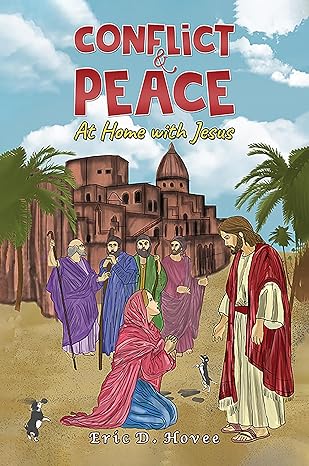

When I first opened Conflict & Peace: At Home with Jesus, I expected a familiar retelling of biblical stories, but instead I found something far richer and more layered. The book walks through twelve figures ranging from Matthew and Mark to Constantine and Luther and explores how each shaped, struggled with, or even fractured the Christian story. Eric D. Hovee doesn’t shy away from pointing out contradictions, tensions, and the uneasy balance between faith and evidence. What emerges is less a polished theology and more a raw chronicle of pioneers wrestling with belief, doubt, politics, and power. The book argues that Christianity has always lived at the crossroads of conflict and peace, heresy and orthodoxy, struggle and hope.
The writing style surprised me. It’s not slick or overly academic, and that’s what makes it work. Hovee mixes scholarship with a kind of candid storytelling that feels personal and searching. He admits where his own faith has faltered, where scholarship has raised more questions than answers, and where interpretations may lean too heavily in one direction. I appreciated this honesty. The detail can be overwhelming at times, with deep dives into language debates or church history that slow down the flow, but even then, I never felt the effort was wasted. It gave weight to his central claim that truth isn’t always clean or easy.
What I liked most, though, was the emotional undercurrent. This isn’t just about doctrine, it’s about Hovee’s father, about legacy, about the ache of wanting faith to feel real in a world of contradictions. I felt that ache with him. When he points out Matthew’s overreach on prophecy, or the way Constantine’s empire-building warped Christianity, I didn’t just learn facts, I felt the tension of a man trying to reconcile devotion with doubt. The book left me inspired. It made me look at my own beliefs with sharper eyes and a softer heart.
I think Hovee’s work is best for readers who want faith that is not easy, neat, or dogmatic. It’s for Christians wrestling with the weight of history, skeptics curious about the roots of belief, and anyone who values honesty over certainty. If you want a book that stirs you, challenges you, and leaves you thinking long after you close it, then Conflict & Peace: At Home with Jesus is well worth the read.
Pages: 401 | ASIN : B0F5641XR1

The Hope of Heaven

Singing Through Fire shares with readers how your life took an unexpected turn when you developed a chronic illness, leading you to cross paths with a youth pastor facing terminal cancer, and falling in love even though you knew your time together was limited. Why was this an important book for you to write?
Singing Through Fire was important for me to write because I knew God was calling me to share my story to encourage other sufferers. Walking through illness and loss was never the path I would have chosen, but it became a place where God’s presence and grace shone most clearly. Writing the book was an act of obedience, a way to testify to His goodness even in seasons of deep suffering. My hope was simply to be faithful with the story He entrusted me with.
What is one piece of advice someone gave you that changed your perspective on God and faith?
One of the most life-changing truths someone shared with me was that our present suffering, as heavy as it feels, is not the end of the story. Scripture reminds us that the eternal glory awaiting us far outweighs the pain we endure now. That perspective shifted my focus from asking “why me?” to lifting my eyes toward the hope of Heaven. It doesn’t erase the grief, but it gives it meaning and frames it in light of eternity.
What was the most challenging part of writing your memoir, and what was the most rewarding?
The hardest part was returning to memories that were still raw with grief and pain. Writing about them meant reliving them, and at times I wondered if my heart could handle it. But the most rewarding part was seeing how God had been present through it all, and how He wove beauty and love even into suffering. Putting it on paper gave me perspective, gratitude, and a way to honor the people and moments that shaped my story.
What do you hope is one thing readers take away from your story?
I hope readers come away with the assurance that even in the darkest seasons, God has not abandoned them. Life may not unfold as we expect, and suffering may come in ways that feel unbearable, but God is still faithful. If my story encourages someone to hold on to hope and to trust His heart, even when His plan feels hidden, then the book will have done its work.
Author Links: GoodReads | X (Twitter) | Facebook | Website | YouTube | Instagram | Amazon
Enter Matthew Silverman: a witty, wise, and impossibly joyful youth pastor and professor facing terminal cancer. What begins with a few random encounters soon ignites an extraordinary, God-written love story that neither of them saw coming.
As their unlikely romance unfolds between medical crises, late-night laughter, and unexpected musical performances, Matthew’s unshakable faith challenges everything Lara thinks she knows about God’s goodness—and what it means to walk with Christlike faith, resilience, and joy in the face of overwhelming grief and suffering.
But with time against them, one question looms louder than the rest: What if this gift is only for a moment?
Surprisingly funny and spiritually rich, Singing Through Fire is a modern-day “Job meets Lucille Ball.” It explores what it means to suffer, love, and even laugh and make music while your life is burning down around you. It eloquently gives voice to the aching questions many sufferers quietly carry—then takes readers inside the breathtaking story of two people who found miraculous love and defiant joy amid heartbreaking loss.
It reveals how God can use even our deepest pain to write the most beautiful love stories—even on the cusp of eternity.
Our Task as Humans
In The Portal Opens, you take readers on a journey through the origins and divine aspirations of Earth in a narrative that blends theology and science fiction. Why was this an important book for you to write?
The Earth is currently divided by our beliefs and understandings about religion, science, politics, and even race. We have no shared beliefs about our origin or destiny, and there is a gaping hole where there should be agreement and certainty. There are countless unanswered questions about our creation, our history, and the meaning and purpose of life. These questions, and the various paths that humanity has taken, have led to a state of confusion with no obvious answers or directions. The Portal Opens is an attempt to provide clarity and direction, and offer a new path by revealing our misunderstood past.
Can you share with us a little about the research that went into putting this book together?
I have been researching religions and spirituality for over 30 years, investigating texts and teachings from all over the world. Born into a family with both a Christian Pastor and Muslim Imam as grandfathers, I have always been intimately aware and knowledgeable of scriptures, teachings, and theology. Later in life, I branched out, gaining understanding and familiarity with countless religions and teachings from the mainstream religions as well as more esoteric groups and spiritual beliefs. Working with the Library system for almost 20 years gave me access to books and manuscripts unknown to most people, including The Egyptian Book of the Dead, The Urantia Book, The Emerald Tablets, and the Tibetan Book of Living and Dying. The ultimate message that virtually all religions and teachings throughout history have tried to instill, is the truth of the reality of God as spirit, and our task as humans to become one with this spiritual reality. At the same time, almost all recorded civilisations from the past tell stories of being taught this information from more advanced beings, not simply discovering it on their own. Agriculture, animal domestication, arts and sciences, have all been recorded and remembered as being gifted to developing civilisations throughout history.
How did you decide to create this unique blend of science fiction and spirituality?
I have always been interested in religion and spirituality, and also talented with computers. With recent advancements in technology, I saw a unique opportunity to utilise AI to examine and analyse the world’s histories, religious texts, and teachings with an “objective” eye. I began a project of using AI to find the missing history and meanings from the vast storehouse of mythology, and religious and spiritual teachings. My investigation led me to the conclusion that the schism between science and spirituality is false, and only occurs when there is a lack of information or understanding of the past. This led to a desire to present a unified picture of reality.
What is one thing you hope readers take away from The Portal Opens?
The most important and powerful message that I hope The Portal Opens reveals to its readers: Each normally minded human being is now inhabited with a literal fragment of God, that constantly communicates with us. The goal of this fragment is to direct us in shaping our thoughts and actions so we may act in harmony and resonance with God, which eventually leads to a literal fusion between this piece of God and the human soul, imparting eternal and everlasting life. This is the true salvation available to all, regardless of their race, sex, culture, or upbringing.
Author Links: GoodReads | X (Twitter) | Facebook | Website | Amazon
I Was Playing Checkers While God Was Playing Chess: The Power and Presence of God in My Life

James Bass’s I Was Playing Checkers While God Was Playing Chess is a raw and vulnerable memoir that chronicles the author’s journey from deep childhood trauma to spiritual awakening and redemption. Drawing on vivid metaphors from the game of chess, Bass uses each chapter to map out pivotal “moves” in his life—moments of heartbreak, divine intervention, and personal growth. Through the lens of abuse, addiction, love, and faith, Bass tells the story of how God’s unseen hand was guiding his life’s trajectory, even when he could barely keep his own head above water.
Bass’s writing isn’t polished in the traditional sense—it’s honest. Honest like a wound still healing. There’s power in that. His voice jumps off the page, not like a preacher, but like a man who’s been through the worst and is just grateful to be alive. The early chapters, especially those about his Abuelita and the horrifying abuse he endured as a child, were painful to read. But that pain is the point. You can feel his desperation and confusion, and then—slowly—his transformation. The chess metaphor could’ve easily been gimmicky, but here it’s brilliant. It gives shape to his suffering and makes it feel like maybe all our worst days aren’t just random punches from life.
Where the book really shines, though, is in the sections about Crystal—his wife, his partner, his mirror. Their love is not a fairy tale. It’s messy, cracked, and sometimes brutal. But it’s also real. Bass’s depiction of being a caregiver to someone with a severe mental illness is unflinching and brave. He doesn’t sugarcoat it. And that’s why it works. His sacrifices don’t feel like grand gestures. They feel like daily choices to love someone no matter what. That kind of love—resilient, imperfect, relentless—feels holy. And when he finally connects his childhood reading struggles to his ability to advocate for Crystal later in life? It was powerful. You can’t make that stuff up.
This isn’t a book for people looking for tidy answers or happy endings wrapped in bows. But if you’ve ever asked God “why?”, if you’ve ever looked at your life and felt like nothing made sense, or if you’ve ever wondered whether your pain had a point—this book is for you. It’s a reminder that you don’t have to know the next move. You just have to trust that the board is in the hands of a Master. I’d recommend it to anyone navigating trauma, caregiving, broken family dynamics, or just plain soul exhaustion.
Pages: 78 | ASIN :
An Innocent World


Douglas A. King’s An Innocent World poses a bold theological and philosophical question: what if Adam and Eve had never eaten from the Tree of the Knowledge of Good and Evil? What if humanity had chosen innocence over guilt, ease over suffering? King explores the potential shape of a world unmarred by original sin. Using a mix of Christian thought, deductive logic, and speculative imagination, he builds two parallel realities—the world of the Innocents and our current, flawed reality of the Guilty. Through chapters spanning topics from religion to medicine to politics, King asks us to reimagine what it means to be good, evil, and everything in between.
Sometimes I found myself agreeing and nodding along, genuinely moved by the author’s sincere search for meaning. His reflections on suffering and character-building, especially, hit home. He argues that we don’t just experience pain for no reason—it’s what gives us depth and brings us closer to God. That idea made me pause more than once. And his praise of the innocent, unconditionally loving nature of dogs as a lens to understand moral purity was surprisingly touching. You can feel that this book came from a real place.
The book has an unwavering commitment to its central theme, weaving the innocence-versus-guilt framework through a wide range of real-world topics—from race and borders to global inequality. This consistent lens gives the book a clear focus and a unique voice. While some readers might find the repetition and tightly structured logic a bit restrictive, some could see it as the author’s way of grounding big questions in a steady moral foundation. The tone often feels like a heartfelt conversation or even a personal sermon. For those open to its spiritual perspective, this can be both comforting and inspiring.
Still, I can’t deny that this book made me think—a lot. It’s heartfelt, raw, and clearly the product of someone who’s spent a long time trying to understand why we suffer and what we’re here for. I’d recommend An Innocent World to readers who enjoy speculative theology, who aren’t afraid to challenge their assumptions, and who appreciate logic paired with faith.
Pages: 129 | ASIN : B08CXMRB34
I Was Playing Checkers While God Was Playing Chess: The Power and Presence of God in My Life

I Was Playing Checkers While God Was Playing Chess is part memoir, part testimony, and all heart. It’s the story of a man who lived through a mountain of trauma. Abuse, racism, addiction, marital struggles, and found God moving in places he didn’t expect. Every chapter uses a chess move to explain a turning point in his life, like how his grandmother giving him an encyclopedia set as a boy set the stage for him to one day decode complex psychiatric info and care for his wife. It’s deeply personal, packed with emotion, and reads like someone sitting across the table, telling you their truth.
One chapter that really hit me was “The Fork” about his abuelita. She steps in during his horrible childhood, gives him love, and literally hands him books when no one else believed in him. That whole section had me teary-eyed. It reminded me how sometimes the smallest gestures change everything. And the way he ties it back later, like decades later, to how he understood medical texts to help his wife, was amazing. That’s not just a good story. That’s fate with a plan. I could feel how much those books meant to him. It wasn’t just about reading. It was about survival.
Then there’s Crystal. She’s not just his wife. She’s a whole force of nature. That part where she tells him, “I love you for the man you’re going to become,” after he’s cheated and blown up their marriage? I had to put the book down for a second. That line wrecked me. You feel the weight of what they’ve been through, but you also feel the hope. The love between them isn’t pretty or easy, but it’s real. The mental health stuff is raw, too. He talks about psychosis, ER visits, and disappearing acts. And yet there’s faith threaded through it all, like a lifeline.
Later on, when he talks about writing his first book and speaking publicly, it’s a total shift. That’s when you realize the guy who used to think he was worthless is now lifting other people up. There’s this full-circle moment when he reconnects with an old boss who turns out to be a pastor. The way it all lines up? It’s wild. It feels earned. I could see the gears turning in his life even when he couldn’t. That made me look at my own life differently. Like maybe all this chaos has some kind of pattern.
If you’ve ever felt like you were getting hit from all sides and couldn’t see the bigger picture, this book is for you. If you’ve ever loved someone who was hard to love, or were that person yourself, this book is for you. It’s not fancy or polished. But it’s real and full of heart.
Pages: 78 | ISBN : 978-1963737240
Paraclete Hills Vacation Bible Camp: Prayers, Praise and Perfect Pranks
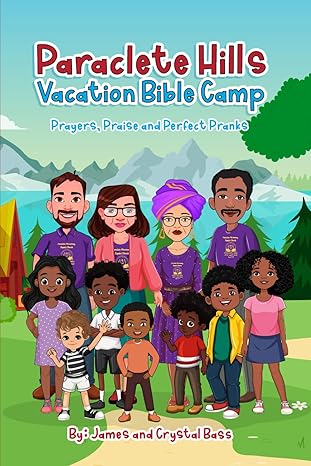
Paraclete Hills Vacation Bible Camp, by James and Crystal Bass, is a sun-drenched, laughter-laced ride through summer camp. It follows six lively kids—Annabelle, Ariel, Zion, Bo, and twins Big Jay and Little Jay—on their hilariously mischievous, often heartwarming journey of faith, friendship, and epic pranks. Through silly escapades like fart-sounding balloons in Bible class and googly eyes on school supplies, they explore what it means to grow, learn, and bond in ways that go beyond marshmallow roasts and canoe races.
I loved how genuine this story felt. The kids aren’t perfect. They make a mess, push boundaries, and pull off pranks that would give any camp counselor pause. But they’re never cruel. Their balloon prank during Pastor Coleman’s Bible lesson had me laughing. But even better was how the adults handled it—with humor, a touch of wisdom, and a good-natured lecture that turned the chaos into a lesson about kindness. That balance—fun without meanness, correction without scolding—made this more than just a goofy camp story. It felt real. Like a place I wish I’d gone to as a kid.
Then there was the moment Micah the Menace arrived. A toddler armed with the appetite of a vacuum and the tantrum power of a hurricane? Genius. But it wasn’t just for laughs. The counselors flipped the script on the pranksters. Watching the kids learn humility through a pint-sized storm named Micah was both hilarious and surprisingly touching.
As the story moved into the later chapters, especially “The Apology and Making Amends” and “A New Kind of Fun,” it honestly got me a little misty-eyed. The kids’ decision to write apology letters and then organize a camp-wide talent show? That hit home for me. It reminded me of how we grow up in spurts—first we laugh, then we reflect. That campfire scene, with everyone clapping and singing, wrapped the whole thing up in the best way possible—warm, sincere, and full of love.
If you’re a parent, a youth group leader, or anyone looking for a story that teaches lessons without preaching, Paraclete Hills Vacation Bible Camp is a treasure. It’s especially perfect for middle-grade readers who want humor with heart. Think Diary of a Wimpy Kid meets Sunday school. This book made me laugh, smile, and think, and I’d happily recommend it to anyone who believes that joy, mischief, and growth can all live in the same chapter.
Pages: 58 | ISBN : 978-1963737837


