Blog Archives
A Strong Moral Lesson

In The Adventures of Captain Polo, readers embark on a journey with a polar bear as he travels the world discovering the devastating impact of climate change. What was the inspiration for the setup of your story?
Climate change is a global problem, yet there are local effects, and also in many cases, local solutions. I wanted to depict this somehow, so very early on when drafting the script, I knew this book was going to be framed as a global odyssey. In the course of my research, I was lucky enough to talk to prominent climate professionals, such as the late Saleem Huq, who enlightened me on very specific aspects to consider, mostly from the perspective of the global south. This inspired me, as did also my own background as a person who has lived mostly in the developing world, and I also drew inspiration from my professional experience in conservation, which has exposed me to the problems faced by wildlife, as well as by local communities. Many of these problems are made worse by global warming, and those who suffer the immediate effects of this are those who are least responsible for the problem. Researching all this under a climate lens basically determined the exact geographical route Captain Polo follows.
However the story also needed to be engaging; inspiration for the fiction, adventure, and comedy inherent in the book come from my own reading while growing up – mostly TinTin and Asterix albums, with a few nods here and there to Lucky Luke and even post-war British cartoonist Carl Giles.
What was one scene in the novel that you felt captured the morals and message you were trying to deliver to young readers?
There are several such scenes, but one that stands out for me is the scene where Captain Polo meets a boatload of emigrating Kiribati islanders fleeing their island home in a desperate gamble to find asylum in New Zealand. This scene reflects a very real truth facing the Small Island Nations in the Pacific region, and it is a perfect example of climate injustice: small island nations are literally being flooded by rising sea levels entirely caused by global warming entirely caused by large, developed or emergent economy countries very far away. For this reason, there is a strong moral lesson to be read in this scene: those who are least responsible for global warming are the very same who pay the highest and most immediate price. This theme is actually present throughout the book and its sequels, and it serves as a bridge between the reality faced by Captain Polo as a polar bear whose Arctic home is literally melting beneath his feet and a great number of human communities around the world who face similar challenges as a result of glacial ice melt raising sea levels the thereby causing catastrophic flooding. As such, climate justice – or rather, injustice – serves to establish a bond between the main character and the various people he encounters.
What made you decide to write Captain Polo’s story as a graphic novel?
Graphic novels are the format I specialize in because I am actually a cartoonist rather than an author of prose per se; my ability to draw cartoons largely predetermines the format of my storytelling. I believe it gives me an edge I would not normally have over prose authors telling the same story, and at the same time, I suspect most graphic novelists would not have my scientific inclinations, interests, or knowledge to tell a story about climate change. It is this sweet spot combining art and science that defines my niche style. The graphic novel format also allows for near-constant visual movement and a dynamic dialogue and narrative, which is necessary to give the story a fast pace. This fast pace represents an unspoken sense of urgency – “the world is burning, we need to do something, NOW.” The graphic novel format crucially also lends itself to the use of visual humour, which is my most important style indicator, and I believe important for my target readers, especially when addressing a subject as grim as climate change.
Can you give readers a peek into the second installment of Captain Polo’s adventures?
In Book 2 of the Adventures of Captain Polo – Polo and the Yeti – the story continues where Book 1 ended. Spoiler alert: Captain Polo escapes his captors and crosses China before entering the mysterious realm of Tibet and beyond. This part of the trilogy is perhaps even more fast-paced than Book 1, and I allowed myself to have a bit of fun with some of the characters!
Author Links: GoodReads | Twitter | Facebook | Website | Amazon
At the beginning of his life-changing journey, the bear is hungry, frightened and alone, drifting further and further from an Arctic home that is changing in ways he cannot comprehend. But the bear without a name survives, and as he travels the world, meeting colourful characters both human and non-human and getting into all sorts of adventures, he gradually begins to understand a reality he never knew existed. The bear who will become Captain Polo realises he is not alone in seeking answers.
The Climate Change Comic is a fast-paced graphic novel depicting accurate geographical settings and detailed, colourful illustrations designed to make learning about a complex and frightening subject positive, easy and fun. In this first book of the series, readers as young as 9 will be swept into a global journey of discovery that will help them understand some of the causes and effects of the most critical environmental crisis in human history, what people are doing about it, and how each one of us can make a difference – wherever we live, and whoever we are.
Our children are facing an existential crisis in the form of ecological collapse and global climate change, but they don’t have to stay confused and anxious. Instead, give them what they want: understanding and actionable knowledge empowering them to become agents of positive change at home and at school. This is the mission of Captain Polo.
Get the first book of the series now!
Buzzing Curiosity And Courage

The Night the Stars Went Missing follows young Winston, who discovers the stars have vanished due to Earth’s mistreatment and embarks on a celestial journey to mend the sky and inspire a world of stewards. What was the inspiration for the setup of your story?
From the beginning, I wanted to create a story for a younger audience that was driven by Climate Change. Somewhere along this journey, I recall hearing the question, “What do the stars mean to you?” I can’t remember if it was asked directly to me, if I heard it in a movie, or picked it up from a passerby’s conversation on the street. But, for some reason, the question stuck with me. It caused me to consider all the beliefs and meanings people carry about stars. I then wondered: “What if the stars were faced with losing their meaning? What if they feared an existential threat?” From there, the ideas poured out of me. So many interpretations of the stars meant ample inspiration for creativity with the stars’ personalities. Alas, The Night the Stars Went Missing was created. A perfect blend of whimsy and fantasy, while tackling one of our generation’s (and future generations’) biggest crises.
How did you approach crafting Winston’s character to resonate with young readers, especially in his connection with his late grandmother?
In general, I created what I thought was missing and what I felt resonated with me as a young reader. A character with buzzing curiosity and courage, a fantastical setting, and an adventure—this is all I wanted to read!
From a character design aspect, it was especially important for my first children’s book to have a character that looked like my younger self or like my nephew. I needed to see a young brown-skinned boy on the pages. I needed to see what I didn’t have in the books I read growing up. In so many ways, not seeing this always made me feel irrelevant in my own skin, or at a minimum, made me question my identity.
Regarding the connection to Winston’s late grandmother, this is rooted in my own connection with my grandmother, which was very rich, strong, and bolstered by unconditional love. It was beautiful. She inspired me to want to be more curious and to go after big things. She instilled in me many of my core values.
Around the time I was writing this story, she was ill and would ultimately pass away. Adding Winston’s grandmother was an addition that came later, as an homage to my own grandmother. I had been trying to understand Winston’s motivation for embarking on such a big journey. When my grandmother passed, I knew it right then. Winston’s grandmother would be his inspiration driving his quest.
The book addresses some complex global issues in a simplified manner. How did you decide which elements to simplify and which to delve deeper into?
This was a challenge, for certain. Ultimately, I needed to distill it down to the message of the story. What was I trying to accomplish? I knew that I didn’t intend on crafting a ‘how-to’ book or something more expository, nor did I desire a disaster-we-are-going-to-die Climate Change story. I wanted something that felt whimsical while focusing on the collateral damage of the devastation placed on Earth by humans. This story was a way for me to associate core feelings with a complex subject. It was about making an emotional connection for a certain age group, and as a result, making the lesson stick.
I knew I was not best equipped to teach about the science behind Climate Change, but I could support the conversation and get it started. And there it was! That was my objective – to serve as a launchpad for parents to have meaningful conversations with their children. To serve as a starting point. I imagined a parent asking their child, “How do we save the stars today?” And that evolving into a lesson that continues evolving.
What is the next book you are working on, and when will it be available?
My next book is titled, The Colorless Boy. It will be out in 2024. In The Colorless Boy, Jasper lives in a world where individuality and self-expression are believed to be the cause of all atrocities in the world. Because of it, all color has been banned and all things in the world, including people, have been drained and stripped of their color.
For Jasper, his colorless skin and muted surroundings are all he has ever known. Until that is, he begins to dream in color. This causes panic for Jasper, who believes he is somehow broken. When things can’t get worse for Jasper, he stumbles across a rare colorful home tucked away in the woods — along with a shockingly colorful boy.
Against all odds, their curiosity, kindness, open hearts, and a journey through a colorful house made of magic, lead them to discover the meaning of acceptance and friendship. Together, they dare to defy a world of rules set long before their time. And for Jasper, it will be the first time he sees himself for who he truly is.
Stay tuned for more up-to-date information by following me on IG @hellowonderworld or by signing up on my website http://www.hellowonderworld.com.
Author Links: Instagram | Goodreads | Website | Amazon
Climate Change Is REAL!
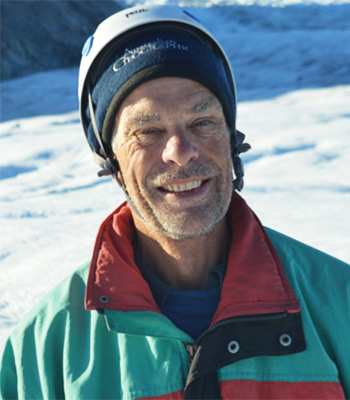
The Vanishing Glaciers of Patagonia take readers on an expedition to the glaciers of Patagonia and shares the effect of Climate Change on this landscape. Why was this an important book for you to write?
Following discussions with the Corporación Nacional Forestal’s (CONAF) person in charge of the protected wildlands of the Aysén Province high up on Glacier Benito in 2017, I felt strongly that I should provide the people of Aysén Province of Chile, more information about the history of the exploration of their region from the sea.
Next, I wanted to establish a recent historical timeline for West flowing glaciers in this dynamic region for a further research paper.
Finally, I needed to obtain stories of explorers so that the many untitled photographs that I had found could be identified and labelled. With all this information, an excellent story emerged of a remote place.
Did you find anything in your research of this book that surprised you?
Finding and reading Commander Pringle Stokes (Captain of HMS Beagle in 1828) last journal in the Mitchell Library of New South Wales, Australia was extremely emotional. Here, there was a description of a place I had spent several months in 1972/73 and visited again in 2007, 2011 and 2017.
Viewing the original 1830 Royal Navy chart of the relevant Patagonian coastline was equally exciting as it showed clearly the two prominent glaciers and the associated icefield (for the first time).
Being able to link the grandchildren of the 1920/21 explorers to this part of their grandfathers lives was most rewarding.
Finally finding a photograph from 1920/21 of the edge of the great Glacier San Quintin that showed fresh ‘clean’ rocks intermingling with moss covered rocks which demonstrated that this glacier was experiencing a surge in 1920.
What were some ideas that were important for you to share in this book?
The most important idea to share is that these significant glaciers are thinning fast.
Another idea to share is that we must revisit the stories, photographs and documents from previous explorers to remote areas and revisit their locations to document the changes to our world.
What do you hope is one thing readers take away from your story?
Climate change is REAL!
Author Links: Website | Facebook | GoodReads
About theAuthor / compiler:
Martin Sessions, as a 24 year old Royal Navy Engineer Officer, spent five months in 1972/73, monitoring a west flowing North Patagonian Icefield glacier, one of the tasks of an 11 man British expedition. He next flew over the region in 2006 and was struck by the catastrophic changes. Returning again in 2007, 2011 and 2017, he led expeditions to measure the rapid surface lowering of the study glacier. As a result, he became familiar with the terrain traversed by Nils Pallin and Allan Bäckman and was able to ‘place’ their many uncaptioned photographs.
Nature Is Imploring Us
Ursamer: A Treasury of Feel-Good Stories Book 2 follows a young Inuit girl who tries to find someone that will understand her message about global warming. What was the inspiration for your stories?
Ursamer – the name came into my head. Sound is very important to me as a musician, but also as a writer. Translated, Ursa and Mer mean Bear and Sea. So, I thought I would write about polar bears and what is happening to them. I also wanted to write about climate change from a different slant. Everyone talks about the physical changes to the ice caps, but not so much how this is affecting those who live there.
Ursamer encounters very different people each time she arrives in a different place, how did you decide on where she would appear?
I tried to imagine what it would be like from her perspective and the difficulties she would have in conversing with the people she met. They would be so culturally removed from her. I wanted to show how different people are affected in different ways, but that we’re all in the world together and things are not looking rosy. Someone old and homeless in New York City (Ursamer can’t see why an elder is not treated with respect), famine-stricken refugees in Africa (they are desperate to the point of lost humanity), and me-dominated rich shoppers in a giant mall – the on-demand types. (It’s all about them, and they are totally clueless about what’s going on in the real world, which is, in essence, their world too.)
What were some themes that were important for you to explore in this book?
That nature is imploring us to turn ourselves around. The main thing for me is that humanity STILL doesn’t get it. The global pandemic is something that has never happened before. (Yes, others have, but they go away, at least for a while. I have a PhD in disease ecology, so I know what I’m talking about here). This virus is different – it’s not going away.
But, we have not learned from it. This is nature shouting a HUGE wake-up call. We’re a small step ahead with vaccines, but then we just keep going with our self-centred agenda – over-populating, over-consuming, polluting, degrading, destroying…
The ”On Demand” species. Uggh.
Listening is also a central theme of this story. The vast majority of people do not listen. Poor communication is a huge problem.
What is the next book that you are working on and when will it be available?
Well, a few. A comedy/social justice novel – it should be out by the end of the year.
Author Links: GoodReads | Twitter | Facebook | Website
Where has she come from? What is her story? She has something very important to say, but no one is listening!
A sweet, poignant tale about climate change, Ursamer is ideal for children ages 8 and older.
I Care Deeply About the Environment
Gary The Go-Cart tells two stories that inspire conversation on the environment in children and adults. What was the inspiration for the idea behind Gary the Go-cart?
I care deeply about the environment. So much so that I began working in environmental science. I started out believing in “clean energy” and thinking that the oil and gas industry needed cleaning up. Then as I worked in the industry and went to a lot of conferences and heard a lot of presentations, I finally had to admit I was wrong. I started getting really frustrated with how things were portrayed in the media. I felt like the problem was that the information is so complex, it would be hard to explain. I kept finding myself saying, “someone needs to make this simple enough for a child to understand”. Usually, when I have a brilliant idea, someone else does too. I kept waiting for someone to write a kids book about it. When no one ever did, I finally took it upon myself. I knew people were going to not just disagree with the concept, but vilify me for saying these things. That is why I titled the second book the way I did, because I knew I was “coming out of the closet” to admit that I didn’t believe in man-made catastrophic climate change.
I enjoyed the adorable art in the book. What was the art collaboration process like with illustrator Sidnei Marques?
Sidnei had a limited understanding of English. I would send him sketches of characters and say things like, I want the character to dress something like this character, and I want him to have an expression like this character, and I want them standing like this character. So our exchanges had few words, but lots of art. He was a brilliant artist. Unfortunately, he had cancer the whole time he was working on the books. He used the money I paid him to pay for his cancer treatments. I felt like we were destined to work together. He lived until a couple of days after we finished Carbon Comes out of the Closet. I think he purposely made himself hang on until we finished it.
What scene in the book did you have the most fun creating?
The final scene in each of the books were probably my favorites in each one. It was fun to have animated cupcakes in Wind Blows, and I was tickled when Sidnei came up with the idea of top hats on the cucumbers for the final scene in Carbon Comes out of the Closet.
Do you have plans to write more books starring Gary the Go-cart?
Unfortunately, I don’t think I could ever do any more Gary the Go-Cart books, not without Sidnei.
Author Links: GoodReads | Facebook | Website
The Gary the Go-Cart books give a different perspective on energy and the environment from the one that is normally heard. Wind Energy is actually horrible for the environment, and climate change is really all about power and money and has nothing to do with the environment. This perspective is shared by large numbers of experts who are not having their voices heard. It is written as a fun story, with poetry, rhyme, and cadence.
Gary the Go-Cart tackles Wind Energy, Climate Change, and Fake News in a manner that is simple enough that even a child can enjoy it. The intention is to educate the adult reading it.
There is a page at the end of each story entitled, “For the Adults in the Room.” These pages give information and quotes showing the problems with wind energy and carbon capture.
Get it for your high schooler to read! They need to hear this before they get to college and are totally indoctrinated!
It is 68 pages of full-color illustrations. It is illustrated by the late, award-winning Sidnei Marques.
The Erebus Tales Series

Gifts of a Dark God follow a group of friends trying to stop the colonization of Antarctica while running into some dangerous hurdles. What was the inspiration for the setup to your story?
See the first two books in the Erebus Tales series, Stone Fever and The Color of Greed, for more background on how a climate-changed Antarctica becomes the focal point of this story.
Which character in the novel do you feel you relate to more and why?
Every major character has a bit of me in it: Keltyn the loner nerd geologist, Joaquin the gimpy but plucky gaucho-wannabee, Luz the impetuous organizer, Fay the defender of the downtrodden, even Helmut Ganz the corporate toady, hiding a fatal character flaw.
What was your favorite scene in this story?
The horse-breeding scene in Chapter 13, though I owe a word of thanks in the conception of that scene to a similar one in Tom Wolfe’s A Man in Full.
What is the next book that you are working on and when will it be available?
No further fiction planned at this time. Readers are referred to the first two books in this series, previously published by Iguana Books.
Author Links: GoodReads | Facebook | Website
Meanwhile, activist Fay Del Campo, sprung from detention, vows to fight Sir Oscar Bailey’s domination of world commerce, even if it means joining forces with a shadowy group of saboteurs. Bailey’s storm trooper Helmut Ganz plots to stop her. Only one of them will survive, and Erebus, the dark mountain god, will have the final say.



 LITERARY TITAN