Blog Archives
Timeless Philosophical Question
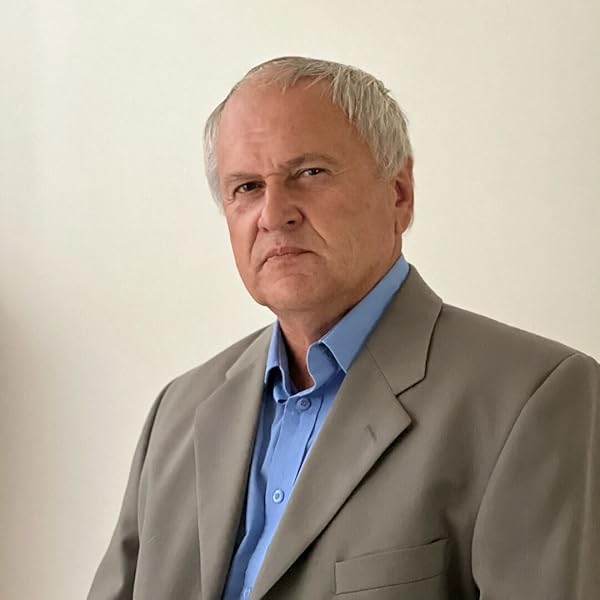
History of Disease. Army: Life, Service, and Escape from the Russian Army shares your story of growing up in the U.S.S.R. during the Cold War, your experiences with the army, and ultimately your escape to Canada. Why was this an important book for you to write?
I think my life was generous enough for me with certain events, though not always pleasant and desirable, so I could share some moments of it with my readers. Also, it was exciting to restore it in detail and answer for myself eternal and timeless philosophical question of what could be changed, improved, or refined had I had a chance to go through it again.
What were some ideas that were important for you to share in this book?
In the light of Russian-Ukranian War, I wanted to answer questions about how and why Russia has degraded to the state it is in, with all associated unprofessionalism, incompetence, and barbarity of its Army. What made Russia to loose bright opportunities of 1990th to step into the family of European states following the example of Baltic states, why had it followed the old and so familiar brutal path leading it to the new dictatorship and catastrophe.
I appreciated the candid nature with which you told your story. What was the hardest thing for you to write about?
Since it was a memoir, it was not too hard to re-live my life unwinding it like an old tape recorder cassette. The challenge was to interpolate my life onto political events that were in abundance of that period of time of Russian history.
Over time, my vision of those events might have slightly changed and been affected by new experiences brought by my life in Canada and view through the prism of time. So, in certain moments it required certain efforts to present the events as they were without been biased and prejudiced.
What do you hope is one thing readers take away from your story?
I tried and hopefully succeeded up to a certain extent, not to be too boring and overload my readers with unimportant and trivial details impregnating my story with irony and sarcasm. I wanted to send a message between the lines that one should be open-minded and resilient to the avalanche of outside brainwashing and propaganda, so omnipresent in the modern world, and be persistent in achieving one’s goals and dreams regardless of pit holes and unpleasant surprises which life has in stock for everybody. As once Mr. Henry Ford said, “Whether you think you can or you think you can’t – you are right.”
Author Links: GoodReads | Amazon
Serge R. Pospelov, born in the USSR, reflects on a tumultuous journey from school years to the final days in Russia in his book “HISTORY OF DISEASE: Life, Service, and Escape from the Russian Army.” His narrative encompasses the sarcastic nuances of life in the USSR and the Russian Army, detailing the struggles, survival, and disappointments during the tumult of the 1990s. Volume 2 contains a memoir about his attempts to leave the country, leading to imprisonment under suspicion of espionage. Released without trial, he lived under the constant surveillance of the FSB until a daring escape took him from Russia to Belarus, then Poland, and ultimately to Canada.
Novelizing a Screenplay

In Deep Cover – The Unknowing Agent, an Army Intelligence officer finds himself amid an espionage plot when he defies orders and follows a cryptic message. What was the inspiration for the setup of your story?
The story of how this came about is different from how my most recent book release, Watching Volume 1: The Garden Museum Heist, came about. With that one, there was a definite event that triggered the story. With Deep Cover, I did something I’d never attempted before. The story started out as a screenplay I’d written about 15 years ago. I wasn’t ready to start Volume 2 of Watching, so I was thinking about different possibilities for my next project. With that in mind, I decided to review some of those earlier screenplays and, when I came across Deep Cover, found that it resonated with me and was even more relevant today than when I originally conceived it.
When you first sat down to write this story, did you know where you were going, or did the twists come as you were writing?
Because I had written the story so long ago, I had a general idea about where it was going. That being said, novelizing a screenplay has taught me that changes to the story are inevitable. With a novel, you are much more free to expand on themes, concepts, and background. One of my favorite things about writing is that the characters and events lead you in directions that you had not originally intended. Deep Cover was no different. So yes, many of the twists were new and came to me as I was writing.
What character did you enjoy writing for? Was there one that was more challenging to write for?
I think I enjoyed writing for Stephen Beck the most. That character speaks in the first voice and so I was able to insert myself into his head, which leads to me trying to think like him. In doing so, I find that it leads to places I may not have otherwise gone, which is just so much fun!
I think the greatest challenge for me was writing for Pushkin. He is so different from anybody I’ve actually had contact with. In addition, I had specific goals for how I wanted the reader to react to him. While it was more challenging, it was also fun to come up with the various scenarios and backstories. He was one of my favorites.
What is the next book you are working on, and when will it be available?
I’m currently writing Volume 2 of the Watching series. Hopefully, it will be available during the early part of 2025.
Author Links: GoodReads | Facebook | Website | Amazon
The Cold War, a period of history during which spycraft rules the world by substituting subterfuge and lies for actual war and mass death. The Soviet Union and the United States of America, the two major players, spend untold sums of money and put their best minds to work at attempting to gain the “upper hand,” whatever that means. Two distinct ideologies. One takes the long view, while the other prefers instant gratification. They find common ground only in their willingness to utilize experimental methods and the lengths to which they are willing to go to “win,” including using their own citizens in unimaginable ways.
During the Cold War, the Soviets plan to infiltrate the U.S. by placing deep cover agents into the country as everyday citizens. Was the plan successful? If so, with détente and the collapse of the Soviet Union, where are they today?
Lisa Jones and Jennifer Turner are two brilliant scientists working at United Genetics Research Lab, a state-of-the-art facility located outside of Washington, D.C., doing state-of-the-art genetics research. Lisa’s boyfriend, Sgt. Stephan Beck, works at the United States Army Intelligence and Security Command (INSCOM) as an interpreter of intercepted Russian language messages. One such message, intercepted by Homeland Security, piques his interest due to what he, and no one else, perceives to be a hidden message. Unable to resist the challenge, he breaks protocol in an effort to unravel the mystery, unprepared for what he actually learns: a possible connection to the people he loves and an attempt to manipulate the next presidential election, only months away, altering the fate of the U.S., and the world.
Deep Cover, the second published novel by acclaimed author Jeffrey Jay Levin, author of Watching, Volume 1: The Garden Museum Heist, asks the question: Are the two countries, and the behind-the-scenes players, really all that different? Who can one really trust?
If The Manchurian Candidate and The Americans had a baby, it would have been the adult action thriller Deep Cover.
Deep Cover – The Unknowing Agent


Deep Cover: The Unknowing Agent, by Jeffrey Jay Levin, is a thoughtfully crafted spy thriller that delves into the lingering tensions of the Cold War era. The narrative is set against the backdrop of a dormant Russian spy program, which is suddenly reawakened to potentially disrupt a forthcoming U.S. presidential election. At the heart of this intrigue is Sergeant Stephen Beck, a character from U.S. Army Intelligence, who stumbles upon a cryptic message. His decision to pursue its meaning against orders leads him into a labyrinth of espionage.
Levin’s storytelling echoes the intricate spy narratives of John le Carré, infused with elements that might remind readers of The Manchurian Candidate, particularly the original version directed by John Frankenheimer. The novel primarily revolves around three protagonists: the policy-savvy Stephen Beck, his girlfriend Lisa Jones, and her colleague Jennifer Turner. These characters are portrayed with intelligence, dedication, and a nuanced sense of patriotism, adding depth to their roles in a world rife with subterfuge and ambiguity.
As the story unfolds, Levin masterfully introduces unexpected developments, maintaining a gripping pace. The enduring animosity between the U.S. and Russia is a central theme, portrayed as an unextinguished flame from the Cold War era, lending a sense of realism to the narrative, especially in light of recent global events. The novel’s strength lies in its meticulous plotting and subtle narrative progressions. Levin’s writing exhibits patience and precision, gradually revealing the intricacies of the plot. The story’s direction is confidently handled, ensuring that readers remain engaged through a slowly unraveling mystery. By the novel’s conclusion, Levin skillfully shifts the reader’s allegiances in tandem with those of the characters, showcasing his prowess as a writer.
Deep Cover: The Unknowing Agent stands as a testament to Levin’s ability to weave a complex and realistic spy narrative that resonates with contemporary geopolitical themes. The novel’s careful construction and compelling character dynamics make it a notable addition to the genre.
Pages: 198 | ASIN : B0CVMWR8XP

By God, Are They Isolated!

Humphrey Hawksley Author Interview
Man on Ice follows Rake Ozenna of the elite Eskimo Scouts as he struggles to protect his family on the brink of World War 3. What was the inspiration for the setup to this thrilling novel?
When I visited Little Diomede island in the Bering Strait in Alaska I was amazed at how close it was to Russia. Every morning, we stepped out and saw the Russian island of Big Diomede barely two miles away and occasionally a Russian military helicopter circling to land at the small base out of sight on the other side. It was time when US-Russian relations were taking a big dip. Many thrillers are written about Russia in Europe, but rarely on this real, live border where American and Russian territory meet. It is an incredible place because there are no border lines, no customs sheds, no marker buoys in the sea water or on the ice in winter – just wind, skies, birds, and emptiness. I just had to set a thriller there. The Russian island is run by the military. The American island is an Eskimo village with no government protection. What would there be to stop the Russians from just taking it? Why would they want to? What would be the reaction in Washington?
This book was able to take a rare look at the Eskimo people and culture. Why did you want to include them in this story and what aspects were important for you to portray?
The Bering Strait setting of Little and Big Diomede islands is native land. Before the Cold War Eskimos travelled back and forth between the islands barely recognizing Russia and America as two separate nations. The border was open to them. When it was suddenly closed during Cold War hostilities, families were separated, and still are today. The American Eskimo villagers of Little Diomede are some of the most rugged and determined people I have met. By God, are they isolated! Their environment is totally unforgiving. But they love it and have lived the land, sea and ice for generations. To make credible the stakes of a Russian incursion onto Little Diomede, I had to show this village as it really was, portraying the challenges of environment and community as well as the ingenuity the villagers use with the terrain, weather and local knowledge to win. At the end of the day, even if you’re the president of Russia or the United States, you do not mess with the Eskimos of Little Diomede.
Rake is an intriguing character that continued to develop as the story progressed. What did you model his character on and how did he change as you were writing the story?
Rake Ozenna is a blend of real life people whom I have met throughout my career as a journalist. Rake’s motivation compares to any character determined to make the best of his life and give himself a wider world than his small, isolated island community. He enrolls in the Alaska National Guard, taking every opportunity he can, eventually breaking the ceiling, making officer and captain. He serves in Iraq and Afghanistan where he meets Carrie Walker, a trauma surgeon, Brooklyn, white, middle class, professional. They both have a wild, independent streak, but their backgrounds couldn’t be more different. Rake adores Carrie and can’t believe his luck. As the action gathers pace, and Rake finds himself more and more alone and hunted down on the island, then on the ice, we see his characteristics of ruthless leadership develop. He needs to win, but is never sure if his skills and natural ability to carry them out are compatible with loving Carrie and whether the two of them could ever make the kids, nice house and white picket fence thing ever work. Interviewing many heroes over the years, I have found there are always two strands of motivation. One is the bigger cause of the country and the mission. The other is the lover, the child, the home community. Sometimes they run in parallel. Often, they clash.
What is the next book that you are working on and when will it be available?
I deliver the second Rake Ozenna political thriller at the end of May 2019 for publication later in the year. Many of the same characters, Rake, Carrie and Stephanie Lucas will be there and the location will be a wild, inhospitable place in the European Arctic.
Author Links: GoodReads | Twitter | Facebook | Website
![Man on Ice: Russia vs the USA - in Alaska by [Hawksley, Humphrey]](https://i0.wp.com/images-na.ssl-images-amazon.com/images/I/510G9ETJgiL.jpg?w=604&ssl=1)
An incident in the snows of Alaska could trigger the outbreak of World War III in this tense and twisting thriller.
When Rake Ozenna of the elite Eskimo Scouts brings his fiancée, trauma surgeon Carrie Walker, to his remote home island in the Bering Strait, they are faced immediately with a medical crisis. Then Russian helicopters swarm in.
America is on the eve of an acrimonious presidential transition and inauguration. As news breaks of a possible Russian invasion, Stephanie Lucas, British ambassador to Washington DC, is hosting a dinner for the president-elect.
Ozenna’s small Alaskan island community is suddenly caught in the crosshairs of sabre-rattling big powers. The only way to save his people is to undertake a perilous mission across the ice. Can he survive long enough to prevent a new world war breaking out?

We Were Soldiers Too: A Historical Look at Germany During the Cold War From the US Soldiers Who Served There

 This nonfiction piece covering various stages of the Cold War, specifically the bases in Germany, tells the stories of 17 soldiers that served from 1960 to 1989. Each chapter of the text is dedicated to one of the soldiers and tells the story of their service in the context of what was happening in the world around them. Each chapter does a great job of telling how the soldiers came to enlist, what their training was like, and what was going on in their heads while they progressed.
These stories produced some fascinating insight into the details of military life that don’t always make it onto the pages of the history textbooks. For example, one soldier shared how another soldier had swindled him out of some of the water in his canteen. After he had been asked to share some water, he asked the fellow soldier why he had already wasted his own supply, and the fellow soldier replied “he had plenty of water but he was saving it for later.” This book is full of little moments like this that deserve to be heard, and it makes for a great read.
The bulk of the text is about the duties that these soldiers were given during their time of duty. The book has information that covers a wide range of duties, giving each chapter something unique from the one before it. One of the topics that is covered in a couple of the chapters is the “dog and pony show” that the troops would have to go through for whoever was the President of the United States at the time. It is interesting to see how the soldiers respond to the inconvenience that these high ranking individuals caused during their service.
The chapters, however, tell the stories in the third person. Without any personal statements from the soldiers, themselves, the reader is left to wonder exactly who these people were. It makes the stories a little less personal, which is disappointing. However, the writing is strong enough and the stories are potent enough to make up for this point of view choice. Still, I wonder if the stories would have had a larger impact if there were some more direct quotations and conversations included in the text.
Overall, these stories are full of the details that bring humanity to the wars that fill our world. Each chapter brings to life the tiny details that kids don’t learn about in school, and it gives the reader an opportunity to see things from the point of view of one pair of eyes in a scene where hundreds of thousands had been. The author states that there is another book coming, one that focuses on South Korea. I’m looking forward to the details that this volume provides, even if they could be delivered with a bit more personality.
Pages: 213 | ASIN: B01B0YRBB0


