Blog Archives
Is There Not A Cause? (2014-2025)


Reading Is There Not a Cause? felt like diving into eleven years of someone’s life all at once. The book moves through storms, heartbreak, faith, rage, pride, fear, temptation, joy, reflection, and rebirth. The poems hit like quick flashes of memory, then long moments of confession, then hard truths about a broken world. The author brings God, struggle, trauma, race, desire, loyalty, and self-accountability into view and spins them around until they blur into something raw and human. I finished it feeling like I had witnessed someone fight through their own darkness and keep getting back up, no matter how messy the fall.
As I worked through the poems, I kept feeling this heat in my chest. The writing is straight from the gut, no filter at all, and sometimes it shook me because the voice is so exposed. There are moments when the author talks about faith with steady hope, then in the next breath, he crumbles under frustration. That mix felt real to me. Life flips like that. I appreciated how he never pretended to be perfect and never tried to make his pain sound pretty. Some poems burned hot with anger. Others were soft in a way that caught me off guard. I liked that unpredictability. It made the book feel alive.
The book hits you with one emotion after another. I admired that intensity. It felt like the writer refused to hold anything back. The honesty gave the work its power. I also enjoyed the wide swing between personal reflection and social commentary. One page dives into relationships that fell apart. Another page calls out violence, corruption, and spiritual decay. It is chaotic at times, but the chaos felt intentional. It mirrors the world we live in.
I walked away feeling like this book is for readers who want truth more than comfort. It is for anyone who has battled themselves, prayed for change, fallen hard, gotten back up, and kept moving even when life hit them from every angle. If you like poetry that talks plain and feels heavy and relatable, this book will speak to you. And if you are in a season where you need to feel seen, this collection has plenty to offer.
Pages: 128 | ASIN : B0FP76VCCM

Fight For What Matters
American Entropy is a collection of poetry that swings from political outcry to spiritual yearning, from queer love to existential doubt, and ignites readers’ desire to fight for what matters. What inspired you to write this particular collection of poems?
It was largely just paying attention to the news and seeing how every day, Trump is violating the Constitution, trying to force universities and museums to adopt right-wing propaganda and treat it as fact. Like all fascist authoritarians, Trump hates it when truths that contradict his lies proliferate, so I felt it important to do my part to tell those truths.
Doing it in a way that makes readers want to fight for what matters, rather than just dwelling on the darkness of modern American life, was important to me too, because if you don’t focus on what we still have, it becomes all too easy for people to give up.
The poems about love, metaphysical, spiritual topics, and queer love are all just examples of me writing what I know.
Your poetry tackles deeply emotional and politically volatile topics while also touching on hope for the future. How do you approach writing about deeply personal or emotional topics?
“Power through and write what’s true,” like it says in the poem “It’s Not Too Late.” I just get it out onto the page as accurately as I can before giving myself a chance to question how honest is too honest. I feel like if I’m too reserved in writing my poetry it won’t be as relatable, and the reader will be able to tell I’m holding something back, and it won’t foster empathy as much as I hope my work does by being unflinchingly honest.
How has this poetry book changed you as a writer, or what did you learn about yourself through writing it?
This book really crystalized for me that poetry is an important type of resistance, which is something I think my work has always been when it comes to fighting heteronormativity and homophobia and other bigotries, but this is the first time I’ve dedicated so much of any one poetry collection to raging against one corrupt administration and detailing all the ways it’s trampling our rights and waging war against the American people.
I’ve learned about myself that I really just don’t give up no matter what, and I can help others not give up either.
What is one thing that you hope readers take away from American Entropy?
That this isn’t normal, the way Trump is shredding the Constitution and speaking to our worst natures, and the way Republicans in Congress and conservative Supreme Court justices are complicit in enabling it. That it’s bigoted Nazi fascism, and we don’t have to just roll over and take it.
Author Links: GoodReads | Facebook | Website | Amazon
Through explorations of the metaphysical, religion, and relationships, the poems delve into both darkness and the light born of efforts to expand human consciousness. Despair is given unflinching witness, making the discovery of hope all the more profound. And love—raw, imperfect, and essential—is celebrated as a balm for our plugged-in yet detached modern lives.
If you’re disillusioned with an America sliding toward fascism and the strain it places on relationships, American Entropy may reignite your fire to keep fighting for what matters, keep loving, and hold faith in something greater than ourselves.
American Entropy


Travis Hupp’s American Entropy is a gut-punch of a poetry collection that straddles rage, revelation, and redemption. The book unfolds across sections named for emotions, Anger, Politics, Metaphysical, Despair, Hope, and Love, each one a pulse of raw feeling. Hupp writes from the jagged edge of personal struggle and cultural collapse, his voice cracking with both fury and faith. The poems swing from political outcry to spiritual yearning, from queer love to existential doubt. It feels like watching someone fight off demons with words, sometimes literally, sometimes metaphorically, until the language itself starts to shimmer like something divine.
Reading Hupp’s work shook me up in the best way. His writing doesn’t just tell you what he’s feeling, it makes you feel it too. The anger is real, the despair palpable, and the hope stubbornly alive. His author’s note alone hit me hard. It’s this mix of confession and confrontation that sets the tone for the entire collection. There’s no pretense here. He talks about hearing voices, about spiritual warfare, about the cruelty of politics, and yet there’s a strange humor threaded through it all. The poems rage against Trumpism, systemic hate, and hypocrisy, but they also reach for angels and grace. His faith isn’t clean or easy, it’s a messy, miraculous survival instinct. That duality is what makes it powerful.
What I enjoyed most was how relatable it all felt. The writing doesn’t hide behind polish or perfect meter. It’s rough and raw and full of bite. Sometimes the rhythm stumbles, but that only makes it more alive. You can hear the exhaustion in his lines, the defiance, the flashes of tenderness. His metaphysical poems, especially, have this haunting, electric pulse that made me stop and reread. It’s poetry that talks back to God and politics in the same breath. I could feel his mind running hot, reaching for meaning in a country and a body both cracking under pressure.
I’d recommend American Entropy to anyone who’s ever felt overwhelmed by the noise of modern life and still wanted to believe in something good. It’s for readers who crave honesty over polish, for those who don’t mind poetry that bleeds on the page. Hupp’s voice is that rare mix of furious and forgiving, and by the end, I felt like I’d witnessed someone claw their way toward the light.
Pages: 231 | ASIN : B0FCD51KZG

Understanding and Solidarity

Well, Mama, This is It (it’s Now Or Never) is part confession, part storytelling, and part letter-writing, all stitched together with raw honesty and a strong emotional pulse with reflections on love, faith, and the messy business of being human. Why was this an important book for you to write?
This book was important for me to write because it allowed me to explore different characters and express what I had imagined. It was a way for me to connect with readers who may be going through similar struggles and offer them a sense of understanding and solidarity. This book is a testament to the power of vulnerability and the beauty of embracing our imperfections.
What were some ideas that were important for you to share in this book?
There were key ideas that I found important to share. Some of these ideas include the importance of self-love, unapologetically being yourself, and the value of perseverance in the face of challenges.
How has writing this book changed you as a writer, or what did you learn about yourself through writing it?
Writing this book has changed me as a writer, and it’s all thanks to amazing readers like yourself and everyone who has been a part of this journey. I have learned that I am capable of overcoming challenges and self-doubt to produce a work that I am truly proud of. This experience has not only improved my writing skills but also boosted my confidence in my abilities as a storyteller. Writing this book has shown me that with dedication and passion, I can achieve my writing goals and continue to grow as an author. Once again, thanks to everyone!
What do you hope is one thing readers take away from Well, Mama, This is It (it’s Now Or Never)?
I hope that readers take away a sense of empowerment and inspiration.
Author Links: GoodReads | Snapchat
We don’t have to fight
We do not have to cry for the rest of our lives
Cause Boys
Girls
And Everyone we know
Seems to drift away just a little bit
That’s life”
Step into a world where love knows no bounds and equality reigns supreme. In this gripping tale, a group of men and women defy the odds and fight for their right to be themselves. As they navigate the twists and turns of their lives, they discover that the greatest strength comes from within.
Meanwhile, teenagers grapple with their own struggles, trying to find their place in a world that often seems to be against them. But as the characters’ stories intertwine, they learn the power of love, the importance of equality, and the beauty of being true to oneself. This is a story that will inspire young women and men in our community to embrace their uniqueness and strive for greatness. So come along on this unforgettable journey of self-discovery and empowerment, and discover the power of love and equality in a world that often seems to be lacking in both.
Well, Mama, This is It (it’s Now Or Never)
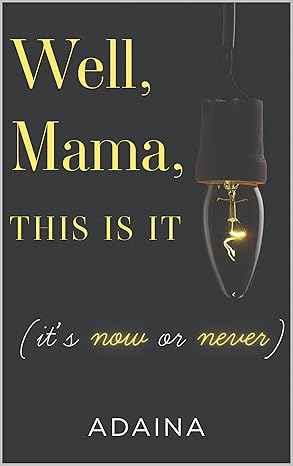
Well, Mama, This is It (it’s Now Or Never) is unlike anything I’ve read before. It’s part confession, part storytelling, and part letter-writing, all stitched together with raw honesty and a strong emotional pulse. The book moves between voices, sometimes it’s a teenage boy writing to his grandmother, other times it’s a young woman chasing a dream life, or even a haunting personal tale of loss and survival. At its heart, though, the book is a letter to her mother, a brave and vulnerable coming-out story wrapped in poetry, reflections on love, faith, and the messy business of being human.
In “A Story of a Friend of a Friend,” when Adaina shares her journey from being a teacher to a stripper, the descriptions are almost cinematic. She writes about smoky eye makeup, French pedicures, and stepping into the strip club as if it were a Hollywood set. It’s dazzling, but then the tone flips as she describes the loneliness and danger behind the glamour, and suddenly I was pulled from the surface glitter into the heavy silence of regret. That swing between fantasy and reality is something the book does again and again, and it made me feel the same kind of emotional whiplash she must have lived through.
I also loved the way she mingles imagination with truth. Take “Secret Agent (Voodoo Princess),” where Rebecca Tanon, a demon-child-turned-undercover-agent, blurs the line between folklore and personal reflection. At first, I thought it was a sharp left turn into fiction, but it clicked for me as a metaphor for how heavy family expectations and inherited trauma can feel like being born with a mission you never asked for. The story gave me chills, not just because of the supernatural edge, but because of what it revealed about how powerless a child can feel in the hands of adults.
In “To My Newest Pen Pal, Jant Leaps,” Adaina writes a heartfelt letter that evolves into a romantic confession, blending vulnerability with defiance against judgment. In “Sexual Orientation,” she reflects on faith, family, and identity, ultimately affirming that love is sacred regardless of gender. She weaves in verses about love, love with a woman who makes her feel free, love that pulls her away from Hennessy and Ecstasy, love that feels holy even when the world insists it’s wrong. There’s vulnerability in her admission, “I never thought I could fall in love with Eve’s gender,” but also defiance when she insists, “Yes, I am a Christian, but my religion is kindness.” That blend of fear, yearning, and courageous self-acceptance struck me deeply. It’s not polished in the way mainstream memoirs often are, but that’s what makes it powerful. It feels like a real letter, one that trembles with truth.
In the end, I walked away from this book feeling like I had just sat across from someone who didn’t hold anything back. It’s raw. It’s uneven at times. But it’s alive with feeling, and that’s rare. I’d recommend this book to anyone who craves honesty in writing, teens struggling with self-expression, readers curious about queer coming-of-age stories, or anyone who wants to feel less alone in their own mess of faith, love, and identity. It’s not a book for someone looking for clean lines or tidy endings, but if you’re okay with sitting in the chaos of someone else’s truth, then Well, Mama, This is It (it’s Now Or Never) will move you the way it moved me.
Pages: 51 | ASIN : B0DT7FZS7Q
Reflections: Earth, Heart, Light, Dark
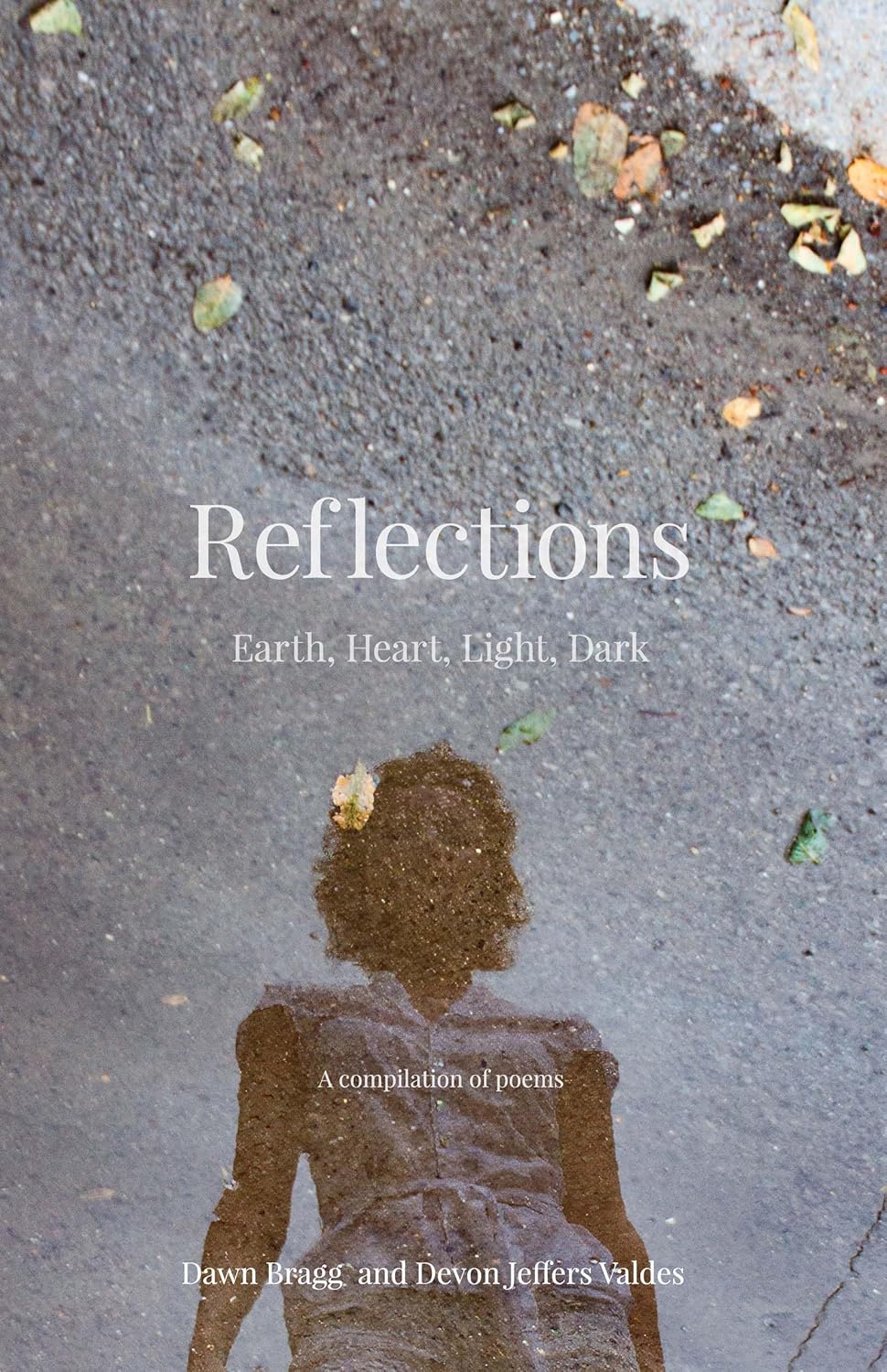
Reflections: Earth, Heart, Light, Dark is a mother-daughter collaboration that explores the intertwined themes of Earth, Heart, Light, and Dark through poetry. The book flows like a seasonal cycle, beginning with poems rooted in nature, moving through love and memory, then toward hope and illumination, and finally into grief, loss, and shadows. Each section feels distinct, yet they all circle back to a shared sense of searching for meaning in both beauty and pain.
Poems like Transition pulled me in with their intimacy, especially the image of a mother’s hands rebuilding a new world after a storm. It felt deeply personal but also universal, the kind of moment that made me stop and think about my own family. I’ll admit, Grandmama caught me off guard with its questions, “What thoughts did you have? Did you think them deserving?” and left me feeling both unsettled and comforted at the same time. That’s what I liked most, the poems didn’t tie everything up neatly. They lingered.
From Ash to Light carried a strong sense of resilience, and I couldn’t help but feel buoyed by its journey from despair to joy. It had this rhythm of stumbling and rising that felt human and raw. On the other hand, Dawn of Forty-Nine leaned more toward classic imagery, almost old-fashioned in its rhymes, which at first jarred me but eventually worked because it added texture to the collection. I found myself rereading those lines about waterfalls and winds, almost like I was letting the words wash over me instead of trying to decode them.
Then there’s the “Dark” section. This is where the book hit hardest for me. You Left Me was plainspoken, almost brutally so, and that stripped-down honesty made it sting. The Waves had this hypnotic pull with its repetition, “Rising above, wave after wave,” that felt like drowning in grief and memory. I could feel the authors letting themselves go to heavier places, and I appreciated that they didn’t shy away. It made the hopeful poems earlier in the book feel more earned, less naïve.
Reflections: Earth, Heart, Light, Dark is for readers who like their poetry to sit somewhere between personal diary and universal myth. It’s not heavy with academic wordplay, but it’s not fluff either. If you enjoy quiet evenings with a book that makes you pause, maybe even tear up, this one is a must-read. Personally, I closed it feeling like I had sat down with two voices who weren’t afraid to be vulnerable, and that’s something I’ll always admire in poetry.
Pages: 38 | ASIN : B0FFNGQ15P
The Meteor Symphony: Stories and Poems
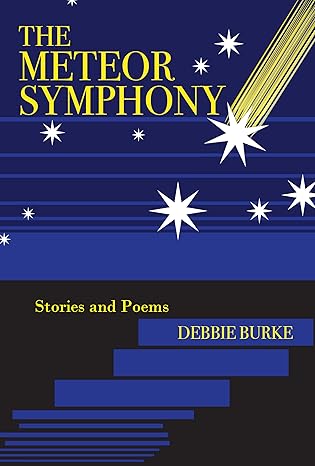
The Meteor Symphony is a colorful mix of short stories, poems, and microfiction, stitched together with music, humor, grief, and hope. It moves from tales of jazz musicians and stolen saxophones to intimate portraits of aging, love, heartbreak, and resilience. Some pieces lean into whimsy, others lean into sorrow, and many hover in the strange, honest space in between. The title story ties it all together with an imaginative search for a lost symphony, but the book itself feels like a symphony of voices, moods, and rhythms.
I enjoyed the range in this book. One page had me laughing at the absurdity of a sax heist, and the next had me sitting with the weight of a widow’s quiet grief. Burke writes with sharp clarity, yet there’s also a looseness in her storytelling that feels natural, like listening to a friend talk late into the night. I loved that she didn’t try to polish away the odd details. People misstep, conversations derail, feelings clash, and it all feels real. At times, the jumps between stories and poems felt a little jarring, but in a way, that’s what made it lively. The collection refuses to settle into one mood.
I also found myself connecting with her fascination with ordinary people. She doesn’t write grand heroes or villains, but flawed, funny, messy people. That resonated with me. Her style is direct but not cold, and she doesn’t shy away from emotions. Some of the poems hit me harder than the stories, brief as they were, because they carried that distilled punch of truth.
I’d say this book is best for readers who like variety, who don’t mind skipping from lighthearted banter to heavier reflections, and who enjoy the intimacy of short-form writing. If you’re open to being surprised, amused, and sometimes gutted all in one sitting, Burke’s collection is worth your time. I’d recommend it to anyone who loves music, who has wrestled with family, or who has ever paused at sunset and felt the ache of beauty and loss in the same breath.
Pages: 114 | ASIN : B0DTJ37FVK
Representation is Lifesaving
Sadness & Sadness Accessories is a raw, vulnerable, and unapologetically human collection of poetry that explores identity, trauma, queerness, grief, and resilience with a voice that is equal parts tender and ferocious. What inspired you to write this particular collection of poems?
There are poems in this collection that I wrote ten or fifteen years ago when I started writing, but the energy and depth of the poems transformed when I transitioned three years ago. All at once, my body was aligned with my spirit, and the poems poured out of me. I did a lot of healing in a short amount of time after I lost my job because of my transition. So much pain in my life that was repressed by PTSD or numbed by disassociation and dysphoria was screaming in my ear. I had so many things to say all at once, and for the first time, they were coming from me. The true me. I processed a lot of this pain via writing, and these words healed me greatly.
But as I think is always true for anything I write, I wanted to put out into the world what I couldn’t find and what I wish I had when I was younger. I didn’t read any trans authors growing up. I didn’t even meet a trans woman until my thirties. Without the words for my pain or hopes, I felt alone and lost. Representation isn’t just a cute marketing line; it’s lifesaving. There are other trans girls in their eggs out in the world who may be helped just a little bit by my poems, and that’s why it’s out and had to happen. And to my various cis friends and allies, I wanted to do my best to present dysphoria and euphoria. That was a big part in writing “Musth,” just trying to put language on something that baffles even my strongest supporters.
What was the biggest challenge you faced in putting together this poetry collection?
I would say it was facing the pain presented in these poems, but honestly, the hardest part was trying to balance grief and hope. Unfortunately, much of my poetry is an attempt to manage my sorrow, but I never want to present being trans as a life of pain and torment because the truth is that our joy is world-shaping. Poetry is a place I visit when I want comfort, and I wanted to come to that place with my delights. Poems about my cat, about the sweet sound of pages turning, and about cold glasses of Dr. Pepper were all essential to keep this book from becoming a pity-party, to represent more accurately that being trans isn’t just dysphoria but heaps of euphoria, and to keep the energy of the book from dragging out and driving the reader insane.
How has this poetry book changed you as a writer, or what did you learn about yourself through writing it?
Writing is how I explain myself to myself. The first poem I ever wrote was a lesbian love poem, but at the time, I thought I was male. It was an overwhelming outpouring of emotion, and it felt right, but as soon as I finished, I felt I had stepped into a room where I wasn’t welcome. I felt like an intruder. But I had no idea what my brain was trying to tell me, and to this day, my own poetry surprises me as it shows me areas of myself I haven’t fully uncovered. I learned about the repressed memories of abuse I suffered at the hands of my parents when the words and images appeared in my poems. Then I went back, flipped through poems I’d been writing for decades, and found the information there the whole time.
But all of that to say that this book healed me. Everything inside of me felt chaotic and noisy, and I had no means to turn on the lights and look into that darkness. Finding the images of my childhood helped me pull out memories of hiding from my parents. It showed me the joy in dancing to Britney Spears in my sister’s bedroom and something about it feeling right and foreign, forbidden and all I’ve ever wanted. It was therapy, and for so long, it felt too vain to put that onto paper and charge people money for it. However, I had many friends, readers, and audiences at open-mic performances, they felt certain that others would benefit from my words, and that they were worthy of sharing. So this book taught me that my words mattered, even if they were ugly and full of pain.
What is the next book that you are working on and when can your fans expect it to be out?
I write in many different genres, and I am working on a collection of YA fantasy novels. They are about a boy named Finn who discovers he can fall into his favorite books to meet his favorite characters and live their adventures. In the first book, The Fullness of Time, which is out now, Finn goes into a book about a young King Arthur, but when the plot goes wrong, he finds his presence might cause the story to be changed for the worst forever. The second book in that trilogy will be coming out later this year, Music of the Spheres. In it, Finn galls into Little Women and falls in love with Beth March. However, if anyone has read Little Women, they will know exactly why Finn desperately wants to change the ending of this book forever. It is very much in line with Sadness & Sadness Accessories as it explores grief, hope, and beauty.
Author Website



 LITERARY TITAN