Blog Archives
Transcendence (The Alphamind Odyssey Book 2)


Humanity stands on the edge of its most transformative technological era. While political leaders strategize the future and scientists push the boundaries of innovation, ordinary people are left to navigate the whirlwind of an increasingly chaotic world. Transcendence by James Azinheira, the second installment in The Alphamind Odyssey series, dives headfirst into this maelstrom, a gripping science fiction tale brimming with mystery, action, and intellectual intrigue.
The novel opens with a man awakening beside a dumpster, stripped of his memories and identity. No name. No past. Only confusion. Thrust into poverty without a lifeline, he must quickly learn to survive in a society where power belongs to the economically privileged. In his struggle, he finds unlikely allies, others abandoned by the system, eking out an existence on the fringes. With quiet resilience, this makeshift community bands together, scavenging for food, evading aggressive law enforcement, and maintaining anonymity. But as survival gives way to strange revelations, it becomes clear the protagonist may hold the key to something far greater than himself, perhaps even the fate of humanity.
From its first page, Azinheira delivers a taut, atmospheric narrative that sustains a constant sense of mystery. Multiple subplots layer the story, enriching the central arc with reflections on technology, ethics, and the crumbling structures of modern civilization. The dystopian backdrop feels eerily familiar, protests spiraling into violence, populist leaders peddling hope while orchestrating shadows, wealth wielded like a weapon, and scientific advances dangling promises that both captivate and unsettle.
The novel reaches its most exhilarating peak with the birth of a sentient AGI (Artificial General Intelligence) and the unearthing of a formula capable of curing all disease. These breakthroughs catapult society to the brink of irreversible change, triggering fierce clashes between altruistic innovation and corrupt ambition. The narrative doesn’t just speculate on technological futures, it immerses readers in the clashing perspectives of scientists, lawmakers, visionaries, and ordinary citizens. Every scene hums with tension, as questions of morality, progress, and human identity surge to the forefront.
Azinheira skillfully integrates quantum mechanics, artificial intelligence, and nanotechnology into a story that never loses sight of its human core. The excitement is palpable, but so too is the unease, what do we sacrifice in the name of advancement? What remains of our humanity when everything else becomes programmable?
Transcendence is a compelling and intellectually charged work, striking a rare balance between high-stakes adventure and thoughtful commentary. With its sharp pacing and layered themes, the novel proves to be both entertaining and relevant.
Pages: 353 | ASIN : B0F2J8GJ9V

Kheira & Khogee: The Legend Begins
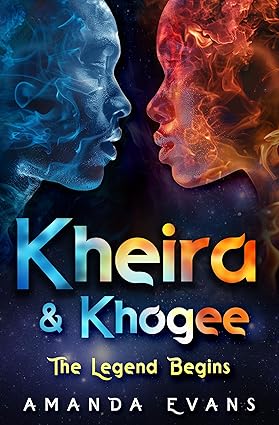
Kheira & Khogee: The Legend Begins is a cosmic love story wrapped in science fiction, spirituality, and mysticism. At its heart, it’s about two soul-connected beings, Kheira and Khogee, who are Twin Flames separated by memory loss and a mission that transcends lifetimes and galaxies. Kheira has forgotten who she is. Khogee remembers just enough to guide her back to herself. Together, they must resist powerful agents sent to erase them from existence and rekindle the deep spiritual light that binds them across space and time.
The book is written almost like a telepathic dialogue between lovers, with a flow more like a play than a novel. It’s heavy on feeling and energy and light on traditional narrative structure. At times, this made it difficult to follow, especially since the plot dips in and out of time and dimensions without much warning. But strangely, that worked. The lack of structure echoed the timeless, otherworldly nature of their connection. It felt less like reading a story and more like being swept up into someone’s intimate dream.
Emotionally, the book hit me in waves. There’s a yearning between the two leads that’s raw and constant, and I was moved by their devotion. The writing focuses more on energy exchanges and inner awakenings than on external world-building or dialogue. That’s not a flaw, it’s a choice, but it means the story will either totally click with you or leave you lost. What stood out to me was the unwavering message of unconditional love, spiritual power, and remembering who you truly are. It’s beautiful. At times, it’s overwhelming. But it’s always sincere.
I found Kheira & Khogee: The Legend Begins to be less of a sci-fi adventure and more of a soul journey. I’d recommend this to readers who are deep into spiritual work, soulmates, reincarnation, or Twin Flame concepts. If you’ve ever felt like you’re waking up to something ancient and real inside you, this might feel like home.
Pages: 243 | ASIN : B0DMG8CSXW

There Are No Stars Here
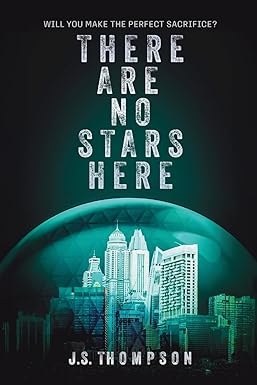

There Are No Stars Here is a speculative dystopian novel set in a near-future America torn apart by environmental collapse, authoritarian control, and ideological warfare. At its heart are the lives of Manuel and Solanis, two young adults navigating fractured families, corrupted systems, and the lingering shadow of a manufactured plague called Haze. Through split narratives, the book builds an urgent picture of a society breaking under its own weight, where AI companions, dome cities, and militant resistance movements exist side by side with old-fashioned grief, duty, and hope. It’s a story of survival, identity, and the terrifying beauty of personal rebellion.
What I liked about Thompson’s writing is the way he captures tension like it’s a living, breathing thing. There’s this pulse running under every page, whether it’s the quiet horror of a dying parent or the chaos of a city in flames. The prose doesn’t try to impress you with its vocabulary. It’s blunt, fast, and full of teeth. That style worked wonders for me. I never felt lost in the world-building, and that’s a real feat in a book with this many moving pieces. The pacing can be relentless, but when the emotional moments hit, they hit hard. Manuel’s grief, Solanis’s panic, it all feels lived-in and earned. There’s sincerity here, even in the most surreal scenes.
The ideas, artificial intelligence as surrogate parent, state surveillance morphing into salvation, climate catastrophe wrapped in corporate spin, are all big and worthy. But sometimes I felt they rushed past in favor of another twist. The emotional weight stays solid, and I found myself thinking about this world long after I finished it.
I’d recommend There Are No Stars Here to anyone who enjoys near-future sci-fi grounded in character and emotion. It’s not just for fans of dystopia or political thrillers; it’s for people who want to feel something, who want to sit with loss, hope, and rage, and watch characters claw their way toward meaning.
Pages: 470 | ASIN : B0FDZDYJ67
Sins of the Saviors Book 1: Escape From the Culling Box

In Sins of the Saviors, TJ Relk throws us into a grim but not entirely hopeless future where war, artificial intelligence, and blind patriotism have reshaped what it means to be human. The story centers on David, a soldier who returns from decades in a senseless, eternal war to a world governed by AI, propaganda, and engineered peace. The tale winds through his memories, regrets, and slow-burning defiance as he comes to understand the true cost of “utopia.” Flipping between David’s perspective and those of his aging mother Gale, his idealistic sister Mary, and his rebel sibling Jane, the book dives into what happens when free will is exchanged for safety, and what’s left when even memory is no longer trusted.
I liked how the book captured emotional decay. The slow erosion of identity in a world that insists it’s perfect. Relk’s writing is sharp. The style is lean and introspective, often haunting in how casually it delivers gut punches. There were pages I read twice because a single line kept ringing in my head, like David’s quiet desperation or Jane’s fiery truths about a world that stopped caring about real truth. Some scenes, like the slow fade of old friendships or Gale’s annual ritual to honor a son who might as well have been a myth, cut deeper than expected. They felt real. There’s no clean villain here, just systems of thought that got out of hand.
Sometimes the pacing slows, especially when the narrative shifts to Mary’s point of view. The dystopian future is vividly imagined. I was left wondering Goliath the network or a god? Sometimes both? Sometimes neither? I got the sense that Relk wanted that ambiguity, and it left me craving answers a few times. Still, I appreciated that the story didn’t spell everything out. There’s something gutsy in trusting readers to make their own calls about what’s real, what’s right, and who, if anyone, is actually free.
I’d recommend Sins of the Saviors to anyone who likes their dystopias philosophical, their heroes broken but not beaten, and their science fiction tangled up with questions about memory, identity, and whether safety is ever worth the soul. It reminded me a bit of 1984 with the heart of The Road, but written for today’s digital chaos. If you’re someone who’s ever worried about where all this tech and tribalism is going, this book might hit a little too close to home.
Pages: 199 | ASIN : B0FDBN6KMT
The Haunted Executioner
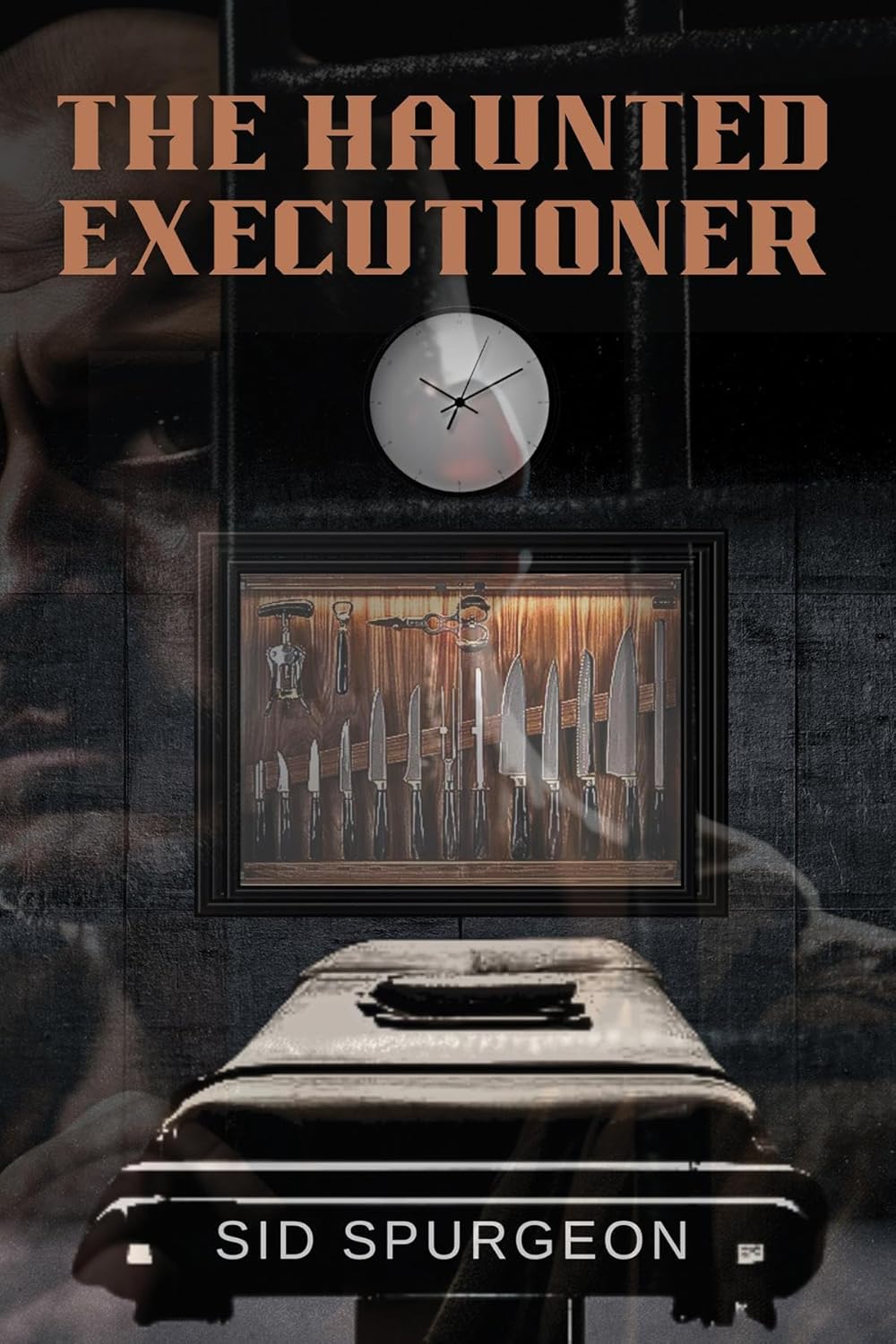
Sid Spurgeon’s The Haunted Executioner delivers a hard-hitting dystopian satire dressed up in gallows humor and brutal honesty. Set in a near-future America where capital punishment is not only legalized nationwide but fetishized and televised, the novel dives deep into the dark heart of a society drunk on vengeance. Through the story of Cecil LeBeeau, a reluctant and deeply damaged state executioner, Spurgeon unspools a twisted tale of justice gone off the rails, laying bare the social, political, and psychological rot that feeds it. It’s a mix of speculative fiction and political polemic, told with a blunt voice and barbed wit.
I found the writing raw and unfiltered. The prose often reads like someone ranting over beers after watching too much cable news, but somehow that works. There’s a rhythm to the chaos, and while the dialogue can feel like caricature at times, the ideas behind the words cut deep. Spurgeon’s disdain for American culture’s obsession with punishment, violence, and spectacle is unmissable and unrelenting. And yet, beneath the cynicism, there’s a weird tenderness for the broken people caught in the middle of it all. The chapters that dig into Cecil’s unraveling psyche—his self-loathing, his numbed soul, his need to be punished himself—are some of the book’s strongest moments. The horror isn’t supernatural; it’s systemic, societal, and deeply personal.
The book isn’t subtle. At all. It’s angry, loud, and long-winded in parts. Some passages lean more into a manifesto than a novel, with pages of political commentary, mass shooting statistics, and imagined congressional debates. These sections drive the point home and add weight and urgency to the book’s message. The intensity of the commentary, though heavy, feels like a bold choice that gives the reader space to reflect. The passion behind the words is undeniable, and it deepens the impact of the story as a whole. Still, I can’t deny that I was gripped—disturbed, unsettled, even sickened, but never bored.
The Haunted Executioner is for readers who like their fiction fierce, unpolished, and full of fire. It’s not an easy read—it’s messy and morally murky—but that’s the point. If you’re someone who’s ever shouted at your TV during a news segment or questioned how close we are to the edge, this book will speak to you.
Pages: 440 | ASIN: B0DLQYCDHZ
The Ascension Directive
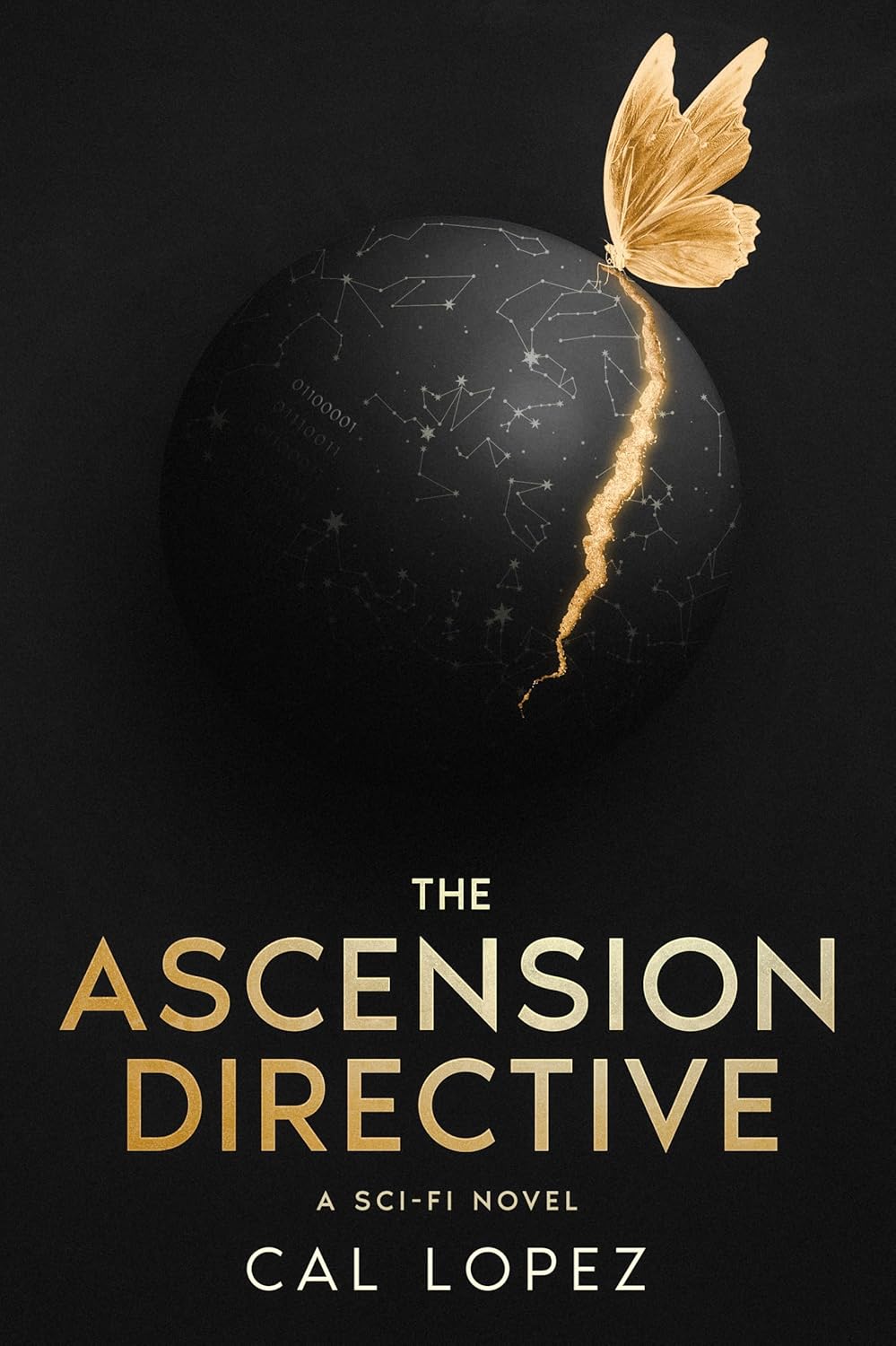
The Ascension Directive is a dystopian coming-of-age saga set in a world where progress has overtaken humanity, and technology threatens to rewrite the essence of being human. Through the dual perspectives of Catalina Restrepo and Natasha Morgan, childhood friends pulled apart by technological upheaval and ideological drift, the book explores the cost of automation, the struggle for identity, and the meaning of love, family, and choice. As their paths diverge, Catalina resisting the invasive march of artificial enhancement in Meadowbrook and Natasha chasing answers in the hyper-optimized New Avalon, the story weaves personal rebellion into a broader critique of a future that asks what we’re willing to sacrifice for perfection.
Cal Lopez doesn’t just tell a story, he excavates the emotional fallout of a society hellbent on “fixing” everything, even at the expense of its soul. His writing style is wildly unpredictable—lyrical in one sentence, brutally direct in the next—and that sharp rhythm mirrors the chaos his characters navigate. Catalina is fire: angry, unfiltered, and afraid to hope. Natasha is her counterweight: analytical, open-hearted, and grappling with the illusion of progress. I was especially struck by the way Lopez handles technology—not as a villain, but as a seductive force that feels eerily close to our own reality. I caught myself nodding, sighing, and—once or twice—clenching the book tightly.
But what really got me wasn’t the tech or the politics—it was the humanity. These characters ache. They long for lost mothers, for belonging, for freedom that doesn’t come with a barcode. There’s a part where Catalina, surrounded by perfect holograms and polite drones, just wants to feel real again—and that resonated with me. Some moments feel raw and jagged, while others are almost dreamlike. Lopez doesn’t shy away from contradictions. Instead, he leans into them, and the result is a story that’s alive with conflict and yearning.
The Ascension Directive made me feel unsettled in the best way. This book is for readers who crave more than just a cool premise—it’s for those who want to feel something. If you liked The Giver but wish it had more grit, or if Black Mirror ever made you cry instead of just freak out, this one’s for you. It’s emotional, it’s thoughtful, and it pulls no punches.
Pages: 486 | ASIN: B0F9YGQNFC
KRIS PR

KRIS PR is a wild, heart-thumping ride through a neon-soaked Manchester of the future, where genetic editing and cybernetic mods clash with old-school policing and gritty human instinct. The book centers around Kris, an “Edit” police officer, genetically enhanced but fiercely clinging to human values, who stumbles across a mysterious girl named Aimee. She’s young, scared, possibly modded beyond anything he’s seen, and very much in danger. From that moment on, everything goes sideways. The novel blends cyberpunk dystopia with raw character introspection, combining action, ideology, and just the right splash of existential dread.
G.S. Morgan doesn’t just describe a futuristic Manchester; he drops you into it with both boots on the cobbles. The prose is rich and textured, almost poetic at times, but then whips around into sharp, no-nonsense grit. Take the opening scene: Kris cruising through the night, haunted by doubt, the streets “held together with rusting – yet unyielding – steel wire.” There’s this beautiful, ugly honesty to the world. I found myself rereading lines just to soak them in. And then, the action kicks off hard. The alleyway scene where Kris finds Aimee is utterly gripping and I didn’t blink for three pages.
The ideas packed into this story go way deeper than cool tech and shootouts. Kris wrestles constantly with what it means to be “better,” as an Edit, as a man, as a protector. His Nietzschean upbringing and loyalty to “The 8” code make for some intense inner dialogue. It’s not subtle, but it doesn’t try to be. He’s torn up about fear, strength, and failure. When Kris is ambushed and chooses to flee, only to later wrestle with profound shame and guilt in the wreckage of his overturned patrol car, the moment lands with striking emotional weight. It’s raw, honest, and deeply human. He isn’t portrayed as an invincible figure; he’s someone navigating fear and survival in a world that demands perfection. That kind of vulnerability, especially within a narrative dominated by enhanced beings, feels both rare and powerful.
Then there is Aimee, a character cloaked in enigma, her presence both unsettling and compelling. She appears to be an ordinary child, yet her connection to advanced biotechnology, including a remarkable ability to quite literally vanish, sets her apart in ways that challenge both the reader and Kris himself. Despite the extraordinary nature of her abilities, she is never reduced to a mere plot device. She is perceptive, composed, and retains a quiet innocence that contrasts sharply with the chaos around her. The relationship between Kris and Aimee is layered with unease and quiet empathy, complex, unfinished, and refreshingly ambiguous. What stands out is that Kris doesn’t fully understand his own drive to protect her. There is no grand revelation or heroic rationale, only instinct, and a deeply human impulse to act in the face of uncertainty. It’s this restrained, unresolved tension that gives the story emotional depth beyond the conventions of typical science fiction.
KRIS PR blew me away. It’s a genre-bending, brain-scrambling mix of noir, sci-fi, and psychological drama with a sharp philosophical edge. The writing’s bold. The world is cracked and humming. The characters, especially Kris, are deeply flawed and alive. If you like your stories with tension, tech, and a soul, this one’s for you. I’d recommend it to fans of Blade Runner, Altered Carbon, or anyone who’s into thoughtful action stories with bite.
Pages: 395 | ASIN : B0F3Y1HRJV
The Rise : Book 3 In The Wall Trilogy

The Rise is a gritty, heart-wrenching, and wildly immersive dystopian saga that grabs you by the throat and drags you through blood-soaked arenas, haunted bunkers, and psychological minefields. The story follows Asher, a gladiator trapped in a collapsing society ruled by the tyrannical Renatus, as he battles enemies, inner demons, and a regime built on resurrection and control. Interwoven are the narratives of Cephas, Sarai, and Kenan, each fighting their own battles in a world where memory, identity, and survival are fragile and fleeting. What starts as a sci-fi gladiator tale quickly blossoms into a dark, emotional exploration of trauma, resistance, and sacrifice.
From the very beginning, the writing delivers an immediate and powerful impact. The opening scene with Asher squaring off against Apex in the arena, only to be unexpectedly spared by an earthquake, establishes a tone that is both cinematic and intense. One line in particular, “Small dust clouds emanated from the arena as if demons were casually puffing on cigars,” exemplifies the book’s vivid and lyrical prose. The language is unflinching and evocative, blending brutality with a strange kind of beauty. This isn’t a story that’s merely read, it’s experienced with all the senses: the dust, the roar of the crowd, the sharp crack of broken bones.
What kept me hooked wasn’t just the action or dystopian drama it was the emotion, the broken relationships, and the aching humanity buried under all that chaos. There’s a scene where Asher kills a man in the arena who pleads for his life, and Asher mutters “Sorry,” before driving the spear into his chest. That moment wrecked me. It said so much in so little. Later, Sarai reflects on seeing her husband kill for sport, wondering if he’s still the man she fell in love with. These moments are quiet but devastating, and they made me care deeply. Even Cephas, a grizzled war dog, has scenes of real vulnerability, like whispering apologies to his dead friend Jude or drunkenly mourning what Eden should have been. The book’s moral compass is messy, but intentionally so because it’s a world where even the “good guys” aren’t clean.
The most unsettling character in the narrative is not Apex or any elite combatant; it is Renatus. His psychological unraveling is profoundly disturbing. In one particularly harrowing chapter, he is depicted hallucinating while fishing, speaking to a photograph of his deceased son as though it were alive. The scene is haunting, pitiable, and deeply tragic. His chilling assertion, “All good things require a sacrifice,” leaves a lasting impression. What makes Renatus so compelling and horrifying is not gratuitous malice, but his unwavering belief in the righteousness of his actions. Most disturbing of all is his consistency. The system in which he operates enables him to function simultaneously as both deity and monster. This is where the novel excels: it constructs a world in which power does not merely corrupt, it gradually strips away everything that is human.
The Rise left a lasting impact on me. The characters feel deeply authentic, and the stakes are both personal and profound. For readers drawn to darker narratives, flawed protagonists, and antagonists who are disturbingly human, this book is a compelling choice. This is not light or escapist fare, it is a somber, emotionally charged, and battle-worn epic that leaves a mark. And truthfully, that’s precisely what makes it unforgettable.



 LITERARY TITAN