Blog Archives
It’s Okay to Show Emotions

Captain Smiley: The Adventure of the Bouncy Frisbee follows a young boy who learns to solve his problems with the help of a police officer pal. What first inspired you to create Captain Smiley as a superhero for young readers?
In creating Captain Smiley, I envisioned a small community where the police officer knew everyone in the neighborhood. He knew how to handle easy to difficult situations. He handled these situations by using his words. I felt it was important to create a character who teaches children how to use their words when they feel upset, angry, or frustrated. After sharing my idea with a group of elementary school teachers, I realized the importance of creating an awesome hero like Captain Smiley. He motivates and encourages children to use their voices. Also, to teach them the importance of controlling their emotions while helping them understand that it’s okay to show emotions.
Why do you think it’s important for young readers to name their feelings while learning how to handle their emotions?
Expressing how you feel isn’t easy. Getting a young person to express how they feel can be very difficult. However, I feel it is important to identify the exact emotion to find a solution to the problem. When a person feels frustrated, it is not the same as being angry. Ace was angry about his frisbee. Once Ace expressed his feelings, it made it easier for him to calm down and focus on fixing the problem. It is important to identify the right feelings to help control the emotion being felt at the time. I think it is essential for children to feel free to express their emotions.
What is the most challenging aspect of creating a graphic novel? The most rewarding?
The most challenging is finding an illustrator to bring your vision to life. As a writer, I can visualize the story I would like to tell. Once you find a connection with the right illustrator, it is an amazing feeling to see what they can do. The most rewarding is a combination of telling the story and watching the illustrations tell the story without words. To answer the question, the illustrations are the most challenging and the most rewarding, from my point of view.
Can readers look forward to more adventures featuring Captain Smiley?
Yes! The second book is completed and waiting to be illustrated. I am hopeful it will be released this spring/early summer. . I will be releasing five books in the Captain Smiley’s series. I am super excited to share and introduce Captain Smiley to the world. Go Captain, Go!
Author Links: Website

Emotional Safety

Karl’s Marsupium follows a young kangaroo boy born with a pouch who navigates his own confusion and the teasing of others with the help of his patient and supportive mother. Why was this an important book for you to write?
Karl’s Marsupium grew out of a desire to create a story that doesn’t rush kids (or parents) past their feelings. I wanted to offer something gentle — a place where difference is noticed, held, and allowed to make sense in its own time. Writing this book felt less like delivering a message and more like making room.
What were some themes that were important for you to explore in this book?
Listening, belonging, and emotional safety were central themes. I was exploring how children experience feelings in their bodies, and how much changes when those feelings are met with patience instead of correction. The story also explores how something that might have once felt confusing or shameful can later be understood as meaningful.
What was your process for writing the interactions between Karl and his mother to develop the bond they have?
It was really paying attention to what wasn’t said as much as what was. Karl’s mom doesn’t try to fix or explain him — she just stays present. I wanted their interactions to model a kind of quiet support where listening itself is the connection and the marsupium is a safe place to be.
What is the next book you are working on, and when will it be available?
I’m continuing to explore Karl’s world through new stories and reflections all the time, but am letting them take shape slowly and organically. There isn’t a set release timeline yet for anything new — Karl tends to arrive when he is ready. ☺️
Author Links: GoodReads | Instagram | Website | Amazon
He was also born with a wise and caring mother who helps him understand that being different doesn’t mean being alone.
Join Karl and his mom as they navigate life with tenderness, curiosity, and courage.
Together they explore big feelings, new experiences, and what it truly means to belong in your own body.
A gentle, beautifully illustrated story for sensitive kids, anxious kids, kids who feel “different,” and every family growing their emotional toolkit.
Perfect for ages 4–8, this heartwarming picture book supports conversations about feelings, self-esteem, identity, and the magic of being yourself.
For parents, educators, and therapists looking for emotional-literacy picture books — Karl’s story is a soothing and empowering companion.
Seasons of Life and Love


Seasons of Life and Love is a wide-ranging collection of poems that moves through weather, memory, loss, longing, regret, and joy as if each emotion were its own season. The book ties nature to human feeling in simple, steady language. Storms mimic sorrow. Sunlight lifts the spirit. Quiet evenings bring reflection. The poet uses these images to guide the reader through moments of love, heartbreak, aging, family, and the slow unraveling and rebuilding that we all face. It is a gentle collection, and it lingers on the enduring hope that tomorrow may feel lighter than today.
I found myself pulled in by how honest the poems felt. The writing is plain and open. I kept thinking how the poet reaches for everyday scenes and somehow makes them feel personal. A shift in weather becomes a shift in the heart. A walk at dusk feels like a confession. Sometimes the rhymes tighten the lines in a way that made me smile. Other times they made the sadness feel sharper. I liked that the book never hid from pain. It met it head-on, almost with a kind of calm acceptance. I felt the weight of past loves, old mistakes, and long memories, and I found myself slowing down to take it in.
I also enjoyed the way the poet moves from the small to the big and back again. One poem sits quietly with a single moment. Another sweeps across years in only a few lines. The tone stays warm even when the subject turns dark. There were points where the sentiment leaned a bit heavy, but I could tell it came from a real place. The emotional sincerity is the glue of the book. I liked how the speaker often steps back to reflect on the choices they made. Those moments felt tender, sometimes even vulnerable. I could feel the author trying to make sense of life as it rushes by.
I feel that Seasons of Life and Love is written for readers who want poetry that speaks plainly yet feels deeply. It will appeal to anyone who loves nature imagery, reflections on love and time, or poems that read like diary entries set to rhythm. If you want something gentle, emotional, and rooted in real human experience, this poetry collection will be a good fit for you.
Pages: 126 | ASIN : B0DXR4YLLT

Seven Magic Bullets

The Hole in Your Life is a compassionate and practical guide to navigating grief and bereavement, shared from a place of not just professional expertise, but lived personal experiences, making it relatable in a way other books are not. Why was this an important book for you to write?
I get a great deal of satisfaction, even joy, when I can relieve suffering. If you like, you can think of this as selfish: I’ve been cursed with way too much empathy, so, for example, the daily news is a horror show. I cannot avoid it because being informed is necessary for my job as a Professional Grandfather (striving for a tomorrow for today’s youngsters, and a tomorrow worth living in), so if I don’t take precautions, I shed sympathetic tears of blood in response to war, environmental disasters, inhumane treatment of people and the like.
This book sets out how I deal with deep distress of any kind including this second-hand grief, but also the death of my daughter, and what I have taught to lovely people during decades of my counseling psychology practice. And the good thing is that these tools are all science-validated.
All sentient beings are apprentice Buddhas, apprentice Jesuses. So, when I remember (but never when I don’t), I act as if I were already enlightened. The Dalai Lama has said, “My religion is kindness,” and “The aim of enlightenment is to be of service,” so this book is an important step on my chosen journey.
What were some ideas that were important for you to share in this book?
First, life is too short for the seriousness it deserves. There is no point in being gloomy when writing about sad topics. In fact, fun is one of the “seven magic bullets” that shoot down monsters like depression, chronic anxiety, irrational anger. When you put a good dose of the seven magic bullets into your life, you are a pogo stick: the harder life bounces on you, the higher you rise. You’ll find them described at http://bobswriting.com/psych/firstaid.html
Second, whatever is, is. Acceptance, what in Buddhism is called equanimity, is the most powerful way to deal with any problem. This doesn’t mean condoning evil, but is part of being an effective change agent.
Third, forgiveness (including self-forgiveness), gratitude, and generosity are the most important tools of positive psychology, which is the scientific basis of my work.
Oh… about generosity. I have a long-standing policy: anyone sending me proof of purchase of one of my books, and anyone subscribing to my blog, Bobbing Around, has earned a free (electronic) book.
What was the most challenging part of writing your book, and what was the most rewarding?
I love all my children. That includes the real physical two-legged beings who call me Dad, and also the children of my imagination. On three occasions, these two groups have overlapped, giving me the opportunity to give double love.
My fictionalized autobiography, Ascending Spiral, has my children in it with their genuine personalities, and the events in their lives, but fictionalized names. (How surprising is that?)
Anikó: The stranger who loved me is my biography of a remarkable woman who achieved the impossible and survived the unsurvivable more than once. She is my mother. I visited her in Hungary during her dying days and returned with a huge amount of material. I couldn’t even look at it for two years, then wrote the book, which has won four awards.
The third book is of course The Hole in Your Life: Grief and Bereavement. It uses the story of how I dealt with the death of my daughter, Natalie, so there she is, loved twice over. Is that challenging enough?
And this is also the most rewarding part. Unlike my mother’s biography, this book was almost completed weeks after Natalie’s death, thanks to all I have learned in the past twenty-four years.
What do you hope is one thing readers take away from The Hole in Your Life?
Your wonderful reviewer has pinpointed it. The best way to deal with suffering is through it rather than avoidance. This gives us the opportunity for growing from the experience. Hmm… I should be about 50 ft tall by now. Hold it, that’s not the kind of growth I mean.
Thanks to the handicap of a scientific training, I don’t believe anything but go with the evidence. So far, I’ve spent a brief 82.75 years collecting that evidence, so I won’t list it all here. There is a part-completed draft of a book hiding in my computer about that. But the conclusion is that the purpose of life is spiritual growth. There is no point in change when everything is perfect. Suffering is the spur to growth. It doesn’t feel nice—but ask a teenager about growing pains.
A major loss is awful, but it is also the opportunity for a new start.
Author Links: GoodReads | X | Bluesky | Facebook | Website
The Hole in Your Life: Grief and Bereavement

Dr. Bob Rich’s The Hole in Your Life is part memoir, part guidebook, and part quiet act of grace. It opens with a deeply personal account of his daughter Natalie’s final months, setting a tone that is both tender and raw. From there, Rich blends professional insight with lived experience, walking readers through grief’s unpredictable terrain. He writes about denial and despair, hope and healing, blending practical techniques, like scheduling grief time and mindfulness, with heartfelt stories from his counseling practice. The book never lectures. It feels like a hand on your shoulder, reminding you that pain is part of being alive, and healing, though never complete, is possible.
I found myself deeply moved by the book’s honesty. Rich doesn’t sugarcoat anything. He talks about loss as something brutal and transforming, a force that tears through you but can, somehow, make you more whole. His writing is simple and kind, with a quiet humor that lightens the heaviness. I liked how he tells real stories, of clients, friends, even himself, without turning them into neat lessons. It’s messy and human. Some parts made me tear up, others made me smile. There’s warmth in his words that feels genuine, like you’re listening to someone who’s been through hell and came back wiser, not just older.
Some sections sometimes read like therapy notes, but then I’d hit a line or story that stopped me cold and made me think about my own losses. Rich’s balance between intellect and compassion is rare. He talks about pain as a teacher, about finding meaning even when nothing makes sense. I felt comforted, not because the book promised easy answers, but because it didn’t try to.
The Hole in Your Life isn’t just for people drowning in grief. It’s for anyone who’s loved deeply and lost something they can’t get back. It’s for the quiet moments when you want to believe life can still hold beauty. I’d recommend it to therapists, caregivers, and anyone sitting in the dark looking for a light that doesn’t blind you with false hope, but steadies you with truth.
Pages: 109 | ASIN : B0FFZVVK6X

A Star Named Sky and Flynn the Firefly
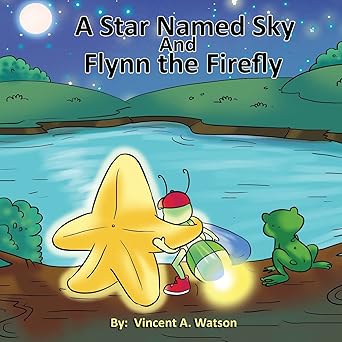
A Star Named Sky and Flynn the Firefly is a tender and uplifting tale that will leave both children and parents smiling. The story introduces Flynn, a little firefly who senses something is terribly wrong; his glow has vanished. Overcome with sadness, he begins to cry, but hope arrives in the form of Sky, a compassionate star who drifts down from above. Through a playful game filled with affirmations and encouragement, Sky gently reminds Flynn of his worth. With every uplifting word, Flynn’s light begins to shine again, and Sky leaves him with a lasting truth: never forget who you are.
Author Vincent Watson has crafted a beautifully inspiring narrative that speaks directly to young readers. The message is clear yet profound: every child is special, and recognizing their own value allows them to help others feel special too. The game Sky teaches Flynn becomes more than a moment in the story; it is an empowering tool for children learning self-love and self-expression. The simple yet powerful phrase, “I love me,” carries weight, especially for little ones navigating complex emotions.
The illustrations add another layer of magic, vibrant and full of life, almost as if the pages themselves were animated. A particularly delightful detail is the chorus of frogs in the background, cheering on Sky and Flynn with infectious joy. By the end, the bond between star and firefly has blossomed into a nightly ritual of encouragement, love, and friendship, a reminder that shining together makes the light even brighter.
Heartwarming, visually charming, and deeply affirming, this story is more than just a bedtime read, it is a gentle guide to embracing purpose, resilience, and self-love.
Pages: 30 | ASIN : B0C6RBPF4G
Anxiety Reset 30 Days to Find Calm: A Self-Regulation Workbook for Busy Adults


Anxiety Reset 30 Days to Find Calm: A Self-Regulation Workbook for Busy Adults is a structured 30-day guide to understanding and managing anxiety. It blends science-backed strategies with practical exercises, moving step-by-step from identifying personal anxiety patterns to mastering self-regulation techniques. The book begins with self-assessment mapping triggers, physical symptoms, and thought patterns before teaching both in-the-moment relief skills and long-term habits. It covers modern stressors like digital overload, workplace pressure, and life transitions, offering tools for building emotional resilience. The program feels intentional, with each day adding a piece to an integrated framework, culminating in a personalized plan for ongoing calm.
What struck me most was how grounded and personal the approach feels. Many books on anxiety either drown you in theory or throw a list of tips at you without context. This one makes you slow down and really notice your own patterns, which was surprisingly emotional. I found myself reflecting more deeply than I expected and connecting dots between physical sensations, old thought habits, and the modern chaos that feeds them. It’s not preachy, and it doesn’t assume you can drop everything for two hours of meditation each day. It works with real-life, messy schedules and all.
The writing is clear, warm, and refreshing. I appreciated the mix of science explanations with relatable stories from people like “Sarah” and “Michael,” which made the material easier to connect with. Sometimes the number of exercises felt a little intense, especially if you’re already stressed, but that’s where the “do what you can” attitude helped. I also liked that it didn’t stop at symptom relief, it’s about rewiring habits and building resilience.
This book is ideal for busy adults who feel stuck in an ongoing cycle of stress and want something more than quick fixes. If you like practical structure but also want space for self-reflection, this will likely hit the mark. It’s a guide you can work through once, then revisit whenever life ramps up again, and it leaves you feeling not just calmer, but more in control.
Pages: 463 | ASIN : B0FH1SK85C
Therapeutic Tools

Bella and Bird Explore Anger follows a young boy who is visibly upset after being denied a slice of his favorite pie, as he learns about anger and how to process it. What was the inspiration for your story?
The inspiration for the first book in the Bella and Bird the Emotion Explorers series came after Hurricane Ian devastated our island in Southwest Florida. Just three weeks before the storm, I had adopted my therapy horse, Bella, from Southern California. After traveling across the country to her new home, Bella endured and survived a Category 5 hurricane.
Her resilience was incredible, and as I thought about her journey, I also kept thinking about the children who lived through that hurricane and children everywhere who face devastating events, whether storms, fires, floods, or tornadoes. I wanted to create a story that would help adults talk with children about big emotions in a way that felt safe and approachable.
More importantly, I wanted my books to provide practical, therapeutic tools children could carry with them for life so they would know not only that it’s okay to have big feelings, but also how to process them in healthy ways.
What were some educational aspects that were important for you to include in this children’s book?
One of my main goals was to help children develop both emotional literacy and emotional intelligence. Emotional literacy is the ability to recognize, name, and understand our feelings, while emotional intelligence is the ability to manage those emotions, express them appropriately, and empathize with others.
In Bella and Bird Explore Anger, I wanted young readers to not only see a character experiencing a big feeling, but also to learn the vocabulary to describe it and the tools to manage it. The story introduces simple, therapeutic strategies like box breathing, cool-down counting, and using an emotion wheel to help children process anger in a healthy way.
By embedding these skills into a relatable story, my hope is that children begin to understand that all feelings are valid, but how we respond to those feelings matters. This combination of emotional literacy and emotional intelligence sets a foundation they can use for the rest of their lives.
What scene in the book did you have the most fun writing?
I had the most fun creating the box breathing scene because it gave me a chance to show a calming tool in action in a way that children can easily understand and try for themselves. But even more than that, I loved creating the character of Bird, who is based on a real bird that lives in Bella’s stall. In the story, Bird brings comic relief to balance out the heavier emotional themes. These books deal with big, sometimes difficult feelings, and I think sprinkling in humor makes the lessons more engaging, comforting, and memorable for children.
Is this the first book in the series? If so, when is the next book coming out, and what can your fans expect in the next story?
Yes, Bella and Bird Explore Anger is the first book in the Bella and Bird the Emotion Explorers series. The second book, Bella and Bird Explore Sadness, is going to print soon. In that story, readers will meet Molly, a little girl experiencing the heavy emotion of sadness. Bella and Bird gently teach her how to tend to her sadness, while also offering therapeutic tools that nurture both emotional intelligence and emotional literacy; skills she can carry for life.
Following that, fans can look forward to Bella and Bird Explore Happiness. Oh, what a joyful adventure that one is! And then Bella and Bird Explore Fear. Each book is designed to help children and the adults in their lives talk openly about big emotions, build the vocabulary to name those feelings, and learn practical strategies to understand, manage, and express them in healthy ways. In doing so, the series aims to nurture emotional literacy (recognizing and naming feelings) and emotional intelligence (understanding and managing those feelings with empathy and self-awareness).
Author Links: GoodReads | Facebook | Website | Amazon
When Henry storms into the pasture, Bella, the wise horse, and her wisecracking sidekick, Bird, step in to help. Together, the friends set out to explore why Henry is angry and offer better ways to cope.
By the time Henry leaves the pasture, he’s gained new insights, is in better control of his feelings, and has tools to take along with him.
Bella and Bird Explore Anger helps children understand and manage their anger, making it a valuable resource for open and honest conversations about this challenging emotion.


