Blog Archives
Lost to Alice


Lost to Alice is a gripping coming-of-age novel set in the Rocky Mountains, following Aria as she’s thrown into a new life with her cousins after her parents’ tragic death. The story explores grief, love, identity, mental health, and the unforgiving pressure of growing up in a small town brimming with secrets. Through her new friendships and romantic entanglement with Chase, Aria finds herself entangled in drug deals, suicide, abuse, and deep-rooted trauma, all while navigating the treacherous terrain of high school. The plot crescendos with brutal emotional weight as one loss triggers others, and the fragile connections between the characters threaten to unravel.
From the first chapter, I was hooked. The writing has a raw, unpolished quality that works. It mirrors the chaos and roughness of the lives it’s portraying. Aria’s voice is incredibly real. Her inner monologues felt like the thoughts I might have scribbled in my journal as a teen, full of rage, heartache, and sarcasm. I appreciated how the story didn’t sanitize grief or teenage pain. The characters aren’t clean-cut heroes. They’re messy, flawed, sometimes deeply unlikeable, but that’s what makes them compelling. The pacing occasionally jumped, and a few transitions felt abrupt, but I never wanted to stop reading.
Emotionally, this book gutted me. I felt every loss like a punch to the chest. Miguel’s suicide hit me the hardest because of how complicated it was. Nobody is innocent, and the book doesn’t try to pretend otherwise. It forces the reader to sit with the weight of words and the consequences of silence. I loved Chase and Aria’s chemistry, their softness blooming in the middle of such dark, violent lives. But I also wanted to scream at them sometimes, which is what made them feel real. And Jonah? God, Jonah just felt like a walking wound. The ending wasn’t tied up in a neat bow, and I’m glad for that. It honored the pain the characters went through without pretending everything would be okay tomorrow.
Lost to Alice is a story for anyone who remembers how hard it is to be young, or who is living through that hell right now. It’s for people who have lost someone and were never the same afterward. It’s for kids who are angry, tired, and trying not to drown. I’d recommend it to readers of Thirteen Reasons Why, Looking for Alaska, or Girl in Pieces.
Pages: 288 | ISBN: 1948807793

The AndroBiotica File: Nearly Human
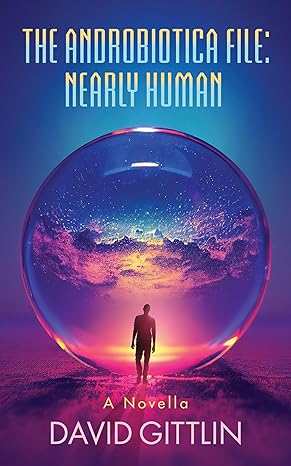
The AndroBiotica File: Nearly Human is a fast-paced science fiction novella that centers on Derrick Faulk, a hard-nosed investigator for the National Science Service, tasked with recovering a stolen file that contains plans for hyper-realistic androids. Alongside his savvy and mysterious partner, Aurora Zolotov, Faulk dives headfirst into a high-stakes investigation that quickly evolves into a journey across dimensions. With synthetic humans on the verge of becoming indistinguishable from the real thing, and a rogue android possibly escaping to a parallel world, the story explores the fine line between artificial and alive intelligence, all while blending espionage, sci-fi tech, and a dose of romantic tension.
Reading this novella was like getting dropped into a high-tech thriller with just enough emotional grit to keep you grounded. I liked how David Gittlin built the world. It’s slick, slightly offbeat, and full of detail, but he doesn’t drown you in explanation. The pacing moves. And Faulk’s dry wit cuts through the tension in just the right way. That said, some dialogue can feel a little stiff, and the inner monologues tend to meander. Still, there’s charm in how raw and personal the narration is. Gittlin isn’t afraid to let his characters brood, stumble, or flirt awkwardly. I appreciated that. Also, the tech hit the sweet spot between weird and cool.
But what really got me thinking was the heart of the story. This idea that machines are edging closer to life. What happens when they start wanting things? Romulus, the runaway android, is more than a plot twist; he’s a whole ethical hand grenade. There’s something unsettling and sad about him, like a kid who outgrew his purpose. The bigger questions about work, identity, and control aren’t hammered home, but they hover in the background. It’s sci-fi that’s self-aware without being smug.
The AndroBiotica File is a fun ride. It’s got brains, action, and just enough emotional punch to make you care what happens when the gears start turning in the wrong direction. I’d recommend this to anyone who loves near-future science fiction with a pulpy edge and a conspiratorial tone. Fans of Michael Crichton, Blade Runner, or even Altered Carbon will enjoy this story.
Pages: 112 | ASIN : B0CN5YSZL5
“What if ….”


The Secret Hamlet follows a brave and intuitive young woman gifted with a mysterious spiritual connection who gives birth to her daughter under extraordinary circumstances, causing her and her found family to seek a life away from the threats. What was the inspiration for the setup of your story?
It started with a “What if ….”. The ongoing barrage of news and media was woven with overwhelming stories around war. Brian starting thinking … Are women starting these wars? Are they involved in the planning? What if they did … and they were. Would the world be a different place today? Women aren’t the power brokers at the war tables. They, and children, are always the victims. What if women could have a deep and ongoing voice and strength?
Originally, more books were planned, but as we dove into it, multiple changes happened. More characters evolved. They spoke to us—even challenging some of the situations we wrote and the dialogue used. Skills started to surface in book 1, The Secret Journey that weren’t originally thought of, they just bubbled up as we wrote together—never in our minds in the beginning.
Brian had a first draft and joined forces with Judith, someone who had written several books and had an expertise in writing about women. Wanting to help Brian get the book done, the characters took her over, waking her at night. She was committed to completing the book, not realizing that they had a solid series in their hands.
We write differently from other partners. One of us will start a chapter in a Word document, then it’s Zoom time where Judith becomes the wordsmith and types away as they both talk, view, and verbally write together for a two or three hour stretch nonstop in a full collaboration.
Typically, we complete a chapter within one to two sessions. During those sessions, we banter back and forth as Judith writes and talk forward as to what we see is coming or needs to be created to fill a void that has bubbled up as we work together. What works here is we are both in the same place, with the same mind/talk think., bouncing live ideas off of each other … and then a “Yeah, that works…”
I found the characters in your story to be relatable and engaging. What character did you enjoy writing for?
Always Nichol and what we could do with her. The “what if she …” was a common phrase between the two of us. Nichol became part of us, almost like family—the one who bypassed fear did what needed to be done. Judith loves to describe her as a “badass young woman who can take down four men in one minute with a bow and arrow—something that was never imagined in the beginning. As Brian says, “Why not have a young woman do great things, unexpected things … why is it always the men in stories?” We let Nichol’s vision become the roadmap for us … often not knowing what she would reveal as the writing evolved.
The monk Timo was just this kind man who was open for Nichol to be what she was and would become. His nonjudgment has become a huge strength in her … and himself. Timo was always going to be a good guy and friend. We didn’t see him as a major character and he let us know he was and will be forward in the series.
Shadow, the wolf pup introduced in the first book, The Secret Journey, was a “bubbled up” storyline that became a major in all the books. As a protector of Nichol, she’s one smart wolf, reading sign language and anticipating Nichol’s and her children’s needs.
Was there one that was more challenging to write for?
Book 1, The Secret Journey introduced three cruel characters—Astrid the cruel mother, Fredric the vicious half-brother, and Priest Loupe who dripped with everything bad about the church. Astrid withers away in The Secret Hamlet, but we allowed Fredric and Priest Loupe to gather in building turbulence throughout and we planned deliciously for their downfall. What awful things could we do? You will see in Book 3 The Secret Rise!
What were some themes that were important for you to explore in this book?
Women are hot! Women can be smart … Women can get it done. Women can meet and handle challenges. And that working together works. The theme of family and caring for others, even when they are family, is important—for them and for self. The power of building a community and creating a gathering place where the glue can be spread and trust developed.
In the beginning of The Secret Hamlet, with Nichol and her family on the run from the greedy and evil Priest Loupe, she comes across a young woman in a daze who recently gave birth from a rape and not wanting anything to do with the baby. She and the infant were thrown away by the young woman’s family. Instantly grasping the situation, Nichol, on the run herself, promises her sanctuary and saying, “Your child will become my son. All I ask is that provide him milk until he no longer needs it. I will care for him with my infant daughter.”
Where does the story go in the next book, and where do you see it going in the future?
Empowerment runs through Book 3 The Secret Rise and the mystical Lady remains with her, her three children, and those she is in close contact with. Also scandal, tragedy, and triumph. Her strengths continue to grow and she now sees variations of them within her children. Nichol becomes a trusted advisor to Duke Richard—saving his life—and Shadow has pups, introducing them to become heroes and setting the stage for Book 4, The Secret Awakening.
Author Links: X | Facebook | Website
WINNER! American Fiction Awards … Fantasy Historial Fiction
Can the Hamlet of Harmonie Remain Hidden?
It’s the 11th century and Nichol with an infant daughter must escape Paris with her extended family. In Book 2 of the Harmonie series, The Secret Hamlet, the power of Nichol is turned loose. At her side is Shadow, her wolf-dog. In the bitter winter, she has become the target of the ruthless priest Loupe and her evil brother Fredric, both in pursuit of her and her daughter, Lucette.
With her expanding vision and skills coupled with the guidance of the Lady, Nichol leads her family, and those in need, to the creation and development of Harmonie. Hidden within the Kingdom of Normandy, Harmonie abuts No Name, another hidden hamlet.
Will the jeweled dagger stay in the hands of the rightful owner?
Will Nichol’s friendship with the new Queen of England benefit both?
Will the alliance with the Duke of Normandy protect the Harmonites?
Will more secrets be revealed by Nichol, Robert, Ezra, Helene, and Timo?
And … will the alliances last? Will the Lady stay by Nichol’s side?
The Secret Hamlet is Book 2 in the Harmonie series.
Authors Brian Barnes and Judith Briles weave a book series for the reader to open and fall into. It’s historical fiction that unravels the 11th century. Out of the darkness comes the empowerment of Nichol … a sanctuary, and the revelation of what women with vision can achieve.
Surviving

Kitty Schmidt: My Life As A Prostitute follows a young woman whose only option to pay for her grandfather’s burial is with sex, sending her on a path to becoming the madam of a high-class brothel for the Nazi in WWII. What was the inspiration for the setup of your story?
I had read a magazine account of Kitty’s life and how the SS refused to let her leave Germany, instead ordering her to work for them. I wanted to know more about her impoverished background that, unbeknownst to her at the time, served to help her manage a brothel for the inner circle of the Third Reich.
In addition, I thought it was important to draw attention to the exploitation of women before and World War II. Kitty Schmidt is a fascinating character who does what she must do to survive during a time when women were not valued as highly as men. She used her position to get information to expand her mind and her portfolio to improve her life and the lives of those around her.
What scene was the most interesting to write for that character?
Two scenes stand out. First, we see how a young child witnesses her mother’s murder at the hands of her alcoholic father. How does a young child process such a situation ? Does it scar her for life? She goes to live with her elderly grandparents who are in their last day, but she won’t have it. She finds paint and brushes and begins to work on fixing their house which has fallen into disrepair. In the second scene, in order for Kitty to pay for her grandfather’s funeral, she must sell herself to a pathetic undertaker. That is when she realizes she has power over men. This power helps her pay for her groceries, her clothes, and household repairs. It opens up a world that she had not known existed.
What draws you to the period of WWII and makes it ripe for you to write such a great historical fiction novel in it?
The WWII generation witnessed many heroes and heroines who in some cases made the ultimate sacrifice. I have written several novels centered on that generation: Brazzaville, The Reluctant Nazi, and Sunrise Over Casablanca. They all embrace a theme of personal growth and self-awareness and sacrifice in the midst of external struggles as well as in their own personal conflicts.
What is the next book that you are working on, and when will it be available?
On the Wings of Flying Tigers tells the story of a young man named Albert who always wanted to fly to feel free. That love grows when he watches flying circus performers in the 1930s. Then his uncle gives him a one-man plane to build.
Through hardship and self-sacrifice, Albert joins the military and moves up the ranks to become a member of the Flying Tigers, a volunteer Air Force branch of the Chinese Army. His time in the air indeed makes him feel free, but that freedom comes at a price. We expect to enter the publishing stage of this book in the coming weeks.
Author Links: GoodReads | Website
When Kitty attempted to leave Nazi Germany, the Gestapo made a deal with her. Manage a bordello for their hierarchy or go to a concentration camp. They wired her bordello so they could eavesdrop on every officer, diplomat, and foreign dignitary that passed through her door. Every word was recorded and passed to the authorities.
A modern-day Berliner stumbles upon her story, and he reads it during breaks from remodeling the building that housed her bordello. In doing so, he contrasts his life with hers
1989: An Eye For An Eye

1989: An Eye for an Eye is a riveting and emotionally tangled novel that centers around a decades-old murder case that left deep scars on a small Southern town. At the heart of the story is Ingrid, a woman haunted by her hidden identity, a web of family secrets, and a burning desire to clear her father’s name. After faking her death to go underground, she returns under a new identity, determined to expose the corruption that destroyed her family. What unfolds is a suspense-filled narrative that weaves together revenge, redemption, and revelations, touching on systemic injustice, identity, and the burden of legacy. With alternating perspectives and past secrets slowly coming to light, the novel drips with tension, building a compelling mystery around who’s guilty and who deserves justice.
I found myself genuinely pulled in by Smith’s writing. It’s not fancy or highbrow, but it’s honest and raw, and that made it powerful. The dialogue feels real, like you’re eavesdropping on two people who have been through hell together. The way he builds emotional weight around every choice Ingrid makes, especially the internal tug-of-war between vengeance and doing the right thing, hits hard. That said, the book has a big cast, and a few times I had to flip back to remember who someone was. Still, the pacing and reveals kept me hooked. It’s a big story with layers of betrayal, hidden ties, and long-buried pain. Every time I thought I’d figured something out, another twist would shake it up.
What really got me was the heart underneath all the thriller elements. The relationships, especially between Ingrid and Nicole, carry the emotional muscle of the story. You see how trauma doesn’t just affect one person, it ripples through generations. And when Ingrid gets her moment to finally breathe and step out of the shadows, you feel it. You also feel the price she pays to get there. The moral ambiguity in this book is thick. You’re constantly questioning what’s justified and what isn’t. And while some characters are undeniably evil, others live in this gray space that makes them unforgettable.
It’s gripping, it’s personal, and it asks big questions without offering easy answers. I’d recommend 1989: An Eye for an Eye to anyone who loves mystery, family drama, or stories about strong women navigating impossible choices. If you’re into slow-burning revenge tales that pack a gut punch, this is your kind of read.
Pages: 278
Dragon Riders of the 12th Battalion
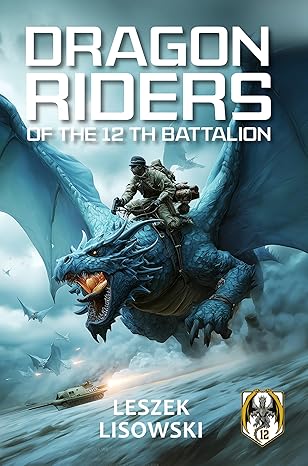
Dragon Riders of the 12th Battalion is a war novel like no other. It mixes the familiar grit of military life with a surreal, almost poetic fantasy about dragons integrated into a World War II-style campaign. The story follows Captain Jack Hanlon, a thoughtful but rigid officer, as he commands a squadron of dragon riders stationed at Pendragon Keep. These dragons aren’t just beasts of war, they are sentient, elemental, and emotionally resonant partners in a conflict that is both external and internal. As Hanlon tries to lead his team, he’s forced to confront not just enemy threats, but also the deeper rhythms of trust, instinct, and the unknown that define dragonkind and, eventually, himself.
The writing is vivid, lyrical, and strangely intimate. It has the grit of trench warfare, but also the quiet weight of a held breath. I loved how the dragons weren’t just weapons, they were characters with presence, agency, and weight. The author never over-explains their nature, which adds mystery, but he also doesn’t fall into fantasy tropes. Instead, everything feels grounded, as if dragons were a long-forgotten part of real military history. The prose, especially during the flight scenes, pulses like a living thing. It’s emotional without being sappy, epic without losing its sense of place.
That said, this isn’t an easy or conventional read. There’s very little exposition. The narrative drops you right into the fog of war and expects you to feel your way through it, like the characters do. Sometimes, I found myself rereading sections to track who was speaking or what exactly was happening. But even in confusion, the mood carried me. The emotional arc of Hanlon, his shift from rule-bound captain to instinct-led leader, was powerful, slow-burning, and deeply satisfying. His final decisions feel earned because they come from silence, not speeches. I also appreciated how the book didn’t tie everything up neatly. It left room for questions and for wonder.
I’d recommend Dragon Riders of the 12th Battalion to readers who like their fantasy mature, moody, and mixed with real human stakes. It’s perfect for fans of military fiction who aren’t afraid of a little metaphysics, or for fantasy readers who want dragons with more depth than fire and fury.
Pages: 358 | ASIN : B0F899C67P

Anticipation Day


Anticipation Day follows Dr. Joshua Lee, an Australian computer scientist who becomes the unlikely leader of a groundbreaking U.S. government initiative to allow citizens to experience fully immersive simulations of past historical eras or even specific days in their own lives. At the heart of the novel is the concept of “Anticipation Day,” an annual event during which eligible citizens can experience a vivid alternate reality. Through political maneuvering, technical innovation, ethical debates, and deeply personal moments, Michelson crafts a narrative that spans continents, emotional landscapes, and big philosophical questions about memory, identity, and the power of longing.
What struck me first was how real the characters felt. Joshua isn’t a stereotypical genius or a cold bureaucrat. He’s a loving father, a tired husband, and a man caught between ambition and regret. The writing is informal but polished, with a strong conversational voice. Michelson uses humor with a deft hand, not too much, but enough to ground the high-concept tech in everyday moments. This book is packed with big ideas about simulated realities, but it never forgets to be relatable.
Some parts felt like a detailed journal, more than a novel, especially in the first third. The world-building around the simulations is dense, but I appreciated the scientific depth. That said, once Part 2 hits, when we experience individual simulation stories from different characters, it absolutely soars. These sections gave the concept heart, showing not just the tech, but what it means to people: closure, adventure, peace, sometimes even sorrow. The vignettes felt like short stories inside a larger novel, and I enjoyed that structure. It gave the book emotional highs that made me reflect on my own life and what day I might choose to relive.
By the end, I felt something rare: hope. That’s not to say the book is rosy, it deals with trauma, loss, politics, and the ethics of tech, but it never loses sight of the value of memory and imagination. Michelson writes with warmth and sincerity. I’d recommend Anticipation Day to fans of thoughtful science fiction, especially those who enjoy character-driven stories with a speculative edge. If you liked Black Mirror episodes that tug at the heart or enjoyed the moral dilemmas of The Midnight Library, this book might be for you.
Pages: 544 | ASIN : B0DPJB1PMB
Flush Royale
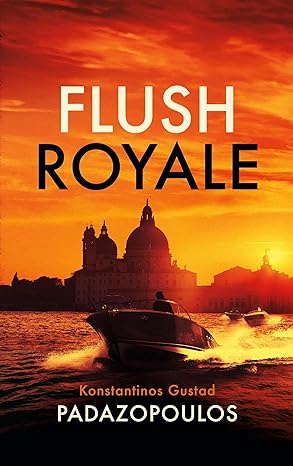
Flush Royale is a gripping historical adventure that kicks off in the 19th century with a vivid shipwreck and spirals into a modern-day maritime investigation packed with intrigue, lost letters, and secret heirs. The novel follows Louis Von Büren, a sharp Swiss envoy caught in a steamer disaster in 1862, and then leaps to the present, where Nick Diamantis, a Greek-Norwegian marine investigator, is pulled into a quest to uncover the wreck’s secrets. The mystery stretches across Geneva, Venice, and even the English countryside as the characters piece together the hidden legacy of King Otto of Greece. At the heart of it all lies a safe, sealed for over a century, and a letter that could rewrite European history.
This book felt like a cinematic blend of The Da Vinci Code and a National Geographic documentary. The writing is sharp and immersive. It avoids the pitfall of over-explaining and instead trusts the reader to keep up. I appreciated that. The historical elements were seamlessly woven into the story. I loved how Padazopoulos shifted between eras, using language and tone that matched each period. That gave the story a real pulse. The pacing, too, was on point. Just when I thought the plot might cool off, something exploded, sometimes literally. But even with the action, it never lost sight of the characters and their inner lives.
Some of the lines seemed almost too perfect, like movie quotes waiting to happen. But honestly, that’s a minor gripe when the worldbuilding is this rich. What struck me most was the way Padazopoulos captured the mood of each setting: the stormy waters of Lake Geneva, the serene chaos of an old archive, the weight of stepping into a library full of forgotten truths. And I loved Nick. He’s the kind of character I want more of. He’s flawed, clever, a little cocky, but deeply driven by something he doesn’t fully understand himself.
Flush Royale is a wild and thoughtful ride. It balances suspense with heart and never forgets that history isn’t just dates and names, it’s people, choices, and secrets that still echo today. I’d recommend this book to fans of historical thrillers, amateur historians, lovers of European settings, or anyone who enjoys a mystery with real emotional stakes. It’s perfect for readers who crave depth without sacrificing fun. I came for the shipwreck and stayed for the politics, the philosophy, and the possibility that a single letter could change everything.
Pages: 228 | ISBN : 8230370664



 LITERARY TITAN