Carolyn is a guardian of the fae. She has spent nearly a century and a half protecting the mystical creatures who live in her family estate in Dancing Valley. When Anita arrives at her home, lost and exhausted, Carolyn knows the young woman didn’t find the cottage by accident.
Abandoned by her mother, when she was hours old, Anita’s only clue to her history is an emerald pendant tucked into the pocket of the shirt she’d been wrapped in. After the unexpected death of her adoptive parents, Anita sells everything and heads to the wilderness. During a week of hiking unmarked trails, she becomes lost and roams for days until she sees a fairy, a creature she’s been convinced doesn’t exist. Anita follows the tiny creature, who leads her to Carolyn, who leads her on a journey to learn about her past and discover her destiny.
When Dancing Valley is threatened, Anita stands beside Carolyn, risking her life to fight for her new home and her mystical family.
The Dream Killer follows a man who is horrified to discover the body of a missing child prodigy in his basement. What was the inspiration for the setup of your story?
The Dream Killer came straight out of a recurring nightmare I’ve had for years—decades, actually. The first time I had it was in the early ‘90s when the JonBenét Ramsey case was all over the news. I was about ten, so I didn’t really understand what had happened, just that a little girl had been found dead in a basement and that nobody knew who did it. I guess my brain took that fragment of information and processed it into a nightmare.
In my dream, I found JonBenét’s body, and somehow, I knew I was the one who killed her… but I had no memory of doing it. My parents knew too, and they helped me cover it up—hiding the body, making sure no one found out. But the police were onto me, questioning me, circling closer. The overwhelming feeling was this deep, gnawing dread. I was free… but not really. It was just a matter of time before the other shoe dropped before I was exposed and my whole life was over.
And this nightmare kept coming back. It wasn’t always JonBenét (I’m not a total psychopath), but the core of it was the same: I’d find a body, I’d know I was responsible, and the dream was all about covering it up, not getting caught, and feeling the crushing guilt of having done something unspeakable. I’d wake up from these dreams still carrying that feeling—sometimes it would take me ten, twenty minutes to shake it off and realize, Oh. Right. I didn’t actually kill anyone.
Then, a couple of years ago, I had the nightmare again… but this time, it didn’t stop. It evolved. It played out past the usual cycle of guilt and cover-up, into an Act 2 and an Act 3. And in this “sequel nightmare,” I finally got answers: Who am I? Who is the girl? Why was she killed? What does it all mean? I woke up from that version of the dream so excited because I love movies and books that feel like nightmares stuff like War of the Worlds (Spielberg’s version), Eraserhead, The Trial, The Metamorphosis. I’d always wanted to write something that captured that kind of dream-logic terror, but whenever I tried to force it, it never entirely worked. It always felt like… trying too hard.
But with The Dream Killer, I didn’t have to force anything. I’d say 80% of it is the nightmare. I just translated it into a novel. It’s pure id, ego, and superego—raw and unfiltered. And I finally managed to create something that feels like nightmare fuel… because it is nightmare fuel. It comes straight from that part of me.
Which of your characters is most similar to you or to people you know?
Ethan is kind of a cipher for the everyman—he’s technically me, in the sense that he’s the dreamer who finds the body. He spends the story constantly bewildered by the shifting, surreal world around him, which is exactly how I felt in those nightmares.
Sophia Labelle, on the other hand, is this rebellious, film-school-dropout-turned-director—a sort of splatterpunk filmmaker. She came from this idea I had back when I was in film school. I used to always say, “Where’s the female Tarantino? I bet if there was one, people would lose their minds over her movies.” And this was before Julia Ducournau and Coralie Fargeat came onto the scene, so Sophia is kind of my imagined version of that—a cocky, fearless filmmaker who makes these ultra-violent, no-holds-barred films. She doesn’t compromise, and she doesn’t care who she offends.
Was there a risk you felt you took in this book? With your characters or with the plot?
The biggest risk I took with this book was trusting that readers would connect with its subconscious, dreamlike logic. It operates on nightmare rules—things don’t always make immediate sense, but instead of holding the reader’s hand, the story asks them to just feel what Ethan is going through.
I really believe that if you go along with that experience, everything clicks into place by the end. There are plenty of clues dropped throughout, and if you’re paying attention, you’ll start to piece together what’s really happening. What I’m most proud of is that early readers have embraced that challenge. Instead of needing everything spelled out, they’ve leaned into the mystery, becoming detectives in their own right. And hopefully, by the time they reach the twist, it feels like this mind-blowing, cathartic moment that makes it all worth it.
Can we look forward to more books from you soon? What do you currently have in the works?
Right now, I’m working on a book called The End, which follows a man trying to make sense of his girlfriend’s suicide. It explores themes of the afterlife, and I’ve got it fully outlined—but there are still some missing pieces that I need to make it as strong as it can be.
Right now, I’m letting the idea marinate. I know it’s close, but I’m waiting for that spark of inspiration to bring everything together—especially in a way that truly cements it as a horror novel. That’s the missing piece. So for now, I’m just living with the idea, letting it evolve in the back of my mind until writing it feels inevitable.
Meet Ethan Webman—a man living a quiet, unremarkable life until he discovers the body of a missing girl—her face splashed across headlines nationwide—in his basement. With no alibi and suspicion mounting, he must prove his innocence before it’s too late.
His quest leads him to James LaRoche, a scientist who believed people could kill within their dreams. As Ethan unravels a global conspiracy, every clue ensnares him deeper, unveiling horrors beyond imagination. Welcome to… The Dream Killer.
A Fine Line: The Beginning follows a dying Union soldier rescued by a supernatural healer, sending him into a life where the veil between the living and the otherworldly grows thin. What was the inspiration for the setup of your story?
Believe it or not, this story was inspired by a dream I had. I have other books that were inspired the same way. So, now I have a notebook and pen by my bed.
What are some things that you find interesting about the human condition that you think make for great fiction?
The human condition is a fascinating topic. In my view, humans are the most intriguing creatures on Earth. The human condition encompasses the shared experiences, emotions, and challenges common to everyone. It also includes the essential characteristics and significant events of human life, such as birth, death, and morality. Exploring these traits and events can bring realism to a story. Manipulating these elements and transforming them into something more powerful captures the essence of what many of us aspire to be or the abilities we wish we had. I particularly enjoy tapping into these emotions to create compelling fictional narratives.
In fantasy novels, it’s easy to get carried away by the magical powers of characters. How did you balance the use of supernatural powers?
I explore the interplay between superpowers and real-life situations, such as love, loss, birth, death, and the internal and external conflicts of morality. My emphasis is more focused on personal dilemmas rather than societal disputes or global crises. Personal moral conflicts usually stem from individual choices, making them relatable to everyone.
Is this the first book in the series? If so, when is the next book coming out and what can your fans expect in the next story?
Readers of A Fine Line Series will not have to wait long. A Fine Line: The Awakening is currently on pre-order and will be released on the 26th of March.
One by one they were pulled together. Not by chance, but by design… The Crew was formed, and their fate was sealed.
From multi-award-winning author J.C. Brennan comes a new edition of the A Fine Line series, starting with Book 1: The Beginning—a dark fantasy epic where history bleeds into myth, and survival demands a descent into the abyss.
May 1864 The Battle of Pickett’s Mill __________________________________
Union soldier William T. Healthaway should have died in the mud, his body lost among the thousands littering Georgia’s blood-soaked earth. But fate… or something far darker… intervenes.
Rescued by a healer with uncanny gifts and his clairvoyant wife, William is thrust into a world where the veil between the living and the otherworldly grows thin.
In the war’s aftermath, he becomes the catalyst that binds an unlikely Crew—each drawn by unseen forces toward a fateful destiny, their paths shaped by whispers from powers unknown, guiding them toward a purpose they cannot yet understand.
The shadows stir. The hour is late.
What secrets lie buried in their past? What awaits them in the gathering dark? And what price must they pay for a destiny they can’t escape?
Meet William and the Crew. Your journey into the unknown begins now.
Blending the visceral grit of historical fiction with the creeping dread of gothic horror, J.C. Brennan’s A Fine Line Series is a masterclass in dark fantasy. For fans of The Terror and Between Two Fires, this epic saga weaves brotherhood, fate, and eldritch horror into a story as enduring as it is unforgettable.
Ayodeji Ayinde’s Forebearer’s Sight: Strangers Among Us is an epic tale that fuses historical adventure with African spirituality and rich mythological storytelling. Set against the backdrop of a mysterious land discovered by European sailors, the novel explores the clash of civilizations, the spiritual power of indigenous people, and the destiny of a young stowaway named Frederick. The book seamlessly weaves two worlds, the invading seafarers and the mystical Yoruba kingdoms, into a tense, often brutal narrative about survival, identity, and power.
Right from the opening chapter, I was hooked. Ayinde’s prose has a cinematic quality that grabs your senses—there’s thunder crashing, wind howling, ships nearly capsizing, and a scrappy twelve-year-old fighting to prove he belongs. Frederick’s bravery during the storm won me over immediately. He’s smart, stubborn, and full of heart, and Ayinde gives him just enough edge to feel real. But what really impressed me was the layered emotional undercurrent, especially that moment when Afonso, the rough first mate, hugs Frederick and then awkwardly pulls away. It’s small, but it’s loaded.
Now, when the story shifts to the Yoruba kingdom, things get mystical and deep fast. The introduction of Ifaromi and the spiritual depth of the Ile-Ife culture is powerful. The world-building is detailed. The customs, the Orishas, and the rituals are immersive and rich, though at times, they can be a bit dense. Ayinde treats African spirituality with reverence and flair. The astral plane sequences and the role of the Hand of Olodumare gave the book a fresh, fantastical vibe that reminded me of why stories rooted in indigenous lore are so necessary.
One thing I didn’t expect was how intense the violence would be. The ambush in the forest was absolutely brutal. Heads rolling, throats slashed, and warriors emerging from tree trunks like ghosts—it’s savage, raw, and effective. Ayinde uses brutality to highlight the stakes of cultural collision. The native warriors aren’t just “villains,” they’re defenders of a sacred land, and that moral grayness is compelling. I also liked how even the supernatural moments, like Frederick’s body going limp from a mysterious touch, are handled with subtlety.
Forebearer’s Sight is a wild mix of swashbuckling adventure and spiritual epic. It’s not a light read, and it definitely asks you to pay attention, but if you’re into rich world-building, complex characters, and bold storytelling, it pays off. I’d recommend this book to readers who loved Things Fall Apart but wished it had more pirates, or fans of Black Panther who want something with more traditional African spiritual elements. It’s daring, emotionally charged, and wildly imaginative.
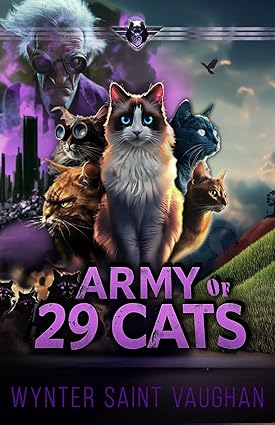
Wynter St. Vaughan’s novel Army of 29 Cats is weird in the best way possible. Army of 29 Cats is a gritty, post-apocalyptic story told through the eyes of street-smart, dumpster-diving cats. The setting is Atomic City, a once-thriving metropolis now drowning in purple fog, feral vibes, and existential dread. Our main feline hero, McGrady, is basically a warrior-poet with claws, and along with his anxious but lovable sidekick Paws, they set out to find out what’s corrupting their city—and their friends. It’s like Watership Down meets Blade Runner, but covered in fur and way more sarcastic.
I was not expecting to get emotionally attached to a cat. But there I was, rooting for him as he leapt rooftops, dodged glowing-eyed mutant dogs, and tried to rescue Felina, a cat gone rogue. The writing has this flow that jumps between poetic and street-wise without missing a beat. Like when Grandma Mittens describes Felina’s haunting purple eyes. That’s some vivid storytelling. The whole world-building around Atomic City is eerie and immersive. It’s a mess of decay, forgotten neighborhoods, creepy raccoons, and weird purple goo that’s turning everyone into mindless husks. I was hooked.
The dialogue is hilarious and punchy. The banter between McGrady and Paws had me laughing. There’s also a moment where Amazing Grace—who totally lives up to her name—pulls a full-on parkour escape from a dog pack and disappears like a silver ninja. And when Professor Waffles showed up with his steampunk goggles, I almost clapped. The characters are so over-the-top but grounded in enough raw emotion that it works.
Sometimes, the book throws a lot at you. Like, every chapter ramps up the action and adds another creepy villain, new neighborhood, or dramatic cat monologue. I occasionally lost track of who was infected and who was just cranky. And the purple-eye infection subplot was super cool and ominous but gets a bit murky in explanation. I wanted a tiny bit more clarity there, especially after the introduction of Mr. Geiger, the ultra-creepy villain.
Still, I had a blast reading this. The mix of high-stakes adventure, grimy urban survival, and cat drama is unique. If you’re into dystopias, underground animal rebellions, or just want something completely unexpected, Army of 29 Cats delivers. It’s great for readers who liked Redwall but always wished the characters were sassier and the setting more cyberpunk. I’d hand this to teens, adult animation fans, or anyone who secretly thinks their cat is plotting world domination.
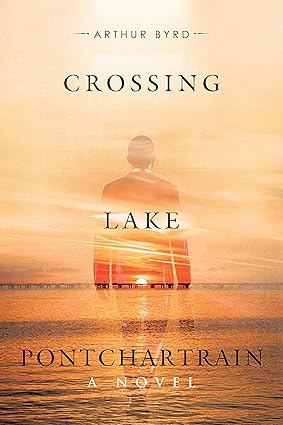
Crossing Lake Pontchartrain is a beautifully tangled story of memory, loss, and rediscovery, told through the eyes of a man who seems to be stumbling into clarity with every misstep. It’s the kind of book that sneaks up on you. It starts as a slow, somewhat meandering tale of a struggling marriage and a jobless protagonist, but then unravels into something deeper, something raw and painfully real. Author Arthur Byrd crafts a story that feels both universal and intimate, full of dry humor, aching regret, and the kind of self-reflection that only happens when life completely falls apart.
The writing is sharp, with a wit that makes even the heaviest moments bearable. Take the scene early on when Larry, the protagonist, arrives at a party already knowing he’s going to be the butt of every joke. Eric, the towering host, immediately takes aim, making cracks about Larry’s job prospects. It’s brutal but hilarious, and Byrd’s knack for dialogue makes these social interactions feel alive. The way Larry navigates his own embarrassment, trying to disappear into the crowd but ultimately making everything worse, is both excruciating and incredibly human.
But the book isn’t just about wit, it’s about pain, particularly the kind that lingers beneath the surface, waiting for the right moment to break through. Larry’s father disappeared years ago, and that unresolved loss bleeds into every relationship he has. The scene where he recognizes the same emptiness in his wife’s gaze that he once saw in his grandfather’s eye is one of the most haunting moments in the book.
Then there’s the slow unraveling of his marriage to Janine. There’s no clear villain, just two people who stopped understanding each other somewhere along the way. When Janine confesses that she needs something else, someone else, it’s not the typical dramatic affair reveal. It’s quieter, almost clinical, which somehow makes it even more devastating. Larry’s reaction isn’t a grand explosion but a slow collapse, a man trying to process something he never thought possible. Byrd captures that numb, suspended feeling so well that you almost feel it yourself.
Crossing Lake Pontchartrain leaves you with more questions than answers but in a good way. It’s a book for anyone who has ever felt lost, for those who’ve looked back at their lives and wondered where they took the wrong turn, or if they ever really had control in the first place. Byrd’s storytelling is raw, unflinching, and occasionally darkly funny, making it a compelling read for fans of literary fiction that isn’t afraid to get a little messy.
Luka follows a hockey player navigating the aftermath of a traumatic injury who crosses paths with a woman who forces him to power through his pain and enter the world of community outreach. What made you write a romance story within this setting?
Who doesn’t love a romance with a damaged hero and a feisty heroine LOL!
When we were writing “Lincoln”, the first book in the series, we’d set Luka up as a ridiculously handsome, happy-go-lucky playboy who spoke several languages. He was so endearing and charming that even the women he broke up with had nothing but nice things to say about him. That kind of perfect life had to come with a price tag eventually. Reading about a few players in real life who had suffered injuries from skate blades, it seemed like the obvious source for Luka’s downfall. But was he so vain that having his perfect face marred would be enough to send him off the rails? It also raised the question of could someone really have had such a perfect life, or was there something he’d been hiding even from his teammates? Those are the questions we want readers to be asking themselves.
We’d set up how active the Quakes organization is in the community, including a charity gala event where they raised money for the Quakes Foundation in “Lincoln”. Before the accident, Luka even tells they guys he’s excited to be helping out with a reading program since Spanish is one of the languages he speaks fluently. We wanted to carry through with that idea of what if he backs out of it. How would a struggling non-profit react? It made for a great, conflict ridden beginning of their story. We also wanted to reflect the real life commitment to their city our actual NHL team has shown throughout the years.
We also wanted to shine a light on two very real tragedies in the hockey world and raise awareness of ways to prevent them. One was the tragic death of former NHL player Adam Johnson, whose neck was fatally cut in a game in London and subsequently died on the ice. Since then, cut-resistant gear has been given more attention but there’s still a lot that can be done to make the game safer. The other is head trauma, which is a concern not just in hockey but other sports as well. There is developing new technology that reduces impact and has sensors to monitor the impact and send real time alerts to the training staff.
What comes first for you–the plot or the characters–and why?
With our hockey books, characters come first and then we figure out how they meet and their story. That’s the fun of writing a series like this is riffing about future storylines in the process of writing one book. We had no idea Luka would end up where he did in his book when we first introduced him, but as crazy as it sounds, we had to get to know him better to know where his story would take him.
Which of the characters do you relate to the most and why?
That’s the great thing about two main characters – there’s something for everyone! On one hand, we relate to Liliana. She takes no prisoners and is protective of her kids. Lily wants to do more with her life by making a difference.
On the other hand, we’re also drawn to Luka. We all have wounds, internal and external, that change our perspective on who we are at once point in our lives. How we handle them is the thing and the fact that Luka falls down in that department from time to time makes him relatable to a lot of people.
You didn’t really think we were going to choose one of our children over the other, did you? LOL.
Where will the third book in this series take readers? When can fans look forward to seeing it released?
Yes! Matthew, our very angry D-man on the Quakes blue line, is next up. Without giving anything away, readers will literally get to see there are two sides to every story and Matt’s is both emotional and hilarious. At the very least, we use a plot device that we can honestly say we haven’t seen in any other hockey romances. His book releases on July 15th, 2025 in both eBook and paperback at your favorite online retailer.
As the hottest left-winger in the league, I was the handsome golden boy for the L.A. Quakes. But after suffering horrific injuries during a game, my life is on a breakaway to disaster. My biggest fear is a darkness from my past is about to repeat itself. All I want to do is hide from the world, but fate has another plan.
Feisty beauty Liliana Alvarez doesn’t suffer fools lightly, especially when it comes to her kids in her new non-profit outreach. She’ll drag me, kicking and screaming, if necessary, from the hole I’ve crawled into if it’s the last thing she does. For some reason, she is patient enough to wait for me to heal and something sparks between us, wounds, and all. But her abusive ex-boyfriend threatens to shatter our hopes of a happily ever after.
Can enemies-turned-lovers help save each other or is the ice tilted against us?
Luka: Hockey Romance, Enemies to Lovers, Beauty & The Beast, Tortured Hero, Curvy Heroine Different Cultures, Stalker Ex-Boyfriend
Bristol Vaudrin’s Afterward is a raw and gut-wrenching novel that pulls readers into a world of emotional turmoil, relationships strained by tragedy, and the quiet, lingering pain of grief and identity. The story follows Lauren Delgado as she grapples with the aftermath of a traumatic event involving her boyfriend, Kyle. From the harrowing moment she finds him unconscious in their apartment to the disorienting world of hospital hallways and waiting rooms, Lauren is thrust into a reality where nothing feels real, and yet every detail is unshakably vivid. As Kyle recovers physically, Lauren is left to navigate an emotional maze, one that forces her to question love, responsibility, and her own sense of belonging.
Vaudrin’s writing is strikingly intimate. There’s a weight to every sentence, an undercurrent of unspoken pain that makes the novel feel deeply personal. One of the most powerful moments comes early on when Lauren watches the EMTs take Kyle away, her mind latching onto a loose thread on her jacket button because what else can she do when her whole world is unraveling? These small but poignant details make Afterward feel like a lived experience rather than a work of fiction. The prose is beautifully restrained; Vaudrin doesn’t drown the reader in overwrought emotion but lets it seep in slowly, in glances, in hesitations, in the quiet spaces between words.
The novel also captures the complexities of human relationships with an almost brutal honesty. Lauren’s interactions with Kyle’s mother, Helene, are layered with tension, passive-aggressive remarks, and the unspoken battle for who understands Kyle best. Helene’s arrival at the hospital is a whirlwind of frantic energy, an intrusion that feels both necessary and unbearable. And yet, there’s a subtle shift as the story progresses, a recognition that grief and worry manifest differently for everyone, even when love is at the core. Similarly, Lauren’s phone calls with her own mother, who is vacationing in Italy, blissfully unaware at first, are heartbreaking in their contrast. The distance between them is more than just physical, and yet when Lauren finally reaches out, there’s an unshakable comfort in her mother’s voice. Vaudrin masterfully depicts how relationships bend under stress, how people fail each other even when they mean well, and how love sometimes looks like showing up even when you don’t know what to say.
Another standout aspect of Afterward is the way it handles trauma, not as a singular event but as an ever-present shadow that refuses to be ignored. The hospital scenes are deeply affecting, especially the moment Lauren realizes Kyle is being transferred to a unit where she can’t visit him. The quiet bureaucratic efficiency of it all, signatures, nods, and the clinical separation of a patient from a loved one feels almost cruel in its normalcy. The novel doesn’t offer easy solutions or grand epiphanies. Instead, it lingers in the uncomfortable, in the questions without answers, in the moments where moving forward feels both necessary and impossible.
Afterward is not a book for those looking for tidy resolutions. It’s messy, painful, and deeply human. But for anyone who has ever loved someone through their darkest moments, who has ever felt like they were holding their breath waiting for the next disaster, this book will resonate. It’s a novel about the aftermath of trauma, but more importantly, it’s about the quiet resilience of the people left to pick up the pieces. I’d recommend it to readers who appreciate emotionally charged, character-driven stories, especially those who aren’t afraid to sit with discomfort and see where it leads.








 LITERARY TITAN