Blog Archives
White Jasmines


White Jasmines is a poetic, spiritual, and deeply introspective journey through the soul of a woman confronting love, faith, and identity. The book unfolds like a diary of divine conversation, tracing forty days of communion between a narrator and a presence she perceives as God. It drifts between prose and poetry, dream and revelation, exploring themes of solitude, womanhood, and transcendence. The story begins with heartbreak and the collapse of faith, then moves through cycles of pain and renewal. What begins as an inward cry slowly transforms into a meditation on existence itself.
Hasti Saadi’s writing doesn’t just describe emotions; it breathes them. Her words rise and fall with the rhythm of confession. The imagery of seas, skies, the Virgin Mary, rain, and jasmine feels alive, wrapping each page in tenderness and melancholy. The tone wavers between gentle surrender and fierce rebellion, as though the narrator keeps arguing with God but never stops loving Him. The sincerity behind each line hit me.
There were moments when the prose turned heavy, circling the same questions of pain and faith. Still, it’s part of what makes the book powerful. It mirrors the way grief and longing echo in real life. I admired how Saadi wove philosophy and personal reflection without sounding like she was teaching. Her honesty about doubt and divine loneliness was what struck me most. She doesn’t try to explain life; she feels it raw and lets it spill. The tenderness in her language reminded me that even despair can be beautiful if faced with courage.
I’d recommend White Jasmines to readers who crave depth and aren’t afraid of introspection. It’s for those who’ve loved fiercely, questioned their faith, or felt unseen. It’s not a book you read quickly; it’s one you sit with, letting its quiet questions linger. It’s a spiritual mirror for anyone ready to look closely at the mess and mystery of being human.
Pages: 220 | ASIN : B0FRJDTTTC

Common Sense & Other Tales of Disillusionment
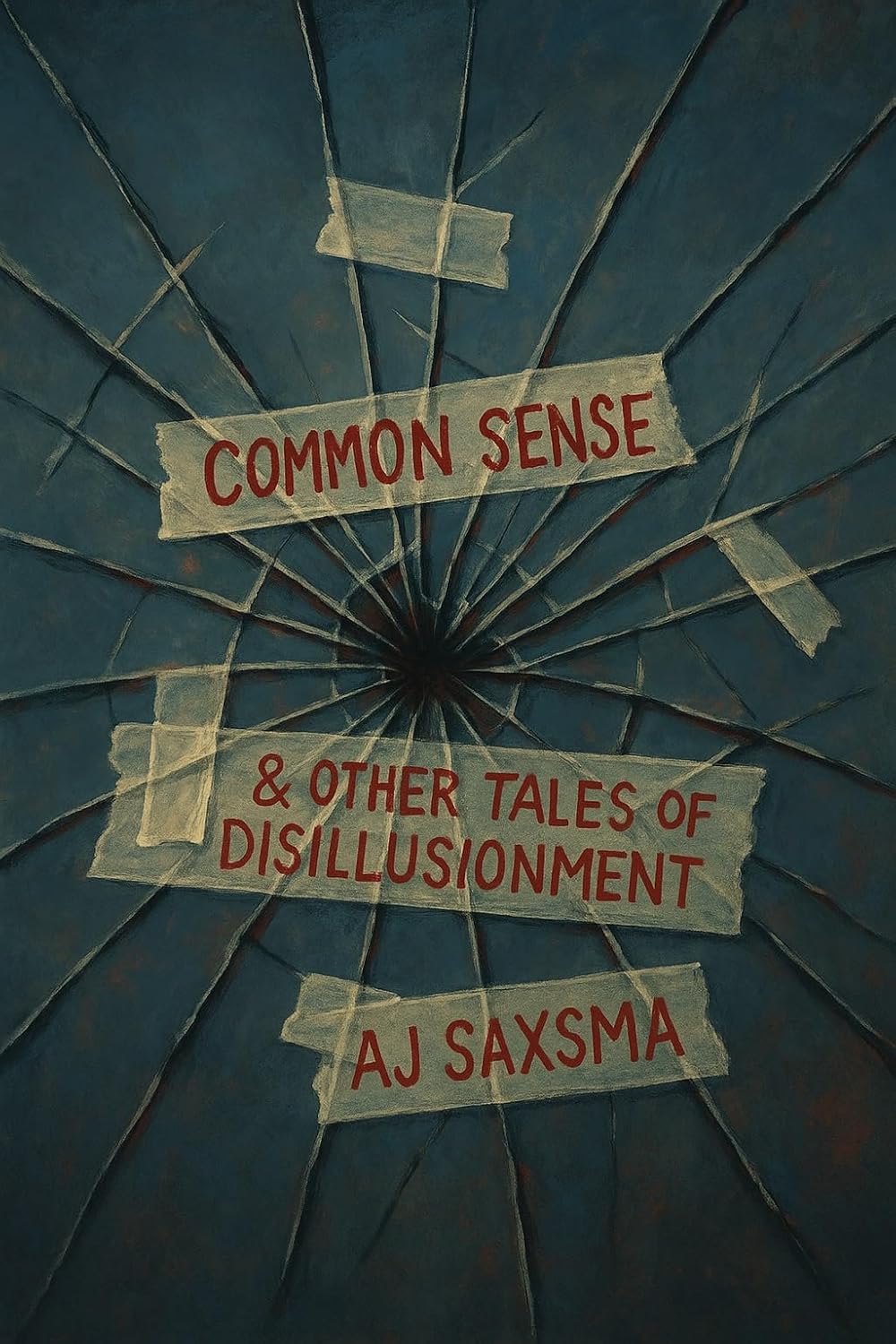

Common Sense & Other Tales of Disillusionment is a haunting collection of short stories that peels back the soft skin of ordinary life to reveal the raw nerves beneath. Each story takes place in familiar settings like a home, an office, and a neighborhood, but nothing stays familiar for long. Saxsma writes about people who are breaking down, sometimes quietly, sometimes violently, under the weight of their own choices and circumstances. The opening story, “Drive You to Violence,” sets the tone: a domestic world suffocating in silence and habit, where love and resentment sit side by side at the dinner table. The prose is stripped down, careful, yet full of emotional danger. By the end, the book has become a mirror that reflects not what we wish we were, but what we fear we might be.
What struck me first was the rhythm of Saxsma’s writing. It moves in circles, looping back on itself, pressing the reader to sit in the discomfort of repetition, the same routines, the same conversations, the same small cruelties. I found myself frustrated at times, but in a good way. That frustration was part of the experience. The language is plain and unadorned, but it works like sandpaper, roughing up the smoothness of everyday life until you can feel the grain. There’s an honesty to it that’s hard to shake. I didn’t feel like I was reading stories so much as eavesdropping on private lives that were coming undone in slow motion. Saxsma’s characters don’t confess their feelings. They leak them.
As I read deeper, I started feeling uneasy, almost complicit. The book makes you question what “normal” even means, and whether common sense is really sense at all or just a way to survive disappointment. Some scenes left me angry, others hollow. There were moments I wanted to look away, but I couldn’t. Saxsma has a way of making the ordinary grotesque without ever being sensational. The writing reminded me how fragile the line is between patience and despair, between love and control. It made me think of people I know, people who keep smiling while their lives quietly cave in around them.
This isn’t a feel-good read. It’s a feel-something read. I’d recommend Common Sense & Other Tales of Disillusionment to anyone who likes fiction that cuts deep, that doesn’t flinch, and that finds truth in the cracks of small, painful moments. It’s for readers who don’t mind sitting in the dark for a while, trusting that somewhere in all that disillusionment, there’s something honest, maybe even redemptive, waiting to be found.
Pages: 258 | ASIN : B0D5BBB2FS
Quantum Genesis
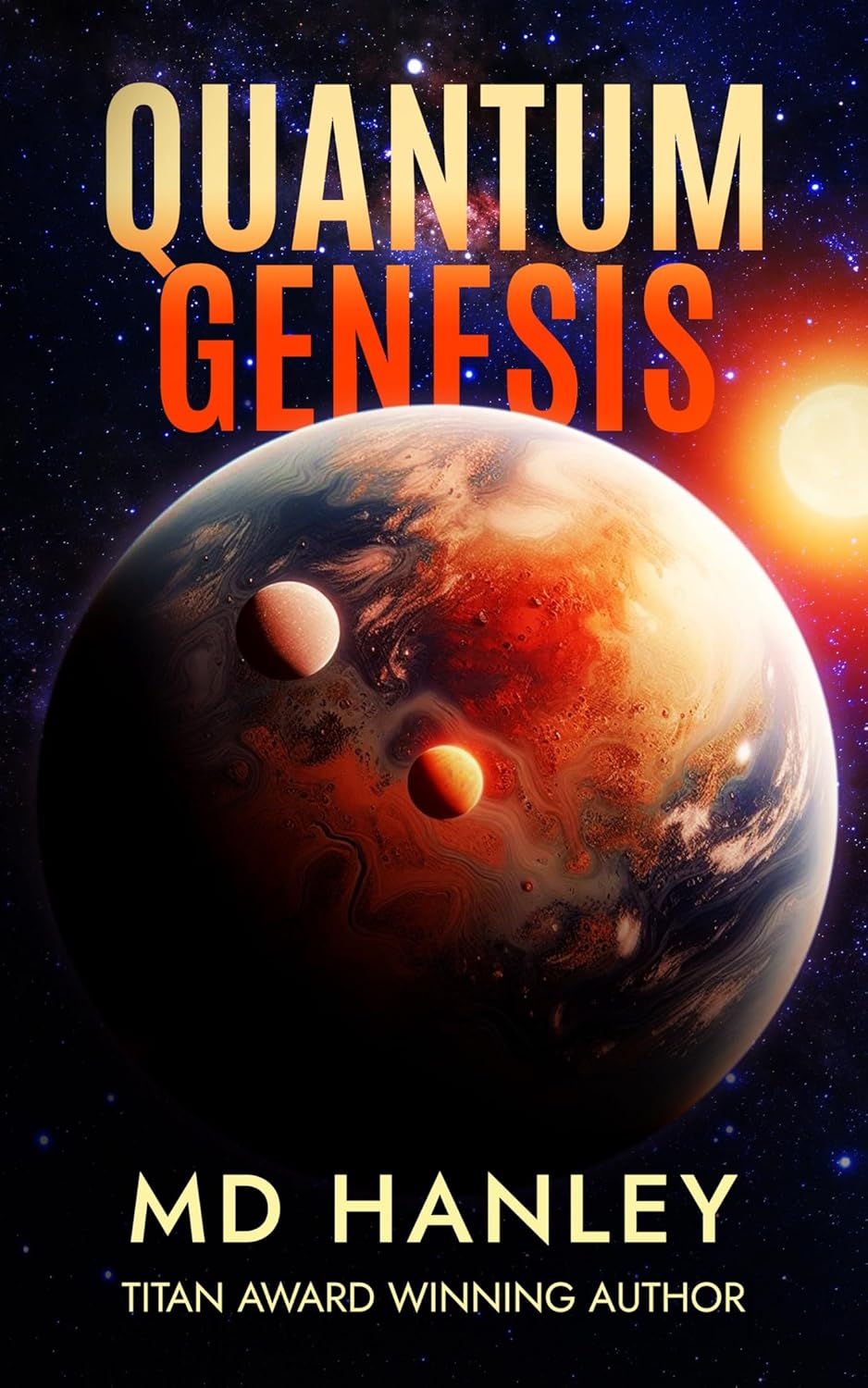
From the opening pages, Quantum Genesis pulled me into a world where science, faith, and survival clash in a brilliant storm of ideas. It’s a story about Ode Tillmook, a scientist on a distant planet called Ghia, who’s torn between duty and conscience. His creation, a powerful compound meant to protect civilization, ends up threatening to destroy it instead. What begins as a tale of technology gone wrong evolves into something much larger, touching on consciousness, rebirth, and humanity’s place in the universe. It’s science fiction, but it feels philosophical, even spiritual. The pacing is cinematic, with scenes that swing from tense corporate politics to moments of haunting stillness and cosmic introspection.
Hanley’s writing isn’t just descriptive, it’s alive. Each sentence is humming with curiosity and heart. Sometimes I had to stop and breathe after certain passages because they carried a quiet power. The story takes big swings with its science, talking about quantum coherence, photosynthetic energy, and living planets. Yet, what hit me hardest wasn’t the technology but the emotion beneath it. Ode’s guilt, his love for his family, and his desperation to undo what’s been done all feel painfully relatable. I liked that Hanley doesn’t hold your hand. He lets mystery sit in the room with you. A few sections got a bit heavy with scientific jargon, and I found myself rereading paragraphs just to keep up. But even then, the sense of wonder kept me going.
By the time I reached the final chapters, I was both wrecked and strangely uplifted. The story turns from destruction to renewal, and that shift, from man breaking the world to man helping it heal, felt beautifully earned. Hanley writes with a sincerity that’s rare. You can tell he loves both science and storytelling. There’s awe here, and anger too, and a sense that we’re all responsible for what we build. I closed the book thinking about how fragile and miraculous our world really is.
I’d recommend Quantum Genesis to readers who like their sci-fi with a heartbeat. It’s perfect for fans of The Martian or Contact, people who love the blend of intellect and emotion. It’s not light reading, but it’s rewarding. If you’re the kind of person who looks up at the stars and feels both small and infinite at the same time, this book will feel like home.
Pages: 296 | ASIN : B0FVB43R8M
Astral Seeds- Eternal Reign Edition

Jhani Mills’s Astral Seeds opens like a symphony of chaos, blending cosmic prophecy with the fragile humanity of its characters. The story follows Aric Draconis, a dragon rider tangled in a universe on the brink of rebirth. As celestial rifts tear open the sky and ancient Guardians stir from slumber, he becomes unwilling witness and participant in a struggle between creation and destruction. Kings crave godhood, dragons debate destiny, and stars themselves become instruments in a war of balance. Mills builds a world that feels both mythic and immediate, filled with lyrical dread and aching wonder.
The prose is lush, almost hypnotic, and sometimes it feels alive, like the words hum beneath the surface. The dialogue between Aric and Ignarion, his dragon, carries real warmth. Their bond has weight, not the kind of flat loyalty you find in typical fantasy tales. But the beauty of the writing cuts both ways. At times, the rich, layered descriptions slow the rhythm a bit, letting the poetry take center stage over the story’s momentum. The language feels deliberate, like Mills wants you to taste every syllable before moving on. But, when it hits, it hits like thunder. There’s power in the way small human acts like kneading dough, watching the sun, and listening to the river, mirror the collapse of galaxies.
What really stayed with me was the sense of longing that runs through everything. The book isn’t just about power or prophecy. It’s about connection, about what it costs to keep faith when the sky itself turns against you. Mills writes with this quiet conviction that even in ruin, there’s something worth saving. The characters aren’t perfect heroes, they’re scared, sometimes arrogant, sometimes heartbreakingly kind, and that makes them real. There were scenes that gave me chills, others that felt heavy in the chest. I could feel the loneliness in Aric’s choices, the hunger in Vaelion’s ambition, the melancholy in Zephyr’s song. The story asks questions most fantasy avoids: Can destruction be sacred? Can love survive apocalypse? It doesn’t hand out clean answers, and that uncertainty is what makes it linger.
If you like your fantasy poetic, unpredictable, and soaked in cosmic mystery, Astral Seeds is for you. It’s not a light read. It’s a storm you walk through, slow and unsteady, until you find something glowing on the other side. I’d recommend it to readers who love the mythic scope of Brandon Sanderson but crave the lyrical weight of Erin Morgenstern.
Pages: 422 | ASIN : B0FTGP8M9N
“The Line of Horror”

A Dangerous Friendship follows a woman navigating heartbreak, loneliness, and the lure of risk, who, after a failed marriage, is drawn to a magnetic yet volatile woman whose energy feels both liberating and destructive. What was the inspiration for the setup of your story?
Any kind of loss that forces a woman to question her future and identity sends me into story-telling mode. Especially against the backdrop of New York City in the 1980s, where there was an electric vibe and the possibility that anything could happen if you were open to it. I lived in the City during that time and it was magical. Wealth, street art, theater, fantasies of changing your life in a New York minute—it was heaven.
What was the inspiration for the relationship that develops between Tina and Spike?
Every female friendship I’ve had or witnessed since high school. We know the archetypes of the popular girls, the mean girls. What about the dangerous ones? What about the women who promise to give us power. Who tell us stories that we want to believe are true because are own lives seem so meh. Also, in the 1980’s, there was a second wave of feminism with women fighting for equal rights and questioning cultural and social norms. That history fans the flames of the relationship between Tina and Spike and their confusion: wanting to be powerful in their right but also looking to be elevated to a different reality by wealthy men.
What were some themes that were important for you to explore in this book?
Reinvention after loss. I like to explore the ways women navigate identity and self-worth when their lives take an unexpected turn. Also, truth vs. fiction. I’m fascinated by the stories we tell ourselves and each other to survive. Finally, the thin line between attraction and danger. Tina calls this “the line of horror,” which she refuses to cross at first, then leaps over, believing that Spike, like a cult leader, will change her world.
What is the next book that you are working on, and when can your fans expect it to be out?
My next novel is The Enlightenment of Henry Pike. It leans even further into dark humor than A Dangerous Friendship. It follows a slightly unhinged philanthropist who’s being swindled out of his fortune by those closest to him. At its core, it’s also about loss and reinvention—and our endless obsession with wealth, power, and the lives we think we deserve. Readers can expect it in the next two years.
Author Links: GoodReads | Instagram | Facebook | Website
In 1980s New York City, aspiring writers Tina and Spike bond in a complex, all-consuming friendship that will change their lives forever.
Desperate to redefine herself after a failed marriage, twenty-nine-year-old Tina embarks on a thrill-seeking journey to feel alive again. When she meets thirty-five-year-old Spike, a beautiful, seductive, seemingly invulnerable woman, she becomes enthralled by the older woman’s stories of NYC power brokers, sex, wealthy men, and her past. Tina latches on to Spike as someone who can save her from mediocrity and show her how to be the kind of woman who can have power over men—both in romance and in life.
Chasing adventure and the writing life, Tina and Spike rent a cabin together for the summer in the rural backwoods. There, they go on a wild, manic, darkly humorous journey involving dive bars, drugs, men, and all-night dancing, becoming increasingly psychologically entangled in each other’s lives along the way. But eventually Tina realizes just how dangerous Spike is, and is forced to act to save herself.
Filled with New York wit and fast-paced dialogue, this is a story of loss, betrayal, survival, and blurring the line between attraction and peril.
Women Owning Their Lives

The Unabridged Life of Missy Kinkaid follows a middle-aged woman coping with complicated relationships both past and present. What was the inspiration for the setup of your story?
Missy was first introduced to readers in my book Finding Scarlet. She radiated such energy that I wanted to explore what her full story might look like. I wanted to write a story of women owning their lives in all their imperfect ways, being unapologetic, which isn’t always easy.
What experience in your life has had the biggest impact on your writing?
In the last several years, it’s been divorce. But intertwined within those books are stories of family, romance, friendships, and second chances. The recognition that we don’t just roll over and cease to exist as vibrant women has been a big driving force.
What character did you enjoy writing for? Was there one that was more challenging to write for?
I loved writing Missy. She is strong, but flawed. Trying to capture her imperfections in a meaningful way was a joy. I also really loved Scarlet (obviously, she has a whole book!).Margo’s imperfections made her story heartbreaking to write at times, but also deeply rewarding. Writing Charlotte as a ghost who weaves herself into Missy’s thoughts required some creative stretching.
Can we look forward to more work from you soon? What are you currently working on?
I have a couple of other projects I have started. They are not divorce fiction. One is women’s fiction and the other historical fiction with romance. I’ll see which one takes over in the process and go from there. I do hope readers will consider reading Finding Scarlet to get a flavor for the characters in The Unabridged Life of Missy Kinkaid. And the ending will be so much more rewarding that way.
Author Links: GoodReads | X | Facebook | Website
Missy Kinkaid has always been the light of Sullivan’s Island—bold, unapologetic, and the beating heart of her family, friends, and Scarlet’s Harlots, the renegade divorced women changing the narrative. But when the death of her estranged mother sends her spiraling into a breakdown in the cereal aisle, Missy is forced to confront the pain of past loves, fractured family ties, and the weight of expectations she’s spent a lifetime defying.
With her closest friends—and a cousin carrying secrets of her own—Missy embarks on a journey of reckoning that tests the limits of forgiveness, resilience, and self-discovery. Along the way, she learns that true empowerment isn’t about posturing but the courage to own your story, scars and all.
Witty, raw, and emotionally layered, The Unabridged Life of Missy Kinkaid is a fiercely uplifting novel about friendship, loss, reinvention, and the strength it takes to become wholly yourself.
First introduced in Kirsten Pursell’s Finding Scarlet, Missy now steps into her own unforgettable story—one of heartbreak and humor, loss and resilience, and the enduring bonds that tether us home.
That Became the McGuffin

Fury of the Vampire follows two supernatural detectives who discover an ancient relic that can remake all of existence, and they must stop it from being used before the world as they know it vanishes. What was the initial idea behind this story, and how did that transform as you were writing the novel?
Thank you for the question. Well, originally the story would have focused more on the Jinn characters and their powers. In fact, the original title was The Power of the Jinn. During my research, I uncovered the story of The Ring of Solomon and that became the McGuffin of the tale and we adjusted the story accordingly and I think it improved the narrative.
Was it important for you to deliver a moral to readers, or was it circumstantial to deliver an effective novel?
I believe the best stories are the ones that have parables or thought provoking messages. The best Twilight Zones or Star Treks were the ones with thought provoking themes and I like to do that in my stories.
Were you able to achieve everything you wanted with the characters in the novel?
Yes, especially with Tori who I think is the best protagnoist in the series. Her relationship with Malia I think really helped develop the character and her feelings toward Richardson.
What is the next book that you’re working on, and when can your fans expect it out?
Fury of the Vampire will actually lead to a cross over with the tenth book in the Jigaw Time Travel Series: Temporal Apocalypse which should be out in May, 2026. I am currently outlining it.
Author Links: GoodReads | X | Facebook | Website
The enemy isn’t just out for blood. Now, they want the world to burn.
They’ve fought the undead. Exposed the horrors behind Utopia. Risked everything to protect those who could not protect themselves.
Now, Vampire Detective Tori Jacobsen and her Werewolf partner Abraham Mueller face a threat unlike anything they’ve seen before: An Ancient Relic that could remake existence.
With the fabric of the world unraveling, they need every ounce of cunning—and the kind of savagery only monsters can wield.
If they fail, the future will vanish before it begins. The world will collapse into a new Dark Age ruled by monsters. Humanity won’t even remember what was lost.
If they succeed… they may not survive it and lose what soul, they have left.
The explosive final chapter in the Nightfall Detective Agency trilogy. If you loved the grit, heart, and horror of The Mummy’s Vengeance and Trail of the Zombies, Fury of the Vampire bites even deeper.
Perfect for fans of supernatural noir, gritty monster-hunters, and apocalyptic thrillers where the last line of defense wears blood and teeth.
O’SHAUGHNESSY INVESTIGATIONS, INC. Leave Murder to the Professionals

A.G. Russo’s O’Shaughnessy Investigations, Inc. swept me into wartime Brooklyn in 1944, where the O’Shaughnessy Detective Agency tries to stay afloat as war, love, and corruption tighten their grip. The story follows Maeve O’Shaughnessy, a resilient woman running her family’s detective agency while her brothers fight overseas. She juggles heartbreak, danger, and loyalty as she faces mobsters, federal agents, and the heavy shadow of the Second World War. The book blends mystery, romance, and historical detail with an intimate look at ordinary people caught in extraordinary times. Author A.G. Russo paints the era vividly. The rationing, the fear, the faith that life might one day feel normal again.
Reading it felt like slipping into another time. Russo writes with a steady hand and a clear affection for her characters. Maeve is strong without being hardened, and I admired how she never loses her compassion even when the world around her turns brutal. The dialogue feels sharp and real; it’s the kind of talk you’d hear in a smoky Brooklyn diner. Some scenes hit hard, especially when Maeve faces choices that test her morals. The emotional weight sneaks up on you. One moment you’re caught in a clever bit of detective work, and the next you’re hit with the loneliness of a woman holding everything together while the world falls apart.
The number of side plots, mobsters, federal intrigue, family drama, sometimes pulls focus from Maeve’s heart, which is the story’s strongest pulse. Yet even when the plot meanders, the writing carries it. Russo’s world feels lived-in, and her affection for her cast gives the novel warmth that lingers. The prose isn’t flashy, and that’s part of its charm. It feels honest, unpretentious, like it’s being told over a cup of coffee on a gray Brooklyn morning.
When I finished, I sat for a while thinking about courage. The quiet kind that never makes headlines. Russo’s story isn’t just about solving crimes; it’s about surviving them, about staying decent when decency feels naïve. I’d recommend O’Shaughnessy Investigations, Inc. to readers who love classic mysteries, strong-willed heroines, and wartime stories grounded in everyday heroism. It’s a slow burn, but by the last page, it left me both moved and grateful for Maeve’s grit.
Pages: 342 | ASIN : B0FRHCZRG9



 LITERARY TITAN