Blog Archives
Where Dark Things Grow
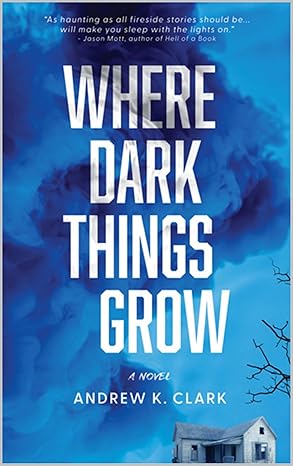

Andrew K. Clark’s Where Dark Things Grow is an enthralling blend of mystery, horror, and emotional depth that captivates readers from start to finish. For fifteen-year-old Leo, life has reached its bleakest point. His younger sister is on the brink of death, and his mother’s mental health is unraveling due to his father’s mysterious disappearance. Forced into the role of provider, Leo faces constant bullying and poverty, all while carrying the burden of his family’s survival. When his mother pleads with him to find his estranged father, he reluctantly sets out on a journey he dreads, confronting his past and inner demons.
Set against the backdrop of the Appalachian Mountains during the Great Depression, Where Dark Things Grow immerses readers in a world steeped in racism, poverty, and survival. The atmosphere in the novel is thick with a foreboding sense of dread, and the tension lingers on every page. Clark’s vivid descriptions transport the reader to this haunting landscape, where every scene is meticulously crafted and every emotion raw and palpable. I could almost feel the damp chill of the woods and hear the rustling of leaves as Leo ventured deeper into the supernatural. The characters are richly developed, each distinct and compelling, while the dialogue flows with poetic elegance. I found myself especially captivated by Leo. His mix of curiosity, innocence, and toughness feels authentic, especially in the way he’s shaped by his circumstances. This coming-of-age story forces its young protagonists to confront the darkest corners of their world and themselves too soon.
Where Dark Things Grow is a must-read for fans of Southern Gothic, folklore, and dark fantasy. Andrew K. Clark weaves an atmospheric, eerie narrative that’s as much about survival as it is about confronting the shadows within and without. I’d recommend this book to anyone who enjoys a haunting, slow-burn story set in a richly imagined world. It’s perfect for readers who love tales steeped in mythology, magic, and the dark undercurrents of human nature.
Pages: 335 | ASIN : B0DG6WZBYZ

Kernels of Truth

Pennsylvania Fireside Tales Volume 2 is a delightful anthology that captures Pennsylvania’s heart and soul by retelling some of the folktales that have been passed on through the generations. Where did the idea for this collection come from, and how did it develop over time?
My inspiration was both homesickness and books by an early collector of central Pennsylvania mountain stories named Henry Shoemaker. After graduating from Penn State in 1967 I ended up working in New Jersey. I missed the mountains of my central Pennsylvania Tom Sawyer boyhood, and when browsing through books in Princeton’s Firestone Library I found many books by Shoemaker. His stories and descriptions brought home right into my lap since I recognized many of the places and family names he wrote about. After I had read all the Shoemaker materials I could find, the thought occurred to me that I could collect similar tales on my own and write about them. Not only would it give me a chance to roam the mountains I loved once more, but it would also alleviate my homesickness. And it did!
What were some themes that were important for you to explore in this collection of tales?
When I started interviewing people to collect my tales back in 1970, we had just put a man on the moon, and I was looking for old-time Pennsylvania mountain folktales, legends, and human-interest stories whose roots went as far back as the Civil War, and even further back than that. Much to my surprise, the old tales could still be heard, and I’m finding some yet today! In fact, to get my arms around my collection I decided to categorize them into four types:
Native American-based episodes that included legends those aborigines passed on to early settlers related to landmarks and tribal traditions. Much to my delight I also found many human-interest stories handed down through families as oral histories that have never made the history books concerning how ancestors sometimes fought battles with Native Americans, sometimes were captured by them, etc.
Early hunting episodes when there were still packs of wolves and mountain lions in the Pennsylvania mountains, and stories about how people hunted them and were hunted by them – men and women alike, including one Little Red Riding Hood-type episode!
Ghost, witch, and supernatural tales. There’s a strong dose of that no matter which legendary domain you explore, and Pennsylvania is no different. What really surprised me the most when collecting these tales was how deeply rooted the superstitions are that form their basis. In fact, in 1970 I could still find old-timers in the more remote valleys who still believed in the old-time kinds of witches – those who could change themselves into black cats, ride broomsticks, cast evil spells, etc. One old-timer in particular stated, “They say there’s no such things as witches, but they’ll never convince me of that!”
Then my fourth category is kind of a catch-all. Stories of lost treasure, hidden gold, exaggerated animals, gypsies, moonshiners, and whatever else seems part of the genre.
What were some goals you set for yourself as a writer in this book?
Unlike Henry Shoemaker, who I later learned was prone to much exaggeration and romanticization of his tales, and even inventing some on his own, I wanted to preserve the tales as they were told to me, but I also wanted to explore the history behind them. I, therefore, envisioned myself as an investigative reporter to put the tales in historical context, even though most sounded like the proverbial “tall tale.” By doing this I could decide whether the tales have any kernels of truth buried in them at all. Did they have any basis in fact at all, and what were their origins? It has truly blown me away sometimes by what I found using this approach.
What is the next book that you are working on, and when will it be published?
My Sunbury Press publisher has asked me to write a fourth volume for my three-volume Pennsylvania Mountain Landmarks series that they have already published. No publication date has been set yet.
Author Links: Goodreads | Sunbury Press Authors | Pennsylvania Fireside Tales | Website | Amazon
In offering a second volume of Pennsylvania mountain legends and folktales to the reading public, the author does so with a note of appreciation to all who found the first volume of legends of interest – public and press alike. The old stories and folktales which appeared in my Pennsylvania Fireside Tales Volume 1 and which seemed to strike a “chord” within me, also apparently appealed to others as well. Most people like these survivors from a bygone day – a time that was simpler in many ways than this present hectic age. In turn, these “survivors” not only help to perpetuate that feeling of kinship some of us feel toward these rugged Pennsylvania hills, but they also connect us to a rich fabric of history and to the people who lived it. With that link or connection, they cause us to feel closer to the past; our life’s span seems extended, and we seem less mortal. It is with this background, then, that this second volume of Pennsylvania fireside tales is presented for the public’s reading enjoyment. As explained in the first volume of this series, the title “fireside tales” comes from the fact that these stories and legends are variants of, or are exactly like, episodes that were related by early settlers sitting around their fireplaces on cold winter evenings when story-telling was the only form of entertainment by which to relax. Return now to those days of old when the pace was slower and life was harder. Keep in mind, however, that people then seemed content with their lot, finding pleasure in simple things like a wolf’s howl, a panther’s cry, a firefly’s glow, or a flaming sunset sinking slowly behind the everlasting hills.
In this volume:
- The Black Ghost of Scotia
- Juniata Gap
- Through the Veil
- Snakes, Snakes, Snakes
- The Lower Fort
- Spellbound
- Last of the Big Shots
- Haunts of the Highway
- More Snakes
- Little Red Riding Hood?
- Burned at the Stake
- Ridden
- Dead for Three Days?
- Mollie Maguire Memories
- Sitting with the Dead
- The Throwback
- Bloody Run
- Beyond Belief
- Jack’s Narrows
- Nights in the Colby Narrows
- Western Pennsylvania Wolf Days
Pennsylvania Fireside Tales Volume 2
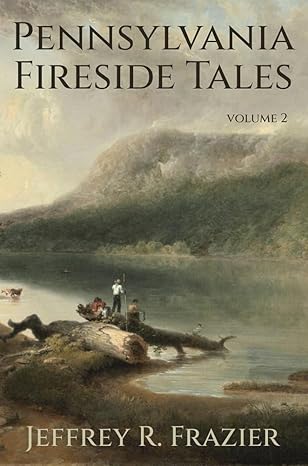
Pennsylvania Fireside Tales Volume 2 by Jeffrey R. Frazier is a delightful anthology that captures the heart and soul of Pennsylvania, a state often considered America’s heartland. From the historic streets of Philadelphia to the steel-forging foundries of Pittsburgh, Pennsylvania has long been a place of rugged beauty and enduring tradition. The people who have lived here, and continue to do so, carry with them a rich heritage of stories—tales from a simpler time when life moved at a gentler pace, yet held lessons just as meaningful. This collection of folk tales, the second in Frazier’s series, evokes the spirit of classic American storytellers like Mark Twain and Washington Irving. The tales are imbued with the no-nonsense, hardworking ethos of Pennsylvanians, but also reveal their whimsical and imaginative nature. The state’s rugged landscape serves as the perfect backdrop for these inventive and fascinating stories, many of which were likely spun around a crackling hearth on a cold winter’s night.
Within these pages, readers will encounter a vivid tapestry of banshees, ghosts, and folksy wisdom, all set against the backdrop of Pennsylvania’s bucolic countryside. Frazier skillfully brings to life the hardy souls who form the backbone of this region—blue-collar workers who take pride in an honest day’s work, and whose stories are as enduring as the land they till. The evocative descriptions make it easy to imagine the smell of woodsmoke rising from cookfires and the distant howl of a farmyard dog. One of the standout tales in this collection is the bloodcurdling Haunts of the Highway, which will leave readers on the edge of their seats. Like Twain at his best, Frazier has a gift for creating characters that are both lovable and deeply human. Even in the midst of improbable events, the goodness and decency of these characters shine through, reminding us of the enduring power of simple virtues.
In a world that often seems to have lost its sense of wonder, Pennsylvania Fireside Tales Volume 2 is a refreshing reminder of the magic that still exists in the stories passed down through generations. Frazier’s collection not only entertains but also rekindles a sense of wonder, bringing these timeless tales vividly to life.
Pages: 200 | ASIN : B0D2S12CR5
The Halls of Valhalla
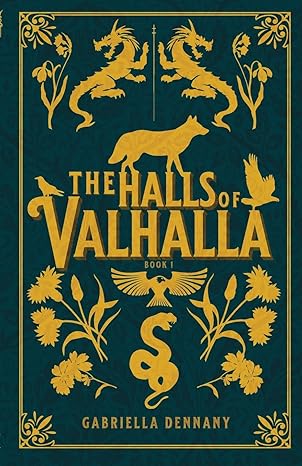
The Halls of Valhalla is a thrilling journey through a reimagined Norse afterlife, where fallen warriors must navigate battles, prophecies, and their own pasts to protect their sanctuary. The story centers around Milo Bohr and his companions as they are thrust into the mythical halls of Valhalla, faced with the daunting task of defending it from an impending doom that intertwines with ancient prophecies and the machinations of gods.
From the very beginning, the author captivates readers with a vivid depiction of Milo’s awakening in Valhalla, disoriented yet filled with a sense of purpose. The detailed world-building is one of the book’s strongest points. The descriptions of Valhalla, from its grand feasts to the eerie, ever-present threat of Ragnarok, are both immersive and imaginative. I loved the way the author, Gabriella Dennany, intertwines traditional Norse mythology with her own creative twists, giving familiar myths new life and adding depth to characters like Milo, Silas, and Thalia.
The book introduces a multitude of characters and mythological elements that, at times, can be overwhelming. For instance, the constant introduction of new realms and creatures, such as the Spøgelse spirits and the Dragur army, although fascinating, sometimes made it challenging to keep track of the main plot. That said, these elements also contribute to the rich tapestry of the story, making it a double-edged sword.
One of my favorite aspects of this book is the character development. Milo’s journey from a confused, newly-dead warrior to a determined protector of Valhalla is compelling and heartfelt. His interactions with Thalia and Silas provide a mix of camaraderie and conflict that feels genuine. The emotional weight of their quest is palpable, especially in scenes like the solemn farewell to Silas, where the pain of loss and the hope of reunion are beautifully portrayed.
The Halls of Valhalla is a must-read for fans of Norse mythology, young adult adventure novels, and epic fantasy. Dennany’s writing is engaging, and her imaginative take on ancient myths offers a fresh perspective that keeps readers hooked.
Pages: 446 | ASIN : B0D3JS1YZZ
The Cautionary Tale Genre

In The Everblue, an idle psychiatrist convinces two young people to travel to a ghost village in Japan to uncover an elusive and mystical flower. What was the inspiration for your story?
The motivation was spiritual, and I had fun writing it. The story is actually inspired by current affairs and politics. I wondered what brings generations together. I found “myth” was the answer.
There is a lot of time and care spent with descriptions and building the setting and tone of the story. Was this out of necessity to develop the depth of the story or was it something that happened naturally as you were writing?
I dedicated my craft to the ambiance I wanted to create, but the book was written in three weeks. It literally poured out of me.
Were you able to relate to your characters while writing them?
Absolutely. The book is a play on the cautionary tale genre, but as readers find out, it’s not offering any solution to the stubbornness of our leaders for whom change always involves sacrifice (for you not for them).
What is the next book you are working on, and when will it be available?
Wereshewolves, a psychological thriller on the subject of the Covid pandemic and colonial guilt will be available in Canada and the US later this year. I am currently working on the story of a witch set in sixth-century Scandinavia and Northern Britain.
Author Links: GoodReads | X (Twitter) | Website | Amazon
As the tangible Western world teeters on the brink of vanishing, expeditionists pursuing the Everblue find themselves thrust into an abyss of their deepest fears. In this labyrinthine adventure, Beatrice, a beacon of innocence and intelligence, stands at the crossroads of destiny. Chosen by the enigmatic cult, her role as the chosen one is fraught with peril.
Yet, the cult’s sinister designs extend beyond mere mysticism, as they covet Beatrice’s very womb to propagate their dark agenda. In a world where beauty and power collide, where the boundaries between myth and reality blur, The Everblue is a mesmerizing tale of innocence tested, alliances formed, and the relentless pursuit of the extraordinary.
How Animals Would Treat a Human

Animal Court follows a group of animals in an African jungle who put a human man on trial for extensive environmental damage. What was the inspiration for the setup of your story?
There are so many court shows on television: Judge Judy, Divorce Court, and Judge Steve Harvey. What if animals had the same playing field? What if they were able to take a person or company to court for the damages they had incurred against nature? That question began my journey into writing Animal Court.
I was also inspired by a true African tribal practice. When one tribesman misbehaved, the others did not punish him. Instead, they gathered in the center of the tribal territory, formed a circle, and asked their fellow member to stand in the center. One by one, the tribesmen reminded the stray of the good he had done throughout his life, eventually allowing him to come to terms that he merely strayed.
We wondered how animals would treat a human if they could put one on trial. If they won the case, would they drag him into the jungle and tear him apart? This whetted our imagination and got us started.
What were some ideas that were important for you to personify in your characters?
An early fondness for wildlife coupled with a growing awareness of the plight of the natural world – wildlife, water, land, trees, and so on – prompted us to take a look at these dire circumstances from a different perspective. By giving voice to animals, some of which face endangerment or extinction, we tried to understand their problems, which, for the most part, are manmade. Some animals were shy; others more aggressive, depending a lot on the circumstances that brought them to testify in the trial.
We thought it was important to make the animal participants in the courtroom portray themselves according to what we know about the animals; for instance, the wolf as the prosecuting attorney or the lion as one of the judges. Each carried his or her own unique weight in relating their fears and hopes in a courtroom setting.
Was it important for you to deliver a moral to readers, or was it circumstantial to delivering an effective novel?
We certainly did not set out to deliver a moral. I think as the trial progressed, however, with some heartrending testimonies – the young giraffe orphaned due to the sport shooting of its mother, the young elephant torn from its family to perform slave labor, the humble ant whose domain was poisoned by insecticides, a mahogany tree lamenting the deforestation around it, the indiscriminate killing of sea lions – it seemed only natural that a moral would emerge.
What is your next book, and when will it be available?
Sunrise Over Casablanca is a post-World War II saga with the same group of characters from the classic film Casablanca and our first sequel Brazzaville. At stake is the pending collapse of Western Europe and the efforts made by the Americans to stabilize her prior to the Marshall Plan. Sunrise Over Casablanca deals with the Greek Civil War and both British and American involvement as well as the struggles of Morocco and Algeria to gain independence from French colonial rule.
We tend to believe that there was nothing going on in the world after WWII until Korea, but the world never stopped fighting after Germany and Japan were beaten. We see how our characters – Rick Blaine, Ilsa Lund Blaine, Louis Renault, and Sam – develop in a rapidly changing world and how they meet those challenges.
Author Links: GoodReads | Amazon
Rejuvenating Uncertain Futures on Earth

Phoenix Saga: A Modern Epic in Prose: Peace on Earth Protocol rejuvenates ancient stories, infusing them with contemporary relevance that deeply resonates with today’s readers. What was the inspiration for the original and fascinating idea at the center of the book?
I, We appreciate the re-framing for this first challenging question!
Core conceptions and resonance originate with the birth of my first-born daughter, Raegan, in June 2020 and a simple promise spoken unto a Universe. What occurs next feels impossible – even still. Perhaps, it’s best for Jean to offer Her words, as it relates:
Il avait été a la peine, c’etait bien raison qu’il fut a l’honneur
In earnest, this work has been less about rejuvenating ancient stories than rejuvenating uncertain futures on Earth — essential works here and now!
Evolutions in Phoenix Saga: A Modern Epic in Pro Sé developed quickly across the Summer months of 2023 ahead of my Vows, as Peace on Earth Protocol came together with pure Vison & Guidance from Archangel Auriel & Saynt Jean d’Arc — amongst many Others. Jean required work on Phoenix Saga: A Modern Epic in Pro Sé be completed within two years once my former employer absolved a significant burden of responsibility by “eliminating my position.” With my consent, Our Work flows, naturally –
We, I discuss “inspiration” in an interview with IndieReader ahead of our first publication in 2023. Not much has changed — “Inspiration” remains a strange human word.
A link to that interview may be found here
What were some themes that were important for you to explore in this book?
An essential, primary focus for Phoenix Saga: A Modern Epic in Pro Sé be Peace on Earth – and pragmatic implementations within fundamentally plural biological systems for a 22nd century and beyond.
What experience in your life has had the biggest impact on your writing?
With certainty, my Voices – not a single word of Phoenix Saga: A Modern Epic in Pro Sé could be written, absent Jean’ Love and Auriel’ Pyres.
When will book two be available? Can you give us an idea of where that book will take readers?
Phoenix Saga: A Modern Epic in Prose: Peace on Earth Protocol at its core is a retelling of an Ancient Babylonian Epic of Creation, which carefully and lovingly integrates 5,000-years of religious semiotics into a unifying call for behavior-biased progress toward Peace on Earth.
We invite readers from all walks of life to engage in a spiritual revolution sparking creative endeavors, which provide families we never live to see with ancestors to love, a Celestial Wish, thorough documentation, and evidence that unity, hope and love connect beyond and across generations as we build Paradises together –
Book Two publishes on August 2, 2024 as a gift to my first-born son, Emrys, for his second birthday. Work on a supporting audiobook is underway!
Author Links: GoodReads | Moxfield | Website

Awakening long-dormant altruistic possibilities begins with a leap of faith rooted in primal and innovative semiotic paradigms. Phoenix Saga: A Modern Epic in Pro Sé emerges as a modern mythos for Peace on Earth, safeguarding possibilities across a boundless, beautiful Multiverse!
A second book in a Phoenix Saga trilogy offers transfigurations of ancient Babylonian stone tablets, called Enūma Elis. Divinity reselling Mythos for God of Creation & Primordial Chaos Dragon-recast to last. Adventures across generations begin anew within a simple framing:
Where did God go? She Ariseth!



 LITERARY TITAN