Blog Archives
Immense Gratitude

In Mommy’s Boy, you share with readers the immense comfort you found in your rescue dog throughout your most trying times. What inspired you to share your story with readers?
I initially began just jotting down memories of Benny so I wouldn’t forget them as time passed. But after a while, a theme emerged that not only was Benny my doggie soulmate and like the child I could never have, but he also helped ease my anxiety and shyness around new people so I could just be myself. And in that way, among others, he literally changed my life, so I wanted others to know the incredible impact a pet can have on a person’s life.
I appreciated the candid nature with which you told your story. What was the hardest thing for you to write about?
The most difficult thing for me to write about was the day Benny passed away and the grieving process that followed. For the most part, reliving Benny’s younger years was an enjoyable trip down memory lane that made me smile and even laugh during a time when I was still crying every day over losing him. However, when I wrote about his passing, not only was I retraumatized all over again, but it was difficult to put into words all the emotions I was feeling: heart-wrenching sadness and grief coupled with immense gratitude that I got to be his mommy; guilt; second-guessing my decisions; anger that we didn’t get more time with him, and just missing every single thing about him. But at the same time, expressing all those emotions–both physically and “on paper”–was very therapeutic.
What is a common misconception you believe many people have about adopting a pet?
My experience has mostly been with dogs, so my answer mainly applies to them. First, you can’t go into it thinking that a pet is going to seamlessly fit into your home. There will be a learning curve and it will likely change how you live your life. You need to commit to giving them the proper attention they deserve on a daily basis. Unlike cats, dogs need to go outside to potty and need fresh air and exercise, some breeds more than others, of course. Owners also need to carve out some time each day to play with and snuggle with their pet, help it socialize with other dogs, and teach it good manners. Unlike cats, which can be more independent and solitary, dogs are pack animals and your family will be its pack.
What is one thing you hope readers take away from your experience and Benny’s story?
The most important thing I’d like readers to realize–which is a big reason why I wrote Mommy’s Boy–is the profound impact a pet can have on one’s life, particularly those dealing with shyness, anxiety, sadness, loneliness, even depression. It wasn’t until after I adopted Benny that I realized how sad and lonely I’d been for such a long time–so long that it had simply become a way of life for me. It was like I’d been sitting alone in a dark room for years, and when Benny came into my life, suddenly my world was filled with light and my heart overflowed with love. In the book, I say: “He ignited a spark in my heart that had been dormant for years, and he brought so much light into my life that I felt like I was Dorothy Gale, stepping from the black-and-white of Kansas into the vibrant technicolor world of Oz.” That’s exactly what the unconditional love of a pet can do for a person. And there are SO many dogs and cats out there in need of a good, loving home, so I hope the story of Benny and me encourages others to rescue a pet.
Author Links: GoodReads | Facebook | Website | Instagram | Amazon
LOVE WAS WAITING AT THE SHELTER, NOT ON MATCH.COM
Jennifer has always dreamed of getting married and having children, but after dealing with men who can’t commit, she shifts her focus from meeting the man of her dreams to finding her four-legged soulmate.
When Jennifer meets Benny, she knows instantly that he’s “the one.” He wiggles his way into her heart and takes up permanent residence. Despite his angelic face and calm demeanor, Benny harbors a mischievous side. He steals any food that isn’t nailed down, nearly breaks his neck chasing squirrels, and suffers from chronic allergies, separation anxiety, and a Napoleon complex. He also eases Jennifer’s “baby fever,” becomes the spokesdog of her business, and is her constant companion as they face life-altering changes and challenges. But when Benny faces a life-threatening illness, Jennifer must come to terms with the reality that our time with our fur babies is limited.
Told with loving affection and raw emotion, Mommy’s Boy is the true story of two lost souls who find the unconditional love, companionship, and emotional support they need, in the process forging a profound bond as deep as a mother and her child. It’s a tender and heartfelt tribute to a special little guy who was more than “just a dog,” he was family.
Information and Knowledge

Karen R Smith-Racicot, CLC
Rebecca K LaChance, PhD Author Interview
Widows Among Us: Stories and Insights is part memoir and part guide for preparation, support, and community; offering readers invaluable insights into navigating life before and after the loss of a spouse. Why was this an important book for you to write?
Becoming a widow was a very different experience for each of us, and we reacted very differently. However, we realized our experiences also had many similarities. We were surprised by the realization that we actually had not known what to expect. No one ever talked about widowhood, the amount of work to be done by the widow, or how to cope with unexpected situations. We want to make widowhood a topic that is discussed among women and families. We believe that the trauma of becoming widowed can be reduced by information and knowledge.
What were some ideas that were important for you to share in this book?
Everyone grieves differently, and that’s perfectly fine. You don’t need to adhere to what society ‘expects’ of you if it doesn’t resonate with your feelings.
Prepare yourself BEFORE a life event happens.
What is one piece of advice you wish someone had given you when you were younger?
It really is to your benefit to be prepared for life events. You can never know when a life-changing event is going to happen. Your way of managing grief and recovery is entirely your choice. Don’t hesitate to seek help if you feel you want it, but trust your inner voice. You have the ability and power to create your new future.
What do you hope is one thing readers take away from your story?
There is life beyond widowhood, and it can be beautiful.
Author Links: GoodReads | Facebook | Website | Amazon
unsure about how to support widows in their lives. The authors illuminate the realities of
widowhood by exploring its unique and often overlooked aspects. (Search for the Large Print Edition using B0DSG1SJRD in the Amazon search bar.)
Every day, over 2,800 American women become widows. The average age of these widows is
59. You might know one of the eleven million widows in the United States. You may be one
yourself, or you could find yourself in that situation one day.
This inspirational and enlightening book offers valuable insights. The three authors write
candidly and emotionally about their unique experiences as widows and their determination to
create new beginnings after loss. Each author’s voice distinctly reveals different yet similar
aspects of grief and rebuilding a life.
They have collaborated to create a spirit guide and a handbook designed to assist women and
those who wish to support them in navigating the challenges of widowhood. The book offers
explanations that ease the discomfort of preparation and provides practical lists for getting
ready. It reassures widows with logical, comforting, and valuable insights into their experiences
and their tasks. The book concludes with advice and suggestions on how to help and support
the widows in the reader’s life.
A quiet, welcome voice of calm and encouragement emerges from the pages. This book has the
power to comfort many.
Widows Among Us: Stories and Insights


Widows Among Us: Stories and Insights is an enlightening book that navigates the complex, emotional, and often isolating experience of widowhood. Written by three women—Rebecca LaChance, Karen Justice, and Karen Smith Racicot—this book blends memoir, practical advice, and heartfelt wisdom. The authors take turns sharing their individual journeys, exploring not only their losses but also their resilience. The book also serves as a guide for preparation, support, and community, offering invaluable insights into navigating life before and after the loss of a spouse.
What stands out immediately is the raw honesty in the storytelling. Karen’s story, for instance, opens with an ordinary Monday, one that quickly transforms into a nightmare as she receives the news of her husband’s sudden death. The details are gut-wrenching—the disbelief, the shock, the immediate practical concerns of running a business and comforting her daughters. The way she describes the moment the police officers entered her office is particularly striking. This kind of straightforward yet deeply moving prose is what makes the book powerful. It doesn’t sugarcoat grief, nor does it drown in it. Instead, it lays out the pain and the struggle in a way that feels relatable.
The second part of the book shifts from personal narratives to a more practical approach—preparing for widowhood before it happens. This section is invaluable, not just for widows but for any woman in a marriage or long-term partnership. The book breaks down financial planning, legal documents, and the importance of knowing everything about household mechanics. The “Black Book” concept, a place to store all essential passwords and critical documents, is one of the best takeaways.
Another incredibly poignant section is Part Three, where the emotional and psychological aspects of widowhood are explored. It’s not just about sadness; it’s about struggling to remember things, making mistakes, feeling overwhelmed by small decisions. There’s a beautiful passage that compares grief to a swirling storm, with moments of calm that trick the widow into thinking she’s okay before another wave crashes down. This depiction resonated with me. The chapter on reframing guilt also stood out, as it acknowledges the self-imposed pressure widows feel to grieve “correctly.” The book reassures readers that whatever they are feeling is valid, and that healing doesn’t follow a set timeline.
The final section is a must-read for anyone who has a widow in their life. “How to Help a Widow” is full of practical, compassionate advice for friends and family. One of the most touching ideas is the suggestion to “remember with her”—to share stories of her spouse, rather than avoid the subject out of discomfort. It’s a reminder that grief doesn’t disappear after the initial shock, and neither should support.
Widows Among Us is a book that should be on the shelf of anyone who wants to understand the impact of losing a spouse. It’s heartbreaking, yes, but it’s also hopeful, full of wisdom, and deeply human. The mix of personal stories and practical advice makes it both an emotional read and a useful guide.
Pages: 208 | ASIN : B0DS6JP4DH

The Science of the Afterlife
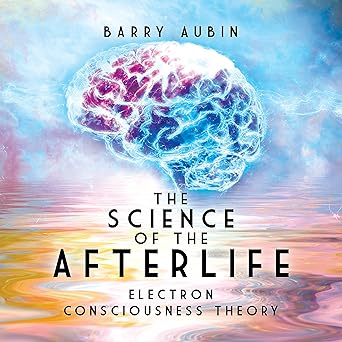

Barry Aubin’s The Science of the Afterlife is a bold attempt to merge science, religion, and philosophy into a single cohesive theory of existence beyond death. He introduces the “Electron Consciousness Theory,” arguing that human souls are made of electrons and that our consciousness persists after death as an electrical presence in the universe. Through a mix of scientific speculation, religious references, and personal insights, Aubin builds a case that the afterlife is not just a matter of faith but of physics. He challenges readers to rethink what it means to exist and whether death is truly the end.
Aubin’s writing is both ambitious, which makes the book engaging yet, at times, overwhelming. He presents compelling questions, like if energy cannot be destroyed, then where does our consciousness go? And he supports them with theories drawn from thermodynamics and neuroscience. One of the most intriguing parts of the book is his exploration of how electrons store memory, suggesting that our thoughts and experiences may survive in a form beyond our physical bodies. This idea resonates with my own beliefs about the afterlife. If souls are energy, and energy continues to exist, then it seems only natural that we persist in some way. His discussion on how electrons might disperse and communicate after death made me pause and reflect on the idea of spiritual presence.
While I appreciate his effort to explain the afterlife through physics, there were moments when his reasoning seemed more intuitive than evidence-based. The connection between morality and the electrical charge of a soul was an interesting concept and left me wondering. Still, his passion for understanding the spiritual world through scientific means is admirable.
One of the most thought-provoking aspects of the book was its discussion on telepathy and spiritual communication. Aubin suggests that electrons within the brain may allow for an exchange of thoughts beyond death, potentially explaining ghostly encounters, divine voices, or even prayer. The idea that we are all part of a vast electrical network, constantly interacting on some unseen level, aligns with many religious and spiritual beliefs. While mainstream science may dismiss such claims, I found comfort in his argument that just because something is not fully understood does not mean it is not real.
The Science of the Afterlife is a thought-provoking read for those who are open to unconventional ideas about existence beyond death. It is not a traditional religious text, nor is it a rigorously scientific one, but it is an imaginative and heartfelt exploration of what might lie beyond. While some of his theories may be difficult to accept, his core message is one of hope: that life, in some form, continues. And for those of us who already believe in an afterlife, that is a comforting thought indeed.
Pages: 34 | ASIN : B09F197Z6M
The Child Becomes the Caregiver

The Night Garden: Of My Mother is a memoir that delves into the intricacies of familial bonds, offering an exploration of love, frustration, and the ties between mothers and daughters. Why was this an important book for you to write?
To be honest, I don’t know that I ever weighed the importance of writing this book. If I had, Night Garden may have developed much more heavy-handedly, suppressing the real life of these characters — as they finally are just that, characters. Traditionally, I am a fiction writer, so I have learned how to allow characters their own lived lives on the page.
At the same time, the mother/daughter dynamic has always been central to my writing, to my novels, however subconscious. In my first novel, Blue Glass, I naturally fell into the first-person perspective of an only child, which I am, to explore the nuanced mother/daughter relationship. The mother in that novel is entirely fictional – I honestly don’t know where she came from, as she is the complete opposite “character” of my mother. But what I do think I pulled from—again, subconsciously—was the integral bond between my mother and me; that intensity of love and devotion of the only daughter.
Though I have to say, this memoir was finally so much harder to write than my novels because the subject was right there in front of me – it was lived. What was most difficult was finding the structure – writing of scene comes naturally to me, and many of these moments I dramatized through the years as they were happening. Other scenes are a kind of consolidation of events, to concentrate a truth. I think I knew I had strong material here, even if it was hard to write. And perhaps in the writing, I was able to objectify in a way that offered me a layer of emotional protection—the harder that things became for me and my mother, the more I wished I could distance myself from it all.
What were some ideas that were important for you to share in this book?
The Night Garden chronicles a period in my life when I was deeply divided between my roles as a mother and daughter, by both distance and powerful emotional pulls—I had my two children in my 40s when my mother was already in her late 80s. When my mother falls and breaks her hip, what I recall best is being unable to nurse my three month old while she was in Emergency, the physical feeling of being torn between my mother’s needs and my children’s. This torn feeling I believe is far more universal than we realize, as women are having children later in life. Granted, my situation was even more skewed, as my mother too had me later in life. But there is something to be said for the fact that birthrates have fallen in every age group except for women in their forties. Women, whether in relation to children or their own parents, are still most likely to be the designated primary caregivers.
I appreciated the candid nature with which you told your story. What was the hardest thing for you to write about?
I think the hardest was reliving that period when my mother manifested dementia — it was a quick and deep descent in her last two years, and one much darker than I experienced with my father — my father’s deterioration was over the span of 13 years, and while he was diagnosed with Alzheimers, the terrain of his dementia was much gentler. No deep descents. My mother would find herself locked in empty churches, dental chairs and in jail. The hardest moment was when she no longer recognized her own home, what she’d always referred to as her “happy house;” and in that lack of recognition, I already felt left behind, as I would wandering that house alone once she was gone.
The second hardest was writing about the grueling lesson of navigating the dementia, one I learned from her aide who had witnessed this dynamic between child and parent so many times before. She understood my desperation in needing to convince my mother that she was not actually locked in a church, but at home in bed with her beloved two cats. In my denial was indeed, a refusal to let go. So instead of trying to convince my mother that she wasn’t locked in a church, I learned how to soothe her in the moment, to promise I would send a parishioner drive her home. But my desperation finally was born out of a stubborn denial — on some level, however old we are, we are still the child unable to imagine losing a parent, however fraught that relationship was or wasn’t historically. Once stripped of our role as child, how do we reimagine ourselves? And how might this reimagining impact our own roles as mothers?
What do you hope is one thing readers take away from your story?
I’ve already received messages about how Night Garden is helping those currently in caregiving roles, whether or not they are balancing young children as well. I do hear mostly from women, who appreciate my candor about conflicted feelings: unable to bear that thought of losing a parent— of our role as child— while resentful of the toll caregiving is having on our own lives and mental health. We are no longer a society of extended families — at best, we are families scattered across the country, so that usually the caregiving does fall to one child, one sibling. Readers of my story I hope will feel a little bit less alone in what finally may be an inevitable quagmire, but also forgive themselves for feeling conflicted; the child/parent relationship is resounding in its complexity, if not always rooted in unconditional love.
Author Links: GoodReads | Website
As her mother’s dementia worsens, Chandice warns the author about other daughters “gone crazy” watching their mothers become unrecognizable-after her mother’s death, the author is admitted to a psychiatric ward, where she sleeps the “sleep of the dying,” as her mother slept in her final weeks. But in the timelessness of this ward, she can wonder: was her closeness with her mother not of best friends, but something inherent in their dispositions as a writer and artist-in that compulsion to be seen and heard? With empathy and affectionate comedy, The Night Gardencandidly explores what it means for a daughter to have her focus fractured by conflicting responsibilities while still seeking, above all else, her mother’s approval, protection and love
A Personal Reckoning

Twice the Family is your poignant memoir of identity, adoption, and the unyielding bonds of sisterhood, exploring the journey of being “chosen” while searching for belonging. Why was this an important book for you to write?
For me, this book was a greater challenge than writing my debut memoir, Twice a Daughter, the five-year saga about searching for my birth parents to gather family medical history. Twice the Family rose out of readers’ requests to know more about what it was like to grow up as a twin and an adoptee. Yet, for me, the book is more than that. It is a personal reckoning.
Twice a Daughter had a specific frame or timeline. While I provided the necessary backstory, it focused on the events surrounding my adoption search. Because Twice the Family is a coming-of-age story, it has a longer timeline: twenty-seven years. It opens with the births of my twin sister and me, and our subsequent adoption, and culminates with the building of my own biological family.
Choosing the events to include in this new book and tying those moments to the desired themes of love, loss, and family was a deliberate and challenging task. Telling the story and sharing my unique perspective as a twin and adoptee within the context of our family history was a delicate balance. My goal was for the reader to understand the struggles I faced within a loving family governed by the strict rules of Catholicism. While we were soothed by love and instilled with a strong sense of belonging, our formative years were overshadowed by my parents’ infertility and drive to achieve their goal of a big Irish Catholic family. As I matured, I realized some of my parents’ goals and values did not align with mine.
How did your adoptive family’s faith shape your understanding of being “chosen” and your identity?
Some of the foundational tenets of Catholicism are love is patient, love is kind, and love heals all. Also, love your neighbor as yourself. This belief system became ingrained in my siblings and me during our formative years at school, church, and at home. Also, the struggles my parents faced in building their big, Irish Catholic family through adoption, their years of infertility, and subsequent child loss due to stillborn death and sudden illness made a lasting impression on me. It was, however, my parents deeply held religious beliefs, their unrelenting commitment to family, and the strong examples they set about honesty, perseverance, and resiliency that influenced who I am and the person I have become.
I always felt as if I held a strong place in my family. Some of that “chosen” feeling arose from the stature of being the firstborn and a twin. I strongly believe that the adoption of my twin sister, myself, and our younger brother was not what set us apart from our younger siblings––my folks’ biological children––but what strung us all together. We were individuals and my mother recognized that and used it in a cohesive way. My mother is a very inclusive person. If she thought, you were the underdog in a given situation, she became your fiercest champion. I love this trait about her; it made her a faithful and reliable mother, neighbor, and friend.
What message do you hope readers—especially adoptees—take away from your story?
Parenting, whether it comes by way of adoption or not, is not a smooth easy road to success. As parents, we make numerous mistakes, and each child takes note, adjusting their behavior to accommodate it. When it is our turn to build our own families, sometimes we are successful at not repeating the mistakes our parents made. Often though, we make different errors, and so the cycle repeats itself. The point I wanted to make in Twice the Family is that family building, then and now, is no easy road. It takes commitment, but through shared values, love, and consistent efforts, parents succeed in building character among those they call family.
Were there moments during the writing process where revisiting your story became emotionally overwhelming? How did you navigate them?
There were chapters I intended to include in the book that happened so long ago that I knew I needed help with validating facts. Because I wanted a true accounting, I consulted with my twin sister and my mother. Together we revisited those key moments. Collaborating was informative and fun, and it enabled me to craft a true story. The result was one part family history, one part memoir, and one part nostalgia for a bygone era of society. Navigating the tough scenes and events meant the writing process slowed down due to the strong emotional impact of those moments. The aftermath of getting them down, getting them right, and polishing them was both exhilarating and draining. Slowing down and honoring those moments was an important aspect of the writing process. The outcome, Twice the Family, fills me with deep pride and satisfaction.
Author Links: GoodReads | Facebook | Instagram | X (Twitter) | Website | Amazon
In this coming-of-age memoir, set in Chicago’s western suburbs between the 1960s and ’80s, adopted twins Julie and Jenny provide their parents with an instant family. Their sisterly bond holds tight as the two strive for identity, individuality, and belonging. But as Julie’s parents continue adding children to the family, some painful and tragic experiences test family values, parental relationships, and sibling bonds.
Faced with these hurdles, Julie questions everything—who she is, how she fits in, her adoption circumstances, her faith, and her idea of family. But the life her parents have constructed is not one she wants for herself—and as she matures, she recognizes how the experiences that formed her have provided her a road map for the person and mother she wants to be.
Report an issue with this product or seller
The Night Garden: of My Mother
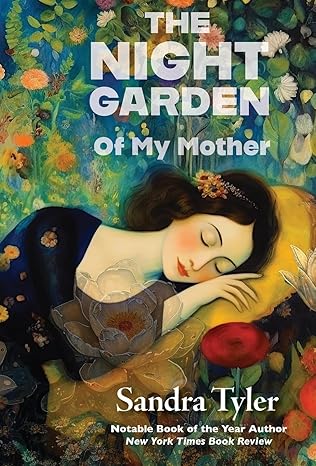

Sandra Tyler’s The Night Garden: Of My Mother delves into the raw intricacies of familial bonds, offering an exploration of love, frustration, and the unshakable ties between mothers and daughters. The memoir presents Sandra, a woman in her early 40s with two young children, who is thrust into the role of caregiver as her 86-year-old mother faces severe health challenges. The arrival of Chandice, a blunt and opinionated caretaker, creates tension, sparking conflicts that leave Sandra caught in an emotional tug-of-war. When her mother passes away, Sandra’s grief culminates in a mental breakdown, leading her to a psychiatric ward where she confronts the deeper layers of her relationship with her late mother.
The narrative echoes the surreal familial dynamics often found in John Irving’s works, such as The Hotel New Hampshire. Sandra’s inner turmoil mirrors the universal struggle many adult children face when the roles of caregiver and dependent reverse. Her mother, once an independent force, becomes vulnerable, forcing Sandra to grapple with the bittersweet realities of caretaking. The tension between Chandice and Sandra’s mother is laced with both humor and sadness, reflecting the often absurd but deeply emotional complexities of elder care. Tyler captures these moments with sharp precision, making readers oscillate between laughter and tears. Sandra’s stay in the psychiatric ward becomes a transformative journey. Stripped of distractions, she reflects on her mother’s life, their shared artistic temperaments, and the paradox of loving someone who could also inflict the most pain. This period of introspection feels less like a breakdown and more like a painful but necessary rebirth. It’s here that Sandra begins to reconcile her grief, acknowledging the beauty and difficulty of her bond with her mother. The result is a deeply cathartic narrative arc that resonates with anyone who has navigated the tangled emotions of losing a loved one.
Tyler’s ability to dissect the parent-child relationship is unmatched. She portrays the paradoxical nature of familial love with unflinching honesty—how the same person can be a source of comfort and exasperation, joy and sorrow. The humor threaded through the memoir softens the melancholy, making the story as entertaining as it is reflective.
Few memoirs tackle the complexity of family with such insight and grace. The Night Garden: Of My Mother is a must-read for anyone grappling with aging parents, the weight of caregiving, or the bittersweet nature of love. Tyler’s prose cuts to the core, reminding us that even the most difficult relationships can leave behind gardens of meaning and growth.
Pages: 288 | ISBN : 195313677X

How to Rewrite Our Lives
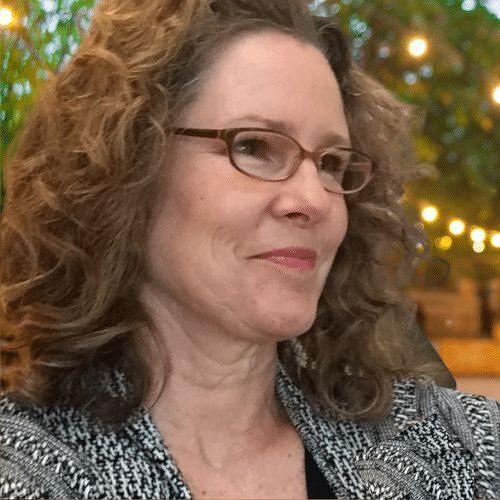
Willower: Rewriting Life After Unimaginable Loss is a heartfelt memoir that delves into the complexities of loss, grief, and resilience, sharing the emotional journey surrounding the tragic death of your son and the toll this unimaginable loss takes on you and the family. Why was this an important book for you to write?
Writing this book was something I needed to do to stay connected to Sam and keep his memory alive. And, writing was a necessary distraction for me, which I later learned. For hours at a time, while concentrating on writing how I was processing and reshaping my loss and grief I was finding some relief from it. I know it seems counterintuitive to write about loss and grief as a way of escaping it, but I came to realize that’s what I was doing. Day after day, year after year, trying to grasp reality, searching for answers and meaning—even if I had to construct my own, creating and crafting this book, then finishing and publishing it is what gave me a focus, a purpose, a reason to live.
What were some ideas that were important for you to share in this book?
One idea was that grieving the death of your child and relearning to live without them, is an unpredictable and lifelong readjustment process.
Another key idea I wanted to get across was that eventually, in time, you do learn to live with the weight of your loss.
But I think the most important idea I wanted to share was that as we migrate through our grief, all we can do is learn how to rewrite our lives and reimagine our stories, the ones we tell ourselves so that we can keep going. As Sam told me in my book’s last chapter: “Imagine the rest, Mommy. And remember, the letters are magic.”
What was the most challenging part of writing your memoir and what was the most rewarding?
The most challenging part of writing this memoir was learning how to write—and then how to write a memoir. After five years of work, I’d sent my “finished draft” to an editor who told me it was a good “first draft.” I was devastated, but learned so much from that experience. I kept at it, the rewriting. Like I said earlier, focusing on this book, on finishing it, is what gave me a purpose, a reason to live. Eleven years later, after taking writing classes, working with a writing coach, and hiring an editor again, my “finished draft” turned out to be my “final draft.”
The most rewarding part of writing this memoir was the magic I experienced while writing the dialogue with Sam. For anyone who’s grieving, I’d recommend—after enough time has passed, and you feel up to it—writing dialogue, a back-and-forth, with your deceased loved one.
What do you hope is one thing readers take away from your story?
After experiencing my story, I hope the reader feels more hopeful and less alone in their grief.
Author Links: GoodReads | Facebook | Website | Amazon
On April 30, 2007, Deanna Kassenoff experienced a parent’s worst nightmare when her nine-year-old son, Sam, collapsed on the playground at school and died from sudden cardiac arrest. Drowning in grief, considering ways to end her own life, Deanna was faced with a choice: give up or rewrite her story, one with a different ending.
A Finalist in the 18th Annual National Indie Excellence® Awards, Willower is a book about using the power of story and imagination to survive the unimaginable. It is the story of a bereaved mother’s urgent quest to find a way to stay connected with her beautiful boy.
Deanna Kassenoff’s memoir takes us into an unfathomable world of the most profound and permanently disorienting experiences: the sudden death of a child. Determined to find meaning in the details of her son’s life, Deanna shows us how it is sometimes our lunacy that pulls us through grief back to living again. Written with stunning honesty, intensity, and eloquence, Willower is an unforgettable and heartbreaking demonstration of the endurance it takes to grieve and the courage it takes to live. This thoughtful and lyrical narrative will change you and stay with you forever.
We use the words widow, widower, and orphan, but there is no word in our vocabulary that identifies the bereaved parent. So, Deanna coined the term willower®. From the words willow, a weeping tree that symbolizes deep mourning; and willpower, that creative source within that provides the superhuman strength and determination it takes to continue on—despite unimaginable loss.


