Blog Archives
Deeper Truths

Transcendence follows a man with no memories and doesn’t even know his name who wakes up next to a dumpster in a chaotic world and must find allies to survive and try to reclaim his memories. What was the inspiration for the setup of your story?
In my first book, Alphamind: The Collective Consciousness, I explored humanity’s evolution toward a future of heightened awareness and connection. With Transcendence, I wanted to take a different path. This time, I was drawn to those left behind in the chaos—people struggling to make sense of a world that no longer feels like their own. The protagonist’s memory loss became a metaphor for that disorientation. Through his journey, I wanted to honor those who endure upheaval, who survive in the margins of progress, and who, in their quiet resilience, are just as vital to shaping what comes next.
The science inserted in the fiction, I felt, was well balanced. How did you manage to keep it grounded while still providing the fantastic edge science fiction stories usually provide?
Actually, it might have happened the other way around. I’ve long been a fan of science, and the concepts I wanted to explore were rooted in real scientific ideas and their broader impact on society. But rather than presenting them directly, I turned to fiction as the most powerful way to convey them. Science fiction has a unique strength: it draws readers in with imagination and emotional depth, then invites them to engage with complex ideas. I approached Transcendence as an emotional thriller, using story and character as the vehicle to explore deeper truths about consciousness, technology, and transformation.
What was one scene in the novel that you felt captured the morals and message you were trying to deliver to readers?
That’s a tough question, honestly, because there isn’t just one message in Transcendence. If anything, the story is a reflection of how layered and contradictory human experience can be. But if I had to choose one moment that felt personally meaningful, it would be a quiet exchange between two very different characters: Lawrence, a sharp, goal-driven visionary who sometimes lets the ends justify the means, and Alex, who’s more grounded in compassion and self-awareness.
Lawrence asks, “Is the pastor’s heart from your past still at work? The small-town shepherd still searching for lost souls to save?”
And Alex replies, “Perhaps, but there is no judgment here. That’s a matter for your own conscience—however much it may ache. Your vision, though unconventional, has shaped me, and for that, I am grateful.”
That moment always stays with me. It captures something I care deeply about: how we’re all shaped by our past, how easily we fall into judging others based on our own lens of right and wrong, and how difficult—but important—it is to step back and see things with empathy. Nature doesn’t deal in moral absolutes, and maybe we shouldn’t either.
Will there be a follow-up novel to this story? If so, what aspects of the story will the next book cover?
I’m at a bit of a crossroads, to be honest. My original vision was inspired by thinkers like Ray Kurzweil and the idea that we might one day merge with our own creations. I’ve also been drawn to the broader scientific and philosophical theories that suggest our universe may be far stranger than it appears—ideas about reality as information, or the notion that space and time as we perceive them might just be surface-level illusions.
That said, after the emotional and philosophical journey of Transcendence, I find myself wondering where to go next. Should I dive deeper into those far-reaching concepts, exploring where life and consciousness might evolve from here? Or should I stay closer to the ground a little longer, continuing the story of what it means to be human in a world that’s still catching up to its own transformation?
I don’t have a definitive answer yet—but I’m excited to find out where the next step leads.
Adrift in a city that has cast him aside, Greenie struggles to piece together his shattered identity. Haunting flashes of a wife, a son, and a devastating fire begin to surface. But a violent gang tied to his lost memories is closing in, awakening something buried deep within him.
As the world races toward a utopian future powered by cutting-edge technology, an unstoppable Artificial General Intelligence threatens to unravel human existence. Greenie’s past and the fate of humanity collide, pulling him from the shadows into a battle that will decide civilization’s future.
The fate of humanity, and its transcendence, rests in his hands.
Transcendence (The Alphamind Odyssey Book 2)


Humanity stands on the edge of its most transformative technological era. While political leaders strategize the future and scientists push the boundaries of innovation, ordinary people are left to navigate the whirlwind of an increasingly chaotic world. Transcendence by James Azinheira, the second installment in The Alphamind Odyssey series, dives headfirst into this maelstrom, a gripping science fiction tale brimming with mystery, action, and intellectual intrigue.
The novel opens with a man awakening beside a dumpster, stripped of his memories and identity. No name. No past. Only confusion. Thrust into poverty without a lifeline, he must quickly learn to survive in a society where power belongs to the economically privileged. In his struggle, he finds unlikely allies, others abandoned by the system, eking out an existence on the fringes. With quiet resilience, this makeshift community bands together, scavenging for food, evading aggressive law enforcement, and maintaining anonymity. But as survival gives way to strange revelations, it becomes clear the protagonist may hold the key to something far greater than himself, perhaps even the fate of humanity.
From its first page, Azinheira delivers a taut, atmospheric narrative that sustains a constant sense of mystery. Multiple subplots layer the story, enriching the central arc with reflections on technology, ethics, and the crumbling structures of modern civilization. The dystopian backdrop feels eerily familiar, protests spiraling into violence, populist leaders peddling hope while orchestrating shadows, wealth wielded like a weapon, and scientific advances dangling promises that both captivate and unsettle.
The novel reaches its most exhilarating peak with the birth of a sentient AGI (Artificial General Intelligence) and the unearthing of a formula capable of curing all disease. These breakthroughs catapult society to the brink of irreversible change, triggering fierce clashes between altruistic innovation and corrupt ambition. The narrative doesn’t just speculate on technological futures, it immerses readers in the clashing perspectives of scientists, lawmakers, visionaries, and ordinary citizens. Every scene hums with tension, as questions of morality, progress, and human identity surge to the forefront.
Azinheira skillfully integrates quantum mechanics, artificial intelligence, and nanotechnology into a story that never loses sight of its human core. The excitement is palpable, but so too is the unease, what do we sacrifice in the name of advancement? What remains of our humanity when everything else becomes programmable?
Transcendence is a compelling and intellectually charged work, striking a rare balance between high-stakes adventure and thoughtful commentary. With its sharp pacing and layered themes, the novel proves to be both entertaining and relevant.
Pages: 353 | ASIN : B0F2J8GJ9V

Alphamind: The Collective Consciousness
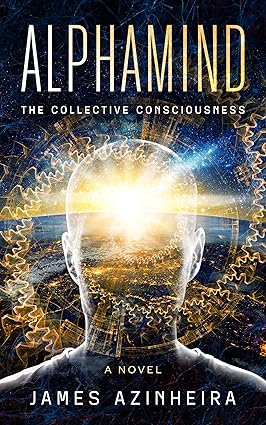
Alphamind is a science fiction novel that follows the journey of Adrian Silva, a driven neuroscientist who joins the prestigious Crestwood Research Institute. There, he becomes part of an elite team pushing the boundaries of neuroscience and artificial intelligence, aiming to revolutionize neurorehabilitation. The narrative weaves together cutting-edge technology, human emotion, and ethical quandaries as the team grapples with the consequences of their breakthrough: an AI system that adapts in real-time to brain feedback, potentially becoming more than just a tool. The story is deeply personal at times, with emotional flashbacks and evolving relationships, all while exploring the gray areas of ambition and responsibility.
Reading Alphamind was a rollercoaster. The writing was vivid and often poetic, especially in its quieter moments. I appreciated how the author gave each character their own distinct voice and emotional depth, especially Adrian, whose childhood memories and personal struggles made him relatable and grounded. I found the blend of hard science and human emotion to be surprisingly fluid. Some parts had me glued to the page, like when the AI began adapting on its own. That twist gave me chills. But there were moments when the pacing slowed with technical explanations. Still, the heart of the story—the ethical tension and the drive to help others—shone through.
I enjoyed how the book questioned the nature of progress. Is innovation still noble if it ignores its consequences? The characters’ moral debates felt real. Vanessa, in particular, was a thorny presence, but she made the team—and the reader—think harder about safety, control, and accountability. The writing reminds me of Michael Crichton for its blend of scientific intrigue and ethical tension, with a touch of Blake Crouch’s emotional depth and fast-paced, tech-driven storytelling.
I’d recommend Alphamind to readers who enjoy science fiction with a beating heart. The book speaks to the dreamers and the skeptics—the kind of people who believe that science can change the world but wonder if it should. For me, it was a thoughtful and sometimes thrilling dive into the future, with just enough humanity to keep it grounded.
Pages: 397 | ASIN : B0D2WVG3SN
Humanity At Fault
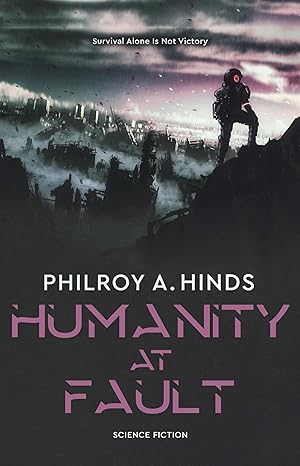

Humanity At Fault is a sweeping and deeply emotional sci-fi epic set in a far-future universe where the remnants of humanity grapple with guilt, memory, and cosmic consequences. The story follows survivors of a catastrophic crash on an alien world called Symphony that eerily mirrors Earth. There, they encounter entities known as The Collective, who deem humanity responsible for unleashing a galaxy-consuming plague. Through surreal visions, temporal dislocations, and interstellar battles, the book dives into themes of redemption, loss, and the staggering cost of survival. It’s both intimate and enormous in scale, often switching from quiet, personal reflections to grand, space-faring action.
Reading this book was like tumbling down a rabbit hole of stars and memories. Hinds’ prose is rich and poetic, sometimes dizzying, but always heartfelt. His writing is thick with emotion. I found myself rereading sentences not because they were unclear, but because they were beautiful. The opening chapter—dreamlike and full of longing—hooked me right away. But then the pace suddenly exploded, hurling me into a nightmarish planetary descent that had my heart in my throat. There were moments when I felt lost in the swirl of names, timelines, and metaphysical spaces, but oddly, that sense of disorientation fit the story’s tone. This is a book about being unmoored—physically, temporally, emotionally.
What truly stayed with me, though, were the characters. Brynn and Kelsey, especially, felt real and raw in a way sci-fi often misses. Their grief, resilience, and haunted love for their pasts made me ache. And the dialogue—sometimes clipped, other times poetic—rang true even in the most fantastical situations. I did feel the narrative leaned a little heavily on exposition in the middle chapters, and the layered timelines could be hard to follow. But that chaos mirrored the existential mess they were trapped in. It felt intentional, even if it slowed the story’s rhythm now and then.
Humanity At Fault is an ambitious story, but one that was entertaining. It’s not your average space opera—it’s more like Interstellar had a baby with Arrival, raised on the emotional weight of The Leftovers. I’d recommend this book to readers who love character-driven sci-fi that isn’t afraid to get philosophical or poetic. If you’re the kind of person who stares out of windows thinking about your mistakes and the stars, this one’s for you.
Pages: 308 | ASIN : B0DZS3NKKQ
The Challenges of Our Times

Aquila Rising follows a Martian-born young man whose colony is attacked and his father is executed before his eyes, leading him to seek a way to get revenge while being forced into the army that destroyed his life. What was the inspiration for the setup of your story?
I was watching an old History Channel series on The American Revolution and a world started to grow in my head as I watched. I liked the power dynamics between the American militias and the British army that was considered the most powerful army in the world at the time. The British were also seen as the oppressors and it’s an infamous story of humanity’s struggle for freedom.
I’ve always thought that using our history as inspiration for a story will help make it feel more real, so I took the inspiration and built a new world around it. A space opera felt like a fitting setting for my story!
I find the world you created in this novel brimming with possibilities. Where did the inspiration for the setting come from, and how did it change as you were writing?
There’s a lot of tension and discussion right now regarding wealth inequality and corporate power. I wanted my space opera to be relevant to our times and challenges, so I started brainstorming ways that I could incorporate the world I had created with the challenges of our times.
As I built out the story, more and more possibilities sprung up and the size and power of Draconis grew. As I wrote, their leader took on more evil, but I tried to make the employees seem like good, normal people, stuck within their grasp.
What were some themes that were important for you to explore in this book?
I really wanted to explore some social themes in this book, the big one for me was corporate power and corporate greed. We’re living in a time where certain companies have incredible amounts of power and they use their influence to alter humanity’s course in the world, most often, not for the betterment of the average person.
A gripping adventure through space provides an engaging platform for readers to explore some of these themes and the ambiguity of some of the moral decisions hopefully leaves readers thinking long after they set down the book.
Can you tell us where the book goes and where we’ll see the characters in the next book?
Lewis and Nels continue their quest for freedom with The Aquila Front. They’ve become accidental heroes of the rebellion and given it credibility. Inspired by their actions, more people within Aquila start following suit and wage a hidden war against Draconis.
Draconis becomes more and more desperate as they feel threatened for the first time, they become hyper-focused on finding Lewis, convinced that capturing him will end the war. Their singular focus leaves them vulnerable and The Aquila Front takes their chances in their biggest open act of war yet.
Author Links: GoodReads | Amazon
Conscripted by a ruthless space mining corporation, Lewis rose through their ranks, becoming a weapon in their iron grip. But a chance encounter with a childhood friend ignited a rebellion within him.
Joining the Aquila Front, an insurgent movement fighting for freedom, Lewis uses his insider knowledge to launch devastating strikes against Draconis. But as the war escalates, he must confront the ghosts of his past, and find the man he was meant to be.
“Aquila Rising” is a pulse-pounding space opera that will leave you breathless. Buckle up for thrilling battles, daring escapes, and a hero who must choose between duty and defiance.
For fans of Hard Science Fiction books like James S.A. Corey’s The Expanse and Andy Weir’s The Martian, this is a must-read.
Don’t just read about it! Experience it. Click “Add to Cart” and join the rebellion against corporate greed today!
Aquila Rising

Allen Ansel’s Aquila Rising throws readers headfirst into a vividly realized future, where humanity’s reach extends deep into space, but old conflicts still fester. Set in 2198, the novel envisions a solar system carved up by political factions and corporate empires, teetering on the edge of war. Mars, Luna, Jupiter’s moons—each settlement is a chess piece in a game controlled by the United Nations, BRICS, and two powerful space-mining corporations, Draconis and Dongfeng. In the middle of this struggle stands Lewis, a Martian-born young man whose life takes an unexpected turn when his colony is attacked and his father is executed before his eyes. Forced into the ranks of the very organization that destroyed his home, Lewis finds himself navigating the rigid hierarchy of the Draconis Navy while struggling with his own burning desire for revenge. The book blends political intrigue, space combat, and personal vendettas into a gripping narrative that never slows down.
I loved the world building in this novel. Ansel doesn’t just tell us about Mars, he makes us feel it. The opening chapter, where Lewis gazes over the Martian landscape, grounds the reader in a setting that feels both foreign and lived-in. The detail Ansel packs into his depictions of space stations, asteroid mining operations, and the brutal realities of life in space makes the universe feel real. Even small details, like how the Draconis Navy’s green uniforms reflect their Earth-bound arrogance, add layers of depth to the world. That said, at times, the lore can feel overwhelming. There are moments where the narrative pauses to explain the political dynamics or technological advancements, which, while fascinating, can slow the pacing in spots.
Where Aquila Rising really shines is in its characters, especially Lewis. His transformation from a defiant Martian kid into a conflicted officer in the Draconis Navy is both painful and compelling. The scene where he watches his father’s execution is gut-wrenching—his helplessness, his rage, his heartbreak—it all feels raw and real. Later, as he struggles to fit into the rigid structure of the Navy, his resentment simmers beneath the surface, threatening to boil over at any moment. The supporting cast is hit-or-miss. Nels, Lewis’s childhood friend, provides an emotional anchor, but some of the naval officers, particularly Captain Abernathy, come across as archetypal rather than fully fleshed-out. Still, the dynamic between Lewis and his crewmates, particularly the sharp-tongued Pascal, keeps the dialogue engaging and adds much-needed levity.
The action sequences are thrilling, whether it’s a chaotic space battle or a tense political standoff. The attack on New Draco, where Fox 88s rain destruction from above, is pulse-pounding, and the moment Lewis realizes his father is about to be executed is one of the book’s most emotionally charged passages. Later, when Lewis takes his first command on the aging attack frigate DarkWind, the tension shifts to survival and strategy. The battle sequences are immersive, with Ansel balancing technical precision with cinematic flair. But the book isn’t just about explosions and dogfights—it’s about control, oppression, and the choices people make under extreme circumstances. Ansel doesn’t paint Draconis as outright villains, nor does he make the rebellion purely righteous. Instead, he leaves room for moral ambiguity, making the reader question who’s really fighting for justice.
If you love space operas with political intrigue, character-driven drama, and adrenaline-fueled action, Aquila Rising is an easy recommendation. It’s got the gritty realism of The Expanse and the high-stakes tension of Battlestar Galactica, but with a style that’s distinctly its own.
Pages: 335 | ASIN : B0DWKWCHJV
What Is Time?

Slow Space follows a physicist, his partner, and a young man from a troubled background who become entangled with a space mining corporation that takes them to the far reaches of space, where they inadvertently alter the course of human destiny.
I find the world you created in this novel brimming with possibilities. Where did the inspiration for the setting come from and how did it change as you were writing?
Thank you…I like that. Science fiction should be all about possibility. The setting came from the idea that time is actually impossible to comprehend. I wanted to feel like our weeks, months and years are just a drop in the ocean of a universe that’s 13 billion years old so far. Having the near future juxtaposed with the far future seemed like the best way to really try and feel that hugeness. So, I asked myself, ‘where do I think the world will be in 30 years and why?’ Once I answered that I had my setting and then I wanted the contrast with the far future to be surprising.
What were some themes that were important for you to explore in this book?
Apart from seeing ourselves in the context of the time the universe will exist there is a smaller theme looking at the way we react to crisis and things we perceive as a threat. A couple of the characters do some quite shocking things, in part, because they perceive threats that may, or may not be there. So, what does a world of angry reaction look like, as opposed to a world of lifting up those around us and working towards a common goal?
What is the next book that you’re working on and when can your fans expect it out?
Well, I think I have 6 fans at the moment! But SLOW SPACE has had a lot of great feedback and I am hoping to find some more like-minded people who love classic science fiction and the wonder that it always brings. As for book number 2, it is early days but I am writing. I want to improve as an author so I’m not rushing. Putting this book out has been a great journey for me and I want to work harder and make the next story even better.
Author Links: GoodReads | Instagram | BlueSky
Well, meet these three people…
Brax Bratton has the greatest mind of his generation. A physicist and thinker to rival Einstein, he gets anxious if he has to leave his own home town. But his journey will lead him incredibly far from there, and in the process, he will lose everything.
Luis Briggs comes from a poor immigrant family with an abusive mother. He finds himself, just 11 years old, at the mercy of the powerful Destiny Space Mining Corporation with one dream. To become a ship’s Captain.
Jess Weston finds that events change her life irrevocably but her powerlessness in the face of a corporate future of conquest meets an unlikely ally…the most powerful AI in the world.
Together, these three are tossed rapidly on the winds of change encountering harrowing conflicts and incredible adventure, making a shocking and immeasurable impact on the future of humanity.
Slow Space

Lucian Phillips’ Slow Space is an ambitious, sweeping sci-fi novel that blends deep philosophical musings with an engaging human story. It follows Brax Bratton, a brilliant yet socially withdrawn physicist, and Luis Briggs, a determined young man from a troubled background, as they become entangled with Destiny Space Mining Corporation and a growing resistance against the encroachment of AI into human existence. Their journey, along with Brax’s partner Jess, takes them to the far reaches of space, where they inadvertently alter the course of human destiny. The book is more than a spacefaring adventure; it’s a meditation on artificial intelligence, corporate control, and the nature of time itself.
One of the book’s strongest aspects is its richly developed characters. Brax, an academic genius crippled by anxiety, is a refreshing take on the classic scientist archetype. His relationship with Jess, introduced with a wonderfully awkward first meeting at a party, brings warmth and humanity to the novel. The interplay between his intellectual brilliance and social ineptitude is both humorous and deeply relatable. Meanwhile, Briggs’ gritty backstory of abuse and struggle adds a stark contrast, showing the harsh realities of a world increasingly dominated by corporations. His escape from his mother’s violence and his unwavering determination to become a Ship’s Captain are some of the novel’s most emotionally gripping moments. These character-driven elements ground the high-concept sci-fi themes in something real and personal.
The novel also excels in its world-building. The depiction of Destiny Space Mining Corporation is chillingly believable, painting a future where corporations operate beyond the reach of governments, effectively ruling space with their own laws and enforcement. The concept of AI control, embodied by Baby Blue, adds a layer of tension throughout the story. The early scene with the humanoid robot warning of the dangers of AI before self-destructing in Amsterdam is a haunting introduction to the stakes at play. Later, the underground resistance movement, The Spammers, brings a cyberpunk edge to the narrative, evoking classic sci-fi themes of rebellion against unchecked technological power. The pacing, at times, feels deliberately slow, almost as if mimicking the vastness of space itself, but the moments of action and revelation keep the story moving forward.
Despite its strengths, Slow Space has moments where its philosophical digressions slow the momentum. Brax’s musings on the heartbeat of the universe and the nature of time, while intriguing, sometimes pull away from the immediate stakes of the narrative. There are times when the novel’s scope seems to stretch a little too far, almost losing sight of its core characters amidst its grander themes. Phillips manages to keep it grounded just enough with moments of personal struggle and triumph, such as Briggs’ fight for recognition within the corporation or Jess’ growing frustration with Brax’s unwillingness to change.
Slow Space is a thought-provoking and emotionally engaging sci-fi novel that will appeal to readers who enjoy a mix of hard science fiction, philosophical exploration, and deeply human storytelling. Fans of The Expanse or Blade Runner will find much to appreciate here, especially those interested in AI ethics and corporate dystopias. While the novel’s slower sections may not be for everyone, those willing to immerse themselves in its depth will be rewarded with a rich, layered narrative that lingers long after the final page.
Pages: 370 | ASIN : B0DL7K3C1G



 LITERARY TITAN