Blog Archives
A Love That Transcends Time

In Silence Cries the Heart follows an American schoolteacher on a trip to Scotland who uncovers the tragic history of a couple from the 17th century and a mystery surrounding their love. What was the inspiration for the setup of your story?
During the summer of 2019 while on a tour of Scotland, I and my fellow travelers stopped at Urquhart Castle, the ruins of which rest on the banks of Loch Ness. Visiting the dungeon there, I read a placard that mentioned the name of its most famous prisoner, Domhnull Donn, a cattle thief who had been executed not so much because he was a reiver but because he had the audacity to fall in love with the laird’s daughter, Mary Grant. When I asked the tour guide for further information about this doomed pair, he really didn’t know a whole lot beyond what was stated there on the display.
For some reason, I just couldn’t shake the memory of the castle, the dungeon, and the two lovers themselves, so when I got home to New York, I started digging around to find whatever I could about Donal and Mary. During that research, I found a particularly wonderful book by William Mackay called, Urquhart and Glenmoriston, Olden Times in a Highland Parish (1893) which included intriguing comments about Domhnull, calling him “the Rob Roy of his generation” who “had more poetry in his soul than the famous Macgregor had.” In addition, Mackay also recounted Domhnull’s capture, his final days, and even his last words before succumbing to the ax. I started to think, What kind of love could be so strong that it would be worth dying for?
I knew I had the shell of a tremendous story from history; I just needed to flesh it out.
Were you able to achieve everything you wanted with the characters in the novel?
I believe so. I hope readers will be captivated by the story of Mary and Donal and feel transported back to another age and time.
There is so much to be said about love in this book. What do you hope your readers take away from your story?
Two things actually. First (as stated earlier), I hope that they will be enchanted by a love that transcends time. Second, I hope that they will come to realize that silence is something to be welcomed, not avoided. For it is in silence where we learn so much about the soul–the spirit that connects all human beings from ancient times to today. Silence is something we have so little of today. Think of all of the buzzing notifications we get on a minute-to-minute basis: FB updates, incoming text messages, Instagram posts, etc. We simply can’t escape the noise and the distractions. But the truth is, we need silence. It’s a requisite for self-discovery. Only in the silence do we get to know ourselves, and when we can do that, we can then identify the part inside of us that’s the same stuff inside every other person–even those who lived in the Scottish Highlands back in the 1600s.
Thus, the Dedication at the opening of the novel:
“To the voices of yesterday that can be heard in the silences of today”
What is the next book that you are working on, and when can your fans expect it to be out?
I’m currently working on another dual-narrative novel, but this one is set in the years before the Norman Conquest. It’s a tumultuous time, and powerful men are jockeying for possession of the English throne.
Various rulers stake their claim, each believing he is the rightful leader to wear the crown. But the waters grow even muddier when King Edward the Confessor, childless and already in failing health, sends for his nephew, Edward the Exile, to return home. What will this mean for Harold Godwinson? For William, Duke of Normandy? And when the Exile mysteriously dies almost immediately after coming ashore, what will become of his son Edgar, the last surviving male member of the royal dynasty of the king?
While these men assume a significant role in the novel, the two main players are women: Melisende, a simple farm girl from Caen, Normandy, and Margaret, daughter of Edward the Exile and future queen of Scotland. Their two lives eventually intersect when Melisende is forced to spy on Edgar, Margaret, and Margaret’s suitor, Malcolm III of Scotland. Facing adversity, loss, and death, each woman is transformed by those experiences to see her own lustrous reflection mirrored in the other. Enemies no more, they emerge as kindred souls: triumphant, brave, and able to endure. Thus, the title, Therein Lies the Pearl.
Author Links: GoodReads | Facebook | Website | Amazon
In Silence Cries the Heart
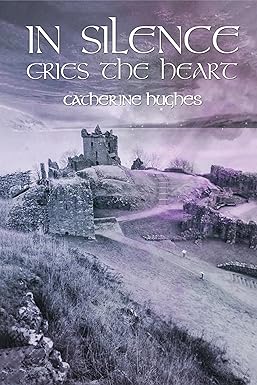

In Silence Cries the Heart transports readers to the atmospheric landscapes of Scotland, where the past and the present are blended in a historical fiction novel that is rich with emotional depth and lyrical storytelling. The narrative weaves between the poignant tale of 17th-century lovers Mary Grant and Domhnull Donn and the contemporary journey of Caitlyn, a woman whose discovery of their story changes her life. The setting goes from the hauntingly beautiful Loch Ness and Urquhart Castle, remnants of a turbulent history, to the modern world, capturing the essence of a Scotland that is as mystical as it is grounded in reality.
The author’s writing shines with a passion for Scottish history and culture, encapsulated through detailed descriptions and compelling characters. The vivid portrayal of the highland landscapes serves as a character in its own right, imbuing the narrative with a sense of place that is both enchanting and haunting. The parallel storylines are skillfully interwoven, maintaining a balance that enhances the book’s thematic depth. While the narrative excels in its atmospheric setting and rich historical details, I feel that it can occasionally linger on descriptive passages that slow the pace.
The exploration of themes such as love, destiny, and the power of history is poignant and thought-provoking. Author Catherine Hughes delves into the human condition with sensitivity, examining how the past influences the present and the timeless nature of certain human experiences. The heartache of Mary and Domhnull’s doomed love is mirrored in Caitlyn’s own journey of self-discovery and liberation from societal norms.
Hughes’ choice to intersperse the novel with Gaelic phrases and traditional Scottish folklore enriches the authenticity of the setting. These elements, combined with the lyrical quality of her prose, created a mesmerizing reading experience for me.
In Silence Cries the Heart is a compelling read for those enchanted by Scotland, historical fiction enthusiasts, and anyone who appreciates a beautifully written tale that bridges time. Its intricate narrative and eloquent prose make it a great book for a wide audience, particularly readers who enjoy stories where history and modernity converge with a touch of romance and mysticism, just like in Diana Gabaldon’s popular Outlander series.
Pages: 360 | ASIN : B0CKLXTLXQ

Blessed Are the Peacemakers

In Blessed Are the Peacemakers, Russell M. Chace delivers an engaging tale that intertwines redemption, courage, and the intricacies of life on the American frontier. Set against the raw backdrop of the Alaskan wilderness, the novel brings to life an era marked by steamboats and gold rushes, populated by characters as rugged as the landscape itself.
Chace employs an evocative writing style that effectively transports readers to the harsh yet vibrant world of lawless territories. The book opens with heart-pounding action and eases into the reflective challenges Coy Tucker, the protagonist, faces. Throughout the story, Tucker, a former gunslinger haunted by his past, evolves into a preacher determined to establish a church and foster peace within a chaotic mining camp. The characters in the story are meticulously crafted, each embodying their unique desires, imperfections, and dreams. Tucker’s journey is particularly compelling, reflecting a significant transformation influenced by his interactions with other characters, such as the enigmatic Colorado Kid. These relationships enrich the narrative, adding complexity and intrigue. The depiction of the Alaskan frontier is both vivid and atmospheric, capturing the brutal beauty of the environment. Chace’s descriptions create a palpable sense of place, drawing readers into a setting where survival hinges on both physical and mental fortitude. This book stands out for its thoughtful exploration of themes such as justice, redemption, and community. Through Tucker’s personal evolution, the novel probes the moral dilemmas that accompany a change in life’s direction.
This novel is a well-crafted addition to the Western genre, offering a story that resonates with anyone interested in historical fiction marked by rich storytelling and immersive settings. Russell M. Chace’s Blessed Are the Peacemakers is not just a journey through the American frontier; it is an exploration of the human spirit.
Pages: 153 | ASIN : B0C4K2ZLZL

The Journal Of Aaron McClare


In The Journal of Aaron McClare by George Lyttle, readers are introduced to American Congressman Craig Bentley and his wife, Lorna, as they settle the estate of Craig’s late stepfather in Ireland. During their visit, Craig stumbles upon a book—an old journal belonging to his stepfather, Aaron McClare. This journal, brimming with the chronicles of a life once lived, captivates Craig and becomes the focal point of the narrative.
The story unfolds as Aaron describes his humble beginnings in Ireland, where he trained as a blacksmith. Facing economic hardship, he, along with his wife and a young boy, relocate to Belfast in search of better prospects. However, opportunities remain elusive, prompting Aaron to embark on a perilous journey to the United States. His arrival in New York coincides with the outbreak of the Civil War, thrusting him into the tumult of the era and onto a Southern plantation that offers both employment and new challenges.
Lyttle’s novel excels in its portrayal of Aaron—a character crafted with enough depth and resilience to engage readers’ sympathies. His life’s narrative is marked by adversity yet punctuated by moments of action and romance, making his journey not just compelling but emotionally resonant. The prose is accessible, allowing the reader to breeze through the book in a matter of days, carried along by the intertwining of dialogue and description that skillfully captures the essence of Victorian life. While the novel captivates with its engaging narrative, it adopts a concise approach to pivotal events, inviting readers to ponder more deeply on Aaron’s experiences and the rich historical context of his adventures. This streamlined narrative style enhances the story’s pace, appealing particularly to those who appreciate a quick yet substantial read.
The Journal of Aaron McClare will appeal to readers of historical fiction looking for a story that offers insight and intrigue. It serves as a poignant reminder of the enduring human spirit in the face of formidable odds, making it a worthwhile addition to any historical novel collection.
Pages: 232 | ASIN : B0CQ58QVHX
Reigning Cats and Frogs


Reigning Cats and Frogs, by V.F. Diefenbacher, is an intriguing middle-grade historical Christian fiction novel set in Ancient Egypt during the Biblical Exodus. Centered around Kafele, a 13-year-old boy grappling with societal expectations and personal identity, the book offers a refreshing perspective on a well-known biblical narrative. The intertwining of Kafele’s journey with the plagues of Egypt paints a vivid picture of life during a tumultuous time, providing a backdrop for a story that is rich in historical detail and cultural depth.
Diefenbacher’s writing style is both accessible and engaging, successfully catering to a middle-grade audience while offering enough complexity to captivate older readers. The character development, especially Kafele’s, is skillfully executed, allowing readers to connect with his internal conflicts and growth.
What sets this book apart is the unique lens through which Kafele views historical figures like Moses, Aaron, and the Pharaoh. This perspective brings a fresh and intriguing dimension to familiar tales. While I enjoyed the story, I felt that, at times, the narrative pace seemed to slow somewhat under the weight of historical accuracy, which may affect its flow for some readers.
The themes explored in the book, such as faith, authority, and the nature of divine protection, are thoughtfully presented. These elements provoke reflection on the part of the reader, elevating the book from a simple historical retelling to a deeper exploration of spiritual and moral dilemmas.
Reigning Cats and Frogs is a great blend of historical fiction and biblical narrative that succeeds in bringing Ancient Egypt to life through the eyes of a young protagonist. It’s a recommended read for middle-grade readers who enjoy historical fiction and for older readers interested in a new perspective on the Exodus story. The book’s appeal lies in its ability to provide a fresh take on a familiar story, making it a valuable addition to the genre of historical Christian fiction.
Pages: 319 | ISBN : 978-1960982001
Stolen Lives

Joyce Yarrow’s novel Stolen Lives, the second installment in the Zahara series, deftly combines historical intrigue with supernatural elements to create a compelling narrative. The protagonist, Alienor, is not only a journalist but also a psychic, gifted with the ability to witness past events through the eyes of her female ancestors. This unique ability embroils her in a dangerous quest to uncover the fate of family members lost under Spain’s Francoist regime and to reunite mothers with children forcibly taken at birth. As the story unfolds, Alienor’s connection to her ancestors deepens, leading her to the discovery of distant relatives and putting her in the crosshairs of unknown adversaries. Her psychic journey also uncovers a trove of stolen gold coins, bringing peril to those she holds dear. This raises a poignant question: Are some stories too perilous to pursue?
Stolen Lives is a masterful blend of suspense and drama, characterized by its fast pace and the seamless integration of multiple timelines and hidden secrets. Yarrow’s narrative prowess is evident in her creation of robust, stubborn characters who are willing to challenge limits to seek justice. While the use of foreign terms occasionally challenges the reader, it ultimately enriches the authenticity and depth of the setting. The novel culminates in a satisfying resolution, providing relief after a series of intense, disheartening events.
For readers drawn to historically rich thrillers that boast engaging dialogue and resilient characters, the Zahara series promises to be a rewarding experience. The author’s notable work captivates and educates, leaving a lasting impression with its intricate storytelling and vivid characterizations.
Joyce Yarrow’s Stolen Lives is a testament to the power of historical narratives woven with supernatural flair. Through its intricate plot and dynamic characters, the novel not only entertains but also invites readers to ponder the ethical implications of delving into painful pasts. This balance of thrill and thought makes the Zahara series a valuable addition to the shelves of those who appreciate thrillers enriched with history and heart.
Pages: 250 | ASIN : B0CXLR3DM3
A Compartmentalized Life

The Reversible Mask follows an ambitious man deeply devoted to the Catholic church who becomes a spy for the church before changing his mind and becoming a double agent serving patriotism and religion. What was the inspiration for the setup of your story?
I was fascinated by the notion of a compartmentalized life, an inner conflict that could not be reconciled. Most of us deal with pulls in opposite directions. As an insurance agent I occasionally felt torn between the need of the institution and the needs of my clients. Today, most work and personal conflicts are resolvable. I sold my practice and now write.
But my spy, Edward Latham, couldn’t achieve resolution. He’s loosely based on a double agent of the time, Sir Anthony Standen. His was a pure lifetime experience of compartmentalization. Crawling around in his psyche was irresistibile, then I put Latham at the center of the iconic struggles of the turbulent Elizabethan era. My take on Standen from his letters is that he spied out of a principle of wanting the opposing sides to moderate their violence. Which drew me into an absorbing exploration of moral choices. Being a spy requires some level of betrayal; becoming a double agent doubles it. So how does an idealistic spy construct an individual moral code with individual red lines. Latham achieves this through his adventures.
I was helped in this framing by an interview I saw with a modern spy. In the video The Green Prince, the son of a Hamas leader who spied for Israel for 10 years talks about his new red lines.
What kind of research did you do for this novel to ensure you captured the essence of the story’s theme?
Many years. A lot of primary sources and secondary sources, Standen’s letters and dispatches to his handlers. There’s still no biography of Standen to the best of my knowledge. There are several academic articles and the authors have diverging views of him, some as a near traitor, self-deluded opportunist, others as one of Elizabeth’s most enterprising and courageous spies abroad. Again, irresistible to get my fix on a fictionalized spy inspired by him.
What is it about the Elizabethan era that makes it a great setting for your spy story?
To me it’s a time that resonates today. Upending of the Catholic Church’s dominance, the discovery of the New World, the beginning of science, traditional alliances between states and between mercantile organizations like the Hanseatic League and the emerging nation states, and the beginning of the idea of the companionate marriage that went beyond property acquisition. Excitement, anxiety, backlashes of violence and superstition. What’s NOT relevant? How can anyone not love the Elizabethan era?
What is the next book that you are working on, and when will it be available?
Thank you for that question. A totally different adventure. I’m just back from a long trip to Papua New Guinea and Australia. My novel (just retitled) Beyond the Bukubuk Tree: A World War II Novel of Love and Loss is due for release in June also by MadeGlobal Publishing. The protagonist is an Australian Jewish doctor who volunteers to join the Army and is posted to Rabaul, the capital of Australia’s Mandated Territory of New Guinea, in 1941. He’s part of Lark Force, the lone and under-resourced battalion defending the town and its strategic environs. They face the full Japanese invasion. It’s a tale of love, betrayal, redemption and heroism. Lots of battle scenes, tropical medicine and polio treatment, two forbidden love stories, and diverse characters drawn from the complex society that was Rabaul in 1941. It won an International Firebird Book Award for War Fiction in July 2023.
Author Links: GoodReads | Facebook | Website
Summer 1566. A glittering royal progress approaches Oxford. A golden age of prosperity, scientific advances, exploration and artistic magnificence. Elizabeth I’s Protestant government has much to celebrate.
But one young Catholic courtier isn’t cheering.
Conflicting passions–patriotism and religion–wage war in his heart. On this day, religion wins. Sir Edward Latham throws away his title, kin, and country to serve Catholic monarchs abroad.
But his wandering doesn’t quiet his soul, and when Europe’s religious wars threaten his beloved England and his family, patriotism prevails. Latham switches sides and becomes a double agent for Queen Elizabeth. Life turns complicated and dangerous as he balances protecting country and queen, while entreating both sides for peace.
Intrigue, lust, and war combine in this thrilling debut historical novel from Loretta Goldberg.
The Last U-Boat

Jack O’Brien’s The Last U-Boat is a gripping dive into the depths of history, seamlessly blending the past with the present. This novel invites readers on a thrilling journey, starting from the tumultuous times of World War II to the explorative curiosity of the modern day. Centered around the discovery of a long-lost Nazi U-boat by a group of adventurous teenagers, O’Brien crafts a narrative that switches between the lives of Gunther Kraus in 1943 and the LeClair family in 2023, unveiling a mystery buried for decades under their home.
O’Brien’s writing is smooth and engaging, making The Last U-Boat a page-turner. His ability to weave two distinct timelines into a cohesive story is one thing I really enjoyed about this story. The juxtaposition of the past and the present is handled with finesse, allowing readers to draw parallels and contrasts between the eras. While I enjoyed the story, I felt that the novel’s pacing can feel uneven at times, particularly in the transition from the high-stakes espionage of the 1940s to the more explorative, yet less urgent, modern-day treasure hunt.
I enjoyed the character development in this story, particularly the portrayal of the Kraus family. Their internal conflicts and loyalties, depicted through Gunther’s perspective, add depth to the narrative. The novel’s most compelling aspect is the thematic exploration of history’s impact on the present. O’Brien skillfully raises questions about legacy, the moral ambiguities of war, and the lasting impact of decisions made by previous generations. These themes resonate well with the dual narrative structure and are thought-provoking.
The Last U-Boat is a fascinating read, particularly suited for those who enjoy historical fiction blended with modern-day adventure. It’s an excellent choice for readers who appreciate a mix of history, mystery, and a touch of youthful adventure and those intrigued by the lasting echoes of the past in the present.
Pages: 295 | ASIN: B0D2M73TRN



 LITERARY TITAN