Blog Archives
How I Became the Real-Life Nurse Jackie
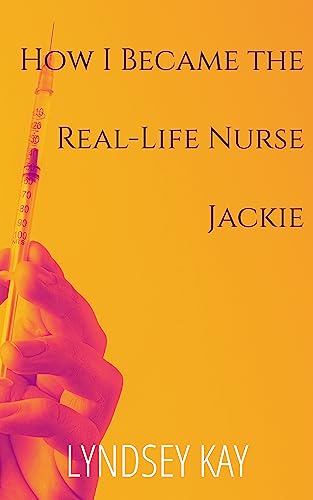

In Lyndsey Kay’s epistolary novel, How I Became the Real-Life Nurse Jackie, readers are invited to traverse the multifaceted journey of a nurse, presented through a series of deeply personal diary entries. The protagonist’s complex upbringing and challenges pave the way for a narrative that is both raw and resonant.
The novel commences with the musings of a nurse who exudes bitterness before diving into the chronicle that marks the inception of her life. Spanning her years as a schoolgirl and a teenager, readers are provided an unfiltered window into her evolving thoughts, experiences, motivations, and passions. The book metamorphoses into an intimate diary, illustrating the passage of time through shifts in thinking patterns and a mosaic of human emotions.
The chosen format for the narrative is remarkably fitting. Diary entries facilitate a closer bond between the reader and the protagonist, enhancing empathy toward her struggles. This style of narration crafts an environment that makes it easy to acknowledge the hurdles she faces. The reader embarks on a profound journey of self-discovery, resilience, and adaptation, guided by a character who plans, recalibrates, and faces life’s many obstacles head-on.
Kay does not shy away from delving into serious and somber themes such as unplanned pregnancies, unstable relationships and marriages, homelessness, and a growing addiction. The narrative beautifully captures the essence of a human being touching the depths of existence and the sparse glimmers of hope to climb out.
How I Became the Real-Life Nurse Jackie succeeds in portraying a stark reality that resonates with many. Despite the dark nature of the topics explored, the prose is accessible and inviting, compelling the reader to immerse themselves in understanding a life path not often articulated. By the end of this stirring read, one is left with a deeper sense of empathy and a greater appreciation for the shared human experience.
This novel is more than just a tale of trials and tribulations; it’s a celebration of resilience and an examination of the human condition. Engaging, heartfelt, and filled with wisdom, How I Became the Real-Life Nurse Jackie stands as a beacon for all those seeking to understand life’s complexities through the eyes of someone who has truly lived them.
Pages: 153 | ASIN : B0C9VXSH4L

Mental Health Mayday
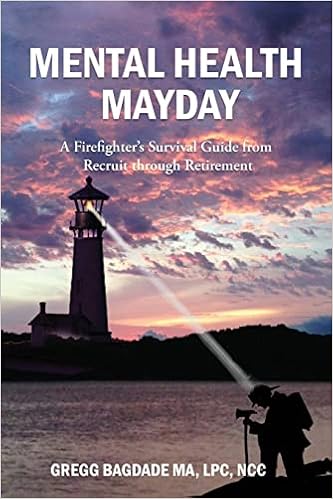
Mental Health Mayday: A Firefighter’s Survival Guide from Recruit through Retirement is a revolutionary work by author Gregg Bagdade that extensively explores the oft-neglected topic of mental health in the arduous field of firefighting. Bagdade, leveraging his profound experiences as a paramedic, firefighter, and trained counselor, illuminates the unseen hardships and psychological tolls endured by these brave professionals.
Bagdade’s personal anecdotes form the core of this literary masterpiece, enabling readers to intimately connect with the author and his peers on a profoundly human level. In a society where we may primarily focus on our health and safety, this book serves as a poignant reminder that the professionals safeguarding our lives are humans, too, subject to the same emotional strains and stressors. Bagdade candidly discusses how the nature of their profession may sometimes leave them at a loss when grappling with emotional adversities.
One particularly affecting account is the tragic loss of one of Bagdade’s friends and colleagues. He poignantly conveys the initial grieving process he and his wife underwent, which gradually evolved into a collective grieving as other couples joined them. They found solace in mutual support, recalling shared memories, and speaking openly about the painful loss. This experience underscored for Bagdade the profound importance of mental health in his professional community, and it catalyzed his journey to becoming a counselor.
Mental Health Mayday sparks an essential dialogue about the significance of mental well-being in professional spheres. This is particularly critical for vocations like firefighting, where individuals regularly encounter the harsh realities of human suffering, loss, and tragedy. The importance of managing these experiences, especially when one’s role is to serve and protect, cannot be overstated. This book, I firmly believe, is a crucial step towards fostering a future of increased awareness and compassion within such challenging fields.
I recommend Mental Health Mayday to anyone aspiring to be a paramedic, doctor, or firefighter or simply seeking a deeply moving narrative. Gregg Bagdade, with this book and his life’s work, has made an immense contribution, perhaps even more than he comprehends. He has equipped his peers with tools to navigate the inherent trials of their professions and has laid the foundation for future generations of firefighters. Bagdade’s unflagging dedication and resilience are indeed commendable. Figures like him, who make a significant difference one step at a time within their communities, are the torchbearers leading us toward a more empathetic world.
Pages: 110 | ISBN-10 : 1957354224
Unique Mythology

The Blood Inheritance Novels Series Two-Book Set: Endow and Resist follows the journey of three friends as they make a dangerous trip through the realms. What was the inspiration for the setup of your story?
I have loved to write for as long as I can remember and although I can’t recall what exactly what inspired the Blood Inheritance Quartet, I believe one major influence was a paperback which I received called of Legends of the Fire Spirits: Jinn and Genies from Arabia to Zanzibar by Robert Lebling. Shortly after that, I began developing stories around the fictitious world of Sumir, in which the Blood Inheritance Quartet takes place. Like many legends, I find the mythology pertaining to Jinn and Genies fascinating and when creating the unique mythology for the world of Sumir, the Jinn were the main focus to start with. From there the idea continued to grow and before I knew it, I had planned a series.
What were the morals you were trying to capture while creating your characters?
The situations in these books may be fictitious and take place in a fantasy world, but the self-questioning that occurs and the doubt, those are things we face every day. I like to say that the protagonists do the best they can with the information that they are given and have found out, especially as they learn and accept more about themselves and each other.
Regarding these heroines especially, I wanted them to be strong and believable characters that held different behaviors, ideas, and moral beliefs, and I strove to maintain their differences in order to show the distinct ways each young woman thinks.
What were some themes that were important for you to explore in this book?
Some of the themes that I felt were important to explore were: BETRAYAL, LOSS, FEAR, SURVIVAL, COURAGE, HEROISM, DISCOVERY, POWER, MAGIC, ISOLATION, ACCEPTANCE, IDENTITY, and MORAL DILEMMA.
I hope the series continues in other books. If so, where will the story take readers?
I have a lot of ideas for the world of Sumir, but in regard to the main characters in this series, I would like to explore what would happen if Amanda came face to face with the guardian that she trapped in the space between the realms. The truth is, I am already working on a few short stories that take place in this fictional world. My hope is to include them in my next short story collection.
Author Links: GoodReads | Twitter | Facebook | Website
Experience the epic fantasy in book three Endow: A Blood Inheritance Novel
Picking up where Lost ended, Endow takes Emily, Amanda, and Kiami on a dangerous trip through the realms. Amanda is determined to prove that the stones they were given are the very ones from the ancient myth. To do so she may have to divulge a few of her dark secrets.
The fate of Sumir is sealed forever in book four–Resist: A Blood Inheritance Novel.
With the end at hand, Amanda seeks redemption. But the myths of Sumir are only half-truths, and the layers of deception go deeper than she ever imagined. After an unknown ally tips her off, completing the puzzle, a bargain is struck, and it’s a race against time.
Once the half-bloods are united, the celestial will come at them with everything he has…
Included short Stories:
Bavmorda Part One: The Journey
Bavmorda Part Two: Lessons
Overcoming Adversity
Mangrove Sands–The Enchanted Sea World: The Epic Journey follows five children with challenges who are brought together to go on an undersea adventure together. What was the inspiration for your story?
My inspiration for The Epic Journey came to me when I discovered I was going to be a first-time grandma. I wrote this book for my beautiful Australian grandson who has a Swedish heritage.
All the characters in this magical story are engaging and interesting. What was your favorite character to write for and why? Was there a scene you felt captured the character’s essence?
Every new character added to each book is interesting in their own unique way. Saige is a Swedish girl who struggles accepting her leg was amputated. My favourite scene would be when Saige has built her confidence with support from the Enchanted Seaworld and friends and overcomes her fears and declares she no longer needs her magical leg.
What were some educational aspects that were important for you to include in this children’s book?
There were several important educational aspects in this book such as environment and overcoming adversity. However, the most important for me was for children to be open to learn and respect other cultures.
I hope the series continues in other books. If so, where will the story take readers?
I am currently at the tail end of writing my fourth book of the series taking the readers and characters to the origins of the Enchanted Seaworld, a world in a fourth dimension.
Author Links: Facebook | Amazon
A young Swedish girl has recently had her leg amputated. She struggles to accept the loss of her leg and has no interest in making new friends or attempting to walk until she meets her Enchanted Sea World friends and her life is changed forever. She starts doing things she never thought possible. She shows her friends how to make Dala horses, bake Swedish buns, and join in traditional Swedish celebrations.
Mangrove Sands–The Enchanted Sea World: The Epic Journey is full of magical adventures in the Enchanted Sea World including surviving a cyclone, a pandemic, and the realm of horrors. Magical spoons, a magical sea god, a wedding, and a death will keep young minds curious and captivated.
This book is full of fun, adventure, and many magical moments. It aims to provide hope and inspiration to children around the globe and encourages children to embrace, respect, and learn about other cultures and languages. It further encourages children to exercise humility, love, and understanding to all.
Scorn as a Shield
Wings of Death follows an embittered woman who, after being gifted a scarab beetle broach, is inflicted with the curse of the pharaoh and must find a cure. What was the inspiration for the setup of your story?
I’ve always loved mythology and ancient legends.
It was in my teens I first read of Howard Carter’s expedition in 1923 to find King Tutankhamun’s tomb. Funded by Lord Carnarvon, many of the artifacts found are on display at the present Earl’s home, which many people will know as the magnificent house used in Downton Abbey.
I was fascinated by the events that followed. Many of the people in the expedition took ill and died after either entering the tombs or handling the artifacts. This caused many people to jump to the conclusion that King Tutankhamun’s tomb was cursed.
However, this wasn’t a new idea. Many ghost stories about a mummy’s curse had been written as far back as the 17th Century.
This was the inspiration for my story.
I enjoyed the depth of the main character, Cassandra Bain. What was your process to bring that character to life?
Cassandra Bain was the most challenging character I’ve written. My idea was for Leigh to give her the scarab to replace her heart, the same as the Ancient Egyptians did when mummifying a body. The story revolved around her heartlessness and her disdain for everyone. She had to be heartless, otherwise, the main theme of the story didn’t work. However, she actually used her scorn as a shield. Her character is complex. Self-assured and disdainful to the world but, in private, crumbling inside. Her miscarriages and her failing marriage had destroyed her more than she was willing to admit.
What kind of research did you do for this novel to ensure you captured the essence of the story’s theme?
This book involved quite a lot of varied research, firstly on Howard Carter’s expedition in 1923 to find King Tutankhamun’s tomb.
Also on various poisons, bacteria, and mold.
Scarab beetles held as much importance in Egyptian religion as the cross is in Christianity. Researching this subject was vital. It was believed the scarab was born spontaneously and so became the representation of the sun. At death, when a body was mummified, the internal organs had to be removed. They were stored separately in jars, as the heart, in particular, had to be weighed by Osiris, the verdict recorded by Thoth on the Day of Judgement. In place of the heart in the mummified body, they placed a scarab.
The scarab Leigh gives Cassandra was supposed to come from the tomb of Imhotep, who was a great doctor and magician and revered as the god of healing. In the 3rd Dynasty, Imhotep was a sage to King Djoser, and a god of healing in his own lifetime. Educated by the Sumerians, he was a man of great medical knowledge and was thought to be a great magician.
Cassandra is a fashion designer, and I enjoyed researching the fashions of the 1950s. I also bring music and other factors such as movies, books, and flowers into my stories.
Wings of Death travels from Melbourne, Australia to London, Paris, Rome, and Cairo. Research had to be done about those cities in the 1950s.
What is the next book that you are working on and when will it be available?
My next book to be released on 10th September 2023 is another cosy ghost story. In fact, although the story has two ghosts in it, it isn’t scary. One ghost is a main character. It’s more of a mystery and a second-chance love story. It’s set in Australia, in Queensland, in the outback town of Charters Towers. Its title is The Cook, the Ghost, and Her Sister.
Following this, my first three books in The Thornton Mysteries are being re-released this year, all with new covers. Books four and five will follow early next year.
I have started research for another thriller, following Wings of Death. It will hopefully be ready for release in the latter half of 2024.
Author Links: GoodReads | Twitter | Facebook | Website | Amazon | Linktree
Then Leigh introduces her to Peter Trembath, a professor of Egyptology, who tells her about a pharaoh’s curse. Cassandra wonders if her scarab beetle is cursed, given that it was found in the tomb of Imhotep, a revered doctor and magician, who became known as the god of healing.
Soon afterward, Cassandra reads a headline in a London newspaper announcing the death of an Egyptologist, claiming that the curse of the pharaohs has struck again. From this moment forward, Cassandra is led through a maze of betrayal and murder.
Arcanus


In Ali K. Eke’s thrilling debut novel, Arcanus, fantasy, and science fiction genres coalesce, creating an innovative landscape where science and magic coexist, albeit via a strained relationship. This tension is navigated by the Bastion, an organization with the challenging task of maintaining equilibrium, ensuring no entity gains overpowering dominance.
Our protagonist, 18-year-old Kibo Kozlov, ambitiously aspires to follow his father’s legacy as a mage within the Bastion. However, his lack of overt magical abilities is an obstacle he can’t seem to overcome. On the brink of abandoning his dreams, an unexpected encounter with a mysterious artifact reignites his hope, revealing latent capabilities within him. This discovery invokes the question: could Kozlov hold the answer to averting a potentially catastrophic war?
One of the most commendable aspects of Arcanus is Eke’s prowess in crafting a vibrant and credible world steeped in extensive history spanning millennia. The depth of the lore is astonishing for a debut novel, constructing a world that feels authentic and lived-in, despite its fantastical elements.
Kozlov, while fitting the familiar “Chosen One” trope, is a compelling protagonist. His occasional stereotypical traits are balanced by his tenacity and humility. His unfolding powers lend the narrative a coming-of-age quality as Kozlov’s development and maturation take center stage.
The plot captivates the reader with its consistent entertainment value. After initial world-building, Eke focuses a significant portion of the narrative on Kozlov’s training, evolving him from an eager aspirant to the hero he yearns to become. This meticulous character development is refreshing in an era dominated by brief training montages, contributing to a sense of authenticity in Kozlov’s progression.
Eke’s prose is evocative without being overly embellished, maintaining a steady narrative pace. The story expertly interweaves action sequences with introspective character moments sprinkling in occasional humor. I would love to have seen further development of a few of the book’s subplots. However, it is important to remember that this is primarily Kozlov’s tale, and the broader series context provides ample opportunity for these subplots to unfold in future installments.
Arcanus is an exciting blend of science fiction and fantasy, and Eke has skillfully established a robust foundation for a potentially captivating series. As such, I eagerly anticipate the next installment. This novel comes highly recommended for both seasoned and budding fans of the genre.
Pages: 304 | ASIN : B0BLXDDWHV
Peace, Love, and Spiritual Revolution
Trippy Hippy follows a young man in 1967, the Summer of Love, who moves to San Francisco and goes on a journey of self-discovery. What was the inspiration for the setup of your story?
The so-called “Summer of Love” was an especially vibrant period in San Francisco instigated by drugs and rock music. It brought young people from all over the country to descend upon San Francisco along with ideals of peace, love, and spiritual evolution. It was a particularly exciting period to use as a setting for my novel.
Was there anything from your own life that you put into the characters in your novel?
The character Arnie/Gator was based on my own transition from bookkeeper to full-on participant in the lifestyle of the times, but once that transition is made the events that Gator participates in are wholly from my imagination.
What were some themes that were important for you to explore in this book?
The themes that I think were important are embodied by the slogan “Make Love; Not War.” The use of drugs to attain enlightenment plays a huge role in the book as well as the daily life and interactions of the characters. The idea of “free love” is introduced early in the story when Nola gives Gator a welcome to the Ashram blow job with no accompanying drama. Gator’s love and loss of Eddy brings out the pain that comes with living on the edge. Music, too, plays an important part in the lives of the characters as Gator and Wabash form a band to not only make money but to express their ideals.
What is the next book that you’re working on, and when can your fans expect it?
I’ve written the first draft of a historical novel about two boys growing up in pre-civil war West Virginia. I’m not sure when I’ll go back to it. Right now I’m working on a sort of wild boys story set in the early 1950s in Houston where I was raised. It’s called The Road to Hell, and it’s both humorous and potentially tragic as the young gang members pull off pranks that become increasingly serious in nature. I’m also considering writing a second draft of a story I wrote years ago about a drive through Mexico in an old car with a hole in the radiator called A Hundred Years of Cilantro.
Author Links: GoodReads | Amazon
Trippy Hippy peels back the facade of Adler’s Ashram to expose the daily lives of its occupants. Wabash Jones, musician and future rock star, Nola and Victor Granola, apartment managers and social magnets, Jeepster Joe, adventurer, and teen boy seducer, and Gracie Fontana, Wabash’s doll-like sweetheart. This acid-splashed tell-all by Gator lays bare the hippy lifestyle during that remarkable year known as The Summer of Love.
The Creation Of A Bloodthirsty Icon

The Prophet and the Warrior takes the biblical stories of Moses and Joshua and transforms them into works of historical fiction, creating a comprehensive narrative. Where did the idea for this novel come from?
The idea for the novel came from my reading the books of Moses in the Bible (KJV). I became aware of how the typical teaching about Moses glosses over the horrible atrocities the man committed in the name of God. I realized then that the big three religions (Judaism, Christianity, and Islam) were not so much interested in teaching the whole truth as they are in teaching a version that suits their purpose (control of the population). This is, in fact, brainwashing, a procedure used by all people who want control and power (think of the Roman empire, the various Kahns, and Adolph Hitler).
What kind of research did you do for this novel to ensure you captured the essence of the story’s theme?
I read and reread Exodus, Numbers, and Deuteronomy looking for obvious departures from what we now consider moral behaviors (There are many). I researched the archeological evidence of the existence of Moses and could find none. When Moses supposedly died they buried him in an unmarked grave (Deuteronomy 24 and others) supposedly to keep his many enemies from corrupting it. I realized that this is a good cover story if one is trying to create a religious icon from stories passed down by word of mouth about a legendary national hero for which there is no solid archeological evidence.
There are no writings in Egypt or other countries of the period, no trash piles or graveyards in the wilderness areas supposedly inhabited by thousands of refugees for forty years. There would have had to have been many graves and skeletons of bodies preserved in the ground in that arid climate. There would have been trash piles with broken Egyptian pottery and the like (which do not decay). The absence of these pieces of evidence and the absence of Egyptian records of something as economically transforming as the Exodus are hard to dismiss.
What is one thing that people point out after reading your book that surprises you?
I have heard little from readers outside of a few who liked the open context of the book and one rather ignorant condemnation that claimed I was condemning the actions of Moses and God. This is exactly what the book is about, the creation of a bloodthirsty icon who is on a first-name basis with God. I am very careful not to condemn God because I believe in a creator God who loves all creation. Here I use the word “which” instead of “who” because no human has ever seen God and so it is natural to create a God in a super-human mage. A friend, who read the book with a Bible at his side (to check references) said it was like two books in one. This is because Moses starts out as a well-meaning, though slightly paranoid, young man who builds a new life with a nomadic tribe after he kills an Egyptian. Later he appears to develop delusions (schizophrenia?) and goes on to become a powerful and psychotic dictatorial leader.
What is the next book that you are working on and when will it be available?
Actually, I have three other published books, available at bookstores, and a fourth and fifth ready for publication. Peter Olaf – The New World At Last, and its sequel, Suddenly A Larger World – Sons Of Peter Olaf, and AcrossThe Chasm, which is a paranormal love story are in print and are being converted to audiobooks. A manuscript, The Scrolls Of Elizaphan is being made into an audiobook and will be published as a paperback, possibly in two volumes because of its size (400+ pages). A manuscript, Alltrust – The Alliance Of Trust, a world government story, is ready for publication. And I have started a new novel.
Author Links: Goodreads | Amazon



 LITERARY TITAN