Blog Archives
The Crucible Principle


The Crucible Principle follows Jackson Cade, a high-powered leader whose world collapses when a corporate crisis exposes not only cracks in the company he built but cracks in his own life. The story tracks his forced sabbatical, his exile in the woods, and his painful unraveling as he confronts the distance he has created with his family, the weight of buried failures, and the truth that leadership means nothing if a man is falling apart inside. Through conversations with mentors, memories that cut deep, and a growing list of words he has avoided for years, the book traces his path from blindness to honesty. It shows how adversity becomes the place where identity is stripped down and rebuilt.
I found myself pulled into the emotional tension more than I expected. The writing is clean and vivid, and the scenes feel authentic. I liked how the author blends storytelling with lessons without turning it into a lecture. The words carry emotional weight. Some passages lingered in my mind, especially the moments with his daughter. They felt real and tender and a little painful. The interactions in the lodge worked well, too. They had a slow rhythm that made me lean in. At times, the metaphors came on a bit thick, yet the honesty in them still made me feel something.
I also appreciated how the book handles the idea of failure. It doesn’t glamorize it. It doesn’t soften it. It lets the reader sit in it. I could feel the ache of regret, the pressure of ego, and the slow, stubborn work of self-reflection. The pacing dips here and there, but the emotional payoff stays strong. The writing avoids jargon, which makes the lessons easy to absorb.
The Crucible Principle is a story I would recommend to leaders, parents, high achievers, and anyone who feels stretched thin and quietly afraid. It is a good fit for readers who want a mix of story and soul searching, wrapped in language that feels simple and relatable. It reminds you that purpose grows in hard places and that the fire you fear may be the thing that saves you. If you liked the raw self-reckoning and emotional grit of The Leader’s Journey, you’ll find The Crucible Principle just as compelling and well worth your time.
Pages: 110 | ASIN : B0G1JC75F7

Love’s Journey Home

Love’s Journey Home by C. A. Simonson tells the story of a young boy named Frankie who grows up in deep poverty, family loss, and emotional neglect. The novel begins with children left sitting on a fence while their father disappears, and it follows Frankie as he is forced to separate from his siblings and survive on his own. The book traces his path through hardship, farm labor, fleeting kindness, cruelty, and moments of grace. At its core, it is a coming-of-age story rooted in abandonment, faith, and the human need to belong.
What stayed with me most was the emotional weight of the writing. The voice feels raw and personal, like someone sitting across from you telling their life story without polish or pretense. I felt anger toward the adults who failed these children, and a deep ache during scenes of separation and loss. Some moments hit hard and fast, especially when innocence collides with cruelty. Other scenes linger quietly, almost painfully so. The author does not rush the pain, and I respected that.
The ideas in the book revolve around resilience, faith, and the search for love when family falls apart. I appreciated how love is not portrayed as neat or easy. It shows up in small gestures, imperfect people, and unexpected places. The spiritual thread is strong, sometimes heavy, but it feels sincere rather than forced. I did feel that some characters leaned toward clear good or bad roles, and I wanted a bit more nuance in places. Still, the honesty of the message carried me through. This story felt authentic.
I would recommend this book to readers who enjoy heartfelt stories about survival, family, and faith. It would resonate most with those who like historical fiction rooted in real hardship and moral struggle. It is not a light read, but it is a meaningful one. If you appreciate stories that sit with pain and still believe in hope, this book is worth your time.
Pages: 260 | ASIN : B0BPF65W63
Cutler’s Wonderful Creations: A Children’s Book About Finding Your God-given Identity

Cutler’s Wonderful Creations by Aaron P. Gordon is a thoughtfully written Christian children’s book that invites young readers to explore identity, purpose, and belonging through a gentle, faith-centered lens. The story centers on Mr. Cutler, a craftsman who owns a small shop where he creates forks, spoons, and knives. When he designs a special set of utensils for his daughter, Alina, each piece longs to be useful and to matter. As Alina grows, the utensils begin to notice differences in how often they are used. Spoon appears essential, while Fork and Knife are left waiting. Comparison creeps in. Discouragement follows. Over time, each utensil comes to understand that it was created with intention and that its purpose will be revealed at the right moment.
What makes this book especially effective is the clarity and warmth of its central message. It speaks directly to children without talking down to them. The story gently challenges the habit of comparison and rejects the idea that worth is defined by visibility or frequency of use. Instead, it affirms that every child is intentionally created, deeply loved, and uniquely designed by God. The utensil metaphor is simple yet powerful, turning an abstract spiritual truth into something tangible and accessible. Fork’s desire to be like Spoon, followed by his eventual realization of his own value, mirrors a struggle many children experience as they navigate feelings of inadequacy or being overlooked.
Patience and trust are also woven seamlessly into the narrative. Mr. Cutler understands his daughter’s future needs long before the utensils do. This dynamic reflects the Christian belief that God, as Creator, sees the full picture even when His creation cannot. The story reassures young readers that purpose often unfolds over time. Waiting does not mean being forgotten. Disappointment does not mean being unimportant. These ideas are presented with tenderness and hope.
The illustrations enhance the story beautifully. They are warm, expressive, and emotionally clear, allowing children to easily connect with each character’s experience. From Fork’s quiet sadness to the shared joy at the story’s resolution, the artwork deepens the emotional impact. The inclusion of children of color is especially meaningful, offering representation that helps more readers see themselves within the story.
The book concludes with discussion questions, memorable quotes, and song lyrics, extending the experience beyond the story itself. These additions invite families to reflect together and engage in meaningful conversation. Cutler’s Wonderful Creations is a reassuring and faith-filled read. It encourages children to value their individuality, trust God’s timing, and understand that difference is not a weakness, but a vital part of who they were created to be.
Pages: 54 | ASIN : B0G275TPXX
Blue Jeans and Lavender Gowns


A. W. Anthony’s Blue Jeans and Lavender Gowns follows Terry Deitz as he grows up in small–town Illinois during the 70s and 80s. The story tracks his friendships, his awkward steps toward romance, and his slow discovery of who he wants to be. The heart of the book sits in his connection with Debbie Douglas, a quiet farm girl who surprises him again and again. Much of the book lives inside everyday moments. School hallways. Study hall banter. Football games. Long drives on dark country roads. It all builds a picture of simple places where small choices shape a whole life.
I felt myself leaning in as I read because the writing has this easy, steady flow that feels honest. Sometimes it rambles the way teenagers talk, and sometimes it snaps into sharp little moments that hit harder than expected. The author keeps the language simple, but the emotions run deep. I appreciated how Anthony lets Terry speak for himself without polishing his thoughts. He admits fear. He overthinks things. He wants to do the right thing, then stumbles. That made him feel real to me. Debbie felt real, too. She works hard. She hides her nerves. She wants kindness more than anything. Watching them circle closer together gave me a warm, hopeful feeling.
The book looks at family pressure, faith, and the everyday pain that people try to hide. Some of the scenes surprised me with how tense or tender they got. I liked how the author handles faith with a light touch. The characters lean on God without turning the story into a sermon. It shows how young people try to make sense of love, fear, failure, and forgiveness. The dialogue sometimes made me laugh, and the charm of the book carried me through.
By the time I finished, I felt like I had spent time with people I might actually know. That is what made the story work for me. I would recommend Blue Jeans and Lavender Gowns to readers who enjoy wholesome romance, small–town nostalgia, and stories that unfold gently. Teens and adults who like clean Christian fiction would enjoy it most. If you want a book that feels warm and sincere, with characters that you’ll keep thinking about, this one is worth reading.
Pages: 271 | ASIN : B0FZ2V62J7

Blessings Abound: Awaken to the Gifts at Hand

Blessings Abound is a short and sweet guide designed to help us spot the good things in life. Katherine Scherer and Eileen Bodoh wrote this book to help readers wake up to the gifts they already have. The authors break the content down into three main buckets. These are blessings we receive. There are blessings we ignore. And there are blessings wearing masks. The pages are packed with quotes from famous folks like Rumi and Abraham Lincoln. It explores how nature and music and friendship make life rich. The main goal is to shift your mindset from complaining to appreciating. It acts as a roadmap to peace and wonder.
I honestly felt a wave of calm washing over me while reading this. It is not trying to be a hard textbook. It feels like a warm hug. I really liked the way they used so many quotes. It felt like a greatest hits album of wisdom. Sometimes self-help books try too hard. They use big words to sound smart. This one keeps it real. It is simple. That is its superpower. The section on nature really resonated with me. I felt lighter after finishing it. It pushes you to use your heart more than your head.
The authors talk about blessings in disguise. This part made me think. It is hard to see the good when things go wrong. But they make a solid point. They mention people like Edison, who failed but kept going. That was inspiring. I also noticed the book gets pretty spiritual near the end. It talks about God and the Bible. They included Native American prayers, too. It felt like they wanted to welcome everyone. The focus on gratitude as a tool to fix a bad attitude is smart.
I think this book is a solid pick for anyone feeling a bit burnt out. If you need a mental reset. It works well as a coffee table book. You can pick it up and read a page or two. It does not demand a lot of your time. It just asks for an open heart. I would gift this to a friend going through a rough patch. It reminds you that the world is actually pretty cool if you look closely. Give it a shot if you want to smile more. It is a quick read with a long-lasting impact.
Pages: 58 | ASIN : B0FBSTLR27
Unbroken: Life Outside the Lines

Unbroken: Life Outside the Lines tells the story of a childhood shaped by violence, poverty, mental illness, and constant upheaval. The author shares scenes that feel almost too real to read, moments where survival hangs by a thread, and small flashes of love keep her moving. The book follows her from her earliest memories with a schizophrenic and abusive mother, through years of instability, family trauma, homelessness, and danger. It is a memoir that traces pain in sharp detail but also draws a clear line toward resilience and the stubborn spark of hope that refuses to go out.
I felt pulled into the author’s voice in a way that left me raw. Her writing hits hard because she does not hide. She tells everything straight, letting each moment speak for itself. The simplicity of the language works in her favor. It keeps the story grounded. It also makes some scenes feel heavier because the words do not soften them. I kept thinking about how young she was during the worst moments and how she managed to hold on to any sense of self. The honesty in her storytelling is powerful.
I also found myself drawn to the way she describes small joys. A homemade sour treat from her grandmother. A moment of kindness from an aunt. A flash of sunlight during a hopeless day. These little details gave me something to cling to as a reader. They also gave the memoir a sense of rhythm. I appreciated how the author allowed those memories to stand beside the darkness without trying to smooth them together. Life often feels jagged that way. The book captures that unevenness with real heart. I found myself caring deeply about her younger self and feeling frustrated at how many systems failed her at every turn.
The story is heavy, no doubt about it. Still, the author’s insistence on survival leaves a clear message. Pain shapes us, but it does not have to end us. I would recommend this book to readers who appreciate personal stories told without filters, to those who work with vulnerable communities, and to anyone who wants to understand trauma from the inside out.
Pages: 221 | ASIN : B0FHY52WZ2
The Empowerment Revolution
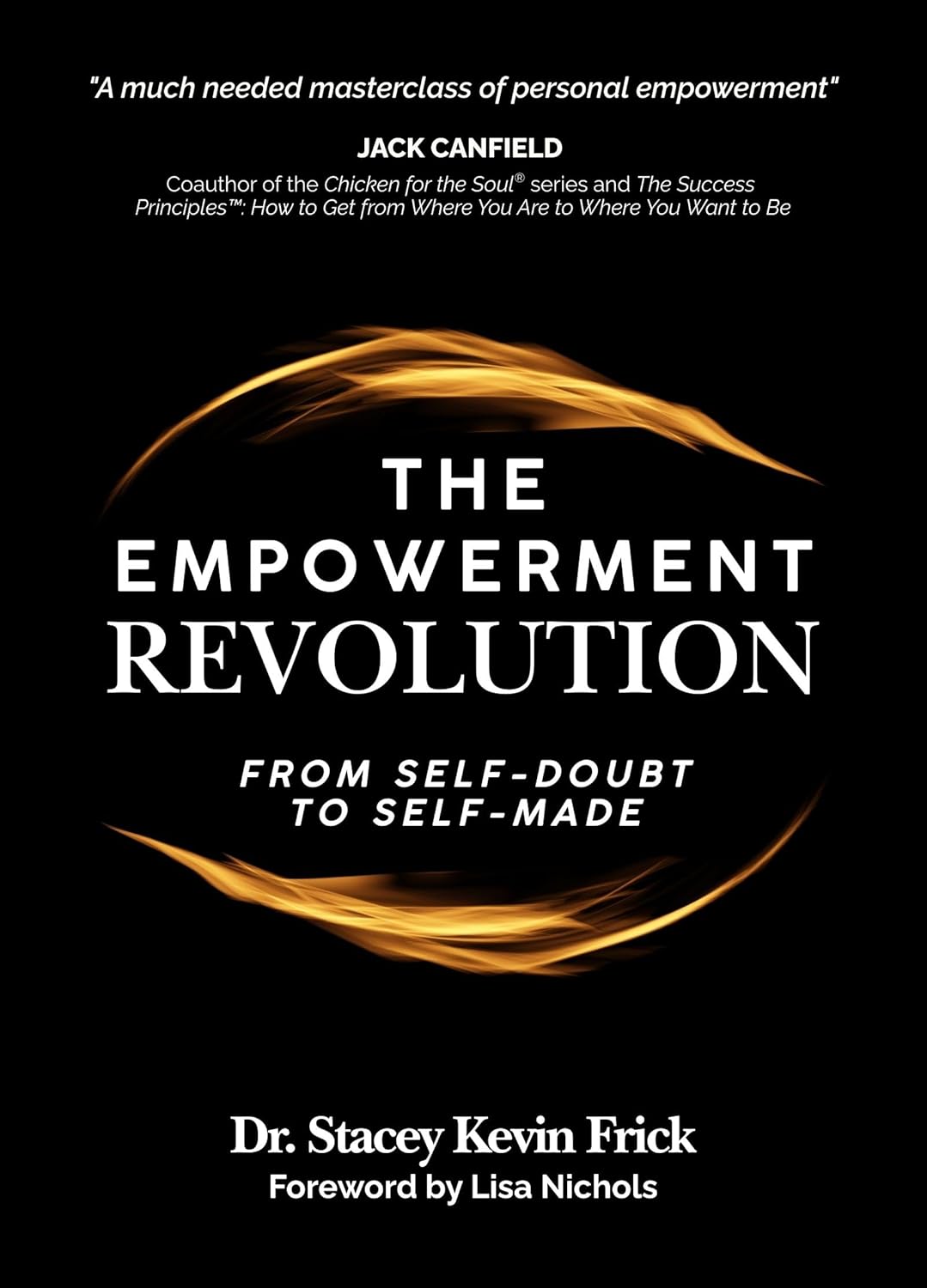
The Empowerment Revolution is a personal-development book that blends memoir, psychology, spirituality, and practical coaching into a clear roadmap for moving from fear and survival into confidence and self-authorship. Dr. Stacey Kevin Frick opens with his own early story of trauma and learned fear, then expands outward into ideas about subconscious programming, emotional survival states, energetic narratives, accountability, and redefining success on your own terms. The book reads like a mix of self-help and narrative psychology, anchored by the author’s belief that empowerment is both a mindset and a lifelong practice of reclaiming your personal agency.
As I moved through the book, I found myself reacting as if in conversation with someone who’s lived the work they’re teaching. Frick’s stories of childhood fear and misaligned beliefs aren’t told for shock value. They serve as the emotional doorway into his central point: most of us inherit limiting stories long before we know we’re allowed to question them. His description of being suffocated as a toddler by his father hit me hard, not because of the event itself, but because of how clearly he connects it to the beliefs he carried into adulthood, beliefs about danger, abandonment, and worthiness. The writing is plainspoken at times, but the honesty gives it weight. I liked that he doesn’t try to sound like a guru. Instead, he sounds like someone who’s been in the dark and is willing to say exactly what it took to find the light.
What surprised me most was how often the book invited me to slow down and check in with myself. There’s a whole section about “old energetic narratives” that blend scientific and spiritual language, but the core idea is relatable: your environment shapes you, and if you’re not careful, it keeps shaping you long after you’ve outgrown it. The story of the CEO who still carried his father’s “you’re not good enough” energy despite having every external marker of success made the point better than any metaphor could. Moments like that made me pause and take stock of which beliefs in my own life were inherited rather than chosen. And even when the book leaned a bit mystical, the practical reminders, like checking where your feet are to remind yourself you’re safe, brought everything back down to earth.
By the time Frick gets to empowerment itself, the tone shifts in a good way. It becomes less about uncovering wounds and more about building something new. The chapter on accountability frames it not as a burden but as a reclaiming of your strength, almost like choosing your life rather than reacting to it. I appreciated that. It felt grounded, not preachy. And the distinction he draws between “proving” and “improving” landed with me. One drains you because you’re performing for someone else. The other fills you because you’re growing for yourself.
The Empowerment Revolution feels best suited for readers who enjoy personal-development books that mix introspection with practical coaching. If you like memoir-styled self-help or transformational psychology, you’ll probably connect with it. The book encourages you to look honestly at the beliefs that built your identity, question the ones that hurt more than they help, and choose new ones with intention.
Pages: 130 | ASIN : B0FNY5VM47
Wagon of Worries
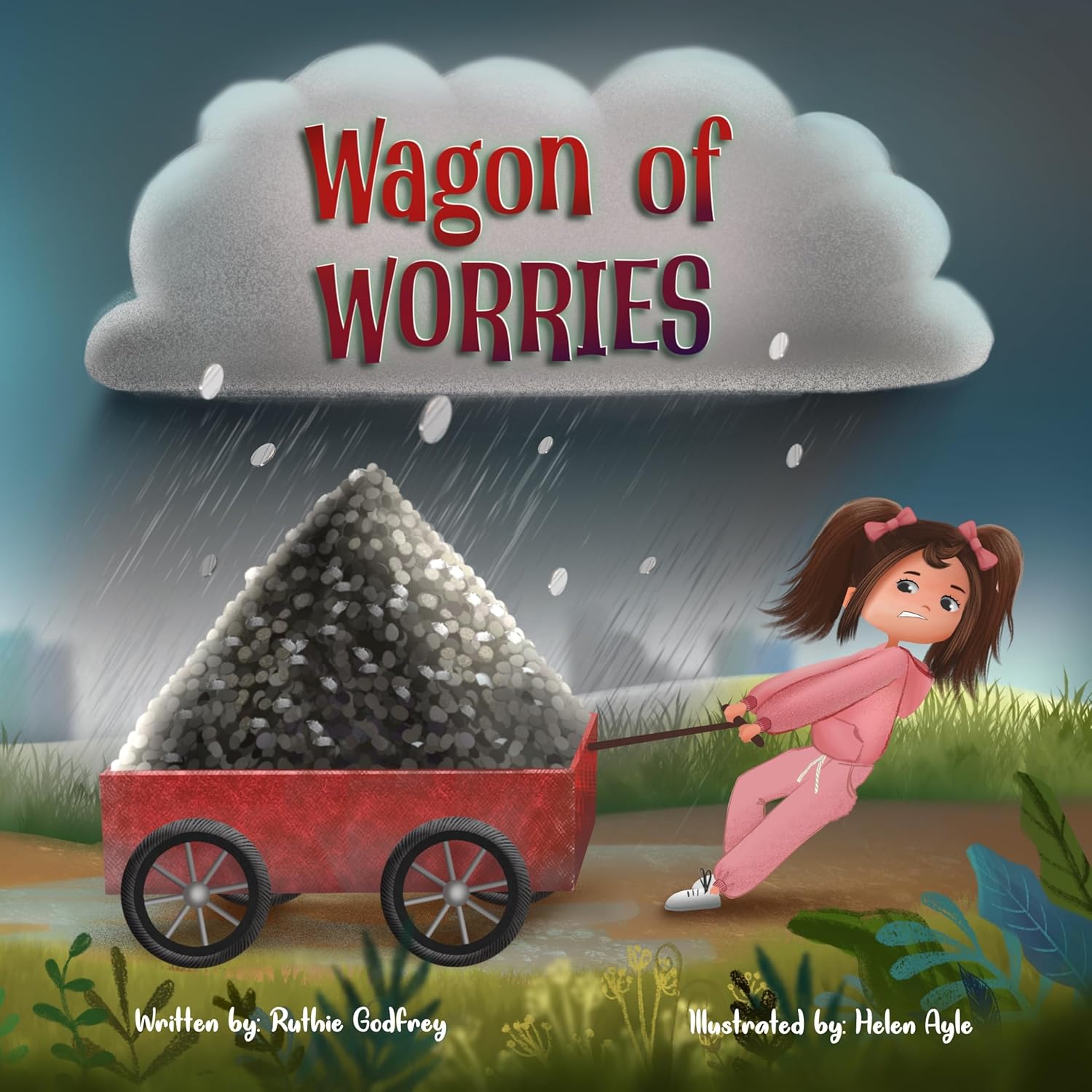
Mabel is gathering something in her little red wagon, though it’s hardly the sort of collection that brings comfort. What she piles inside are worries. They appear everywhere, multiplying with ease, and Mabel scoops them up almost without thinking. Soon the wagon swells with these gray tokens of unease, growing so weighty that she can scarcely drag it along. She tries to abandon it, to shake herself free, yet finds she’s somehow bound to it, tethered by forces she doesn’t fully grasp. The question becomes urgent: how can she move forward? A turn toward a higher power may hold the key.
Wagon of Worries, written by Ruthie Godfrey, targets readers roughly ages 4 through 11. While older children may find the message too direct, younger readers are likely to enjoy its vibrant illustrations and the gentle wisdom woven throughout.
Godfrey introduces the idea of anxiety with refreshing creativity. The dull gray coins Mabel gathers function as symbols for the small but persistent stresses that follow us through life, whether we are children learning to navigate the world or adults juggling responsibilities. As those worries accumulate, steering one’s life can feel increasingly difficult. Mabel’s journey demonstrates that seeking help from the divine can offer a release, a way to surrender the heaviest burdens and trust in something beyond oneself. Once she does, her wagon and her path forward grow lighter.
The symbolism may lean toward the obvious, yet the message remains valuable for young readers. Godfrey emphasizes that even those outside the Christian faith can find meaning in the book’s core principle. A “let go, let God” mindset, whether interpreted literally, spiritually, or metaphorically, can help anyone overwhelmed by anxieties regain perspective. In an era where worry feels nearly universal, the book presents a gentle, sensible approach to coping, wrapped in a story children can understand and remember.
Pages: 36 | ASIN : B0F6M8Y7BH



 LITERARY TITAN