Blog Archives
How Not to Behave

How to Host a Unicorn: A Tale of Hospitality and Manners follows a unicorn that enjoys structure and quiet, who visits his bear friend that has a drastically different idea of fun and has to learn how to be a good host. What was the inspiration for your story?
There’s a funny and quirky backstory. I was working on a scene for one of my nonfiction projects. In the late 1950s, Soviet Premier Nikita Khrushchev invited UN Secretary-General Dag Hammarskjöld to his villa at Sochi. Khrushchev behaved rather boorishly, and I thought to myself, “In a different context, this could actually be a good teaching moment. How not to behave with a guest. How not to host a unicorn.” And so, Nick the Bear and Dag the Unicorn have an experience with manners and hospitality that neither will soon forget.
What were some educational aspects that were important for you to include in this children’s book?
I think in Western society, extroversion is still seen as the “norm,” as the “desirable way of being.” Introverts and HSPs, particularly children, can feel left out or ostracized if they don’t wish to yell, stomp, get loud, perform sociability, etc. So one thing I wanted to do with Dag the Unicorn is to show that it’s perfectly fine to enjoy solitude, tidiness, a quiet afternoon with a book, and so forth.
From the hospitality perspective, I also wanted to show that when you host a guest, you must consider their feelings, too. Hosting doesn’t mean bringing someone into your space and forcing them to do all the things you want to do. You must be conscientious of the other person. For instance, Nick thinks a boisterous, wild surprise party is a lot of fun. Dag doesn’t. As a host, you can ask the guest, “Do you enjoy parties? Would you like a large group of people to talk to, or would you prefer a quieter night to watch a movie?” As an introvert myself, the quiet night of movie-watching would always be my top pick!
What scene in the book did you have the most fun writing?
The scene where Dag is in the bathtub. He discovers all of the water is cold, the soap is basically unusable, and the towel is the size of a handkerchief. I had a similar experience once when I stayed with a friend who told me I needed to buy my own towels and washcloths (and a bathmat, too). Then we have Nick jiggling the knob impatiently and lurking in the hallway. It’s a reminder that even though someone is a guest in your home, they still need a modicum of privacy—and basic necessity items.
Is this the first book in the series? If so, when is the next book coming out, and what can your fans expect in the next story?
Yes, it’s the beginning of the How to… with a Unicorn series. The next book, How to Christmas with a Unicorn, will release in November 2026, in time for the gift-giving season. Dag goes home to visit his parents for Christmas. His brother and sister-in-law arrive with their three wild children, who proceed to go nuts in the house: pulling the cat’s tail, trying to tear down the Christmas tree, yelling, and banging the piano keys while Dag tries to play. It’s highly relatable for any introvert or HSP who’s gone home for the holidays and found the experience chaotic and entirely too noisy.
Author Links: GoodReads | Facebook | Website | Amazon
Nick is a bear who… doesn’t.
When Nick invites Dag for a visit, he means well—but his idea of hospitality includes stomach-churning boat rides, chaotic surprise parties, and a bath towel the size of a handkerchief.
Dag does his best to stay gracious. Nick tries to show a good time. Somewhere between the fish feasts and the chandelier-spinning owl, Nick discovers what it really means to be a good host—and a good friend.
How to Host a Unicorn is a cozy, gently funny picture book about mismatched personalities, mutual respect, and the quiet strength of thoughtful souls. Within these pages, you’re invited inside a world with wit, wry humor, and plenty of fun.
Rendered in hand-drawn, imperfect illustrations that celebrate character over mechanical polish, the art honors the heart of the story itself: that real beauty lies in sincerity, not perfection.
Ideal for sensitive kids, introverts, and the adults who were once that kind of child, this story celebrates kindness and friendship without noise, unicorns without glitter, and emotional intelligence without preaching.
Stillness and Reflection

Shifting Sands follows the survivors of Sol Thalen in the aftermath of its fall as they try to rebuild their culture and society when everything has literally been destroyed. How did you approach writing about this destruction and your characters’ response to it?
For me, destruction is never just about the physical loss of a city—it’s about what happens to identity, purpose, and relationships in the aftermath. When Sol Thalen fell, it wasn’t just the loss of a home; it was the unraveling of legacy, belief, and the illusion of safety. I approached the writing with a deep sense of grief—both personal and communal. I asked myself, What do people hold onto when everything collapses? The characters’ responses came from that place of questioning. Just as some characters choose hope—clinging to survival and the chance to rebuild and dream of a future—others give up hope for themselves, often believing that their own death or disappearance might still serve a purpose. There’s this tragic tendency to justify surrender as a kind of sacrifice: If I fall, maybe someone else can rise. That contrast—between hoping for self and hoping for others—is the heart of the emotional conflict I wanted readers to feel. It’s rarely clean or heroic. It’s messy, human, and deeply personal. And it’s in those moments, I think, that the soul of a story reveals itself.
It seems you took your time in developing the characters and the story, creating a great emotional impact while the survivors process what is left of their world and civilization. How did you manage the pacing of the story while keeping readers engaged?
Thank you—that means a lot. Pacing is something I pay obsessive attention to. I wanted the emotional beats to land, but I also didn’t want the story to feel like it was dragging its feet. What I aimed for was a rhythm: moments of stillness and reflection followed by bursts of urgency. It’s like breathing. When the characters pause to mourn or reflect, the reader breathes with them. But when danger returns—and it always does—they’re pulled right back into the action. I layered multiple storylines so that even when one character is reeling, another might be scheming or moving forward. That way, readers never feel stuck. There’s always a heartbeat somewhere.
I also use an outline, and I’m meticulous about following it. That’s where I catch when there’s too much breathing space, when a chapter feels like it’s meandering, or when a sequence clearly needs to be tightened with rising tension or sharper stakes. The outline becomes a map of emotional flow and momentum, helping me keep that delicate balance. I layered multiple storylines so that even when one character is reeling, another might be scheming or moving forward. That way, readers never feel stuck. There’s always a heartbeat somewhere.
Are you a fan of the fantasy and adventure genres? What books do you think most influenced your work?
Absolutely, I’m a lifelong fan. Fantasy gave me the language to talk about things I didn’t always have words for—identity, grief, power, longing. I grew up reading Tolkien and C.S. Lewis like many others, but it was later on that I was deeply moved by authors like Brandon Sanderson, Cassandra Clare, J.K. Rowling, and Ursula K. Le Guin. Each of them, in their own way, showed me that fantasy could be epic and intimate. That worldbuilding could serve emotional truth. Their works taught me that it’s not just about dragons or swords or kingdoms—it’s about the people who bleed and hope in between. I try to carry that into every page I write.
I hope the series continues in other books. If so, where will the story take readers?
Thank you—and yes, it absolutely does continue. Shifting Sands is the fourth installment of a five-book saga, and the next book is the finale, where everything comes to a head. The choices made in Shifting Sands ripple outward, and readers will be taken to corners of the world that have only been hinted at until now. The political game gets even deadlier. Old wounds resurface. And the more fantastical elements take center stage in ways that force the characters to question not just their loyalties, but their very sense of identity.
If Shifting Sands was about surviving the collapse, Ancient Paths is about reckoning—learning who you really are when certain truths come to light, and deciding what kind of legacy you want to leave behind. Some legacies, after all, might be too broken to rebuild. And some people may discover they were never meant to serve themselves, but something far greater.
Readers have often told me they don’t know how the stakes could possibly get any higher—and to that, I say: I’m excited for them. Many have also noticed how I tend to plant seeds in earlier books that only bear fruit later on. Well, this fifth and final book is where all those seeds bloom. Every thread comes together. Every secret is revealed. This is the climax of everything.
Author Links: GoodReads | Facebook | Website | Amazon
THE DAWN OF A NEW ERA IS ALWAYS PAID IN GRAVES. And with the Sunken City subdued and Sol Thalen fallen, this truth has become undeniable. The Cycle of the Capitals has ended, leaving a world fractured by distance and silence. As Chris joins a people in exodus, he finds no victory left untainted—every gain paid for in blood, every cost sharpening like a blade. Joined by the new Chronicler, he journeys in a final attempt to save a scattered remnant from extinction—and soon realizes he must confront the creature within him… and accept that surviving the monsters around them may require becoming one himself.
Elline faces a different reckoning. With the Capitals isolated and every line of communication severed, mistrust coils behind every stone of Djarin Tor—ready to ignite a coup that would ensure their defeat in the widening war. To stop this collapse, she must embrace the birthright she has long avoided—even if it means defying the Magister. Meanwhile, Havet’s designs tighten with a precision that suggests his victory has already begun, and his cruelty shows no end. As an era dies in silence, the fate of the next will be written not by those who hope to endure it, but by those who dare to shape it from the ruins left behind.
A fast-growing favorite among epic-fantasy readers, this saga delivers cinematic battles, devastating stakes, and slow-burning bonds caught in the crossfire of a war that threatens to consume entire eras—set in a world where monsters rise and no victory comes without a price.
The Book of Oded, Chapter 2
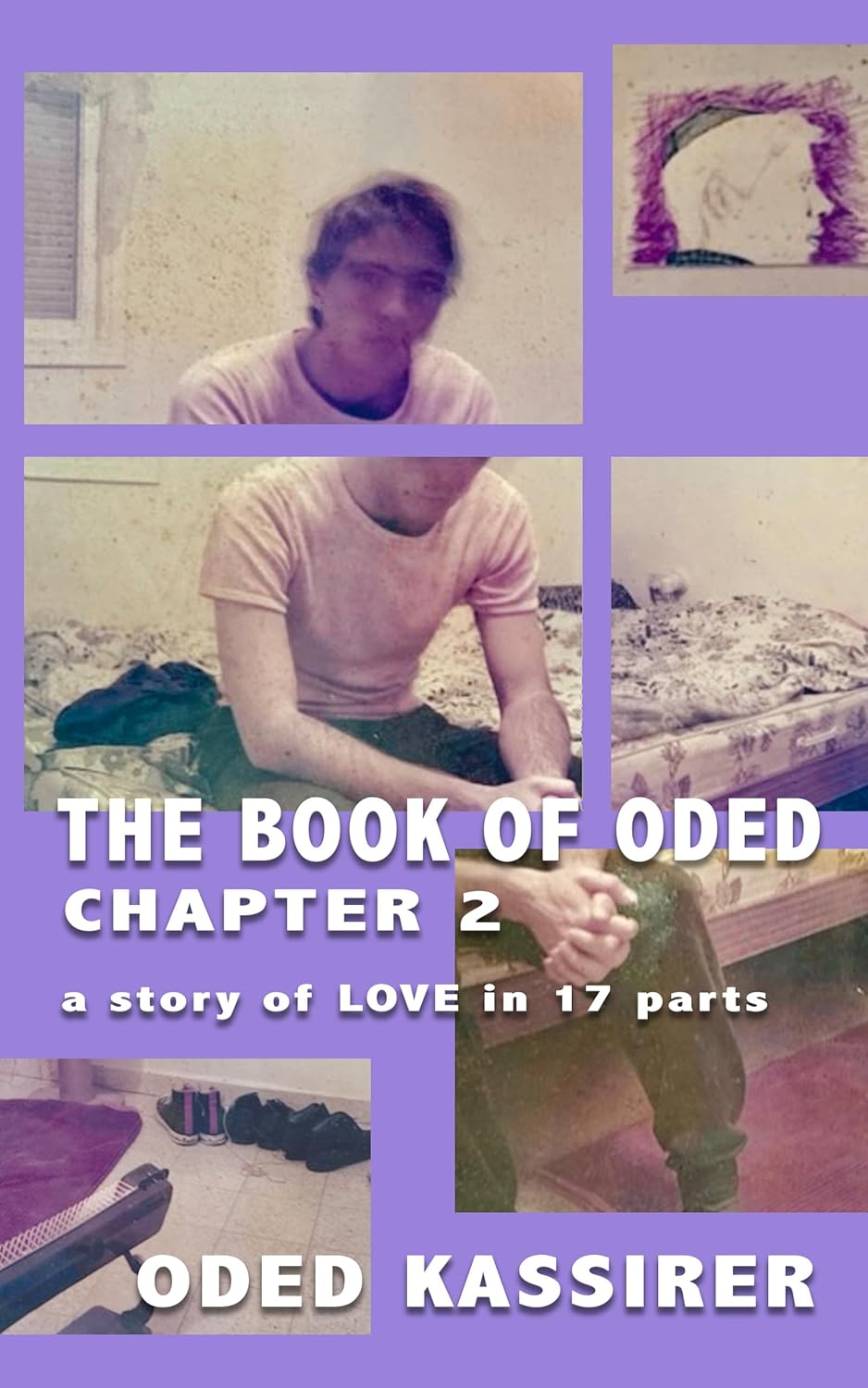

The Book of Oded, Chapter 2 tells the story of a young Israeli man whose life spins through love, identity, migration, and loss. It begins with Oded racing through Tel Aviv to share his green card news with his boyfriend, Gil, and then expands into a rich, heartfelt memoir about how their relationship began, how it grew, and how it changed when HIV entered their lives. The book follows Oded from his army days to his first years in Los Angeles, through joy, heartbreak, separation, friendship, and finally grief and spiritual acceptance. It becomes a story about love that keeps changing shape yet never quite disappears.
The writing feels relaxed and honest, like a friend sitting across from me telling me their story. I loved the humor tucked inside the pain. I laughed at the stories about Na’alei Kvasim slippers and the matching striped shirts at Shabbat dinner, little moments that make the book feel alive. Then the tone shifts and sinks when needed, especially in the phone call that delivers Gil’s diagnosis. I felt myself slow down as the story did, almost holding my breath at times. The simplicity of the writing makes the emotions stand out even more. There is no attempt to impress. It just speaks plainly, and that makes it powerful.
I also found myself moved by how the book tracks what love can become over the years. Oded does not hide the messy parts. He admits the silence, the drifting, the resentment, the guilt. That honesty made me trust him as a narrator. I could feel how love for Gil kept expanding even as their lives pulled apart, and how caring for someone can be both an anchor and a weight. The dream near the end, where Gil appears in white and disappears in a hug, was very emotional. It felt like closure that grew from feeling rather than logic, and I found myself sitting quietly after reading it.
This book feels perfect for anyone who likes real stories told without pretense. If you enjoy memoirs about love, identity, or resilience, you will probably connect with this one. It is also a meaningful read for anyone who has lost someone and is still figuring out what to do with the love that remains. I would happily recommend it.
Pages: 61 | ASIN : B0FVD1N895

Where The Pecan Trees Grow

Where The Pecan Trees Grow, by Thomas Gates, follows Miguel, a Mexican father who leaves his drought-stricken home in Michoacán to cross the border and search for work in the United States. His journey is dangerous and exhausting, filled with tense nights in the desert, smugglers who mix threat with necessity, and close calls with patrols. Eventually, he finds work on a pecan farm in California, where the quiet rhythm of trees and soil gives him a fragile sense of hope. The story moves between struggle and calm, fear and stubborn faith. It is about survival, family, and the long, slow work of building a life from almost nothing. It is also about promise, the kind that sits heavily on the heart.
I found myself swept up in the raw honesty of the story. The writing feels simple in the best way. It opens a clear window into Miguel’s thoughts and fears. I kept pausing when the story talked about soil or trees. Something in those passages felt grounding. I could feel the heat from the fields, smell the dust, and hear the quiet talk between workers. The tense scenes, like the border chase and the near discovery in the truck, hit hard. They left me holding my breath and maybe gripping the page a little too tight. The gentle moments hit just as hard. The letters Miguel writes but cannot send, his quiet walks through the rows at night, and the way he treats the orchard like something alive and listening. These parts warmed me more than I expected.
There were moments when the book made me ache a little. The prejudice he meets in town feels eerily familiar. Still, the story never falls into hopelessness. It keeps lifting itself up, often because of the farm, the trees, and the quiet steadiness of Big Jim. I liked how the book painted Jim as tough but fair. No speeches. No miracles. Just a man who sees effort and decides it is worth backing. The pacing surprised me at times. Some chapters rush with danger while others slow into a gentle hum. I liked that. Life isn’t even. It jumps and stumbles, and the story captures that feeling well.
By the end, I felt proud of Miguel in this strange way, like I had watched him build himself again layer by layer. I would recommend Where The Pecan Trees Grow to readers who enjoy character-driven stories, especially ones rooted in real emotional stakes. Anyone who likes tales about migration, perseverance, and the quiet strength of ordinary people will find something meaningful here. It is a great choice for book clubs, too. There is a lot to talk about, and even more to feel.
Pages: 163 | ASIN : B0G5M3CDRX
The Chip
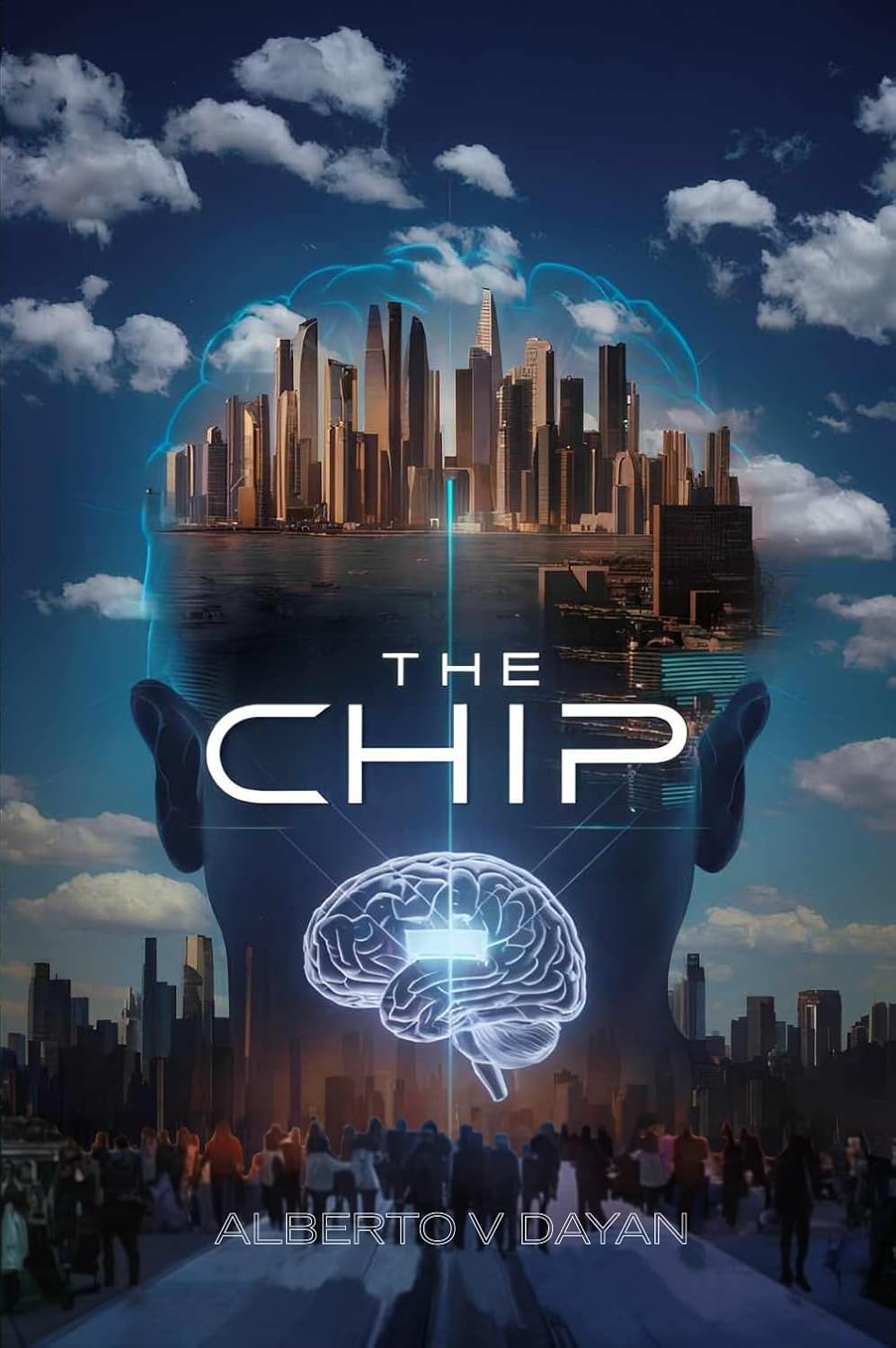

The Chip follows Phillip Novak, a brilliant and driven CEO who secretly implants an advanced A.I. microchip into his brain. The surgery turns him into a kind of superhuman thinker, and the world quickly bends around his newfound power. Governments scramble, cultures fracture, and everyday people start asking whether they should become “enhanced” too. It begins as a story about invention and ambition, then widens into a global clash over identity, freedom, and who we become when we let technology crawl into our minds.
The writing often moves at a quick clip, and I liked that. It gave the story a sense of momentum, almost like the world itself was speeding up the moment Phillip woke from surgery. Some scenes felt larger than life. His fleets of look-alikes, his secret mountain compound, his perfect confidence. I kept thinking how bold it was to paint a character with so much certainty. I would have liked more space to breathe with Phillip and understand him as a man rather than a symbol. Even so, I enjoyed how the book made big ideas feel close and personal. I kept turning pages because I wanted to see how far this technology would push him.
The book plays with power in a way that made me uncomfortable in the best sense. Watching governments rush to control the Chip felt scarily real. The split between “Enhanced Persons” and everyone else gave me a knot in my stomach. I caught myself thinking about how easily people trade freedom for convenience and how quickly leaders twist “safety” into something else entirely. Some of the social changes came fast, but the emotional weight landed. I found myself wondering what I would do. Would I let someone drill a device into my skull if it promised to make me brilliant? The book never answers that for you. It just sits with you and pokes at your thoughts.
The Chip is a cautionary tale, a thriller, and a tech fantasy all at once. I think this book is a strong fit for readers who enjoy fast pacing, high-concept ideas, and stories that make them question where our world is heading. If you like fiction that blends science with moral tension and if you enjoy thinking about the consequences of our inventions long after you close the book, then The Chip will be right up your alley.
Pages: 171 | ASIN : B0DJMJHRC4
Slickrock

Slickrock blends a fast kidnapping thriller with a rugged, sun-bleached wilderness adventure. The story kicks off when Relic, a loner and moonshiner who haunts Utah canyon country, discovers a body in a fake granary. At the same time, college student Malia is yanked from a nightclub and dragged into a scheme run by a revenge-hungry crew. Sheriff Leavitt and Deputy Dawson try to track down a missing ranch hand, but their investigation collides with the kidnappers’ plans. The book jumps between these threads until everything crashes together in Slickrock Canyon, where desert storms, gunfights, and raw survival force each character to show who they really are.
The pacing moves fast, like the book can’t wait to shove you around the next corner. I really liked the way the author paints the canyon. It feels hot and harsh and alive in a way that made me thirsty just sitting on my couch. Relic ended up being my favorite part of the book. His quiet grit sneaks up on you, and the way he tries to help Malia even though the whole mess has nothing to do with him makes him feel grounded and real. I also liked how the author lets scenes breathe just long enough before snapping into chaos. It kept me on my toes, and I didn’t mind that one bit.
The villains are nasty, but a few of their scenes felt over-the-top. Malia’s storyline pulled me in, especially the terror and confusion she feels early on, but I sometimes wanted more space inside her head instead of being rushed along. Still, when the story drops her into the wilderness with Relic, everything tightens up again. Their scramble through canyon forks and flash floods has a wild, sweaty energy. The writing hits hardest when it sticks to people running for their lives under a huge sky.
The book is punchy and dramatic. If you like thrillers that sprint rather than stroll, or if you enjoy survival stories set in wide open desert country, this one will probably scratch the itch. It’s especially good for readers who love a mix of crime, action, and a little rough humor. And if you’re the type who likes rooting for the stubborn, dusty outsider who’d rather avoid everyone but still ends up saving the day, Relic alone makes the journey worth it.
Pages: 300 | ASIN : B0G1CD2S61
In the Face of the Foe

In the Face of the Foe brings together three wartime tales that follow British prisoners of war and the strange mix of fear, grit, and shaky hope that shapes their survival. The story opens inside Stalag XXA, where boredom and danger sit side by side. Men spar, argue, dream, and stumble into choices that could kill them or free them, sometimes on the same night. The early chapters move from camp politics to tense missions beyond the wire, and the book keeps piling on moral knots that force each character to decide what they are willing to risk and who they want to be.
As I moved through the book, I felt myself leaning in, drawn by the rough humor and the raw strain between the men. The writing feels direct and sharp. It never hides the ugliness of fear. It also never forgets that soldiers can be petty and foolish and brave all at once. I liked how the author gives room for small moments that say more than the big ones. A quiet exchange over stolen cherries, the sting of a bad joke, the uneasy pause when a guard appears in the dark. These details felt honest, and they gave me a sense of standing right there in the mud with them. The dialogue sometimes slips into playful banter, and I found that mix of light and dark strangely comforting. It felt real in a way that polished war stories often miss.
The book kept raising questions without preaching. What does loyalty look like when every man is starving? What does courage mean when the cost falls on someone else? Some choices hit hard. One scene with a child had me holding my breath because the moment felt too close to the edge. The tension built slowly, then snapped tight. The writing does not tidy up the mess afterward, and I appreciated that honesty.
It is a story for readers who enjoy wartime fiction that focuses more on people than battlefields. Anyone who likes character-driven plots, moral puzzles, and a close look at the fragile ties that hold people together will find a lot here. I would recommend it to readers who want grit without glamor and heart without sentiment.
Pages: 508 | ASIN : B0G1K6GG7F
Letters from the Sand

Letters from the Sand is a reflective military memoir that follows a soldier’s deployment to Iraq, told in vivid, sensory detail. The book moves from arrival in the desert, through the daily rituals of patrols, barracks life, cultural encounters, and the emotional weight of service. It reads like a series of lived moments stitched together: the heat, the dust, the camaraderie, the fear, the boredom, and the quiet resilience that keeps people going in a place where everything is stripped down to necessity. As a nonfiction war memoir, it captures both the grind and the humanity inside a deployment.
The writing is descriptive in a way that pulls you straight into the environment. Sometimes the detail is intense, but that felt honest. Deployment is overwhelming. I appreciated how the author didn’t rush through anything. He let the boredom breathe. He let the fear sit. Even the small rituals, like cleaning a rifle or sorting gear, were given space to matter. Those choices made the narrative feel grounded rather than dramatized.
What struck me most was how genuinely the book handled relationships. The people aren’t flattened into stereotypes. They’re messy, thoughtful, funny, irritating, and necessary. Watching those early, awkward introductions shift into something like family reminded me how much of military life is built on small gestures. I also liked how the author showed the mental shifts that happen over time, the way vigilance becomes second nature, and how the desert environment presses into everything, even your dreams. Some passages feel almost meditative, others blunt and raw. The mix worked for me. It felt like someone telling the truth without trying to polish it.
By the end, I found myself thinking less about the missions and more about the emotional residue of the experience. The book doesn’t preach. It doesn’t try to define service in grand terms. It just lets you live inside it for a while, long enough to understand why leaving is almost as disorienting as arriving. For readers who appreciate military memoirs that focus on lived experience more than strategy, this will resonate deeply. I’d recommend it to anyone curious about the human side of deployment, especially those who value slow, reflective storytelling that feels personal and unfiltered.
Pages: 201 | ASIN: B0G2335VNQ



 LITERARY TITAN