Blog Archives
The Unfair Advantage: Weaponizing the Hypomanic Toolbox


The Unfair Advantage is a business parable wrapped in deeply personal storytelling and tied together with bold, energetic strategies for leadership transformation. This book is about harnessing the raw energy, creativity, and intense focus that often accompany hypomania—without spiraling into its destructive counterpart. Through the fictional (but strikingly real) journey of Jack Whelan, a struggling CEO of a shopping cart company, author Todd Hagopian outlines a practical playbook for operational turnarounds, self-management, and personal growth, built from his own lived experience with bipolar disorder.
What hit me hardest in the opening chapters was Hagopian’s transparency about his own mental health battles. This isn’t your typical business guru boasting a polished success story. He lays it bare—arrests, career meltdowns, sleepless nights, and finally a diagnosis that changed his life. That vulnerability gave the whole book a rare authenticity.
What I appreciated most was how the fictional narrative serves as both teaching tool and mirror. Jack’s spiral at Cartwell Manufacturing, from the tense call with Spencer to the chaos on the factory floor, mirrors so many real-life corporate messes I’ve witnessed. The depiction of employees like Deb and Tim sniping over process bottlenecks was painfully familiar. Then enters Eugene Spark, the eccentric, wildly successful, bipolar billionaire. He’s a character, no doubt, but also a mouthpiece for the HOT system. The idea of weaponizing mental health quirks into business edge? That’s bold. And kind of brilliant.
There are definitely moments where the book toes the line between clever and slightly eccentric. The “Karelin Method,” for instance, draws parallels between Olympic wrestling and ruthless prioritization. It sounds absurd until you realize it’s essentially about cutting the fluff and focusing like a maniac. Likewise, the idea of creating internal “battles” to drive team performance initially felt gimmicky, but then I thought about how motivated people get when there’s a shared enemy—even if it’s just a metric or a competitor. Hagopian’s methods are aggressive, high-octane, and results-driven. They’re not for the faint of heart, but they’re also not reckless. He’s built in guardrails, and that’s what makes it smart.
The Unfair Advantage is an inspiring read. It’s part business manual, part memoir, part redemption arc. It’s definitely not your typical airport leadership book. But it’s real, it’s raw, and it’s useful. I’d recommend this to high-performing professionals, startup founders, or turnaround specialists who are hitting their limit—or are just wired a little differently and want to turn that into a strength.
ASIN: B0FV6F52G2 | Pages: 310

Literary Titan Gold Book Award: Nonfiction

The Literary Titan Book Award recognizes outstanding nonfiction books that demonstrate exceptional quality in writing, research, and presentation. This award is dedicated to authors who excel in creating informative, enlightening, and engaging works that offer valuable insights. Recipients of this award are commended for their ability to transform complex topics into accessible and compelling narratives that captivate readers and enhance our understanding.
Award Recipients




























Why you should never EVER have children by DJ Dean
Visit the Literary Titan Book Awards page to see award information.
A Fresh Lens for Leaders

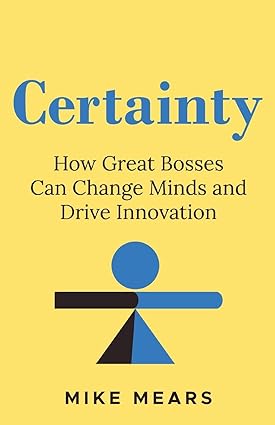
Certainty: How Great Bosses Can Change Minds and Drive Innovation explores how survival instincts shape workplace behavior and presents readers with practical leadership strategies that will build trust, inspire teams, and drive innovation. Why was this an important book for you to write?
Because I’ve seen firsthand—both at the CIA and in the private sector—how often leaders unintentionally trigger fear, uncertainty, and resistance in their teams. I tossed out everything I learned about leadership and management from West Point and Harvard Business School and started with human nature. I wrote Certainty to give leaders a fresh lens: to understand that the workplace is not just logical, it’s deeply emotional, instinctual, and biological. We’re wired to survive, and that wiring still shapes how we respond to change, authority, and feedback. I wanted to offer practical, brain-based strategies to help leaders build trust, lower fear, and lead in ways that align with human nature—not fight against it.
What were some ideas that were important for you to share in this book?
One key idea is that uncertainty is the enemy of innovation. When people don’t feel psychologically safe—socially, emotionally, or professionally—they shut down, they play it safe by clinging to the status quo, and creativity suffers. Another essential idea is that leadership is less about control and more about creating conditions where people feel seen, heard, and valued. A leader’s job is to unleash the best of human nature. I also wanted to show how simple brain-friendly tools, like open-ended questions, regular check-ins, and praise with purpose, can become part of a leader’s habitual behavior and make a real, lasting difference.
What is a common misconception people have about effective leadership?
That being a great leader means having all the answers or being the smartest person in the room. In reality, effective leadership is about asking better questions, listening deeply, and making people feel safe enough to contribute their best ideas. Too many leaders rely on authority and metrics, when what really drives performance is clarity, belonging, and trust.
What is one thing that you hope readers take away from Certainty?
That you don’t have to be perfect to be a great leader, but you do have to be intentional, and that means setting aside a small amount of time to reflect in order to devise a mental plan for the week. If leaders make small, consistent changes—like replacing feedback with praise and advice or being more transparent in times of uncertainty—they can dramatically increase trust, engagement, and innovation. The book shows that leadership isn’t about charisma—it’s about understanding what makes people tick and creating the conditions for them to thrive.
Author Links: Amazon | Other retailers | Certainty book website | Mike Mears website | LinkedIn | Facebook | Instagram | X | Goodreads | BookBub
The dilemma. Our Stone Age brains are hardwired for survival and programmed to fear the unknown, yet the work world demands constant innovation. The enemy of better leadership is uncertainty deeply buried in the minds of your workforce.
The solution. In Certainty, Mears offers the answer: understand human nature. Work with it rather than pushing against it. Mears draws on neuroscience and psychology-plus compelling stories from his career-to offer practical leadership advice, including:
• Entertaining, science-backed explanations of how our brains think and how our primitive brains are colliding with the demands of the modern workplace
• New feedback, change management, and delegation tools to build an environment of certainty rather than of fear
• Fresh insights to overcome innate change resistance in yourself and others
• Time-saving ideas to empower yourself while empowering your employees
The results. You want loyalty, trust, and great performance from your team. We all do. With Mears’s guidance, you can identify the limitations and strengths of the human mind and create a dynamic and innovative workplace.
Connected: A Guide for Leading in a More Human Way

Jami Varela’s Connected: A Guide for Leading in a More Human Way is a refreshingly candid and insightful guide to leadership that challenges the outdated, robotic style of management and replaces it with something far more meaningful, human connection. The book is built around a simple but powerful idea: great leadership isn’t about control, it’s about empathy, trust, and real relationships. Drawing from personal experiences, Varela takes readers through the highs and lows of her own leadership journey, making this book feel less like a manual and more like a conversation with a mentor who’s been in the trenches.
One of the book’s biggest strengths is its honesty. From the book’s introduction, Varela lays it all out: being a top performer in your field doesn’t automatically make you a good leader. Her story of transitioning from a superstar sales rep to a struggling manager is both relatable and eye-opening. She describes the frustration of suddenly feeling incompetent in a new role, a feeling many professionals experience but rarely talk about. I appreciated how she didn’t sugarcoat the difficulties of leadership but instead offered real, actionable ways to navigate them. The chapter The Path to Compassionate Leadership was especially compelling, showing how vulnerability and self-awareness can turn a struggling manager into a true leader.
The book is also packed with humor and real-world wisdom. Chapter titles like Don’t Bring Fear to the Village People and 1980 Called. They Want Their Leadership Style Back makes it clear that Varela isn’t here to lecture, she’s here to shake things up. One of my favorite sections, Golden Globe Best Supporting Actor, emphasizes how leadership often requires showing up as your best self, even on days when you don’t feel like it. Her ability to blend humor with hard truths makes Connected an engaging read, and I found myself nodding (and sometimes laughing) as she called out common leadership mistakes in a way that felt constructive rather than judgmental.
What sets Connected apart from other leadership books is its focus on emotional intelligence. Varela doesn’t just tell you to “be a better leader;” she breaks down exactly how to do it, how to build trust, how to give and receive feedback without fear, and how to lead with both confidence and compassion. The chapter Unlicensed Therapist stood out to me because it tackles something few leadership books address: the emotional baggage that employees bring to work. Instead of dismissing personal struggles as “not my problem,” Varela encourages leaders to create a supportive environment while maintaining healthy boundaries. This approach is not only refreshing but necessary in today’s workplace.
Connected: A Guide for Leading in a More Human Way is a must-read for anyone who wants to lead in a way that actually works, whether you’re a first-time manager or a seasoned executive looking to revamp your leadership style. Varela makes it clear that leadership isn’t about having all the answers; it’s about building real connections, earning trust, and fostering an environment where people can thrive. If you’re tired of old-school, fear-based management tactics and want to lead in a way that feels natural and fulfilling, this book is for you.
Pages: 112 | ISBN : 978-1544546223
CERTAINTY: How Great Bosses Can Change Minds and Drive Innovation
Mike Mears’ Certainty: How Great Bosses Can Change Minds and Drive Innovation takes a deep dive into the human mind and how our survival instincts shape workplace behavior. The book is built around the idea that humans crave certainty, and uncertainty often triggers fear, resistance, and poor decision-making. Mears explores concepts like the “auto-brain,” which governs instincts and emotions, and the “focused-brain,” which helps us control those impulses. Through engaging anecdotes—some from his time in intelligence—he presents practical leadership strategies to build trust, inspire teams, and drive innovation. At its core, the book argues that great leaders don’t just manage—they create a sense of psychological safety that allows people to thrive.
One of the things I really appreciated about Certainty is how it strips leadership down to the basics of human nature. It’s not just about motivational speeches or company mission statements; it’s about how our brains are wired. Mears breaks down how we spend most of our day running on instinct, often without realizing it. His discussion on how humans resist change not out of stubbornness but because our brains are wired to see it as a threat felt like a lightbulb moment. He explains that the key to leading people through change isn’t brute force but creating a sense of security. The simplicity of that insight hit hard.
One of the book’s strengths is its clear and consistent message about how uncertainty triggers fear, reinforcing the importance of creating psychological safety. Mears emphasizes this idea throughout, ensuring it sticks with the reader. His anecdotes from intelligence and corporate leadership are captivating, offering unique insights from high-stakes environments. I appreciated the inclusion of case studies from everyday workplaces to showcase how these concepts apply across a broader range of industries.
One of my favorite sections was the one on “Mental Prompts,” which provides easy, actionable ways to create a culture of certainty. The “Vision Prompts” help clarify expectations, the “Inclusion Prompts” tap into our social bonding instincts, and the “Insight Prompts” encourage creative problem-solving. Mears makes a compelling case that small, consistent behaviors like genuine recognition or making sure everyone feels included can have a massive impact on a team. The example of CIA officer Renee, who created a high-performing unit in a war zone by focusing on trust and inclusion, was powerful.
Certainty: How Great Bosses Can Change Minds and Drive Innovation is an insightful, engaging read that makes leadership feel less like a skill you have to master and more like a mindset you can adopt. If you’re a leader (or aspiring to be one) and want to understand what truly motivates people, this book is worth your time. It’s particularly great for managers in high-pressure environments, but honestly, anyone who works with people will find something useful here. If you’ve ever been frustrated by resistance to change or struggled to inspire a team, this book will give you practical ways to flip that script. Highly recommended.
Pages: 288 | ISBN : 1639081372
You Don’t Know Sh*t About Leadership

Leadership books are everywhere. Most of them repackage the same tired advice, wrapped in a neat list of rules or principles. But G. Damon Wells doesn’t play that game. Instead, he rips apart traditional leadership myths and exposes why so many leaders fail—repeatedly and predictably. You Don’t Know Sh*t About Leadership takes a raw, research-backed look at why leadership is broken and offers a fresh, brutally honest framework for getting it right. Wells blends cognitive science, game theory, and real-world case studies to dissect the psychology behind leadership, ultimately introducing the Ballistic Leadership Framework (BLF), a model designed to work with, rather than against, human nature.
Wells doesn’t sugarcoat things. Right from the start, he hits hard with data: 82% of organizations pick the wrong people for leadership roles, and bad leadership costs the global economy trillions of dollars. He argues that leadership failure isn’t just about poor training or bad hires; it’s about the fundamental ways our brains misunderstand power. One of the most eye-opening sections is his takedown of the so-called “hero leader” myth. We love the idea of the lone visionary saving the day, but in reality, leadership is more about networks, adaptability, and trust than one charismatic figure making all the calls.
One of the strongest parts of the book is its exploration of the biological and psychological reasons behind leadership failures. Wells explains how our primitive neural wiring makes us default to outdated leadership behaviors, fight-or-flight responses, status obsession, and irrational decision-making under pressure. He gives compelling examples, like how Uber’s former CEO Travis Kalanick’s aggressive, winner-take-all mindset worked in Uber’s early days but led to long-term cultural and reputational disaster. Wells is at his best when he’s showing how leaders unknowingly sabotage themselves by following instincts that were useful in small tribal groups but disastrous in modern organizations.
Wells’ writing style is punchy, direct, and sometimes borderline confrontational but that’s part of what makes this book refreshing. He’s not here to stroke egos; he’s here to challenge assumptions. The book isn’t just a rant, though it offers solutions. The Ballistic Leadership Framework is a practical, well-explained system that prioritizes adaptability, psychological safety, and trust. He shows how real organizations can apply these principles through case studies and scenarios, making it clear that leadership isn’t about following rigid models but understanding the science behind human behavior.
If you’re looking for a feel-good, motivational leadership book, this isn’t it. But if you want an unfiltered, science-backed reality check on why most leaders fail and how to do better, this book is a must-read. It’s perfect for mid-career leaders, executives struggling with organizational dysfunction, or anyone frustrated by the endless cycle of bad leadership. Wells challenges everything we think we know about leadership, and in doing so, he provides a path forward for those willing to embrace the complexity of human nature.
Pages: 318 | ASIN : B0DX8C67YR
Pursue the Exceptional: Decoding Three Thousand Years of Proven Principles to Confidently Navigate Leadership and Life

Pursue the Exceptional is a motivational manual blending modern leadership strategies with timeless wisdom. It merges personal anecdotes, insights from bestselling business and self-help literature, and biblical references to craft a guide for achieving meaningful success. Structured around ten principles, the book aims to simplify the complex journey of leadership and life, making it accessible and actionable. Whether discussing servant leadership, relentless hard work, or leaving a legacy, Fudge roots his guidance in stories that resonate with the ambitious yet overwhelmed professional.
I appreciated this book’s honesty about leadership challenges. Fudge begins by sharing his own insecurities and struggles as a newly appointed CEO, making it easy to connect with his journey. The Rubik’s Cube metaphor from the introduction immediately hooked me. It framed life’s puzzles not as impossible challenges but as solvable with the right patterns. His recounting of early leadership lessons from mentors and his realization that truth often transcends time felt relatable. In particular, I found his reflections on servant leadership inspiring. His partner Frieda’s example of rearranging a conference room for a graduation ceremony struck me—small gestures often have the biggest impact.
Fudge’s writing style is engaging. When he dives into the principle of hard work, for instance, his anecdotes, like dedicating countless hours to transforming a used bike into a gift for his son, are moving. Yet, similar lessons on diligence recur in multiple chapters. That said, his unwavering commitment to showing instead of telling is refreshing. As someone seeking motivation, I appreciated how he shared not just successes but also setbacks. For instance, his admission of initially making BAL’s leadership overly centered on himself before evolving into a more inclusive leader felt authentic and powerful.
What I found particularly unique was how the book ties modern practices to biblical principles. Fudge argues that concepts like accountability or dreaming big are echoed in ancient texts, lending them credibility and depth. While this perspective might not resonate with everyone, it enriched my understanding of leadership’s roots. His comparison of present-day leaders like Simon Sinek and Jim Collins with the teachings of Jesus might sound ambitious, but it worked for me. The juxtaposition of timeless truths with actionable advice made the content both meaningful and practical.
Pursue the Exceptional is a gem for those striving for clarity in their careers or leadership paths. It balances wisdom with real-world application, never losing sight of its core message: success stems from service, effort, and vision. I’d recommend it to ambitious professionals, faith-oriented readers, or anyone feeling lost amid the sea of leadership literature.
Pages: 256 | ASIN : B0D7FNRSSJ



 LITERARY TITAN