Blog Archives
The Veil Breaker: Beyond Madness to Freedom


The Veil Breaker is a surreal and emotionally raw journey through mental collapse and spiritual rebirth, set against the backdrop of a dystopian world ruled by psychological manipulation and nanotech illusions. The story follows Marcus, a man caught in the ruins of a once-vibrant world, now shattered by war and the global rollout of CARLY, a mind-controlling simulation technology disguised as a solution to a mass mental health crisis. Through Marcus’s descent into madness and his struggle to reassemble his broken identity, the book becomes both a personal memoir of awakening and a broader call to question reality, authority, and the nature of healing itself.
The writing is fragmented in a way that mirrors Marcus’s own mind, and that’s part of its power. It doesn’t follow a predictable structure or clean arc, but it doesn’t try to. The rawness is deliberate. Some of the prose drifts into stream-of-consciousness, then suddenly snaps back with a chilling bit of clarity. That rhythm, messy, beautiful, unnerving, made it impossible to look away. And the emotional beats hit hard. Especially the scenes where Marcus confronts his inner voices, his past wounds, and the lies he’s told himself. I felt like I was in the room with him, holding my breath.
At times, though, the story weaved between allegory and reality in a way that left me spinning. I liked the ambition. This is a book with big things to say about love, pain, mental health, and the systems that try to fix us. There were moments when the metaphor got dense, and I wasn’t sure what was real anymore. It didn’t stop me from feeling it. In fact, some of the most powerful parts were when I stopped trying to “get” the book and just let it hit me. The message is clear: true healing means facing everything, even the ugliest parts of yourself, and choosing to love anyway.
This is not a book for someone looking for a casual weekend read. It’s heavy. It’s weird. It’s brilliant in parts and bewildering in others. But if you’ve ever been through real darkness, the kind that leaves you gasping for something true, The Veil Breaker might speak to you in a way few books can. I’d recommend it to seekers, to survivors of trauma, to anyone who’s had a brush with mental illness or spiritual transformation and wants a book that gets it. Not in a clinical way, but in a gut-punch, soul-lifting, what-the-hell-just-happened kind of way.
Pages: 114 | ASIN : B0FH717TC6

Nurse Dorothea® presents Managing Anger Instead of Letting Anger Manage You


Michael Dow’s Managing Anger Instead of Letting Anger Manage You is a conversational, interactive guide on understanding and handling anger in everyday life. Framed through the warm and encouraging voice of a fictional nurse named Dorothea, the book reads like a group therapy session, complete with peer discussions, personal reflections, and science-backed insights. It blends storytelling, practical advice, and educational content with a focus on building emotional intelligence and community support. Across three parts, Dow takes readers on a journey through the biology of anger, its triggers, consequences, and most importantly, dozens of actionable ways to respond to it in healthier ways.
I found the book to be surprisingly heartfelt and easy to connect with. The writing is simple, perfect for children, and it also makes it feel accessible. It doesn’t get bogged down in academic jargon or heavy theory, which makes it approachable for people of all ages, especially teens or those who feel overwhelmed by dense self-help literature. The use of a classroom-style narrative, with Nurse Dorothea guiding a group of diverse students, makes the lessons stick. Their stories felt real. The emotional resonance is where the book shines most. It invites you to not just read, but to pause and reflect.
The book sometimes revisits the same ideas, especially when emphasizing similar coping strategies or restating the importance of managing anger. But maybe that’s the point. Anger doesn’t go away with one good insight, it takes practice, and a lot of the same reminders, over and over. What I appreciated most was the variety of techniques offered, from journaling and exercise to breathing, forgiveness, and goal-setting. It’s a toolbox, not a rulebook. The encouragement to try what works for you felt empowering rather than prescriptive.
This children’s book is a warm and practical guide for anyone who struggles with anger, whether that means explosive rage or the quiet, festering kind. It’s especially helpful for young adults, teachers, counselors, or parents trying to model emotional regulation. If you want something that feels like a caring voice walking beside you, offering kind, practical nudges in the right direction, this picture book fits the bill.
Pages: 281 | ASIN : B0FB1X2H7N
The Unfair Advantage: Weaponizing the Hypomanic Toolbox

The Unfair Advantage is a business parable wrapped in deeply personal storytelling and tied together with bold, energetic strategies for leadership transformation. This book is about harnessing the raw energy, creativity, and intense focus that often accompany hypomania—without spiraling into its destructive counterpart. Through the fictional (but strikingly real) journey of Jack Whelan, a struggling CEO of a shopping cart company, author Todd Hagopian outlines a practical playbook for operational turnarounds, self-management, and personal growth, built from his own lived experience with bipolar disorder.
What hit me hardest in the opening chapters was Hagopian’s transparency about his own mental health battles. This isn’t your typical business guru boasting a polished success story. He lays it bare—arrests, career meltdowns, sleepless nights, and finally a diagnosis that changed his life. That vulnerability gave the whole book a rare authenticity.
What I appreciated most was how the fictional narrative serves as both teaching tool and mirror. Jack’s spiral at Cartwell Manufacturing, from the tense call with Spencer to the chaos on the factory floor, mirrors so many real-life corporate messes I’ve witnessed. The depiction of employees like Deb and Tim sniping over process bottlenecks was painfully familiar. Then enters Eugene Spark, the eccentric, wildly successful, bipolar billionaire. He’s a character, no doubt, but also a mouthpiece for the HOT system. The idea of weaponizing mental health quirks into business edge? That’s bold. And kind of brilliant.
There are definitely moments where the book toes the line between clever and slightly eccentric. The “Karelin Method,” for instance, draws parallels between Olympic wrestling and ruthless prioritization. It sounds absurd until you realize it’s essentially about cutting the fluff and focusing like a maniac. Likewise, the idea of creating internal “battles” to drive team performance initially felt gimmicky, but then I thought about how motivated people get when there’s a shared enemy—even if it’s just a metric or a competitor. Hagopian’s methods are aggressive, high-octane, and results-driven. They’re not for the faint of heart, but they’re also not reckless. He’s built in guardrails, and that’s what makes it smart.
The Unfair Advantage is an inspiring read. It’s part business manual, part memoir, part redemption arc. It’s definitely not your typical airport leadership book. But it’s real, it’s raw, and it’s useful. I’d recommend this to high-performing professionals, startup founders, or turnaround specialists who are hitting their limit—or are just wired a little differently and want to turn that into a strength.
ASIN: B0FV6F52G2 | Pages: 310
My Story Wasn’t Just Mine
The Committed Professor: A Memoir is a powerful and unflinching account of your descent from contentment to emotional devastation. What were some ideas that were important for you to share in this book?
There were three key ideas I wanted to convey in this book.
First, betrayal, divorce, and narcissistic abuse aren’t just painful experiences. They can be deeply traumatic. I endured all three at once, and the psychological consequences were profound. Too often, people underestimate the lasting impact of these relational traumas. I wanted readers to know they are not alone, that their pain is real, and that these experiences fundamentally change who you are as a person. By sharing my story, I aimed to validate the emotional and psychological toll these experiences take, particularly on women.
Second, individual trauma doesn’t exist in a vacuum. It is shaped and compounded by systemic forces, especially for women. We live in a patriarchal society that often dismisses women’s pain and questions their credibility. Divorce, in particular, becomes a site where male privilege plays out in legal, financial, and social realms, making it even harder for women to break free and rebuild their lives. I wanted to explore how these structural inequalities intensify an already devastating experience, turning divorce into a broader battle for agency and justice.
Finally, I wanted to show that survival is possible. This book isn’t just about trauma. It is also about resilience. I didn’t write it to dwell in despair but to illuminate the path forward. Healing is neither linear nor easy, but it is possible. There is power in speaking our truth, in reclaiming our voices, and in understanding that we are not defined by what was done to us but by how we rise from it to help others.
I appreciated the candid nature with which you told your story. What was the hardest thing for you to write about?
The hardest part of writing this memoir was confronting the impact that my toxic divorce had on my children. As a mother, you want to protect your kids from pain, and reflecting on how my choices and circumstances affected them was heartbreaking. Writing about them meant revisiting some of the most difficult moments of my life, times when I felt like I was failing them or couldn’t shield them from the fallout of the divorce.
It was especially challenging to navigate the balance between telling my story and respecting their privacy. My children are a central part of my life, and their experiences are intertwined with mine. But as I wrote, I had to be careful that I wasn’t projecting my perspective onto their stories.
Ultimately, writing about my kids forced me to face some of my deepest regrets. It brought up a lot of guilt, but it also brought moments of clarity. It reminded me of my strength as a mother and the ways I’ve fought for them, even in the face of immense personal struggles.
What was the most challenging part of writing your memoir and what was the most rewarding?
Without a doubt, the hardest part of writing my memoir was reliving the trauma of my past. Writing a memoir isn’t just about telling a story. It is about digging up painful memories, sitting with them, and shaping them into something that resonates with others. Revisiting my ex-husband’s betrayals, narcissistic abuse, and the toxicity during the divorce process took an emotional toll. There were moments I questioned whether I could continue, especially knowing the stigma that comes with women publicly sharing their experiences. But I kept going because I knew my story wasn’t just mine. It also belonged to countless other women who have been cheated on, gaslit, manipulated, and abused.
The most rewarding part was reclaiming my voice. For so long, my reality had been distorted by my ex-husband, by societal expectations, by the family law and court systems, and even by my own attempts to rationalize what had happened. Writing this book allowed me to break free from that distortion and tell my truth on my own terms. And seeing how my story resonates with other women—how it helps them feel seen, validated, and empowered—has made every painful moment of this process worth it. The Committed Professor isn’t just about my personal journey; it’s about challenging the cultural narratives that silence women and hold them responsible for men’s betrayals and abuse. The response from readers who feel less alone because of my story has been the greatest reward.
What advice do you have for aspiring memoir writers?
My advice to aspiring memoir writers is to be brutally honest with yourself and don’t shy away from the hard truths. A memoir isn’t just a collection of events, but an excavation of your deepest emotions and experiences. That means facing parts of your past you might rather avoid. But it’s in those raw, unpolished moments that the true power of your story lies.
At the same time, give yourself permission to take breaks. Writing about your life can be emotionally exhausting, and processing trauma on the page isn’t something you can push through too quickly. Prioritize your mental health. Let yourself sit with the memories as they surface. The most meaningful writing often takes time.
Another key piece of advice is to focus on the universal themes within your story. While your experiences are uniquely yours, what makes a memoir resonate is its ability to tap into emotions and struggles that others recognize in themselves. Readers connect not just to what happened, but to how it felt.
And finally, remember that writing a memoir is as much about healing as it is about storytelling. Be kind to yourself throughout the process. Telling your story is an act of courage, and no matter how difficult it feels, the result will be worth it.
Author Links: Website | TikTok | Instagram | BlueSky
________
In The Committed Professor, A Memoir, My Fall from the Lectern to the Psych Ward, Dr. Kathi N. Miner tells the powerful true story of being married to a man with a double-life of adultery, the horrific narcissistic abuse that occurred after she filed for divorce, and the related events that led her to being committed to a psychiatric hospital. In her harrowing narrative, she demonstrates the critical role patriarchy plays in the process of divorcing abusive men.
The Committed Professor, A Memoir, My Fall from the Lectern to the Psych Ward should be of interest to:Anyone who has experienced or wants to learn more about narcissistic or psychological abuse by an intimate partner
Anyone who has experienced or wants to learn more about narcissistic, betrayal, or divorce trauma
Those with post-traumatic stress disorder (PTSD) or PTSD-related symptoms as a result of non-physical abuse from an intimate partner
Women in the midst of a marital separation or divorce from an abusive partner or who are considering leaving their psychologically abusive partner
Academics and students in psychology, women’s and gender studies, sociology, law, social relationships, and health and well-being
Those who work in the family law system (e.g., attorneys, judges, social workers, etc.)
Anyone who likes a good, true story that is full of surprising twists and turns
We Simply Are

Good Boy Bad Boy is a heartfelt exploration of self-acceptance and the battle within ourselves between societal expectations and personal authenticity. Why was this an important book for you to write?
Thank you for your kind words!
The last time I wrote a book, I was so burnt out that I vowed never to write again. Yet, less than a year later, I found myself back at the keyboard at 5:30 AM, eager to write again.
Writing can be a cathartic experience, and I had been contemplating “Good Boy Bad Boy” for quite some time. I had also written numerous blog posts centered around its themes. The turning point came when I discovered we were expecting our third daughter. This news motivated me to properly explore my struggles with self-worth as a man and my feelings of inadequacy as a father. I hoped that by sharing my journey, I could help my children navigate their own inner critics and, selfishly, one day understand where I had fallen short.
I appreciated the candid nature with which you told your story. What was the hardest thing for you to write about?
The hardest part for me to write about was my relationship and healing journey with my mother. It was challenging not only because it was deeply personal, but also because I was concerned about portraying her in a negative light (which would not have been representative of what I was attempting to convey). She graciously supported my efforts to share our journey, which I believe will resonate with many parents and their children.
What were some ideas that were important for you to share in this book?
In this book, I aimed to convey a few key ideas that I found particularly important. First and foremost, we are neither inherently good nor bad; we simply are. While are the moral standards of right and wrong, to often we give meaning to experiences that result in unneeded and unwarranted feelings of guilt and shame. By embracing our shadow selves—the parts of ourselves that we often deem “not good enough”—we can liberate ourselves to live more fully and purposefully.
I also wanted to highlight the destructive impact that the structures and influences of modern society can have on us, both intentionally and unintentionally. These influences play a significant role in shaping our actions and our perceptions of what is good and bad within ourselves. I hope that by raising awareness of these often harmful influences, we can find greater freedom from them.
What do you hope is one thing readers take away from Good Boy Bad Boy?
What I hope readers take away from “Good Boy, Bad Boy” is that the forgiveness of our feelings of guilt and shame stemming from past experiences is a gift we can give ourselves. This gift is available to us at any moment.
Author Links: GoodReads | YouTube | Website | Instagram | Substack
Author Joel Primus grew up believing he needed to “do good” and “be good” to earn his parents’ love and society’s acceptance, but no matter what he accomplished, he never felt good enough. This underlying feeling of “badness,” which he tried desperately to ignore, permeated much of his life.
Psychiatrist Carl Jung calls the unsavory aspect of our personality the “shadow self,” and the more we distance ourselves from it, the more anxiety, shame, and unworthiness grows. From the media, society, religion, our parents, and other external voices, we learn to condemn the bad in others and push it away in ourselves. But what if good and bad aren’t actually opposites?
That’s what author Joel Primus explores in this book. Combining research and parables with his
own experiences as a long-distance runner, entrepreneur, traveler, and father, Primus asks us to challenge our perception of good and bad. When we embrace the idea that our shadow is not the antithesis of our light, but rather a vital piece of our whole, we free ourselves from self-imposed constraints and give our children permission to do the same. By healing ourselves he believes we can “heal the line” and redefine what it means to live a good life.
Good Boy Bad Boy

Joel Primus’s Good Boy Bad Boy is a heartfelt exploration of self-acceptance and the battle within ourselves between societal expectations and personal authenticity. Drawing on his own experiences and blending them with psychological insights, Primus dissects the binary notion of “good” and “bad” that often traps us in cycles of guilt and shame. Through personal anecdotes, philosophical musings, and practical advice, he invites readers to confront their “shadow self,” embrace their complexities, and ultimately, find harmony. The book is both reflective and actionable, moving from the roots of our struggles to solutions for overcoming them.
From the first chapter, when Primus shares his teenage feelings of inadequacy in front of a mirror, you can feel his pain and relate to it deeply. His journey is woven with relatable examples, like the dichotomy of being a “good kid” who follows the rules but internally feels hollow. The chapter on duality, with its Cherokee wolf parable, offers a powerful metaphor for the internal struggle between our better and darker selves. It’s not just abstract philosophy; the examples, like balancing societal expectations with personal truth, felt refreshingly real.
The book’s strongest moments come when it challenges the idea of external validation. For instance, Primus describes a poignant moment when his coach urged him to race for the love of the sport rather than for others’ approval. That conversation resonated with me, as I’ve struggled with the same perfectionist tendencies. His ability to balance personal anecdotes with universal lessons—such as recognizing and integrating your shadow self—made the book incredibly thought-provoking.
Good Boy Bad Boy is a book for anyone seeking personal growth and self-acceptance. Its candid tone and relatable stories make it accessible to readers who feel weighed down by the need to be perfect. Whether you’re grappling with feelings of inadequacy or simply looking to better understand yourself, this book offers a compassionate guide to navigating the messy, beautiful middle ground of being human. I’d recommend it to anyone who wants a blend of introspection and practical advice wrapped in genuine emotion. It left me inspired to look in the mirror with more kindness and curiosity.
Pages: 166 | ASIN : B0DL8H6HVC
Crazy Has A Name
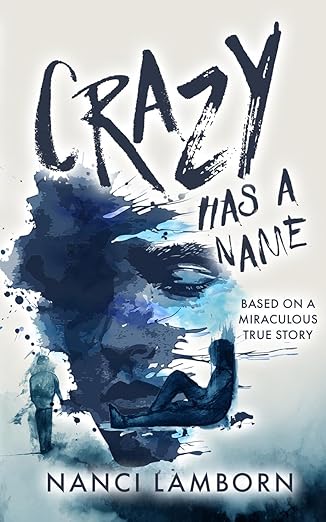
Crazy Has a Name is a raw, Christian contemporary novel that dives deep into the harrowing journey of Danny, a man haunted by his traumatic past and literal inner demons. From being born into unspeakable circumstances to navigating the voices (or “Others”) that live in his mind, Danny’s story is an emotional rollercoaster. At its heart, this book is about hope, redemption, and the powerful intersection of faith and healing. It’s a blend of brutal realism and miraculous transformations, making it both heavy and uplifting.
Author Nanci Lamborn’s voice is gritty and honest. I appreciated the candidness in Danny’s therapy sessions with Marti, especially when he recounts his childhood in “The Pit” or the horrifying truths about his foster family. One part that shook me was his reflection on being bought for $200 and how casually the adults treated it. That kind of detail sticks with you. I loved the depth of Danny’s character, but I would have loved to have seen some of the secondary characters, like his wife Grace, more fleshed out.
What I found most powerful—and frustrating—were Danny’s interactions with the “Others.” Garrison, Kendra, and the Bossman felt like fully realized characters, almost like spiritual manifestations of his fractured psyche. The scenes where Kendra scolds Danny or Garrison protects him are fascinating. However, I wanted more clarity about what these figures represented. Lamborn dances between psychological and spiritual explanations, which is intriguing.
Lamborn doesn’t shy away from portraying the darker side of life, but she pairs it with intense moments of faith-based healing. When Danny begins to unpack his trauma and face the memories he’s suppressed, you can feel his desperation and yearning for peace. The moment where he confronts his adoptive father’s cruelty while holding onto his belief in Jesus felt both heart-wrenching and hopeful.
This book is not for the faint of heart. It’s for readers who can handle heavy topics like abuse, neglect, and the complexities of mental health, all through the lens of faith. If you’re into Christian contemporary fiction with a raw edge and don’t mind grappling with some tough truths, Crazy Has a Name will grip you from start to finish.
Pages: 246 | ASIN : B0DTC2LS4W
The Child Becomes the Caregiver

The Night Garden: Of My Mother is a memoir that delves into the intricacies of familial bonds, offering an exploration of love, frustration, and the ties between mothers and daughters. Why was this an important book for you to write?
To be honest, I don’t know that I ever weighed the importance of writing this book. If I had, Night Garden may have developed much more heavy-handedly, suppressing the real life of these characters — as they finally are just that, characters. Traditionally, I am a fiction writer, so I have learned how to allow characters their own lived lives on the page.
At the same time, the mother/daughter dynamic has always been central to my writing, to my novels, however subconscious. In my first novel, Blue Glass, I naturally fell into the first-person perspective of an only child, which I am, to explore the nuanced mother/daughter relationship. The mother in that novel is entirely fictional – I honestly don’t know where she came from, as she is the complete opposite “character” of my mother. But what I do think I pulled from—again, subconsciously—was the integral bond between my mother and me; that intensity of love and devotion of the only daughter.
Though I have to say, this memoir was finally so much harder to write than my novels because the subject was right there in front of me – it was lived. What was most difficult was finding the structure – writing of scene comes naturally to me, and many of these moments I dramatized through the years as they were happening. Other scenes are a kind of consolidation of events, to concentrate a truth. I think I knew I had strong material here, even if it was hard to write. And perhaps in the writing, I was able to objectify in a way that offered me a layer of emotional protection—the harder that things became for me and my mother, the more I wished I could distance myself from it all.
What were some ideas that were important for you to share in this book?
The Night Garden chronicles a period in my life when I was deeply divided between my roles as a mother and daughter, by both distance and powerful emotional pulls—I had my two children in my 40s when my mother was already in her late 80s. When my mother falls and breaks her hip, what I recall best is being unable to nurse my three month old while she was in Emergency, the physical feeling of being torn between my mother’s needs and my children’s. This torn feeling I believe is far more universal than we realize, as women are having children later in life. Granted, my situation was even more skewed, as my mother too had me later in life. But there is something to be said for the fact that birthrates have fallen in every age group except for women in their forties. Women, whether in relation to children or their own parents, are still most likely to be the designated primary caregivers.
I appreciated the candid nature with which you told your story. What was the hardest thing for you to write about?
I think the hardest was reliving that period when my mother manifested dementia — it was a quick and deep descent in her last two years, and one much darker than I experienced with my father — my father’s deterioration was over the span of 13 years, and while he was diagnosed with Alzheimers, the terrain of his dementia was much gentler. No deep descents. My mother would find herself locked in empty churches, dental chairs and in jail. The hardest moment was when she no longer recognized her own home, what she’d always referred to as her “happy house;” and in that lack of recognition, I already felt left behind, as I would wandering that house alone once she was gone.
The second hardest was writing about the grueling lesson of navigating the dementia, one I learned from her aide who had witnessed this dynamic between child and parent so many times before. She understood my desperation in needing to convince my mother that she was not actually locked in a church, but at home in bed with her beloved two cats. In my denial was indeed, a refusal to let go. So instead of trying to convince my mother that she wasn’t locked in a church, I learned how to soothe her in the moment, to promise I would send a parishioner drive her home. But my desperation finally was born out of a stubborn denial — on some level, however old we are, we are still the child unable to imagine losing a parent, however fraught that relationship was or wasn’t historically. Once stripped of our role as child, how do we reimagine ourselves? And how might this reimagining impact our own roles as mothers?
What do you hope is one thing readers take away from your story?
I’ve already received messages about how Night Garden is helping those currently in caregiving roles, whether or not they are balancing young children as well. I do hear mostly from women, who appreciate my candor about conflicted feelings: unable to bear that thought of losing a parent— of our role as child— while resentful of the toll caregiving is having on our own lives and mental health. We are no longer a society of extended families — at best, we are families scattered across the country, so that usually the caregiving does fall to one child, one sibling. Readers of my story I hope will feel a little bit less alone in what finally may be an inevitable quagmire, but also forgive themselves for feeling conflicted; the child/parent relationship is resounding in its complexity, if not always rooted in unconditional love.
Author Links: GoodReads | Website
As her mother’s dementia worsens, Chandice warns the author about other daughters “gone crazy” watching their mothers become unrecognizable-after her mother’s death, the author is admitted to a psychiatric ward, where she sleeps the “sleep of the dying,” as her mother slept in her final weeks. But in the timelessness of this ward, she can wonder: was her closeness with her mother not of best friends, but something inherent in their dispositions as a writer and artist-in that compulsion to be seen and heard? With empathy and affectionate comedy, The Night Gardencandidly explores what it means for a daughter to have her focus fractured by conflicting responsibilities while still seeking, above all else, her mother’s approval, protection and love


