Blog Archives
The Spiral Can Be Reversed
The Path from Hell to Heaven is a philosophical and psychological map of the ego, tracing how people spiral downward into “Hell” through fear, shame, and denial, and upward toward “Heaven” through trust, openness, and renewal. Why was this an important book for you to write?
Because ego explains nearly every human collapse and ascent, yet most people never receive a practical map for it. I wanted to translate psychological chaos—fear, shame, denial—into a recognizable model anyone could use, the same way we map complex systems in software or business architecture. This book is that missing human blueprint: a self-debugging framework that moves readers forward instead of leaving them looping in abstraction.
How did you come up with the concept of the two-sided spiral of the ego and develop this into a process that readers can implement into their own lives to find clarity and understanding of themselves?
I analyzed patterns before individuals. Ego contracts or expands; there’s no true neutral. Avoiding truth descends, openness creates lift. The spiral metaphor stuck because it captures momentum and acceleration.
To make it implementable, I structured it as an RPM self-awareness loop:
- R – Recognize the ego state you’re operating in
- P – Pause the automatic reaction loop
- M – Move with intentional correction or openness
It’s diagnostic and reversible, giving readers a clear exit path whether they’re descending or rebuilding upward.
I found the ideas presented in your book relatable and appreciated the actionable steps that readers can take to find their own clarity. What were some ideas that were important for you to share in this book?
The concepts that mattered most to me were:
- Ego itself isn’t the problem → closed ego is
- Narcissism is often unprocessed fear wearing armor
- Pain isn’t identity, it’s a turning point
- Ambition without self-awareness becomes self-sabotage
- Recognition of the loop always comes before the escape
And above all—I wanted a book that doesn’t just sound smart, but gets applied and changes outcomes.
What is one thing that you hope readers take away from The Path from Hell to Heaven?
That their ego has directions, and so do they. If they feel stuck, defensive, ashamed, or overwhelmed—it’s a state, not a life sentence. The spiral can always be reversed, rebooted, and climbed. The only real trap is believing the descent is normal and permanent.
This book is a Map of the Ego’s Double Spiral — a journey every individual, family, and society travels between Hell (closed ego) and Heaven (open ego).
Through vivid metaphors and grounded psychological insight, LANOU unveils how pain becomes protection, how protection turns to illusion, and how awakening begins when trust cracks the shell.
You’ll see yourself, groups, and even nations in these patterns:
The wound that starts the descent.
The mask that hides pain through control.
The collapse that breaks illusion.
The trust that starts renewal.
The open ego that frees love and truth.
Structured as a fractal spiral, the book reveals six repeating steps across all scales — from individuals to groups to the world itself. It blends the clarity of psychology with the simplicity of spiritual truth: hell is repetition; heaven is renewal.
Once you see the map, you cannot unsee it.
The Path from Hell to Heaven: The 2 Sided Spiral of the Ego
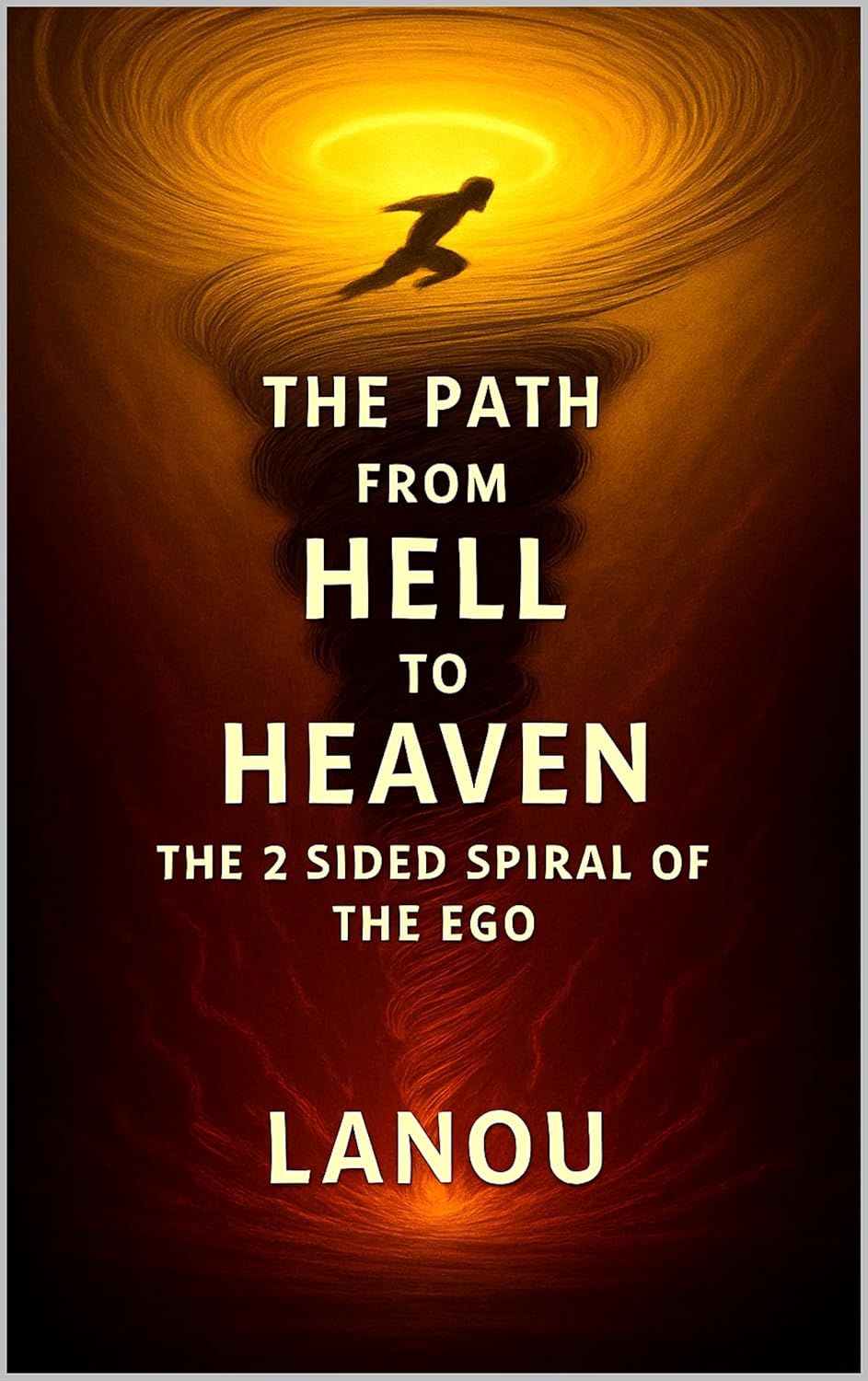

This book is a philosophical and psychological map of the ego, tracing how individuals, groups, and societies spiral downward into “Hell” through fear, shame, and denial, and how they rise toward “Heaven” through trust, openness, and renewal. It’s written like a guide for self-awareness, where the ego’s descent, wound, shell, mask, illusion, collapse, and denial are mirrored by its ascent through trust, openness, adulthood, mastery, and renewal. Each section builds on the last, connecting personal trauma to collective dysfunction and, finally, to global healing. The language is clear and rhythmic, sometimes poetic, and the structure moves like a spiral itself, repeating ideas but deepening them each time.
I liked how direct this book is and how it pointed to familiar pain without drowning in theory. The writing style blends psychology and spirituality without turning preachy. I could feel the author’s intention: to wake readers up, not to comfort them. Sometimes the simplicity of the prose makes it cut deeper than expected. It’s not a book that flatters, it exposes. At points, it felt like being called out and held at the same time. The “spiral” metaphor worked for me; it explained so much of what people repeat in life, from personal self-sabotage to entire societies collapsing under pride and denial.
The book’s tone is confident, almost absolute, which can feel heavy when you’re already raw. The ideas are strong, but their repetition across individual, group, and world scales sometimes blurs the freshness. Yet even then, I found myself underlining lines, rereading them, and thinking of people I know who live both spirals at once. The message that Heaven and Hell are not destinations but daily states of ego, sticks.
I’d recommend The Path from Hell to Heaven to people who crave clarity more than comfort. It’s for readers who think deeply about healing, leadership, and the way our inner wounds ripple into culture and politics. Therapists, activists, or anyone burned out on shallow self-help would probably find it bracing. It doesn’t tell you what to do; it shows you what you’re already doing. And if you’re willing to face that, it can be liberating.
Pages: 151 | ASIN : B0FT5HM9RS

Philosophical Tidbits


Philosophical Tidbits is an engaging collection of musings, observations, and reflections with a philosophical bent. The author, Michael Tate, delves into an array of life’s facets, blending serious contemplation with humor. This mix offers readers a distinctive view of life’s varied aspects. The book serves as a thought-provoking journey, inviting readers to explore the complexities of human experience. Tate’s knack for combining wit and wisdom allows for an exploration of diverse topics, ranging from introspective thoughts to societal commentary.
Tate’s writing style is both engaging and contemplative, encouraging readers to reflect on life’s intricacies through a narrative that is imaginative yet grounded in adult experiences. He skillfully juxtaposes lighter topics with profound philosophical queries, adding depth to his musings. The reflections, covering everything from personal relationships to societal issues, resonate due to their relatable nature and the author’s insightful observations on humanity’s imperfections. Tate’s use of humor is a key aspect of his work, providing a counterbalance to the more serious philosophical themes. His quips, such as “He that can see the future shall rule the world” and “If a child asks, answer. If a man asks, wonder,” inject a playful element into the narrative.
Moreover, the book bravely tackles often-shunned subjects like politics, justice, and belief systems, sparking vital discussions about societal perceptions. While the book offers insightful perspectives, it also presents a level of cynicism and skepticism, particularly regarding societal constructs and belief systems. Tate’s views on truth, ignorance, and justice showcase a critical, questioning mindset, which I feel might challenge some readers. The book’s more pointed critiques of established beliefs might not appeal to everyone, but I believe those who look beyond will find the work enriching.
Philosophical Tidbits is a stimulating read for enthusiasts of philosophical discourse, especially those who appreciate a blend of humor and skepticism. Tate’s ability to convey mature experiences with childlike imagination adds a novel dimension to the philosophical discussions. The book stands out not only for its broad range of topics but also for its forthright approach to expressing thoughts that many might harbor but seldom voice. It serves as an intriguing catalyst for deeper conversations and encourages a departure from conventional social norms in pursuit of honest dialogue.
Pages: 89 | ISBN : 0578269473

Meditations for Modern Man
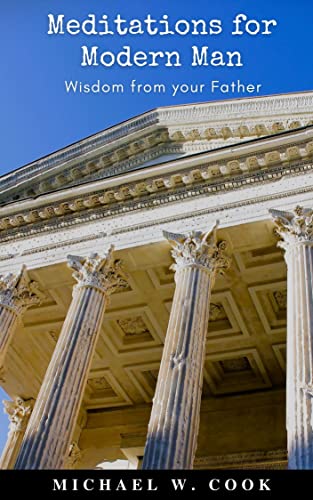
In Meditations for Modern Man author Michael Cook provides readers with inspirational quotes that cover a variety of enlightened and humanistic topics from logic to morality and more. These intellectually stimulating quotes empower readers with timeless wisdom that anyone can use in their daily lives.
Author Michael Cook has written a unique and thought-provoking book that many readers will find encouraging and uplifting. While reading the quotes in the book you feel as though you are getting advice from a mentor or someone who has experienced so much in life and has a wealth of knowledge to share.
I encourage readers to, as I did, stop and reflect on what is read, because while some quotes are subtle but potent, like this one “When Logic fails, Emotion reigns.”, I found others to be layered and profound. I’m sure that some of these keen aphorisms will echo in your mind as you go about your daily life.
This is a great book for readers who are looking to grow as a person and for those seeking an enlightened opinion on how to be the best version of themselves. I enjoyed the author’s candid and unapologetic voice in his book. Readers will be able to sense his personality, and I think these aphorisms hold more value because of it.
As I was reading, I found myself agreeing with many of the maxims, but I would have enjoyed a bit of an introduction to each section if only to dive deeper into the authors thoughts on the topic. There may be some quotes in the book that readers may not agree with, but I like that the author’s writing can spark debate, either within a group or within your mind.
The author has written an observant and enlightening book of maxims that can easily become common adages. I recommend this book to parents and to young adults who are ready to go out into the world on their own and find out what kind of person they really are. This is a fantastic book for anyone that is about to embark on a personal transformation journey, as these will help guide them.
Pages: 167 | ASIN: B09BQ9FWW1
The Empathy Academy
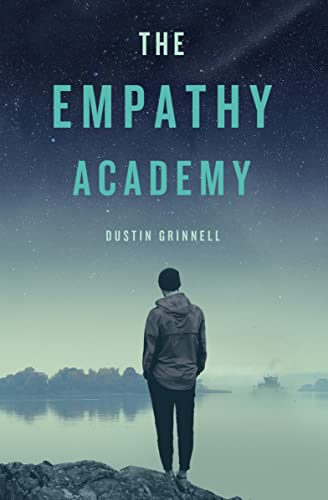
The Empathy Academy, by Dustin Grinnell, follows Montgomery Hughes on his journey of discovery as he questions his morality. A school was built for those who test positive for genes that affect empathy, and even though Monty tests negative, he finds his way onto Nantucket Island to enroll.
Montgomery “Monty” Hughes is a terrific kid, intelligent, and constantly questioning if he is doing the right thing. When he discovers his father profited on a fake cancer drug, he decides to enroll in the Empathy Academy, which is run by Dr. Sonja Woodward. Monty uses his friend’s test results to get into the academy so that he can escape his father’s wrongdoings.
Monty has been intrigued by medicine and wants to become a doctor; however, he does not want to make his father’s same mistakes. As Monty goes to the academy for the summer, the FBI places his father under house arrest while awaiting trial for the biggest fraud committed in medicine. His father, Richard Hughes, marketed a drug that was supposed to cure cancer and ended up being harmful. There is some irony in the story as his father was diagnosed with terminal Pancreatic Cancer.
The writing style and tone of this book are a balance of science and questioning morality. Are our genes responsible for our behavior and empathy, or does our environment also play a role? Throughout this book, Grinnell accurately captured human nature and the fine line between right and wrong. Some characters in this book know what they are doing is wrong but move forward because they are scared the outcome would negatively impact them. Other characters believe what they are doing is just and right but blind themselves to the true nature of their actions. Monty is inherently good but feels he needs help because of his father’s mistakes.
This captivating novel was interesting to read. Each character had a unique development, and you could see the inner workings of human nature. The underlying plot of the fake cancer drug could elicit some strong emotions from those that have been impacted by cancer in their lives. Cancer is a touchy subject, but I believe the author handled it well throughout the book.
The Empathy Academy combines science fiction and ethical philosophy into a riveting fantasy novel. If you question right and wrong, love deciphering morality, and would like to dive into human nature, then this book is for you.
Pages: 209 | ASIN : B09RTSZ7PQ
I Am A Healer At Heart
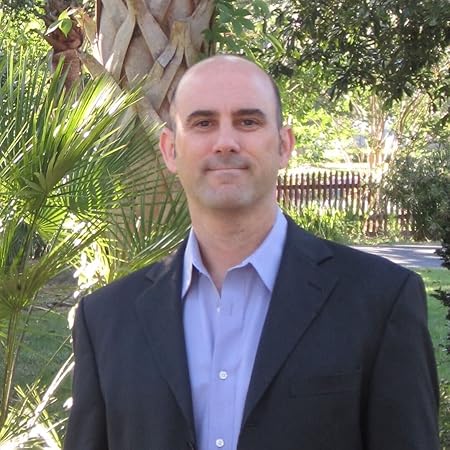
Wisdom: A Very Valuable Virtue That Cannot Be Bought takes a secular approach to explain what wisdom is and how to obtain it. Why was this an important book for you to write?
Wisdom, values, ethics and so on are very important to me personally, and of major importance to what I consider to be an ailing America. Yes, I believe that America (and of course many other countries) are in serious trouble nowadays. If we do not begin to quickly value wisdom as a society, our institutions will continue to fail, Americans will become increasingly politically polarized and violent, and the promise of the American dream will slip further and further from the grasp of all but the wealthiest individuals. People who are wise have been advising us to listen to our better angels, or our gods, or our inherent potential as human beings, for millennia, and yet here we are…. As it stands, human beings will likely destroy ourselves through nuclear war or global warming in the foreseeable future. This is of great concern to me because I think of all the good and decent people who have come before me–they didn’t work so hard and reach for the stars simply to see the world implode.
But also, I am a healer at heart. I see the power of philosophy and the potential of philosophy to engender personal growth, critical thinking, and moral values in the hearts and minds of people. I did my very best with the book because my overarching goal was to be helpful to people.
What is a common misconception you feel people have about wisdom?
I personally think it is amazing that wisdom is this age-old virtue that every significant civilization has had some interest in, which can be of unparalleled use to us as individuals and as members of society, and yet most people never think about it. Wisdom is behind truth, justice, and love in regard to how highly it is regarded–and it is certainly behind money, power, beauty, popularity, and significance on the list of those things to which Americans aspire. This is tragically misguided, because wisdom is that which can most accurately guide us through all the trials and tribulations, all the mountains and valleys life throws at us all. It can even save your life, as anyone knows who has had an accident involving gasoline, hurt someone while drunk driving, or been faced with an agonizing decision to carry a child to full-term or end the pregnancy! I have also made some dumb decisions in my life, either as a person, as an investor, or in my relationships, and it is only through wisdom that I can hope to do better in the future!
Another element that seems interesting to me is that wisdom (to the degree that folks even really ever think about it, as I said…) tends to be associated with those who are excellent in some attribute or social status, or even simply more advanced in age. I live in a part of the country with more than a few Confederate flags flying on the porches and trucks of folks who are well over 50. So it is a bit of a paradox as to what engenders real wisdom, and what has merely a superficial appearance of wisdom.
What do you hope is one thing readers take away from this book?
We each have the capacity to make wisdom our greatest strength. And in a world some say has gone mad, character strengths and worthy virtues are of the highest value. These things, like love and peace, cannot be bought with money, but they can be worked toward, cultivated, prized, and loved. Indeed, the word philosophy comes from the Greek for “the love of wisdom.” So, to philosophize is to seek out, care about, and take seriously wisdom. That is amazing! To succeed in this high aspiration and worthy goal, we ought to make a habit out of taking a broad, deep look at large numbers of individuals throughout history (and from different cultures) who have lived wise, successful, impressive lives. What I call living “a life of value.” I have a free quote search engine on my website that has over 35,000 wonderful quotes about wisdom, values, virtues, ethics, personal growth, etc. Some are just plain truth (in my opinion) that I read in some magazine or heard someone say. In the present book, I bring in many philosophers, thinkers, artists, freethinkers, and spiritual exemplars to the fore. Even one quote about wisdom can make a difference in a person’s mindset, which is why I love quotes and have been thinking about these issues for almost twenty years. If we heed the lessons the wisest people have learned and then taught in many millennia of civilization, struggle, creation, cooperation, and thinking, we will surely benefit as a species.
What is the next book that you are working on and when will it be available?
I really left it all on the field with this book! It took me hundreds of hours of reading, thinking, and typing–dear God, THE TYPING!! I have issues with my eyes due to the side effects of glaucoma medications I take daily, so often to stare at a computer screen is hard to do. Further, I have to promote this book for the next year or so–and that is no easy task since I don’t have a publishing house behind me and I really don’t like book promotion. Frankly, I am not a full-time author and I don’t even think I am that great of a writer, so the thought of yoking myself to a computer for another 300 hours sounds frankly abhorrent to me at present. I also feel like I had a certain wind in my sails for this project because the Trump years were very hard on me, and the present moment causes me trepidation, and I am not sure I could replicate that “fire” for a subject such as meaning, compassion, or success. Wisdom is a thing of beauty, and I was transfixed by it, indeed!
Author Links: GoodReads | Facebook | Website
Why is America increasingly plagued by tribalism, elitism, materialism, and ME-ism?
What do philosophy, psychology, and personal growth have to say about wisdom?
Are the Bible and other religious texts legitimate and useful sources of human wisdom?
Wisdom is not able to be bought — no matter how much money a person has!
And philosophy has typically discouraged many who find it difficult, abstract, and boring.
Modern psychology and age-old personal growth principles are given a bad name by many social media personalities who oversimplify modern psychological science in an effort to make money.
What is wisdom, how can it help me, and is this book authentic, reliable and useful?
Four-time author Jason Merchey believes wisdom can be developed and acquired and improving your understanding of wisdom will certainly lead to living a better life! Wisdom is one of humankind’s oldest and most prized virtues, yet it is not much respected nowadays. . .
This new book has the potential to assist readers to live a life that harnesses the power of philosophy, critical thinking, and applied psychology. These secular sources of wisdom are not as complicated as they may seem, and indeed are road maps to a better life.
Greater wisdom leads to improved personal growth, happiness, and success.
Wisdom is not simple or plug-and-play, but it will yield its secrets to those who love it.
In fact, the word philosophy is Greek for “the love of wisdom.”
Wisdom is a comprehensive, transparent exploration of ancient and intriguing concepts combined with critical thinking, compassion, and other aspects of wisdom. Brimming with examples of psychological principles, careful analysis, and insightful quotes from many cultures and civilizations, it provides a basis for authentic intellectual, emotional, spiritual and moral growth.
The author deftly combines digestible psychological research findings, compelling personal stories, and useful quotations about wisdom.
Anyone aiming to build a life of value—one that yields purpose and happiness—should consider wisdom to be their basis. Wisdom has been one of humanity’s highest aspirations for millennia.
Jason Merchey has dealt with mental illness most of his life, but also earned a master’s degree in clinical psychology and trained as a psychotherapist. No stranger to “the big questions” and the difficulty of life, he has studied wisdom, values and virtues for twenty years.
In addition to personal benefits, this book sheds light on some of America’s significant social problems. The great philosopher Socrates himself knew that ancient Athens, Greece was in serious trouble. If we were all wiser and we had more enlightened and humane priorities, many of the problems that mark communities and nations would give way to more love, fellowship, and prosperity.
This deep and eclectic book is full of ideas and insights that will assist you to:
Discover and prioritize wisdom in your personal life and relationships
Achieve greater fulfillment, happiness and self-confidence
Bring about true success based on self-knowledge and values
Make a positive difference in your community—and the world as a whole
One cannot buy wisdom per se but investing in this affordable book provides a refreshing opportunity for self-improvement and intellectual growth. It has the potential to assist you to make wisdom your greatest strength!
On The Turning Away

Author Xavier Hernandez takes readers through the different stages of life, explaining the changes that people undergo and discussing why transition is important. In his thought-provoking book, he uses the analogy of the children’s game Hide and Seek to discuss the complexities of life and the nature of human beings. Hernandez’s writing style is engaging and gives the reader a sense of belonging. The author talks not only about his experiences but also about his observations and hypothetical situations. Reading this intriguing book will get readers thinking about everything they have to appreciate in life and make them more aware of what they are seeking in their hearts.
The author lets readers into his world as he talks about family, work, culture, and other personal things. He is open to the readers as he shares the knowledge, wisdom, and insight he has gained over the last forty years. In On The Turning Away: The Real Life Hide & Seek, readers are shown some of the realities that impact life and inhibit growth at times. The author then inspires readers to reach for greater heights and to fulfill the dreams they have kept hidden away inside themselves. Hernandez wants to help readers develop a positive view of life. The author discusses what ails human beings and the activities one can take to become a better version of themselves.
The writing style used is straightforward and conversational. The author’s tone is considerate and he is thoughtful in his writing and encourages readers to embrace the changes needed to achieve their own goals.
On The Turning Away: The Real Life Hide & Seek is an inspirational book that will resonate with readers in all stages of life and from all demographics. This is an excellent reference if you are a student aiming for the corporate world, married, planning on starting a family, advancing your career, or going through a transition in your life.
Pages: 119 | ASIN : B09Q6BW941
Wisdom
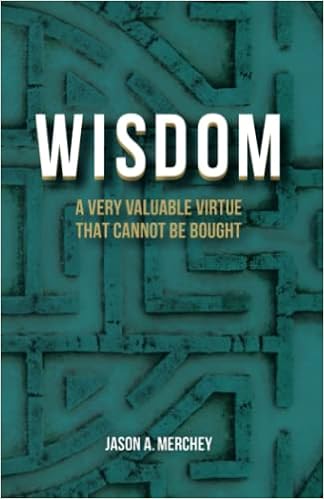
Wisdom is a virtue that many wish to live by. To be described as wise gives you an advantage over others, as people appreciate your persona and thinking capabilities. In his book Wisdom: A Very Valuable Virtue That Cannot Be Bought, author Jason A. Merchey digs deep into the topic, discussing insights from neuroscience and individual traits in detail. Jason Merchey combines notes about philosophy, astuteness, and human nature. The author is well-read and gives historical references when discussing various matters.
Wisdom: A Very Valuable Virtue That Cannot Be Bought is an excellent book for readers that yearn to improve their intelligence quotient. There are gems in the book that will benefit you as a reader to make better decisions and approach issues logically. I enjoyed how the author paired subjects in relation to wisdom in each chapter. The book has fifteen chapters, with each chapter having discussions from different perspectives. You get to read and understand interesting topics like loving wisdom, living a life of value, intellectual humility, self-awareness, and self-discipline, among others.
This well-written book will also teach you about modesty and open-mindedness. Jason A. Merchey tackles the aspect of human behavior in relation to the vastly different characteristics human beings possess. The historical tales and comparisons between modern man vs. ancient man and modern philosophy vs. ancient philosophy were enlightening. The lessons in the book are valuable and will have you view life in a different light. They will guide readers in finding a life of value.
Wisdom: A Very Valuable Virtue That Cannot Be Bought has the end goal of guiding people to be better humans and build a society where everyone is free and lives comfortably. With eye-opening discussions, readers of philosophy and social sciences will appreciate the perspective the author brings. As the author says, you can not buy wisdom, but you can invest in yourself to gain wisdom.
Pages: 399 | ASIN : B09RTR5F7D



 LITERARY TITAN